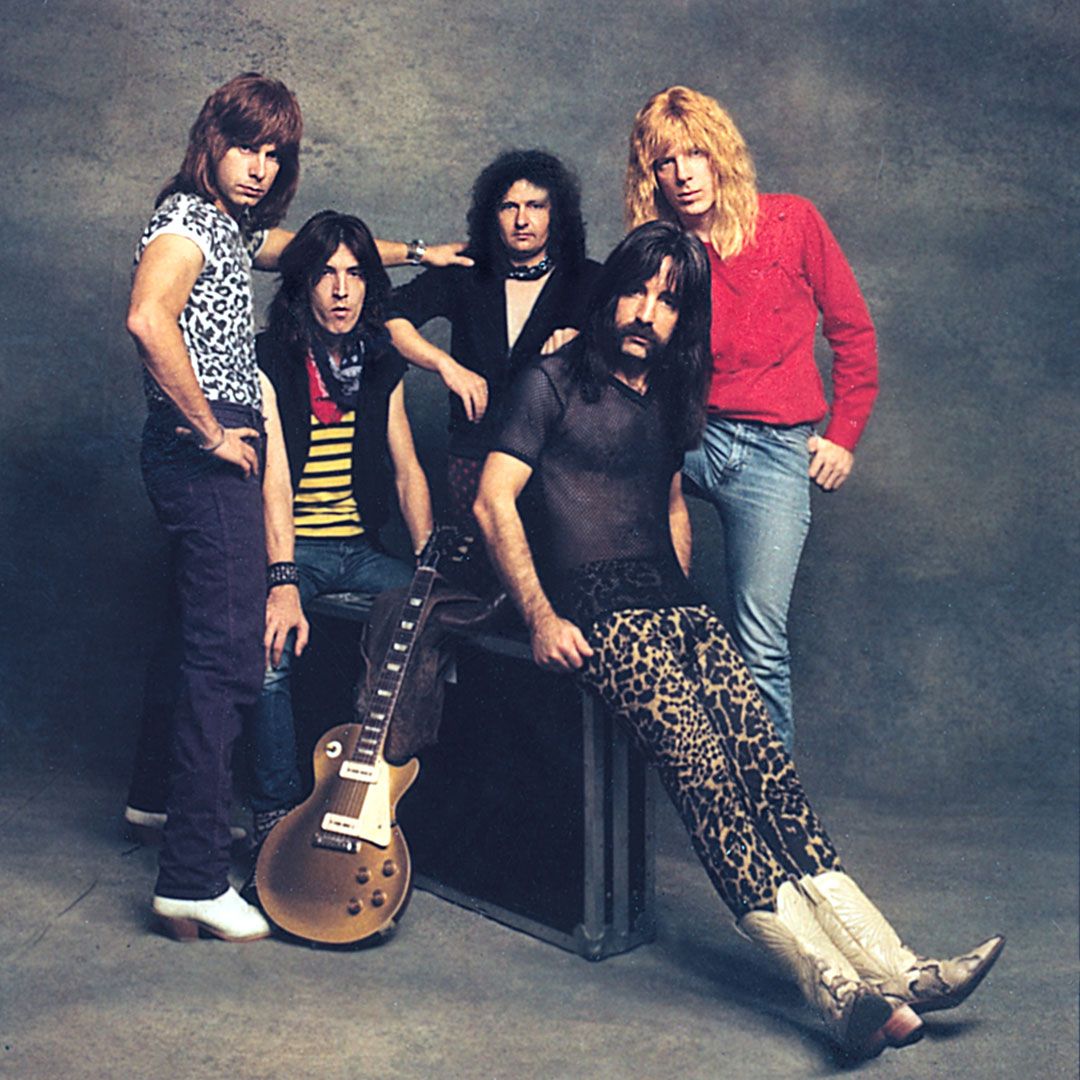
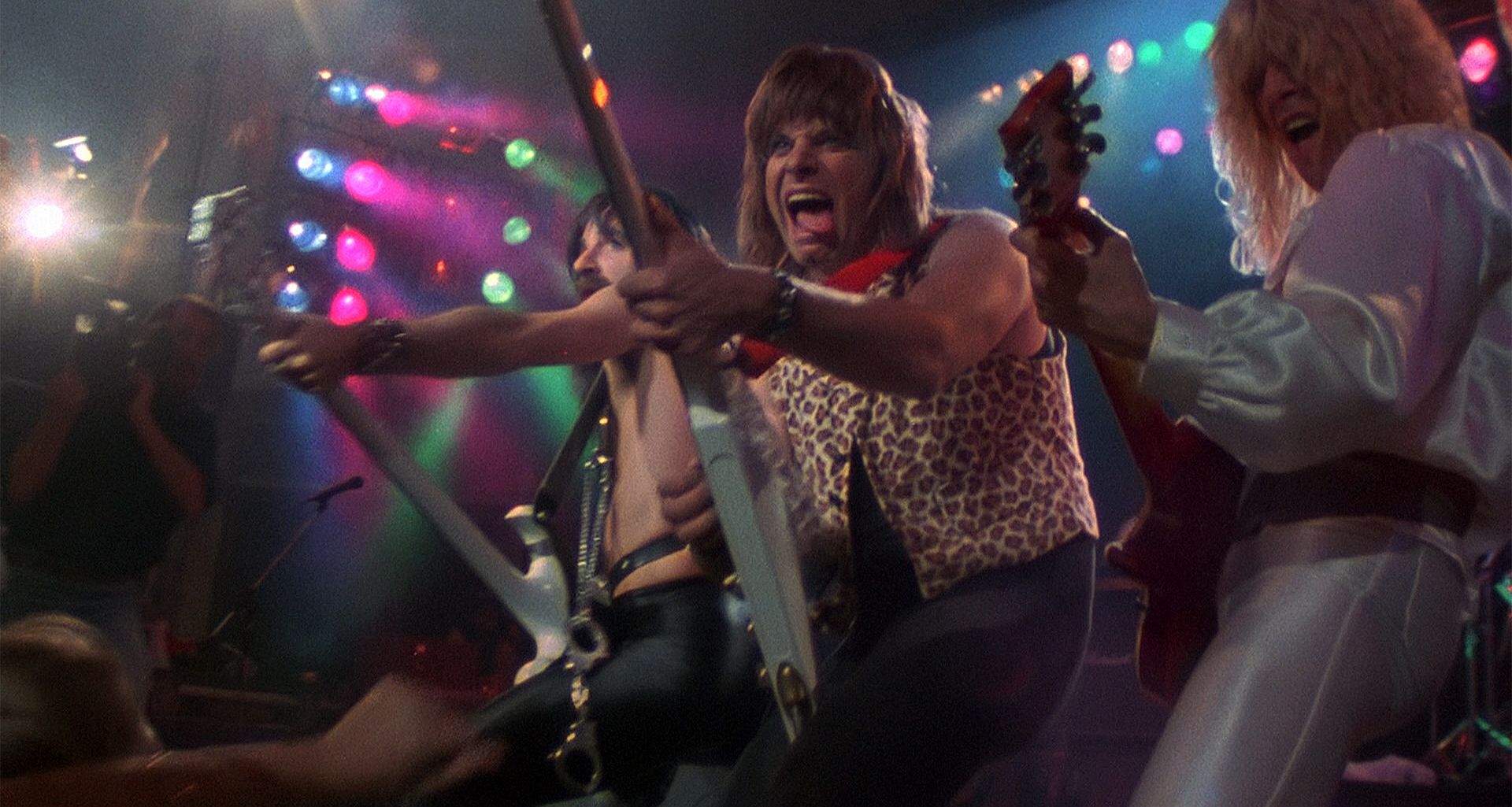
As a longtime film critic, I’m often asked to name my favourite movie. Rather than offering up Citizen Kane or The Godfather, I have a default answer: This is Spinal Tap. Because I’ve watched Rob Reiner’s 1984 mockumentary more often than any other movie, and it just gets funnier with each viewing. I first saw it before I became a film critic, after five years of touring in a rock band that imploded in a Tap-like vortex of deflated grandeur. Spinal Tap’s satire of rock ’n’ roll pretense hit so close to home that its targets became the film’s biggest fans, amazed to see American actors create an English power trio that was more than credible. Their songs, from molten heavy metal to baroque prog rock, were as good, or better, than those they parodied.
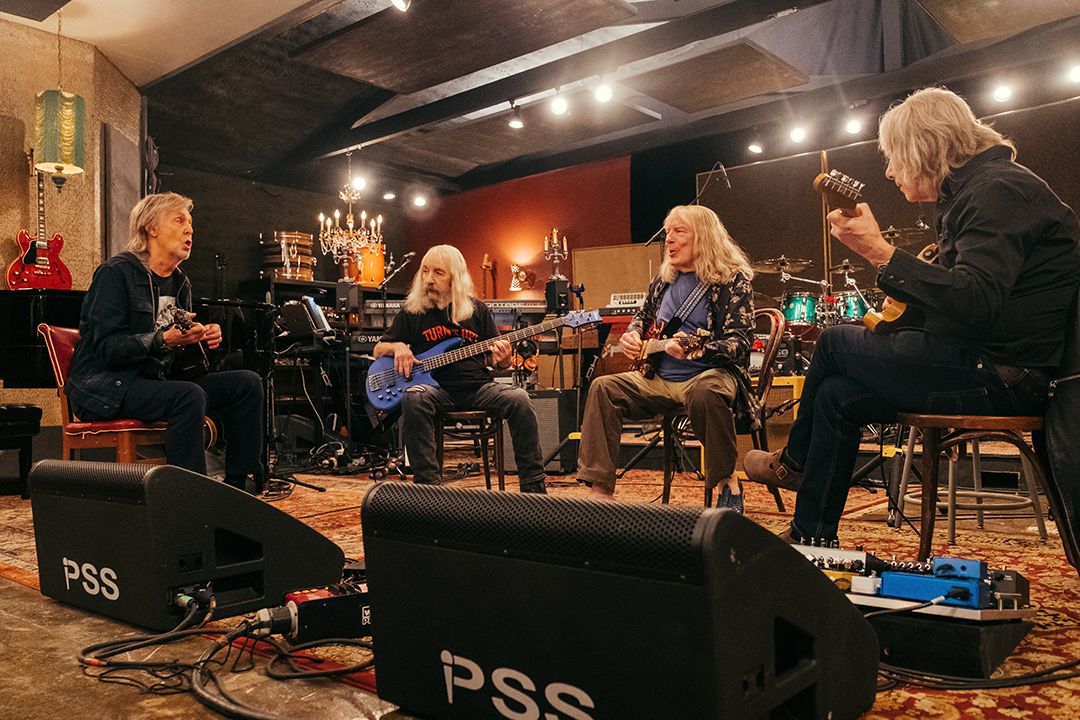
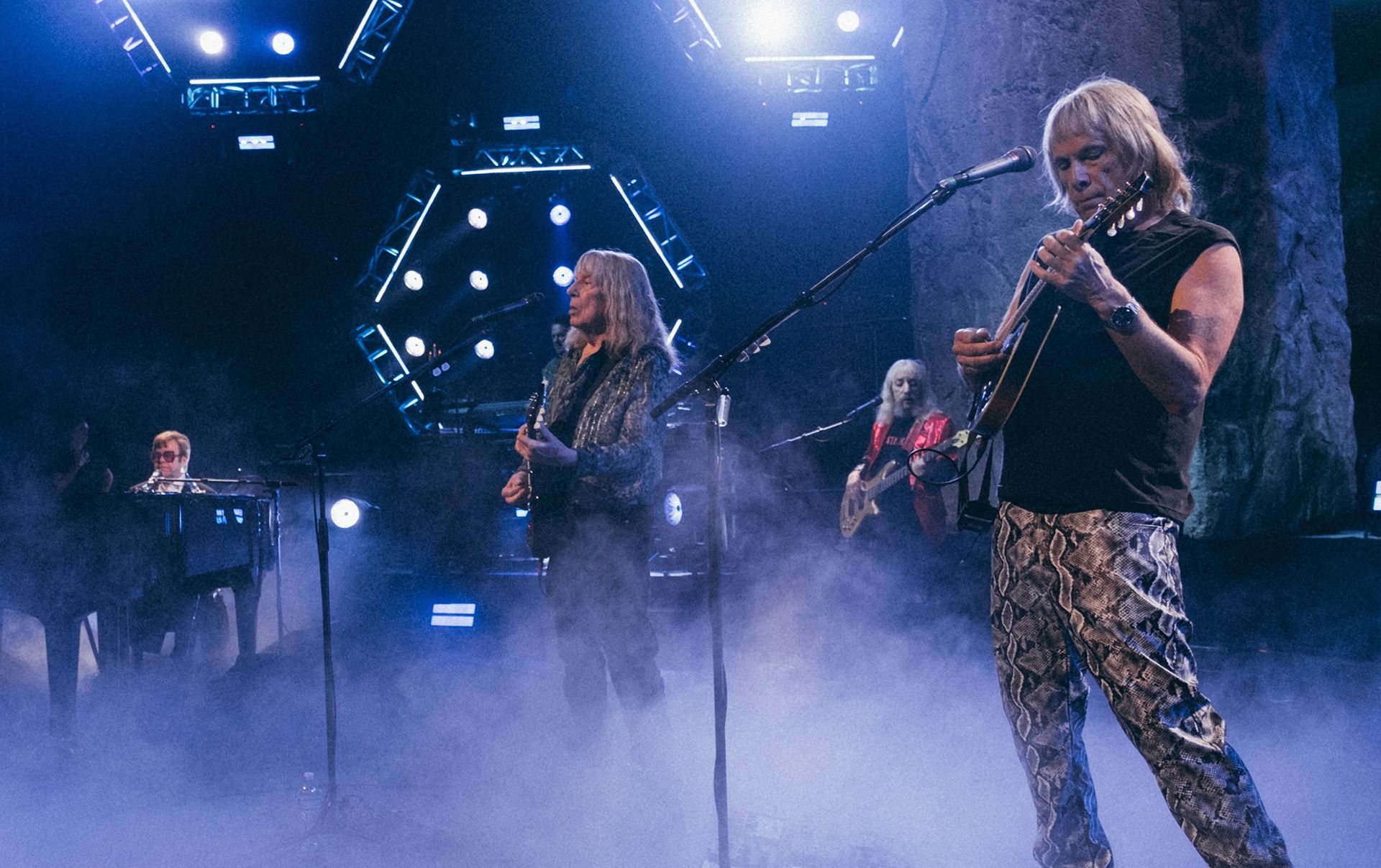
And now the band returns to the big screen with a preposterous comeback. Arriving 41 years after the original movie, Spinal Tap II: The End Continues is such a long-awaited sequel that no one was waiting for it anymore. When I screened the film, a couple of weeks before its Sept. 18 release in theatres, most people I knew weren’t even aware of it. So is the sequel as brilliantly innovative as the original? Of course not. It’s a nostalgia trip. But as the band shuffles out of retirement, putting a fresh spin on old tropes, their bouts of improvised dialogue are as sharp as ever, and they are boosted by remarkable cameos from two elder knights of the realm, Sirs Paul McCartney and Elton John.
With Rob Reiner, 78, back as director, and on screen as his meta counterpart Marty DiBergi, the story finds shredder Nigel Tufnel (Christopher Guest) placidly married, tending the counter of an English cheese & guitar shop where a vintage axe can be traded for a wheel of brie. Singer David Saint Hubbins (Michael McKean) maintains his chops in a California mariachi band while writing a horror movie called Night of the Assisted Living Dead. And bass player Derek Smalls (Harry Shearer) has found a new vocation curating a glue museum. Guest and McKean are both 77, and Shearer is 81, but the wigs are ageless.
But hey, as a superfan, I have no business reviewing this movie. I did, however, jump at the opportunity to do an interview with the band, and later with Marty DiBergi.
The boys come across as a trio of diehard rockers who mastered the art of aging gracelessly. With his blue satin shirt and blond mane, David projects the restless indifference of a bored diva who would rather be doing anything else. Nigel, also blond but with a page-boy cut, cuts a sullen pose in a black leather jacket and stares a hole through me like a stone sphinx examining a bug as he chews gum with punk insouciance. Nigel and David finish each other’s sentences, bickering like a couple stuck in an endless marriage. Meanwhile Derek, who looks like a medieval sage – oddly dignified with his grey beard and platinum locks – lobs gentle curveballs into the fray. Me, I just try to keep up.
Zoomer: This is a real thrill. I’ve interviewed Mick Jagger, Keith Richards, Sting, Neil Young, Madonna . . . but frankly this is on a whole other level. And I’m a bit starstruck. Do you gentlemen ever get starstruck? When Paul McCartney walked into your studio, you seemed kind of nonplussed.
David: We were deferential at first.
Derek: He was struck [pointing at David].
Z: David, you were struck? You said he was “toxic.”
David: Very impressive artist, etcetera. I don’t want to go into it, if you don’t mind. Just talk about how wonderful he is.
Nigel: He’s a legend, obviously. And, David had a few problems with . . .
David: No, I didn’t have any problems.
Nigel: You did, you did because he was trying to help with the song, and you got very on edge.
Derek: You got pissy.
Z: Well, he seemed quite reverential toward you, so polite and humble, and he could actually quote your lyrics [from the song Big Bottom] which McCartney called “literature,” as he cited the line “My baby fits me like a flesh tuxedo / I like to sink her with my pink torpedo.”
Nigel: He was very sweet, and I had no problem.
Z: What about Elton John? He seemed like a superfan.
David: Lovely guy.
Derek: Lovely guy. I feel very sorry for him.
Z: Sorry? Why?
Derek: Well yeah, but I don’t want to give it away.
Nigel: Don’t give it away . . .
Derek: I won’t.
David: Don’t tease it then.
Z: Did you try recruiting any other big names? Like Mick Jagger?
David: No. We have no use for another vocalist.
Nigel: Yeah, and we have no way of contacting him.
David: We don’t know him. It’s not like all rock’n’rollers live in a big hotel.
Derek: He’s unlisted.
Nigel: You can’t reach him unless you know him.
David: Or happen to be married to him.
Z: Did you know Paul?
Nigel: I’d met him twice before. So it wasn’t completely out of the blue.
Derek: He came by when we were rehearsing for a tour.
Nigel: He just walked in . . . and walked out.
Z: Were you taken aback?
Nigel: Oh, yes. Way back.
Derek: Way back machine.
Z: Way back, you had a lot of dead drummers in your band.
David: Yeah, every drummer is a moment.
Nigel: It gets a bit repetitive after the third or fourth, then it was just . . .
David: Another statistic.
Nigel: And we just move on and get another one.
Z: Nigel, at the end of the first film, you imagined yourself selling shoes. Now you’ve got a cheese & guitar shop, which seems like a step up from shoes.
Nigel: Oh, I wouldn’t say that. It’s just different.
David: It’s your own invention. It’s never been done before.
Nigel: I’ve always liked cheese, and I like music and guitars, and I put them together.
David: You like juxtaposition as well.
Derek: And you need shoes to step up.
David: Or to walk into a store, or to do anything.
Z: There are so many memes that came out of the [original] film, at a time when memes didn’t really exist.
David: You’re trying to say “mimes”?
Z: No, no. Memes. Like “This goes up to 11.”
Derek: Well, that’s in the dictionary now.
Z: Does that make you feel good to know that your dialogue is now memes?
Nigel: Look. I don’t see it. No one shows me a meme of anything. Whatever this thing you keep saying is, I don’t know. You seem to be obsessed with it, but that’s alright.
Derek: Well, here’s the point: You get in the Oxford English Dictionary, they don’t pay.
Z: Like Spotify.
Derek: Yes. Exactly like Spotify.
Z: How do you all get along? Every time we see you, you break up and then get back together.
Nigel: You’ve covered rock ’n’ roll. So you’ve read about other groups. They split up, they come back, they punch each other. They don’t punch each other, they don’t come back. It’s all the same thing. We just have issues with . . .
David: With people.
Derek: And like any human being, if you’re surrounded by other human beings who are making a bloody racket, sometimes you just got to explode.
Z: Are any of you going to write a biography?
Nigel: Well, if anyone did, it would probably be David. He’s really the poet.
David: Yeah, but the last epic poem I wrote didn’t sell – Icarus. Icarus Redo: Another Shot at the Sun.
Z: But that was not about you?
David: No, it was about the lack of a market for poetry. And I don’t think I could write a book-length anything if it wasn’t a poem.
Z: You guys are all pretty old, as am I. Does it get harder to play rock ’n’ roll when you’re old?
Nigel: Well, I play every day, so that’s not the problem. We don’t jump about the way we used to on stage. Remembering lyrics is a challenge.

Z: You’ve written a few new tunes. Can you tell me how that process works?
David: Over the years, it’s changed. There have been times when we weren’t on great terms, and we would be jotting down lyrical notes and slipping them under hotel room doors. We’ve gone to that level and then back again where we just keep the door open and toss it through.
Nigel: And then not having a door at all.
David: Or having anyone in the other room that we knew. So we all put it in a drum and we just shake it up and start plucking songs out of the air.
Z: Really? And that works?
David: No.
Nigel: No.
Derek: No . . . but that’s the way we do it.
Z: And now what? What’s next for Spinal Tap?
David: There’s a possibility that we’re going to play another gig, one more gig in the U.K. We can’t say when.
Nigel: There’s something, in the wind, as you like to say.
David: As cheesemakers like to say.
Z: So you’re not going back to the cheese shop, Nigel?
Nigel: I am, of course.
David: We’re all in Los Angeles right now, promoting this thing. The End Continues is apparently what they’re calling it. We’re going to see the film for the first time tonight. We don’t have any idea what’s in it. Just hoping we would just come off a bit better than we did in the first.
Z: You had problems with the first film?
Derek: Hatchet job.
Nigel: Yeah.
Z: I found it very funny.
Nigel: Well, you would.
Derek: [The scene where] we don’t find the stage. Do you know how many times we did find the stage?
Nigel: Lots and lots and lots and lots. Oh, look. The stage. Big deal. So he shows us not, and then . . .
Derek: Ha ha ha.
Nigel: Very funny, to him.
* * *
Moments later, I speak to Spinal Tap‘s documentarian Marty Dibergi:
ZOOMER: Hello, Marty . . . can I call you “Marty”? Or is it like Scorsese where you have to be close to him, like calling De Niro “Bobby.”
Marty: I feel very honored that you would think of me in that league. Martin Scorsese was not all that thrilled initially with the first film because I’m in the film just like he was in The Last Waltz, and he thought I was making fun of him. But I was being respectful, and he’s now come to like the first film.
Z: When it comes to changing the art of the documentary interview, you’re in a league with Errol Morris. You virtually invented the mockumentary – Borat, Best in Show, The Office. . .
M: Unfortunately, I’ve never gotten any money from any of these things, even though they overtly acknowledge that they took from this style that I created. They’ve made a lot of money. I haven’t seen a dime.
Z: Well, maybe the acclaim is more important than the money.
M: Maybe, but maybe not.
Z: I was just talking to the band, and they called the first film a hatchet job.
M: Oh, wow. Yeah, they didn’t like it. They said I showed them in a bad light, and I only showed the bad parts. They said I only showed the one time they didn’t find the stage, and rightfully so, they did reach the stage more times than they didn’t – I would say about 60 or 70 percent. So they got mad at me for that. But, too bad! I’m just a fly on the wall trying to show what actually happened on that tour, and that’s what I try to do in the second one as well.
Z: You’ve called them the loudest band, but in that movie, they’re probably the funniest band. Was that your intention, to make them funny?
M: No, of course not. I’m not making comedy. I’m a serious filmmaker. I’m making a documentary. I can’t help it if Derek got stuck in the pod or that they had the wrong size Stonehenge. That’s not my fault. I didn’t write that. I made a film about what actually happens to a band. It’s the press that says “mockumentary.” There’s no mock. I’m not making fun of them.

Z: After 41 years, this is a reunion for you and the band. How have they changed?
M: In all these years, I can honestly say that they have not grown either emotionally or musically. The only thing they might have grown is a few skin tags, on the face or wherever. That’s par for the course. You get older, you grow things, you don’t know where the hell they came from. Why is there hair in my ear?
Z: Were you as surprised as everybody else when Paul McCartney walked into the rehearsal and started playing with them?
M: Well, I was not as surprised as others because I’ve always looked at Spinal Tap as a great band, musically. And seeing Elton John and Paul McCartney show up, it only proves that this is a band that has not gotten their due, and hopefully they will at this point.
Z: What do you think the future holds in store for them?
M: You never know. Derek talked about a song that he wrote called “Rocking in the Urn,” which talks about what happens to you after you go. In his mind, you keep rocking even in the urn.
Z: This is vérité filmmaking. You don’t know what’s going to happen or what’s going to be said. What surprised you the most this time around?
M: In the first film, I explored the relationship between Nigel and David, which goes back to the time they were little kids. And like brothers, sometimes there’s tension and conflict. What I discovered is that as you get older, whatever issues and problems you have as a kid get intensified. And for me as a filmmaker, that’s good. Because conflict is what gets the audience on the edge of their seats.
Z: What’s your next project, Marty?
M: You know, I have this idea that I’ve been working on. Years ago, I did a series of commercials for Purina Dog Chow, and it showed a dog running after a chuckwagon trying to get the food, and it would go under the counter, and into a lot of different places. We ran out of places the chuckwagon could go. So they cancelled the series. But when I saw Barbie, they made a whole movie out of a doll, and I’m thinking, wait a minute, what about a movie about the chuckwagon? Maybe it’s Wagon Training. Maybe it’s going across the country and you have a whole story about the dogs trying to get to the chuckwagon. I think it has potential as a feature film.
Z: So you want to make the jump into dramatic features?
M: Well, yes! I always did. And I’m not going to have many more opportunities after this.
Z: It’s hard when you get older to make movies.
M: Very taxing, very tiring. But maybe I have one more left in me.
Z: Another one with these guys? Spinal Tap III? You can’t wait another 40 years. Unless it’s an archival documentary.
M: You can have holograms or something. But I won’t be around to do that. I can’t wait another 40 years. I’ve got to strike while the iron is tepid.
Z: You just came up with that?
M: Well, yeah. Came up with everything.
Publicist: (interrupting) We need a wrap.
Z: I don’t have a wrap. Do you have a wrap?
M: Well, I had one that had a little fox on the front of it. My mother used to have a fox thing.