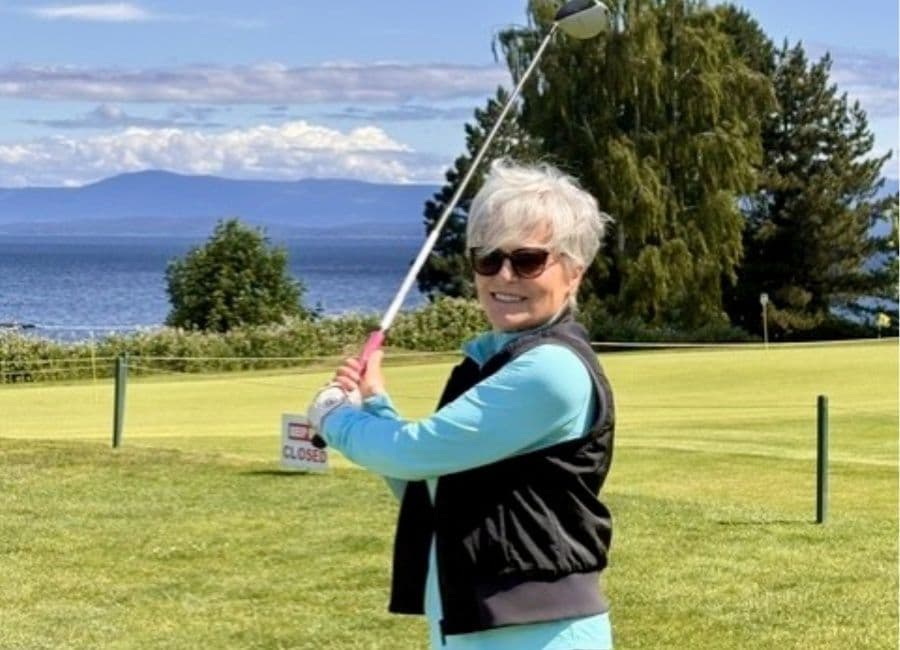
At 78, Valerie Card isn’t slowing down. She’s riding 15 miles on her bike, hitting the gym, walking 10,000 steps a day, and heading back to the golf course this weekend. But just over a year ago, she could barely bend down to tie her shoes.
Valerie had been living with spinal stenosis for nearly three decades. For most of that time, the diagnosis was a footnote in her busy life — an occasional flare-up that quickly resolved.
“I used to think, well, I really don’t think I have severe spinal stenosis, because I felt so good,” she recalls.
But in the year before her surgery, everything changed. The sharp, shooting hip pain that radiated down her leg stopped going away. The pain settled into her daily life like a current she couldn’t switch off, sending sharp zaps and prickling pins and needles down her leg without warning.
“It came, it stayed, and it was horrible.”
Things she used to enjoy were now a struggle. Her constant hip and leg pain made sitting through dinner with friends agonizing. She and her husband stopped travelling. She couldn’t bend over to pick up a dropped item. The condition, as she puts it, “just makes your world small.”
Waiting Was No Longer an Option
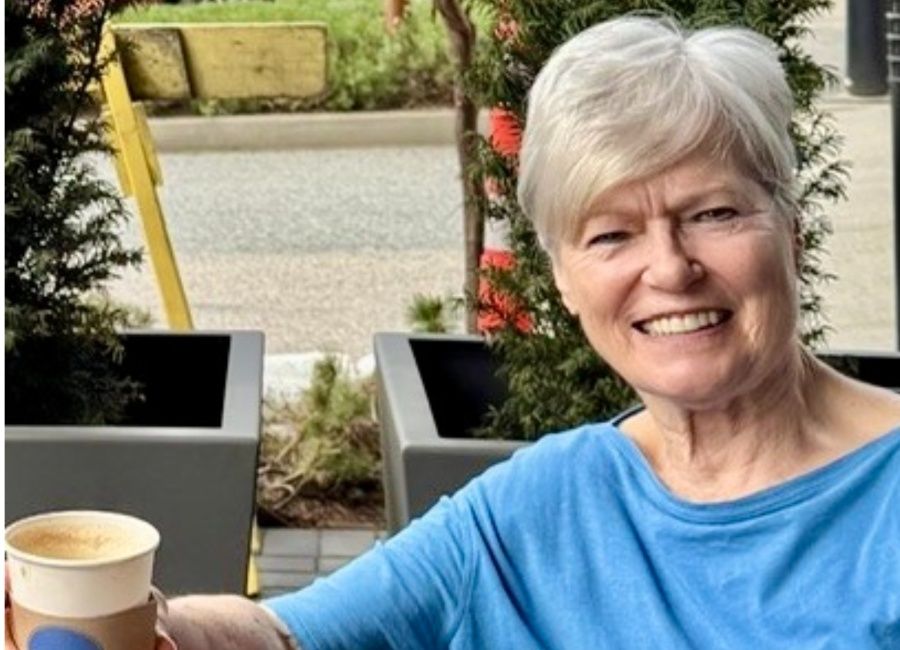
After exhausting the usual options — chiropractors, physiotherapists, massage, and eventually relying on pain medication she’d never wanted to take — Valerie decided enough was enough. Confronted with a three-year waiting list for surgery to fix her spinal stenosis, she knew she didn’t want to lose that time.
“If you don’t have your health, what good is money?” she says simply. “The cost of missing out on years of your life and wasting time and money on bandaid solutions was much higher for me.”
A search for private surgical options led her to Surgical Solutions Network. What followed surprised her at every turn. The intake process was clear and efficient. A private MRI was arranged quickly, with results sent directly to the clinic — no paperwork, no chasing. Within weeks, she was on a Zoom call with her surgeon, who walked her through her options, answered her questions, and put her at ease.
“He made me feel very comfortable,” she says. “Everything was so clear.”
The surgery — an L4/L5 laminotomy and discectomy — was booked soon after.
The Moment the Pain Was Gone
Because private surgical procedures cannot be performed in your home province under current regulations, Valerie and her husband flew from British Columbia to Toronto, where Surgical Solutions Network operates one of its surgical centres. The surgical centre exceeded her expectations at every level. From the front desk to the operating room, every staff member she encountered was professional and caring.
“From the minute I walked in, I felt welcomed,” she says. “Every single person I had any dealings with was absolutely wonderful.”
The morning of her surgery, the nursing team prepared her for the procedure, and her surgeon came by to speak with her once more. She was brought into the operating room, placed under anesthesia, and, in what felt like only a moment, opened her eyes in recovery. The pain was gone.
That same day, Valerie and her husband were walking through a shopping mall and sitting down for dinner. “I could suddenly walk and sit normally,” she says. “I couldn’t believe it.”
Back to the Full Life She Refused to Lose
Recovery required patience and discipline, and Valerie embraced both. She followed her post-operative instructions carefully, tracking her progress in a series of monthly YouTube video updates on her channel ValCard1 — a resource she created to help others better understand spinal stenosis surgery and recovery because she wished something like it had existed for her.
“Once the pain is in the rearview mirror, you forget about the experience,” she says. “I wanted people to see what the journey is like and hopefully feel confident to go for it. I’ve referred friends to Surgical Solutions Network and the videos are there for everyone to see.”
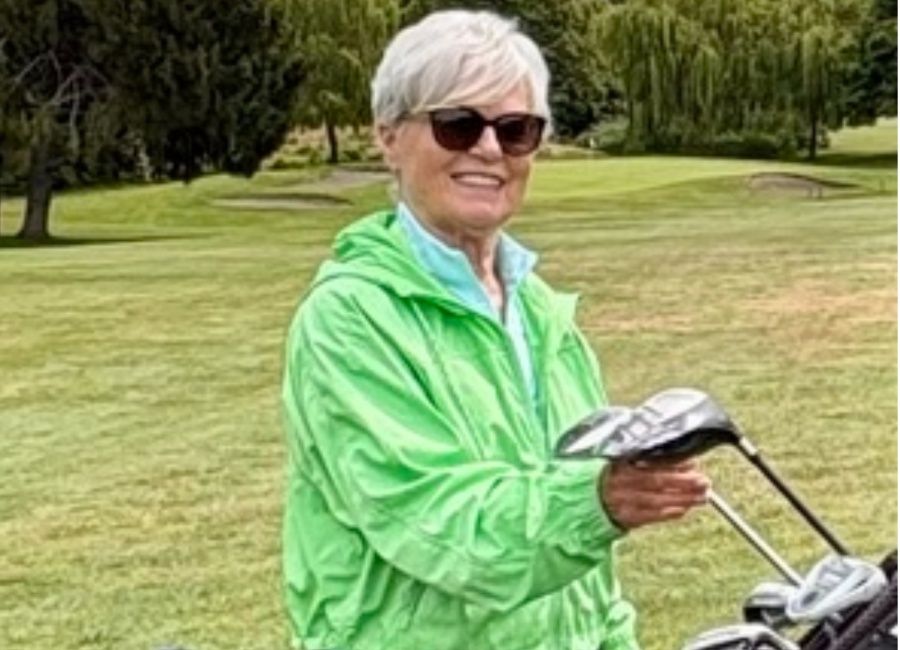
Ten months later, she’s back to everything she loves: cycling, weights, walking the dog, and visiting her grandchildren in North Vancouver.
“It just gave me back my life,” she says. “The ability to be as active as I was at 30.”
For anyone sitting on the fence, her message is direct: stop managing the pain and fix the problem. At 78, she’s living proof that it’s never too late to reclaim the life you love.