After speaking with U.S. President Donald Trump for the third time, Prime Minister Justin Trudeau announced on social media this afternoon that “proposed tariffs will be paused for at least 30 days while we work together” with the U.S. on an arrangement for further securing our shared border.
Trudeau noted that the strategy includes Canada “implementing our $1.3 billion border plan — reinforcing the border with new choppers, technology and personnel, enhanced coordination with our American partners, and increased resources to stop the flow of fentanyl.”
He added that, “Canada is making new commitments to appoint a Fentanyl Czar, we will list cartels as terrorists, ensure 24/7 eyes on the border, launch a Canada-U.S. Joint Strike Force to combat organized crime, fentanyl and money laundering. I have also signed a new intelligence directive on organized crime and fentanyl and we will be backing it with $200 million.”
Previously, Trump had warned that starting Feb. 3 the U.S. will begin imposing a 25 per cent tariff on all Canadian exports and a 10 per cent tariff on energy exports.
Trudeau responded immediately, noting that Canada will retaliate with tariffs of its own, including those on everyday items such as American bourbon, fruit juices, vegetables, perfume, clothing and shoes.
“As I’ve said before, if President Trump wants to usher in a new golden age for the United States, the better path is to partner with Canada, not to punish us,” the prime minister said in a public announcement directed to Americans on Feb. 1.
The article below, which explains the economic fallout of a prolonged tariff war, appeared in the Feb./March 2025 issue of Zoomer magazine.
As soon as Donald Trump won the U.S. presidential election in November, he began serving notice that Canada should no longer take its enduring alliance with the U.S. for granted. Posting on Truth Social, the tempestuous 78-year-old leader huffed that he would impose a 25-per-cent tariff on all exports from Canada and Mexico “until such time as Drugs, in particular Fentanyl, and all Illegal Aliens stop this Invasion of our Country!”
He followed this uppercase ultimatum with a series of posts, including an AI-generated image of him standing atop a snow-covered mountain peak (looking suspiciously like the Swiss Matterhorn), in front of an enormous Canadian flag; referred to Prime Minister Justin Trudeau as “Governor … of the Great State of Canada”; labelled former finance minister Chrystia Freeland “toxic;” threatened to use “economic force” to fix his country’s trade imbalance, and mused about annexing Canada.
Welcome to Trump 2.0 and the return of government by social media. Over the next four years, our political leaders will need to ignore all his noise and bluster and focus on the real issues – especially the brewing tariff war between the two countries that threatens Canada’s economy, not to mention our own pocketbooks.
Taxing Trade
Trump, as we know, loves imposing (or threatening to impose) tariffs. In 2018, he slapped a 25-per-cent levy on Canadian steel exports and 10 per cent on aluminum exports, claiming he was protecting U.S. manufacturing interests.
These border taxes act as a “powerful source of leverage that, when coupled with his unpredictable style, encourages other countries to swiftly make concessions,” wrote Ana Swanson in the New York Times. Plus, he can resort to this tactic at any time without congressional approval and regardless of the U.S.-Mexico-Canada Agreement, which he signed in 2020 to promote trade between the countries.
The menace that tariffs pose to Canada is amplified because “we’ve tied ourselves to the American economy and we don’t have alternatives,” explains Jack Mintz of Calgary’s School of Public Policy and the Macdonald-Laurier Institute.
Mintz says that 90 per cent of all Canadian products are sold to the U.S. – with crude oil and natural gas leading the way at $142 billion per year and automotive exports totalling $67 billion. We are also America’s largest foreign supplier of aluminum, steel and uranium. As the provincial and territorial premiers scrambled to come up with a united response to this emergency, Ontario leader Doug Ford warned that a 25-per-cent levy “would be devastating to workers and jobs in both Canada and the U.S.”
Economic Fallout
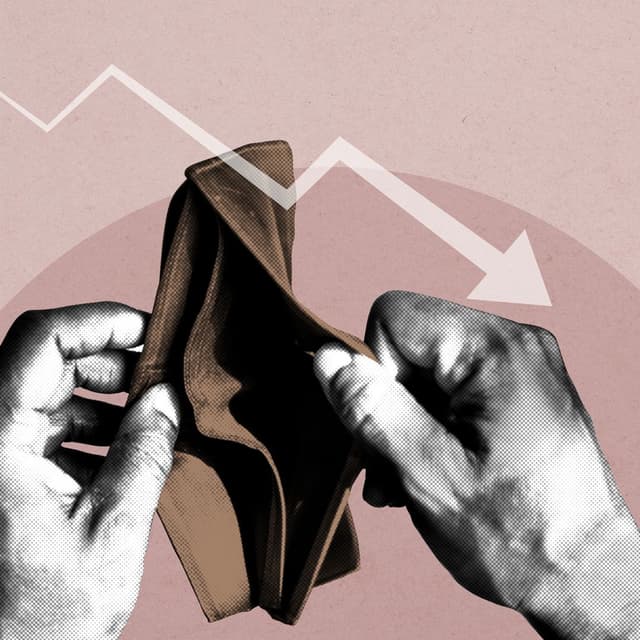
Just how devastating? A November 2024 study by the Canadian Chamber of Commerce predicted that a 25-per-cent tariff would shrink our GDP by 2.6 per cent (or roughly $78 billion), hitting our pocketbooks to the tune of $1,900 per person annually. The researchers concluded that Trump’s measures could push Canada’s economy into recession by the middle of 2025, which would mean lower corporate profits, job losses and a further weakening of our already fragile dollar.
Besides the economic fallout, the trade war could reduce the roughly 30 million border crossings we make to the U.S. each year, either on a day trip or for an extended stay. Some Canadians – including 64 per cent who responded to a recent poll on everythingzoomer.com – claim they will not travel to the U.S. while Trump is in power.
But Rudy Buttignol, president of CARP (a partner of ZoomerMedia), feels that we’ll travel stateside regardless of who’s in the White House. “We’re so integrated with the U.S. – whether it’s through business, family and friends or vacationing snowbirds,” he says. The larger issue for travellers, Buttignol maintains, is the brutal exchange rate on the Canadian dollar. Economists fear that our dollar’s value could sink even further if a prolonged trade war ensues. Shopping, accommodation or dining out south of the border could become an alarmingly expensive proposition.
Canada vs. Trump
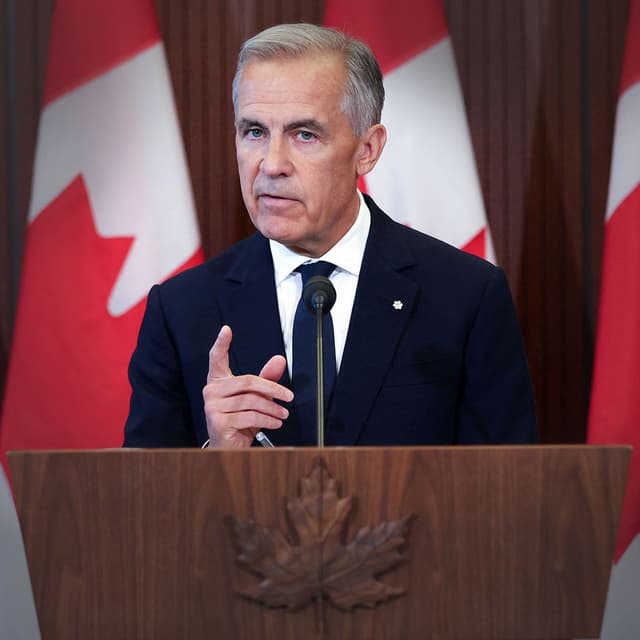
The prime minister responded to the first salvos in this trade war by racing down to Florida to parley with Trump, departing with a promise to tighten up our borders. But when Trudeau announced his resignation in early January, it seemed certain that Conservative leader Pierre Poilievre would be leading us into battle. At least it seemed that way until Mark Carney threw his hat into the ring for Liberal leadership. His experience as head of the Bank of Canada would come in handy in solving the trade dispute.
Mintz suggests that having a fresh face in Ottawa, especially a leader whose political philosophy is more in tune with Trump’s, might help defuse the acrimony that has festered between the two nations. He hearkens back to a previous generation’s trade dispute when Prime Minister Brian Mulroney developed a very good relationship with President Ronald Reagan, which helped bring about the first Canada-U.S. free-trade agreement in 1988.
Mintz feels Canada shouldn’t bow meekly to U.S. threats. Instead, our leaders should remind the White House of the huge economic advantages and prosperity that free trade has brought to North America – “this means creating fewer, not more barriers to trade.”
Premier Ford, who shares the same businessman-turned-populist leader career arc, suggests that instead of engaging in a punishing and unwinnable trade war, our two countries should instead act like allies and build “Fortress Am-Can,” a trade agreement that Ford says would create “the strongest and the richest, and the most prosperous two countries in the entire world.”
A version of this article appeared in the February/March 2025 issue with the headline “Border War”, p. 40.
RELATED:
As Prime Minister Justin Trudeau Resigns, Looking Back on His Track Record with Older Canadians
Strong and Free: How Regional Tensions and Changing Demographics Fuel Trump’s Annexation Threats