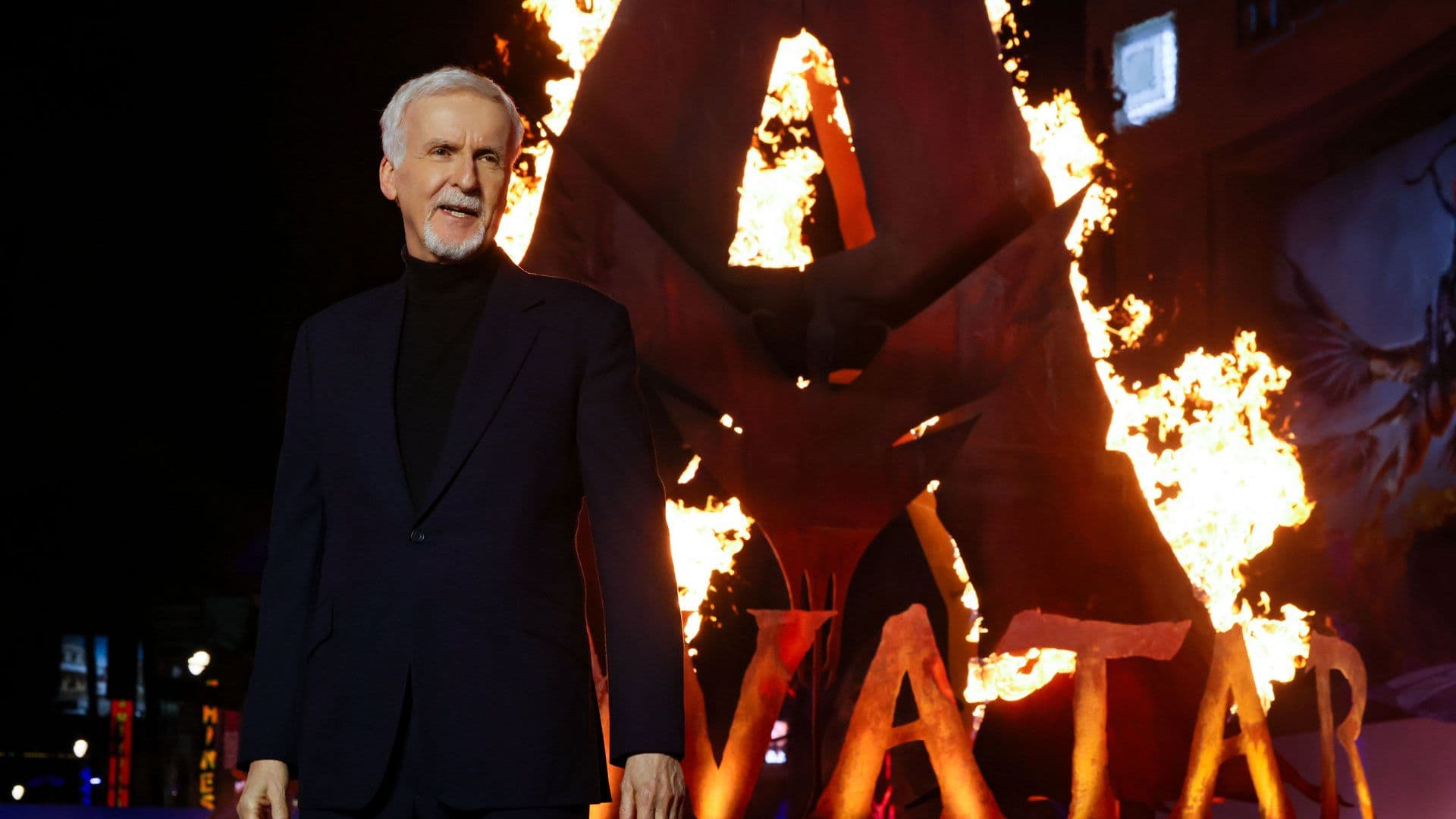
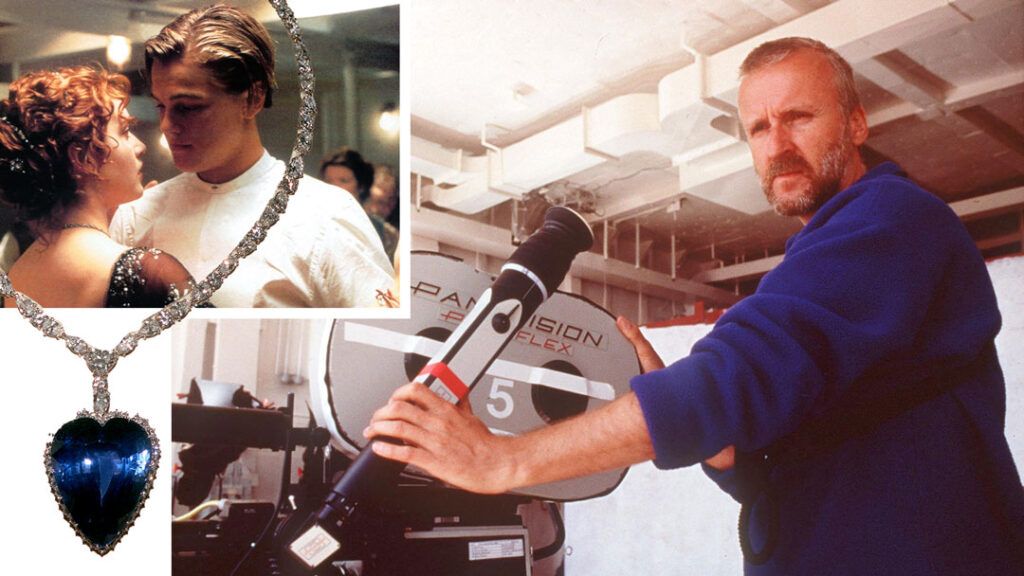
For decades, James Cameron has devoted his career to expanding the frontiers of blockbuster cinema and defying naysayers. Before Titanic (1997) smashed box-office records, the media piled on with gleeful predictions that the film would suffer the same fate as the ship. They scoffed at Cameron’s promise of a tech revolution that would bring 3D glasses back to movie theatres – until the stereoscopic spectacle of Avatar (2009) blew Titanic out of the water, grossing $2.9 billion worldwide. Avatar still holds that record. Then, after taking time off to pursue solo trips deeper into the ocean than anyone in history, exploring the Mariana Trench in his custom-built sub, Cameron resurfaced with Avatar: The Way of Water (2022), which owns third place in the all-time box office at $2.3 billion. And now, with the launch of Avatar: Fire and Ash, no matter what the critics think of it, they’ve learned it’s unwise to bet against James Cameron.
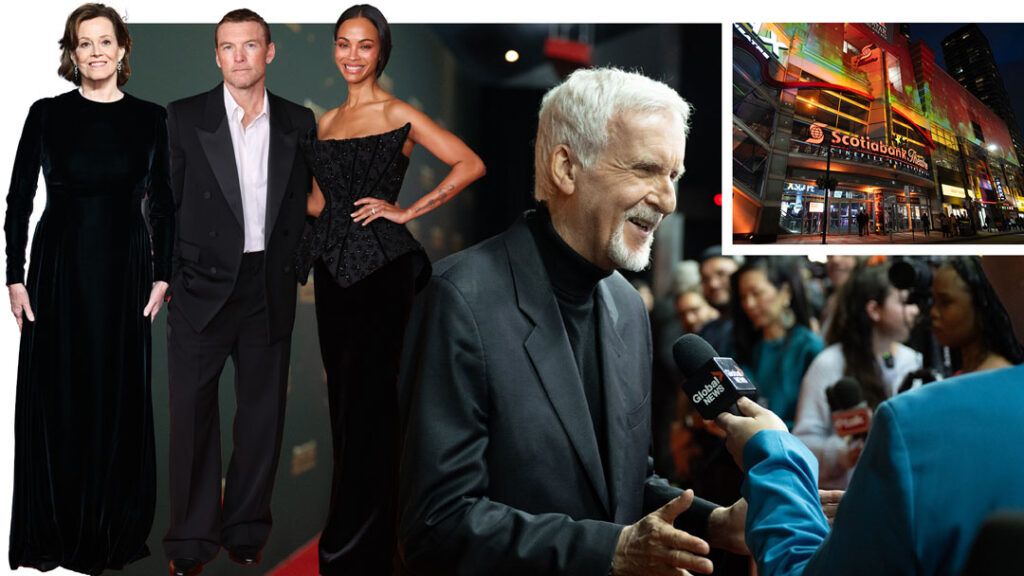
A day before the movie’s Dec. 19 opening, the 71-year-old Canadian director, who has lived and worked in New Zealand since 2012, touched down in Toronto, making his final stop on a global publicity tour. As a modern-day Leonardo da Vinci, an inventor and explorer fluent in vast areas of art, science and technology, Cameron can be a daunting interview subject. His reputation for flashes of tyranny on the set, as a director capable of doing everyone else’s job, is legendary. But since he blurted out, “I’m the king of the world” on winning the Oscar for Titanic, Sigourney Weaver, whose work with him has gone from Aliens (1986) to all three Avatar movies, suggests he has “mellowed” (though, in a recent New York Times interview, Cameron preferred to say he was “marinating”). As for his lack of hubris, in rebutting a comparison to Icarus flying too close to the sun, he said if he had designed them, “the wings would have worked.”
Before interviewing the director, I spoke with American actor Stephen Lang, 73, an Avatar veteran who plays the ferocious Colonel Quaritch, a transgenic human/Na’vi warrior. “Jim Cameron, he’s an alpha,” said Lang. “So when I come on, there are two alphas in the room, snapping at and circling each other. We get along just great. Sure, he’s capable of tyranny but that’s not who he is. I’ve been working with him since 2007, and [his] tendency to dominate in a way that could be considered despotic has really diminished. I don’t think Jim has anything to prove at this point to anyone. He’s sanguine about where he is.”
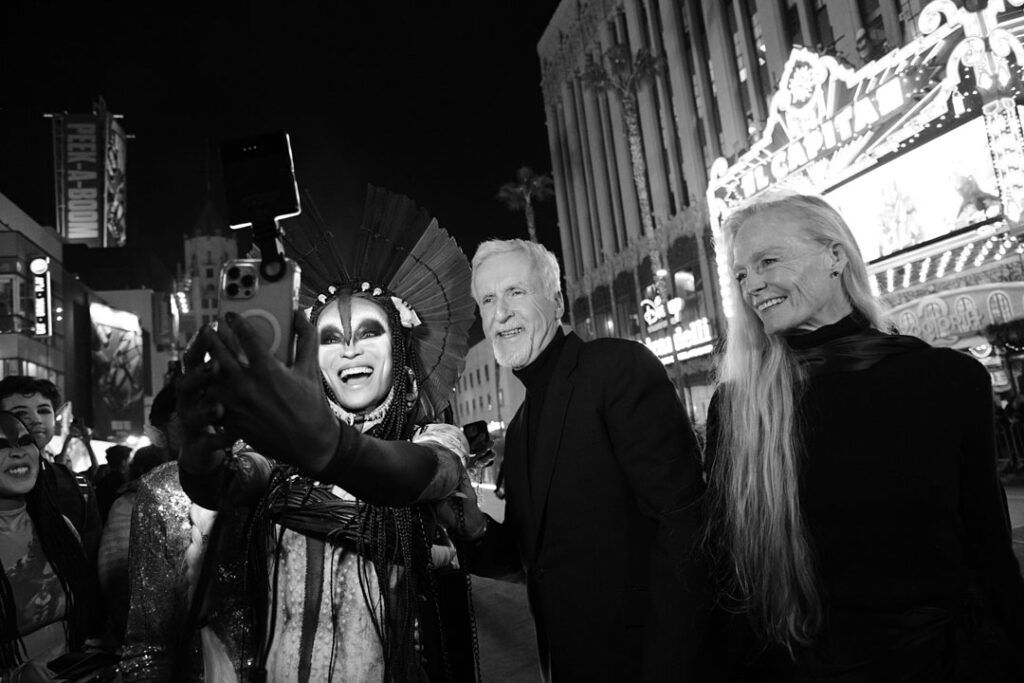
Cameron lives on a 1,500-hectare organic farm in New Zealand’s Wairarapa region with Suzi Amis Cameron, 63, his fifth wife – a former actress and model – who has been with him for 25 years. They are both vegans. He has five children: two daughters, a son and a stepson with Suzi, and a daughter with his ex-wife and Terminator star, Linda Hamilton. Born in Kapuskasing, Ont., he applied for U.S. citizenship in 2004, but withdrew his application after George W. Bush became president. This year, he became a citizen of New Zealand.
Before our interview, Disney reps prohibited any personal questions. But with Cameron, I get the sense that nothing is more personal than making movies. Here’s an edited version of our conversation.
ZOOMER: Hi, Jim. It’s been 16 years since we last spoke, when the first Avatar came out. Since then, you’ve been busy inventing new ways to blow our minds.
JAMES CAMERON: That’s our goal.
Z: Watching Avatar movies is like being on another planet – I don’t mean Pandora, but another planet of filmmaking, your own species of cinema. In New Zealand, you’re working halfway around the world, as far as you could possibly be from Hollywood. But you make the biggest Hollywood movies of all.
JC: Hollywood is a state of mind. You’re plugged into a global distribution system, and Hollywood’s not a place anymore. It hasn’t been for most of my career – especially since, between The Terminator in ’84 and Aliens in ’86, the international markets have really exploded. The Avatar films so far have made more than three quarters of their revenue internationally. So it’s incumbent upon me, in writing and conceiving these films, to think, “Alright, what can supersede language barriers, cultural barriers, religion, politics or all of those things, and connect with people around the world?” Which is why I settled on the idea of doing a family story, an intergenerational saga that follows this one particular family. Seems like it would work. And so far it has. We’ll see what happens with this film.

Z: Most sequel franchises are built on repetition. Yours seems built on reinvention.
JC: You do have to reprise and do callbacks so there’s a story continuity. And there’s a balance between what you expect and don’t expect, revealing new landscapes, new creatures, new cultures, that sort of thing. Fire and Ash introduces two completely disparate new, not-Na’vi cultures [the infernal Ash People who inhabit a charred wasteland, and the nomadic Wind Traders who sail Pandora on giant jellyfish-like airships]. But at the same time, we’re following the story of the Sully family, the surviving members. They’re at risk throughout this whole film, whether it’s an external jeopardy or an emotional jeopardy within the family.
Z: Here on Earth, we’re in constant jeopardy – at war within our species along lines of race, religion, class and gender, at war with nature and the animal kingdom. And now we’re beginning to mate with a species of our own creation: AI. On Pandora, you’ve taken “trans” to a whole new level. You have interspecies warfare, interspecies romance. The Na’vi aren’t preying on animals, they’re praying to them, when they’re not exchanging cosmic fluid plants. Do you envision this Pandoran world war as something happening on a remote planet of your imagination, or is it a vast metaphor for our own colonial strife?
JC: I think the answer is within the question, right? Obviously what science fiction and fantasy have always done so well is hold a mirror up to our existence and allow us to step outside of our day-to-day lives, and look back at ourselves through different eyes. And in this case, you know, the Na’vi are closely attuned to nature. In a sense, they are the representatives of nature in the story. So we’re looking at the human race through the eyes of nature and saying, “Hey, we’re basically killers. We’re basically a destructive force.” Now, I think we’re a lot more than that. And when we watch an Avatar film and relate to these characters, we’re seeing the better part of ourselves writ large, as well as the worst aspect of our of ourselves – selfish and intolerant – writ large. I think everybody knows where to root. But this film was the first time that we actually confused things a little bit by introducing Verang and the Ash People, and they’re kind of scary but they’re cool.
Z: Between Oona Chapin’s Varang [a volcano-dwelling fire witch] Stephen Lang’s Quaritch, you’ve got two incredibly seductive villains. To me, they’re the most fun characters in the film.
JC: There’s a relish on the part of the actors. They’re not just chewing the scenery, they’re inhaling it. But in a good way. I tried to take as many risks as I thought I could get away with and still justify the vast budget.
Z: What were the biggest risks?
JC: Well, I’m dealing with teen suicide, with racism, with interracial marriage and mixed-race children not fitting into their community. And I’m jumping off my protagonist to follow the bad guy [Quaritch] on his journey. Not equally, but he certainly gets a lot of screentime. That can be risky, though I think that risk paid off.
Z: I love the way you navigate the elements. Here you play with volcanic fire. And with The Way of Water – no one has filmed actors performing underwater on that level. You have spent so much of your life exploring the deep. It’s been said that if aliens are already here, the logical place for them to hide out would be in oceans, the least explored part of the planet.
JC: I made that movie. It’s called The Abyss.
Z: Ha! But when you look at a jellyfish or an octopus, what do you believe in …
JC: When it comes to extraterrestrials? .
Z: Yeah.
JC: The thing I believe in more than anything else is science. And that which can be observed, analyzed, published and peer-reviewed. To me, there’s no compelling evidence that we are being visited or have been visited. Show me one thing, any piece of technology that can’t be accounted for by the human presence here. I think that the emergence of consciousness here is a miracle. And I don’t mean that in a religious way. I mean, it’s the most astonishing thing. It’s our job to be carriers of the flame of consciousness into the future. And whether that means cohabiting with AI or not, we’ll figure that part out. I don’t see the need for extraterrestrials. As a science fiction writer, I love the idea of it, but you’ve got to prove it to me. And when you said jellyfish and octopus, were you saying, “Well, we’ve got these weird creatures …”
Z: And mushrooms. Living things that seem to operate on different level.
JC: I believe in the imagination of nature, by which I mean selection.
Z: It doesn’t have to be imported.
JC: It doesn’t. All the aliens are already here, and they probably emerged here. But we can’t prove that there wasn’t some panspermia that came in from the outside.
Z: Some what?
JC: “Panspermia” is the term for life forms that got ejected by asteroid collisions and float around, and then enter a different biosphere and then flourish there. We could be from Mars. Who knows? In the sense that four billion years ago, an asteroid could have knocked some microbes that emerged on Mars first and then wound up here.
Z: In terms of other dimensions, you led the 3D revolution in cinema with the first Avatar movie. And you turned the flat screen into a kind of aquarium. In action blockbusters, 3D was all the rage for a while, and now you seem to be one of the last filmmakers still using it.
JC: The problem is, it has evolved in the wrong direction, to conversion [from 2D footage]. And conversion is an inferior form of stereo. But I just shot Billie Eilish in 3D – four concerts in Manchester, two concerts in Phoenix. I think there’s going to be a resurgence of interest in 3D, but it has to do with the next generation of AR, VR and XR glasses, which hasn’t dropped yet. They are going to be very lightweight with gorgeous stereo.
Z: Well, I have to admit, I hadn’t seen a 3D movie in quite some time, but when I watched the Avatar, after a few minutes, I was no longer conscious of the fact that I was watching 3D.
JC: The second you’re realizing it’s a 3D movie, because something is poking at you, you’ve broken the fourth wall. We do a kind of very integrated and narrative-centric use of 3D. It also has to be very smooth and not generate eyestrain. It’s taken 25 years to really perfect that art. Me and my team know how to do that now. I’m happy to share that with anybody else who wants to work in native 3D. But it’s not like filmmakers come banging on my door.
Z: To me, one of the only filmmakers whose work seems akin to yours in some way is another Canadian, Denis Villeneuve.
JC: The Dune films are spectacular. I’m a big admirer of his science fiction storytelling, the two Dune films and Arrival. Amazing work. But these are the kind of films – like Avatar, these big science fiction films – that could become dinosaurs. We could be on the cusp of that fading away into a level of mediocrity caused by streaming. Pulling eyeballs. They spent a lot of money to pull a lot of eyeballs and change habit patterns. A lot of it was a loss leader to get filmmakers to move into that medium with the promise of cinematic-level filmmaking. But those budgets are hard to come by these days, so there’s a bait-and-switch tactic. Meanwhile, it has significantly hurt the cinema experience. We’ve got lost revenue on the cinema side. We’ve got lower budgets on the streaming side. Where do those films exist?
Z: One final question. Your life has taken you from Kapuskasing to Hollywood . . .
JC: From Kapuskasing, to Chippawa in the Niagara Falls area, to Orange County, then to Hollywood!
Z: And then to New Zealand. Does a national culture of any kind play a role in your art?
JC: I think my choice of New Zealand has very much to do with my upbringing here in Ontario. I see a lot of commonality between the landscape, the natural flora, fauna, the kind of agricultural, rural background here in Ontario. Because I spent a lot of time on my grandfather’s farm in the Orangeville area. And also the quality of people. Canadians are all different, just like everybody, but there’s a bit more of a premium on decency and values. And I see that also in New Zealand. I was drawn to there not for the landscapes, but for the technical capability down there. We have great technical capability here as well. But it was specifically the company Wētā Digital, where we spent a lot of money to develop the facial pipeline to do the Avatar films.
Z: Welcome back.
JC: [Laughing] I’m only back for 24 hours.