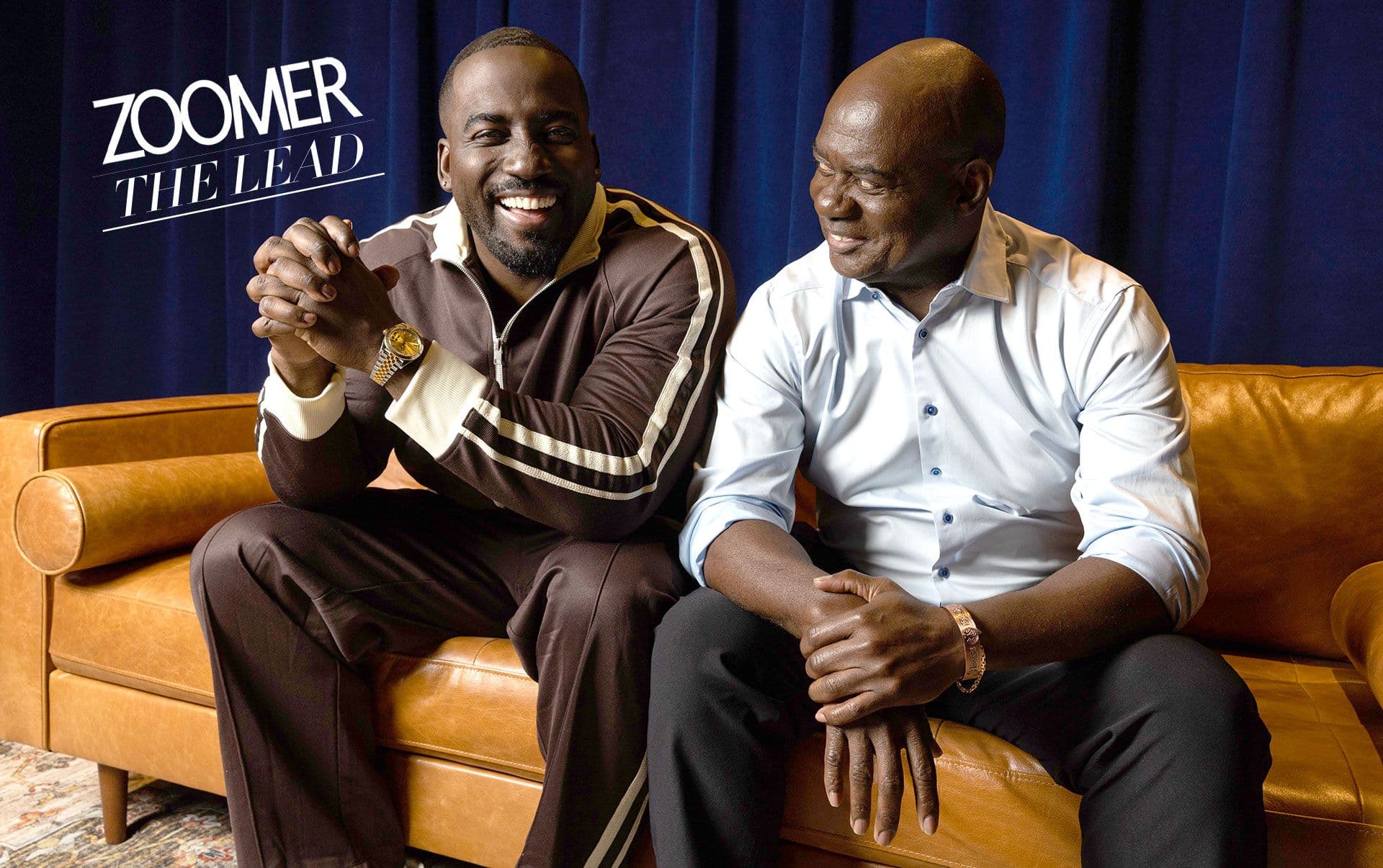
The current golden era of sports documentaries began with the pandemic. Every major sport was on hiatus. The world was stuck at home. And Netflix debuted The Last Dance, promising (and this would become a theme) unaired footage, never-before-told stories and exclusive access to Michael Jordan and members of his legendary Chicago Bulls teams.
Six years later, we’ve become familiar with the tropes: archival footage set to tension-building piano and strings. A main character, seated alone in a nice chair in a sparse room, saying something extremely serious. The Last Dance may have brought this format to the larger populace, and Netflix and other streamers have built on its success with dozens of glossy imitations, but its core is a storytelling form that has been around for decades. It is, one might imagine, the perfect, deadly serious format for the deeply serious story of Ben Johnson, champion “Canadian” sprinter turned disgraced “Jamaican” athlete after he tested positive for steroids at the 1988 Olympic Games in Seoul. And the Johnson story, Hate The Player, that’s set to debut on March 26 on GameTV and March 27 on Paramount+ is … not that. Not at all. It is the opposite of that.
First, the six-episode fictionalized series, which stars Scarborough native Shamier Anderson as Scarborough Olympian Johnson, is a comedy. In fact, it’s a sketch-comedy send-up of that earnestly serious format that we’re all familiar with. And while it’s best described as a mockumentary series, it’s one that Johnson tells me actually, truthfully represents “the real story, that no one knows.”
“This show is based on Ben Johnson’s version of events,” intones the series’ onscreen “lawyer” Walter F. Essanpee, played by legendary Kids In The Hall alum Mark McKinney. “Which in no way are we saying is the actual truth.”
“It’s A truth, sure! Ben’s. But THE truth? Who knows.”
Or as an opening title card says: “This is a heightened and theatrical take on Ben Johnson’s story. His version of events. If things don’t jibe with your recollection, it is what it is. Go make your own show.”
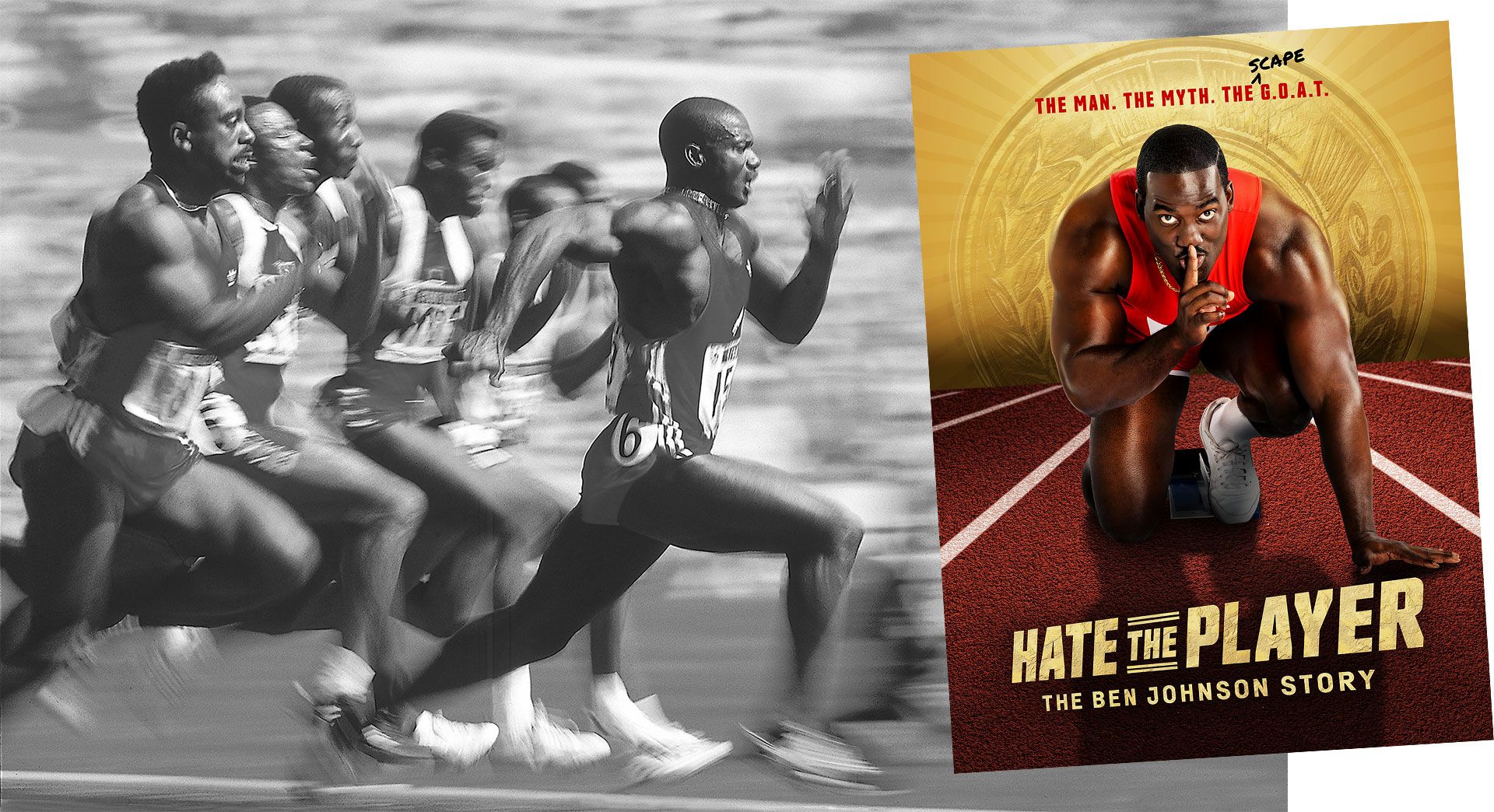
Somehow, this approach makes Hate The Player both funnier and arguably more revelatory than the modern hagiographic documentaries its format is mocking. Unlike The Last Dance, which relied heavily on Jordan’s willing participation and bent its storylines in pursuit of pleasing its star while claiming to present an objective viewpoint, Hate The Player acknowledges its bias from the get-go, and needs nobody’s consent but Johnson’s. Well, his and a real-world legal team, which was tasked with ensuring the show doesn’t actually step over the line when, say, it proudly and gleefully portrays Johnson’s real-life rival and nine-time U.S. Olympic gold medalist Carl Lewis – played by Canadian-American Internet comedian Andrew Bachelor (also known as King Bach) – as the biggest, most self-absorbed jerk to ever lace up a pair of sneakers.
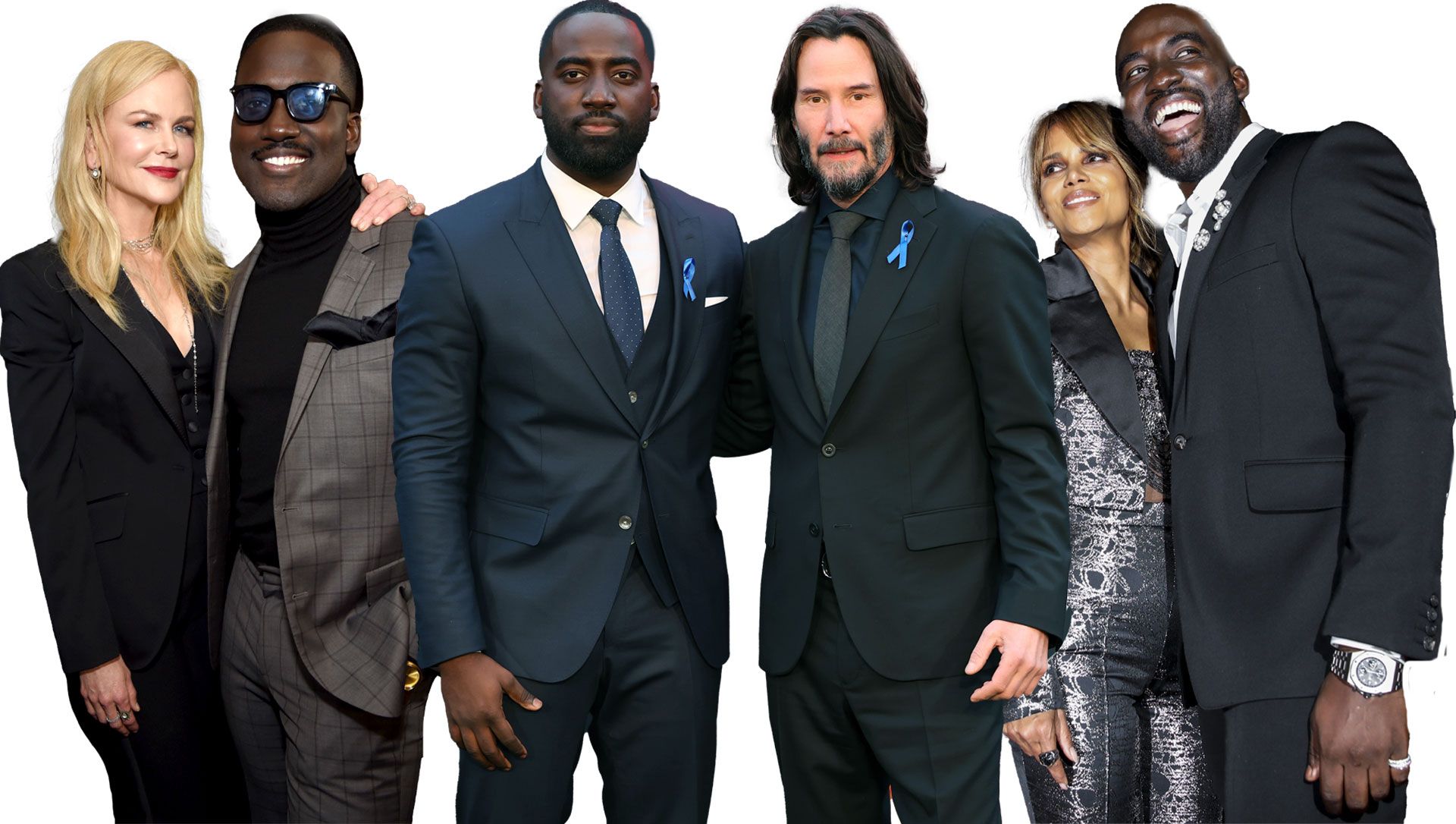
For Anderson, whose Hollywood credits include John Wick 4 (opposite Keanu Reeves) and Tin Soldier (alongside Jamie Foxx and Robert De Niro), Hate the Player’s comedic approach to an incredibly important Canadian story is “a chocolate-covered vitamin.” Most of Hate the Player follows the predictable sports doc format: Anderson as Johnson in a comfy chair, telling his story to the camera; but those scenes are interspersed – not with piano-laden sports highlights – but absurd, over-the-top dramatic reenactments of key moments in Johnson’s rise and fall by an ensemble cast that features some of Canada’s best television talent.
For instance, early in the series, Johnson’s mother (played by Law and Order: Toronto’s Karen Robinson) gives her pleading son permission to finally chase his track-and-field dreams … then immediately proceeds to spirit heal a broken toaster. And yes, there are a lot of ridiculous shots of needles going into bums – especially Carl Lewis’s.
Executive Producer Mark Montefiore, whose production house, New Metric Media, is best known for the Canadian hayseed hockey culture satire Letterkenny (co-created by Jacob Tierney of Heated Rivalry fame) had been interested in putting Johnson’s story on the screen since reading a series of articles on Johnson’s story and post-Olympics life written by then-Toronto Star reporter Mary Ormsby. This project, say Montefiore and Anderson (who is also an executive producer on the series), has existed for years, in many different forms, and was almost abandoned during the pandemic – until taking on its current shape and tone, thanks to a riotous script from Canadian comedian and screenwriter Anthony Q. Farrell (The Office and Little Mosque on the Prairie).
Early on, Anderson knew that no matter the format, he was on board. “I told them, ‘You had me at Ben Johnson,’” he says, laughing. “I was so excited about the possibility of playing this man.” It tracks that Anderson would jump at portraying such an important figure in Canadian sporting history. Alongside his brother, fellow actor Stephan James – who has also played a sprinter, Jesse Owens, in Race, and was the star of the Oscar-nominated If Beale Street Could Talk – Anderson founded The Black Academy in 2020, an organization dedicated to increasing Black presence in the Canadian screen industry, as well as showcasing Black achievement to the rest of Canada. Telling these kinds of stories, about a legend of his own community – and shot in Scarborough, no less – really matters to Anderson.
But as honoured and excited as he was to secure the role, the actor was actually less than eager to meet Johnson right away. “I got the job officially six weeks before filming. During that time, I was on hiatus and not working. And I wasn’t in the best shape,” Anderson says, grinning sheepishly, “and so I did not want to meet Ben in my schlubby state. It was very important that I at least got to the gym, got my body in order and my mind in order before sitting down with Ben.”
Anderson ended up not meeting the man himself until just 48 hours before the cameras rolled. “I didn’t want to clog my process. It was important for me to meet with him, but not to interview him.” The two eventually had dinner at Anderson’s house, and the vibe was natural. “It felt like having dinner with my uncle,” he remembers. “We didn’t talk about business. We barely spoke about the show. It was ‘What’s your favourite food? What’s your favourite music?’ We were just vibing.”
Anderson wants to make one more point, though, about that dinner. “The first thing he said to me was, ‘Wow, man! You’re big! You look good!’ And I was, like, ‘Thank goodness!’ Because I know if he’d met me prior to that he’d be like, ‘Oh no, why did we cast him?!’”
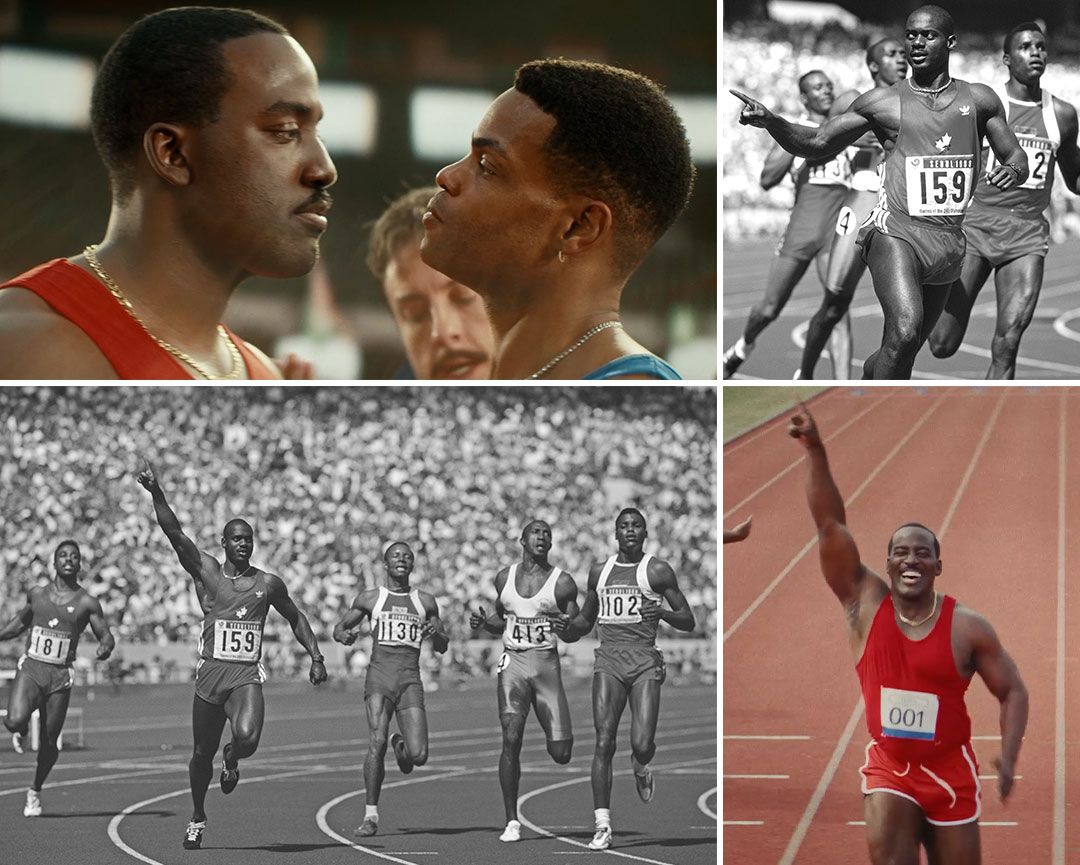
These days, Anderson even channels Johnson’s confidence. “Anthony [the screenwriter] said there’s nobody else he could imagine playing this role. And you know what? Most times you’re bashful, like, ‘Oh, no…’,” he says. “But for this one, there is nobody else. Because I’m the only guy from Scarborough who’s Jamaican that can play this man as an actor, and I believe that in my heart.”
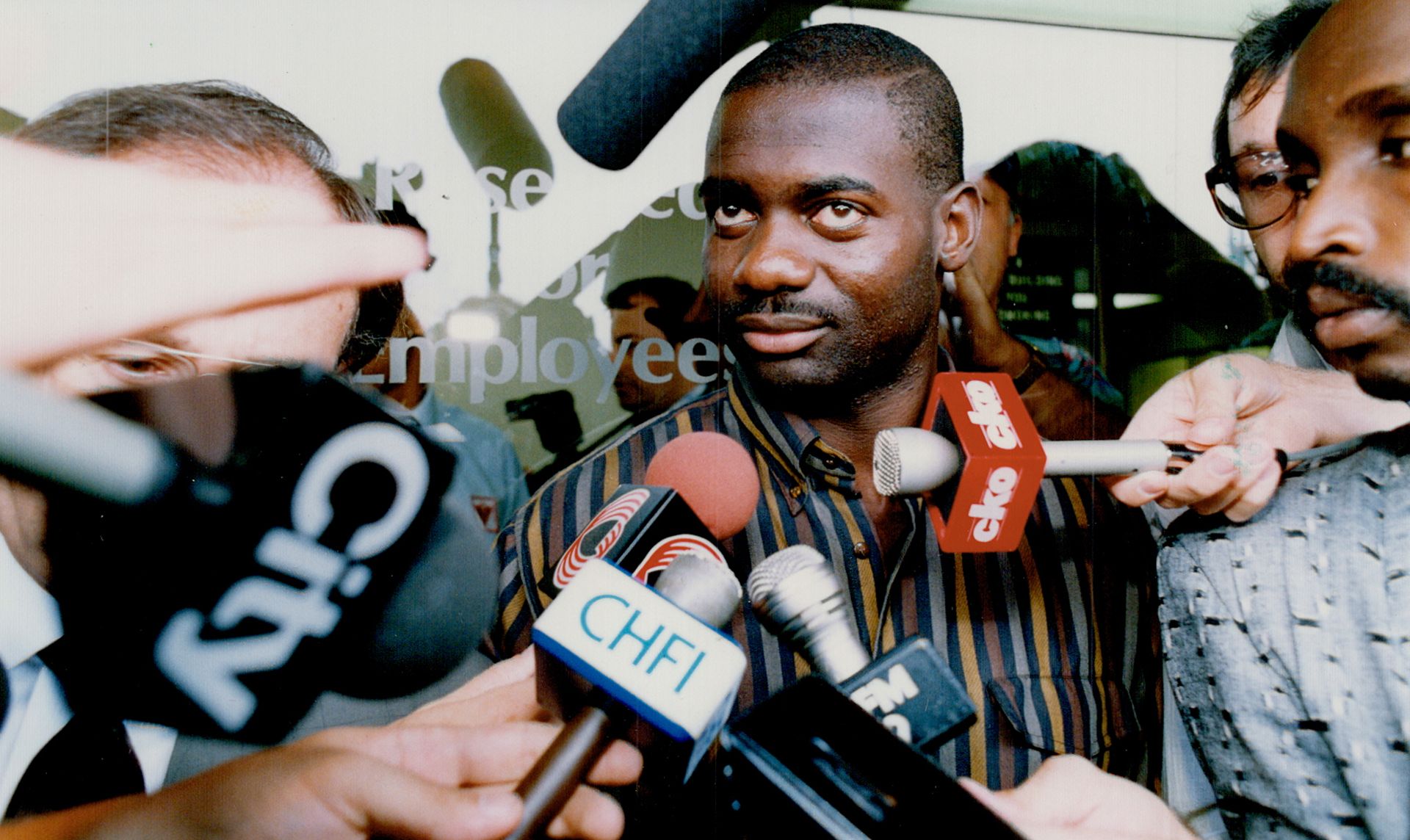
In that Toronto suburb, everyone noticed the way that first the press, and then much of the rest of the country, turned on Johnson in the aftermath of that infamous 100 m race when the medal was removed from his neck. And the racism implied by that sudden shift is one of many serious themes underpinning Hate The Player. “In my community, he’s always been the man and the myth. And the GOAT, quite frankly,” Anderson says. “He’s always been a hero in my household, a winner in my household, and a victim in my household, and I want to be clear about that.”
But you don’t need to be from Scarborough, or be Jamaican, to understand why making Johnson the scapegoat of that Olympic scandal still stings. It’s been called the “dirtiest race in history,” in both books and prior documentaries. And in the end, six of the eight sprinters who ran (including Lewis, who was awarded Johnson’s gold medal) had their careers marred by positive tests.
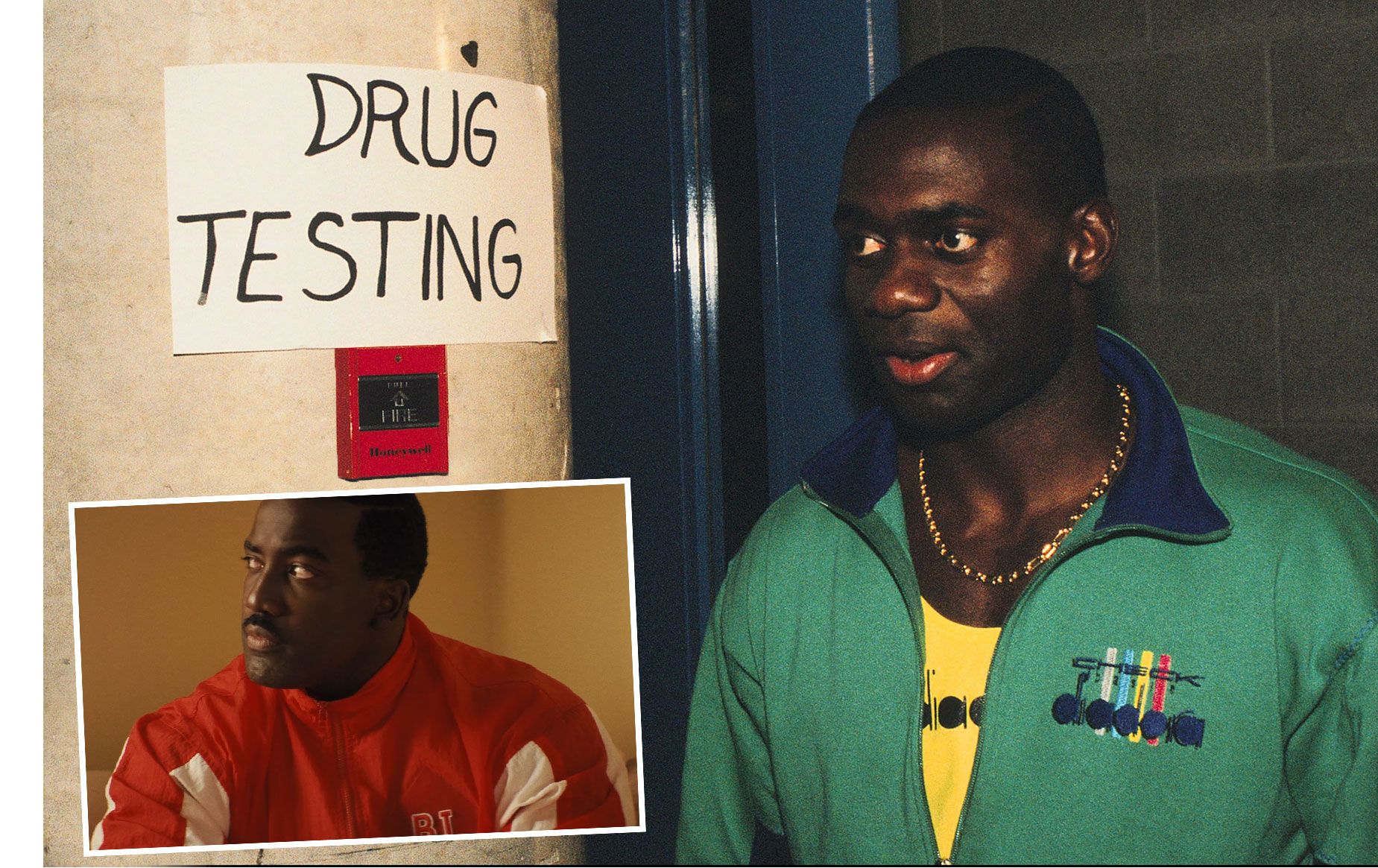
The rise and fall of Johnson cast early light on some of the themes that would come to dominate conversation about sports in the coming decades, which is why that moment in history still resonates almost 40 years later.
The most obvious was the harbinger of the Steroid Era, which athletes like Johnson felt pressure to use – not necessarily to dominate, but simply to give themselves a chance to keep up with their peers, many of whom were also using.
But that pressure wasn’t confined to individual athletes. The Canadian track program, like most Canadian athletic programs in the 1980s, was chronically underfunded, trying to chase down the Americans on a shoestring budget. The further they fell behind, the less chance of funding they had.
Meanwhile, money was pouring into the sport as companies like Adidas and Nike were ramping up their marketing – but the cash was only for winners, predominantly big-name U.S. stars like Lewis.
The system heading into the 1988 Games was deeply flawed, rigged to push even the most moral athletes toward synthetic improvement. As Ice-T put it, “Don’t hate the playa, hate the game.” But in Johnson’s case, it was the player who paid the price, and he’s grateful for the chance to finally make that point.
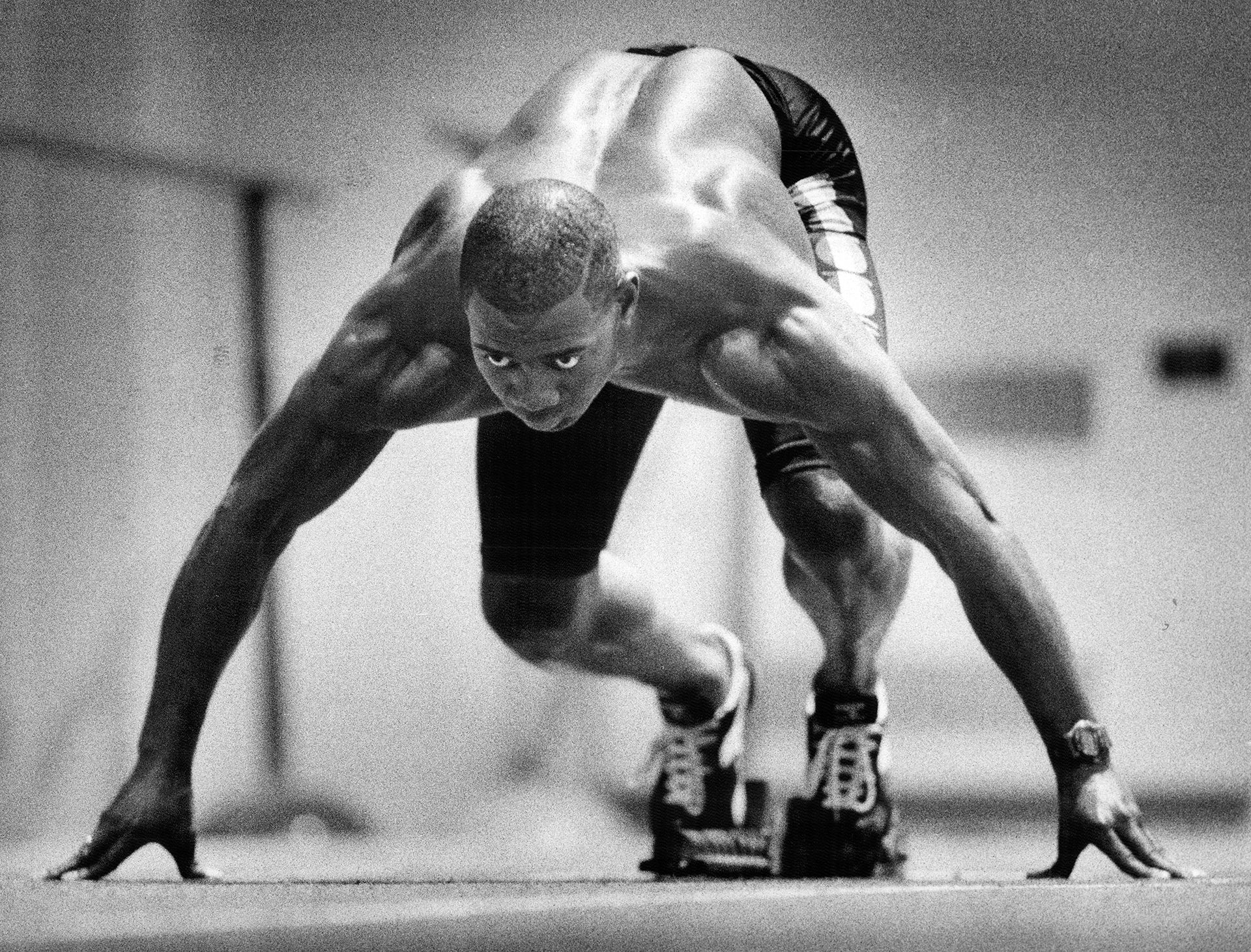
While Johnson says he was laughing reading the scripts and cracking up on set, he feels the series does get across what he experienced – and the feelings he’s been sitting with for almost four decades. For example, Hate the Player takes great pains to remind viewers that while Lewis never tested positive for steroids, he did, in fact, test positive for banned stimulants. Of Bachelor’s portrayal of Lewis, who taunts Johnson at every turn, calling him “sprint bitch” and launching the rivalry that eventually drives the Canadian to take banned substances out of desperation, Johnson says: “It was the right way, the way he is is the way he’s portrayed, I think it was great.
“The story has been told. But now it’s being told in the right way. This is what I lived. This is what happened to me.”