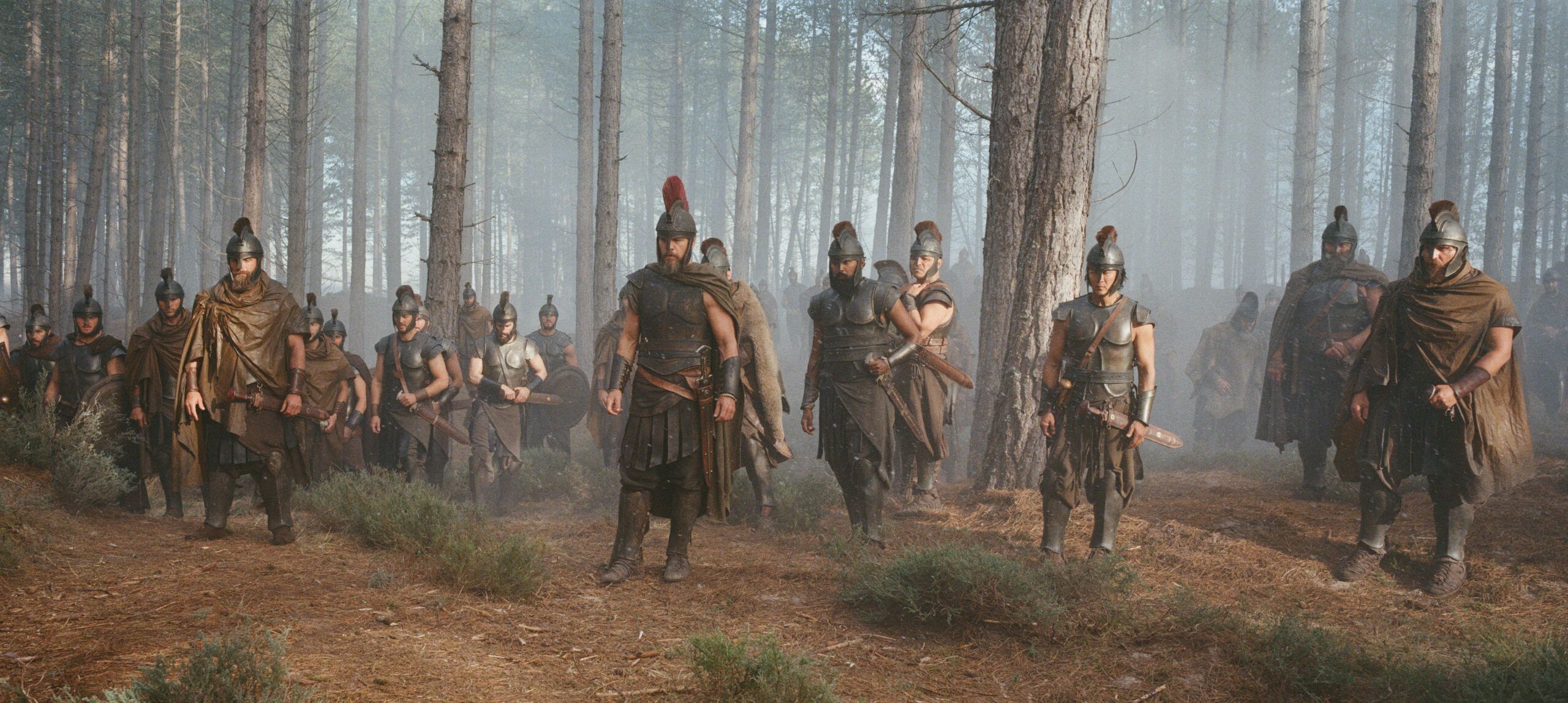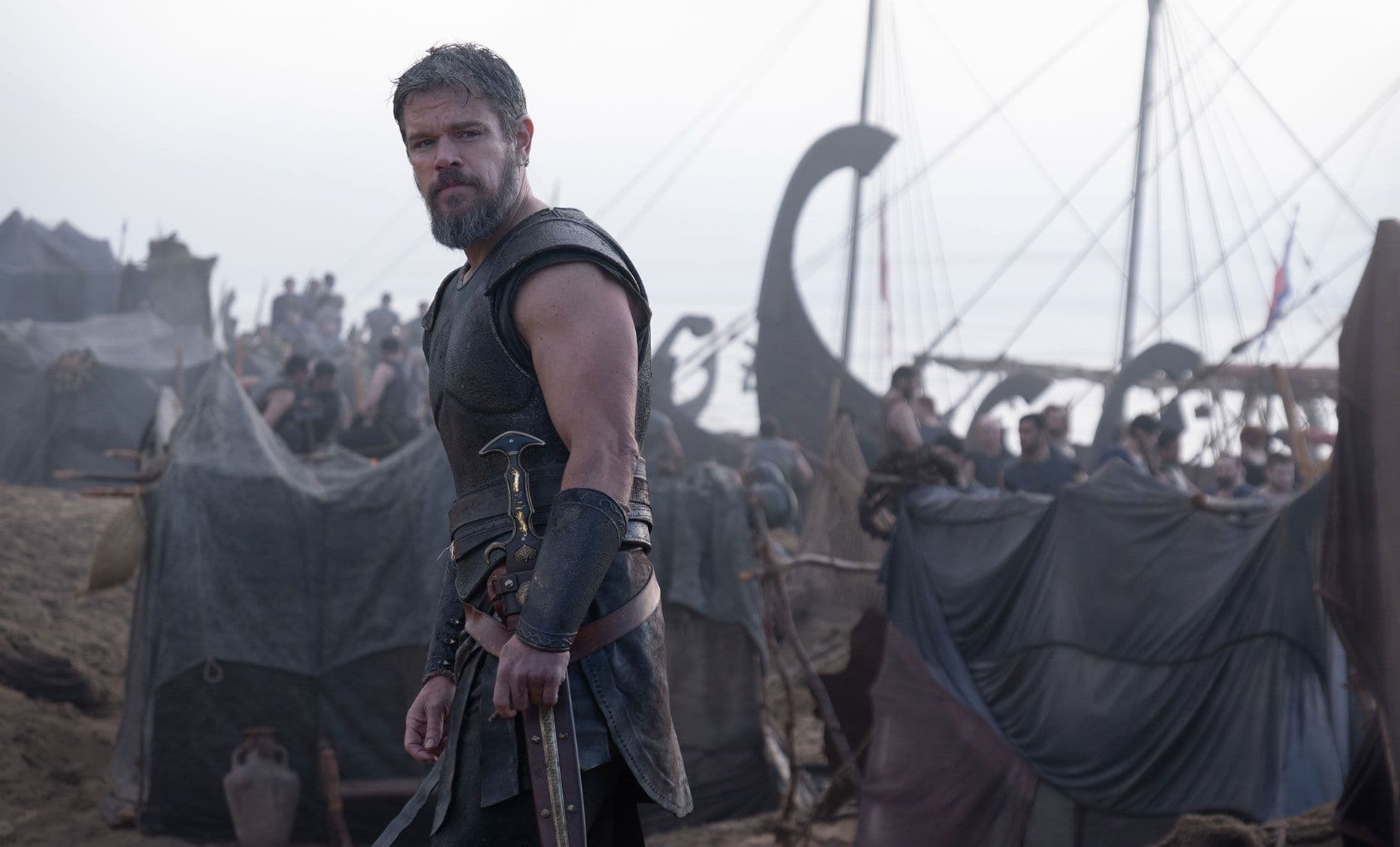
Tell me about a complicated man . . .
tell the old story for our modern times
Find the beginning.
—The opening lines of Emily Wilson’s translation of The Odyssey
Odysseus didn’t seem all that complicated. Not when I first encountered him as a chubby kid growing up in a Toronto suburb during the ’50s. I’d bike down to the Smoke Shop in Etobicoke’s Humbertown Plaza and pick up the latest Classics Illustrated comic book of The Odyssey, along with the new Superman and Batman. They were all he-men. But Ulysses, as Odysseus was called in the comics, didn’t have a cape or a mask. He was more like Tarzan, half naked much of the time. Then I met the real deal in grade school, in an abridged version of Homer’s Odyssey that read like a comic book without the pictures. I remember being intrigued by the frequent scenes of the hero being bathed and rubbed down with olive oil by some goddess after a hard day at sea. And when I turned 17, as a literary challenge to a budding writer, my older brother gave me a copy of James Joyce’s Ulysses, which spun threads of The Odyssey into a day-in-the-life maze about a Jew roaming through Dublin. Now that guy was complicated.
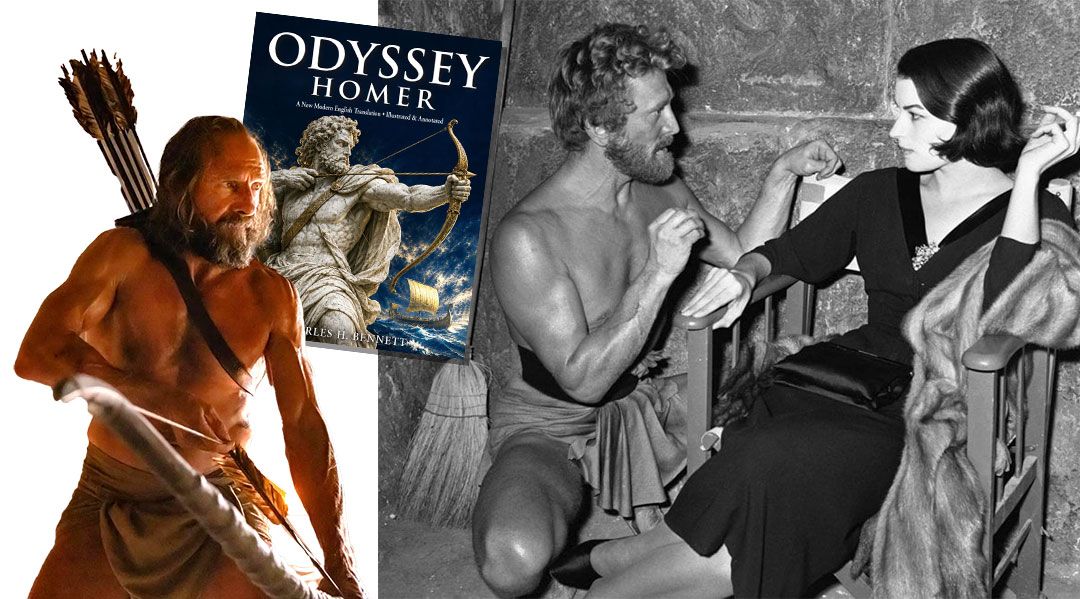
And when you come down to it, so is Homer’s Odyssey. This epic poem that churns through 12,109 six-beat lines of dactylic hexameter verse is the foundational text of Western literature. It’s 3,000 years old. And Odysseus, or Ulysses as the Romans called him, is our OG superhero, and anti-hero. But until now, he’s had a hard time making Hollywood’s A-list. Over the past half century, screen adaptations of Homer’s saga have come and gone, from Ulysses (1954), a badly dubbed Italian coproduction starring Kirk Douglas, to a 1989 episode of The Simpsons that had Homer doh’ing his way through Homer. And most recently, Ralph Fiennes starred as a severely spartan Odysseus in The Return (2024), which skipped his actual 20-year odyssey and began with him being washed up on shores of Ithaca. Despite bravura acting by Fiennes as we’ve never seen him before, gym-pumped and frontally nude, it failed to make a splash. Meanwhile, a legion of Odyssey-adjacent gods have been re-engineered by the mills of the Marvel Universe, but never the man himself.
It’s puzzling why Hollywood has taken so long to come up with a blockbuster adaptation. But now Christopher Nolan has stepped up to the plate with the biggest swing of his phenomenal career – an old-school studio epic with a cast of thousands, a running time of almost three hours, a budget of US$250 million and an estimated $175 million for marketing it to everyone on the planet with a pulse. The movie, which opens July 17, could not be more keenly anticipated.
I was certainly pumped when the lights went down at a preview screening a few days ago. Nolan is not one to deliver empty spectacle. He always brings a moral agenda to his movies, and an artistic vision. There’s no other director, aside from Canadian auteur Denis Villeneuve (Dune), who can fuse a commercial blockbuster with a pioneering adventure in the art of cinema. And after the alchemy of Nolan’s Oppenheimer (2023), which turned a dry nuclear physics lesson into gold at the box office and the Oscars, there was no telling what he might do with one of the richest, most action-packed morality tales ever written. And for the director, who also wrote the script, it was a passion project. “The Odyssey underpins almost all of cinema,” he says in the production notes. “It’s certainly there in every movie I’ve ever made, to a degree I never before realized.”
For Nolan and his star, Matt Damon, who are both 55, the high-seas ordeal of making the movie became personal. The Odyssey is after all a mid-life crisis story of a man who is literally adrift, haunted by years of battle, waylaid by monsters and thrown off course by irresistible women as he yearns for his wife and a son he’s never met. He’s the original road warrior, a prodigal father who returns from a foreign war to purge a palace overrun by a corrupt gang of suitors. And what could be more timely for an America hijacked by the House of Trump – and for a Hollywood where every action hero now bears the burden of restoring pride, honour and profitability to a cinema desecrated by billionaire oligarchs?
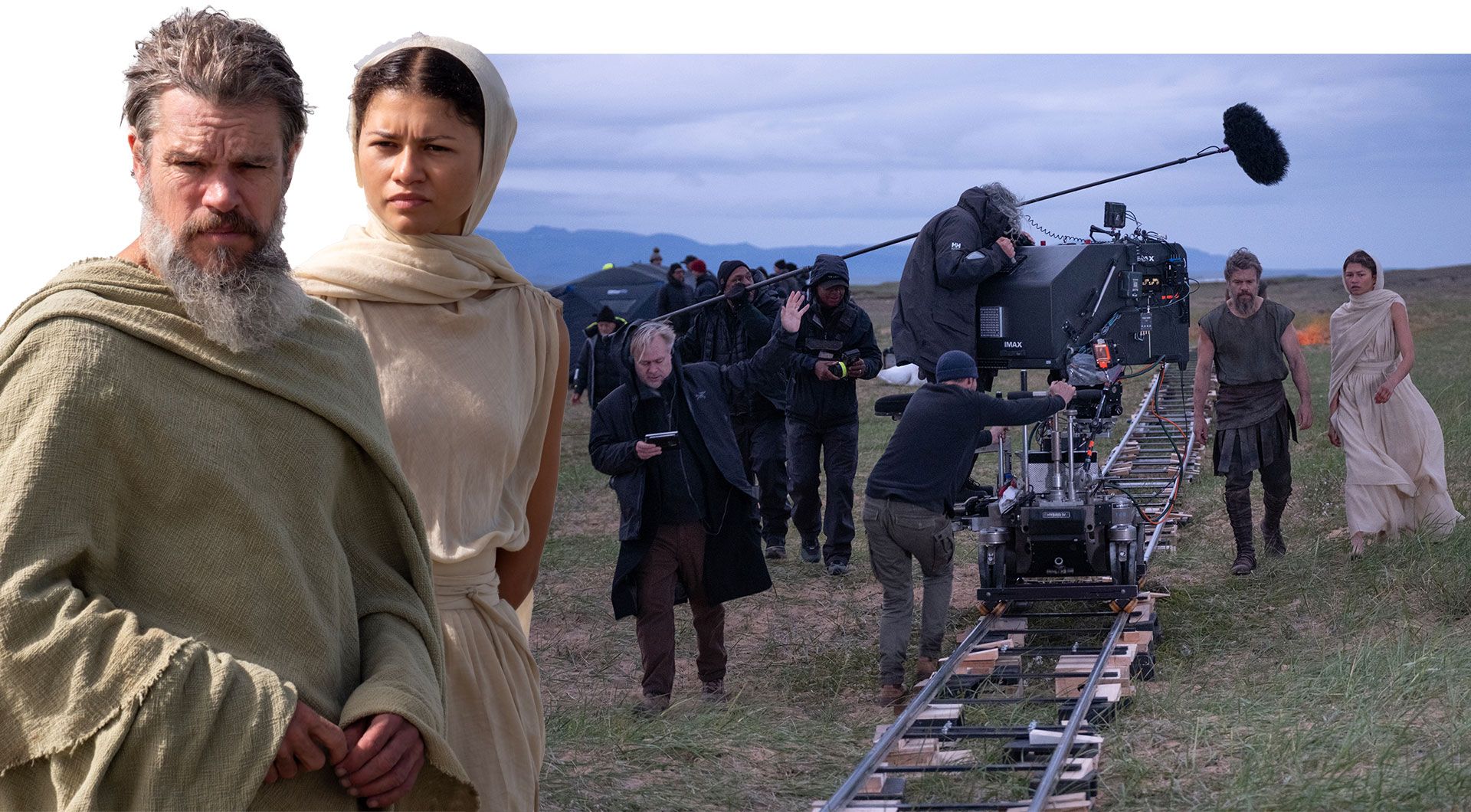
The Odyssey does not disappoint. With spectacular visuals from stem to stern, a strong cast, riveting action scenes and a symphonic narrative that wends its way toward an exhilarating finale. And it amounts to a magisterial feat of cinema, a world-building epic that far outweighs Oppenheimer. Nolan may have built a vessel bent on reviving a classic era of sword-and-sandal epics like Ben-Hur (1959) and Spartacus (1960), but he takes the genre to a whole new level, with a profound relevance to the world we live in.
Before even seeing the movie, Elon Musk condemned Nolan for “desecrating” The Odyssey by casting Lupita Nyong’o as Helen of Troy as a “woke” ploy to win Oscars, saying that Helen was a blue-eyed blonde, not Black, and that “not one person on the planet” would buy Nyong’o as “the most beautiful woman in the world.” He also piled onto right-wing outrage over transgender actor Elliot Page playing the Greek soldier Sinon. But if the MAGA crowd actually sees the movie, identity politics may be the least of their concerns. The whole thematic thrust of the drama comes down to a blistering attack on xenophobia – that to violate the law of Zeus and turn away a stranger, a foreigner from a far shore, is an unforgivable crime. Which speaks directly to the current wave of anti-immigration sentiment.
“Tell the old story for our modern times” – those opening lines written so long ago, as phrased by Emily Wilson in her wonderfully fresh and lucid 2018 translation, could have been Nolan’s marching orders. And the director has said that he was inspired by Wilson’s contemporary approach to Homer’s language. The British director abandons the standard practice of dignifying ancient Greeks with English or European accents. Everyone in the movie speaks American. Even the movie’s English stars – Tom Holland (Telemachus), Robert Pattinson (Antonius), and Samantha Morton (Circe) – don’t use English accents. In fact, Holland’s clipped vernacular sounds more like Tony Soprano than Sophocles. That takes a bit of getting used to. But at least everyone is on the same page and in the moment, acting with a conviction that feels wholly natural.
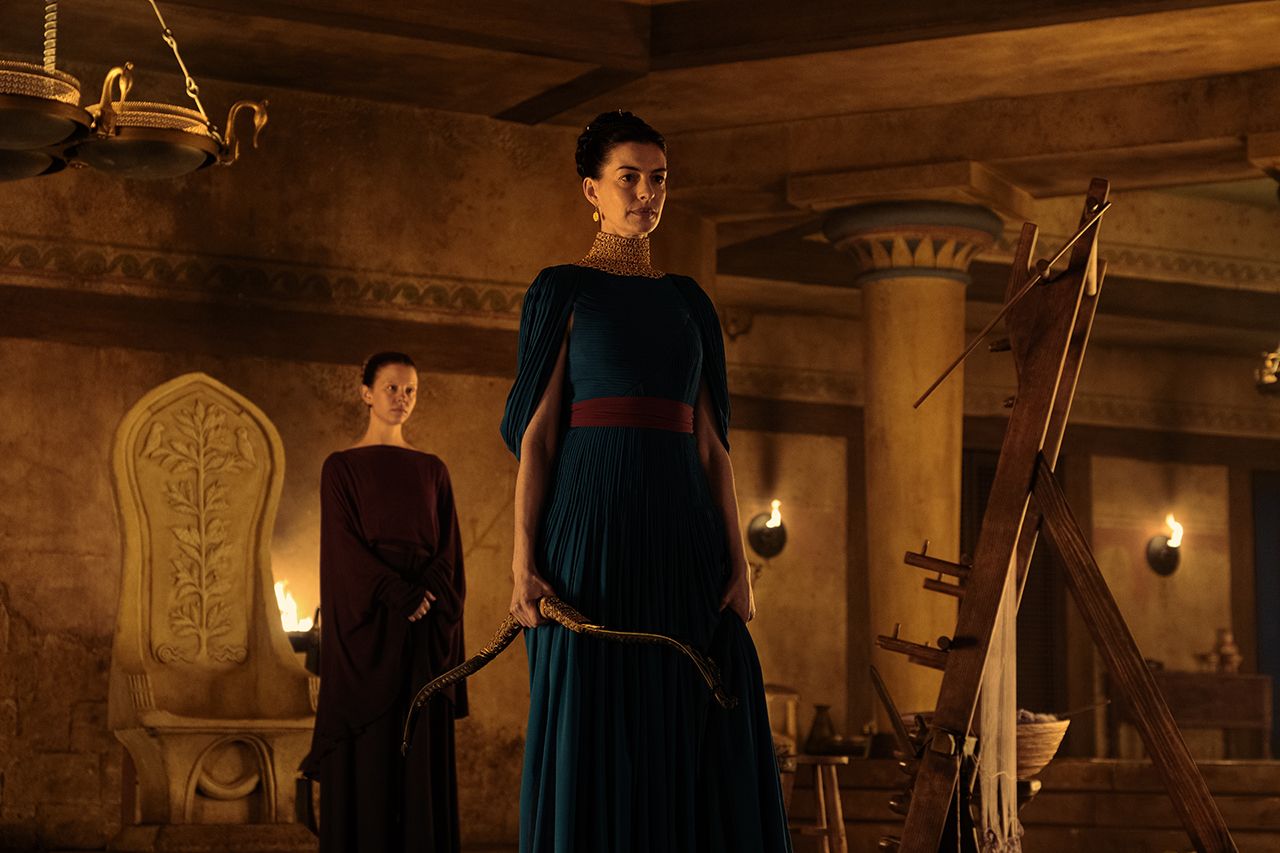
There’s a slew of Oscar-calibre performances. Damon deftly underplays his role as a wily combatant reluctant to reveal himself. Anne Hathaway swings between ferocious resentment and enduring devotion as Penelope, our hero’s long-suffering wife. A barely recognizable John Leguizamo is eerily mesmerizing as his loyal swineherd (made blind by Nolan as an homage to Homer). Pattinson gives evil a razor’s edge as the conspirator Antonius. And Morton is blithely terrifying as Circe, the witch who turns Odysseus’s men into pigs with her bare hands in a scene worthy of David Cronenberg.
I have a few caveats. Penelope and Circe are the strongest women we’ve seen from a director who’s often criticized for his neglecting female characters. But among the all-star cast, Zendaya and Charlize Theron are squandered as Athena and Calypso. They are both honoured with the prestige “and” billing at the end of the top-line credits reserved for big names in underwritten roles. As goddesses, they both look divine, but they’re reduced to bystanders. Homer portrays Athena as a lively, shape-shifting sprite who moves heaven and earth to protect Odysseus. But Zendaya’s Athena just sulks by his side as a doleful apparition, her brows knitted in a fixed glare of concern. And Theron’s Calypso, who kept Odysseus opiated on lotus flowers for seven years while promising him immortality, seems equally flat as his rejected lover.
Nolan’s Odyssey is a distinctly secular vision that doesn’t seem to have room for actual gods. It’s as if the deities exist only in people’s heads. Zeus occasionally intrudes as a coincidental rumble of thunder. But it could just be . . . thunder. Given the level of naturalism that Nolan has worked so hard to create, the gods’ invisibility is hardly surprising. Odysseus’s wooden vessel is a real ship, with a mix of actors and professional sailors manning the oars on location in Greece, Morocco and Iceland, often in heavy winds and high seas.
Even the fabric of the images is physical. Shot entirely on film, The Odyssey is the first dramatic feature shot on IMAX, using a bespoke arsenal of new IMAX cameras that weigh 135 kg apiece. Nolan even worked to avoid CGI visual effects in creating the monsters. His Cyclops, a 20-metre giant with one twisted eye and a sideways nose, is a construction of animatronics and puppetry finessed with computer graphics.
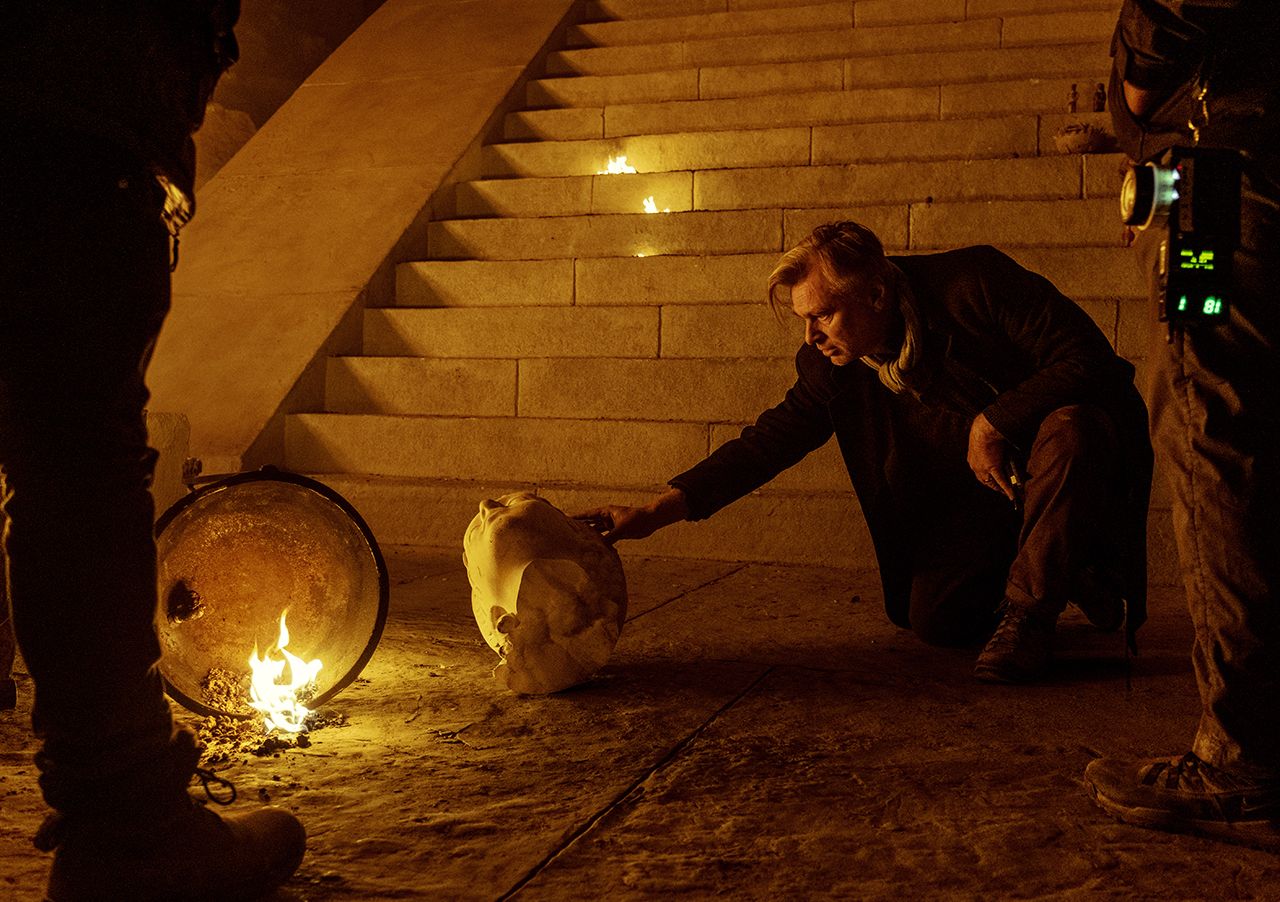
It seems you can make The Odyssey without gods, but not without monsters. And no matter how you do it, a giant one-eyed cannibal and a hydra-headed sea monster can throw our suspension of disbelief off kilter. At times, I couldn’t help but be reminded of the stop-motion monsters designed by special-effects master Ray Harryhausen in the Odyssey-adjacent movies of my childhood, such as The 7th Voyage of Sinbad (1957) and Jason and the Argonauts (1963). But maybe that’s the point. Given how Nolan has expressed his admiration for Harryhausen, they could be seen as a playful homage. As the director serves up a Vegas buffet of Homer’s greatest hits, from Circe and the Sirens to Scylla and Charybdis, his completist odyssey can start to feel as exhausting as his protagonist’s. Following every whipsaw twist of Homer’s storm-tossed plot, he weaves a wildly non-linear voyage riddled with flashbacks. Every episode seems like its own movie.
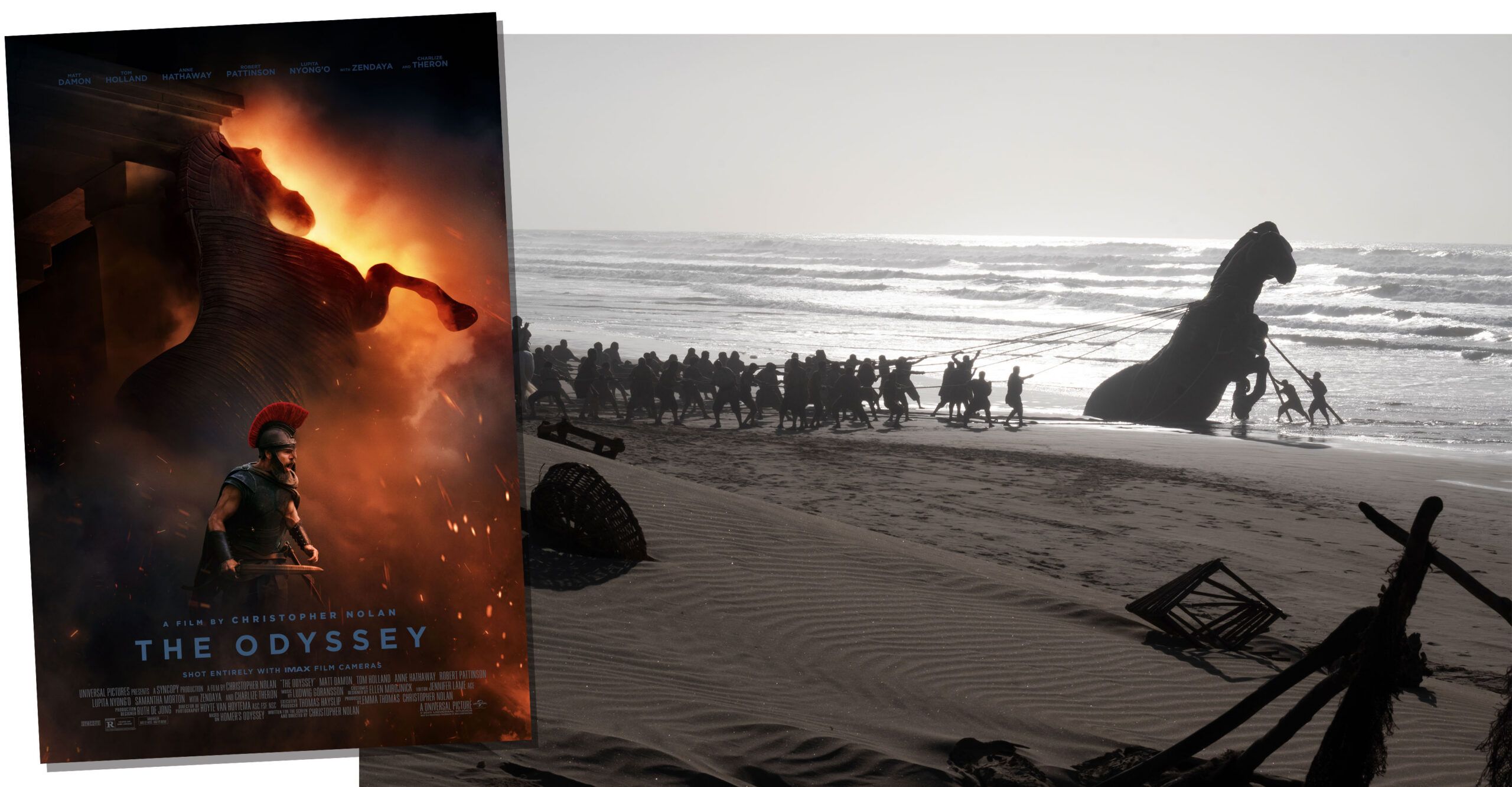
But like his voyager, Nolan beat the odds and brings his roiling narrative home with a flight of breathtaking drama. While the middle of the story is at sea, in every sense, the beginning and the end are sublimely grounded. And that’s all because Nolan chose to anchor his narrative, at the beginning and the end, with something almost completely absent from Homer’s Odyssey, the tale of the Trojan Horse – which is only alluded to in the poem and is fully told in Virgil’s Aeneid, written some 700 years later. Nolan’s version is not the usual horse on wheels. It’s a 10-metre steed rearing up on its hind legs. The movie opens with a stark image of it half-submerged in the sands of a desolate beach, a tower of live bait. The Trojans haul the buried treasure into their city. And in the dead of night, the Greeks slide down ropes from its belly in silence like commandos from a helicopter, and begin slitting throats. It’s like a scene out of a James Bond film.
As the final act is strung on a piano wire of pure suspense, Odysseus, in effect, becomes a spy, a king infiltrating his own house, cloaked as a beggar in rags. He’s a one-man Trojan Horse, a stealth weapon homing in for the kill. Penelope is also undercover, watching his climactic showdown with the suitors from behind a latticed screen, which is incredibly effective. As in The Return, the climactic scene of Odysseus stringing his bow is electrifying. But what surprised me is the emotional undertow that breaks the surface as he reunites with Penelope, and how Nolan weaves in flashbacks to the Trojan Horse and the carnage at Troy with tableaux reminiscent of Nolan’s Dunkirk. And Damon’s Odysseus finally cracks, revealing himself as a broken man, a war veteran haunted by the barbarity of his acts, of his civilization. And as love mingles with blood and thunder, with cathartic clarity we realize that this odyssey of a complicated man who finds his way home is so much more than another action movie, or period saga. It is who we are at this moment in time.