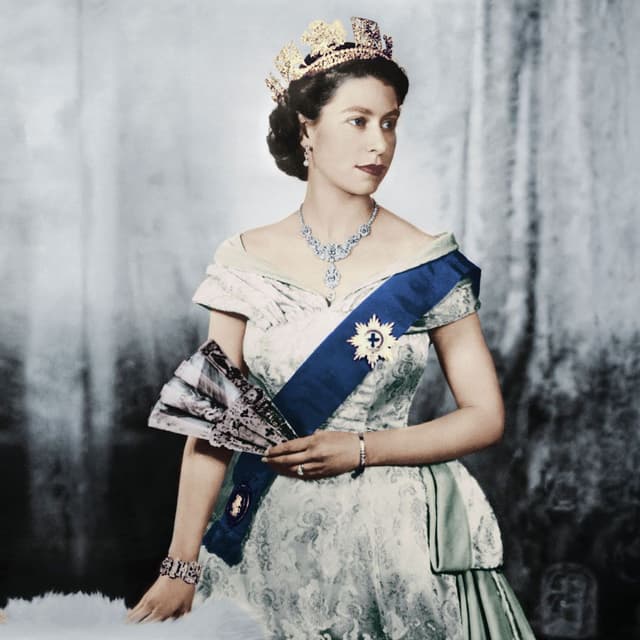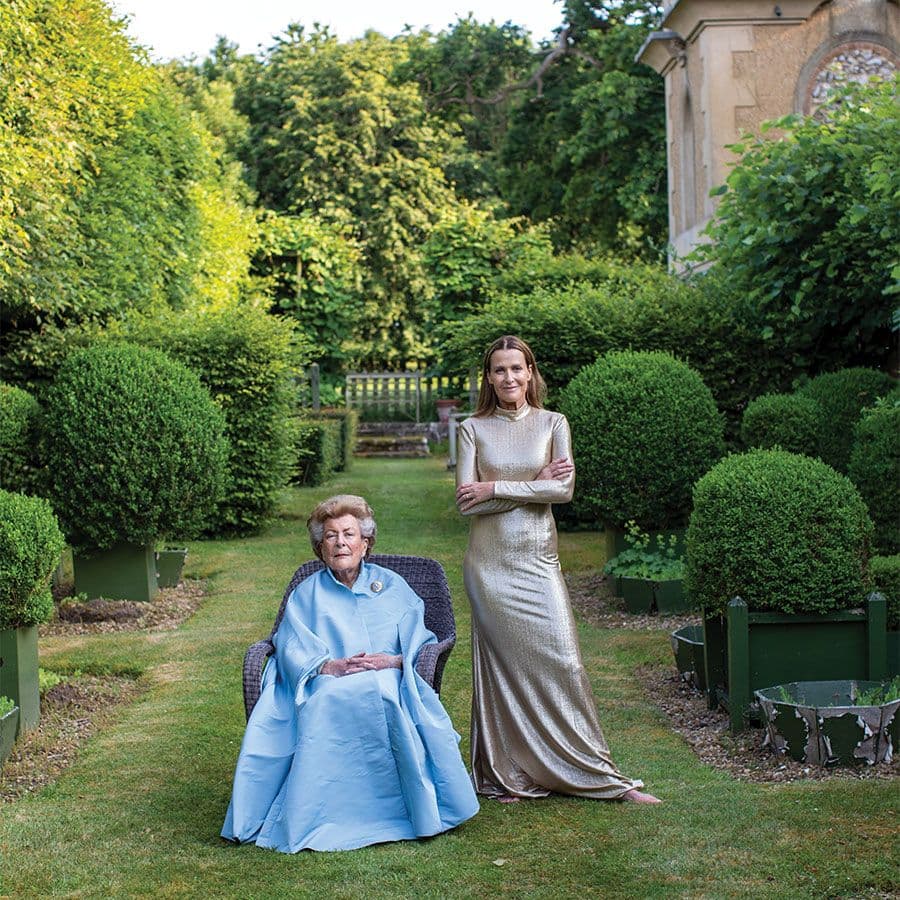
I don’t think my mother’s ever laid a table in her life,” laughs India Hicks, talking about the aristocratic subject of her latest book, Lady Pamela. “But she was a brilliant hostess, because she knew exactly how to invite and mix an interesting table.” It’s a classic British understatement. Lady P., as Hicks calls her mother, was perfectly positioned to create sparkling guest lists, given she was a lady-in-waiting to Queen Elizabeth II (her third cousin), the daughter of Lord Mountbatten (India’s last viceroy) and the wife of England’s most famous interior designer, David Hicks. Lady Pamela, who was 17 when she moved to India with her family, maintained close ties with Princess Elizabeth. She was by her cousin’s side in 1952 when Princess Elizabeth learned her father, George VI, had died and she would become Queen – later accompanying her, on her first Commonwealth tour as Queen, to 11 countries including Jamaica, Panama, Fiji, Tonga, Australia, New Zealand, Libya, Malta and Gibraltar.
“My mother would run a house impeccably, so the guests felt very at ease and comfortable, but really she was happier to be out of the spotlight, sitting on a sofa, riding a horse or walking a dachshund,” India says in a Zoom video interview from America Farm, her Oxfordshire home about 82 kilometres west of London. “She wasn’t really interested in the social scene at all; she felt slightly obliged to do it when she had to host for my grandfather, and certainly my own father was a social whirlwind.”
David was not an obvious choice for Lady Pamela. She was expected to marry a duke, at the very least, and he hadn’t even attended Eton. “I call it an unorthodox marriage,” says Hicks, who was named after the country where her grandfather, as the King’s representative, oversaw independence from British rule in 1947 and the partition of India and Pakistan. Lady Pamela witnessed the birth of a nation and immersed herself in the multicultural environment. “When [she] came back to England, she was slightly depressed and couldn’t relate to her contemporaries who’d all been focusing on who they’re going to marry, which duke and which estate they’re going to be running.”

Then she met David, a stockbroker’s son, who was good-looking, great fun and saw life very differently, given he was educated at a lesser-known public school followed by the Central School of Arts and Crafts in London (which later became Central St. Martins). “He literally danced her off her feet, and she thought, ‘this feels new’ – and I think she wanted something different.” David not only tore up the dance floor, he shook up the way the English decorated their houses. He pioneered daring colour combinations, bold geometric prints and mixing antique and contemporary furnishings, which heralded a sense of modernity and hedonism that became associated with the Swinging Sixties.
David was obsessive about style details, and he was horrified by the car Lady Pamela drove to their first date. The local country garage had mixed up the colours for the paint job, and it was pale pink with a deeper pink hood. “It was, according to my father, hideous, so when she arrived he said could you move that car around to another street so people don’t associate it with me,” says Hicks. “It was an indication of what was to come, but she gallantly went on.” Once they were married, he took over esthetic decisions, from the clothes Lady Pamela wore to the (increasing) height of her hair (telling her she had a large face and had to balance it) and, of course, the interior design of their houses.
Those dwellings, despite being showcases for Hicks’ fabulous designs, were very much family homes, although they had to sell their own beloved Oxfordshire manor, Britwell – after David made a disastrous business deal – and move into The Grove, the smaller “dower house” (a moderately large house traditionally reserved for widows or dowagers on British estates), where Lady Pamela still lives. “They were very decorated, but extremely comfortable. I think that’s the brilliance of David Hicks,” says Hicks, who lives “two fields away” from her mother in a six-bedroom farmhouse she built with her husband, David Flint Wood, to give their five children roots in the U.K. after living in the Bahamas for 25 years. “There were definitely gumboots and gun dogs and people to stay and a fire roaring and crumpets for tea,” she says. “However, I did learn as I grew up that you would never sit on the comfortable sofa, but you would sit on the hard Louis XV chair so as not to de-plump the cushions!”

Hicks’ style was, of course, influenced by her father. “Living under the imposing eye of David Hicks all these years, I’ve probably learned a thing or two,” she says modestly. The former Ralph Lauren model has authored three decorating and entertaining books – one, Island Style, features their Bahamian house on Harbour Island – and she has designed bed and table linens, picture frames and leather bags (in collaboration with brands like Pomegranate, Addison Ross and Tusting). “I would say I’m not nearly as bold as my father – he had a fearless relationship with colour – I’m a bit more boring,” she says, gesturing to the background in her house, with its pale blue walls and soft sepia tones. “But I do love a tablescape and bursts of red. I definitely care about the way things look in my life.” Hicks walks around, using her iPad to show me a hall table surrounded by Napoleonic bergère chairs with arms carved like gold swans (inherited from her socialite grandmother, Edwina Mountbatten, Countess Mountbatten of Burma), which are covered in a bold, geometric, red-and-white David Hicks fabric. On a console table – with a dramatic giltwood eagle supporting the marble top – is a clear acrylic box with two brightly coloured floral, rubber objects inside. They are Lady Pamela’s old bathing caps, which Hicks chose to display like works of art. “We did the same thing in the Bahamas with our children’s goldfish bath toys,” she says, joking that it makes everyday objects look valuable. “You need to have a bit of a sense of humour, and something personal, so that your story is painted onto the blank canvas that you begin with.”
To wit, the family’s generational ties to the monarchy are symbolized by two historic garments in the upstairs bedroom: the dress Hicks wore as a bridesmaid at Prince Charles and Lady Diana Spencer’s 1981 wedding (Hicks is his goddaughter); and the gown her mother wore as one of Queen Elizabeth’s bridesmaids in 1947.

Now 95, Lady Pamela “maintains herself with impeccable style and an abiding charm that make her a cherished institution, and perhaps the last of her kind,” Hicks writes in her book. “Never looking back, always facing forward to the future.”
Hicks says Lady Pamela and the Queen had a lot in common. “They both had quite an acute sense of humour, and my mother said she was a brilliant mimic,” Hicks explains. “They were both sort of no-nonsense and didn’t suffer fools easily; they were resilient and not over emotional. My mother’s very shocked by the world now and feels we’re all far too self-indulgent and self-focused.” When the Queen had to leave Prince Charles and Princess Anne behind for six months for her first Commonwealth tour, no one questioned it, whereas nowadays it would cause an uproar. “My mother said, ‘but duty came first.’ They were brought up in the same way, and my mother learned from her parents an absolute dedication to duty.”
With that, Hicks checks her watch and realizes she’s due for lunch with her mother, a 10-minute walk through fields. She’s too polite to rush out, but when I say she should probably go, she graciously replies, “Yes, it would be good not to be too late for Lady P!”
India’s Tips For Stylish Living

1. Good lighting! Dimmer switches are essential.
2. The key to being a good host is understanding who you are and how you like to live, and sharing that. I like to invite a mix of people and I hope that people leave my home remembering not only the food and the table design, but the conversation.
3. ‘Good taste and design are by no means determined by money’ was my father’s saying; it also applies to the world of entertaining and living well. Many entertaining moments we’ve had over the years didn’t always need a big budget, but relied much more on wit and imagination.
Festive Caribbean Cocktails at the Hicks’
Our Christmas is a blend of two strong cultures, Bahamian and English. Our tree is a real fir that travels by boat and is very thirsty by the time it finally settles in our Bahamian sitting room. On Christmas Eve, we gather around the fireplace, which we light even if it’s boiling hot, just so we feel English-y and Christmasy. We hang the stockings, which were made for each of my children by my mother’s dressmaker, with their names stitched on in bold lettering, and have a rum drink. My husband David has created a delicious, not too sweet rum, Idle Assembly, which we use to create our favourite festive tipples.
Idle & Stormy
For a cold drink it’s hard to beat a Dark & Stormy. We call ours the Idle & Stormy:
2 oz Idle Assembly rum
3 oz Fentimans ginger beer
½ oz fresh lime juice
Candied ginger garnish
Lazy Orchard
For a more festive flavour, David likes to mix what he calls the Lazy Orchard:
2 oz Idle Assembly rum
1 oz Cointreau
Top off the tumbler with cloudyapple juice (like Cawston Press)
Hot Rum Toddy
When we’re in the U.K. over Christmas, we make a hot rum toddy instead:
2 oz Idle Assembly rum
1 generous teaspoon of honey (or more if you have a sweet tooth)
Juice of a lemon
Boiling water to top off the mug
A couple of cloves, ‘tis the season after all
A version of this article appeared in the Dec 2024/Jan 2025 issue with the headline ‘A Royally Good Life,’ p. 76.
RELATED:
‘Cooking & the Crown’: Inside Tom Parker Bowles’ New Cookbook, Plus 4 Royal Recipes