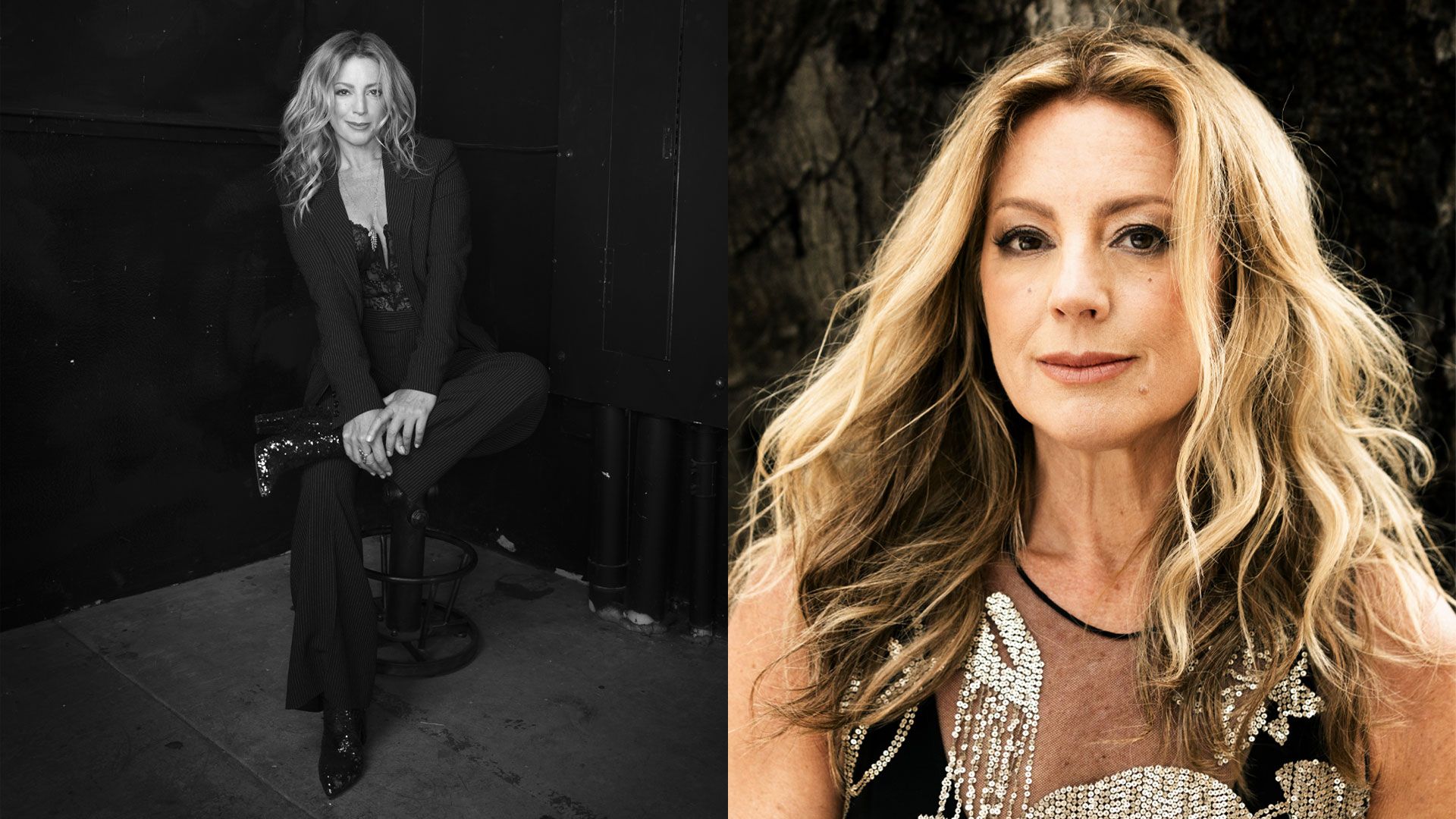
Sarah McLachlan is having one of those mornings: her laptop isn’t working, she had trouble finding her phone, her house is full of visiting relatives and there’s construction outside – making it hard to find a quiet spot to log on to our Zoom call. Also, it’s 8:30 a.m. “It’s early,” says one of Canada’s most famous singer-songwriters, as she pops up onscreen with messy hair in a topknot, no makeup and wearing a surf sweatshirt and blue jeans with moose printed on them. “I kicked my partner out of bed. I said, ‘Sorry, you got to go,’ so now I’m set up in the bedroom.”
McLachlan may be a bit behind this morning, but she’ll soon switch into overdrive. A normal day at her summer home in Tofino, B.C., involves hiking with her dogs, playing pickleball, running wind sprints on the beach and as much surfing as the waves allow. “There’s nothing more beautiful than just bobbing up and down out there and feeling incredibly small. There’s just a beautiful moment of surrender when you get on a wave,” she says. “It’s this brief moment of flow state defying the laws of gravity.” At 57, though, she knows her limits. “It’s a little bit terrifying at times. I don’t tend to go out when it’s really big anymore because I just don’t want to get hurt. But a three- or four-footer with a nice, clean face, and I’m just so happy.”
In fact, right now she’s glowing. In September, McLachlan is releasing a new album, Better Broken; finishing the Canadian leg of her Fumbling Towards Ecstasy 30th anniversary tour (it was cancelled at the end of last year due to an extended vocal cord injury); and is the subject of a new documentary, Lilith Fair: Building A Mystery. This definitive portrait of the groundbreaking all-female music festival that McLachlan founded and headlined in the late 1990s airs on comes to CBC and CBC Gem starting Sept. 17. And all this is taking place at the same time that she’s becoming an empty nester. Her oldest daughter, India, already lives and works in Victoria, B.C., and her youngest, Taja, is heading off to university in Los Angeles. “Right now, I’m fine,” says McLachlan, “but three months ago, every time anybody mentioned it I started to leak tears. I know she has a good head on her shoulders, it’s just my sadness around losing that day-to-day connection.”
McLachlan will have work to distract her – and pickleball. “We just got four courts in Tofino,” she says with a huge smile. “My partner [who she’s not about to name] plays squash, and he’s like, ‘Pickleball is really fun, we should do it.’ And I’m game to try anything new. I really liked it, chasing a ball around and laughing. Anytime you’re getting exercise and you don’t even know it – you’re just having so much fun and laughing your ass off – sign me up for that.”
Needle scratch: McLachlan laughs her ass off?

Thanks to decades of one-liners from late-night talk show hosts, Saturday Night Live skits about McLachlan’s sad breakup music, that “earnest” festival she’s synonymous with, and the tear-jerking end-animal-cruelty commercial she starred in back in the 2007, you may have been led to believe that she’s an angry, self-serious artist who’s never cracked a smile. “All these opinions were projected onto me,” she recalls. “‘You’re too much of this. You’re not enough of that.’ What? Why do you care so much? We’re just having fun.”
For all those Gen Xers who thought (or still think) that McLachlan and all that she’s cultivated is uncool, get ready for the wall to come crashing down. And if you’re anything like me, you’ll kick yourself for having been led so astray.
It was 1994, my second year of university, and I was in the throes of a tortured unrequited love. Hold On, McLachlan’s second single off of her breakthrough album, Fumbling Towards Ecstasy, seemed to be talking directly to me: “Hold on, hold on to yourself / For this is gonna hurt like hell / Hold on, hold on to yourself / You know that only time will tell / What is it in me that refuses to believe / This isn’t easier than the real thing.” To my friends, I was a flannel-wearing, die-hard Nirvana, Pearl Jam and Smashing Pumpkins fan, but in my bedroom, Fumbling – and its 12 tracks of hauntingly beautiful raw sincerity – was on a loop in my CD player. But by the time I graduated two years later, I’d moved on from the infatuation – with both the boy and the album. I’d completely turned my back on sincerity and McLachlan, just as her story was really getting interesting.
In 1995, McLachlan fought to bring Paula Cole (you’ll remember her hit song, I Don’t Want to Wait, as the theme to Dawson’s Creek) on tour with her as an opening act. Venue promoters didn’t want to book them, believing it wasn’t possible to sell tickets with two women on the bill. There was also a prevailing “wisdom” that you couldn’t play songs by female artists back-to-back on the radio. “It seemed asinine to me,” McLachlan says. “And as it turned out, we did quite well.” McLachlan and Cole drew sold-out crowds, so the next year, the rebellious 29-year-old Canadian did the unthinkable: she asked a half-dozen women (including Emmylou Harris and Lisa Loeb) to play four shows with her. Then, the year after that, she asked a total of 60 artists to join her in uncharted territory: a 37-city North American all-female tour to rival the more traditional rock festivals, like Lollapalooza and Ozzfest. She named it Lilith after Adam’s first wife in Jewish lore – a woman thrown out of the Garden of Eden because she wouldn’t be subservient – and McLachlan says in the new documentary, “I put ‘Fair’ on the end because I liked the play on words: fair being beautiful, fair being equal and fair being a celebration.”
Over the next three years, the likes of Sheryl Crow, Natalie Merchant, Tracy Chapman, Jewel and the Indigo Girls graced the stage, while the press called it Chickapalooza or Lesbopalooza (one particularly ornery journalist referred to the artists as “coffee house wenches”). The jokes were constant: “Must have been a bonanza for the cat-sitting business,” said one critic. Others accused McLachlan of commodifying feminism and decried, “Sarah McLachlan’s brainchild is not female, friendly or festive.” The musicians on the tour begged to differ. “It was the highlight of all my 50 years of playing,” Bonnie Raitt told Vanity Fair, and says in the documentary: “There was geographical coming together, generational coming together and musical coming together in a way that probably wouldn’t have intersected before.”
To this day, women artists who weren’t on the bill are still bummed that they weren’t included. “I was so impressed that Sarah was able to put that kind of collective together,” Wendy Melvoin of Wendy & Lisa – the duo that got their start as part of Prince’s band – tells Zoomer. “In the spirit of full disclosure, both Lisa and I felt jealous that we weren’t involved in Lilith Fair.”
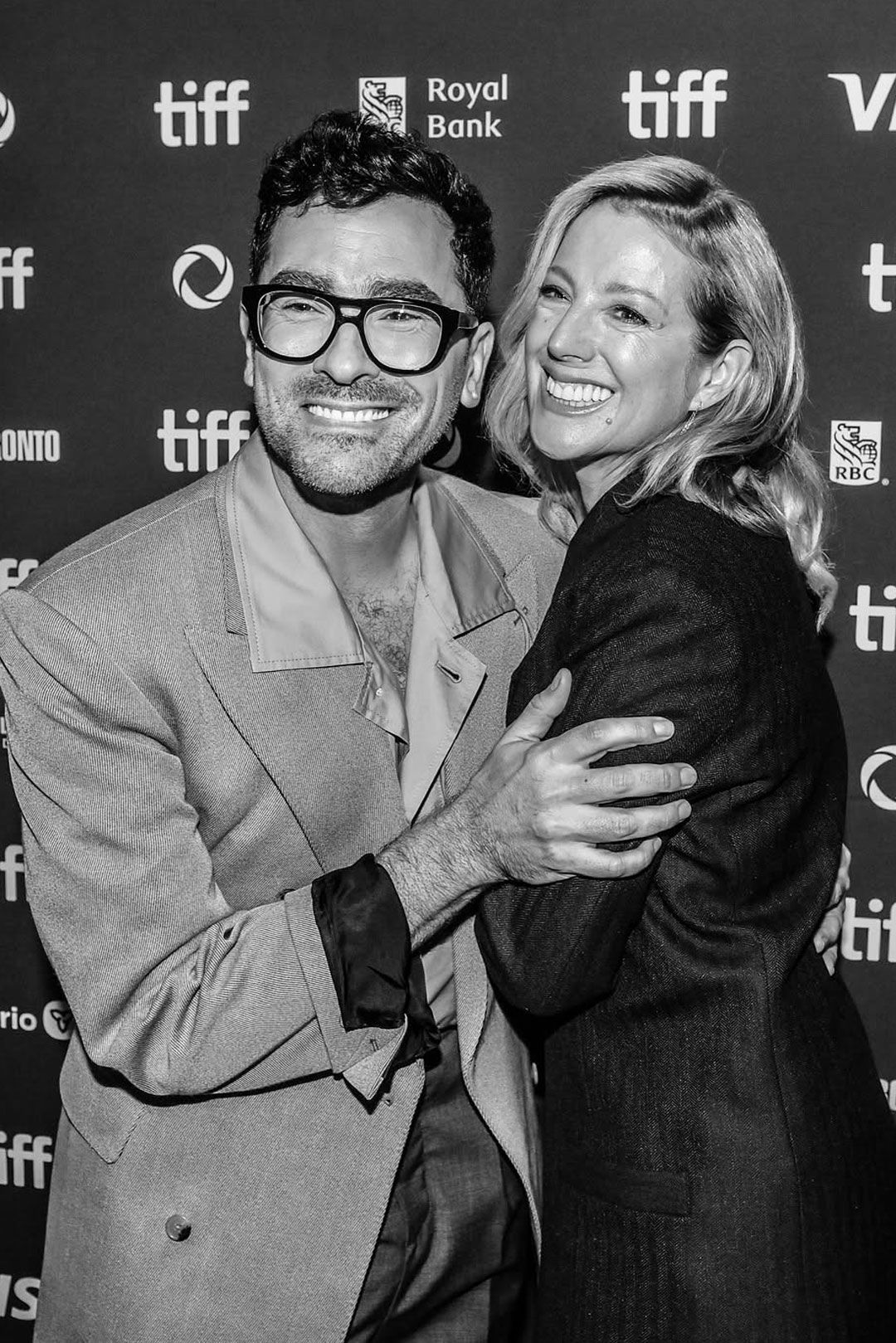
Then there are the lucky fans who attended – like Dan Levy (of Schitt’s Creek fame). “I was young. Like 13 or something. Super impressionable,” he tells Zoomer. “And my big takeaway was how safe it felt there. How joyful that experience was. And then on top of it all, seeing these musical goddesses, one after the other, perform in the flesh. The whole experience had this magical surreality to it.”
I can tell you what it feels like to have shunned Lilith Fair – mindlessly dismissing it as schmaltzy and lightweight – in favour of Lollapalooza. Almost three decades later, none of the performances at the latter still resonate for me. Meanwhile, I have spent countless hours watching YouTube videos of Lilith Fair highlights, including Missy Elliott’s first-ever live performance; Queen Latifah singing her feminist hip hop anthem Ladies First with out-and-proud folkies Indigo Girls backing her up; and McLachlan and Sinéad O’Connor out-beautifuling each other in a duet of the former’s massive hit Angel. And then, there was that one night at the 1999 Toronto stop when Prince showed up to jam on Every Day Is A Winding Road with Sheryl Crow. (Prince wanted a headliner slot, but there were no dudes allowed. He also wanted a bigger dressing room than everyone else, but that was a no-go, too). To top it off, every night of the festival ended in an all-star singalong of Joni Mitchell’s Big Yellow Taxi or Bob Dylan and the Band’s I Shall Be Released. Having missed that, I feel like a huge tool – which just happens to be the name of one of the headliners at Lollapalooza ’97 that I likely saw and means nothing to me now.
About watching the footage in the documentary, McLachlan tells me, “I felt huge nostalgia and
huge pride. I don’t spend a lot of time looking back, but it’s beautiful the way the film captures the community that was built, the challenges that we faced and what was achieved. We did create change, in really meaningful ways – inwardly for us as artists and outwardly in the community – as well as the safe space that we created for the audience in a time where most large festival shows were aggressive and male-dominated.”
Case in point: in 1999, Sheryl Crow took one day off from the Lilith Fair tour to play at the revived Woodstock Festival, which infamously ended in violence, chaos, fires and looting. “The day I got back, I ran into Sarah’s arms and sobbed into the bosom of the founder of Lilith,” Crow only half-jokes in the doc.
And speaking of Sarah’s boobs…
When quintessential leather-jacketed female rocker Chrissie Hynde showed up, she had a bit of an attitude, says McLachlan. “So I thought, ‘I’m going to fuck with her.’ I was dancing on the stage [during her set] and I had this crazy pink tube top on so I just flashed her.” The incident brought Hynde to her knees in uncontrollable laughter and for the rest of the tour, the Pretender was just one of the girls.
After three years, two million tickets sold and $7 million given away to local women’s shelters and non-profits, Lilith Fair came to an end. Radio stations were now playing women back-to-back and no one questioned the pull of their live shows. At this point, McLachlan was one of the most influential and powerful women in the music industry; she could have gone anywhere and done anything. But the Halifax-born West Coast transplant and her husband/drummer at the time, Ashwin Sood, returned to Vancouver and started a family. “I’ve been really lucky to stay in Canada and I’m grateful for it,” she says. “I think I’ve had an amazingly normal existence.” She continued to make albums and took her two daughters on the road when they were little. She started the Sarah McLachlan School of Music, which has provided free lessons to under-served kids in B.C. and Alberta for 23 years and counting. And she did a lot of mom stuff, from carpooling to crafting. “I had a lot of time on my hands,” she says. “I made a bunch of jewelry, mostly for friends for Christmas. For a couple years, I made pillows. One year, I made purses.”
AFTER LILITH FAIR, the Top 40 radio pendulum swung again and the Britneys and Christinas, boy bands and angry white rockers like Limp Bizkit and Linkin Park replaced the introspective female singer-songwriters and alternative grunge rockers. Luckily, enough millennial kids and teens had been at those Lilith Fair shows to incubate its inclusive, supportive, feminist, queer, fun and free-spirited attitude toward art, community and collaboration.

Years later, Dan Levy, who produced the new Lilith Fair documentary, would carry over his love of McLachlan to his Schitt’s Creek character, David. Country folk singer Brandi Carlile was 15 when she first attended Lilith Fair, and these days she’s the driving force behind the Joni Mitchell jams – a mostly female collective (including McLachlan) that has brought the legendary Canadian songstress back to the stage.
Even the unofficial voice of the millennial generation was inspired by Lilith Fair. Girls and Too Much creator Lena Dunham wrote in a New Yorker article about her trip to the festival at 11 years old: “When the music started, as I remember, with Paula Cole taking the stage in a flurry of goddess force, everyone was spinning, arms wide toward the heavens, and laughing with abandon, enlivened by the beauty and safety of the collective we became. Women pranced, stretched, bowed, rolled in the grass, ate churros, kissed with tongue.”
These days, the Gen Zers are also keeping the vibe alive. The new breed of pop singer-songwriters, alternative folk singers and even hip hop artists that McLachlan’s young adult daughters might listen to owe an awful lot to India and Taja’s mom. These female artists reject the inherent music industry competition that has been traditionally foisted upon them and instead have built a network, playing on each other’s albums, showing up as guest stars at each other’s shows and cheering each other on at the Grammys. Olivia Rodrigo calls the ’90s Lilith Fair participants (along with the era’s more rage-filled Canadian superstar Alanis Morissette) her “north stars,” and Taylor Swift chose mostly female opening acts for the Eras tour and makes her concerts an inclusive-to-the-max affair. The California sister band HAIM even namechecks Lilith Fair when talking about their own goal to start up an all-female festival.
While McLachlan did take her daughters to Swift’s Eras tour, she doesn’t spend a lot of time thinking about the current state of women in pop. For example, she hasn’t asked herself, “Did I really break down all those barriers so that Sabrina Carpenter can pose on all fours on her album cover Man’s Best Friend with a guy holding her hair as if she’s a dog on a leash?”
But when I pose that exact question, McLachlan goes into a stream of consciousness that proves there is an untapped, foul-mouthed sage hiding away in the wilds of B.C., ready to drop some wisdom: “I mean, women have been sexualized since the beginning of time, and whether it’s men doing it or us taking back our power and doing it ourselves – which I would assume is what Sabrina is saying she’s doing. I think everybody’s got to find their own way. You know, I was naked in half my videos when I was younger. I never thought of it as sexual. I thought of it as natural. I was like, everybody’s out there being super sexy, and that’s not me. I’m just naked covered in mud in a studio and it’s fucking freezing. I’m doing this because it looks cool, which might have been a little bit naive on my part.
“So is it derogatory for her? I mean, fuck, I don’t know. It’s not my place to say. I just wish we could evolve a little more and find other ways to be sexy. Personally, I think not revealing everything is a little sexy. Mystery is sexy. A really well-coined phrase is sexy. A guy with a Baby Bjorn is really fucking sexy, like a dad who is actually present and cares, that’s hot. So I just have different priorities.”
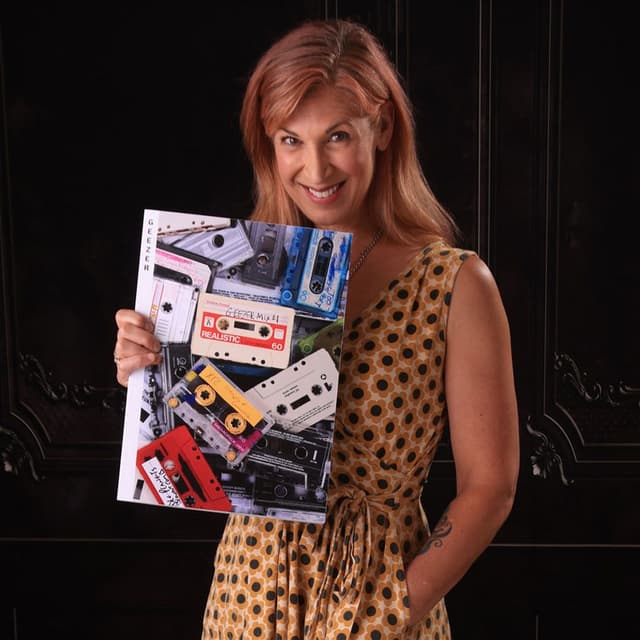
You’ll hear them on her first new studio album in 10 years, Better Broken, which speaks to those early McLachlan fans who have long since grown up, gotten married, had kids, maybe divorced and, if so, are navigating the romantic minefield once again, just like she is. (She and Sood split in 2008.) Better Broken fills a void for women in their 50s who are too old for the this-is-so-high-school lyrics of Swift and too young for the throwback duets of Barbra Streisand and uncomfortable with Madonna and Shania’s Peter Pan syndrome. J.Lo is in her 50s, but who can relate to that kind of open-book chaos, and Alanis Morissette’s last release was way too zen – a literal meditation album featuring aural vocal tones. So bring on McLachlan’s no bullshit, authentic lyrics set to soaring pianos, gentle percussive beats and, on at least one tune, slide guitar.
There are a few songs, she says, that she wrote “a number of years ago, while I was sort of pulling myself out of this stupid relationship that I’d been in for too long that was really unhealthy.” She gets pretty specific about that pain in Wilderness: “I don’t want to blame you but my heart is shattered / How could you leave us like none of it mattered … You came back, you begged me / I bought what you sold / I gave my forgiveness, set the bar low / All along you had another life somewhere with someone else.” On the title track, she’s learned her lesson: “So don’t come back to me begging, ‘Why’d you leave? / Tell me why, how could you let this go?’ / Let it be all it is / Small and still, a memory like a stone / A jagged edge made / smooth by time / Let it be all it is / Small and still and better left alone / Some things are better broken.”
Rolling Stone magazine calls the songs “civil.” McLachlan chuckles and tells me, “Well, I think the language is very civil, like the line, ‘So I walk on through this rage / with this hunger / with the insatiable desire to take you down.’ But I didn’t say what I was thinking: ‘I wanna fucking kill you.’ I dressed it up a little bit. I like pretty words. But you get the gist of it.”
Gravity is a meditation on parent-child relationships – not as bitter as Cats in the Cradle, or as sappy as Wind Beneath My Wings: “You can hide away, hold your heart at bay / I know you want to be loved / Know life will come apart / break and unbreak your heart / I will be that gravity always true / I won’t give up on you.” McLachlan explains, “It’s about my older daughter. We had a very challenging relationship for a lot of years. We’re both super stubborn, dig your heels in and we both think we’re right.” The singer, who often talks about growing up with strict adoptive parents, says, “I thought I was doing such a good job of doing the opposite of what my parents did. But then in fragile, angry moments, I’d find things coming out of my mouth that my mother would say, and I’m like, ‘Oh my god, what are you doing?’ These patterns are hard to break. It doesn’t matter how many books you read, you’ve just got to find your way through.”
Family therapy helped – and so did making music. McLachlan composes to help get herself through tough times – and comes out happier. Then, that music goes out into the world and does miraculous things for others. “I read an interview in Rolling Stone that Sarah had given and she talked about [how the song Angel was inspired by] this young boy who played with the Smashing Pumpkins and who had died of an overdose,” Wendy Melvoin tells me over the phone from Los Angeles where she’s recording with Annie Lennox, “and I realized that she was talking about my brother, Jonathan. I tried sending her a note through management, but I never got in touch with her over many, many, many years. Then, just a couple of years ago, we saw each other at a Joni Mitchell concert and I walked up and said, ‘Sarah, I’ve been waiting since 1997 to tell you that the boy who had a drug overdose in the Smashing Pumpkins, that was my brother.” Melvoin recalls how McLachlan – who had never met Jonathan but only read about his death – looked shocked. “Her eyes got big and she looked at me and said, ‘That was the easiest song I’ve ever written in my life. It just came out of me. Your brother spoke through me.’ And just her honesty about it just really touched me.”
Angel, which is also the song used in that ubiquitous McLachlan animal shelter commercial, would later become a literal lifesaver for another artist, Darryl McDaniels – better known as DMC of hip hop legends RUN DMC. He writes in his 2016 memoir, 10 Ways Not to Commit Suicide, “I first heard the song getting into a taxi in 1996, and the song had stayed with me ever since.” In his darkest hours, he explains, “It was the only song I listened to and the only song that I allowed to be played around me…For all the depression that weighed me down, Angel buoyed me. Whatever my hesitations about suicide, I sometimes think I would have done the deed easily if it weren’t for that record.” Years later, McDaniels would approach McLachlan to cut a song together (and bond over both being adopted) because her lyrics had meant so much to him. “That song has so many stories,” says Melvoin, who has also come full circle with McLachlan by playing guitar, bass and drums on Sarah’s new album. “That it came from the tragic death of my brother is just incredible.”
Coming out of a decade-long recording hiatus and excited to be touring her new songs (alongside her 30-year-old ones), McLachlan can’t make any promises about what the future holds. She’s not sure if she’ll put all her focus on work or on a newer passion, like skate skiing. “It’s like biathlon but without the gun,” she explains. “I never felt like music singularly defined me. I had lots of things that brought me joy. Plus, success to me is looking in the mirror at the end of the day and feeling good about the choices I’ve made. Have I helped people? Have I been a good person? Have I done productive things?”
Let the records show, she’s done all of that – and a fair bit more.