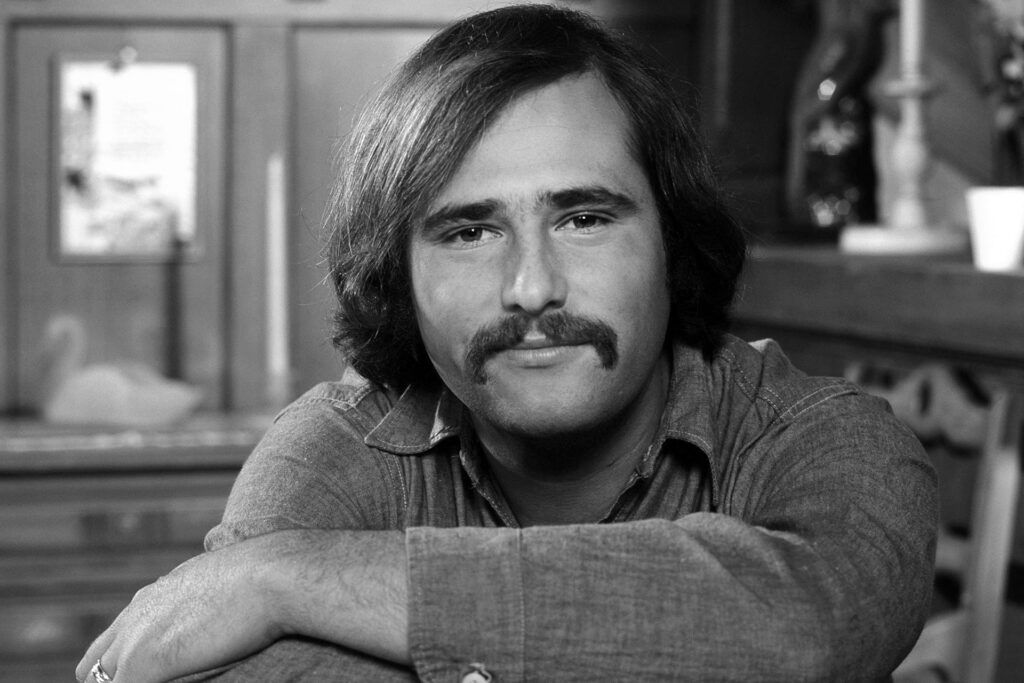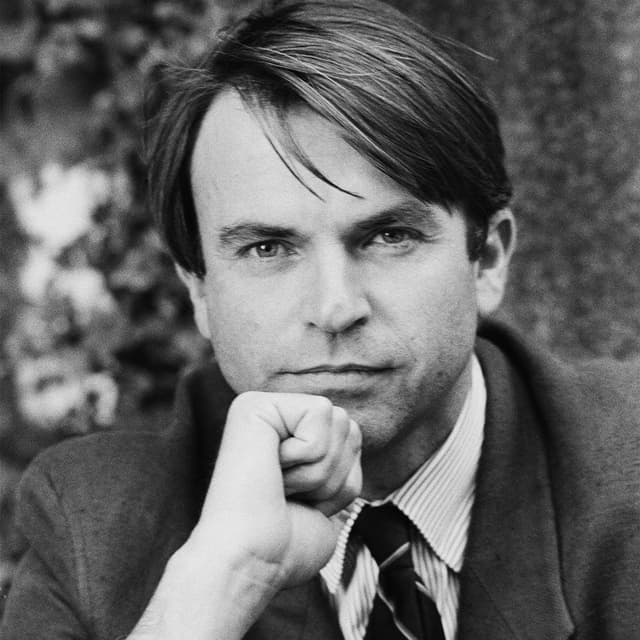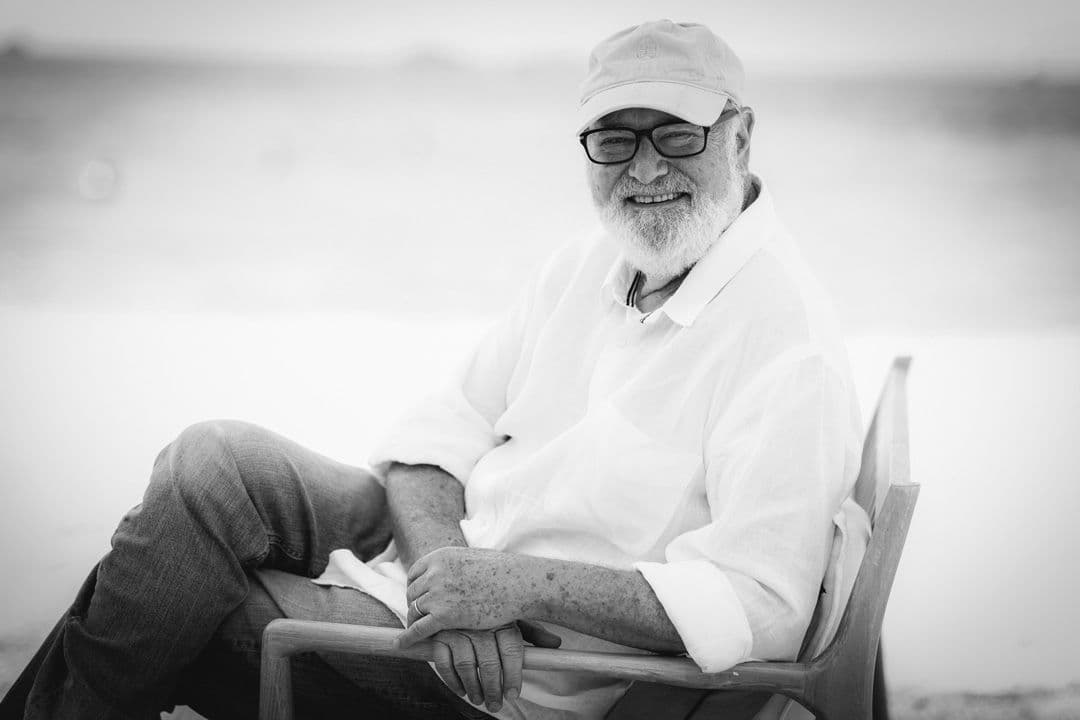
Waking up to the news that Rob Reiner had been killed, and in such monstrous circumstances, was not just a terrible shock. On the heels of the Australian massacre and the Brown University shootings, it seemed incomprehensible. Those other events could at least be related to sadly familiar horrors, respectively the rise in antisemitic hate crimes and the pandemic level of American gun violence. But Rob Reiner?
Early Sunday morning in Los Angeles, the 78-year-old director and his wife, photographer Michele Singer Reiner, 68, were found stabbed to death in their family home. Rob’s son, Nick Reiner, 32, was taken into custody on suspicion of murder. As these details emerged, a tragedy that seemed to come out of the blue did not seem quite so random as it first appeared. Reiner’s son had a long history of drug addiction, and his fractious relationship with his parents was dramatized in Being Charlie, a semi-autobiographical film that Rob directed from a script that Nick co-wrote with a friend from rehab. The movie, which premiered at TIFF in 2015, seemed to provide a cathartic closure for Rob, according to a Los Angeles Times reporter who interviewed the family at the time, and noted that Nick didn’t seem to share his father’s enthusiasm, saying, “I wasn’t sure I wanted to do this.”
Reiner came into our lives personifying one side of a culture war, as Michael “Meathead” Stivic — the liberal, college-educated son-in-law of household bigot Archie Bunker in the CBS sitcom, All in the Family (1971-79). His father, the late Carl Reiner, revolutionized the sitcom in the ’60s with his portrait of modern marriage in The Dick Van Dyke Show, setting up co-star Mary Tyler Moore’s self-titled 1970 sitcom, where the actress played a single and independent woman in the workplace. At the same time, Archie and Meathead brought the political conflicts that inflamed America into the home. Reiner also helped create Happy Days (1974-84), the sitcom that launched the Fonz, and marked a coming-of-age for Ron Howard, the future director who, as a child star, incarnated the innocence of the early ’60s as Opie in The Andy Griffith Show. “Our careers and lives intersected often over the decades,” Howard wrote in a tweet after hearing of Reiner’s death, “from Rob writing the pilot script for Happy Days and then as we each shifted from acting careers into directing and producing. He proved to be a superlative filmmaker, a supportive colleague and at all times a dedicated citizen.”
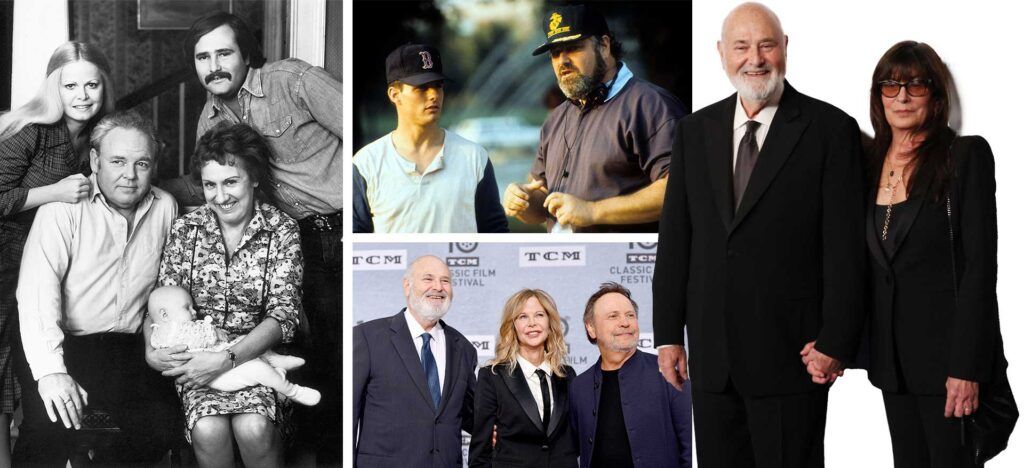
Reiner vaulted from the cut-and-thrust of TV comedy to directing a timeless canon of films that became generational landmarks, notably This is Spinal Tap, Stand By Me, The Princess Bride, When Harry Met Sally… and A Few Good Men. As tributes poured in with the news of Reiner’s death, screenwriter C. Robert Cargill (Doctor Strange) wrote on Bluesky: “The cultural impact of Rob Reiner cannot be overstated. Legend isn’t big enough a word.” He then rhymed off a string of memes from his movies: “It goes to 11. You can’t handle the truth. As you wish. I’ll have what she’s having. I’m your number one fan. You guys wanna see a dead body? The very idea of a bucket list.” Kathy Bates, who won an Oscar for starring in Reiner’s Misery (1990) said, “He was brilliant and kind, a man who made films of every genre to challenge himself as an artist.” And Steven King, who wrote the novels behind Misery and Stand By Me, posted on X: “I’m horrified and saddened by the death of Rob Reiner and Michele. Wonderful friend, political ally, and brilliant filmmaker . . . Rest in peace, Rob. You always stood by me.”
Among the tributes, Reiner’s civil rights advocacy and his contributions to America’s political and moral discourse received almost equal weight to the art. “Rob’s achievements in film and television gave us some of our most cherished stories on screen,” Barack Obama wrote on X. “But beneath all of the stories he produced was a deep belief in the goodness of people – and a lifelong commitment to putting that belief into action. Together, he and his wife lived lives defined by purpose.” And California governor Gavin Newsom hailed “his extraordinary contribution to humanity.” Reiner’s “boundless empathy made his stories timeless, teaching generations how to see goodness and righteousness in others – and encouraging us to dream bigger,” Newsom said in a statement. “That empathy extended well beyond his films. Rob was a passionate advocate for children and for civil rights – from taking on Big Tobacco, fighting for marriage equality, to serving as a powerful voice in early education.”
Christopher Guest, who starred in This Is Spinal Tap and its recent sequel, issued a joint statement his wife, Jamie Lee Curtis: “Christopher and I are numb and sad and shocked about the violent, tragic deaths of our dear friends Rob and Michele Singer Reiner and our only focus and care right now is for their children and immediate families . . . There will be plenty of time later to discuss the creative lives we shared and the great political and social impact they both had on the entertainment industry, early childhood development, the fight for gay marriage and their global care for a world in crisis.”
Until recently, I had only known Reiner from watching his films. But as someone who’s made a career of film criticism, I often get asked to name my favourite movie of all time, and instead of citing an obvious classic like Citizen Kane or The Godfather, I have a default answer – This is Spinal Tap, Reiner’s 1984 debut feature. And I’m only half-joking. I’ve watched this priceless heavy metal satire countless times, and it never gets old, only funnier. I met Reiner for the first time, via Zoom, last September when he and the band were promoting Spinal Tap II: The End Continues, the epically long-awaited sequel that landed 41 years after the original film — featuring Paul McCartney messing with their egos in a rehearsal and Elton John performing Stonehenge onstage in the film’s cataclysmic finale.
Reiner, like the three band members, insisted on being interviewed in character, as Marty DiBergi, the documentary director of the film within the film. In a career that would embrace multiple genres, Reiner launched his big-screen career by pioneering one. As the godfather of the mockumentary, he created a genre that would resurface in movies ranging from Borat to Best in Show, and in TV shows from The Office to Parks and Recreation. And as I began my interview with Reiner/DiBergi, in a feat of self-casting he slipped effortlessly in character, as if Marty was just a dumber, more deadpan version of Rob. But as it wound down, and I asked if he planned to make another Spinal Tap sequel, Reiner couldn’t resist breaking the fourth wall with twinkle in his eye and a complicit grin,
“I can’t wait another 40 years,” he said. “I’ve got to strike while the iron is tepid.”
“You just came up with that?” I said.
“Well, yeah. Came up with everything.”
Then the publicist cut in: “We need a wrap.”
“I don’t have a wrap,” I said. “Do you have a wrap, Marty?
“Well, I had one that had a little fox on the front of it. My mother used to have a fox thing.”
At the time, I was unaware that Reiner would, in fact, make one more movie with the band, filming them performing a secret concert at the pre-historic Stonehenge site in Wiltshire, England. It was the first musical event ever permitted at the site. With musical guests that include Eric Clapton, Josh Groban and Shania Twain, the concert was filmed for a movie called Stonehenge: The Final Finale, due to premiere in theatres and on IMAX screens sometime next year. The band has said this will be Spinal Tap’s final performance. Now, tragically, it will be Rob Reiner’s last picture show.