JULY 30, 2026
Let There Be Light
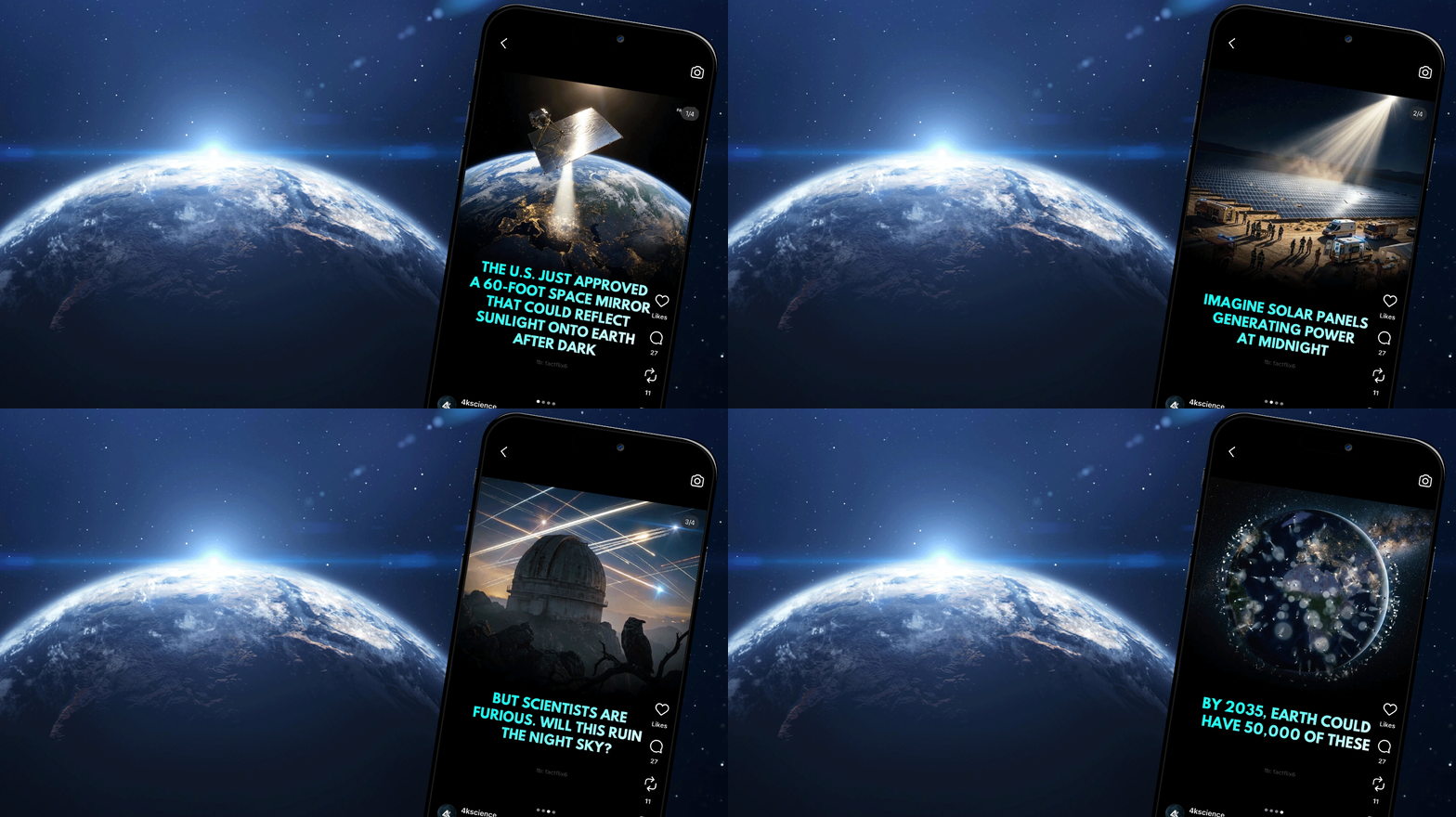
Just when you thought technology couldn’t get any more disruptive – or weirder – the U.S.-based Federal Communications Commission has just approved an application from a California-based startup that wants to turn nighttime into day. Later this year, Reflect Orbital plans to shoot a satellite with an 18-metre mirror into space that would bounce sunlight back to Earth, illuminating the dark sections of our planet. By 2030, the company hopes to deploy 5,000 satellites capable of directing five-kilometre-wide beams of light wherever paying customers request them – promising “round-the-clock, indoor-level lighting” for everything from search-and-rescue missions and overnight construction to charging solar farms and boosting crop yields. But critics see a dark side to this technology. Beyond the unsettling notion of commercializing sunshine, they warn that these satellites could be weaponized – evoking uncomfortable childhood memories of those kids who used to fry ants under a magnifying glass. There are real objections as well, including how artificial light could disrupt our sleep cycles, confuse migrating birds and other wildlife, interfere with astronomy, and even blind airline pilots. “The night sky is part of humanity’s shared heritage, not a billboard or a floodlight,” says John Barentine, an astronomer and dark-sky advocate with DarkSky International. “Once we lose natural darkness, it’s extraordinarily difficult to get it back.”

JULY 29, 2026
Longevity Revolution
Today we wish feliz cumpleaños – happy birthday – to Spain’s oldest living person, 113-year-old Teresa Fernández Casado. Born in 1913, when life expectancy in Spain was about 50 years, Teresa lived in a world before antibiotics, movies and modern appliances. Horses outnumbered cars on the streets of the small village of Zambroncinos del Páramo in Spain’s northwestern region of Castile and León, where she was born and still lives. Described by her daughter as “a simple village woman who is loved by everyone,” Teresa celebrated her birthday with a special mass held in her honour. Today, there are more than 12,000 centenarians in Canada and 700,000 around the world, about 90 percent of whom are women. Their growing numbers are a testament to how advances like clean water, sanitation, vaccines and medical care have transformed human lifespans. This longevity revolution is now being powered by tech titans like Amazon’s Jeff Bezos and AI-entrepreneur Sam Altman who are pouring billions into researching ways to repair older cells, re-engineer damaged tissue and target aging pathways. For most of human history, living to 113 years was considered miraculous. In the not-too-distant future, it might become the norm.
JULY 28, 2026
The Moment: Code Red
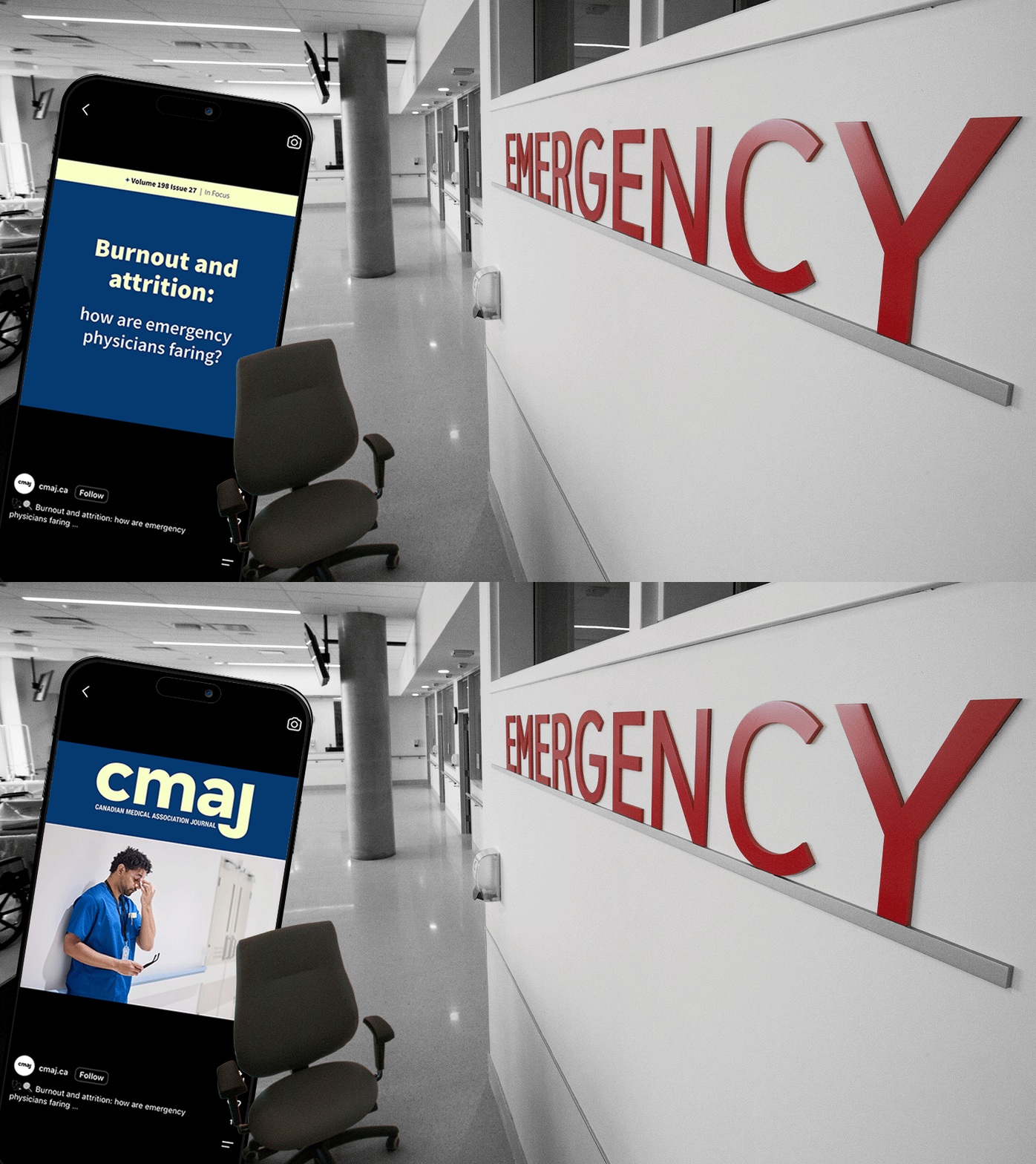
If you’ve visited an emergency room lately, a new survey from the Canadian Medical Association won’t come as a surprise: Canada’s ER system is stretched to the breaking point. The casualties in this case are the overworked ER doctors, who are burning out, cutting back their hours or leaving the profession altogether. According to the study, published in the Canadian Medical Association Journal, nearly half of doctors surveyed in 2025 said they had reduced hours, one in five had taken a leave of absence, and one in 10 had quit emergency medicine entirely, with women and younger physicians reporting the highest levels of burnout. “The crisis is worsening year by year,” warns Dr. Kerstin de Wit, the study’s lead author. With millions of Canadians struggling to access a family doctor (many of whom are close to retirement) – ER departments are expected to pick up the slack. But when additional crises hit – a heat wave or wildfire smoke – the burden often becomes too much. Unless provincial and federal leaders take “thoughtful and intentional action” to address the demand placed on ERs, especially by our aging population, Canada’s ability to provide round-the-clock care is in jeopardy, and “preventable tragedies will continue to occur in our waiting rooms.”
JULY 27, 2026
Born to Run
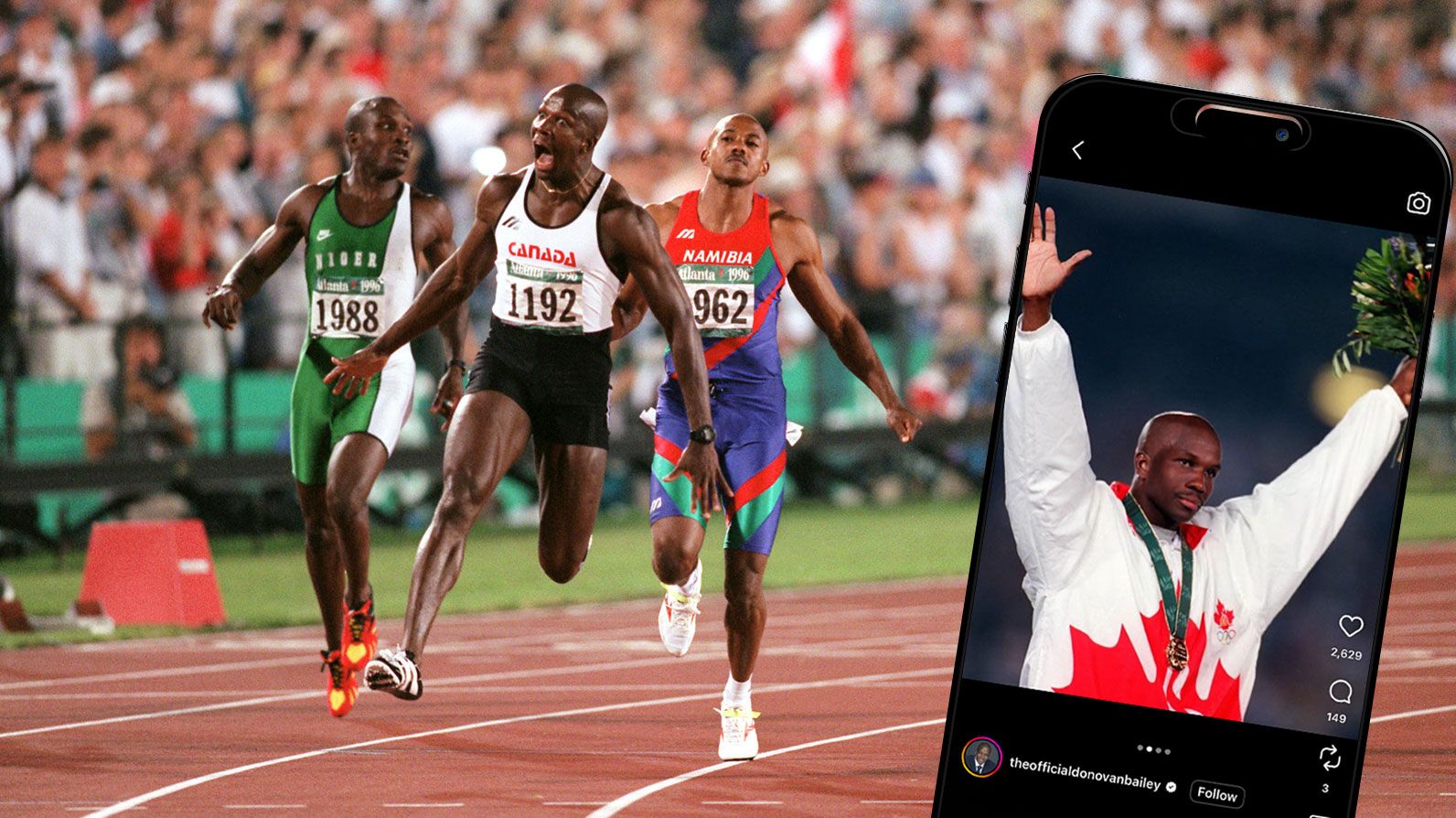
It was 30 years ago today that Canadian sprinter Donovan Bailey blazed to gold, winning the 100m race at the 1996 Atlanta Games, cementing his status as the “world’s fastest man.” Or, as his characteristically confident Instagram post puts it, the “First Undisputed Sprint King Holding All 3 Titles: World Champion, Olympic Champion and World Record Holder.” On that unforgettable night in Atlanta, there was no disputing any of his claims. Facing a stacked field in the final, including Frankie Fredericks of Namibia, Ato Boldon of Trinidad and Tobago, and Dennis Mitchell of the U.S., the Jamaican-born, Ontario-raised sprinter fell behind early but found his pace midway, streaking across the finish line in a world-record 9.84 seconds, reaching an astonishing top speed of 43.6 km/h – faster than any human had ever been clocked. Days later, he anchored our 4x100m relay team to gold against the heavily favoured U.S. squad. For the millions of Canadian fans cheering him on, Bailey’s victories were more than just signature Olympic moments. They helped erase the lingering memories of Ben Johnson’s 1988 doping scandal, replacing them with one of the country’s greatest moments of sporting glory. | Michael Steele/EMPICS via Getty Images