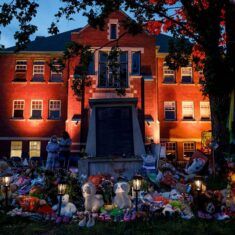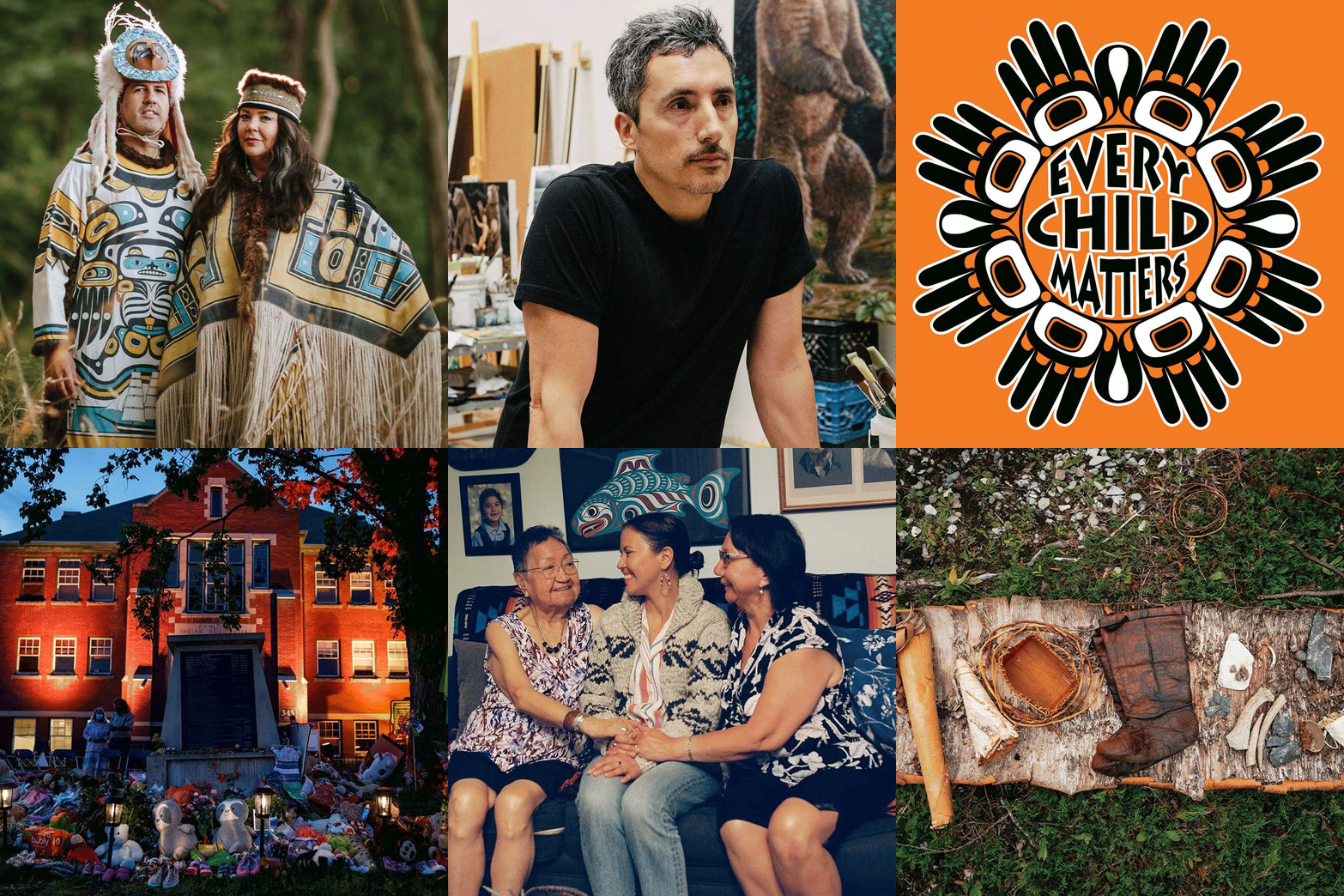
As the National Day for Truth and Reconciliation – observed annually on Sept. 30 – calls on Indigenous and settler Canadians alike to honour residential school survivors, their families, communities and the thousands of children who never made it home, there is still much work to be done.
The statutory holiday, first observed in 2021, was created in response to one of 94 calls to action issued by the Truth and Reconciliation Commission of Canada, and gained renewed national attention following the tragic discoveries of unmarked burial sites at former residential school grounds across Canada.
While Mark Carney’s Liberal government included significant investments in reconciliation efforts in its Spring Economic Update – including $4 billion to improve access to health care, culturally relevant education and nutritious food in Indigenous communities, as well as $4.6 billion to protect clean drinking water for First Nations – the federal government has yet to address growth of residential school denialism.
On Monday, a group of masked individuals believed to be associated with white supremacist group Second Sons dropped a banner from an overpass in Kamloops, B.C., that read “got bones?” Indigenous Services Minister Mandy Gull-Masty condemned the demonstration – which was clearly intended to intimidate the Indigenous community of Tk̓emlúps and question reports of human burials on the grounds of the former Kamloops Indian Residential School – but was non-committal when asked about criminalizing such acts.
Leah Gazan – who serves as the NDP’s critic for Indigenous affairs – introduced a private member’s bill in September 2024 that would make it a criminal act to “wilfully promote hatred against Indigenous peoples in public by condoning, denying, downplaying, justifying, or misrepresenting facts relating to the Canadian Indian residential school system.” But with the bill still before the House of Commons, several First Nations chiefs have asked the Liberal government to introduce its own legislation criminalizing such behaviour.
View this post on Instagram
“This demonstration is a part of the escalating and harrowing attacks from residential school denialists, seeking attention and monetization from the promotion of hate,” Gazan said in a statement responding to the Kamloops incident. “I join the Assembly of First Nations’ calls for a full investigation, and for governments to take urgent action to respond to residential school denialism with the urgency and seriousness needed to protect the safety and dignity of survivors.”
In the meantime, truth and reconciliation efforts in Canada involve not only acknowledging the painful history of the residential school system, but also learning from the strength, culture and perspectives of Indigenous communities today. With that in mind, we revisit stories that highlight powerful Indigenous voices and offer guidance for recognizing and responding to residential school denialism in its many forms.
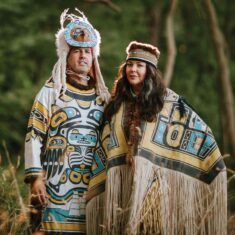
How a First Nation Artist Uses His Art to Honour His Grandfather and Other Residential School Survivors
Artist Kent Monkman’s Gender-Fluid, Time-Travelling Alter-Ego Gets a Memoir
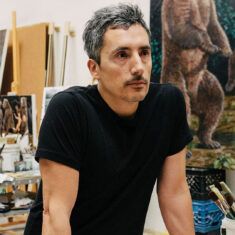
Indigenous Filmmaker Mary Galloway Explores the Story of the Cowichan Sweater and the Knitters Who Carry On Its Legacy
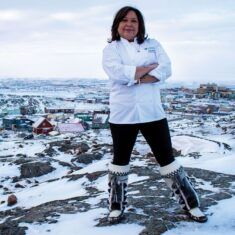
How Local Food Connects Indigenous People to Their Language, Knowledge and History
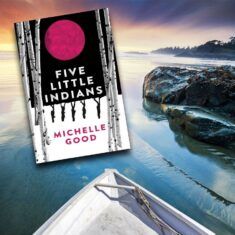
One-on-One With ‘Five Little Indians’ Author Michelle Good