One hundred years after her birth and 64 years after her death, Marilyn Monroe remains a champagne supernova that explodes into our collective consciousness when we need her most. In 1953 – as the smiling nude on the cover of Playboy magazine’s premiere issue – she heralded the move away from stultifying, post-war societal mores into the sexually liberated ’60s. In 1997, three decades after Monroe’s death, when the world mourned the passing of the other troublesome 20th-century blonde who died under questionable circumstances, Monroe abdicated her role of muse. Elton John rewrote and performed a ballad that was originally a tribute to the tragic star at the televised funeral of Diana, Princess of Wales, and only a benevolent muse would have prevented the rock legend from singing, as he feared he might, “Goodbye Norma Jeane” (the song’s opening lyric, using Monroe’s original name) instead of “Goodbye England’s Rose.” Candle In The Wind 1997 raced to top of the global charts, helping the world heal while all proceeds from its sale were donated to Diana’s charities. And in 2022, when reality star and entrepreneur Kim Kardashian arrived at The Met Gala in the glittering “naked dress” that Monroe wore only once – when she scandalously sang “Happy Birthday” to President John Kennedy at Madison Square Gardens in 1962 – it set off a backlash against the billionaire class’ latter-day habit of hoovering up our most precious cultural touchstones for self-promotion and sport.

Of course Monroe’s centennial would be marked with fanfare and celebration. In Toronto, the Crow’s Theatre is staging American Devotion (from June 3 to 21) which imagines a tense 1957 night at the height of the McCarthy purges when pugilistic novelist Norman Mailer visits Monroe and her acclaimed playwright husband Arthur Miller at their Connecticut farmhouse. In L.A., the Academy Museum of Motion Pictures is exhibiting Marilyn Monroe: Hollywood Icon until February 28, 2027, positioning her as “a visionary actor and image maker, examining the many facets of how she created and shaped her public image in the context of the classical Hollywood studio system.” The Academy is the body that bestows the Academy Awards and, though several of her performances being deemed worthy, Monroe never received an Oscar nomination herself. It is notable, though, that actresses Michelle Williams and Ana de Armas, who played her in My Week with Marilyn (2011) and Blonde (2022) respectively, were both nominated for Best Actress, perhaps as consolation prizes for the thankless task of attempting to capture her ephemeral yet palpable effervescence.

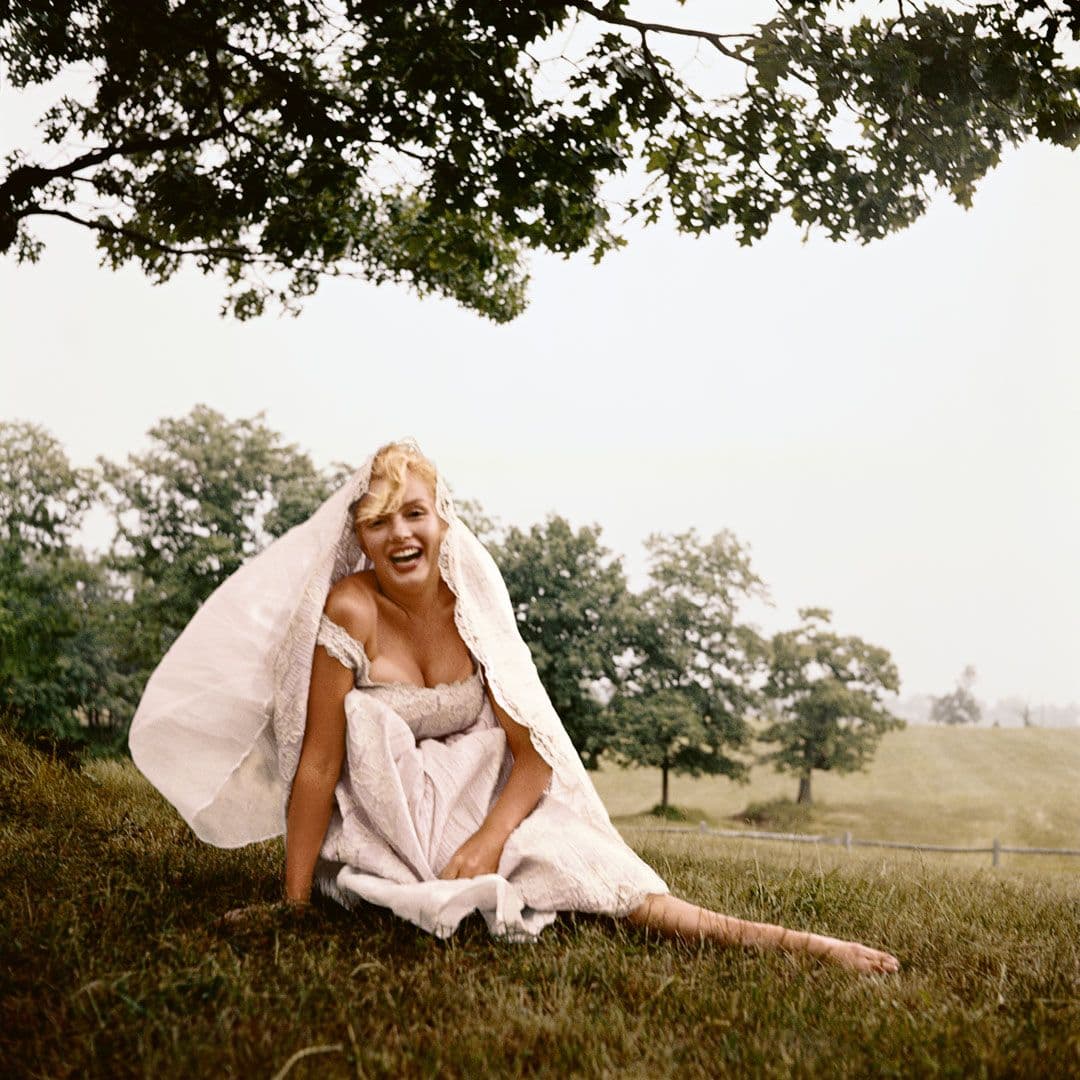
Monroe is best expressed through images of herself, and for a woman synonymous with cinema’s moving pictures, her spirit is just as present in stills, hung on a wall or laid out on a page. Monroeologists will welcome Taschen’s reissue of André de Dienes’ 2002 coffee-table tome Marilyn. The photographer was her erstwhile fiancé and friend; they remained close throughout her metamorphosis from brunette California girl to platinum-plated silver-screen star, and the collectible cult classic is described as an “intimate archive“ that captures her “enduring magnetism up to her final days.”


Not even printing can flatten Monroe’s fizzy charisma, and that’s once again brought home in a new compilation, Marilyn Monroe 100 (ACC Art Books), which boasts the work of historically significant photographers from Alfred Eisenstaedt and Henri Cartier-Bresson to Cecil Beaton, Richard Avedon and Bert Stern.

These masters of the craft met their match in Monroe, who even as the 16-year-old bride Norma Jeane Mortenson (née Baker) – before hairline electrolysis, nose jobs, chin implants and bleach – knew how to play to the lenses and orchestrate the light. Mailer’s proverbial 10,000 words – his 1973 Marilyn: A Biography, written as an extended essay as text for a Monroe monograph – only outshone the pictures because he concluded that her demise was orchestrated by shadowy U.S. government operatives. Her alleged affairs with both Kennedy and his brother Robert, who was the country’s attorney general, was deemed the alleged reason. To this day, the Kennedy undertow, coupled with reports of the star’s mental fragility and prescription pill abuse, only adds another frisson of vulnerability to her enduring myth.

It’s one within reach every time I stand in front of her television – a Magnavox Portable set that was in her Brentwood house where she lived and died – at the MZTV Museum of Television housed in the same complex as our Zoomer Media offices. The TV was bought by the Museum’s and this company’s founder, Moses Znaimer, at a Christie’s auction in 1999 and is fittingly positioned beside that of another Boomer cultural colossus, Elvis. Monroe’s set is displayed in a mise-en-scène, including a fluffy carpet and strewn mules approximating her boudoir-esque film persona. Above it, a modern plasma set plays on a loop, clips of the three times she appeared on television in her lifetime. One can only imagine a sex-steeped Goddess of Summer – later to be eternally frozen in a white halter dress with skirts flying ever upward – alighting in the living rooms of suburbia to be forever flickering through time.