Darragh sent us our reader question of the week: No matter how much sleep I get, I struggle with dark circles under my eyes. I also struggle with concealers to cover them up: I don’t like to wear too much makeup, and especially under my eyes, the concealer settles into my eye bags (I’m 63, and otherwise have skin I’m pretty happy with). I’m sooo tired of people telling me I look tired. It’s so insulting, why do we all feel that is okay?”


I Have Questions...
How Do I Keep Concealer From Settling Into My Eye Bags?
Call Out for Q’s...
Do you have questions, too? Why is Brad Pitt dressing like a fuzzy Smurf at the age of 59? Can I still wear a miniskirt? How do I pull off stealth wealth on a budget? Who says I have to age gracefully? What is the best sex position for a bad back? Yup, way more questions. Add your question to our list at TheZoomerist@Zoomermag.com. We can’t answer all emails personally, but please let us know if you mind us using your name in the event your question is chosen for publication.
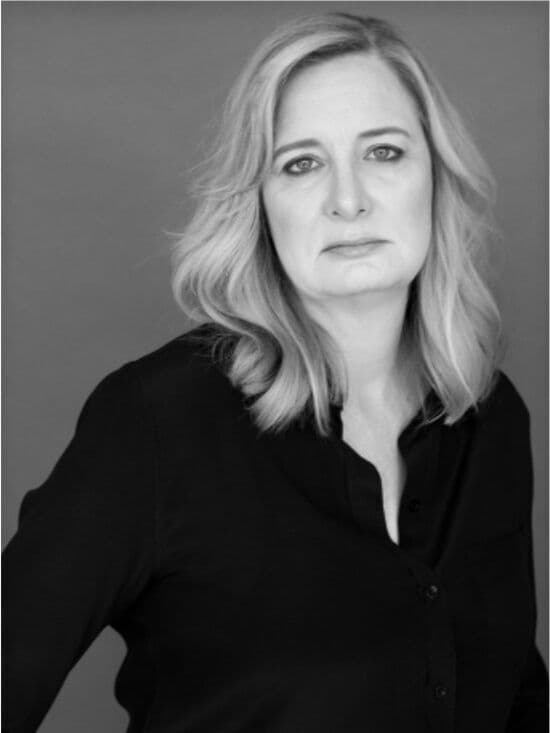
Well, Darragh, I agree with you that when someone tells me I look tired I get furious—if there is a graceful way to counter that without coming off as huffy I’ve yet to find it. But what we can help with is those dark circles. This is an area where pro makeup artists really earn their pay. The major message I got during a deep-dive on the subject with a makeup artist on your behalf is that a little product goes a long way. A thin consistency without too much pigment in the concealer also matters. And so does pinpoint precision in application.
Sheri Stroh is a Toronto-based makeup artist known for making skin glow. As with all makeup, skin prep is the foundation on which you build the look. “You want to make sure concealer doesn’t set into fine lines,” says Stroh. “Eye cream is very subjective, some people swear by it and others find it a big waste of time. I’ve always liked it and I just go with a really light eye cream.” You want to choose an eye cream with a thinner consistency, she says, or a gel cream. Heavy eye creams are too emollient, and they cause the concealer to be too rich.
Thin consistency is what to look for in a concealer as well. “Anything too creamy or too dry will tug at the delicate skin under the eye,” she says, and potentially get cake-y. Liquid concealer, which has minimal pigment compared to a pot concealer, is what Stroh carries in her makeup kit, especially ones that incorporate brightening ingredients.
Note that brightening is not lightening. “If you go too light, you get what we call the reverse raccoon effect,” says Stroh. “It can look really harsh and almost white underneath.
If you choose something too light, you are just going to draw attention to your eye, it is going to look odd, and off, and way too bright.” Plus, she adds, the lighter you go, the more you can shine a highlight on any puffiness.
Stroh prefers to use a concealer pretty close to your overall face tone and skin colour; you can maybe do half a shade to a shade lighter, but avoid concealers that are too white-based/pink or too yellow, which can look odd and give a sallow effect under the eyes.
As for colour correctors, which I personally do not understand in any way and relegate entirely to the professionals, Stroh says that if you do have a lot of darkness, under eye, correctors can really help. From light to dark skin, purple is countered a range from pink/rose/peach/apricot and to burnt orange. Nars Radiant Creamy Color Corrector and Le Correcteur de Chanel are Stroh’s favourite options, because both are lightweight and can be used in a targeted and sparing way then blended under concealer.
As for concealers, she recommends one with a brightener built in. Favourite lines include Rare Beauty Positive Light Undereye Brightener, plus Nars Radiant Creamy Concealer. Also YSL Touche Eclat Radiant Touch, an industry favourite brightener that can often double as sufficient concealer. “There are many more shades now,” she says, for more inclusivity, and it is a legendary light and silky finish.
These choices all have a sheerness to them, which is what Stroh means when she says “less pigmented.” The real secret to subtle, effective makeup is blending. The Rare Beauty has a metal ball applicator for soothing and cooling. Stroh pats the products in with a little finger—because the warmth of your hands helps melts the product into your skin—then blends with a fluffy brush. This keeps the distribution light because it doesn’t pack on too much product, and it leaves the product sitting above the wrinkles.
“Keep each layer—primer, corrector, concealer–very thin,” says Stroh, “because the more product you put on the more it can move around.” Also be very careful where you put the product, she warns. Start with where you see darkness. “You do not need a full half-moon of concealer under the whole eye, or you are just going to highlight the problem,” she says. “So just even on the inner corner beside the nose, and right underneath inner corner to first third or first half under the eye where you are going to have the most darkness.”
If you are someone who likes to “set” their makeup, Stroh warns to let the concealer settle in before adding any powder. If it does settle in? She has a tip for that: you can find very tiny Q tips. Makeup artists go into the little line and remove that little bit of excess concealer that has settled.
After that, you can also then powder underneath. But only loose powder, never pressed powder. The industry secret is Laura Mercier Secret Eye Brightening Powder (Linda Evangelista is a devotee). Stroh’s tip is to use it just below the places where you have applied corrector/concealers, so it can’t accumulate and settle into fine lines.
The last thing to remember, Darragh, is that no one sees the dark circles the way you do. Even the jerks who say you look tired. They are likely reacting to a lack of vim and vigour. Distract from undereye bags with concealer carefully applied, sure. But also take control of the narrative with your energy and verve so the bastards can’t get you down.
Always asking questions,
—Leanne Delap