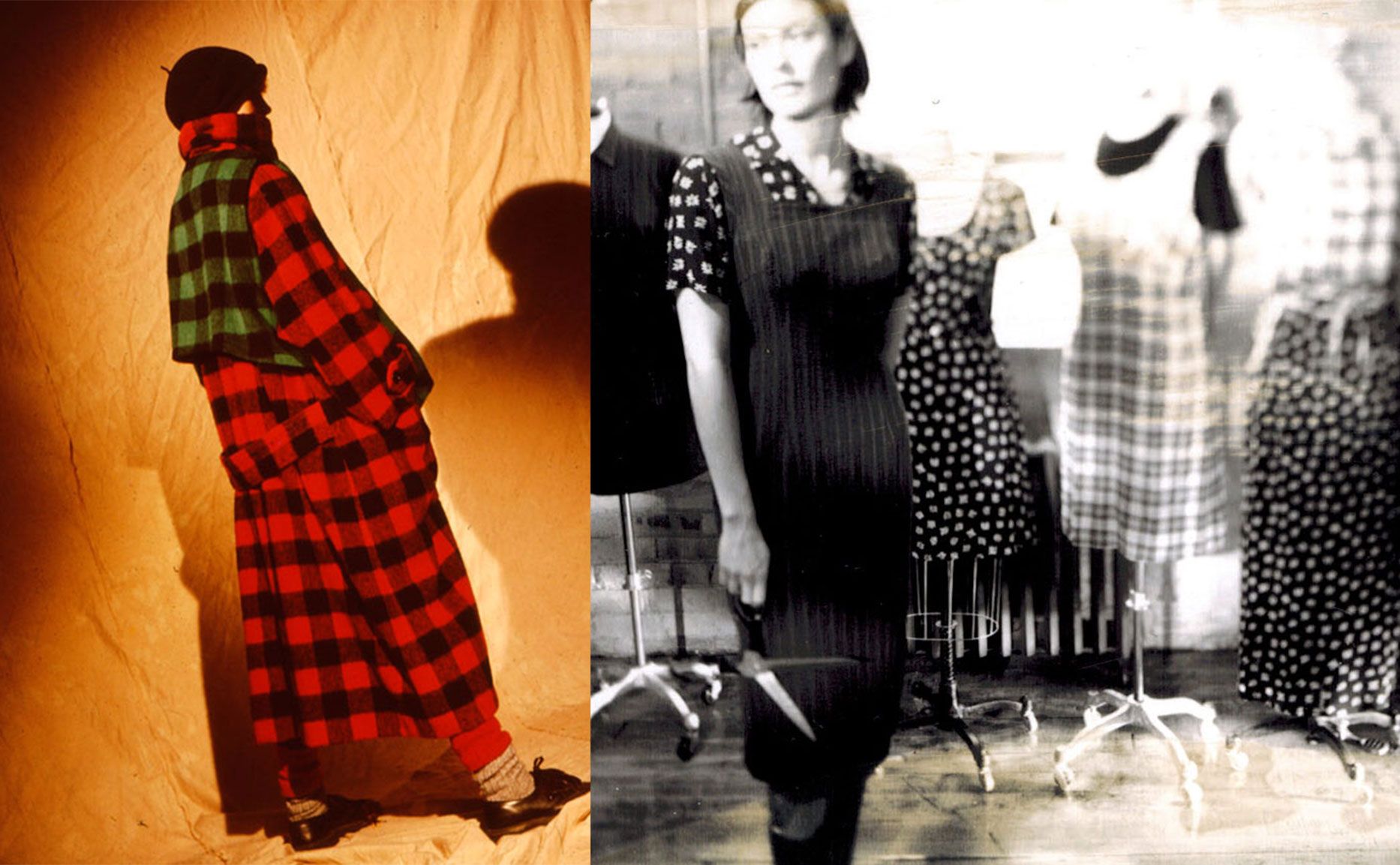
Comrags, the fashion label designed and made in Toronto for 42 years by Judy Cornish and Joyce Gunhouse, has announced the closing of its line and the iconic Dundas Street store this fall. They are, they say, retiring by choice on an upswing, having weathered dramatic changes to the industry over the decades that have long ago driven most of their peers out of the fashion game. “Our success in the beginning is because we were doing the right thing at the right time,” says Cornish. “Retiring now, we really feel this is the right time. We’re leaving on a real high; we don’t owe anybody any money.” The industry, she says, has changed. Yet again.
Comrags has maintained a consistent look – a slouchy silhouette, pants that hang a certain way, heavy on dresses and coats, a consistent subdued but energetic colour palette and an appreciation of print – over the years. The look has stayed true to the brand’s DNA over the years, but adjusted to changing lifestyles as their clients moved through the decades. When those customers were 20-somethings who lived in dance clubs, the vibe was vintage and off-beat. One of their early styles was inspired by those Italian and Portuguese housedresses you used to see in Toronto’s Little Italy shops. Others were flavoured like ’30s and ’40s slip dresses. Uniforms, coveralls and even pajamas were favourite references. As the Comrags woman grew up, the whimsy came from fun touches, like the haystack skirt, whose volume was inspired by a woman on the street with a full skirt hiked up over her bike. Clothes were often cut on the bias, for movement, and what Cornish has called “a look of rumpled dishevelment or cultivated messiness.”
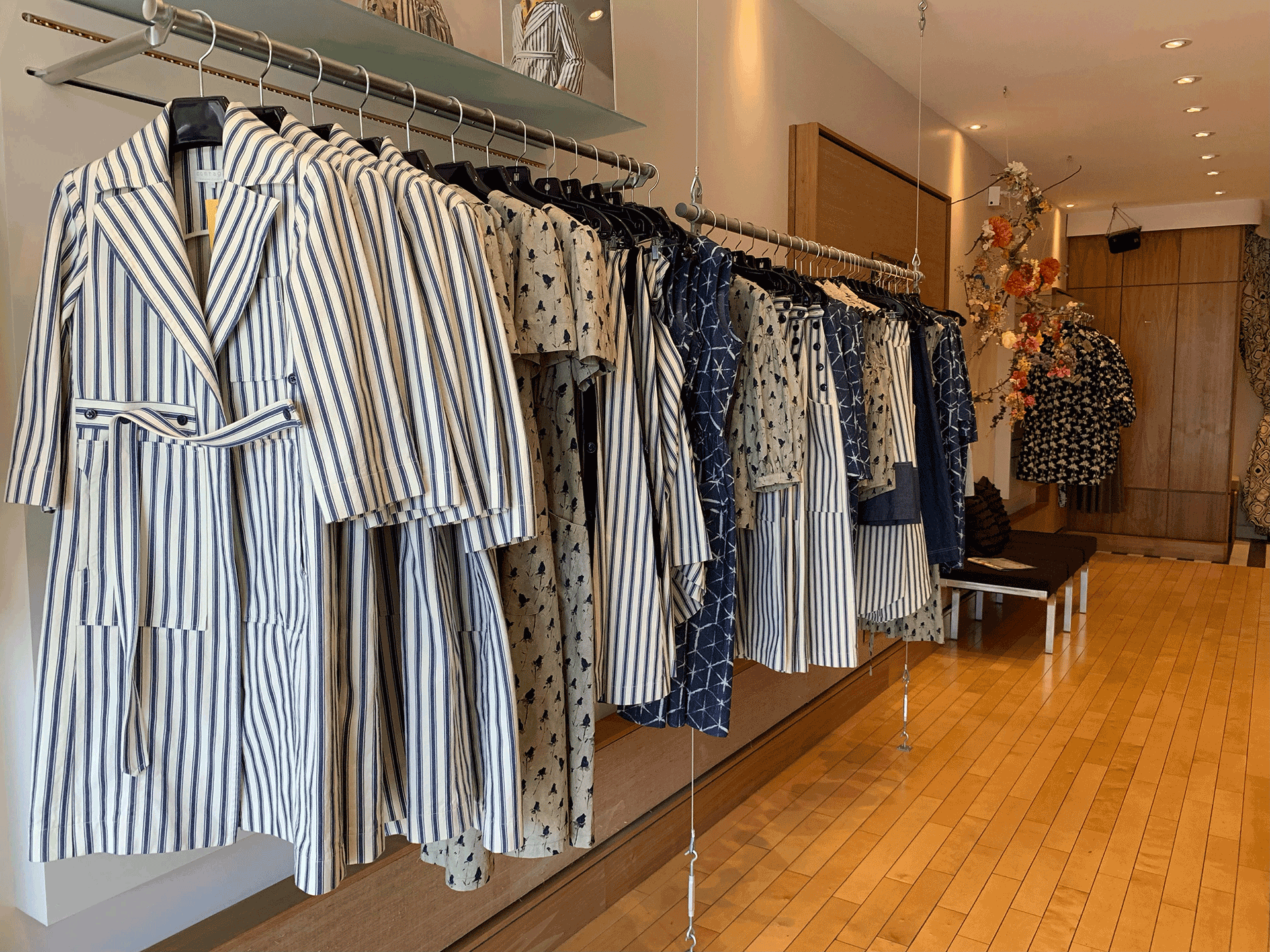
In other words: the clothes have always been cool, wearable, a way to feel great going about your real life. Their favourite description of the line came from the late legendary Canadian fashion reporter David Livingstone, who said, “Comrags is never in style, but never out of style.”
When Comrags began in 1983, there was something very cool happening in Toronto and around the world with fashion and music and club culture – think Tokyo, New York City, Antwerp – as youthful startup labels began reflecting the energy of their cities. In Toronto, there were Bent Boys, Loucas Kleanthous, Emily Zarb, Zapata, Babel Fashion Collection co-founded by starchitect Karim Rashid and former architect Jim Searle, who went on to create Hoax Couture with Chris Tyrell. Comrags sold at now-lost boutiques of the era, Metropolis and Atomic Age. The group of designers staged shows at empty warehouses, says Gunhouse, bringing in generators and music. “Toronto was not so gentrified back then,” she says. They also threw fashion shows at clubs like Voodoo and Larry’s Hideaway (where Joyce worked to pay the bills as their line caught traction), and photo studios in artist’s neighbourhoods like the Junction. “It was an exciting time; there was a lot of energy,” she says. “We’ve been lucky at both ends of our career,” adds Cornish. “Coming back to the small, controlled production, working the delivery dates around our timetables, not the fashion calendar – it is like coming full circle in some ways.”
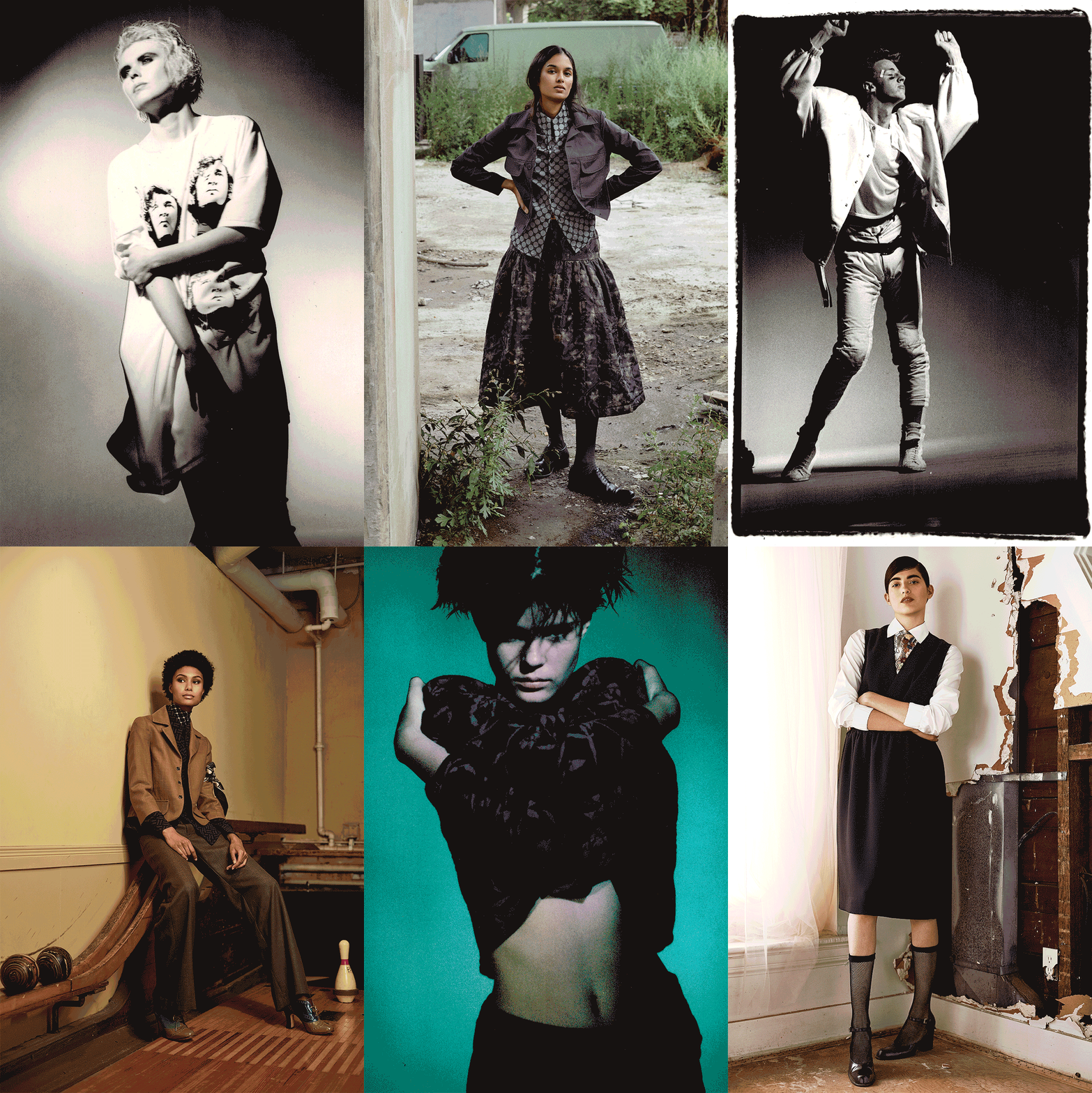
Gunhouse and Cornish can teach us a great deal about how to build a business with staying power and devoted fans (what Gunhouse’s sister, also named Judy, who runs the label’s shop, jokingly calls, “the Comrags cult”). They kept their focus on flexibility, changing their approach as they went along, following their own logic rather than prevailing retail winds.
“Our kids basically grew up in the studio,” says Gunhouse. But by the late ’90s, she says, they found themselves “spending too much time in sales meetings and not enough doing the things we loved. We were hiring people to do what we wanted to be doing. So we stopped.” Wholesale got them into department stores across Canada and the U.S., and as far away as Saudi Arabia, but those mega buyers selected just bits and pieces of the collection, which meant consumers weren’t seeing the vision as a whole.
The combination of streamlining for family life and wanting out of the constant scaling up (and inherent risk therein; Canadian designers have been burned many times over the eras by industry shifts and recessions) meant that they shifted to a direct-to-consumer model, basically selling their collections to themselves, then retailing them in the store underneath their studio. The first store on Queen Street was open from 1997 to 2011. Then they moved to Dundas.