Zoomerist Image
Zoomerist Facelifts

I Have Questions...

Should I Get A Facelift?


Looks like our readers are shy, as this letter again begins: “Please do not publish my name. Thank you.” She goes on to say “I’m 75 this year and I’m not ready to give up. I don’t want to look like a 40-year-old, but I’m not ready to look like a frail, dotty old woman.” She says she eats healthy, goes to the gym three times a week and dresses fashionably, “classic but not cool.” But: “I’m seriously thinking about cosmetic surgery or injections or something. I’m a bit jowly and have lines around the bottom of my mouth that makes me look crabby. I HATE that. Could you please do an article on the pros and cons of facial surgery, injections, etc”

This struck a nerve with me, as I am someone who toggles back and forth about facial interventions. One day I fantasize about a complete facelift, the next I’m looking at a picture of Sinead O’Connor and admiring how the late rabble-rouser wore her years with honesty, her heartache etched on her face. But that dichotomy perfectly reflects the Zoomerist goal to age with style: both approaches are equally valid, to intervene or not is a private, personal decision.

But information is power, and information is what our reader is asking for here, so I reached out to one of Toronto (and New York’s) celebrity plastic surgeons to give an overview on facelifts and injectables. Operating from his private surgical suites on Avenue Road just above Davenport, Dr. Born has been at the cutting edge of his field since the late 90s.

I propose we start at the beginning with this as an intro level column on the subject of facelifts: I’m hoping we can drill down deeper into the nitty gritty of different procedures in the future.

If there is one thing I have learned from interviewing plastic surgeons, dermatologists and medspa aestheticians over three decades now since the cosmetic surgery and medspa intervention phenomenon grew into such a big part of the fashion and beauty beat, it is this: everyone’s goals are different. Every face is different. Individual care and consultation is the beginning and end of the story. What works for someone may not work for someone else. I have not had facial surgery (see my above flip-flopping), but I have had both good and bad experiences over the years with various injectables, lasers, radio-frequency collagen treatments, etc. (Note that for research purposes, reporters only try one of a series of said treatments in order to describe the process, so the results are not what a full treatment regime would be.) 

That said, I can say with authority, that from looking at the work of various doctors and practitioners, some are more artistically talented in terms of interpreting and manipulating underlying facial structure with the tools at their disposal. 

It is thus super important to interview doctors and practitioners and look at their work. They will all offer consults, and talk to you as long as you need to come up with a plan together for how much or little as you want to do. 

You must also vibe with them: I can’t emphasize this enough. For an endeavour that changes (however subtly) your face, choose someone you trust. I have seen, and very much like, Dr. Born’s work, and I trust his talents, so I asked him to give his professional take on this question.

Call Out for Q’s...

Do you have questions, too? Why is Brad Pitt dressing like a fuzzy Smurf at the age of 59? Can I still wear a miniskirt? How do I pull off stealth wealth on a budget? Who says I have to age gracefully? What is the best sex position for a bad back? Yup, way more questions. Add your question to our list at . We can’t answer all emails personally, but please let us know if you mind us using your name in the event your question is chosen for publication.


The Zoomerist

The most important thing he told me is the one message I would like anyone to take away from this story: “Don’t go for a half-baked facelift.”   

A facelift is a major surgery, and the facial balance must be treated holistically. Facelifts are expensive and range in technique and complexity: you can get one at an average across Canada for about $8,500, but frankly a good one is in the $20,000 to $50,000 range, and an exceptional one can and does hover in the low six figures. This is not chump change — this is a house renovation-level decision.

To deal directly with our 75-year-old reader’s point, you have to adjust your expectations as you age. Says Born: “Definitely doing a facelift on someone in their 40s is going to be a home run; it’s easier, the skin is better, the work is lighter, can get fantastic results.” Results can last up to 10 years. (And yes, people do get second facelifts.) 

“As you get older,” he says, “there is more complexity, the skin changes, there are more fine lines and wrinkles and more volume loss. The result simply doesn’t look as good.” 

That said, if you are in good health and have a realistic understanding of the outcome — and again, a good surgeon really needs to explain this outcome in detail — surgery is a good option. It will make a difference, for a price.

As for less invasive procedures, Dr. Born is careful to say that for older patients, “injectables can only do so much.” While it is true that doctors get better all the time at using the various restorative agents you can put in needles, from Botox to fillers and PRP (platelet rich plasma, aka vampire injections of your own blood spun through a centrifuge to concentrate plasma to stimulate collagen), skin laxity is an issue with increasing age. These approaches are often used in tandem, and the bill is not small, as you can ratchet up an $8,000 to $10,000 tab pretty fast. 

I’m going to toss in a few pop culture examples here of celebrities in the 70-plus-zone (Dr. Born did not comment on these, this is entirely my aside here). I’ve interviewed Jane Fonda, who is now 85, several times, and while she has sworn off surgery after two facelifts in the past, in her 40s and her 70s, you can’t say that up close in person she doesn’t look really amazing, glowing and natural. And maybe it is the L’Oreal anti-ageing products she represents. We also have the case of Sharon Osbourne, who has also sworn off plastic surgery at age 70 after multiple trips under the knife. Celebrities have taken the vanguard on this subject, and we should be grateful for the ones who are open about the work they’ve had done.

And as for 60-somethings, we could do a whole ten-part series on Madonna’s literally trend-setting facial work over the years, and how it represents the changing ideals of plastic surgery.

Dr. Born emphasizes that what is important is looking at the face as a whole, and that restoring volume is a huge part of the equation. An idealized face, he says, “is a defined jaw, with breadth at the side of the forehead down to the cheek, a very triangular shape.” These are the magic elements that make up what we consider beautiful. “What happens when you just start adding volume back in, well you may not have lines or folds, but you don’t have beauty. You can’t add back in fillers without repositioning features.”

In other words, you can’t just change one thing that bugs you on your face without addressing the face holistically. “If you just do the bottom of your face when you are older that’s a disaster, a band of the neck looking tight looks like a band around the jawline. It should really be a facelift, as it doesn’t give a harmonious experience.”

We can get into the different types of facelifts in another story — younger patients can often go for a SMAS lift (short for Superficial Muscular Aponeurotic System) and Deep Plane is often advised for older patients, as this more invasive procedure also addresses skin laxity. But rest assured that minimizing scarring is a major focus in the plastic surgery world. Depending on whether you get a brow lift combo with lower face lift, or forehead work, the scars are either buried in the hairline better than previous generation face lifts (now “cut across the hair follicles so they grow into the incision”) or behind your ears. “Only your hairdresser will know,” says Dr. Born. There are also new anti-metabolite treatments for scarring to reduce visibility.

Facelift work is usually combined with the above-mentioned more aggressive medspa treatments to take care of the skin, texture, tone and colour, says Dr. Born. The world of medical aesthetics is huge, and boggling. There is a lot that can be done, at any age. But remember that a good plastic surgeon will put your feelings first: help you adjust expectations of what can be done, and make sure you understand that it won’t change your life. 

It can be an incredible thing, and I’ve interviewed dozens of patients who are absolutely ecstatic about their investments. They have also been honest with me about the downtime, and the moments in the recovery (that can be long) where they have had regrets, or even become depressed. 

I look forward to exploring the psychological side of plastic surgery also in a future column. Please ask Zoomerist about that, so I have a reason to get another doctor on the phone!

Always asking questions,

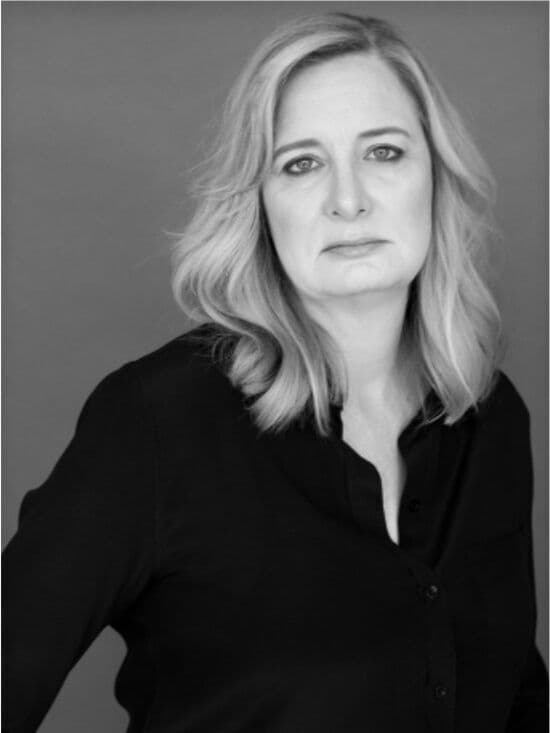
—Leanne Delap

PHOTO CREDITS: GETTY IMAGES; HELEN TANSEY (DELAP)

YOU ASKED & WE ANSWERED