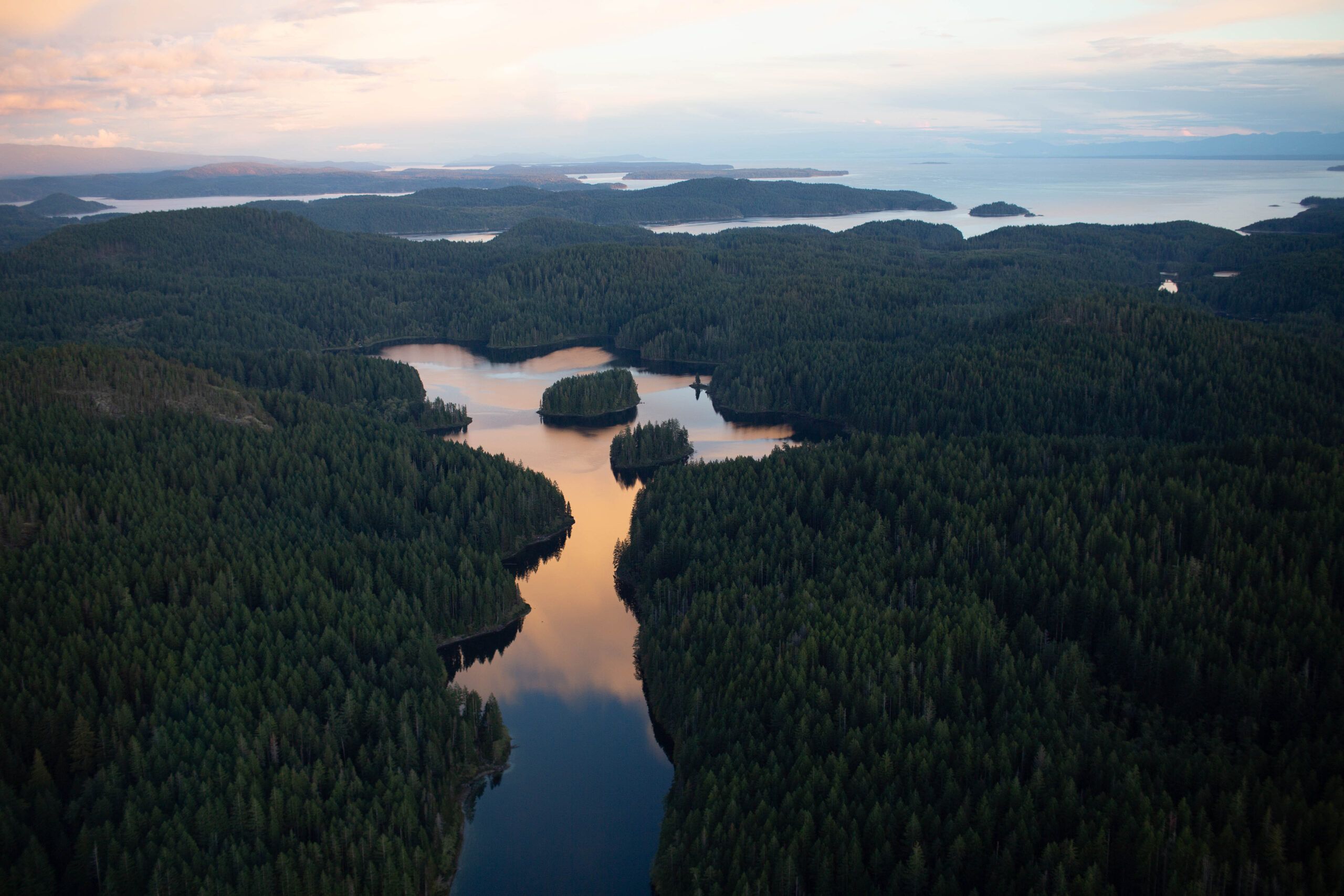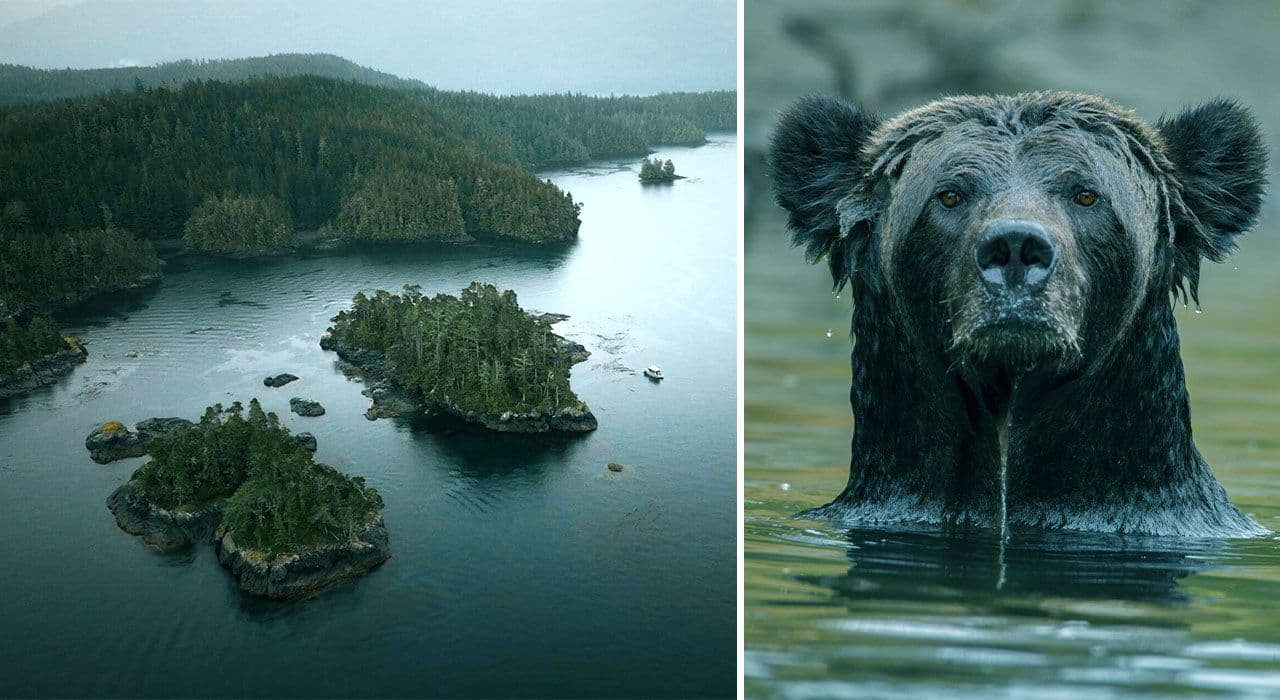
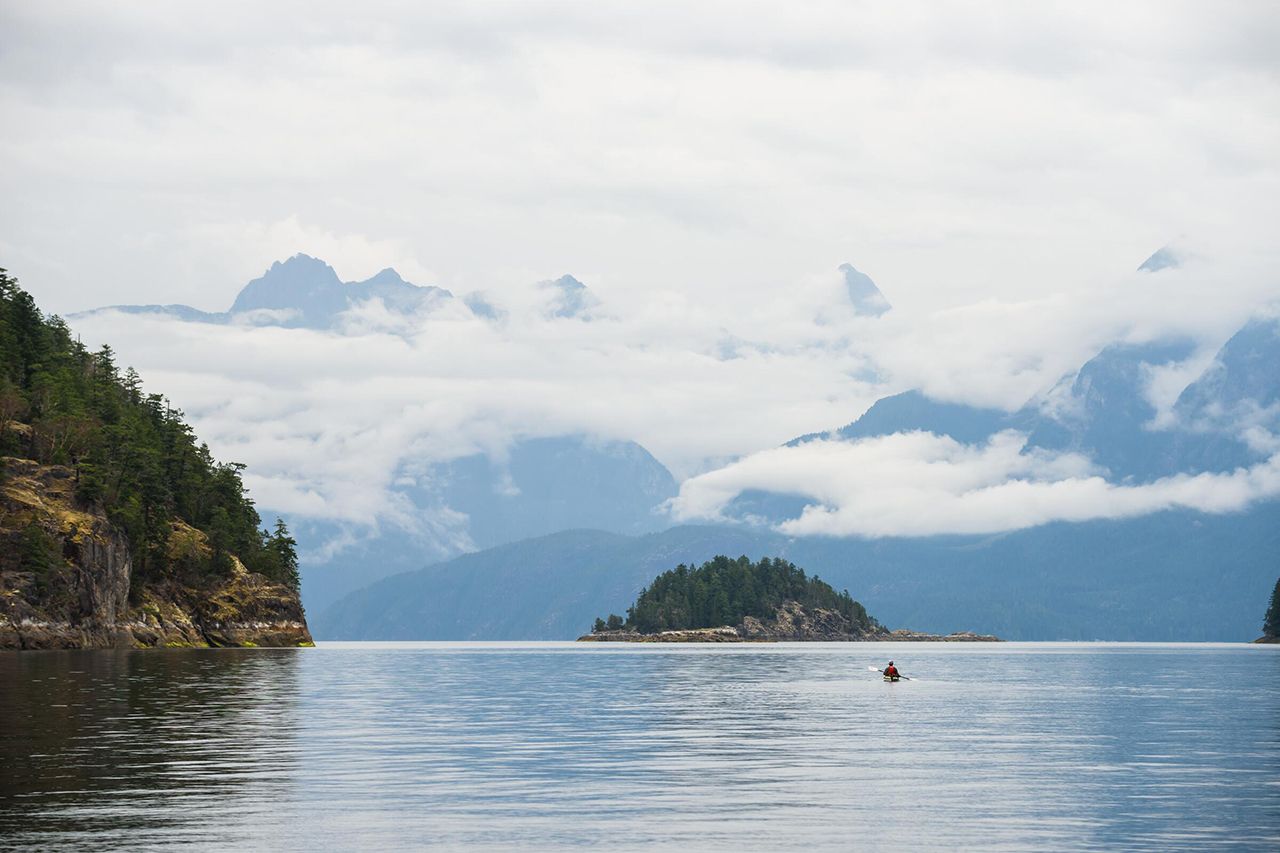
I’ve never been on a sea with a surface as still and yet roiling as that of British Columbia’s Desolation Sound. The deep-blue water is constantly moving as it is squeezed and pushed between the narrow openings of the Sound’s islands and inlets, creating mesmerizing whirlpools, swirls, creases, eddies and standing waves that sea lions play in. Yet despite all the movement, the surface has a viscous quality. I am here to go on safari – a Canadian safari – to spot grizzly bears as they fish for salmon before bedding down for the winter. The bears are in the appropriately named Great Bear Rainforest, accessible only by boat, as is true of so much of this area around Vancouver Island with a shoreline more than 3,400 kilometres long that snakes in and out of heavily forested fjords, coves and bays.
I am being taken out to Bute Inlet by Campbell River Whale Watching and Adventure Tours on a reassuringly rugged steel boat, built to withstand the ever-changing September weather (I know why so many of these places have Scottish names, the weather is so similar to that of the Highlands). The three-hour journey is an adventure in itself, as we navigate the convoluted maze of islands. The first thing we spot is three orcas swimming at speed right along the shore. (I learned later that Desolation Sound has one of the most dramatic drops in altitude from mountain peak to ocean floor in all of North America, with some glacier-carved fjords with depths of more than 2,000 feet deep). Apparently the orcas are hunting sea lions, and with their sharp, vast, dark dorsal fins and velocity, they certainly earn the moniker “killer whale.” They are thrilling to watch.
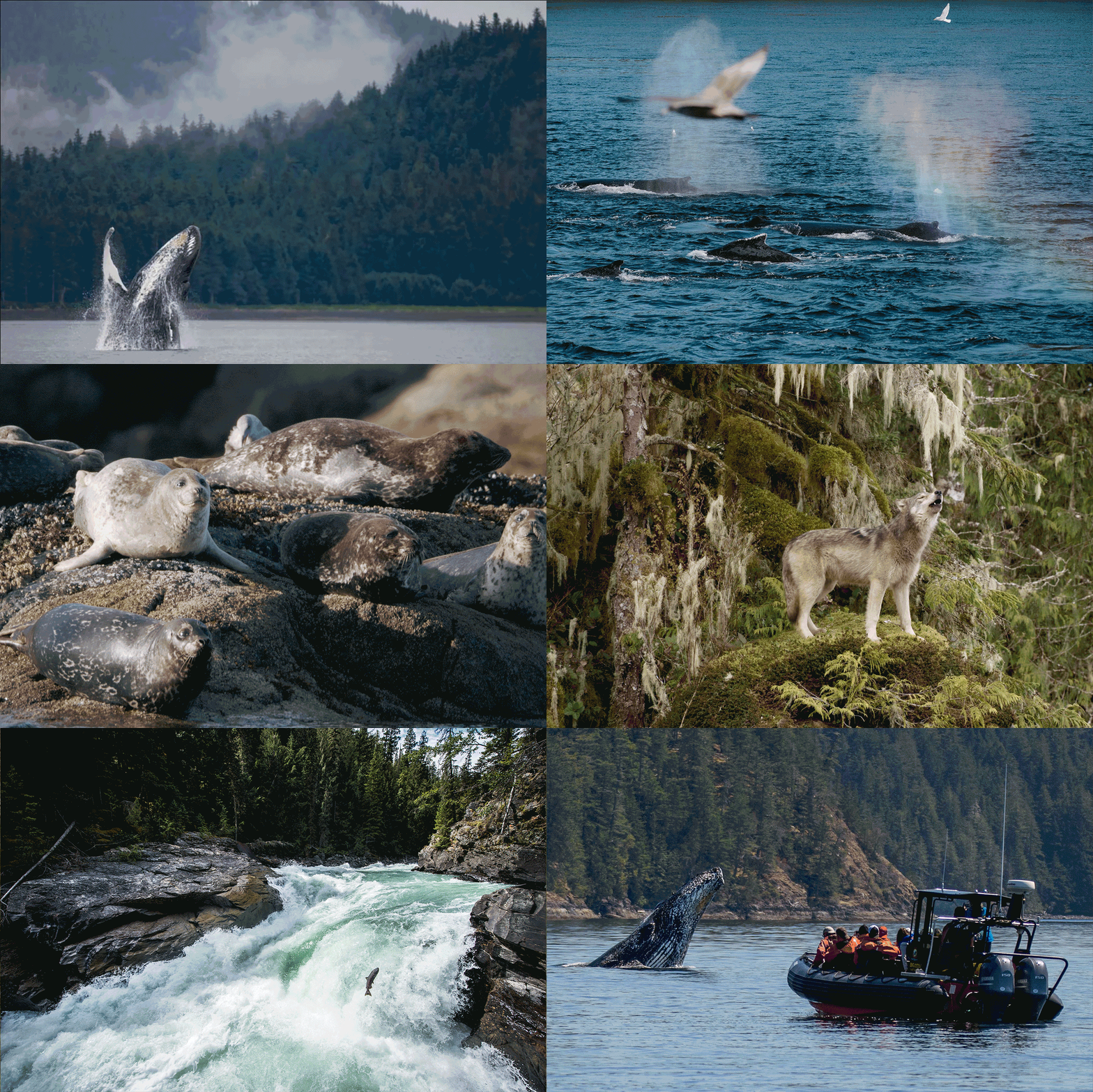
Later, we are given the treat of seeing an even faster marine mammal, the Dall’s porpoise. These black-and-white speed demons can swim up to 55 kilometres per hour – keeping them well out of reach of the orca’s jaws. They love bow-riding and they put on a superb show for us, with five or maybe six of them leaping and playing in and out of the wake and around the bow of the boat. All around us are seals, eagles and sea lions. By the time we make our way down to the dock on Bute Inlet to start the bear-watching tour, my wildlife-loving heart is already deeply full.
I have been on safari in South Africa, way up near the border with Zimbabwe in a place called Thornybush, where I saw 11 lions make a kill, leopard brothers playing in a dry river bed, languorous giraffes and endless wildebeest. But one of my deepest realizations came on a walking safari through the bush. I had been praised for my animal-spotting skills, which of course made me inordinately pleased. In that moment it struck me that I had spent every summer growing up in Northern Ontario, in our own version of the bush, surrounded by apex predators and nature in all of its abundance, and yet knew so little about it compared to our guides in South Africa. It changed the way I looked at our ecosystem when I got home, appreciating everything from the industrious and sometimes too-abundant ants, to the different types of scat left by mink, otter and bears, to the fact that most Canadian predators run away from rather than at you.
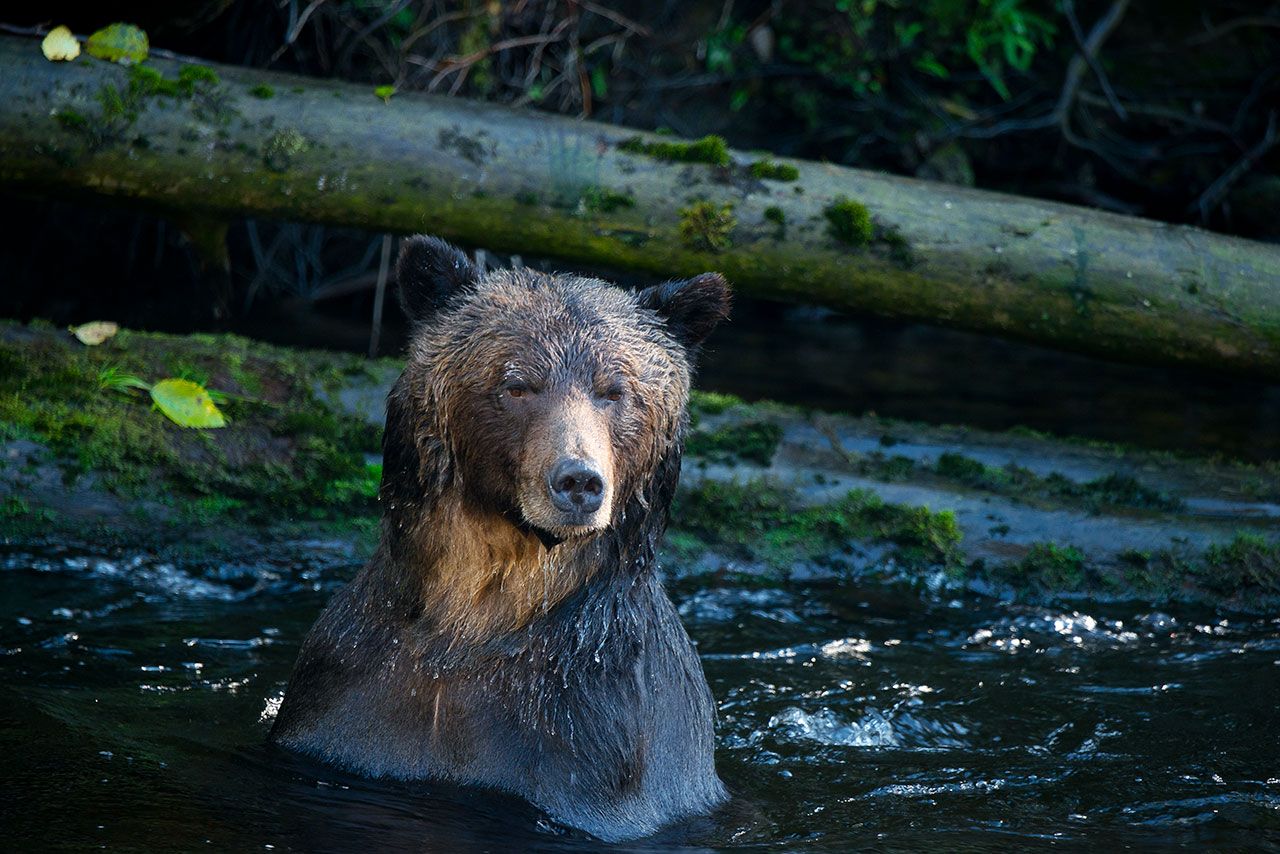
So here I was, about to view one of our biggest and most formidable animals, the hulking coastal grizzly. First, we are greeted by the Homalco First Nation guides, whose land we are on – Homalco means “people of the fast-running waters.” They take us to a rustic hut with a wood-burning stove to warm ourselves, and with displays describing both the territory and the bears we are about to see. There, I was able to compare the grizzly’s claws to those of black and polar bears – the grizzlies are the longest at 4 to 5 inches, designed to dig out burrows and dig into salmon. I also learned that coastal grizzlies are significantly bigger than their inland relatives thanks to their salmon-rich diet. Males can get to 400-plus kilos, and stand 2.5 to 3 metres on their hind legs. We were asked to be quiet as they drove us through the forest to hides built on wooden stilts twenty feet above the fast-flowing, chalky turquoise Orford River.
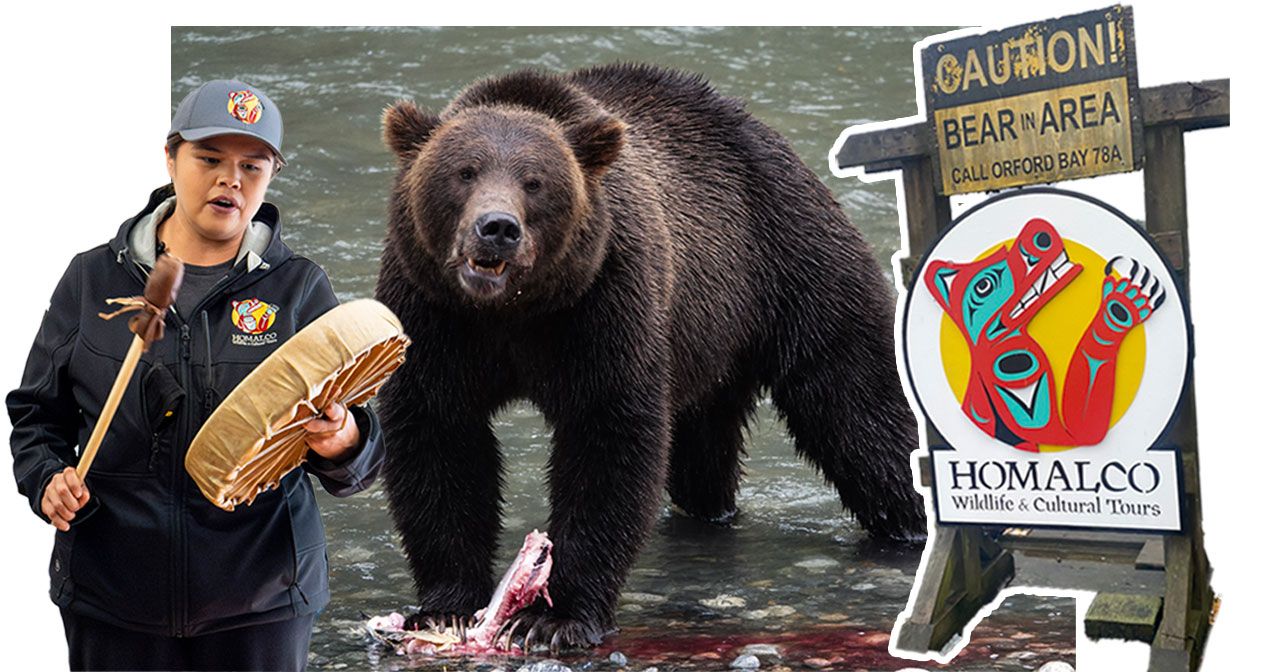
I had prepared myself that I might only see one or two bears, but even before we got to our first hide, we saw a large bear in the river, a torrent of swift water flowing around him, as his head moved back and forth scanning for salmon. The river flows at about 15 knots or 27 kilometres per hour, an incredible force to stand and stay rooted against (I know because I went snorkelling for salmon in the nearby Campbell River and was powerless against the current – I will write about that experience soon). It explained the grizzly’s enormous shoulders and bulk.
As we silently took our positions in the hide – I was grateful the open stairs had a wire mesh around them and a steel gate at the bottom – the same grizzly walked onto the rocky bank of the river and started sniffing the air. Soon, another female bear appeared, walking towards him. They made wary, large circles around each other before getting back to fishing. Our bear-spotting luck continued from there. At another spot, we watched an enormous male lying lazily on a sand bank, seemingly oblivious to us, and everything else in the world. Then suddenly he leapt up, swiped his paw in the river and pulled out a salmon, which he carried off to the woods to eat away from the competition. He reappeared, visibly content, to lie in his sandy bed and await the next fish. The bear’s acceleration from lazing to a rippling wall of muscle reminded me of the lion pride I saw in South Africa, who one minute looked like sunning, indolent cats, and the next were tearing apart a wildebeest.
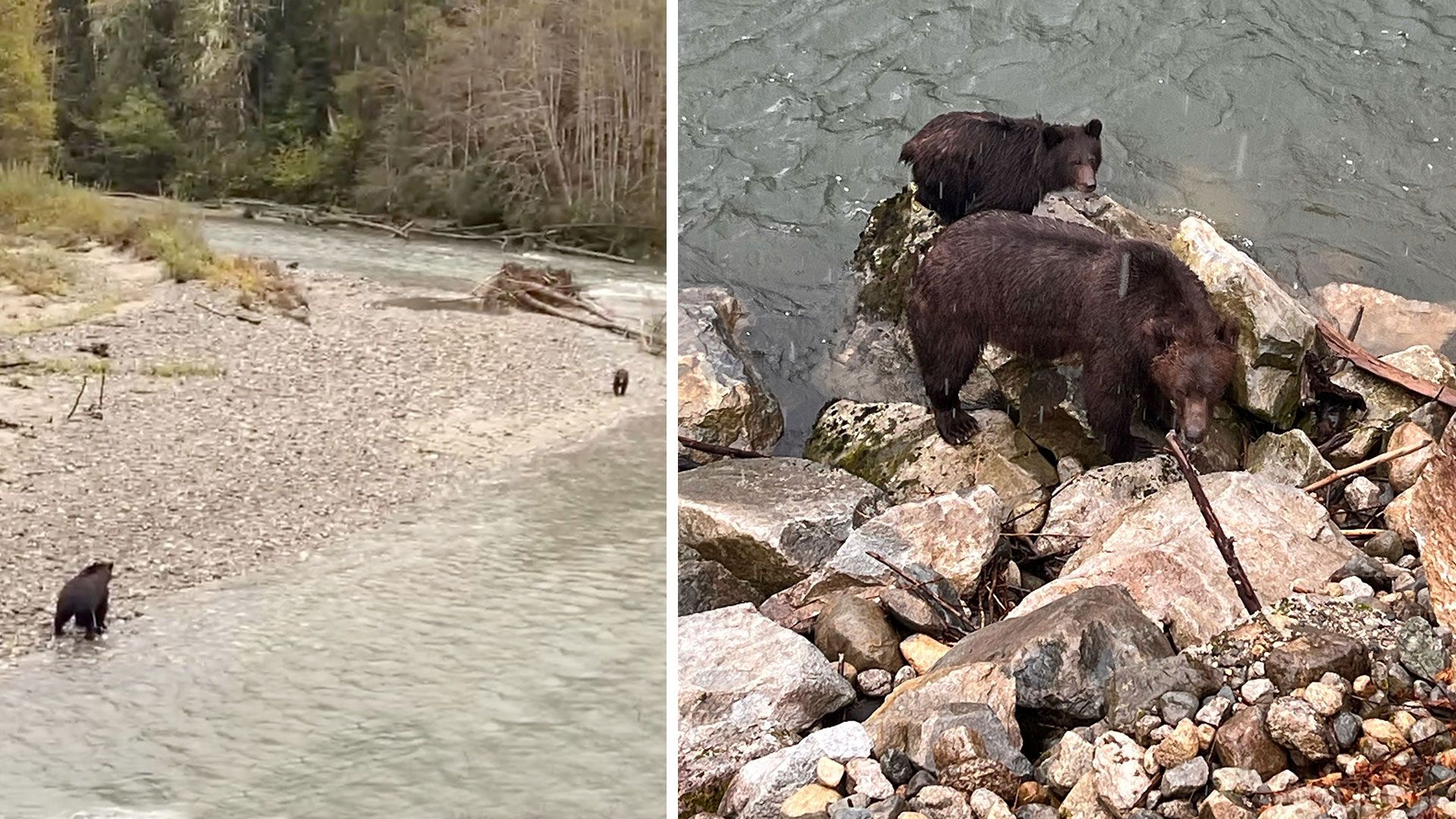
We saw seven grizzlies that day, all intent on bulking up on the omega-rich salmon before winter. The ultimate sighting was a mother and her cub, walking along the banks of the river right under us; they were so close I could see each claw, the powerful ripple of her shoulder muscles, the quiver of her nostrils as she checked the air to make sure her cub was safe. We watched her lead her cub over a fallen log to a pebbly island, and saw the cub start playing on the shore while she scanned the river for fish. Listening to the sound of the river rushing around us, rain falling on leaves and birds calling while we quietly, calmly waited for our next sighting was remarkably contemplative.
I found myself thinking about the circle of life, how the sea feeds the salmon, and how the salmon then bring the sea to the forest when bears carry them into the woods to eat. Their carcasses fertilize the soil, making the trees grow faster and healthier. The faster-growing trees then provide shelter for the salmon in the river. The Homalco First Nation have long-cherished and protected this interconnected relationship to the salmon. A common belief is that the salmon are relatives rather than simply a resource – travellers returning from the sea who feed people, bears and forests alike. Protecting the rivers they return to is therefore both a cultural responsibility and an ecological one.
At Bute Inlet, the Homalco run the Taggares Salmon Hatcheryat the mouth of the Orford River that now hatches millions of young chum salmon each year, significantly boosting the number of fish that return to spawn. They restore and maintain the river banks, protect habitat and monitor the wildlife. Their deep knowledge and respect for the land and sea infuses the experience. As we get on our boat back to Campbell River, our guides wave us goodbye and disappear back up into the vast, mist-shrouded forest. But that’s not the end of our Canadian safari. On the way back, humpback whales obligingly breach, bald eagles fly overhead and more Dall’s porpoises race the boat. The clouds lift, the rain stops and the piercing blue and green of the sea, sky and trees vibrates.
MAPPED INTEL
STAY
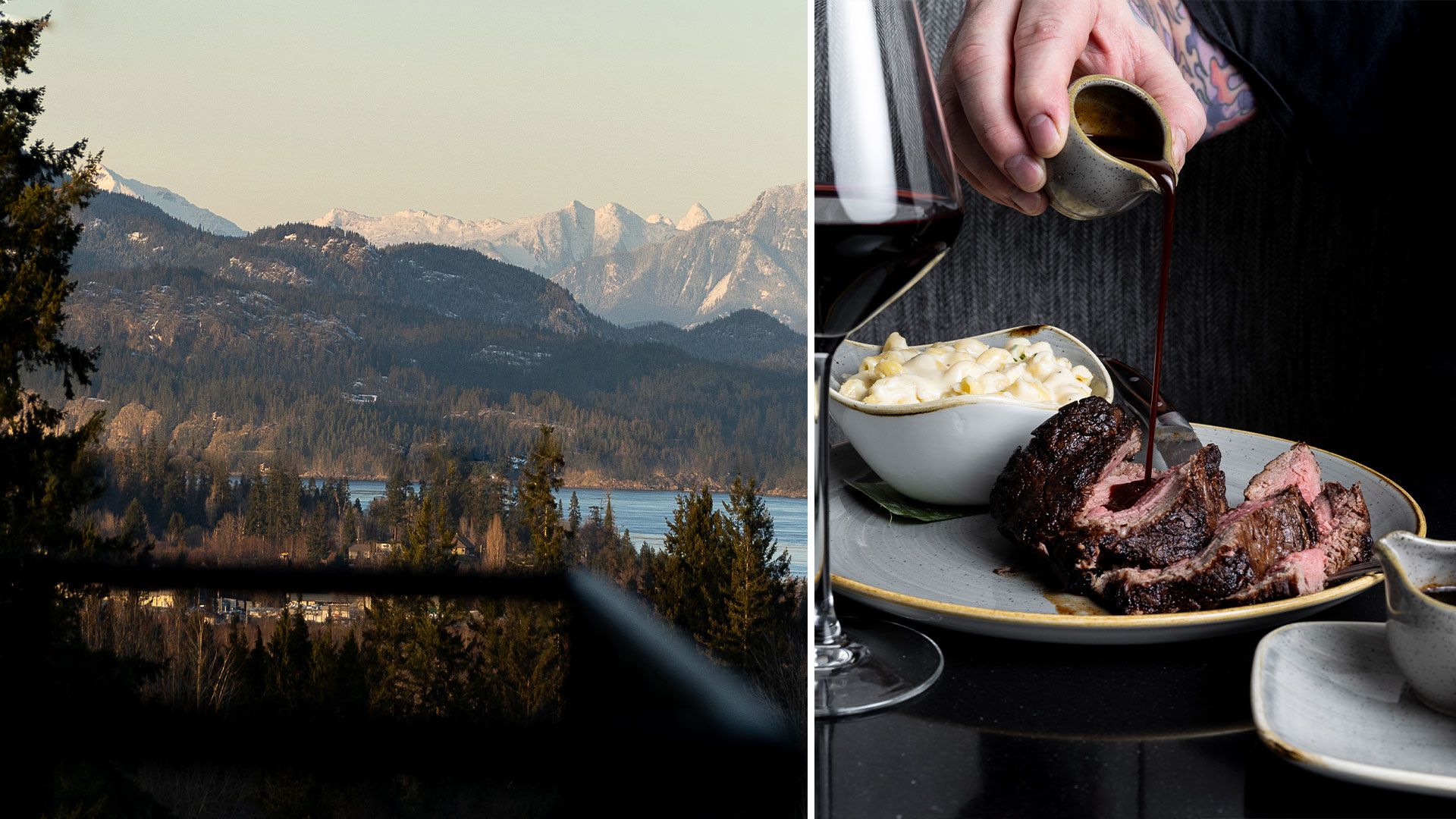
After a day on the water, Naturally Pacific Resort, just outside Campbell River, is a delightful hotel to return to. Opened in 2024, with 100 spacious, softly modern rooms, a spa and an excellent restaurant, it is also home to the Campbell River Golf Club, an 18‑hole, par‑71 golf course designed by Graham Cooke.
GETTING HERE
There are seasonal direct flights on Air Canada, Pacific Coastal Airlines and WestJet from Vancouver International Airport to Campbell River Airport, and regular flights from Vancouver to Comox / Courtenay Airport. The drive to Campbell River is about two hours north.
TOURS
Grizzly bear-viewing trips can be organized through Campbell River Whale Watching & Adventures from mid‑August through October, with September as often the best month to see bears feeding on the salmon runs. Because tours are limited and peak season is busy, it’s best to book well in advance to secure a spot.