





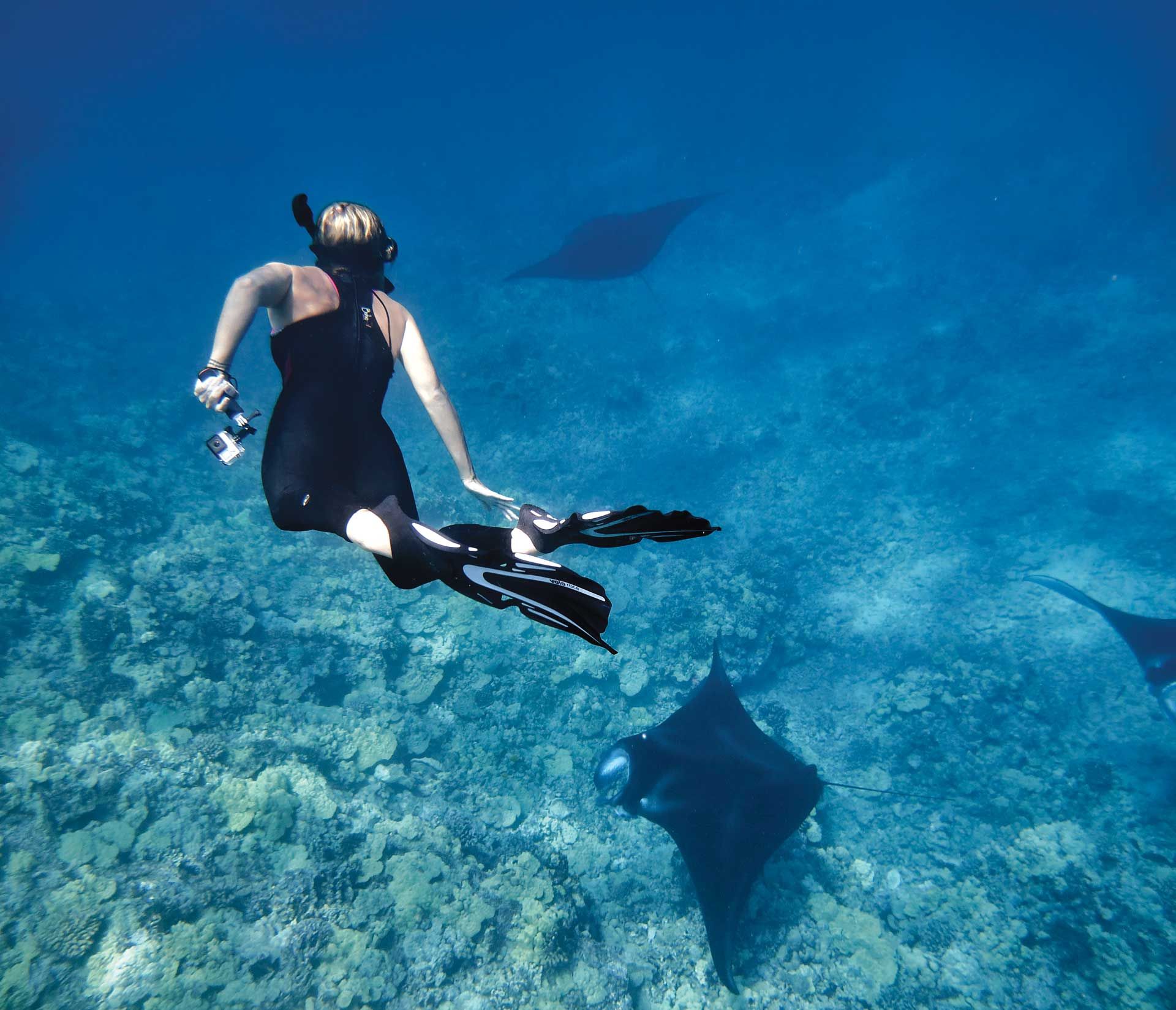
After 50 years of travelling, I finally achieved it: the perfect trip. Admittedly, it wasn’t the longest or the most exotic trip I’ve ever taken, or the most adventurous or thrilling. Three days in Copenhagen in May. I’d never been to Copenhagen and I’d always wanted to go (who doesn’t?). Simple enough, but simplicity alone never guaranteed anyone a perfect trip. Missed connections, mechanical trouble, bad weather: When the itinerary spans a mere 72 hours, it doesn’t take much to upend your travel plans. But on my Danish mini-vacation, everything went right from the instant I boarded my flight and – I swear it – found Swedish actor Alexander Skarsgård in the seat next to me.
Every minute in Copenhagen was dreamy. The weather was ridiculously gorgeous; the streets full of smiling residents on pastel-coloured bicycles. Small electric boats cruised the city’s canals, with passengers picnicking on deck. There was an epic dinner at Fiskebaren (warm sourdough bread with sea moss butter! Oysters! Orange wine!) in Vesterbro; blissful hours browsing the Politikens Boghal bookstore; a long walk through the King’s Garden to the sculpture of Hans Christian Andersen’s Little Mermaid. But the moment that conferred perfection – the moment I remember most vividly, and always with longing – was when I walked out of my hotel in a bathing suit, climbed down a ladder, and went for a twilight plunge in the Kalvebod Bølge harbour bath.
To put it mildly, most urban centres do not evoke the urge to bathe in their harbours. (I swam in New York City’s East River once, and it’s not an experience I’d care to repeat.) Copenhagen is a magnificent exception. Here, the water was 21 C, clean and restorative, but it was the setting that blew my mind. As I floated in the harbour canal, one of the city’s main arteries, I looked up at towering office buildings, a conference centre, an opera house. And I wasn’t alone: I was among dozens of harbour bathers. Floating docks, replete with saunas, lined the canal. All along the waterfront, ladders beckoned: Do it. Enter the heart of this place. Slipping into the Kalvebod Bølge was like accessing a deeper level of Copenhagen’s soul.
If the aim of travel is immersion in a spot you find alluring – to feed curiosity, mind, body and soul – then one way to make any trip richer is to literally immerse yourself. Step into a canal, ocean, lake, river, cenote, hot spring, cold plunge, pool, mineral bath – they’re all excellent options. The point is to soak in another layer of experience, to open the aperture of your senses. To know a place by its waters.
This advice is biased because aquatic environments are my passion, but that doesn’t make it any less true. Water always tells interesting stories. Plus, it’s beautiful and being around it tends to make us happy. It can invigorate us. Soothe us. Rock us back on our heels in awe.
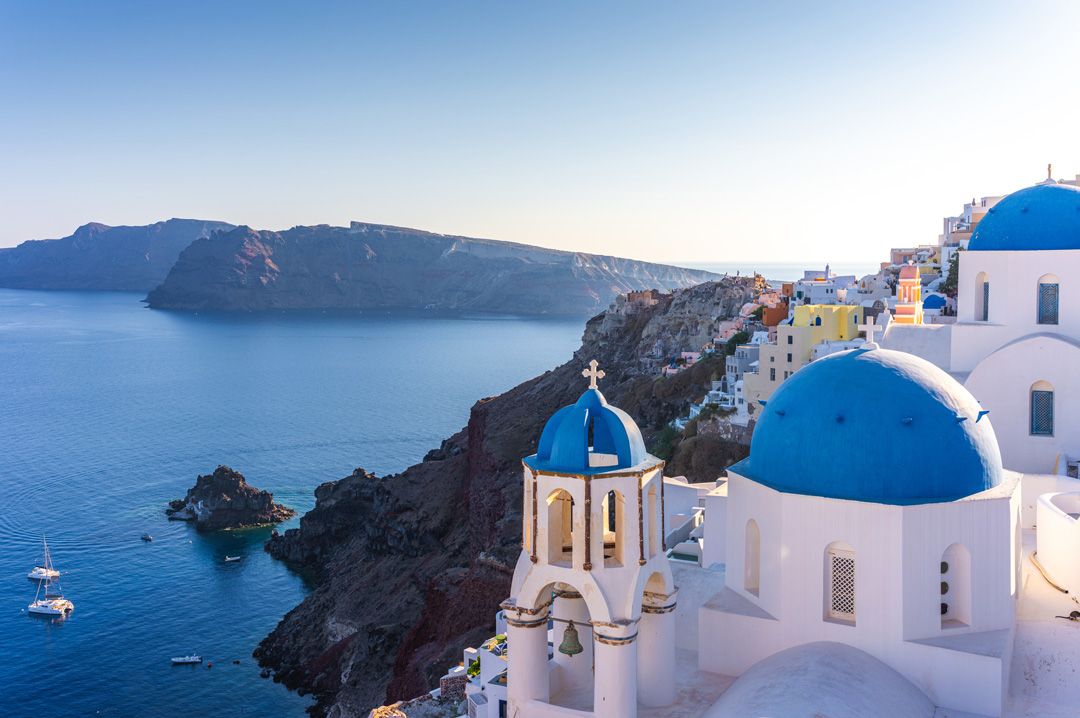
I can’t tell you how many times I’ve been rocked. A few years ago, I went to Greece because I was writing a book that included a chapter on the Minoan civilization. The Minoans have vanished into the mists of time, but at their zenith 3,600 years ago, they were known for their sophistication, artistry and mastery of seafaring. They lived in palatial settlements on the Aegean Sea’s Cyclades Islands until around 1,600 BCE, when a volcanic eruption blew apart Thera (now called Santorini), resulting in the dramatic cliffs and deep caldera – the collapsed centre of the volcano – that have graced a zillion Instagram accounts. (Some scholars believe this eruption was the basis for the legend of Atlantis.)
Cruising into Santorini on a ferry from Crete, I stared at those cliffs and thought about the cataclysm that formed them, and how so much lost history lay on the seafloor, and all I wanted to do was get into the water. Sure, I took in the action on land: museums, ruins, shops, cliffside tavernas. But as soon as possible, I dove in at the island’s northern end and swam along the caldera’s rim. I traced the cliffs as they plunged underwater, their sheer verticality dizzying, their rock faces jagged, as though they’d been clawed apart. Treading water, I could see Palea Kameni – an island in the caldera’s centre where a volcanic vent still smoulders, and where day trippers go by boat to bask in its hot springs. On the wind, I could smell its sulfuric fumes. And I understood, in a visceral way, what had happened here.
You can’t get that from a guidebook. And here’s the best part: no crowds. For all its beauty, Santorini is generally packed to the point of claustrophobia. Another merit of taking a fish-eye view when travelling is that you’re likely to have the water to yourself – and often that water conveys the very essence of the destination.
Rodrigo Valadao/Getty Images
What’s Egypt without the Nile? I’m not recommending a dip (crocodiles, pollution), but how about a river cruise to Luxor? If you sail as far as Alexandria, you can snorkel above the sunken ruins of Cleopatra’s palace or scuba dive on the Lighthouse of Alexandria, one of the seven wonders of the ancient world. In Tuscany, why not give a nod to the Romans by revelling in sybaritic excess at the Terme di Saturnia baths? Ask any Tahitian: Every Pacific isle offers a perch for sleeping and drinking Mai Tais, but it’s the blue universe below that truly dazzles, and all you need to explore it is a bathing suit. And, of course, let us not forget Antarctica, the pinnacle of aquatic travel, where the entire landscape is made of water.
Closer to home, it makes no sense to confine yourself to a scenic outlook above Niagara Falls when you can board the Maid of the Mist, don a slicker, and feel the falls’ thundering energy in your solar plexus. Canoeing through Algonquin Park is classic Canadiana, but Georgian Bay, with its crystalline visibility, is sublime. Touring around Vancouver Island, where nature has a habit of showing off, how could it get any better than to gaze into an orca’s eye from a kayak?
Whenever you add water, you add the likelihood of encountering wonders. One time, on a cruise around Papua New Guinea and the Solomon Islands, I went for an ordinary snorkel in shallow water and came upon Leviathan: a barracuda that had to be seven feet (two metres) long, with dagger teeth and a head bigger than mine. I was startled, then frightened, then enchanted. But not as enchanted as I was the next day when I ran into a school of bumphead parrotfish. I had never before seen these gentle, cartoon-faced giants with their square heads, pink lips and buck teeth, and I was instantly charmed.
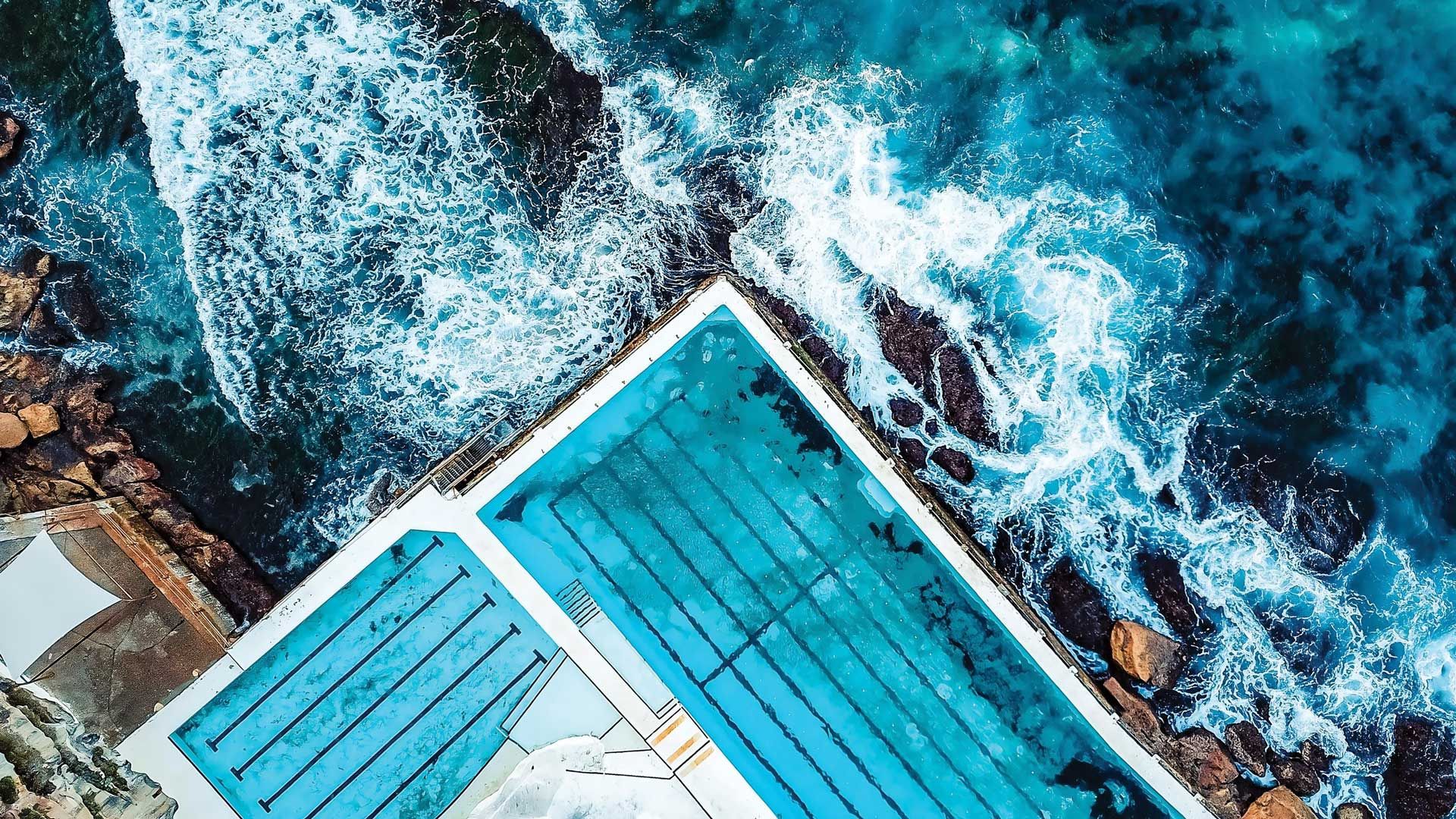
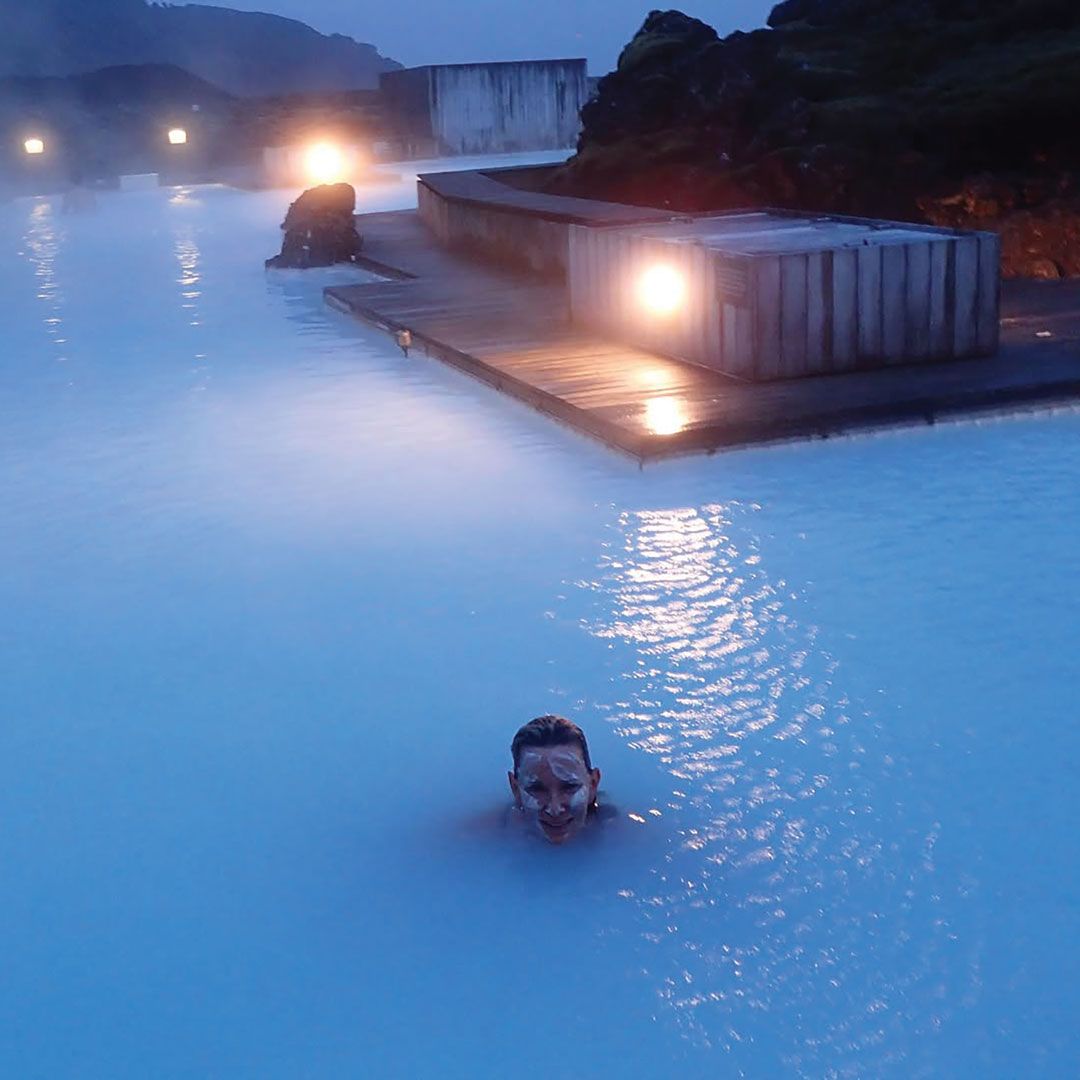
Climb aboard a catamaran, rent a paddleboard, pull on a pair of fins – dive in. That’s my philosophy and it has served me well, which is why I like to share it. Even pools excite me, and the world is filled with fabulous pools. Like Icebergs Club at Bondi Beach, Australia – a bucket list item for swimmers – where the 50-metre saltwater pool is hewn out of a rock promontory, and ocean waves sweep across the lanes. And thermal pools … my god, they’re better than Xanax. I’ll just admit it now: I’m obsessed with Iceland’s Blue Lagoon (specifically its Retreat Spa). That silky geothermal water, emanating from 2,000 metres underground, has a narcotic effect on me. I return often for a fix, and next time I will add to my euphoria by free-diving the Silfra Fissure in Thingvellir National Park, the only place on earth where you can glide between two tectonic plates and reach out and touch them both.
Being at large in the world is pure unadulterated freedom, and it’s equalled only by the elemental freedom of being in, on or under the water. Tourists are happy on the flatlands; travellers go for dimension. It’s all about transcending the obvious, expanding your perspective, taking your imagination out for a spin. On this blue planet, there is no lack of liquid magic, and our communion with the aquatic seems, to me, more important than ever. Because even amid the chaos that surrounds us now, peace and joy can always be found just beneath the surface.