


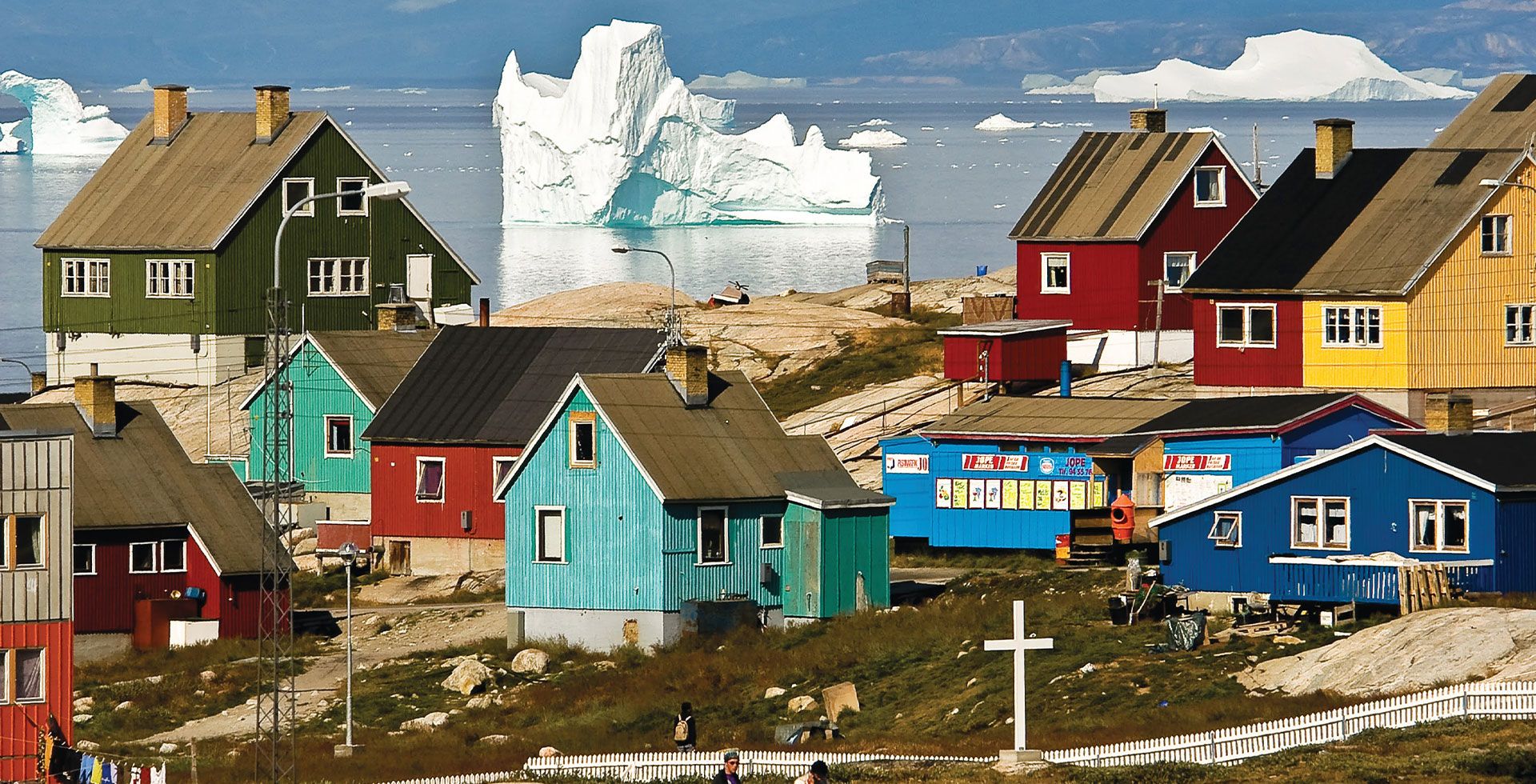
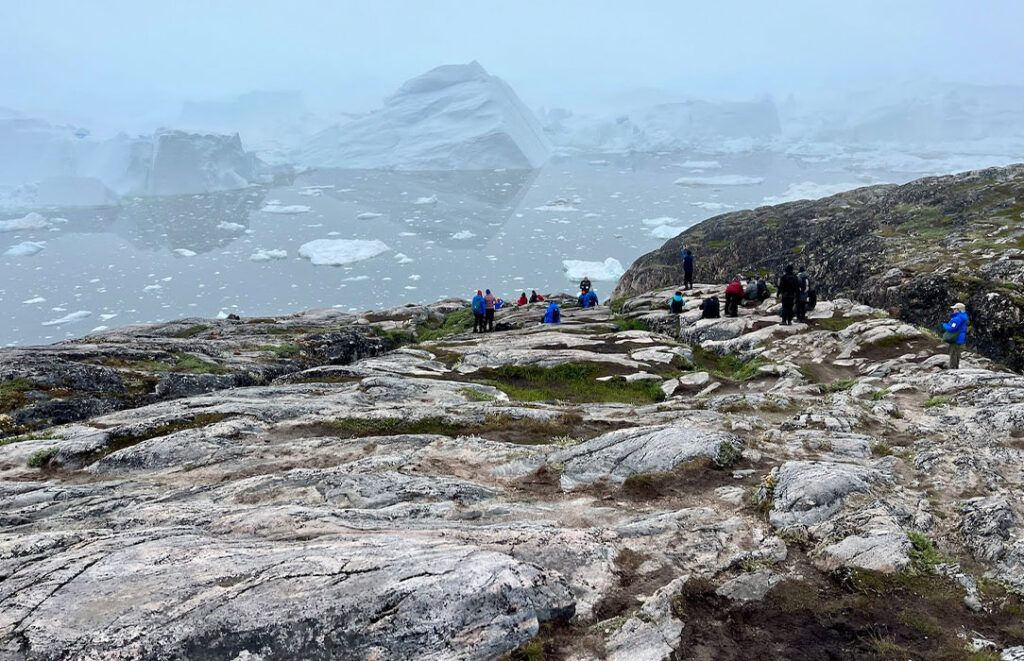
For the second time in a year, I sat in silent reverie on lichen-covered rocks in western Greenland overlooking the iceberg-choked Ilulissat Icefjord. When I was first here with my family, I did little more than admire the melting ice sculpture gallery as it floated between a calving glacier and the sea. This time, though, I was alone and thinking about heat waves, forest fires and the dangers of a warming world.
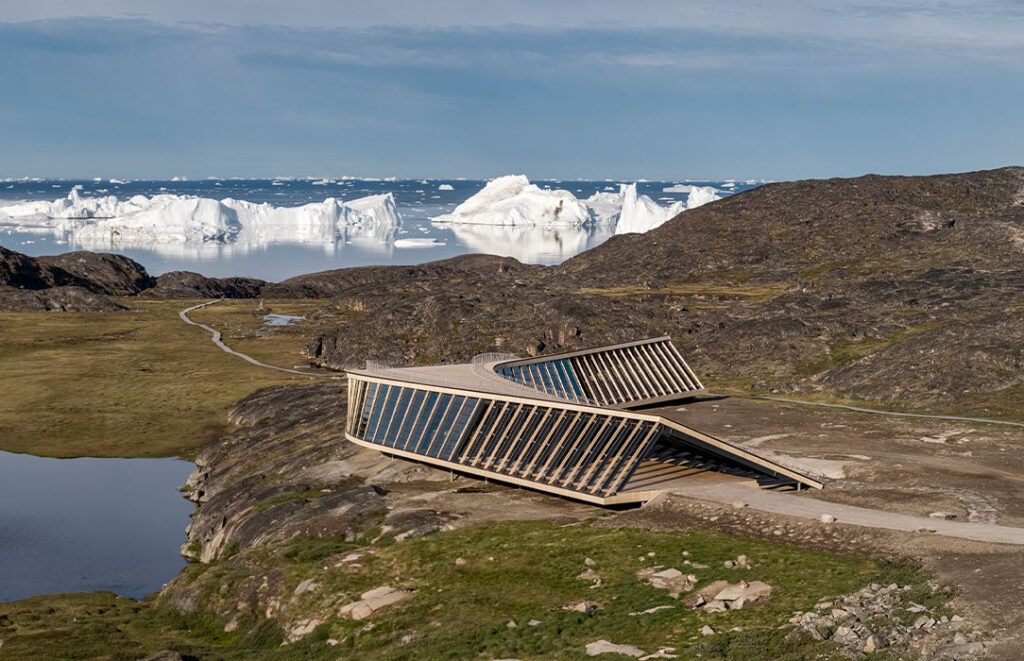
Well, alone except for my fellow 130 passengers on an Arctic expedition cruise. And alone except for several hundred Europeans from another ship in Ilulissat, population 4,670. As we explored the iceberg capital of the world, I wondered how many understood that this icefjord is a UNESCO World Heritage Site and not just a viewpoint at the end of a boardwalk behind the dazzling Ilulissat Icefjord Centre.
Devastating studies show that Greenland’s ice cap and glaciers are melting at an alarming rate due to the climate crisis, and are being replaced by barren rock, wetlands and shrub. As a travel writer who specializes in national parks and protected places, I am drawn to this fragile place even though it can be tough to justify visiting on a cruise ship with its high carbon footprint.
“Just look at your life and figure out what you can do.”
The words of Merran Smith, a climate and energy solutions specialist, came to mind as I finally was able to comprehend the melting icebergs causing sea level rise in a more ominous light. The Victoria-based founder of the think tank Clean Energy Canada had been repeating that mantra aboard Adventure Canada’s Ocean Endeavour.
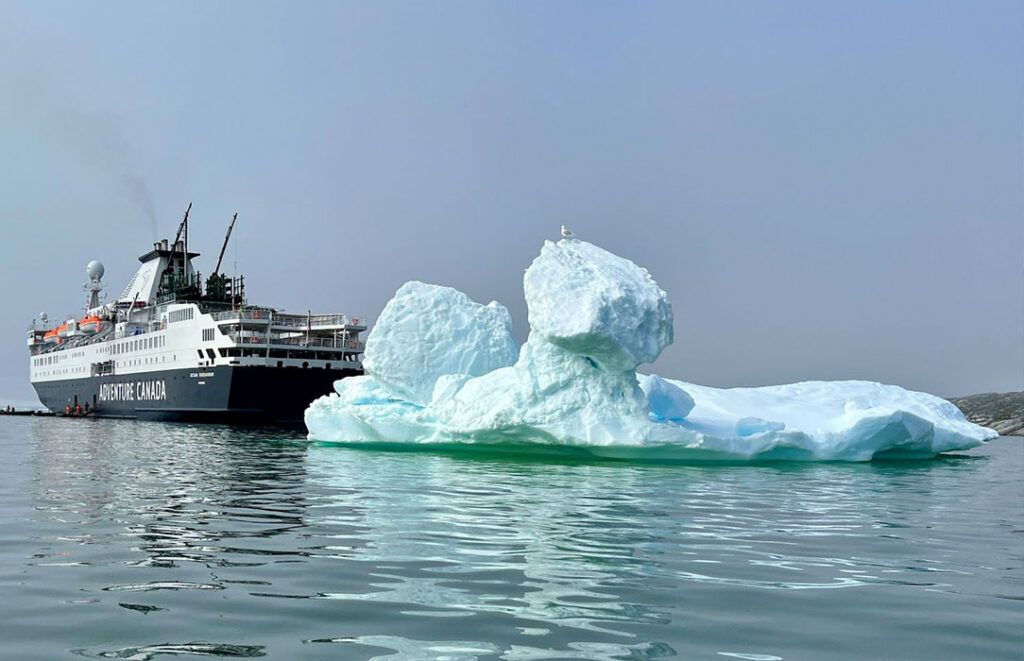
What I could do — to see icebergs at the source and experience Greenlandic culture — was choose a female-led, family-owned, Mississauga-based company, Adventure Canada, known for small-ship regenerative travel. More than that, I could pledge to bear witness to the effects of climate change, and then work harder to be part of the climate change conversation.
Greenland welcomes roughly 100,000 visitors a year and tourism is an economic pillar alongside fishing and mining. It’s challenging to get to this self-governing, autonomous country within the Kingdom of Denmark that’s almost completely covered by a thick icecap. But in late 2024, Greenland opened an international airport in Nuuk, its capital, and has another planned for Ilulissat for 2026. Then U.S. President Donald Trump put Greenland on everyone’s radar by threatening to annex the mineral-rich, strategically important Arctic territory that’s becoming more accessible because of climate change. He said he will “have” it through either a financial deal or by military force.
Some visitors fly through Iceland or Copenhagen, but Greenland’s coastal communities aren’t connected by roads and must be accessed by boat, helicopter or plane. Cruise ships deliver nearly half of all tourists, and I’ve taken five Adventure Canada journeys since 2018 that included easy charter flights between Toronto and Kangerlussuaq (a former U.S. air force base) and let me explore cities like Nuuk and Sisimiut, fishing villages and uninhabited stretches of land.
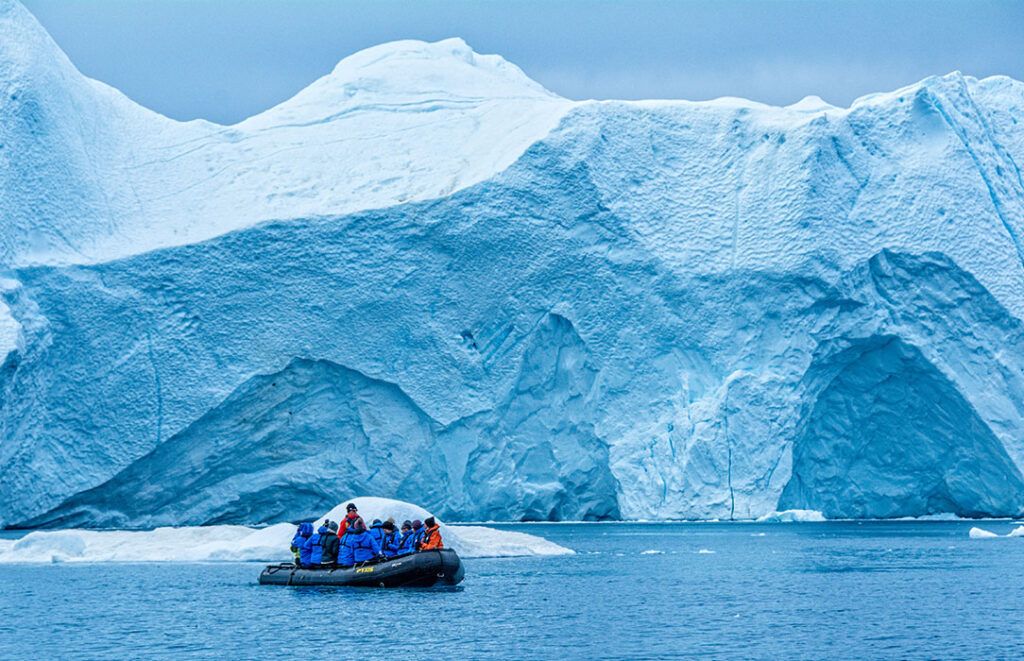
Ilulissat (“icebergs” in Greenlandic) is the biggest tourist destination. The first time I tried to visit, I was thwarted by an ice-choked harbour but took a breathtaking Zodiac tour nearby through millions of bobbing bits of ancient ice.
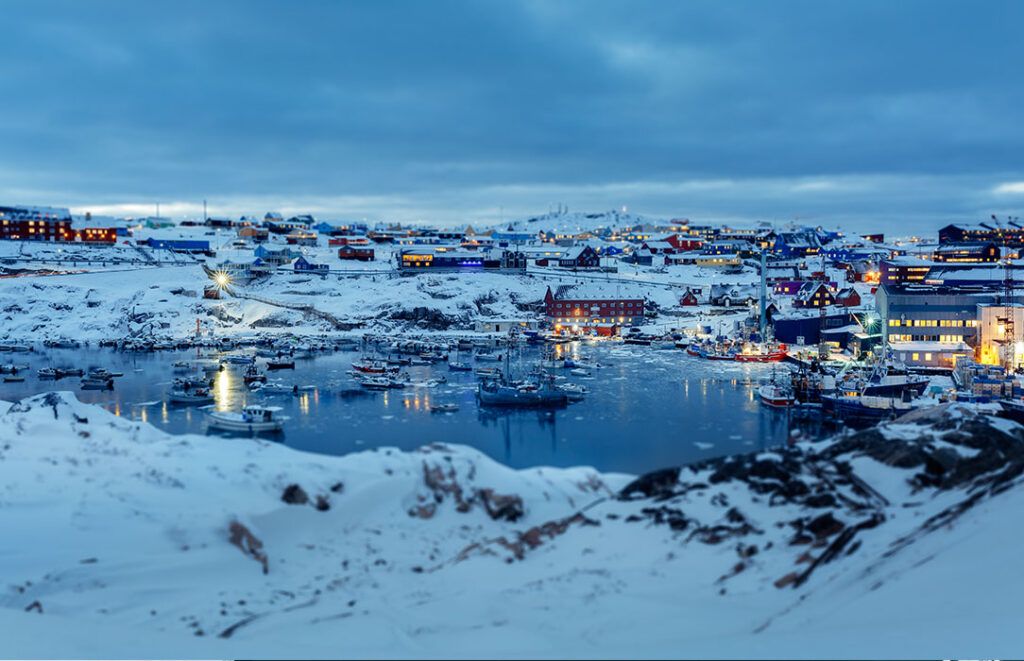
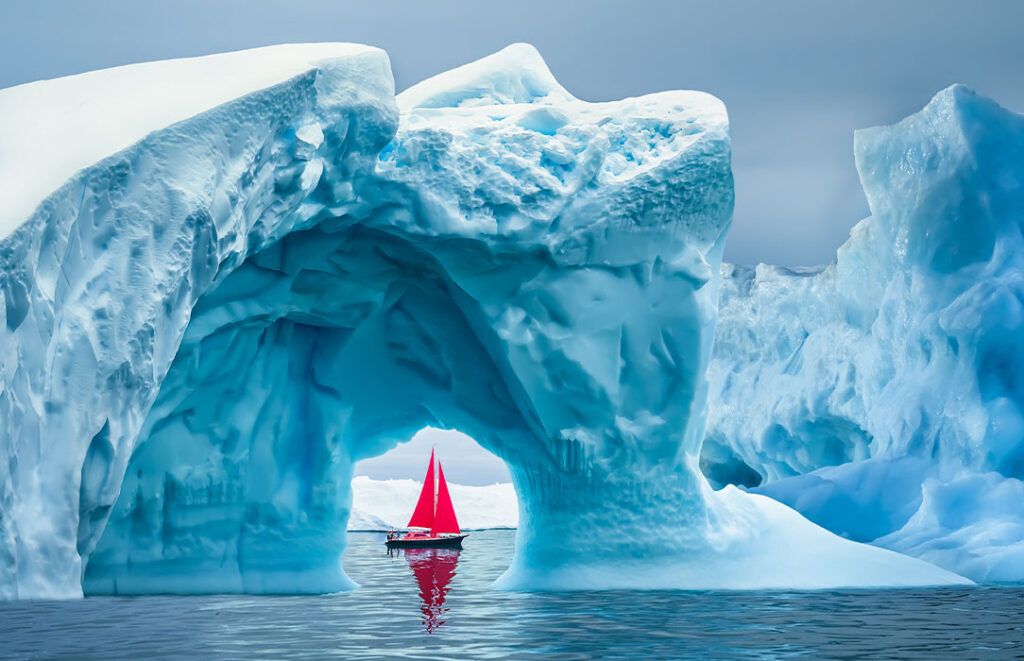
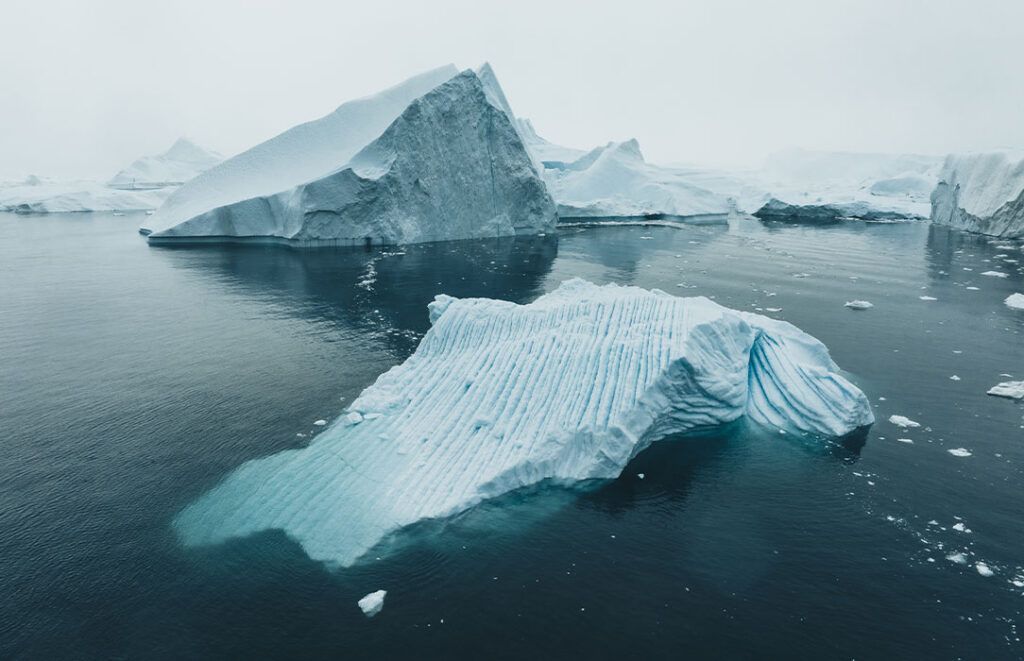
“Mark Twain once said a man who keeps company with glaciers comes to feel tolerably insignificant,” Alberta-based Arctic explorer Jerry Kobalenko told us. He drove the Zodiac and pointed out all the sizes, shapes and colours of icebergs he dubbed lumpbergs, loafbergs, glowbergs, cavebergs, rubblebergs and filthburgs.
The second time I passed by, we made it to shore. Ilulissat is a shrimp and halibut fishing centre in Disko Bay, 250 kilometres north of the Arctic Circle — a line of latitude that marks the border of the Arctic — and two kilometres north of the mouth of the Ilulissat Icefjord.
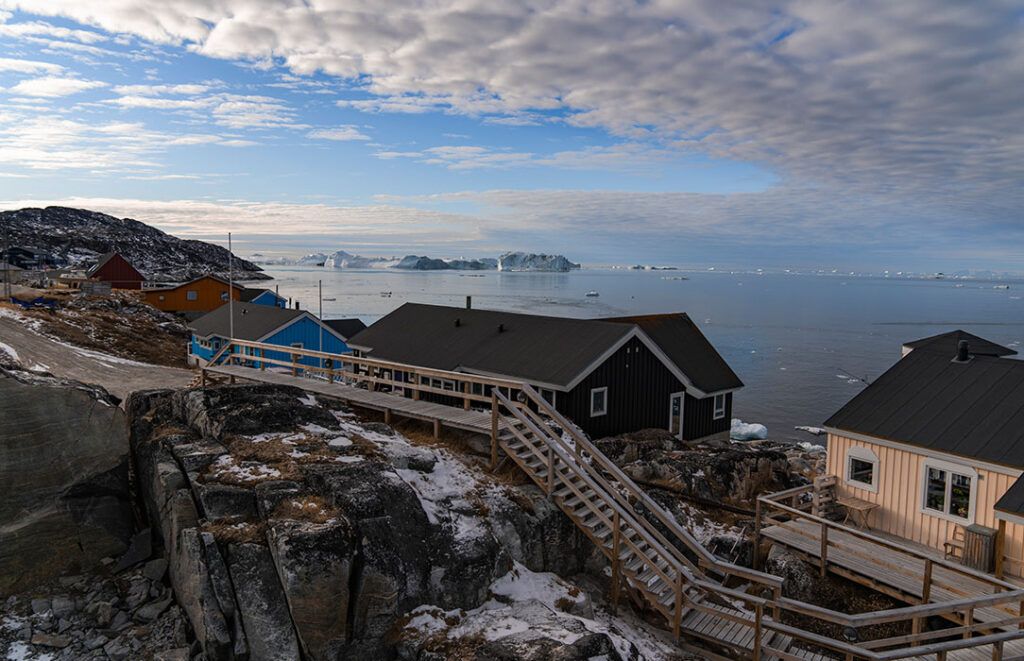
Icebergs form when ice crystals and snowflakes fall on places like Greenland’s icecap. They can grow to a kilometre high and it can take them thousands of years to journey from deep within the icecap to the foot of a glacier. Eventually they break off, or calve, from the glacier and drift with the currents towards Canada, melting as they travel for up to four years. The infamous iceberg that hit the Titanic east of Newfoundland came from Greenland.
I’ve seen icebergs when they come to Newfoundland from Greenland and Nunavut to die. It was a dream to go to where they are born, calving out of sight off of Sermeq Kujalleq (Southern Glacier) and then spilling from the icefjord. This is one of the world’s most active and fastest moving glaciers and one of several major outlets for ice to escape from Greenland’s interior into the ocean. Ilulissat’s annual iceberg production is enough to cover America’s annual water consumption.
You can’t see much of the icefjord, which is 70 kilometres long, seven kilometres wide and more than one kilometre deep. But you can sit above the “iceberg bank” near a sombre spot where Inuit once threw themselves into the sea when they became a burden to their nomadic communities. It’s shallower here because of gravel and stone left behind by earlier ice ages, and so larger icebergs ground here until they break into smaller pieces or melt enough to continue to the ocean.
In 2004, the Ilulissat Icefjord became the first place in the Arctic to be inscribed on UNESCO’s World Heritage List. Greenland must manage and preserve the area’s unique glaciology and outstanding beauty.
And that brings us to the Icefjord Centre that opened in July 2021 on the border of the icefjord. Designed by Danish architect Dorte Mandrup, the twisted, wood-clad structure’s shape is meant to resemble a snowy owl extending over the barren terrain.
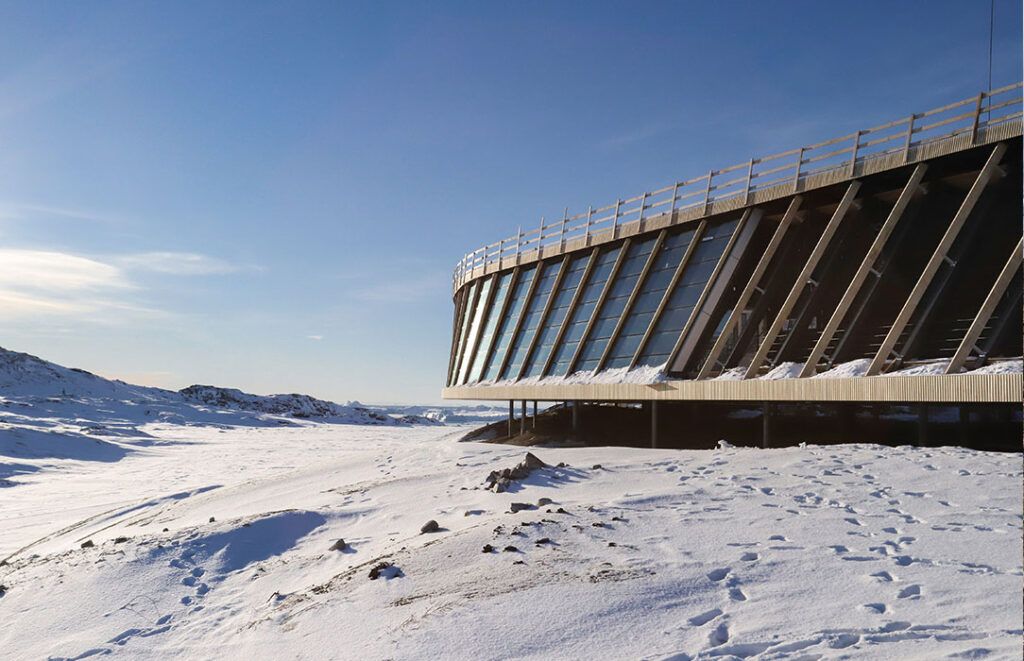
You must remove shoes before entering the hushed space. A film details a snowflake’s journey, while a live feed from 11 Greenland glaciers plays in another room. The Story of Ice exhibition is in a room dominated by mouth-blown glass prisms designed to look like blocks of ice and filled with objects that have been important to local life, like harp seals, humpback whales, halibut fishermen and soapstone lamps.
Some 30,000 people make it to Ilulissat every year and most — including glaciologists, state leaders and climate-conscious people — visit the centre.
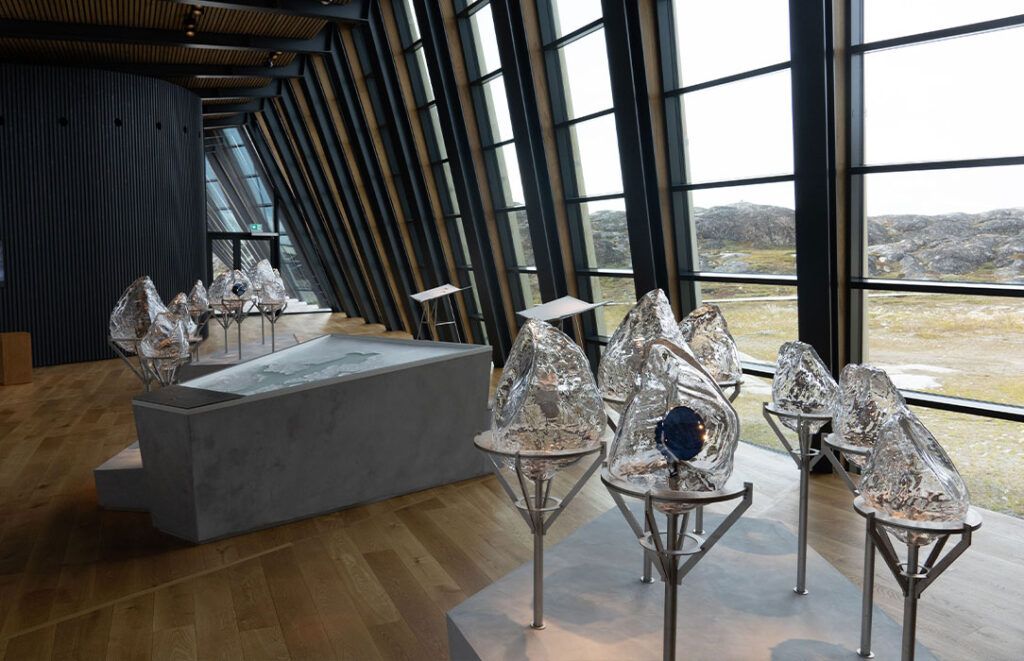
You can walk over the low-slung roof to a boardwalk down to the icefjord. A plaque subtly embedded in the boardwalk says you’re now entering a UNESCO-protected site. Stone cairns with orange poles are scattered across the landscape to mark the UNESCO boundaries. Warning signs urge you to stay on the boardwalk to protect the fragile landscape, and to avoid the beach and sea area as calving icebergs can create sudden lethal tsunamis.
I chatted with UNESCO site manager Bo Albrechtsen who praised local hunters and fishers for adapting to climate change. I later learned that Greenland officially views climate change as a positive prospect that will bring new opportunities. Elisabeth Momme, director of the icefjord centre, said those who live close to nature are better prepared to adapt to a changing climate. “We don’t want to scare people here,” she stressed. “We just want them to maybe take a little notice of what they’re doing in their everyday life.”
Which brings us back to the proverbial elephant in the room — cruise ships. The day after Ilulissat, I heard a fellow passenger confess her guilt about cruising and flying. “All those things have impacts,” Smith gently acknowledged. “We know we do them and so we should choose to do them judiciously.”
I sail with Adventure Canada because it provides climate education (and reusable bottles) on every trip and builds itineraries that maximize fuel efficiency. Carbon audits have shown that fuel use accounts for virtually all Adventure Canada’s emissions, but that should be reduced next year when it starts leasing a younger and more fuel-efficient vessel.
After that thought-provoking time in Ilulissat, we climbed into Zodiacs for an iceberg cruise and later gathered on the ship to ruminate about our day.
Smith told us how she had spotted a plug-in hybrid taxi and learned how glacial meltwater was being used for hydro-electric power. To see such a remote community switch to low-carbon energy sources had inspired her to return to Canada and work even harder to slow down climate change. The unspoken challenge was for the rest of us to do the same.