





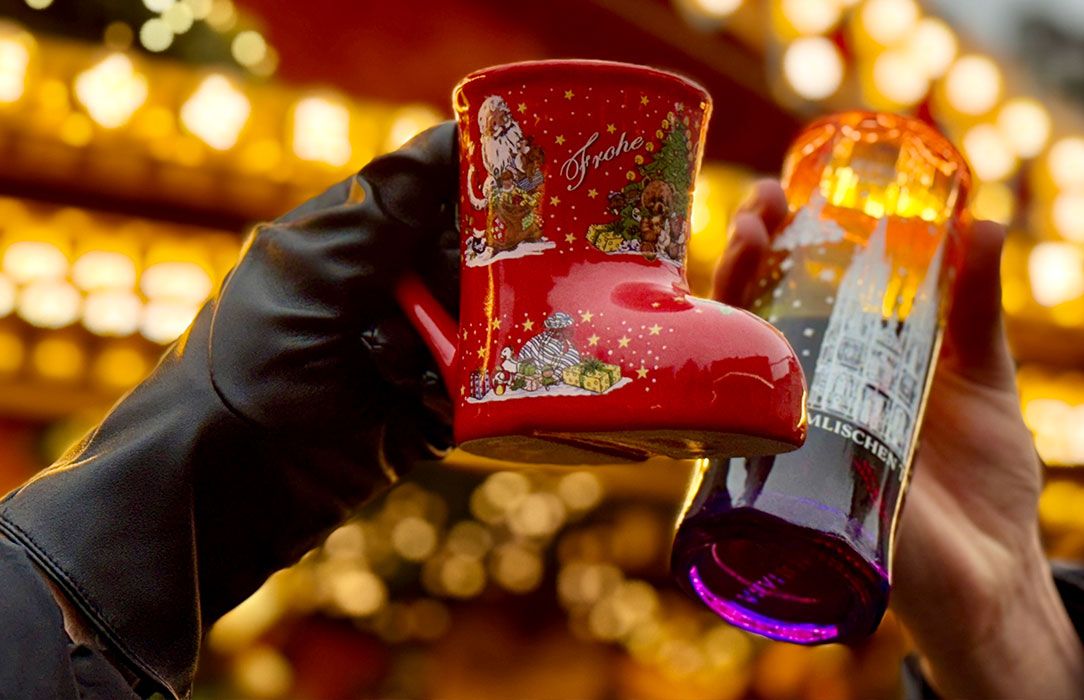
All it took was one little red boot-shaped mug to fill me with the Christmas spirit. It hardly mattered what the Regensburg Christmas Market vendor poured into the ceramic vessel featuring Santa, beautifully wrapped gifts and a festive penguin brandishing holly, but for the record it was glühwein, Germany’s beloved mulled wine.
As my friend Nicola and I triumphantly clinked mugs, young revellers crashed our photo and we shouted “cheers” and “prost” in our respective languages.
It was the start of a seven-night Christmas market river cruise through Germany, Austria and Hungary, and although I had instantly scored the most coveted mug, I was already calculating how many markets I would visit and how many mugs might fit in my carry-on suitcase. To combat plastic waste at many European markets, you buy a hot drink, pay a mug deposit and then decide whether you want a souvenir or your Euros back. How clever is that?
Nicola and I downed our drinks, tucked the mugs into our bags and strolled back to the Viking Gullveig, the elegant longship that served as our floating hotel and restaurant. The Gullveig was tastefully decorated with Christmas trees and festive lights. Before dinner one night, Nicola won praise for how well she decorated a ball ornament with a green Sharpie. Another night, I piped white icing around the edges of an oversized gingerbread man and decorated him with colourful sprinkles.
Viking has been promoting holiday-themed sailings for a decade and its eight Christmas market itineraries offered more than 100 sailings this November and December on the Danube, Rhine, Main, Seine, Moselle and Elbe rivers. We sailed the Danube through Germany, Austria and Hungary, where temperatures hovered around eight degrees and there was no snow – typical December weather, I learned. However, I found it charming to wander through the cobblestoned streets of Medieval cities in thick fog.
And what a delight to unpack once and be slowly transported down the historic Danube, once a bustling trade artery at the northern frontier of the Roman Empire. Many of the towns here, Regensburg, Vienna and Budapest, were once Roman port cities and forts. In Regensburg, you can see Porta Praetoria, an arched gateway built for the emperor Marcus Aurelius in AD 179. Riverships offer a place to eat, sleep and lounge. You are supposed to leave the ship and explore, and we walked about 15,000 steps each day, sometimes on included tours and sometimes alone.
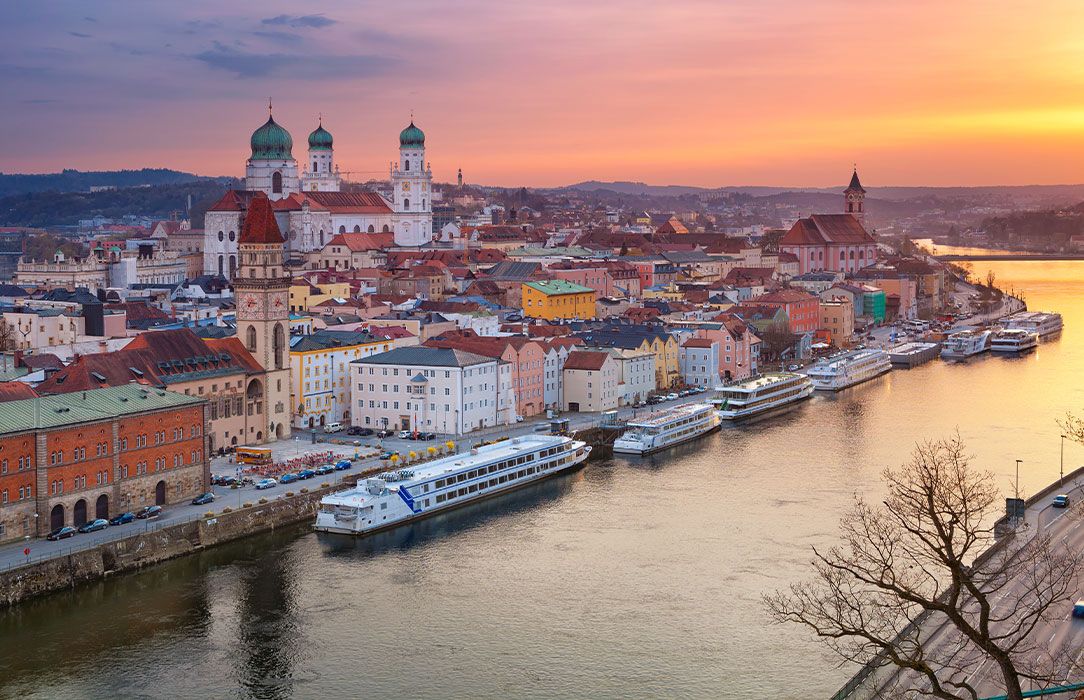
While docked in Regensburg, I opted for a shore excursion into Nuremberg before we sailed to the charming city of Passau a Baroque jewel of a town at the confluence of three rivers, the Inn, Ilz and Danube. Crossing from Germany into Austria, we docked in Krems to visit Göttweig Abbey, a Benedictine monastery founded in 1083, where we heard that one of the modern monks decorated his room with IKEA furniture and we spotted another driving a Mitsubishi. We saved two of Europe’s grandest cities — Vienna and Budapest — for last.
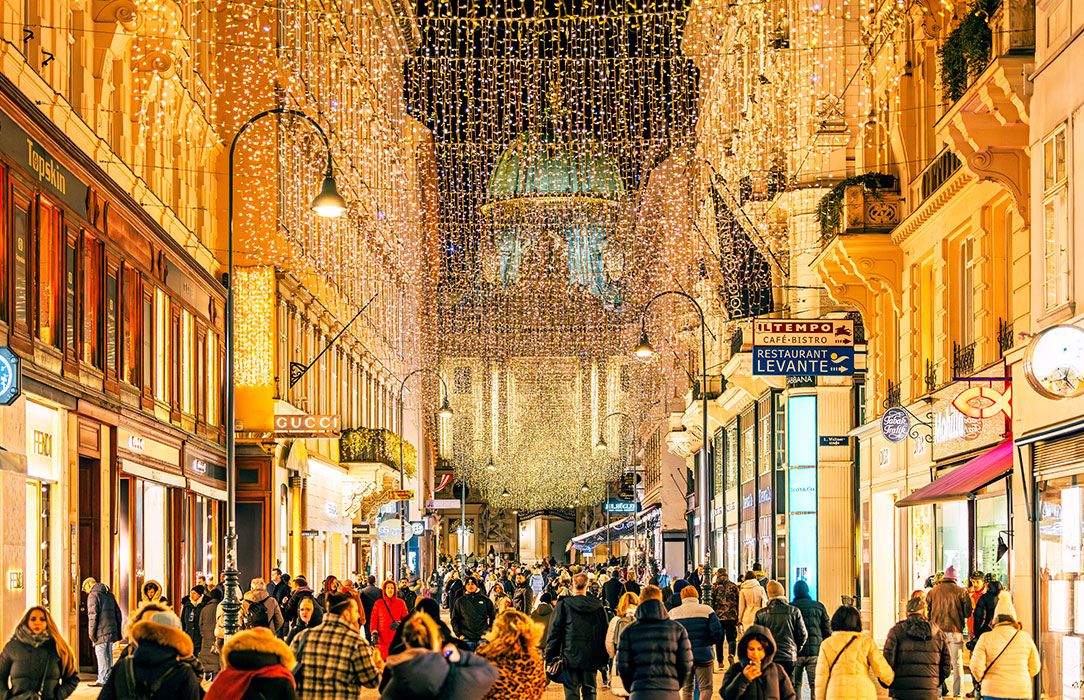
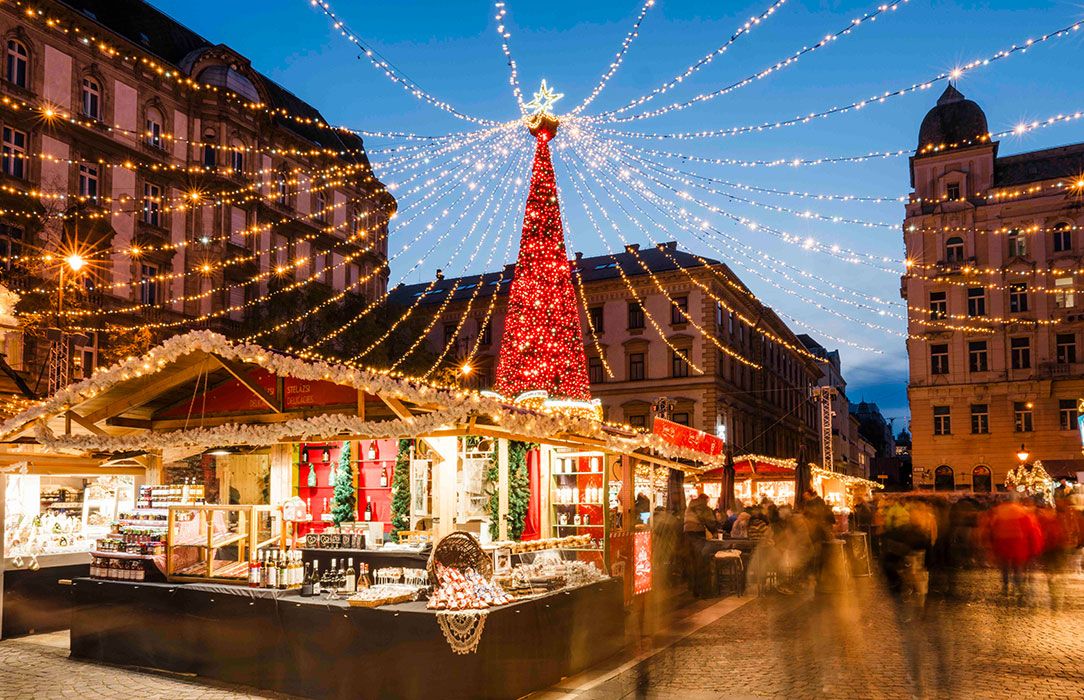
Each day, we popped in and out markets, lingering over all the beeswax candles, handmade ornaments, ceramics and food. My favourite time to visit was around 4 o’clock as night fell and the twinkling Christmas lights started to pop, but before the evening crowds arrived.
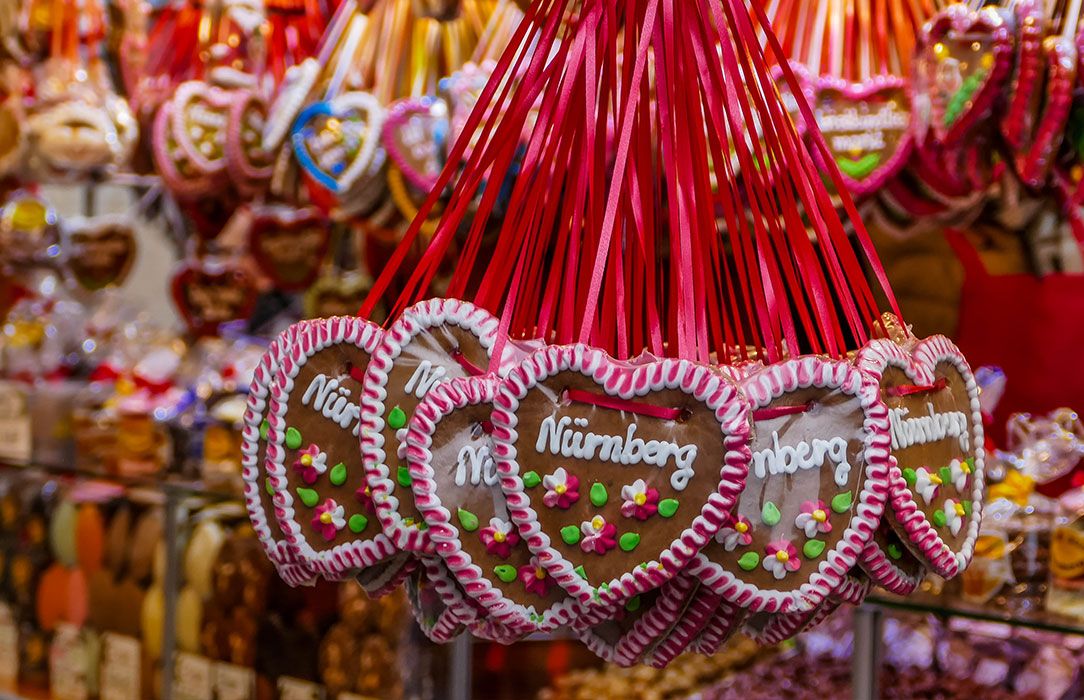
An optional bus excursion to the Nuremberg Christkindlesmarkt was unexpectedly powerful as we first explored the German city’s dark past. It was the site of the Nazi Party’s largest rallies and later the Nuremberg Trials, international criminal trials held against the defeated leaders of Nazi Germany. While the city confronts and acknowledges this history, there was no trace of it at the Christmas market.
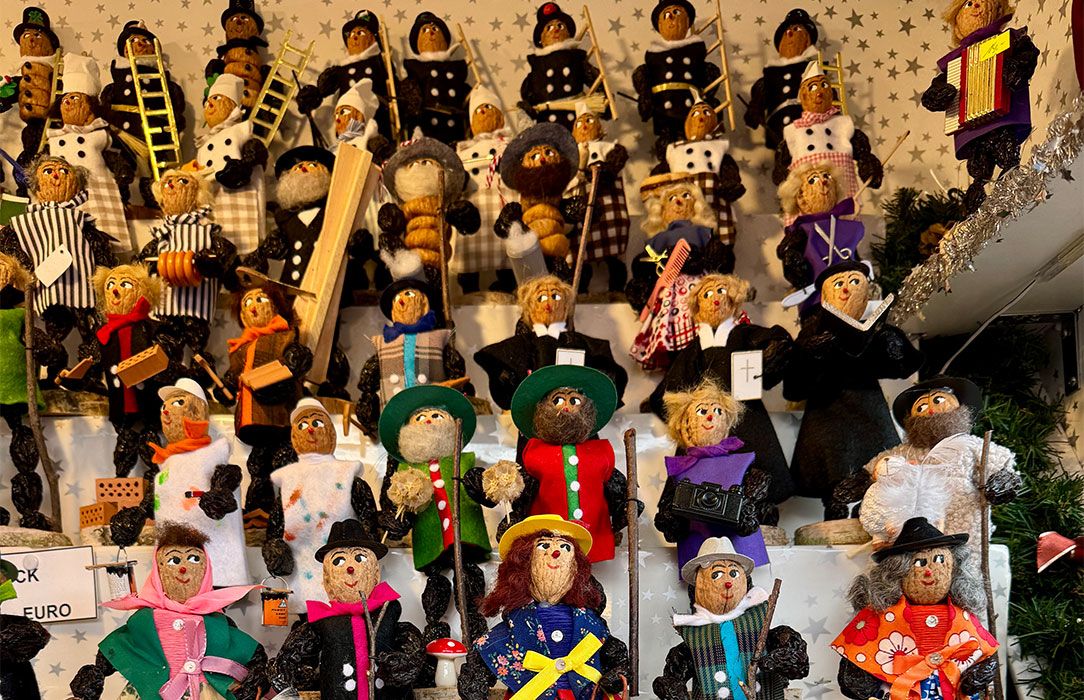
I had gone just to see the prune people or ‘zwetschgenmännle’, charming figures exclusively made here by two sisters and their families with dried prune limbs, dried fig bodies and walnut shell heads. Legend has it that a wire drawer (a skilled worker who made metal wire) invented prune men in the 18th century as a gift for his children when he only had wire and a plum tree.
The kids ate them, but these days, they are definitely not edible. They may not be as popular as they once were – I saw more people photographing them than buying them – but they’re still a delightful homemade souvenir. There’s a fun local saying that translates as “With a prune man in your house, money and happiness stay, too.” I chose a snowman-like figure with a top hat, ladder and a wee ladybug on a leaf.
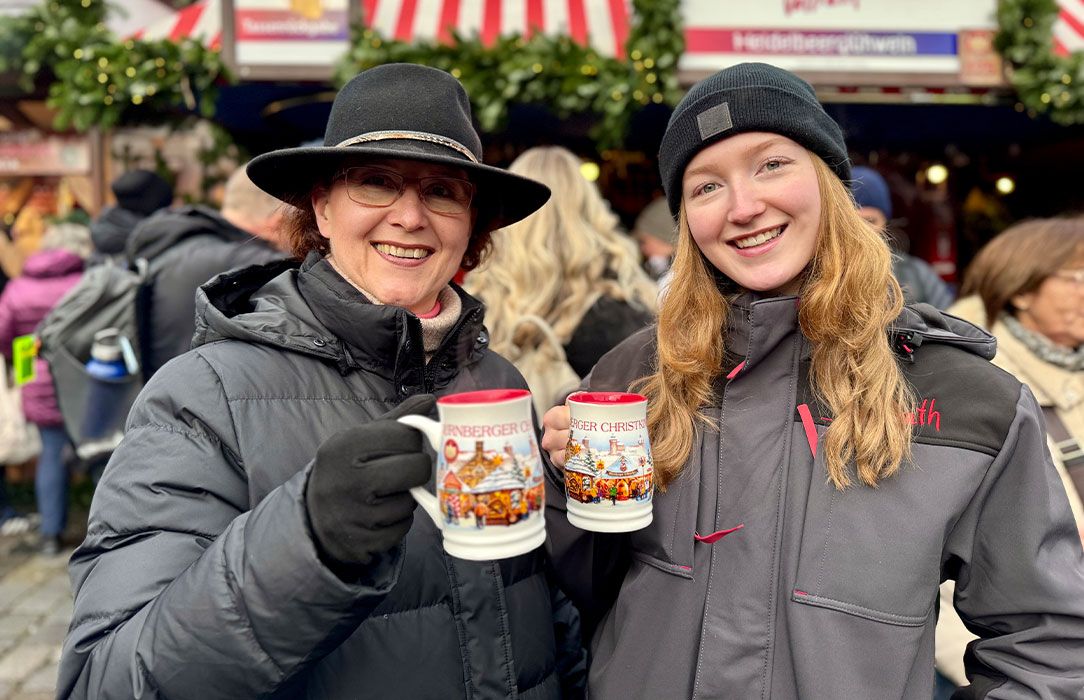
Steps away from the prune people, I learned more about the Christmas mug tradition at a booth selling family-owned Vollrath glühwein. That’s where Claudia Blokesch handed me a shapely white mug with a red interior covered in market, city and football club scenes. Glühwein means “glow wine” and dates back to Roman and medieval times. Red and white glühwein are the main options, but Vollrath makes the blueberry-spiced version, and there are “flaming” options that involve setting a rum-soaked sugar cone on fire and letting the boozy result drip into the mug.
“This is what you have to taste when you come to Nuremberg,” said Blokesch.
Back in 1990, the city asked her dad to create a sustainable, waste-free cup system. Now, Vollrath picks and orders the annual design and then delivers 100,000 mugs for eight glühwein sellers to share. Each mug has the year stamped on the bottom.
“Mogsd nou an?” they ask. “Do you want another one?”
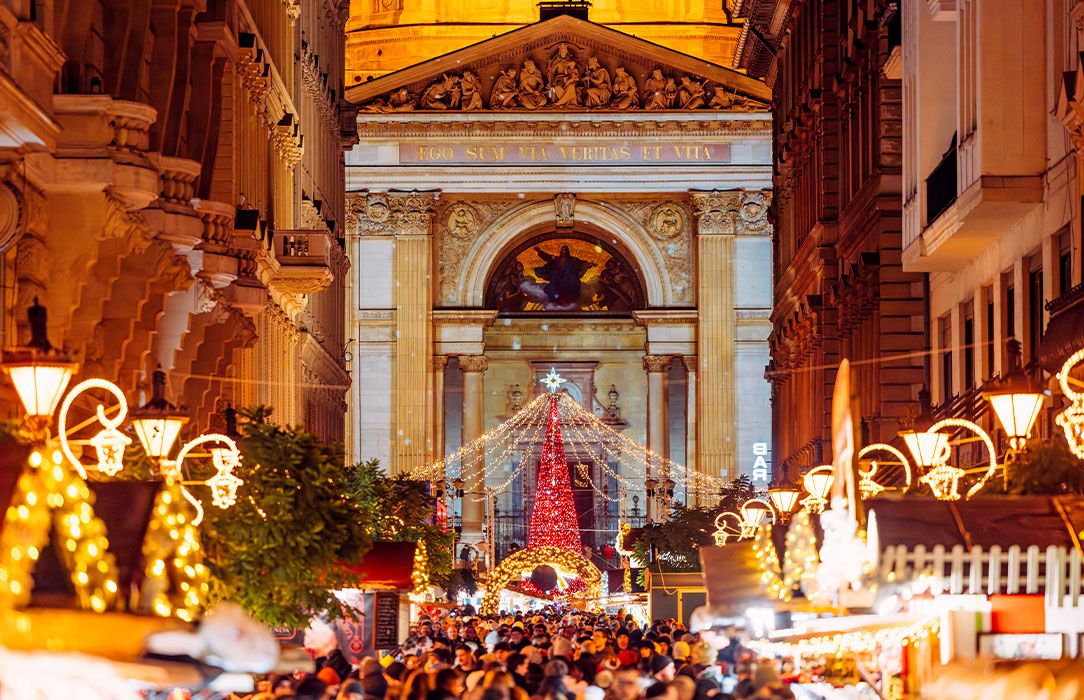
The answer was almost always yes, especially when paired with sausages served with mustard or some other new taste sensation. At the main market In Passau, I loved how the understated navy/burgundy mug wished me “Frohe Weihnaschten” (Merry Christmas), and how its unusual German gingerbread (lebkuchen) is made of sweetened ground nuts and spices with very little flour. Budapest’s Christmas markets, by contrast, were a sea of single-use paper cups, so I didn’t want to drink, but the strudel stuffed with curd (cottage cheese) and sour cherry more than made up for that disappointment.
When I day-tripped to Bratislava on another bus excursion, honestly just so I could say I had been to Slovakia, I found a foodcentric Christmas market where I skipped the group lunch and feasted instead on crescent-shaped pastries stuffed with poppyseeds and párance, torn noodles tossed with cottage cheese and strawberry jam.
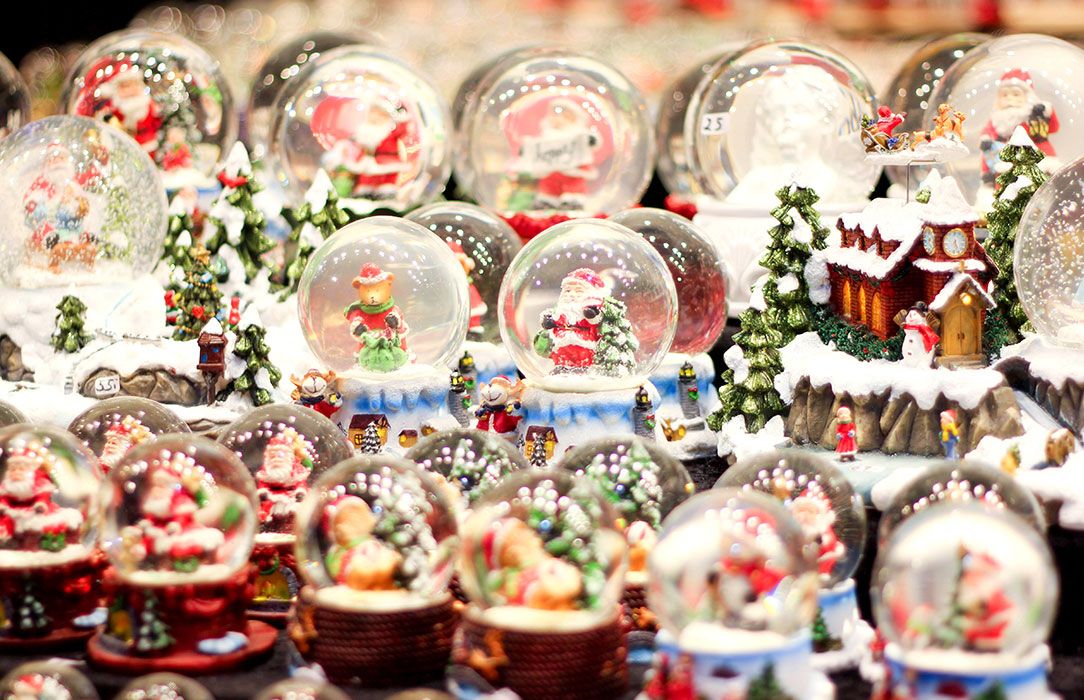
And then there was elegant Vienna, the birthplace of snow globes, where we spent nearly two days. Like so many European cities now, it’s home to multiple markets, some known to tourists and others favoured by locals, but I stuck to the six that were within walking distance of the central spot our ship shuttle took guests to.
There were skating rinks and carousels, including one made of found objects. Weihnachts Markt am Hof was in the shadow of one of the world’s biggest palace complexes that once served as home to an imperial family. The Stephansplatz Christmas Market was tucked under St. Stephen’s Cathedral, the symbol of Vienna and the tallest church in Austria, which dates back to 1137.
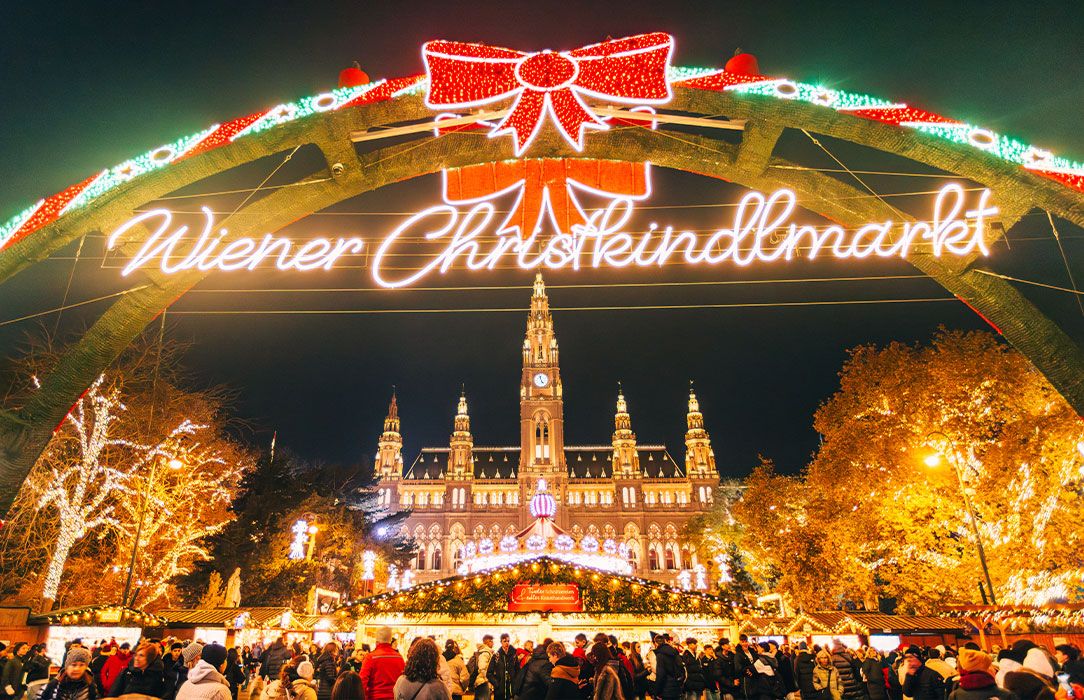
The Wiener Christkindlmarkt in front of the Neo-Gothic Vienna City Hall drew me for two visits despite the crowds. That’s where I savoured hot chocolate in a refreshingly straightforward red mug that held 250-millilitre portions that were slightly more generous than the ones in Germany.
Made with good dark chocolate and oat milk, and served without whipped cream or other embellishments, hot chocolate will now forever taste like European Christmas markets to me – no matter what mug it’s in. Speaking of mugs, I squeezed the best eight into my suitcase and found good homes for the other five.
When I reminisce about sailing down the Danube to visit 13 markets in four countries over eight whirlwind days, one moment stands out. It was when a young man dropped to his knees and surprised his girlfriend with a ring inside a giant picture frame set up in front of a tree full of hanging red hearts. Those of us standing in line to photograph ourselves in the Instagram-friendly frame at the Wiener Christkindlmarkt applauded and gave the happy couple extra time to collect themselves. Christmas markets really are magical, whether you’re young lovebirds or grownups on a river cruise looking to reconnect with the Christmas spirit.
Viking’s Christmas market cruises run in November and December on six European rivers. Mine was called “Christmas on the Danube” and visited three countries in eight days, sailing between Regensburg, Germany, and Budapest, Hungary, on a longship that held 190 passengers. There’s a free shore excursion in each port – usually a coach/walking city tour – plus more available for purchase. All Viking cruises are adults only. Founded by Norwegian billionaire Torstein Hagen and headquartered in Switzerland, Viking has a fleet of more than 100 ships that explores 21 rivers, five oceans and all seven continents.