





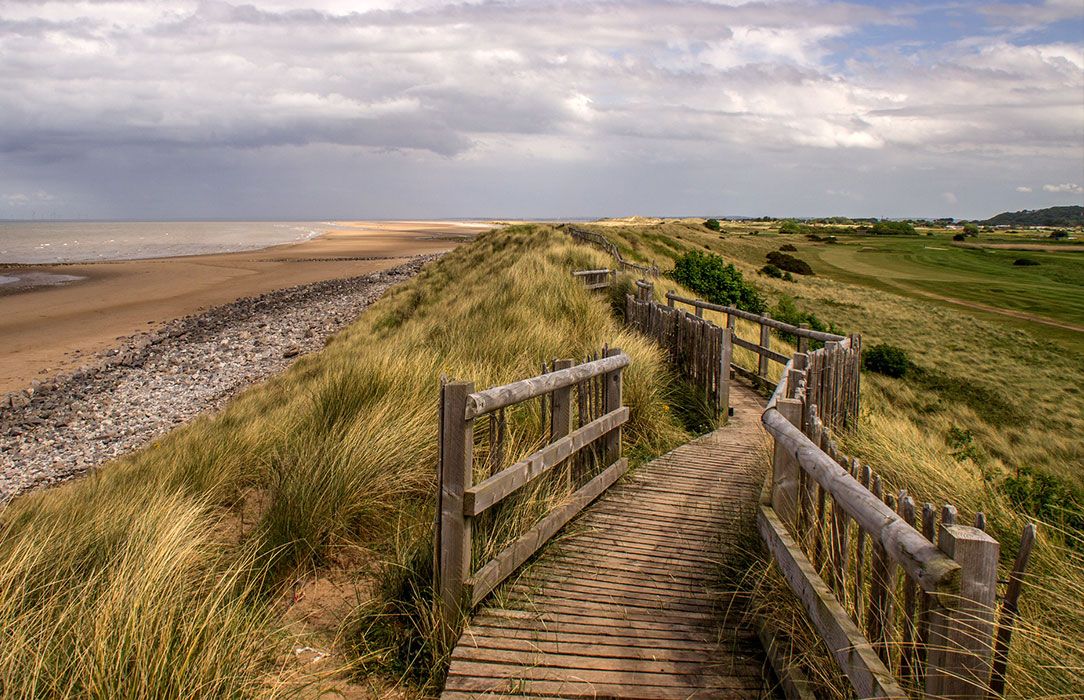
On the outskirts of the Welsh village of Saundersfoot, I eyed the steep trail ahead of me with dismay. Aside from a few worn stone steps, there was little to notch my toes into – barely even a tree root. And I, expecting an easy stroll before dinner, had left my hiking boots back at my hotel.
The Wales Coast Path makes no apologies as it winds 1,400 kilometres along the country’s entire shoreline (with occasional detours inland). This is a land of rocks and hills, of green fields and sweeping beaches, of cliffs and coal mines. A land that has flummoxed many an invader over the centuries, including the Anglo-Saxons and the Normans, with its written language largely devoid of vowels.
I’d shown up in Wales in mid-May with a waterproof jacket, rain pants and a sunhat, but without hiking poles, a tuque or sunglasses. Trust me, you’ll probably need them all. But despite the fact that I was ill-equipped, I decided to tackle the daunting path leading out of Saundersfoot.
After all, I had come to Wales to log some serious kilometres in my “6,000 by 60” quest – a personal challenge I’d set myself to walk 6,000 kilometres in the 16 months before I turn 60. The challenge was partly to stay fit and partly to raise awareness of multifocal motor neuropathy, a rare disorder that causes asymmetrical, slowly progressive weakness in the limbs. I’ve had since 2012 – it’s very manageable with treatment but potentially disabling without.
So, I stuck out my sneakered foot. Within a few hundred metres, the dirt trail gave way to thick mud. Determined, I squelched up the hill, keenly aware that beyond a scraggly row of trees to my left, a cliff sheared down to the beach below. After 10 slippery minutes, I conceded defeat and retraced my steps to the trailhead. Lesson learned.
Don’t let this anecdote dissuade you from tackling all or part of the Wales Coast Path. A bit of preparation – and, yes, common sense – will allow you to follow gorgeous trails along seaside cliffs and through charming villages.
I spent six days along the Wales Coast Path in the company of Italian photographer Irene Pila and Mike Price of Visit Wales. Rather than through-hiking – which would have taken weeks and a budget we lacked – we drove between segments. Here are a few of my favourite discoveries.
Cardiff
The Welsh capital of Cardiff was our starting point, and the paved Cardiff Bay Trail was a flat, gentle introduction to the walks that lay ahead.
The capital’s waterfront is home to some of the most important buildings in Wales, including the stunning Senedd Cymru (the Welsh parliament), designed by Pritzker-winning architect Lord Richard Rogers and Ivan Harbour. Wide steps of Welsh slate lead from the waterfront to the Senedd, its glass walls conveying the message of transparent government. A huge funnel on the roof provides light and ventilation to the Siambr (the debating chamber), and the undulating roof collects so much rainwater that the sustainable building only uses as much municipal water as a typical large house.
Nearby, an inscription by poet Gwyneth Lewis comprises the entire façade of an arts complex called the Wales Millennium Centre. Reading “In these stones horizons sing” in English and Creu gwir fel gwydr o ffwrnais awen (“Creating truth like glass from inspiration’s furnace”) in Welsh, the two-metre-high letters are warmly illuminated at night by the light of the theatre’s bar.

Speaking of bars: Cardiff has a vibrant restaurant and nightlife scene, fuelled in part by the steady stream of actors, directors and others who film productions such as Dr. Who and His Dark Materials here. (While starring in the latter, actor/singer Lin-Manuel Miranda became so enamored of Cardiff that he rapped about the city.) Tap into the city’s vibe at the Rum & Fizz cocktail bar, which hums until late seven nights a week and morphs into an opulent coffee shop and tea room by day.
Laugharne and Saundersfoot
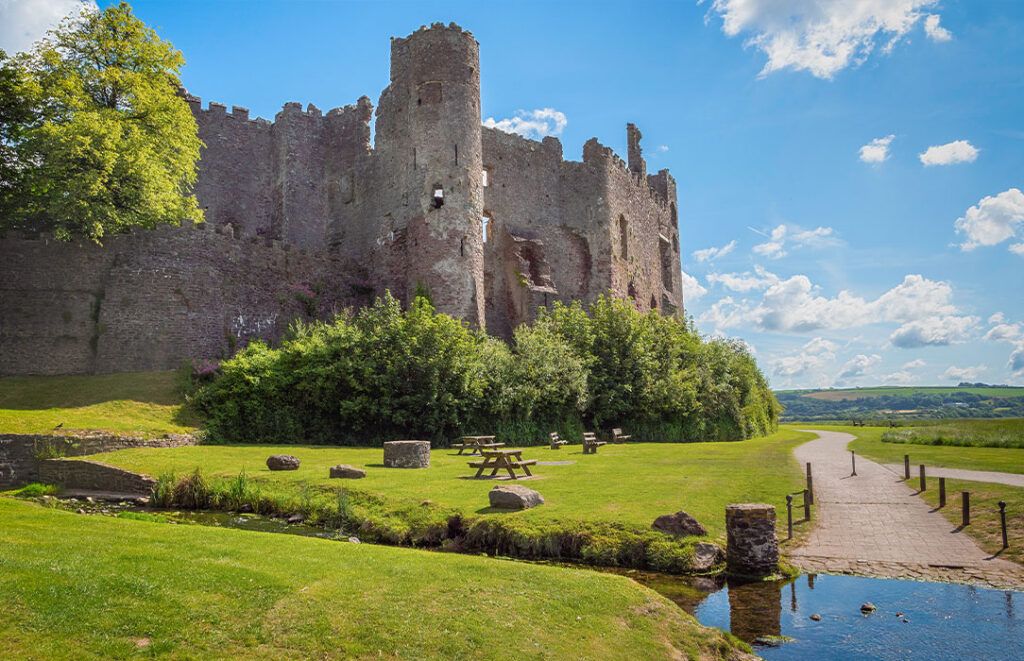
A 90-minute drive from Cardiff brought us to the village of Laugharne, most famous as the one-time home of poet Dylan Thomas. After a stroll along the shore path and tea at Thomas’s former cottage, we drove half an hour further to Saundersfoot, where I encountered the aforementioned muddy trail.
Fortunately, we were staying at the St Brides Spa Hotel, where I enjoyed a restorative soak the next morning in an outdoor hot pool high above the sweeping, cliff-rimmed beach. Unfortunately, a misty rain fell from low grey clouds. No matter. The dampness gave the experience an otherworldly quality, and the pool was cozy.
Tenby
Just a 10-minute drive from Saundersfoot lies Tenby. Often appearing on lists of beautiful seaside towns, Tenby is lined with candy-coloured row houses that – so I’m told – are beautiful in the sunshine. By the time we arrived, however, the wind was whipping a drenching downpour into pedestrians’ faces. Heads down, we forged along wet streets, popping into shops to browse for Welsh shortbread and wool. Eventually, we sloshed into a café for warming cups of tea.
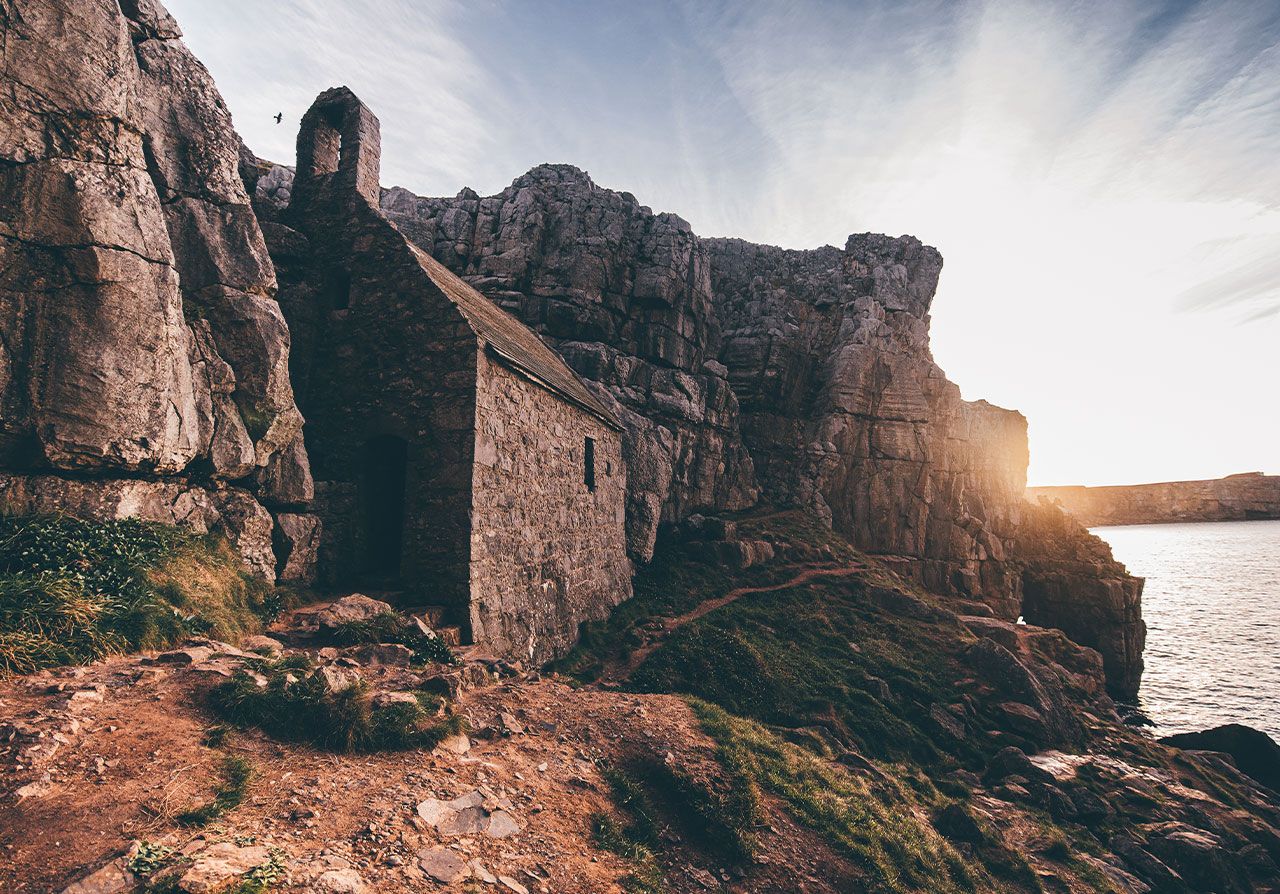
Past Tenby, short hikes from car parks took us to two Wales Coast Path landmarks. The first was St Govan’s Chapel, a tiny structure carved into a cliff face at least eight centuries ago. The second was Freshwater West Beach, better known to movie fans as the place where Dobby the House Elf dies in Harry Potter and the Deathly Hallows – Part One.
St. David’s
That night, we stayed in the sleek Twr y Felin Hotel in St David’s. Its location near the Wales Coast Path meant Irene and I could nip out for a short hike early the next day. Golden early-morning sunshine lit our path through green fields, as waves crashed and surf foamed against the beach below.

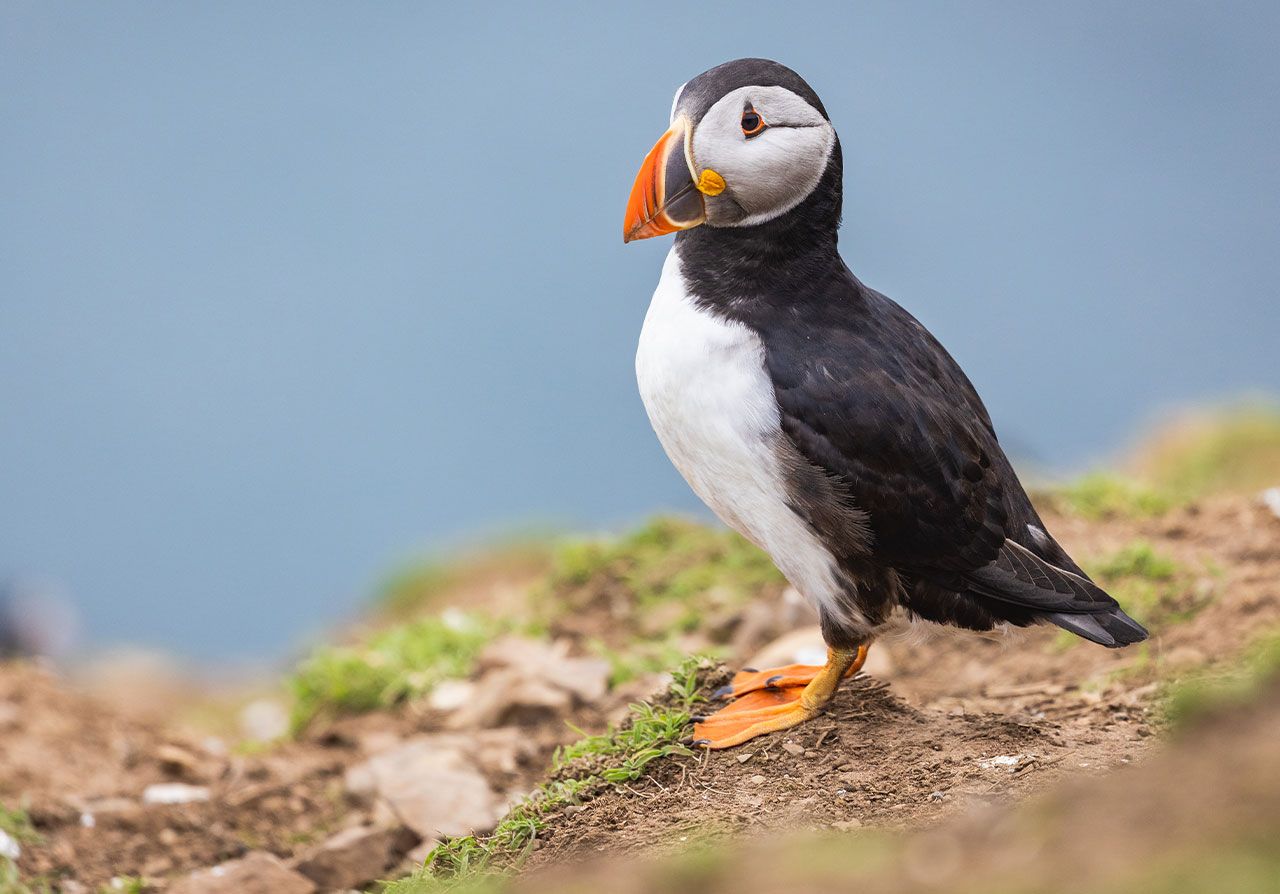
Later, we toured St David’s Cathedral, largely completed in 1220 and dedicated to the patron saint of Wales. Then, about 40 kilometres from St David’s, we took a bracing, windy hike along cliff-top trails glowing with bright yellow gorse, before boarding a sightseeing boat to Skomer Island, home to thousands of puffins.
Cardigan
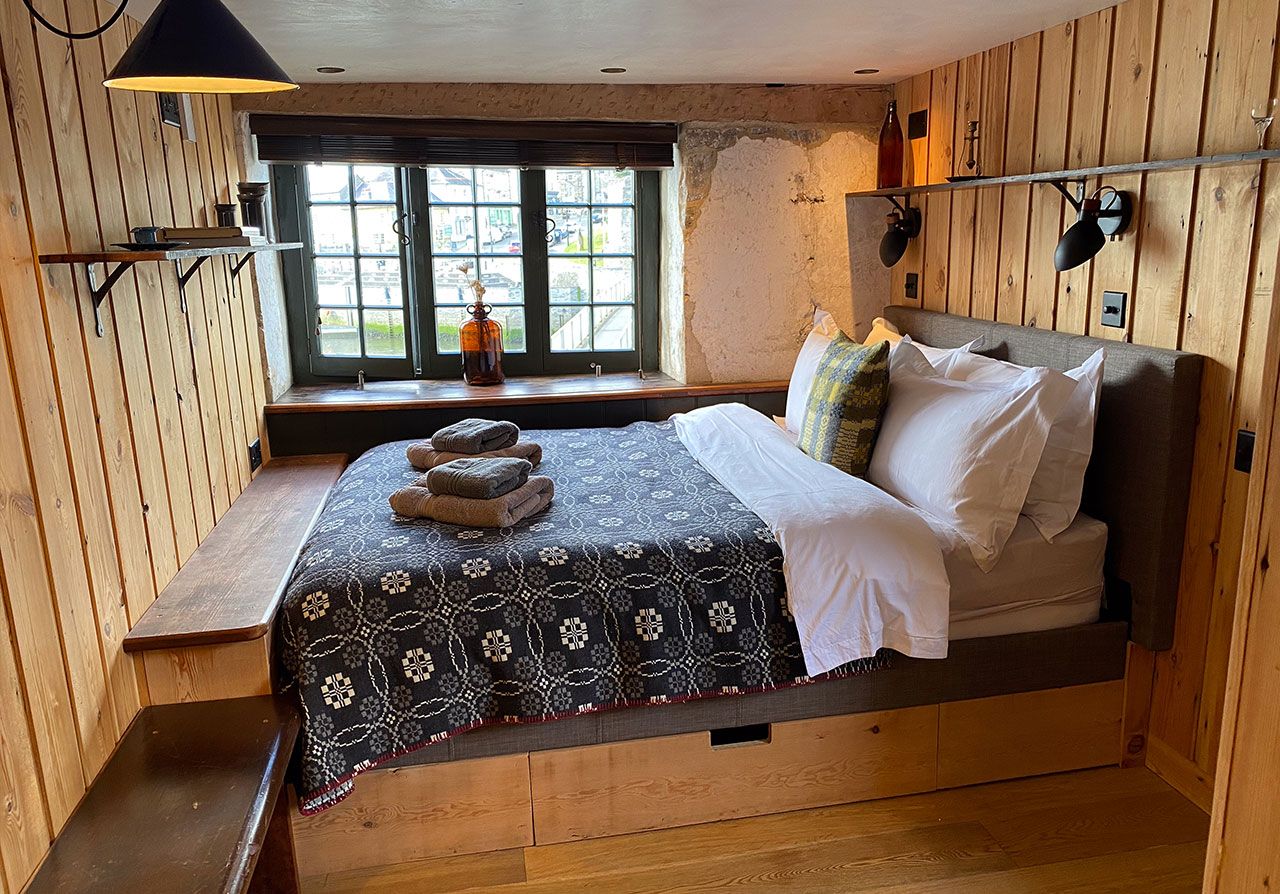
Our next hotel was the Albion Aberteifi, which opened in 2022 inside a Victorian shipping warehouse in Cardigan. In an intriguing Canadian connection, the hotel is named for the Albion, a ship that set sail from Cardigan in 1819 with 27 Welsh families. They would become the first Welsh settlers in Canada, establishing the community of Cardigan, New Brunswick.
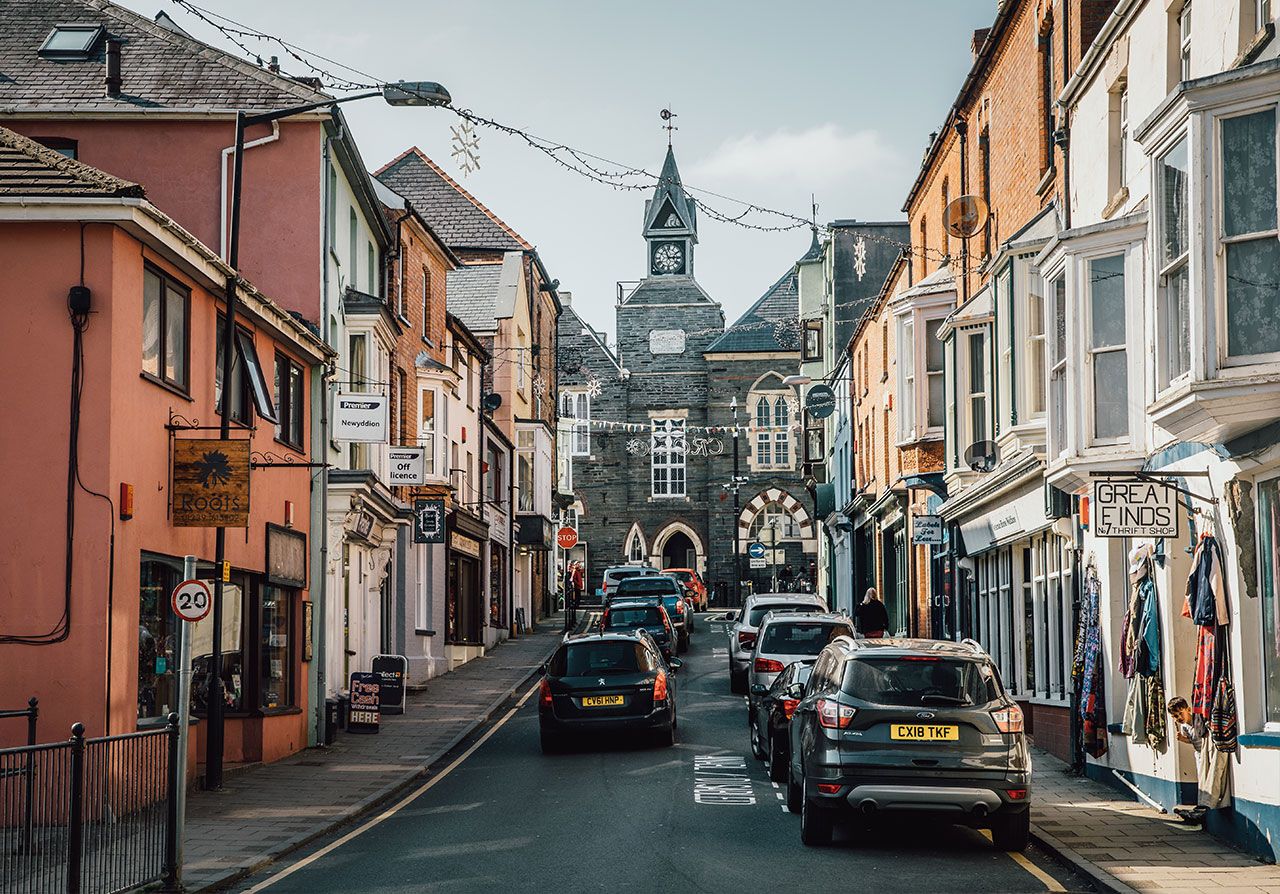
Located slightly inland on the River Teifi, the Welsh Cardigan is a pleasant community of stone buildings and little shops, where I easily logged a few more Fitbit kilometres.
Portmeirion
The following day, we kept driving north, stopping frequently to walk and snack. High notes included the seaside promenade in New Quay, where dolphins frolicked offshore; a cup of honey-vanilla ice cream from The Hive, a shop in Aberaeron; and a lunch of scones and pea soup in the cozy T.H. Coffee Shop in Dolgellau.
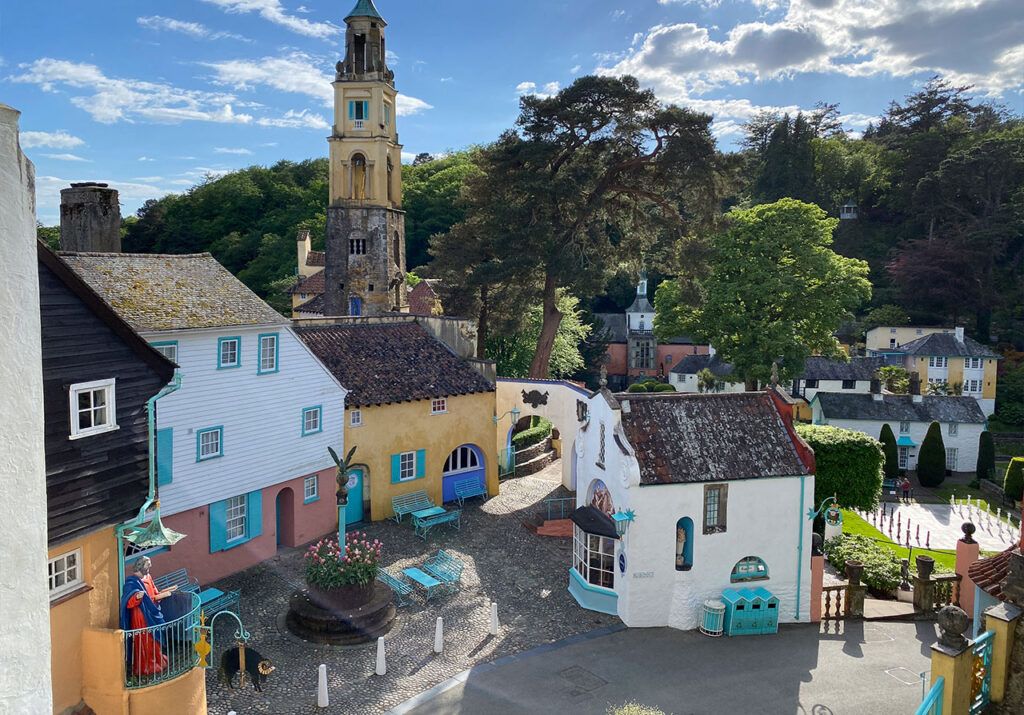
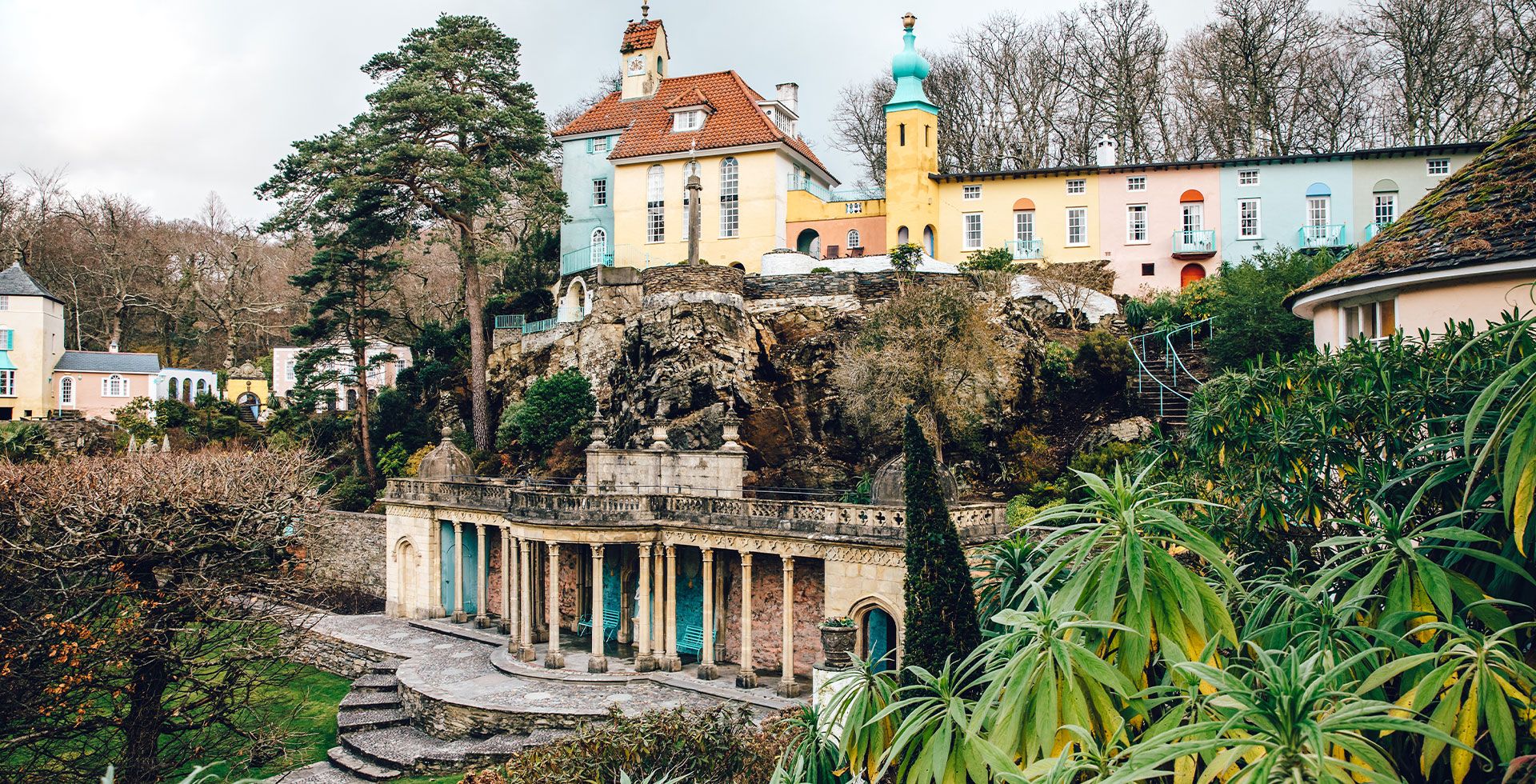
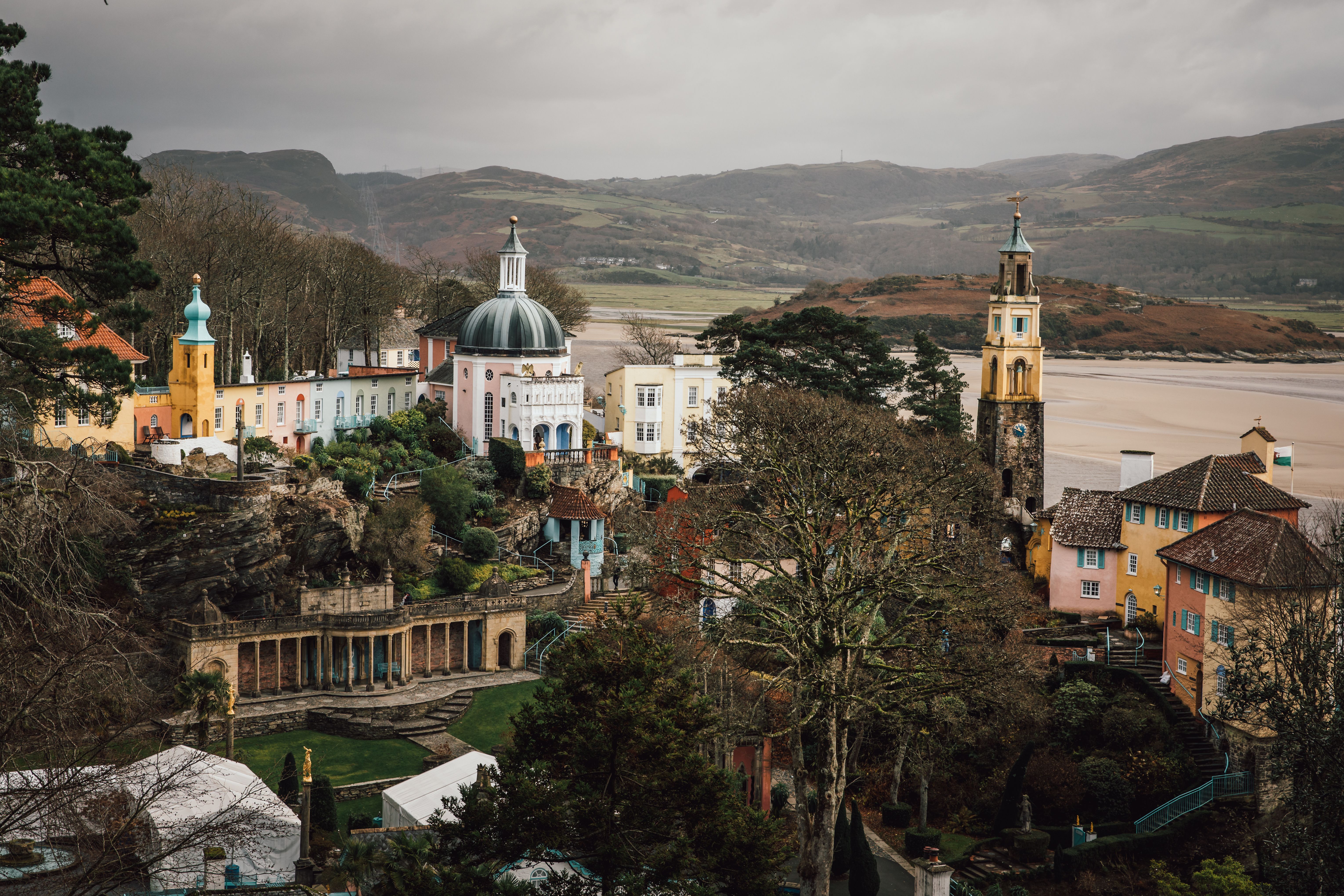
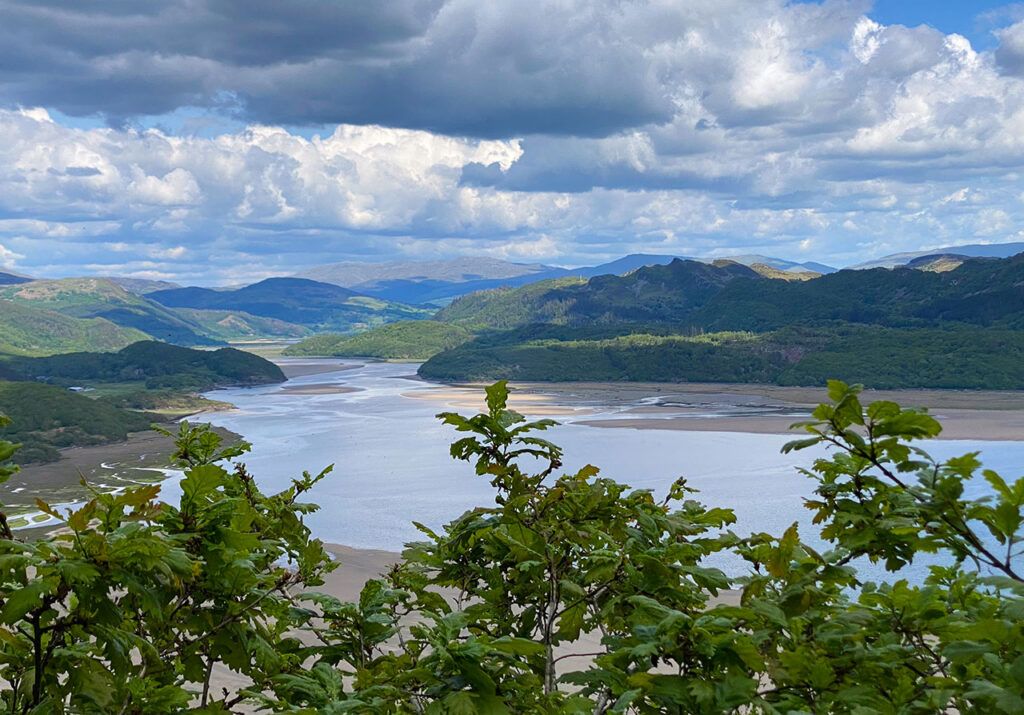
We overnighted in Portmeirion, a quirky resort village where much of the 1960s TV show The Prisoner was shot. Once the day trippers left and dusk descended, lanes lined with faux Italian villas – designed by Welsh architect Sir Bertram Clough Williams-Ellis and built between 1926 and 1976 – took on a magical air. And the network of paths, stairs and promenades provided a great walking workout, along with stellar views of the Dwyryd Estuary.
Caernarfon
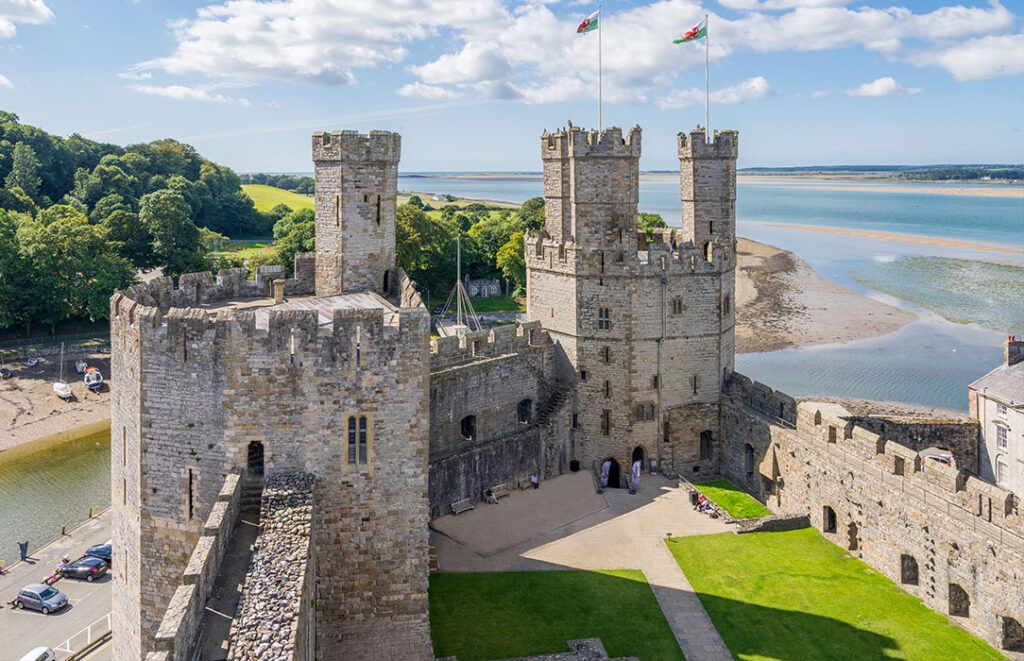
Our last stop along the Welsh Coast Path was Caernarfon Castle. The vast castle palace, one of the world’s most spectacular medieval structures, was built by three generations of English kings between 1283 and 1330. Begun by Edward I, it was part of England’s centuries-long effort to dominate its smaller neighbour. In 1969, the investiture of Prince Charles as the Prince of Wales took place here, amid protests from Welsh nationalists.
Reflecting on that, I realized that the Senedd, the Wales Millennium Centre and the Wales Coast Path had all been built in the decades since that ceremony. Today, Welsh pride is stronger than ever, and it’s not unusual to hear Welsh spoken on the streets, in the shops, on the radio. Perhaps that’s why Prince William – who lived near Caernarfon in the early 2010s – decided against an investiture ceremony when he became Prince of Wales in 2022.
So, how many kilometres?
During my six days in Wales, I walked 77 kilometres, for a daily average of about 13 kilometres. I logged the most kilometres (20) on our first day in Cardiff, and the fewest (8.4) on our rainy day in Tenby. It was all good training for my next adventure in the U.K.: a walking festival in Wellingborough, England.
Not sure what a walking festival is? You’ll find out in the next post in my 6000 by 60 series.
The author travelled as a guest of Visit Wales, which neither reviewed nor approved this post.