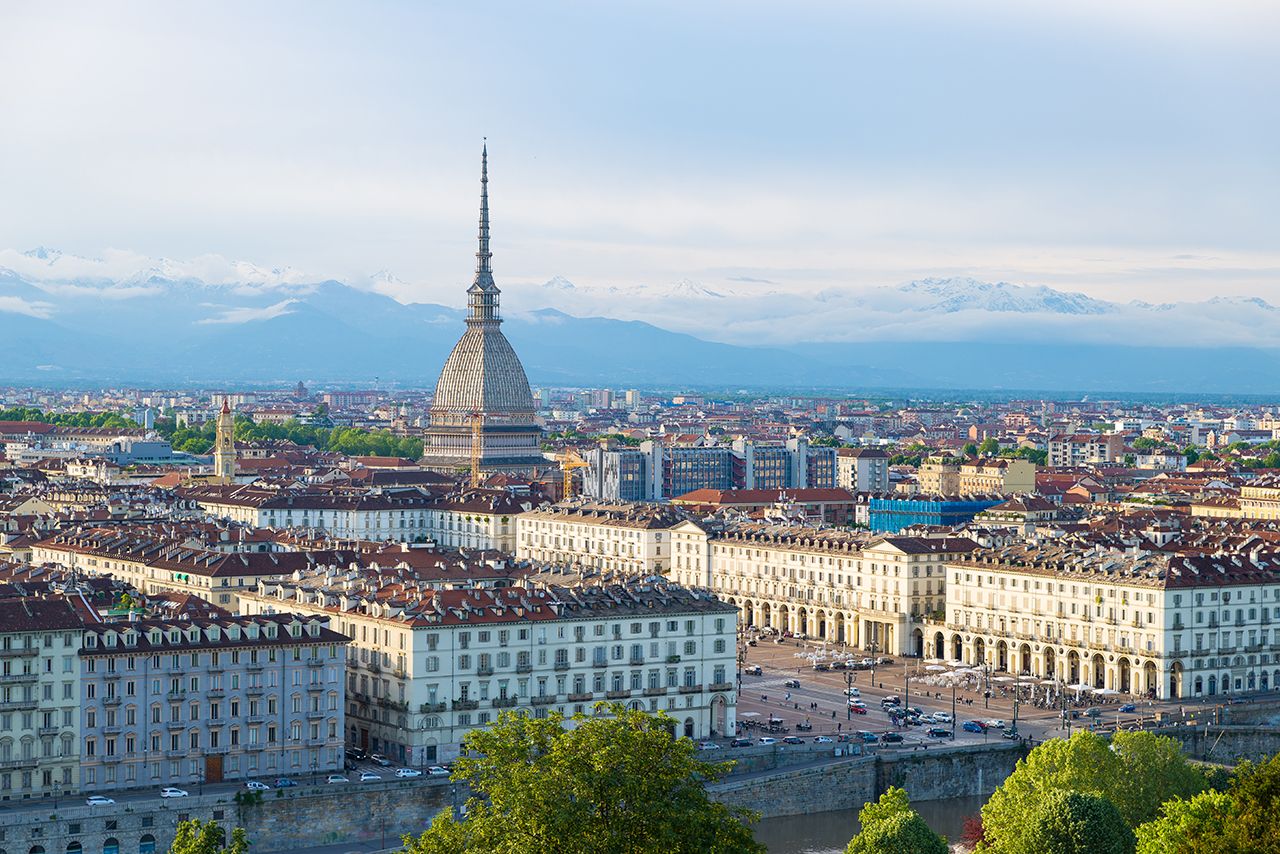




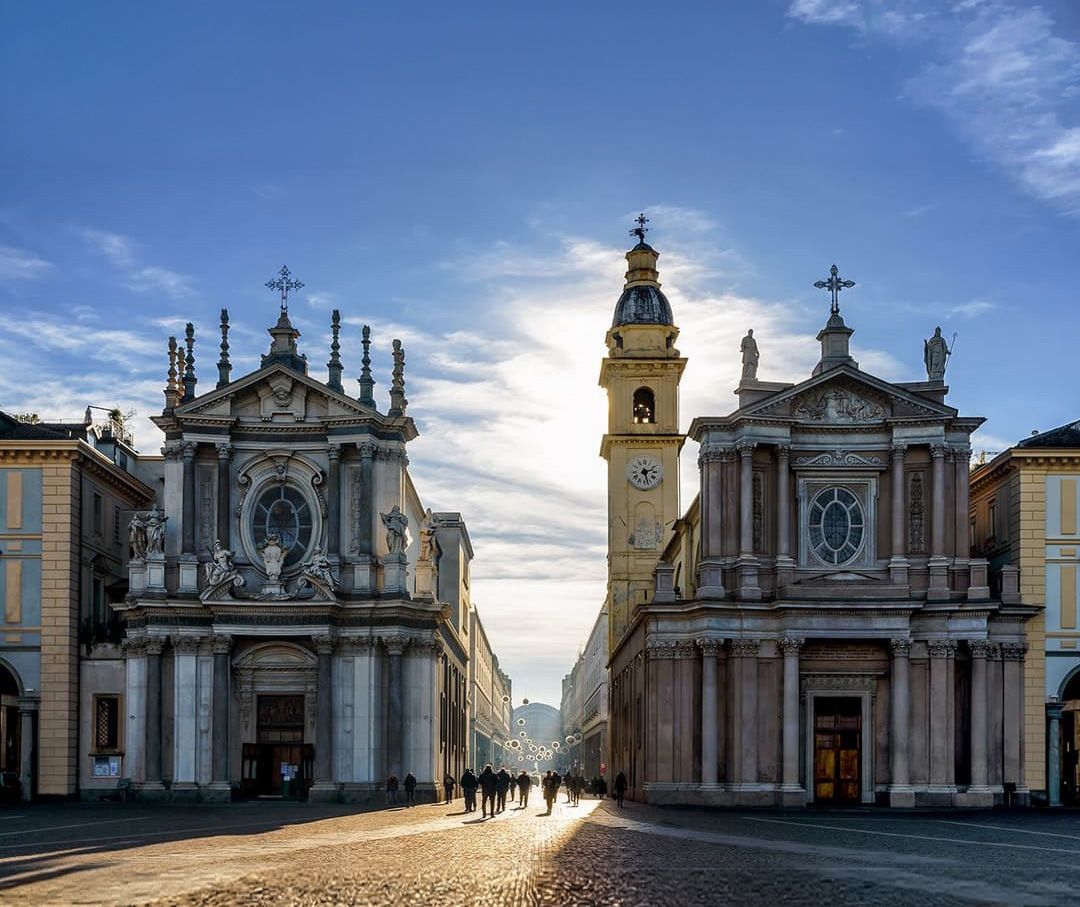
Travellers tend to check Turin’s more famous sisters (Rome, Florence, Naples, Venice, Milan) off the list when planning a Grand Tour of Italy, leaving this stunning, sophisticated city as a more off-piste destination that’s, happily, less overrun by tourists. This is both a gift – and a wonder. Set against snow-capped Alps with the scenic Po River cutting through the heart of town, Turin offers an inimitable blend of French elegance and Italian charm, thanks to centuries of rule, 1562 to 1946, by the Franco-Italian House of Savoy.
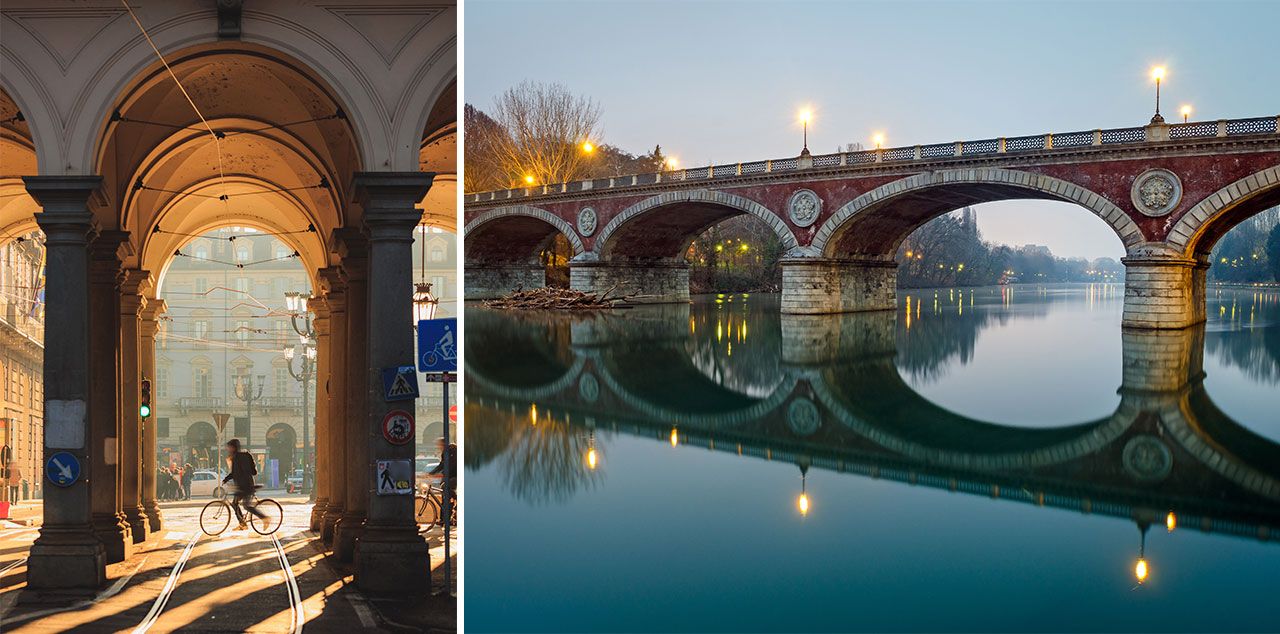
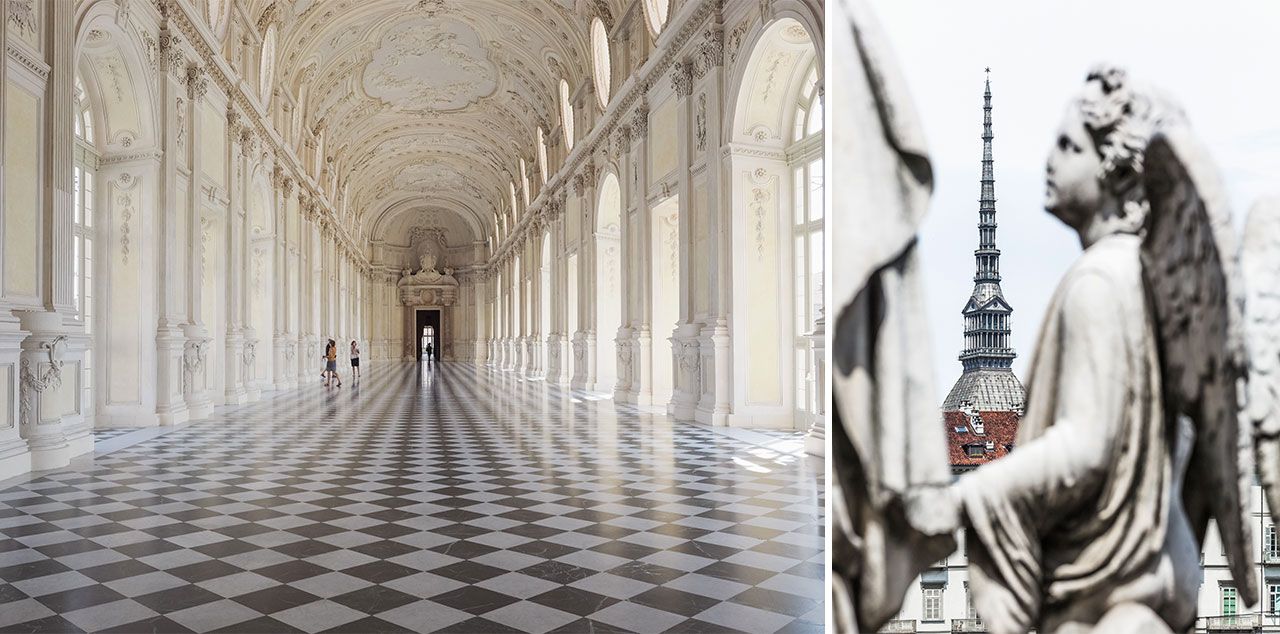
Leaving a distinctly Parisian imprint on Turin’s atmosphere and architecture, the French royals scattered Turin with splendid palaces, gardens, opera houses and grand boulevards. Unlike most ancient capitals from the Roman Empire, Turin’s procession of park squares and blocks of uniform facades are laid out in an orderly grid. One colonnaded piazza is linked to the next via the city’s 18-km network of historic, covered walkways, with shops and cafés tucked under its shady porticos – you can wander Turin’s streets for hours, sheltered from sun, rain or snow.
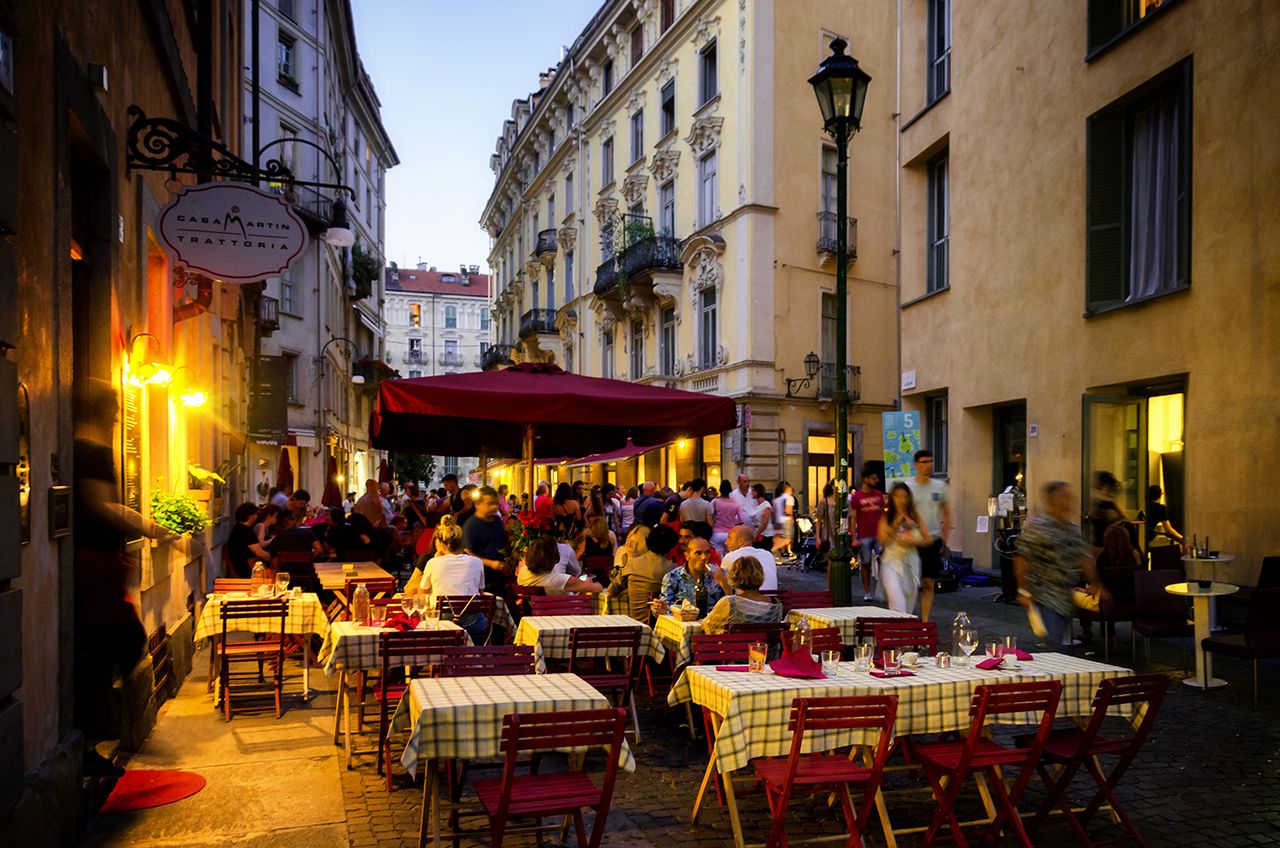
Mostly pedestrianized, Turin’s calm, cobbled streets have none of the scooter and traffic chaos of other Italian cities. All the better to admire its fantasia of Baroque, Rococo, Neoclassical and Art Nouveau architecture and historical sites that range from 16th-Century Savoy palaces – some 22 in all and considered such pinnacles of Baroque architecture they are now UNESCO world heritage sites – to the Porta Palatina, erected in 1st century BC, and among the world’s best preserved Roman gates. The city is so proud of its classicism that the McDonald’s in the centre of town is disguised behind an old-world shopfront shrouded in silk drapes.
With locals saying brioche, instead of cornetto, for breakfast pastries, and grassie-mersì for thanks, local cuisine is a similar melange of Italian and French. Sauces are based in butter and cream, instead of olive oil and classic French dishes such as canard à l’orange or fonduta (fondue) are among the favourites on the menu. In the 19th century, the city was a mecca of café-culture, with aristocrats and socialites whiling away their afternoons over cocktails, coffee and cakes.
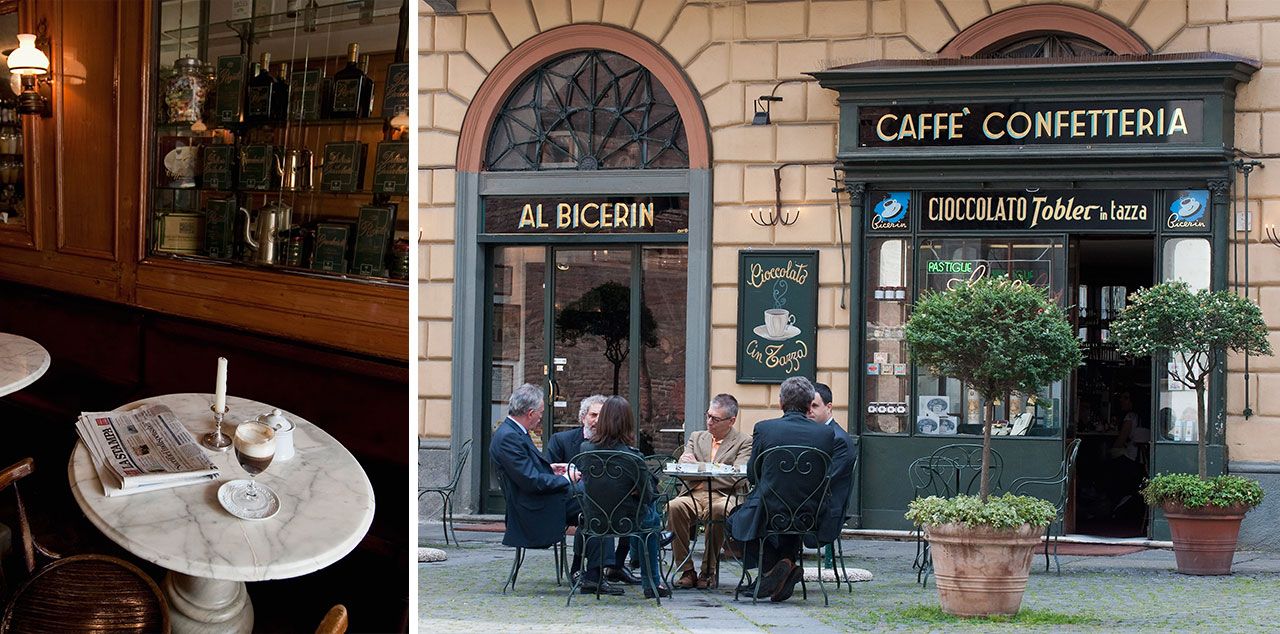
As a result of these erstwhile flaneurs, the city’s historic centre, or centro storico, is punctuated with opulent, beautifully preserved cafés. Ten have protected historic status, including Caffè Al Bicerin (1763), which created the city’s signature Bicerin, a chocolate-espresso. Turin is considered the birthplace of solid chocolate, including the first individually-wrapped chocolates, Gianduiotto (1865). Its legendary sweet shops – like Peyrano, the official chocolatier of the House of Savoy – are a real treat for connoisseurs.
Turin is considered the birthplace of solid chocolate, including the first individually-wrapped chocolates, is also the The birthplace of the delicious Gianduiotto (1865), the first individually-wrapped chocolates, anTurin’s. Its legendary sweet shops – like Peyrano, launched in 1915 the official chocolatier of the House of Savoy – are a real treat for connoisseurs.
Lively, yet refined, Turin also came up with the aperitivo, the lovely Italian ritual of sundown drinks and light bites to whet the appetite. The city is littered with places to enjoy this 6 p.m. to 8 p.m. pre-dinner ritual from traditional options like Caffè Torino, to the more modern and creative La Drogheria. Order a vermouth cocktail – Turin invented that too, in 1786.
The big splurge for dinner is Del Cambio. The grand dame of Turin’s landmark restaurants opened in 1757 and has counted Mozart, Verdi, Nietzsche and Maria Callas amongst its patrons. Housed in an historic, multi-story townhouse, menus in its mirror-lined dining room draw inspiration from the seminal Cuoco Piemontese Perfezionato; the 18th-century cookbook that first fused Piedmontese ingredients with haute French culinary practices. If a dining tab here is too rich, pop by for a cocktail at Bar Cavour on its sexy top floor.
A city of 860,000 that boasts 10 Michelin-starred dining rooms, the capital of Piedmont is full of charming restaurants and delights for epicureans in all price ranges – including Porto Palazzo, the largest open-air food market in Europe. Turin is also where the concept for Eataly was born, launched 20 years ago in an abandoned vermouth factory. If you’re headed to town, an excellent duo to follow for insider tips are Oddur Thorisson, a renowned travel and food photographer, who did a story on Turin and loved it so much, he moved there with his wife, Mimi Thorisson, a celebrated food writer. The expat culinary couple regularly publish stories and posts about favoured foodie haunts in their adopted hometown.
View this post on Instagram
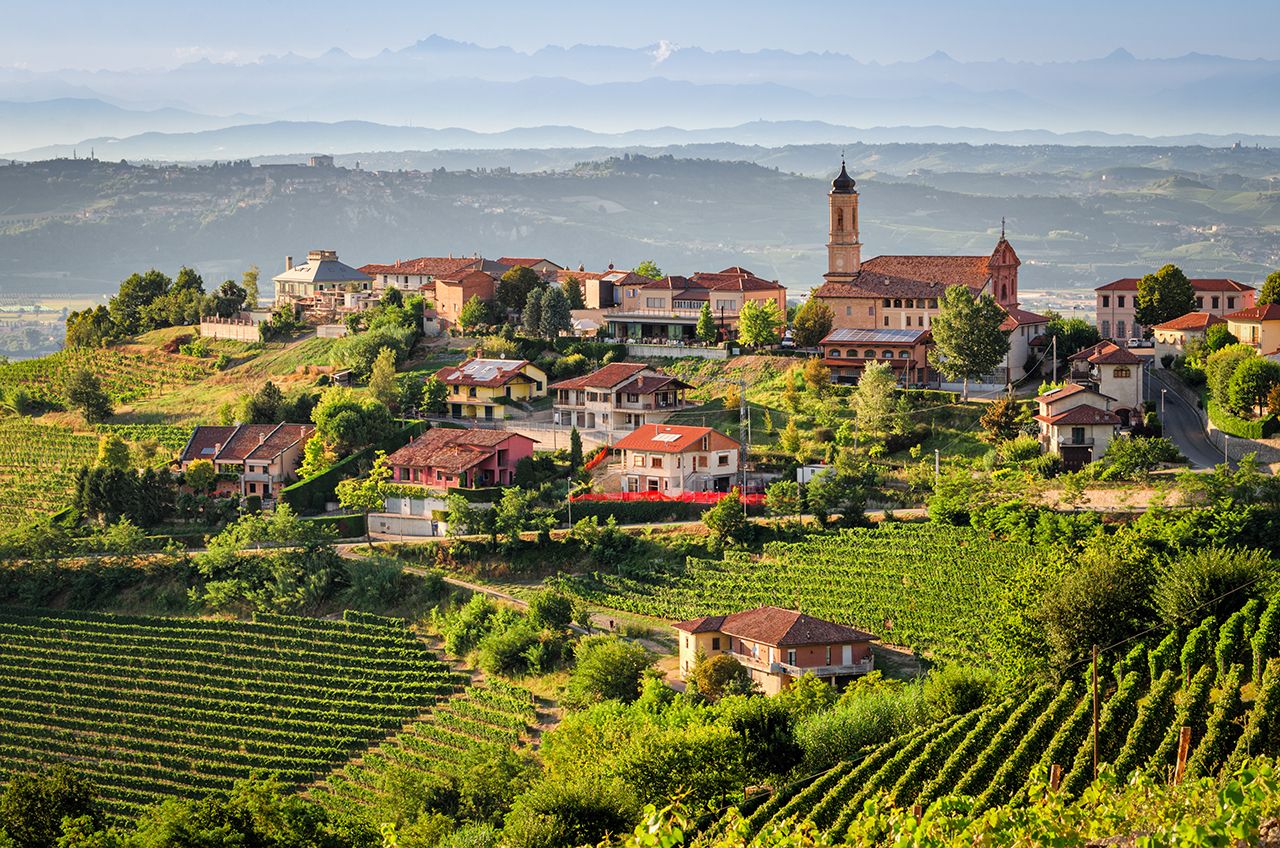
Beyond the food and architecture, Turin offers a wildly diverse array of museums and national galleries. Over 50 in all, there’s something for every interest. The Museo Egizio houses the world’s second-largest collection of Egyptian relics; the National Museum of Cinema is packed with movie memorabilia from Fellini collectibles to Marilyn Monroe’s shoes; and the Museo Nazionale dell’Automobile (MAUTO) is a must for vintage-car fans – after all, Fiat was founded here too. Day trips are equally bountiful, from vineyard hopping in the surrounding wine region, renowned for the Barolo and Barbaresco reds made from the Piedmont’s august Nebbiolo grapes, to buzzing ski resorts in the snow-capped Alps.
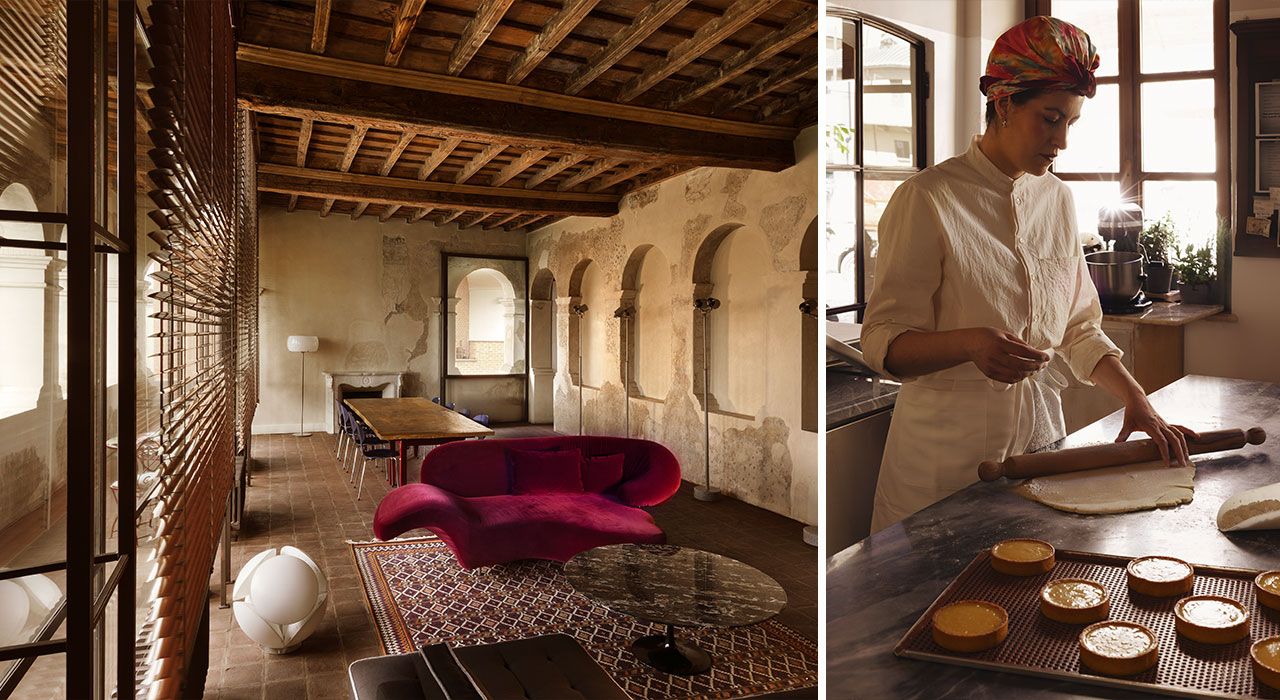
Where to stay? Turin hasn’t been flooded with generic chain hotels. Given its grandiose history, there are palace addresses like Grand Hotel Sitea, which opened in 1925 in a 17th-century manse and has welcomed everyone from Louis Armstrong to Tim Burton. On the contemporary side, the luxe Opera35, a stately Belle-Epoque-villa-cum-boutique-hotel, opened in 2024. And fans of cozy, eclectic chic will enjoy Casa del Pingone. Prefer your own flat? The Apart Deluxe Casa Boffa-Costa is full of art and character.
Truth is, you can’t really go wrong in this elegant city that has somehow stayed off the massa tourismo radar, and in doing so has retained its authenticity and charm. As they say in Turin, L’eleganza è la sola bellezza che non sfiorisce mai (elegance is the only beauty that never fades.)