





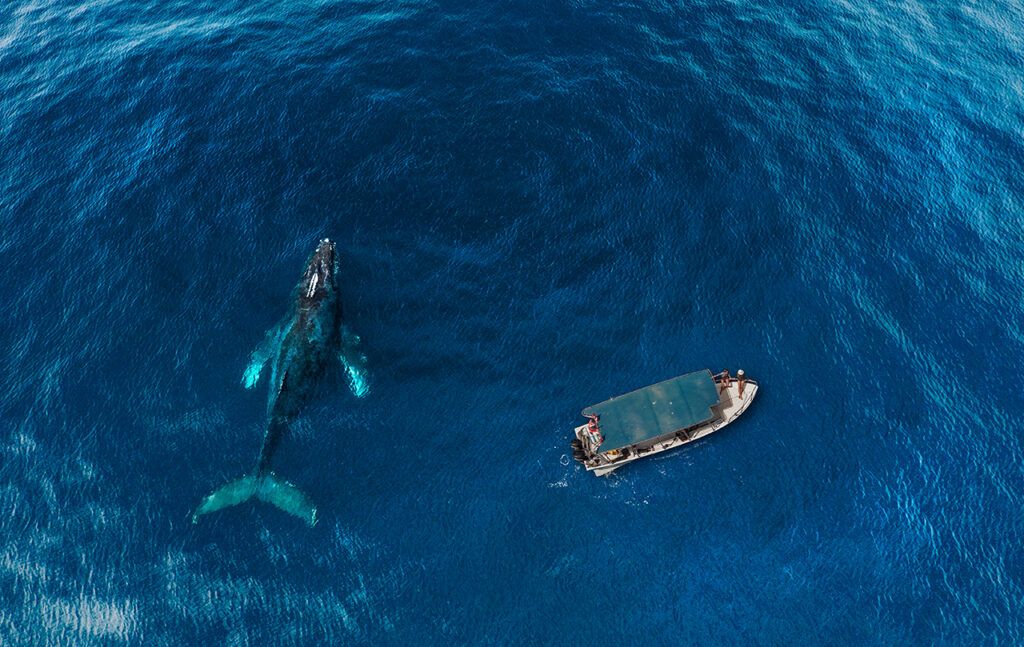
How many whales can you see before you become blasé? This is not a question I’ve had to ask myself before, but by my third day in Los Cabos, on Mexico’s Baja Peninsula, I had already seen 11. Casually, from my breakfast table, as I sat on the tiled verandah of my hotel sipping an agua fresca while contemplating the unashamedly blue Pacific, I spotted several whales breaching beyond the beach. Delightedly, from the bow of a swishy 46-foot chartered boat, as four humpbacks cavorted off the prow, waving their flukes and flippers, backs glossy with water. And again as I turned to look back at the ocean – just to check before jumping into a taxi – and sure enough, there it was, a spume flaring on the horizon.
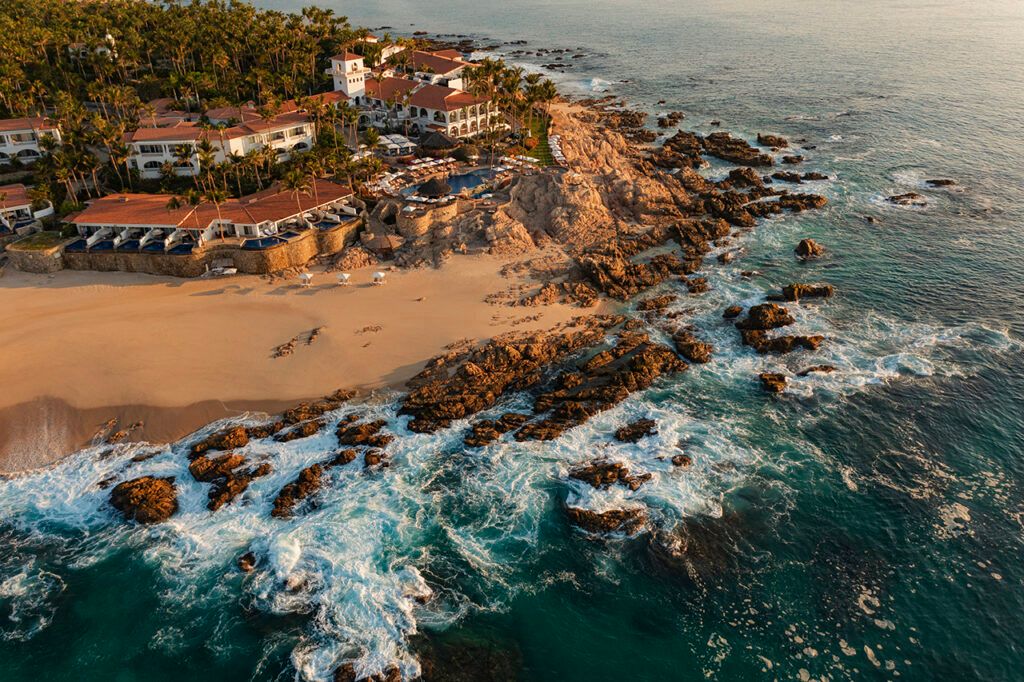
Los Cabos was the first place I ever saw whales, just over 20 years ago when I came here from London to go to the newly opened One & Only Palmilla, the hotel that set the standard for luxury here with restaurants created by Charlie Trotter and Jean-Georges Vongerichten and celebrities like George Clooney and Tom Cruise (who came here to swim with whales) graced its deck chairs. The memories came back of lying on the beach and being astonished to see whales tail-slapping and doing full body breaches just off shore. I was so excited I almost dropped my drink and turned to my Hawaiian friend Kate to declare that we must book a whale-watching tour immediately. She casually turned back to me, umbrella drink in hand, and said, “Honey, it doesn’t get much better than this.”
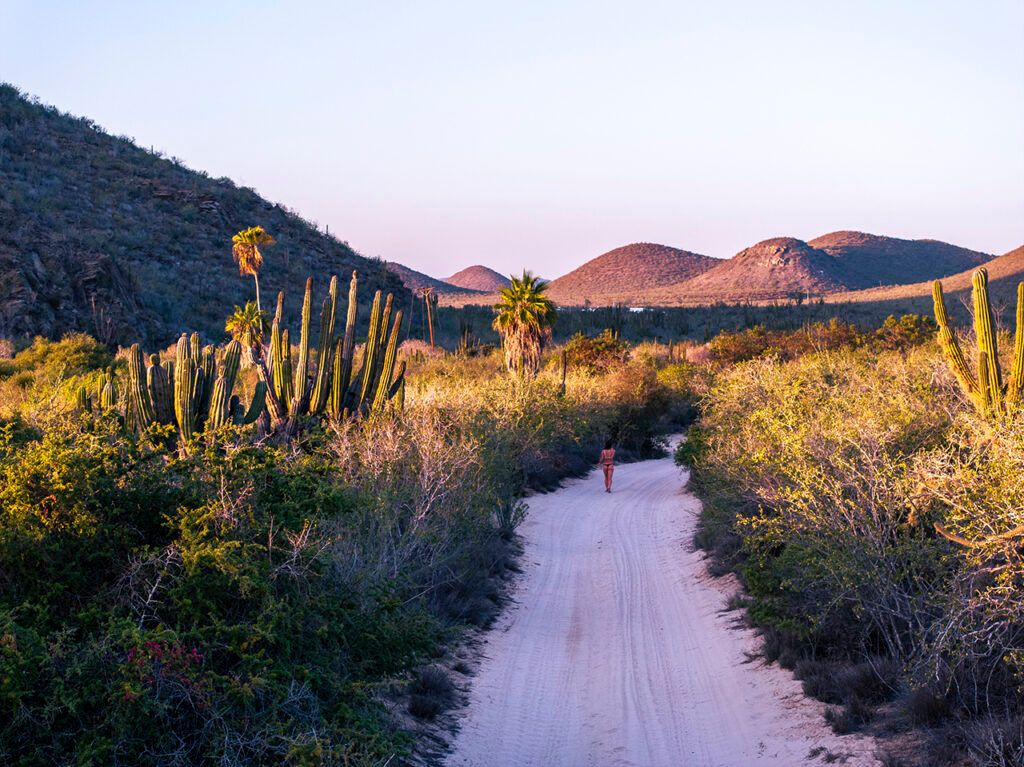
All these years and many whale experiences later, I realize my Pacific-islander friend was right. It really doesn’t get much better than this. Baja is an extraordinary place, geographically cut off from the rest of Mexico, and indeed North America, this 1,200-kilometre-long peninsula dangles like a sun-bleached jewel into the Pacific. The arc of coast at the bottom is where Los Cabos is situated and where the Sea of Cortez and the Pacific meet. Humpback whales head down here from the freezing Arctic to have their young in the warm waters and protected shallow bays.
With its guaranteed sunshine, access to nature, wonderful local culture and discreetly luxurious hotels, Los Cabos has long been a mecca for Hollywood A-listers, from Gwyneth Paltrow to Leonardo di Caprio, Cameron Diaz the list goes on … and of course Jennifer Anniston, who whips down so often she has been crowned the “Queen of Cabo”.
The draw, besides the weather, is the serenity and security. Los Cabos is the antithesis to the all-singing, all-dancing, Cumbia-blaring mega-resorts of Cancun and Puerto Vallarta. In Los Cabos, you can hear the waves washing the shore and have the beach to yourself at sunset. Food here is often Michelin-starred and cocktails are artisanal. It is also one of the safest regions in Mexico – there are no unnerving military stops like the false one I had to screech away from in the Yucatán when I realized it was a set-up. With direct flights from all over Canada, it has also become a sought-after destination for Canadians who want to avoid the States and still get guaranteed sunshine within an easy travel distance.
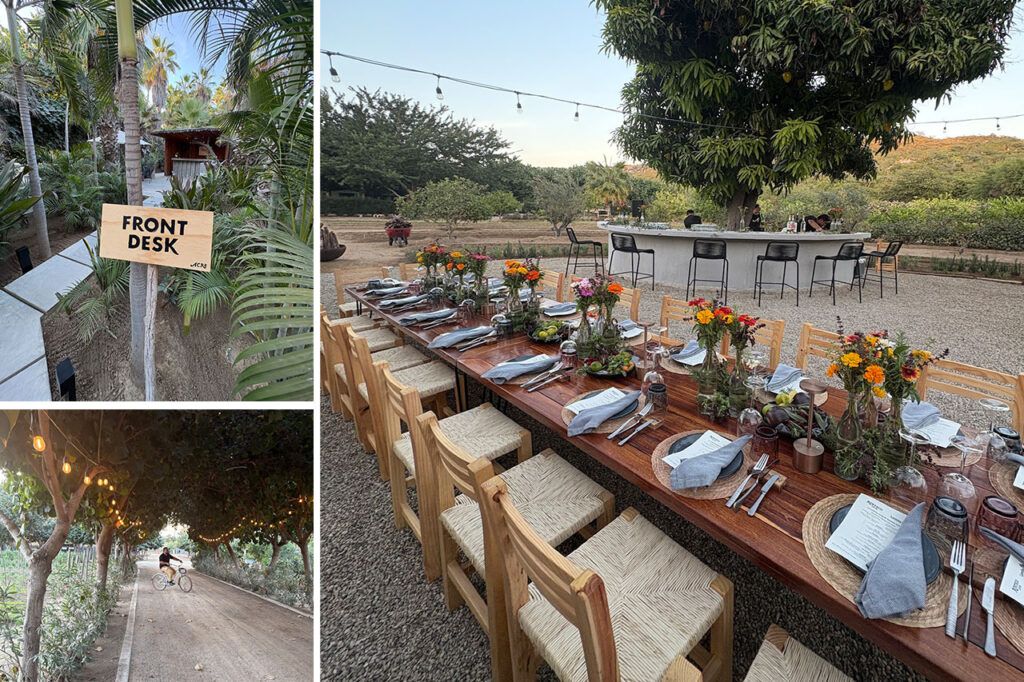
Indeed, one of the most astonishing properties here is Canadian. The magical Acre (pronounced Acr-eh), set in a lush palm-filled oasis, is more like a happening than a hotel. The owners, Vancouverites Stuart McPherson and Cameron Watt, came to Los Cabos on holiday and did that thing many of us dream of, they decided to stay. The pair were drawn to a mango orchard a few kilometres inland, where palm trees could naturally grow. Sixteen years and 5,000 indigenous shrubs, palms and agave plants later, they have created a 25-acre jungle sanctuary. You can stay in one of the 12 treehouses, really luxurious sky bungalows, or keep your feet on terra firma in one of their architectural villas and haciendas with private pools.
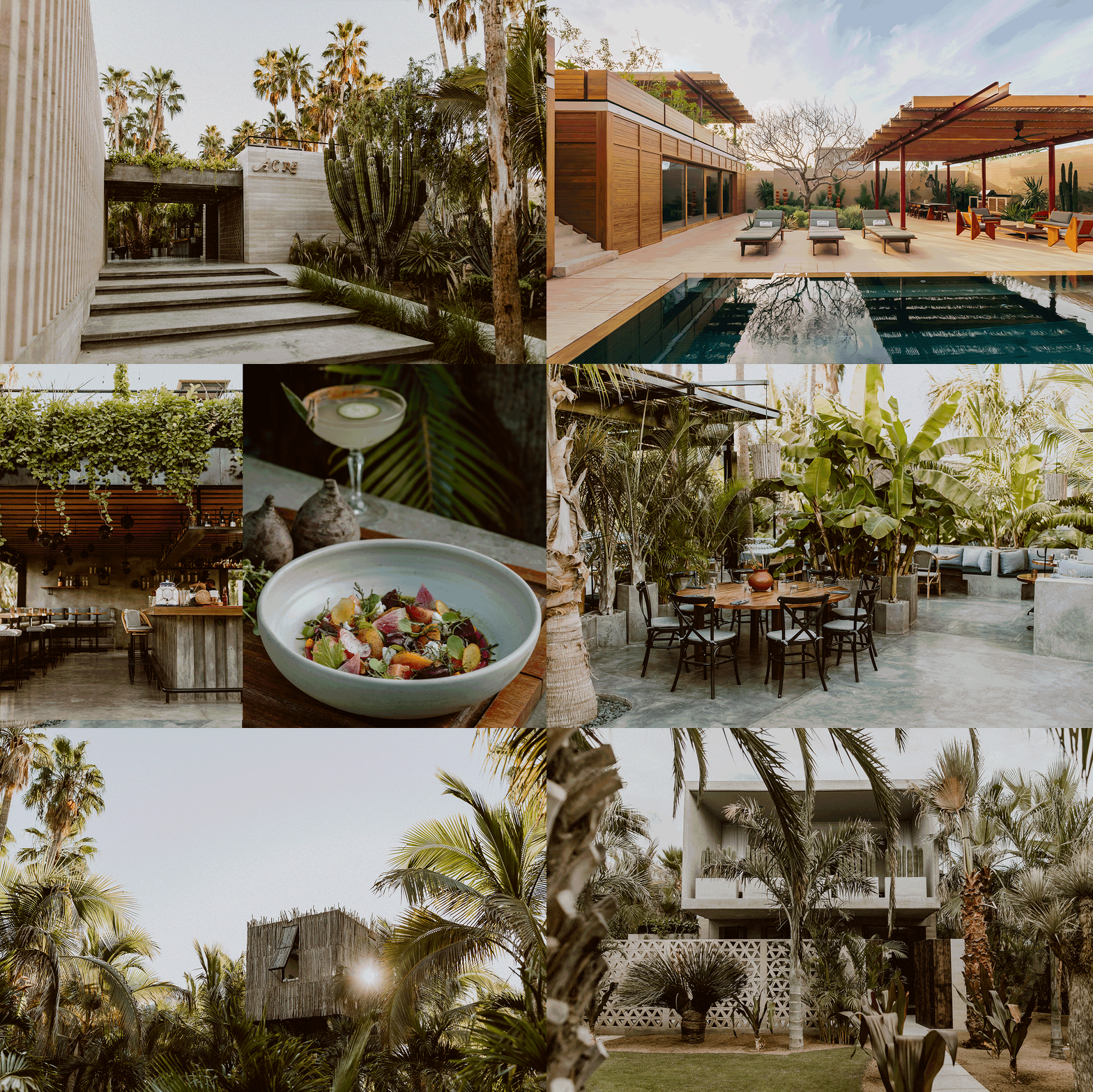
The whole experience at Acre feels like a mirage, with surprises around each sun-dappled corner. There are white beach cruisers to bike around on; an animal rescue sanctuary with goats, horses, donkeys and dogs that are available for adoption; and a jungle pool surrounded by beautiful tiles that spread out under the original mango orchard. Around another bend is an open-air kitchen Rūstico, set up with flower strewn farm tables for wine tastings. Further on you’ll find an Airstream with an eclectic shop inside, and ultimately, their Michelin Guide restaurant, with its lush completely outdoor setting, superb food (90 percent of the produce is grown at Acre) and vibrating atmosphere that draws up to 600 people a night.
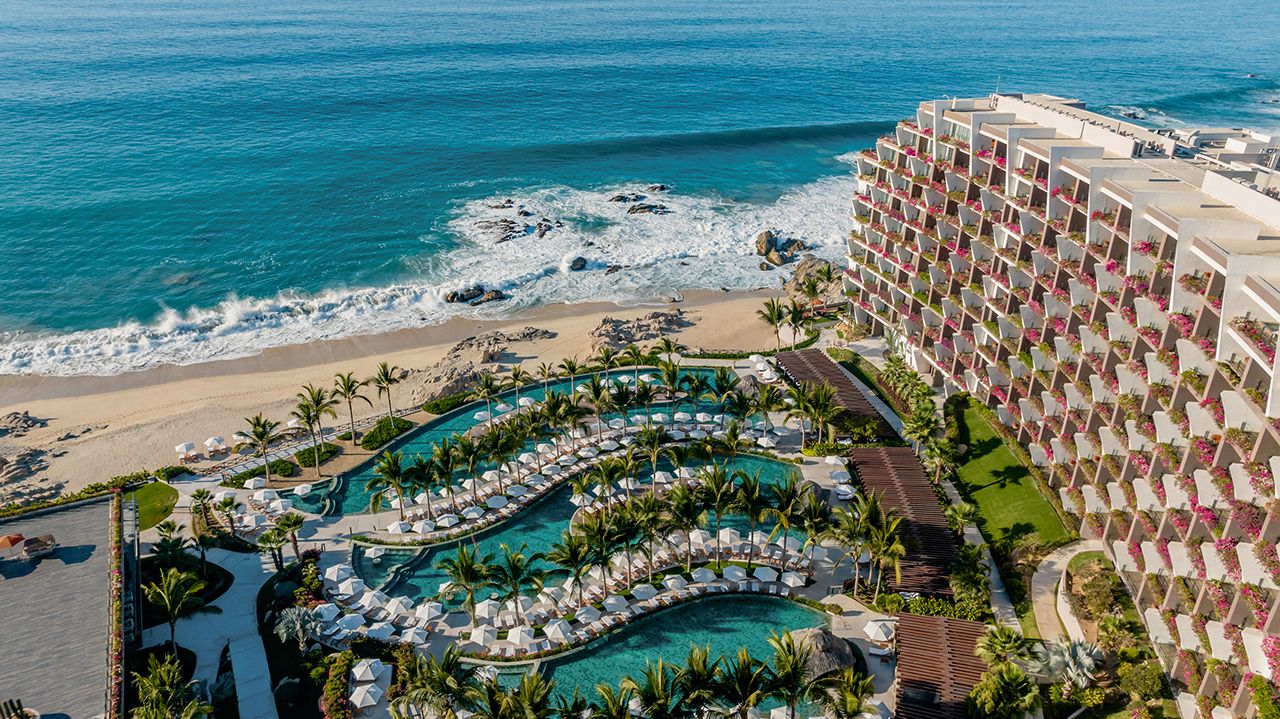
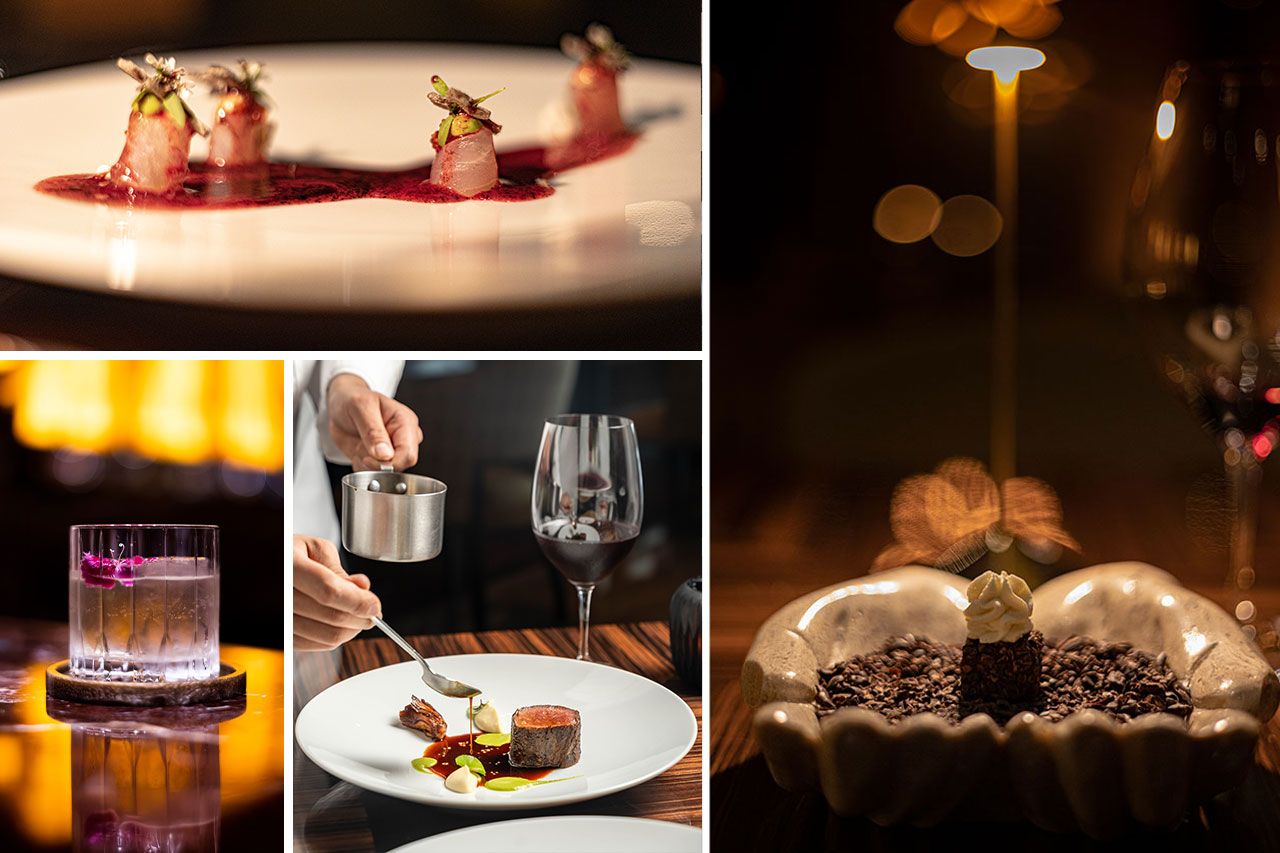
On the opposite end of the barefoot luxury vibe, but still utterly seductive, is the Grand Velas Los Cabos – the only all-inclusive in the world with a Michelin Star. The hotel’s half-moon-shaped facade is covered in bougainvillea that tumbles from its trapezoidal, sail-like balconies. The night I ate at their Cocina de Autor restaurant, I was a bit overwhelmed by the thought of an eight-course menu in the heat, but of course each dish was perfectly sized and paced, and utterly beautiful.
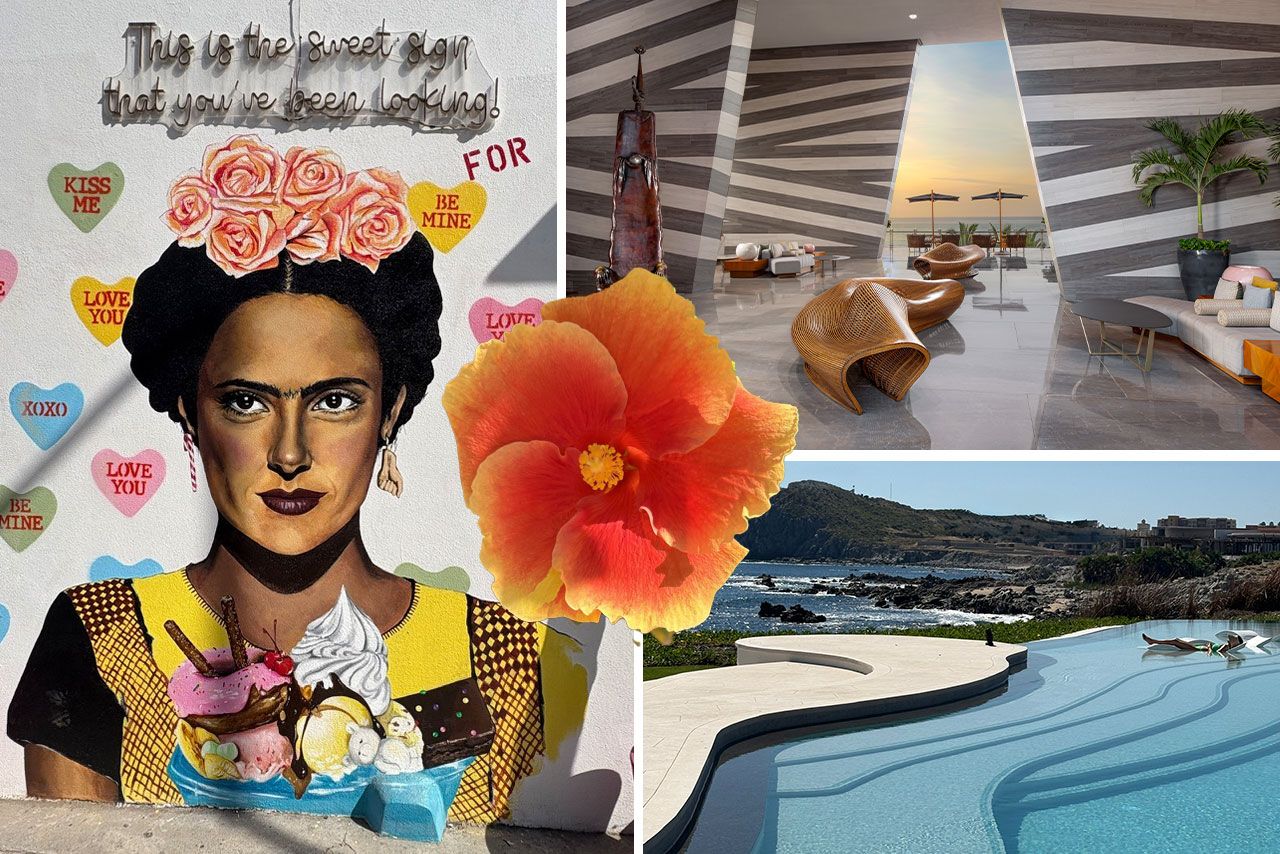
It was a hallucination of a meal where the amuse-bouche came on sculpted marble hands, and the one dish of totoaba (a native fish) arrived covered by a delicate screen of flower shapes made from cacahuazintle corn. Sitting outside next to the sleek koi pond dotted with water lilies and tropical plants, with ocean breezes rippling the infinity pools that snake down to the ocean beyond, was utterly glamorous. No wonder Selena Gomez chooses to stay here.
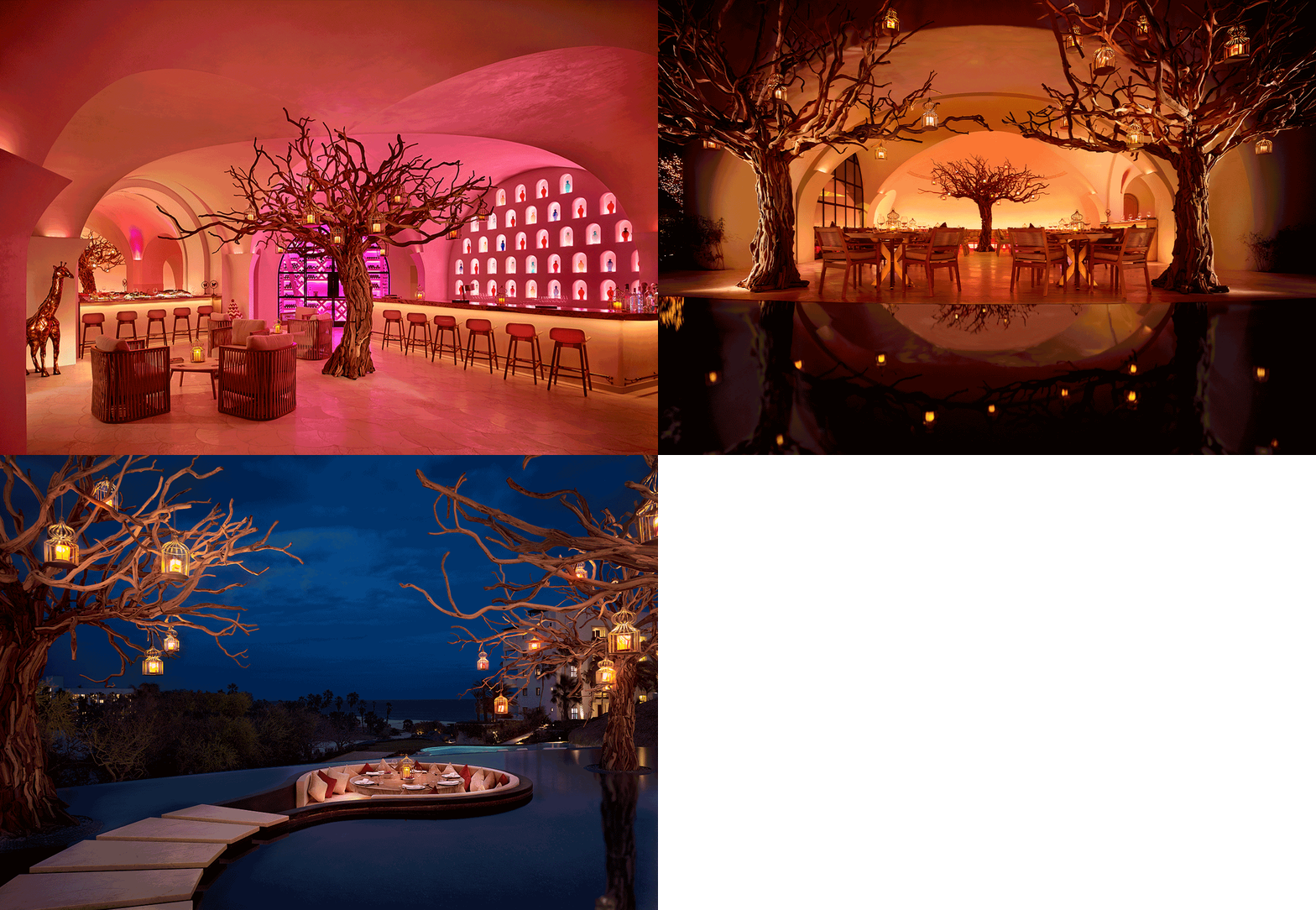
Speaking of pools I actually ate in one. At Arbol at the storied Las Ventanas al Paraiso Rosewood resort, there are two “sunken tables” that you get to by walking on stepping stones over a pool. Sculptural trees lit by 500 birdcage lights glimmer overhead and reflect in the water around you, an installation by Mexican artist David Luna. The food is equally fanciful, brilliantly blending Asian cuisine with Baja coastal thanks to having a Thai chef with a Tandoor oven to dream up dishes like Asian Tandoori Lobster. Equally surprising is the hotel’s speakeasy La Botica, reached via typing a special code into an old-fashioned cash register. Get the code right and suddenly a clandestine door opens to a 1920s-inspired space where alcohol is revealed when a wall of tinctures behind the bar slides open. There is a playful list of house rules including “In Case of Raids, Down your Drink Post Haste” live jazz is sung and at the bottom of one of the huge tincture jars there is a coiled snake.
The resorts in Los Cabos truly have the ability to surprise and delight – it is as though every hotelier here got such a mood-boost from all of the negative ions released by the ocean, that they let their imaginations run wild. The one thing they can’t do is tame the sea, which is often a tease in Los Cabos. There are very few swimmable beaches thanks to the convergence of the Sea of Cortez and the Pacific, which creates powerful rip currents and large breaking waves. On top of which there are sudden, steep underwater drop-offs near shore that cause unpredictable undertows. Most hotels have incredible pools but if ocean swimming is top of your list, make sure to check first with your hotel about their beaches’ swimmability.
One thing is certain, with Soho House, the Amanvari and St. Regis all opening in the near future, Los Cabos is caliente right now. The good news is that the region’s growth is being carefully managed – there isn’t a Señor Frog or high-rise in sight – and there is something here for everyone who wants their winter sun served with a side of good taste.
Getting to Los Cabos is easy from Canada. Air Canada flies non-stop to San José del Cabo from Toronto, Vancouver, Montreal, Calgary and Ottawa. West Jet flies direct from Vancouver, Kelowna, Victoria and Calgary and Sun Wing had direct flights from Edmonton, Toronto and Montreal.