



“Home.” It’s an idea that many hotels around the world love to evangelize. The feeling of. The heart’s abode. The proverbial home away from home.
More often than not, it’s just lip service. Marketing-speak. Hokum. Walking through the chalk-white facade of Lima’s Hotel B, in the Peruvian capital, and arriving in its art-filled vestibule, I immediately felt it, however. Casa! It wasn’t a tease; it was a promise. The imaginary residence, at least, of your eccentric monied aunt who always kept a healthy distance from the rest of the family, and did things her own goddam way.
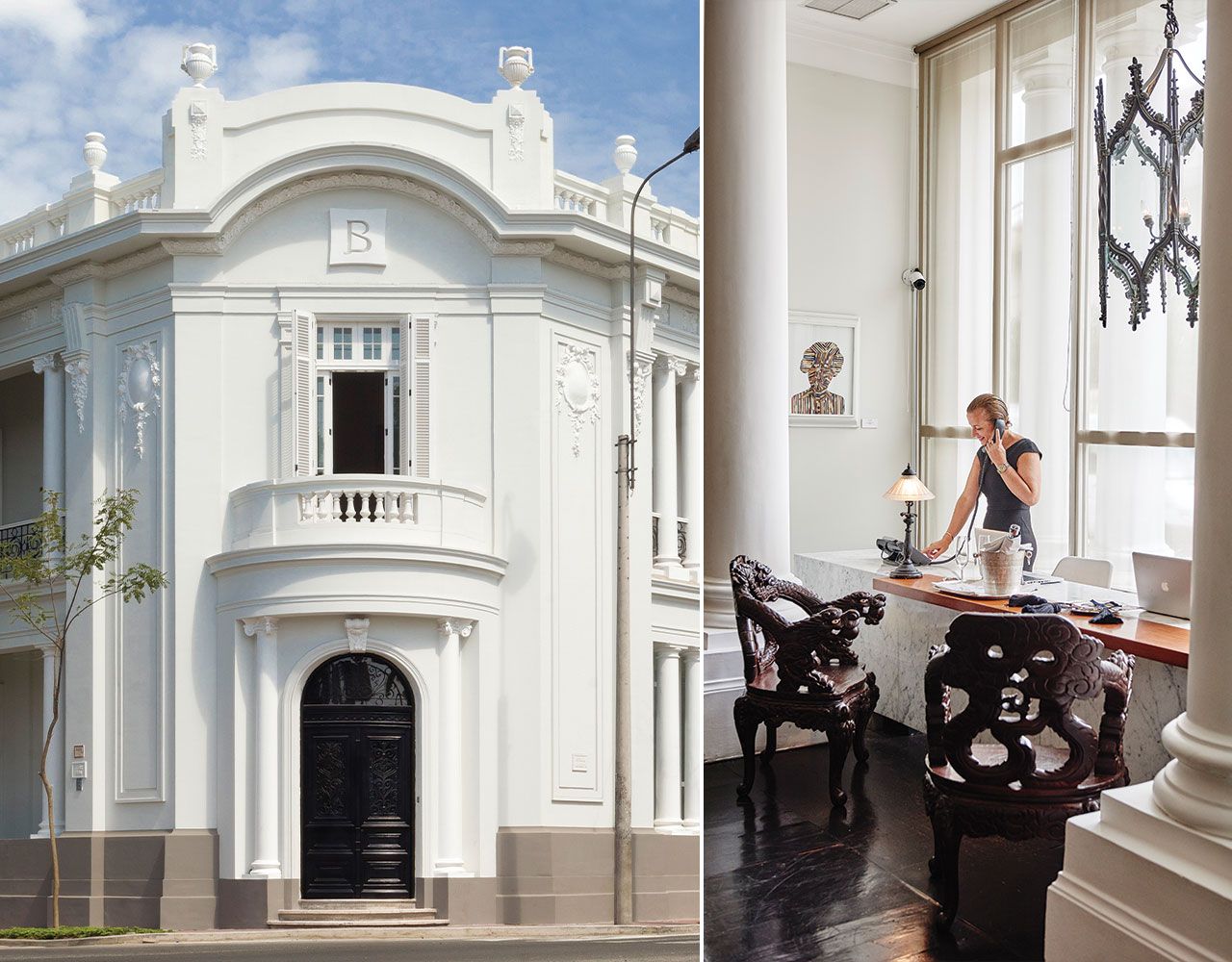
“Seaside retreat,” rang out the voice of the woman who greeted me at what could loosely be called reception. She was sitting behind an elegant, Gilded-Age-style desk, and, soon enough, was handing me the key to one of the 17 rooms in this prized hotel poured into a Belle Époque mansion from the 1900s. A real key, I should add! One from a fairy tale – long and spiky, with a bouquet of tassels.
It was early in the morning – I had taken an easy-peasy overnight flight to Lima from Toronto; easy-peasy because there is no time difference and it’s straight down from Toronto or New York! – and the concierge was giving me the spiel. Once the holiday home of a wealthy García-Bedoya family – in the only South American capital located on the Pacific – the building came via French architect Claude Sahut (who was also commissioned to design the presidential palace in Lima, thought it was never finished because of a coup – hey, it happens!). Think: Italian marble, exotic woods, winding staircases, vaulted ceilings, nooks galore, a library that now sets the scene for breakfast, and an expansive terrace. Not big – but not exactly small either.
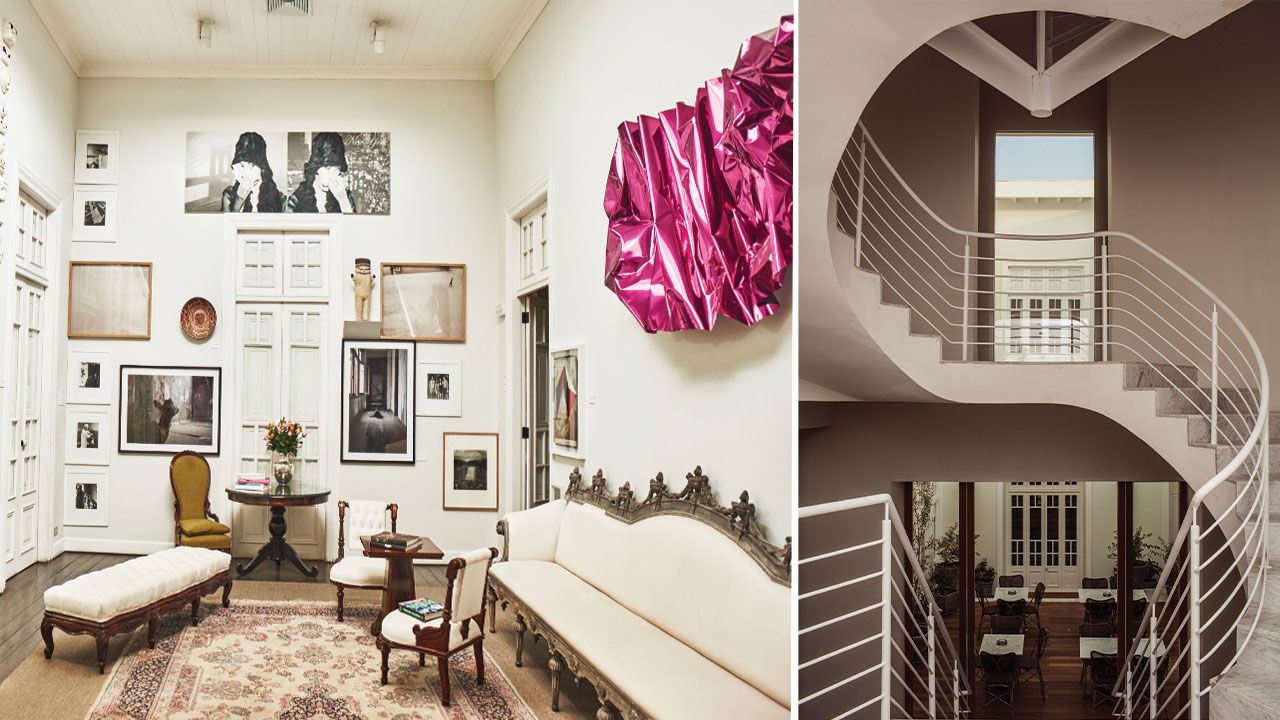
Turned into a hotel in 2013, Hotel B is Lima’s only Relais & Chateaux property. It is also widely considered one of the world’s most successful “Art Hotels” (this era’s answer to “Boutique Hotel” – it sits comfortably on a list with other such establishments as Castello di Reschio in Umbria, Italy or The Fife Arms, in Scotland). Hotel B hits you with the winsome sculpture of Woman 2 by Joaquin Liebana, and does not let you go as you meander your way through the place – 300-plus paintings, photographs, installations and other artworks cover the hotel, some rather haphazardly (or made to look haphazardly, as if that imaginary eccentric aunt had had some flashes of ennui at one point).
The collection? It leans towards the Latin American in general and Peruvian in particular – artists such as José Tola, Haraldo Higa and Aldo Chaparro: from the “pre-Hispanic” to the post-modern. Unsurprisingly, the hotel is connected to an actual art gallery and tours are offered of the collection for interested art-lovers.
The drama woven into its walls, meanwhile? It carried over when, upon entering my room – a “chamber” suite on the second floor – I noticed a long, black necktie casually lying on the bed. Tales of a tryst to come, or one that had already occurred … ? In fact, the tie, I learned, is the hotel’s answer to a “Do Not Disturb” sign to hang on the door. Cheeky.
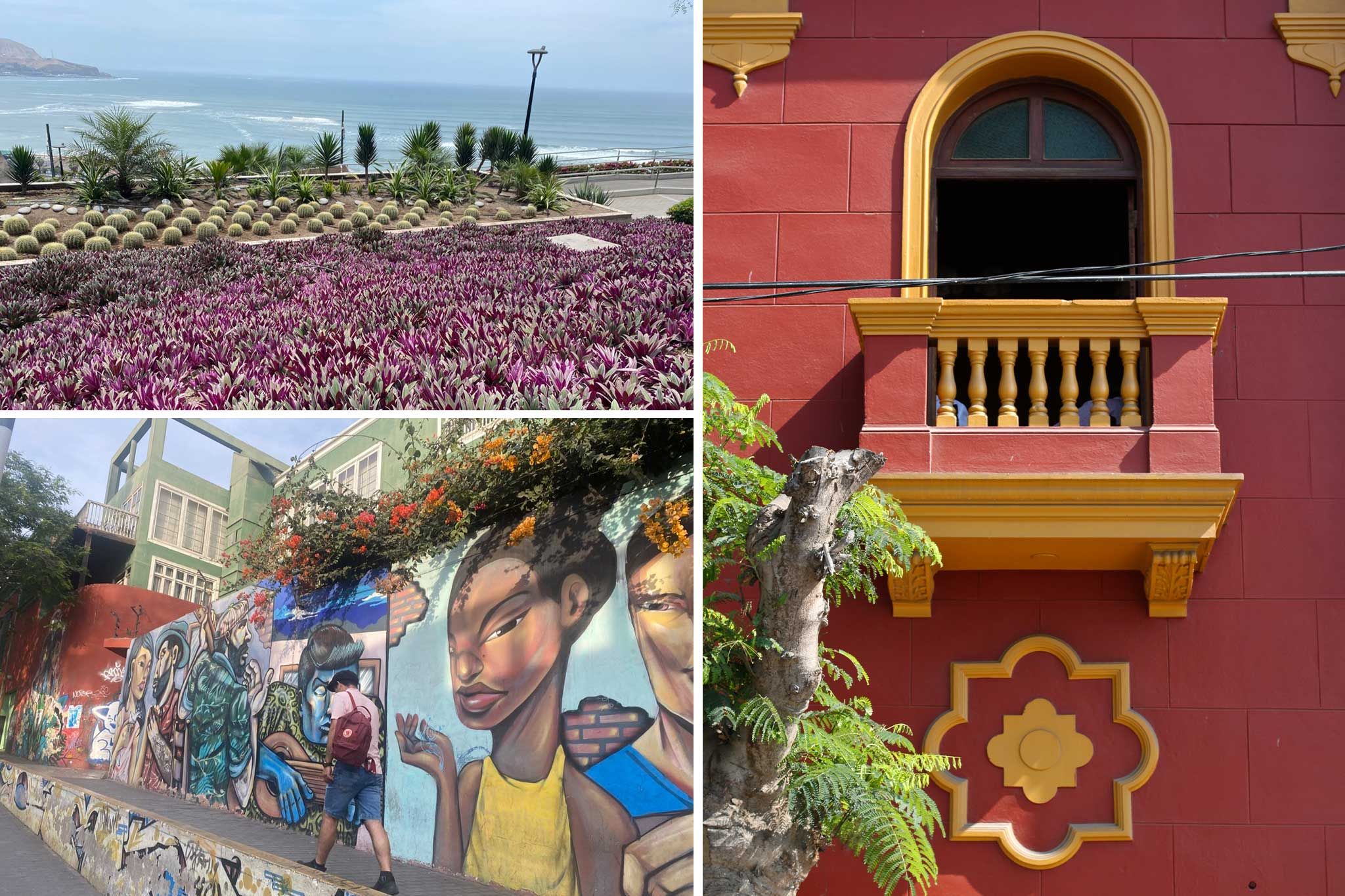
Of course, the lure of Hotel B – as I found out in the days ahead – ultimately comes down to that old tune: location, location, location. The B in its name is for Barranco. The hotel sits on a prime, tree-lined corner of Calle San Martin in Lima’s – and one of the world’s, frankly – coolest neighborhoods. Barranco is a bit like Santa Monica meets Valencia. Imagine, too: Shoreditch with an ocean view. Situated on a bluff that noses down to the ocean, Barranco started as a fashionable resort area for Peruvians but was later absorbed into metropolitan Lima itself.
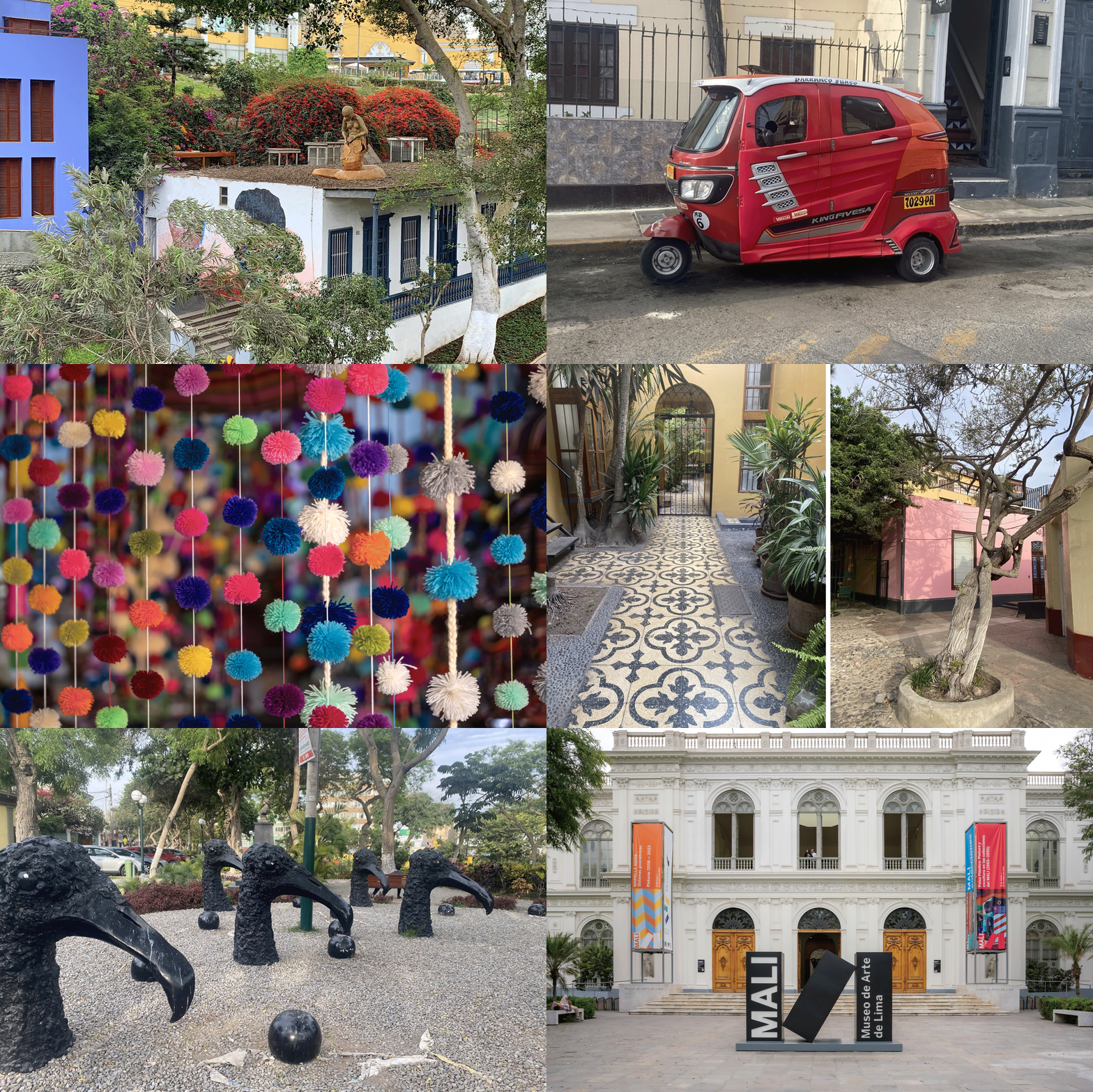
Fact: As much I tried venturing out to other parts of the Lima (a sprawling city of 10 million-plus), Barranco kept me luring me back with its pastel-coloured houses, meandering back alleys, bookstores and bars, surrealistic murals, and street life aplenty. Boho in the best way! A few blocks north of Hotel B is Lima’s Museum of Contemporary Art. Throw a rock and you’ll also find the restaurants that have turned Lima one of the most celebrated cities on the planet, culinarily speaking. Haunts like the fashionable-set Siete, the avant-garde-y Merito, and the old-school Isolina.
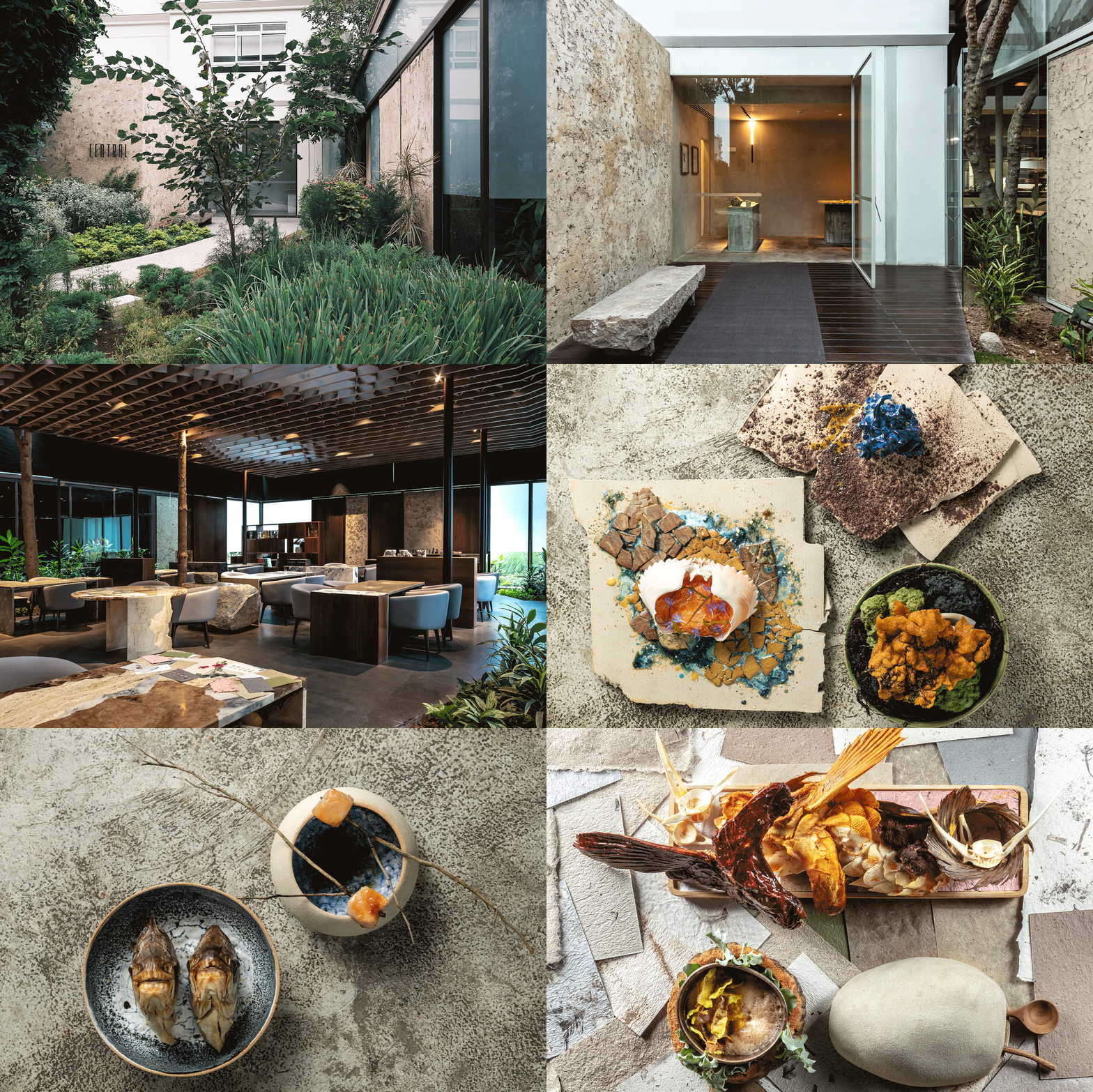
It’s a culinary quake that began with Central, a restaurant that cinched the city’s rep when it took the No. 1 spot on the World’s 50 Best Restaurants list in 2023. But it’s also evocative of a country “where there are 3,500 varieties of potato” alone, as one chef told me. A food scene that also owes much to the significant Japanese influence in Peruvian food, a sub-genre known as Nikkei cuisine (ceviches, etc), and all goes back to the Meiji era in the late-19th Century when the Emperor of Japan favoured Peru as a destination. This is reflected today in the city’s heaving population of some 200,000 people of Japanese descent. Lima, after all, was the place where Nobu Matsuhisha opened his first sushi resto – merging Peruvian ingredients with Japanese flair. Boom: the origin story of a now-global Nobu empire.
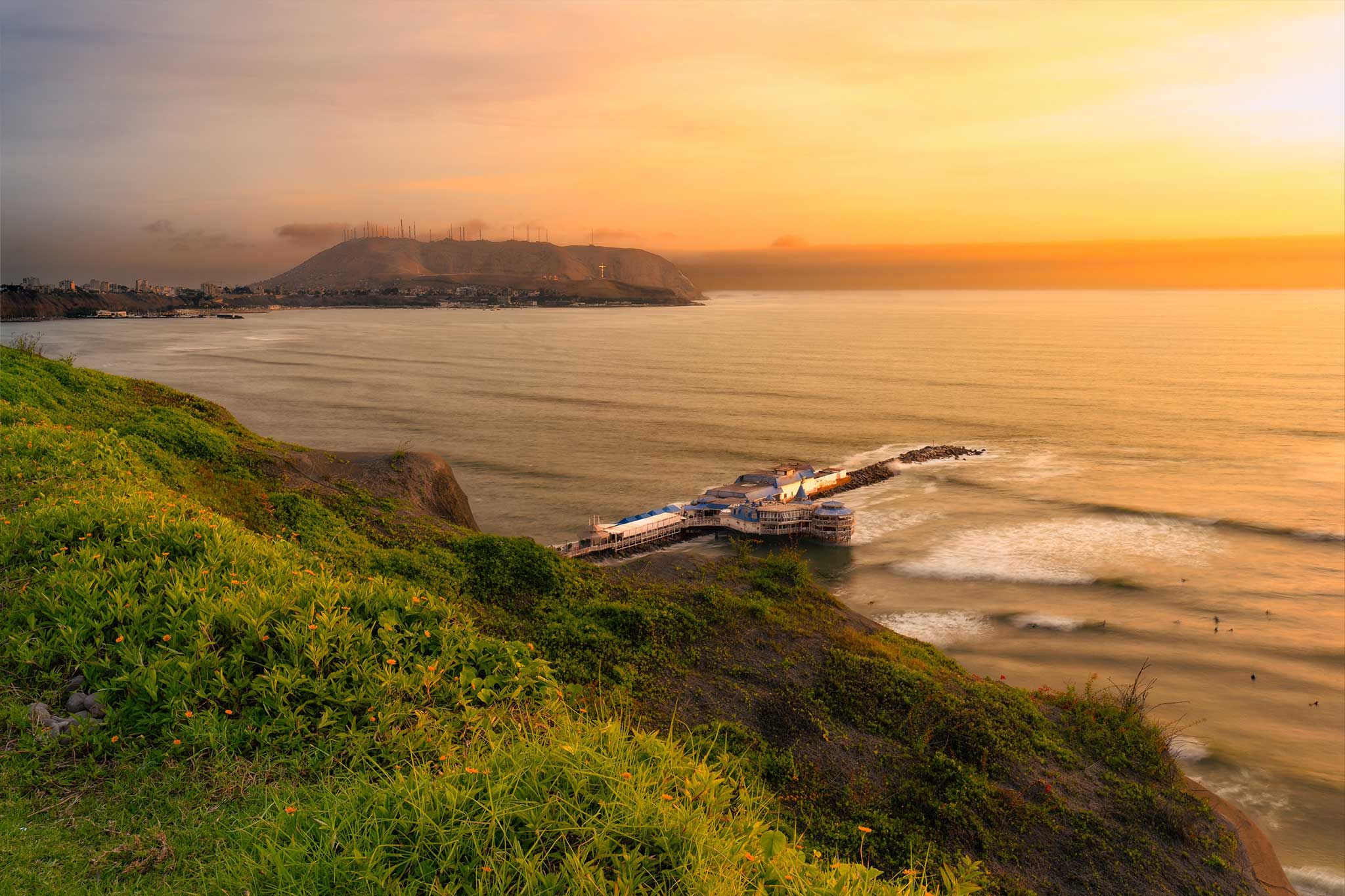
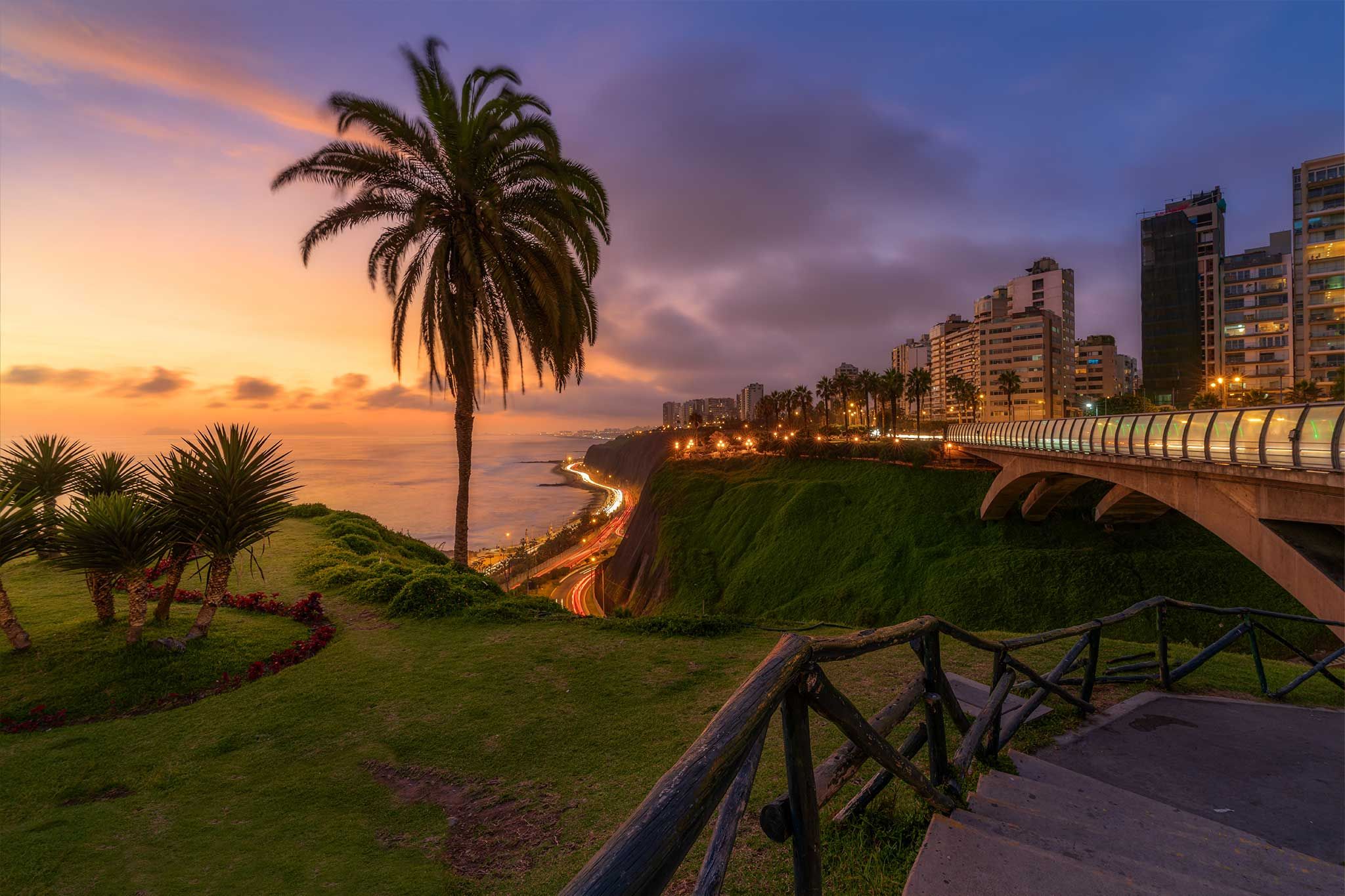
If the tastes and sounds of the neighbourhood were not enough to sate me, trust me, Lima’s sunsets took care of the rest. I’d certainly heard about the city’s theatrical swoops at dusk – putting on their very best show between December and April, during Lima’s summer – but they have to be seen to be believed. Puttering around Barranco’s cliffs, I had one of those moments that made me utterly aware of my own breathing: the entirety of the Peruvian capital turning into a jumbotron of sky and sea. Bruises of apricot, pricks of pink – time slowly unfolding.
Situating yourself in this neighbourhood is like having a “box seat” to the sunsets – with unimpeded panoramic views over the ocean. And, as I soon learned, there is a science to it all. Two words: “tropical desert.” Due to its latitude and its spot on the Pacific, Lima is bound by both the Pacific Ocean and the Andes mountains, rising 20,000 feet to the east. This setting helps trap the cool, moisture-rich air created by the Humboldt Current along the coast, contributing to Lima’s lingering marine haze, even though the city technically sits within Peru’s coastal desert. That haze diffuses the evening light, deepening the reds, golds and pinks at dusk. The Andes also block hotter continental air from the Amazon basin, preserving Lima’s unusually stable coastal climate.
The sky? Truly its own show. And yet another reason to make a dart for Hotel B. It is home, incidentally, to a rooftop bar that makes for ideal viewing, too. B is for Barranco. But also, it seems: breathtaking.