



I was about to turn 60. The number didn’t stress me out. Where to celebrate did. Since 2006 (when I was merely 40), I’ve been a freelance travel journalist, travelling and reporting 365 days a year on my Trans-Americas Journey working road trip through the Americas. This ongoing personal and professional adventure in North, Central and South America has taken me to the Galápagos Islands (multiple times), the Arctic Ocean, Tierra del Fuego, the Amazon basin (in five different countries), and much more in between.
But my travel habit goes all the way back to my youth. When I graduated from high school, I deferred college and moved from California to Australia. In my 30s, I spent years backpacking around South and Southeast Asia. Add in a few jaunts in Europe and, all told, I’ve spent roughly 25 years of my life travelling. And turning 60 (or 70 or 80 or 90) is not going to stop me.
I don’t normally go in for birthday celebrations. They feel like forced fun fraught with New Year’s Eve levels of expectation. However, renewing my vows to adventure travel and my work chronicling it, on a birthday that rings in retirement for many people, felt like something to celebrate.
Going to Extremes
After ruling out a return to any of my favourite places (there are just too many new things to see), I started looking for a fresh adventure that would be up to the task. Then my husband, Eric Mohl (a former corporate lawyer turned adventure traveller and photographer), found a three-week trans-Atlantic Swan Hellenic cruise from Ushuaia, Argentina to Cape Town, South Africa via the Antarctic Peninsula, South Georgia island and Tristan da Cunha island, which ranks as the most remote inhabited place on earth
The itinerary satisfied the main touchstones of my decades of adventure travel: a commitment of time and effort, plenty of extremes and firsts, and the potential for all kinds of unforeseen mishaps that some of us insist on calling adventure. A little all-inclusive luxury thrown in didn’t hurt either.
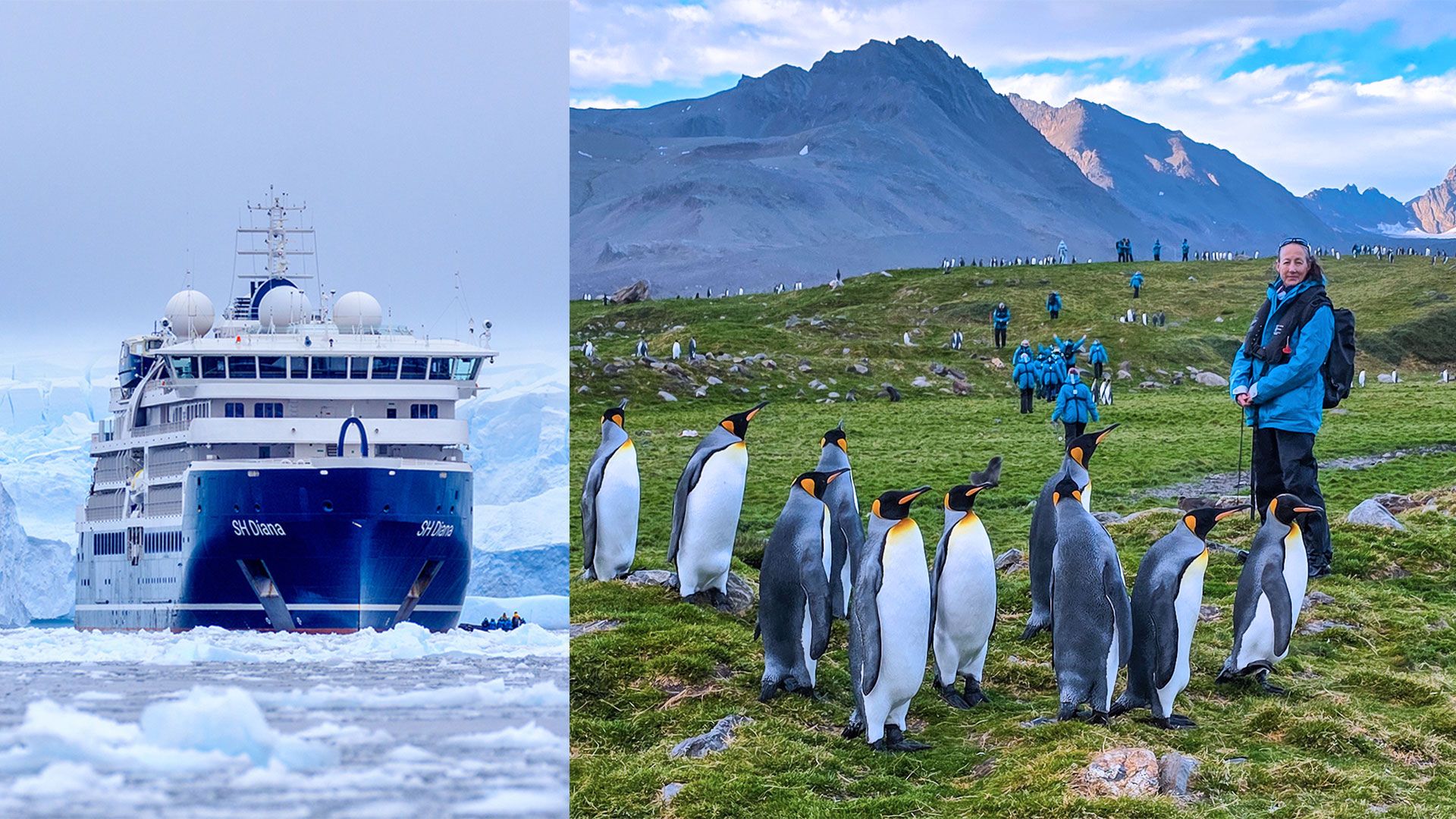
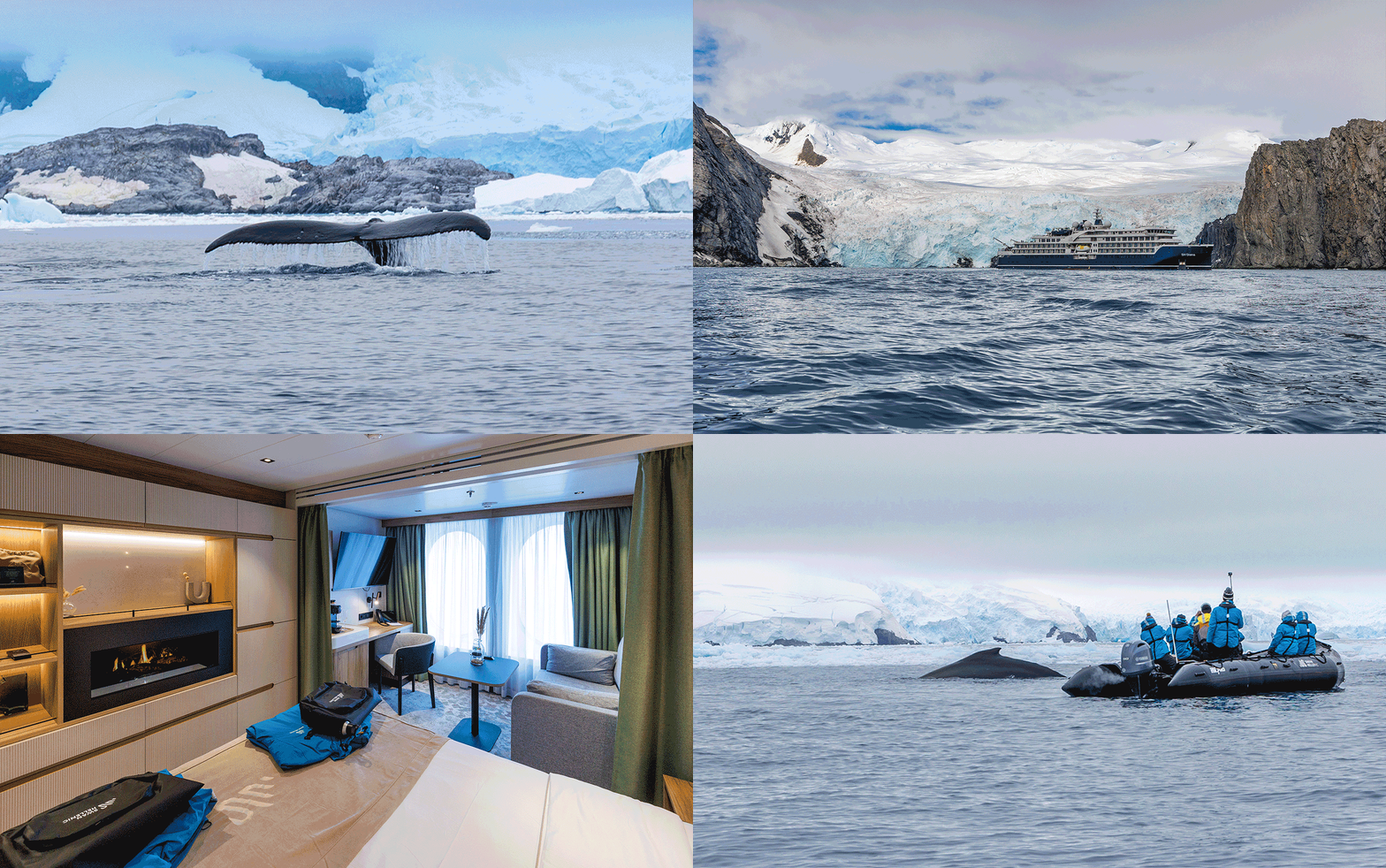
A few weeks after getting the medical clearance to embark on the trip, Eric and I were settling into our sleek, chic, luxurious suite (faux fireplace! private patio!) on the SH Diana, the newest boutique ship in the Swan Hellenic fleet, as she slipped away from the dock in Ushuaia.
Often referred to as the end of the world and the most southerly inhabited city in the world, windswept, ramshackle Ushuaia was created as a penal colony at the southernmost tip of Argentina. Over time, the city, wedged between the Martial Mountains and the Beagle Channel, grew into an adventure travel destination and main jumping off point for Antarctic cruises.
Age of Adventure
While many of the 90-odd passengers on the half-full vessel were older than me, I noted with a raised eyebrow that many were younger – some much younger. There went my idea of celebrating a significant birthday amongst a group of people who would make me feel like the kid in the group. Curious as to whether this was the norm, or if it was because we were on an expedition cruise with an active itinerary, I did some investigation and discovered that 67 percent of people on all types of cruises are 40-years-old or younger, according to a 2025 report by Cruise Line International Association.
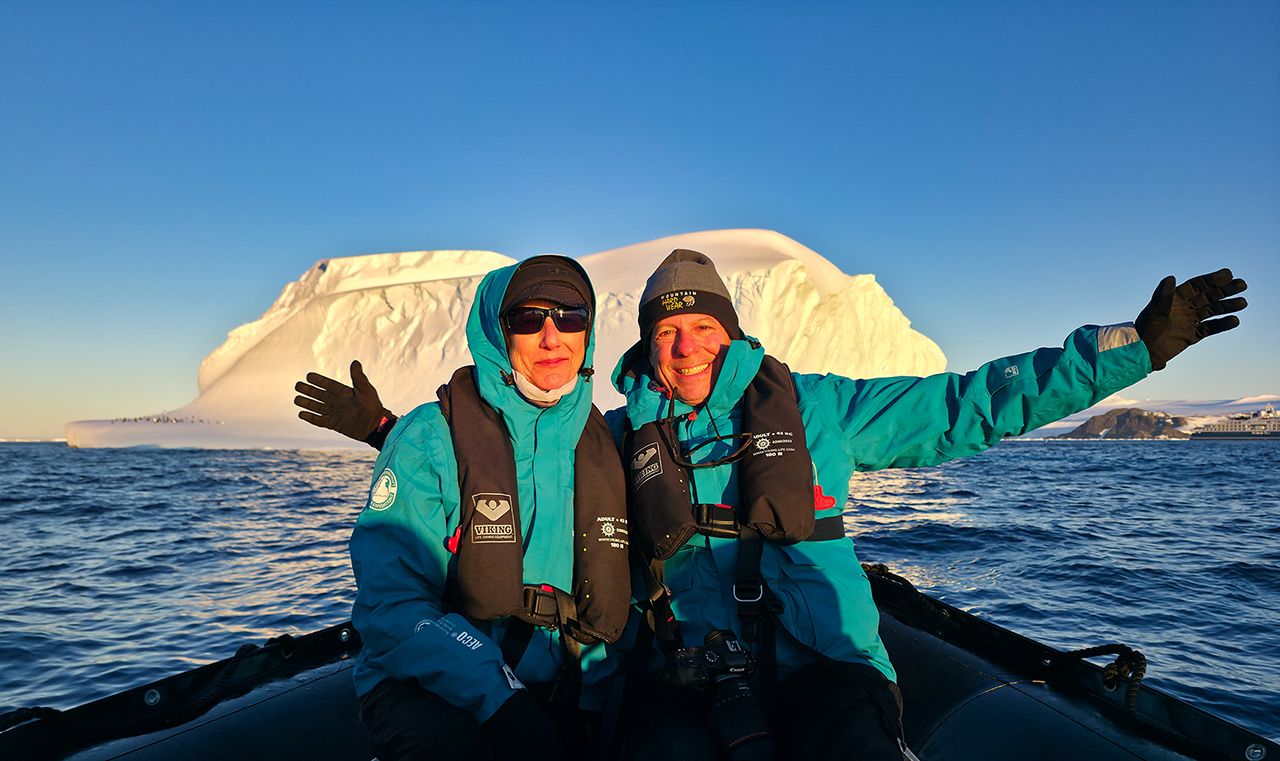
Unlike traditional cruises, with passive gangplank-to-van shore excursions, an expedition cruise requires physical fitness to maneuver on and off floating zodiacs bobbing in the surge, walk swiftly past territorial (and sharp-toothed) fur seals, and paddle kayaks through a maze of spouting whales.
This is why no passenger was allowed to board the SH Diana until they’d completed a detailed online medical history and fitness questionnaire. This was followed by a mandatory online video consultation with a physician who deemed each passenger to be fit for travel and participation (reassuring also, in this time of highly contagious viruses). I admit to a surge of pride when the doctor said “you’re obviously fit to travel” at the end of my video consult.
I’m often taken for a younger person, in part I believe, because travel keeps the mind and body agile (though all that time in the sun and wind has done a number on my skin). That said, I purchased an international travel health insurance policy for the first time last year, largely in response to a nagging feeling that I may have pushed my fingers-crossed approach to travel wellness as far as is prudent. And quite a number of years ago, folks in Latin America stopped calling me señorita and began calling me señora.
Use it or Lose it
I remember my parents celebrating birthdays by hiking up to the top of Valencia Peak in central California to prove to themselves that they could still conquer one of the steepest trails in their area. When they stopped marking those milestones on Valencia Peak, I felt sad that the challenge was behind them. I know that someday challenges may well be behind me. But that day isn’t today, I thought, as I watched an enormous pod of rarely seen southern right whale dolphins (that’s a real species of dolphin, not a typo) from the bow of the ship as she churned through the open ocean.
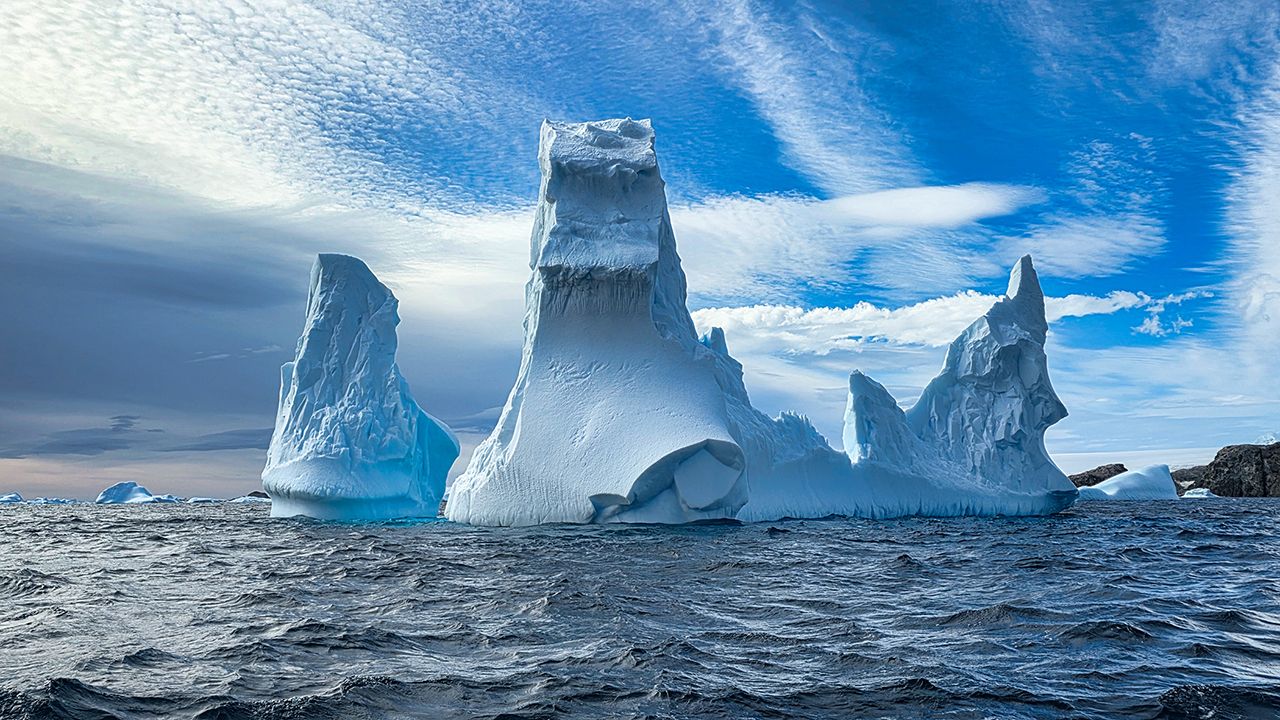
We hadn’t seen land in days (and wouldn’t for another two). We were, however, surrounded by icebergs. Most notably, we passed remnants of the A-23A iceberg, which was created in 1986 when a 4,000-square-kilometer hunk of ice broke off Antarctica’s Filcher Ice Shelf. A-23A (as berg experts named it) has been reduced and reshaped by wind and sun ever since. Over the years, chunks have also broken off, and in January of 2026 the original megaberg was estimated to be about a quarter of its original size, covering just 1,182 square kilometers (456 square miles). Even reduced, A-23A still strikes a forbidding pose.
Though I’d imagined a lot of downtime for dolphin, whale, and iceberg watching during a three-week itinerary that was roughly 50 percent “days at sea”, our cruise was blessed with weather conditions that allowed us to make all of our scheduled shore excursions, plus a few bonus stops, with no weather-related cancellations or disappointments.
A major bonus was our landing at Point Wild on Elephant Island in Antarctica. This rugged spit is where Ernest Shackleton left 22 crew members from his doomed Endurance while he set out for help. This low-lying point is entirely exposed to frigid winds and freezing seas and as I set foot on Point Wild, I marvelled at how each and every crew member survived for 137 days with little more than their wits, the meager shelter of an overturned wooden boat, and the legendary leadership of Frank Wild who kept hope of rescue alive (and for whom the point is named).
Later that day, the ship’s expedition leader admitted that he’d only had conditions calm enough for a Point Wild landing a couple of times during his nearly 20-year career. A serendipitous nod like that made putting my wellies on the historic ground of Point Wild even more poignant.
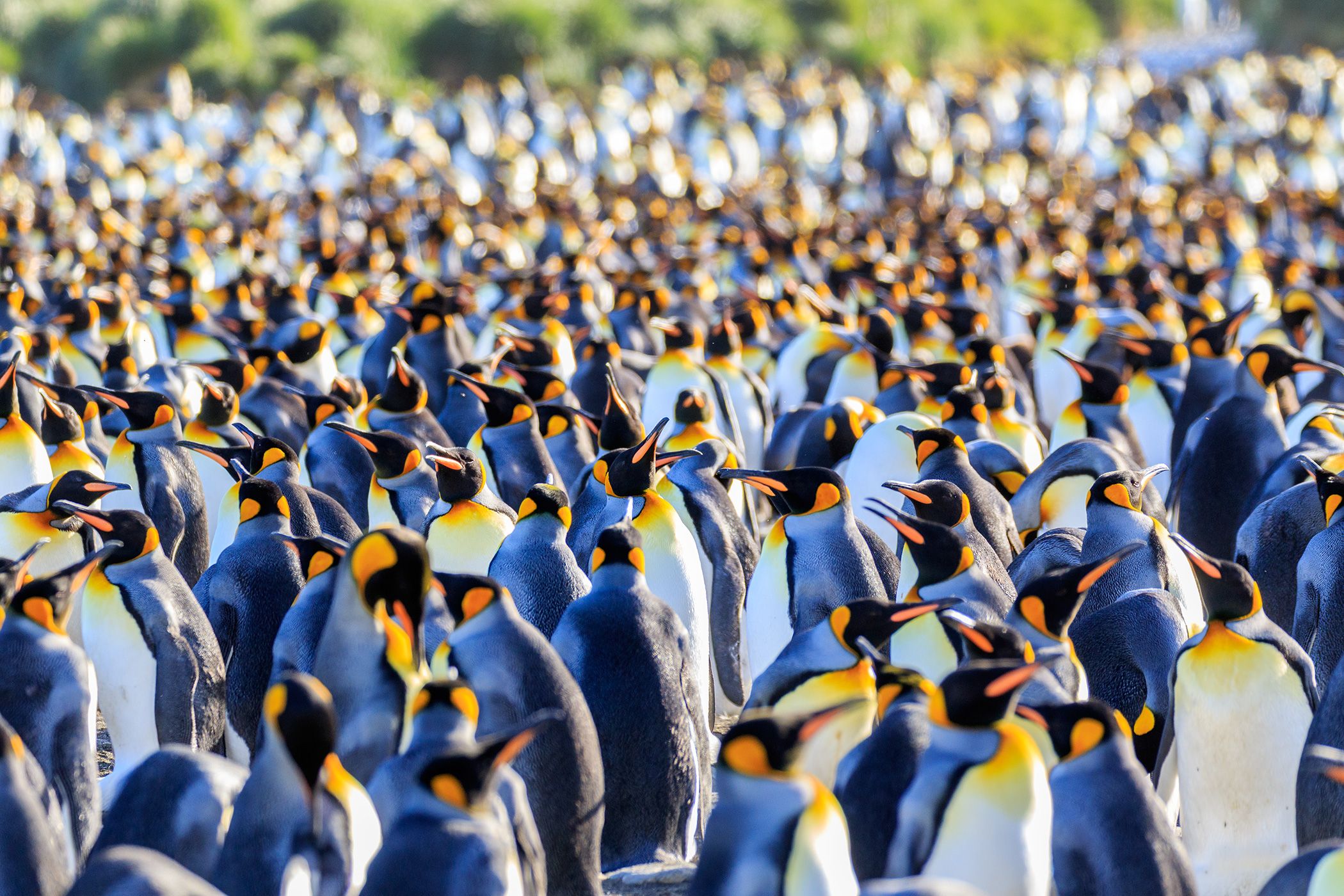
I allowed myself to consider that our extraordinary weather and landing luck was the universe celebrating with me. Certainly, it felt like it as I crab-walked across a waterway swollen with glacial run-off, then walked to the top of a low rise to see hundreds of thousands of king penguins in their famous rookery on South Georgia Island.
The thrill was amplified by the fact that South Georgia island, located about 1,390 kilometres southeast of the Falkland islands and sometimes called the “Serengeti of the Southern Ocean” because of the density of wildlife there, was reached after two days at sea. Passengers awoke to a vision of a very large island blessed with beaches, lush stretches and soaring peaks, and jam-packed with so much wildlife that it seemed like a mirage.
Not just a privileged sight, my time among the king penguins of South Georgia Island is precisely the thing I love about adventure travel: physical effort rewarded with proximity to awe-inspiring nature that feels earned.
Seen through the lens of my looming 60th birthday, I could recognize that, yes, I’d used a trekking pole for balance while fording the glacial run-off. And I’d navigated that last muddy steep bit of trail very carefully (especially downhill). After hours of kayaking with feeding and spouting humpback whales, my arms were, indeed, sorer than I remember them being in the past. But as the king penguins honked and flapped in their thousands, I also recognized that I was still out there doing it. That’s what I’d come to prove. That’s what I’d come to celebrate.
Expedition Cruise Tips for Landlubbers
Along the way Karen Catchpole garnered some practical advice
Long ocean crossings can come with a few bumpy days at sea, so it’s wise to come prepared with seasickness remedies – ginger candies, motion sickness pills, Sea-Bands, and any prescription medication you might need (note that scopolamine patches aren’t available in some regions, including parts of South America, so bring them from home if required). Health precautions also matter at sea, so it pays to treat the ship like a floating nursery school – wash hands frequently, use sanitiser stations liberally and keep up with whatever immune support you rely on. Dining, meanwhile, requires a little strategy: with abundant buffets and exceptional meals from chef Amit Rao and his team, I resorted to trickery and began using a smaller plate at all buffet meals. Less room meant less overindulgence.
One unexpected advantage of a long cruise is a gentler adjustment to time zones, the five-hour time difference between my embarkation point in South America and my disembarkation point in South Africa, for example, was gently handled with a series of one-hour time changes spaced throughout the 21-day cruise, so I arrived in Cape Town already accustomed to local time. Even so, don’t underestimate the after-effects of time at sea – “sea legs” may take days to kick in and just as long to fade, with a lingering sense of motion once back on land.