





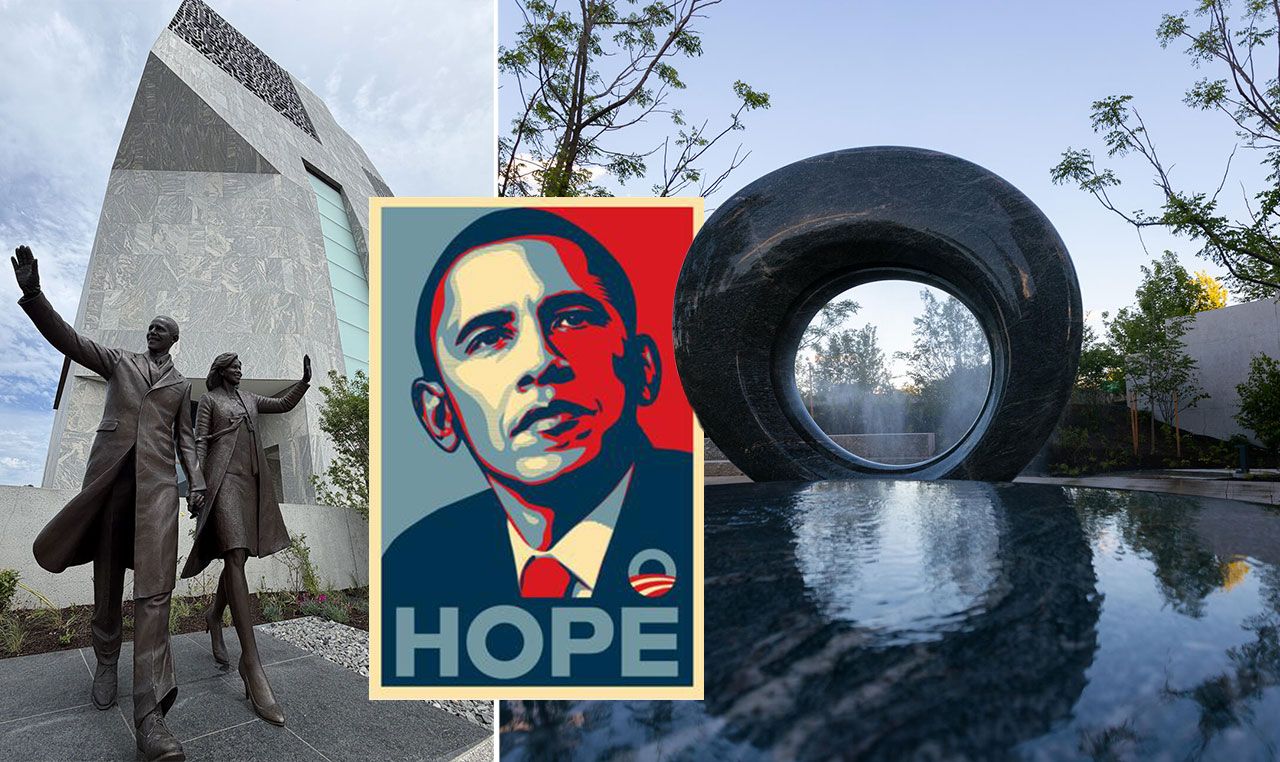
By the time I arrived at the Obama Presidential Center, 104 days since its opening in Chicago’s south side this year, it had already been the site of three bald eagles sightings and four marriage proposals.
Most significantly: it had by then attracted over 175,000 visitors from all 50 states and some 39 countries, many of them treating it like a very modern pilgrimage.
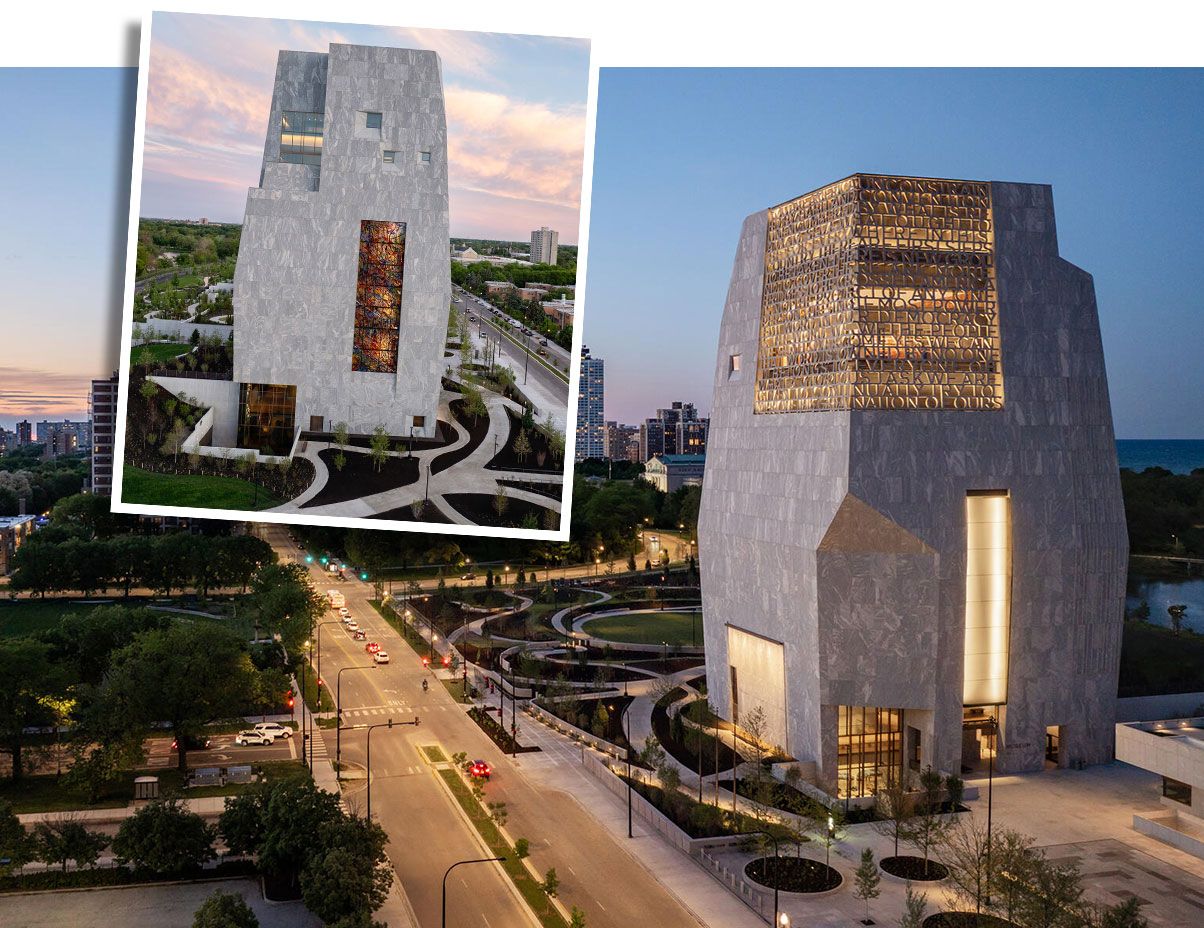
“The pictures do not do it justice”: my immediate thought when standing straight-on before its unmissable “Museum Tower” that doubles as an eight-floor complex, and anchors miles of rolling parkland beneath. A solemn, stalky structure, rising 225 feet (70 metres) in the air, it’s been variously described as: something of an obelisk, a Stonehenge-y echo, and “like an elephant in the tall grass.”
It struck me as merely ethereal – reinforced by the rainy day that happened to accompany my visit, giving it all a sort of misty mood-board.
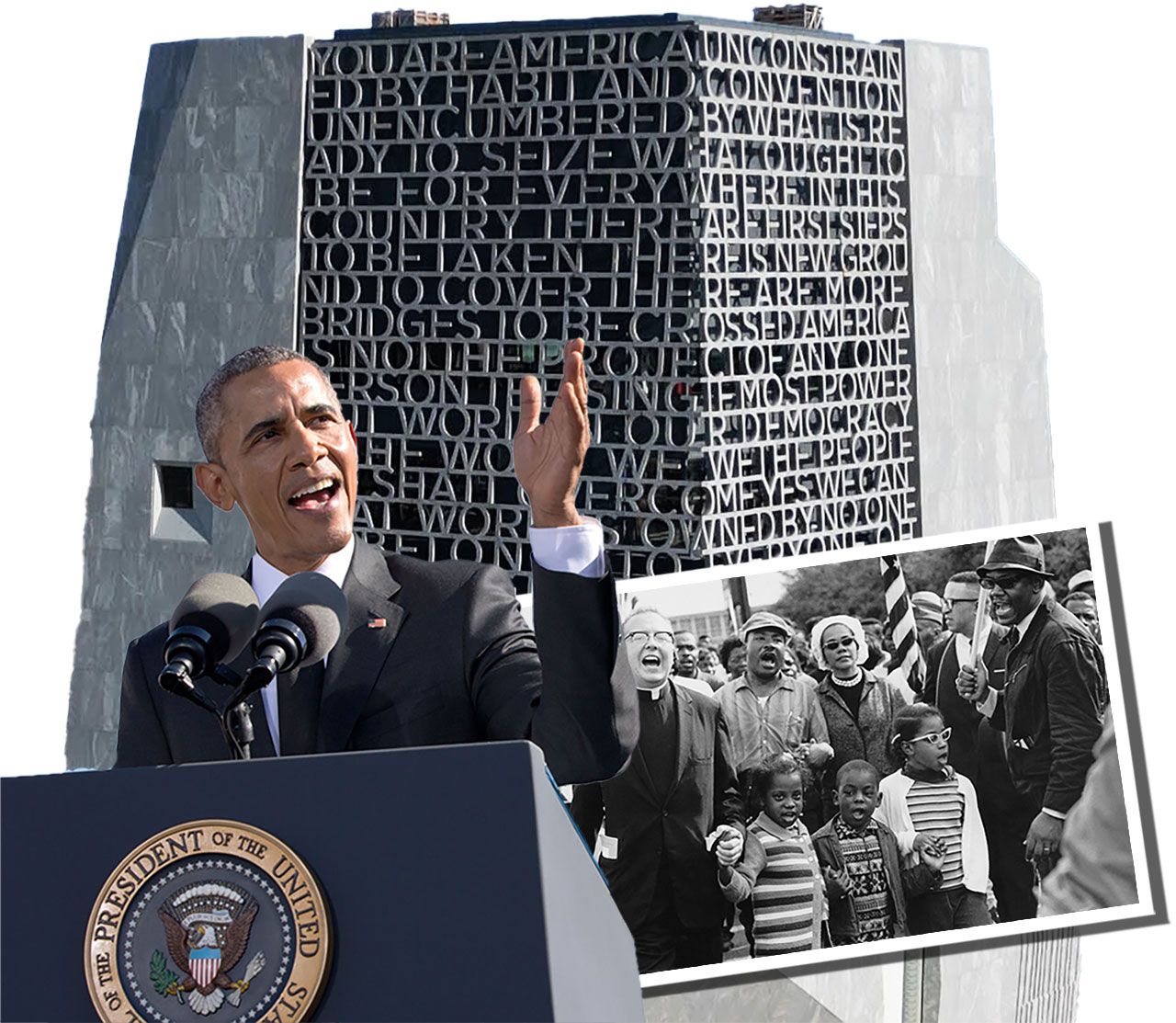
“It gives it a shimmer,” a docent later elaborated, adding that the structure – made of textured granite and designed by Tod Williams Billien Tsien Architects – turns into a moving canvas when it’s drizzling. In fact, the edifice, as a whole, often slips through a plethora of tones – from grey to bronze to noir – depending on the time of day and the level of light. The words themselves inscribed on its exterior – taken from a speech that Barack Obama delivered in Selma, Ala. in 2015, on the 5oth anniversary of “Bloody Sunday,” a defining moment in civil rights history – glint and deepen accordingly.
Words that read, in part: “The single most powerful word in our democracy is the word ‘We.’ ‘We The People.’ ‘We Shall Overcome.’ ‘Yes We Can.’ That word is owned by no one. It belongs to everyone.”
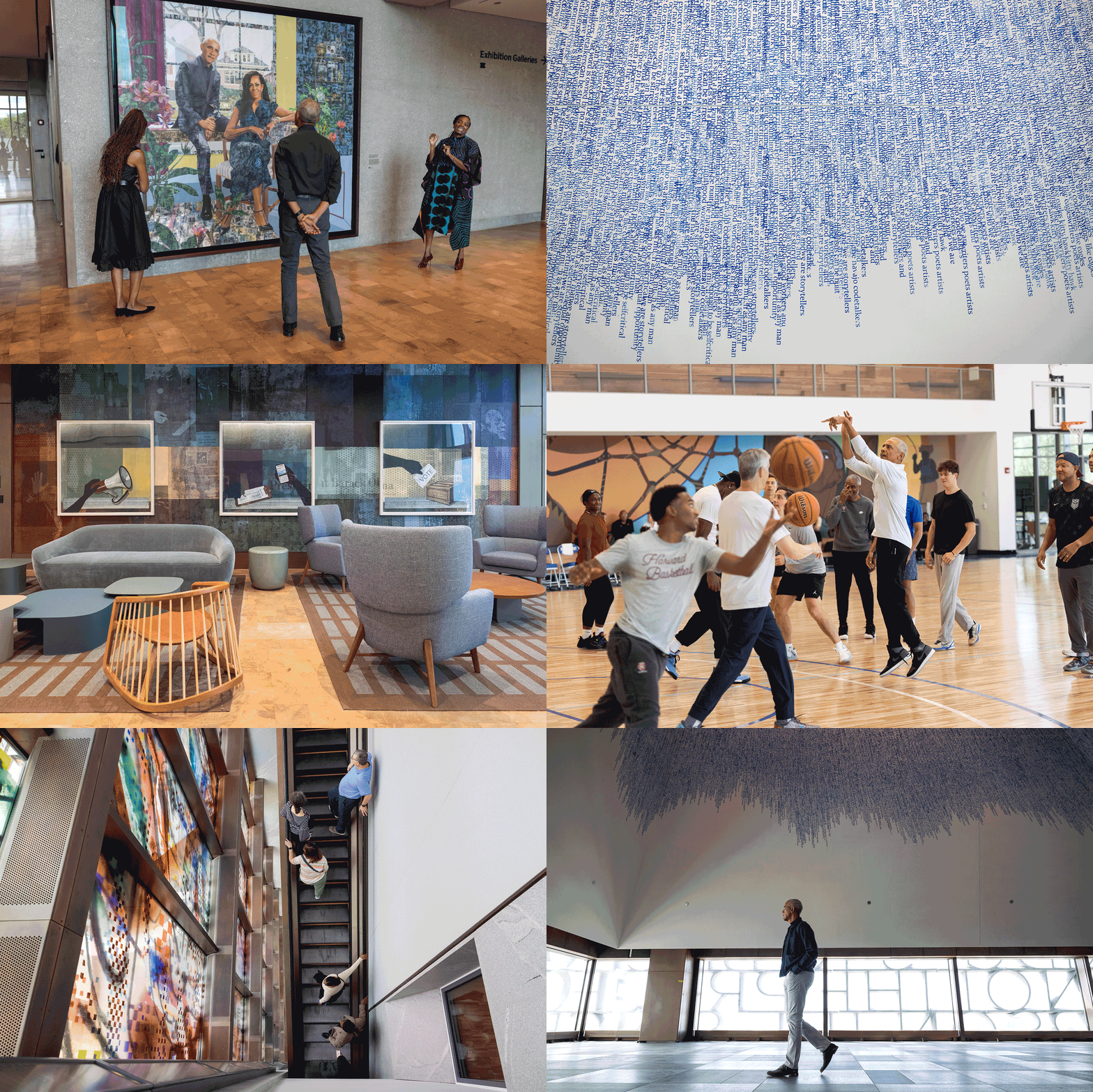
The Center, which includes, among other things, a branch of the city’s library system (and carries some of the books banned in Red States), a basketball court, and picnic areas, is also clearly meant to be vox populi in action. And for a city long synonymous with architecture – Chicago regularly draws skyscraper groupies lured by its slew of historic glass totems and modern-day pyramids – this new Center, in a more unheralded part of town, is clearly the new cool kid. The continent’s must-visit building, in fact, and reason enough to get thee to the Windy City.
Incoming: nostalgia! Presto: catharsis. And what was that strange twinge I felt running through my veins … could it be that elusive thing called hope?!
Just some of the feelings that seized me once I had ventured inside the main building, a first-level galleria that places the nation’s first Black president – No. 44! – in the context of early U.S. history and core social movements. Scrolls of images and text. Spools of sounds – the installation covers the entire length of the tower, prompting you to look up and up. And around. The whole matrix of democracy; the sweep of time.
It is only the first section, indeed, but one that manages to zoom out, while also zooming in: displays here include the Declaration of Independence, as well as documents tracking the fight to end slavery. Here, too, we see events like the March on Washington in 1963 come alive, alongside items like the Pullman Porter hat (displayed here, not only as a historic representation of Black labour but as a deeply personal totem, too, given that Michelle Obama’s great-grandfather worked as a porter).
Democracy as a work in progress: the obvious theme, as the room loops to displays of other movements, both here and abroad – the Stonewall uprising in New York, hard-won fights for disability rights, the crusade against apartheid in South Africa – before it winds again to the very personal trajectories of Barack and Michelle. The latter who was raised right here on the now-storied South Side of Chicago, in the neighbourhood where the Center sits; the former whose journey spanned continents but eventually landed here, where he worked as a community organizer.
“It was as if, because of the strangeness of my heritage and the worlds I straddled, I was from everywhere and nowhere at once,” ring the words of the former president in large typeface on one wall.
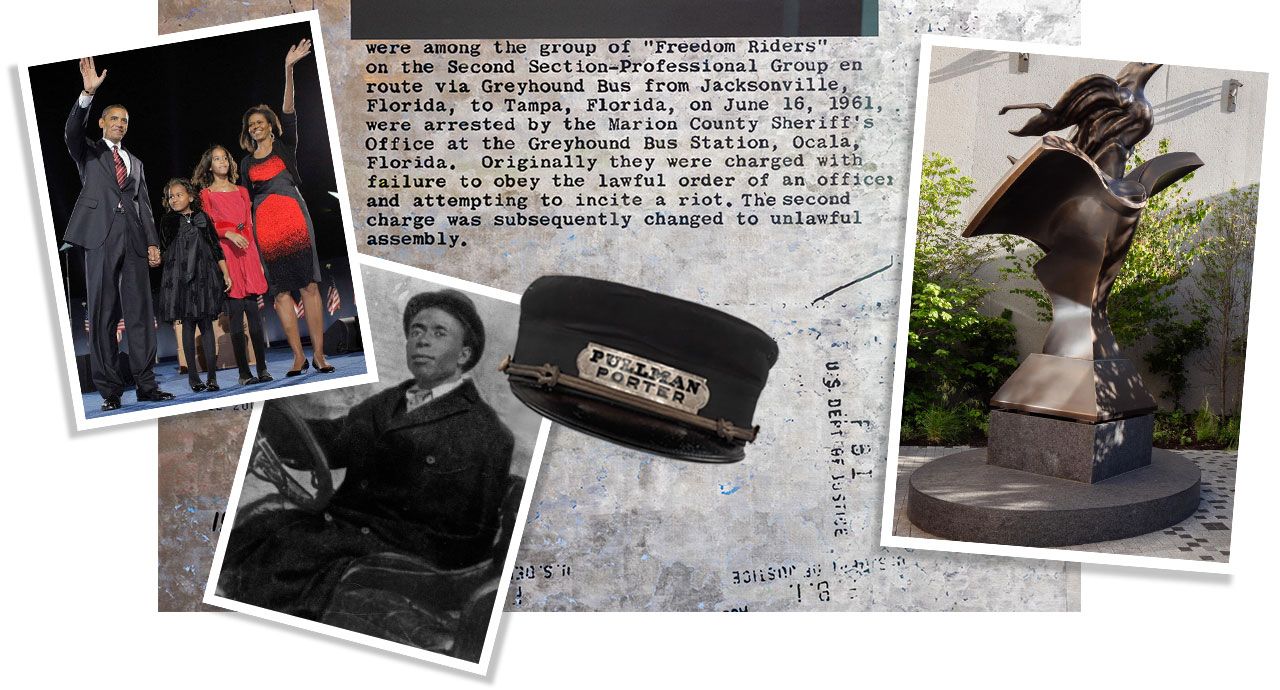
A few things were immediately notable about this whole experience (and it is an experience, more than a mere museum visit), even from its very outset. One: how the Obama Center is the first fully digital presidential museum, emblematic of his time in office falling in the age of smartphones and livestreams. Unlike other such institutions that came before (the John F. Kennedy Presidential Library in Boston, for instance, or the Ronald Reagan Presidential Library and Museum in Simi Valley, Calif.).
Two? How joy and grief sit jowl-to-jowl, as the exhibition space moves into Obama’s historic victory and time in office. Resilience and sorrow, sometimes even occurring on the same day, like how the Supreme Court ruling for marriage equality arrived on the same day that Obama sang Amazing Grace at the funeral Rev. Clementa C. Pinckney, who, along with eight of his Black parishioners, was murdered by a White supremacist at the Charleston, S.C., church shooting. Moreover, because you can’t help but feel the weight of our present time – all the divisions and vitriol, even as you witness previous flickers of progress – there is an obvious solemnness at play among the visitors.
No wonder you find discreet boxes of Kleenex laid out in the corners of different wings, on every floor! (Full disclosure: I had to grab more than one, my own dam initially breaking in the section of the museum that celebrates the night of Obama’s election in 2008, as a whole Rubik’s Cube of screens show the awe-inspiring reactions to that moment from the ’round the world!)
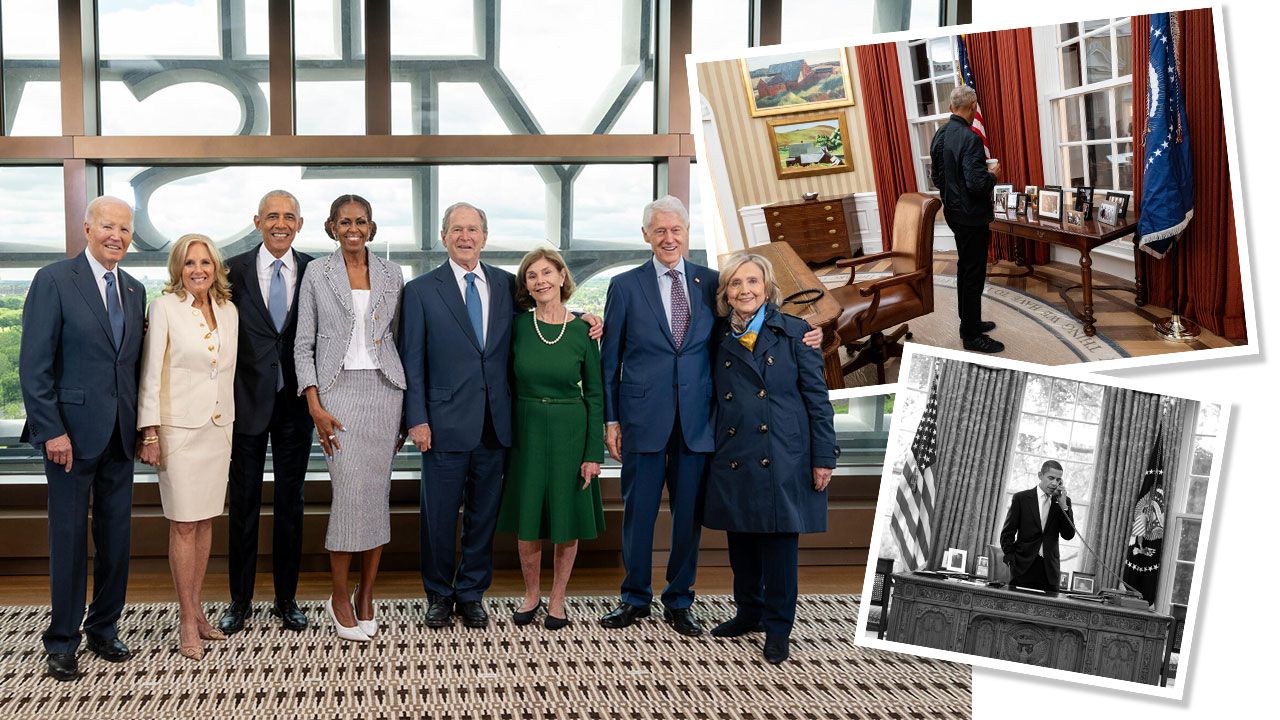
Watching people move through this space? For me, it was as compelling as the space itself. A large mob of “aunties” who’d all arrived together on a bus from Michigan, for instance, their faces arranged into expressions of awe. Or the young couple with their young son hanging from the back of daddy, in a line in front of me, waiting to enter an exact replica of Obama’s Oval Office (down to Barack’s “Crackberry” on the Resolute Desk). Discussing his costume for the next Halloween, we decided that the boy should dress up as Obama. “We’ll just put him in a red tie,” said mom.
I also got a kick out of talking to many of the staff. One, operating an elevator, told me that her own favourite part of the Center was “the miniatures” – incredibly life-like models of White House spaces found on an upper level (the Old Family Dining Room, the East Room, and the South Lawn, reenacting real events: a Passover Seder, for instance, and a Soul concert!).
Another staffer, over at coat check, whispered that her fave was considerably simpler: a display of actual letters that ordinary Americans had written to both Obamas.
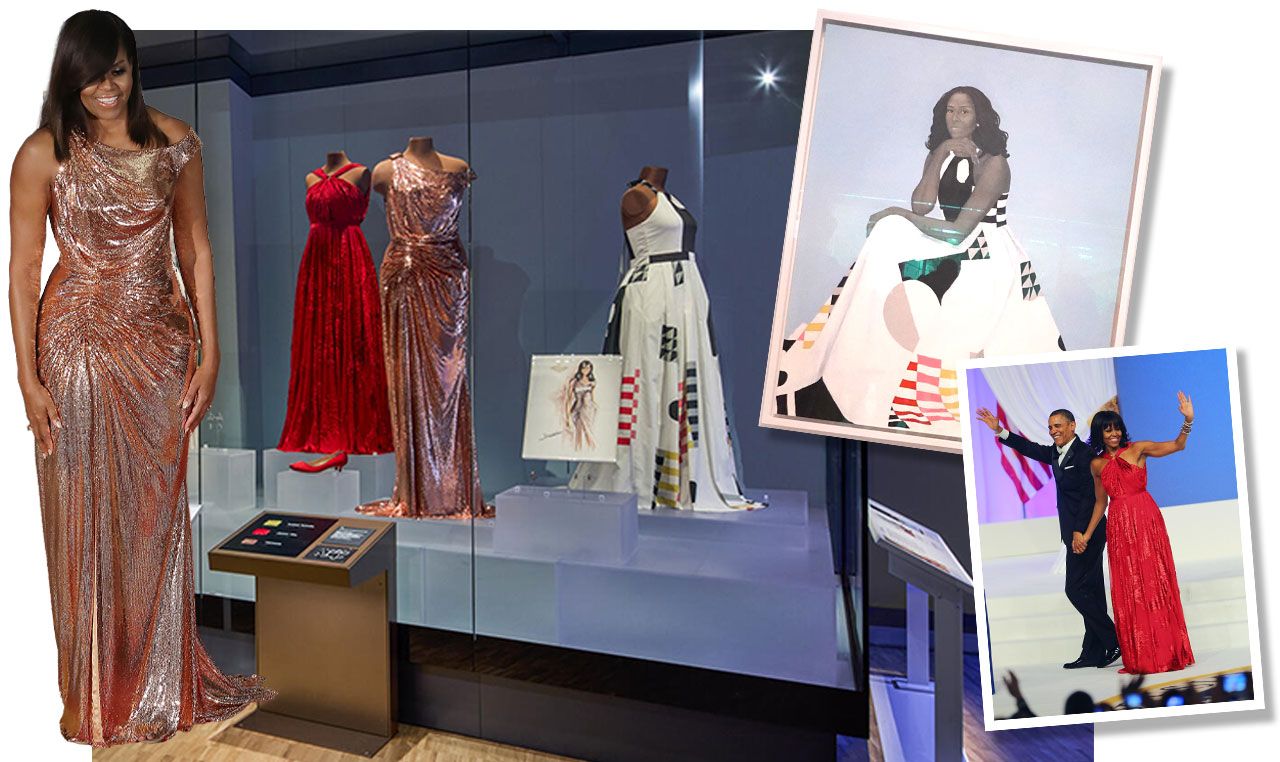
The exhibition spaces, they run the gamut: from haberdashery (a dozen of Michelle’s most famous looks appear on mannequins behind glass to the gravely geopolitical (a vast foreign affairs section retells the story, naturally, of the 2011 military raid that killed Osama bin Laden).
Art, of course, is everywhere, ranging from The Obamas: Springing Forth by Njideka Akunyili Crosby (a kaleidoscopic vision of the First Couple that adorns the main lobby) to a lotus-leaf sculpture via the one-and-only Yoko Ono (it sits in Jackson Park, just adjacent to the Center). Inside the neighbouring public library, a massive mural depicts literary icons like James Baldwin and Toni Morrison.
A fruit and vegetable garden rounds out the space – a tip of the hat to the former First Lady. The central square is dubbed the John Lewis Plaza, in honour of the congressman and civil rights legend. Hundreds, meanwhile, beeline each day to a spiffy, but unfussy, restaurant on the Center’s first floor – Tafari’s Kitchen, named after Tafari Campbell, their personal chef who drowned near their Martha Vineyard’s property in 2023 – where the menu boasts, among other items, the Obama Family Chili.
Up high, on the top floor of the Center? The best way to take in the wider environs: the Nelson Mandela Sky Room, which exudes an almost cosmic-feeling, complete with floor-to-ceiling windows. The sky was smeared with clouds when I popped in, but you could still catch stirrings of the famous Chicago skyline. As I was heading back down, a staffer gave me another neat detail about the design of the Obama Presidential Center: the corners of the tower all differ slightly, instead of being bound to the same geometry. What looks to be a monolith from a distance, in other words, has “no identical corners.” And the angles vary. It’s a matter of just looking more deeply.
If you are planning your own pilgrimage to the Obama Presidential Center, here are some other ideas to round out your trip!
DO
Flyover Chicago https://www.experienceflyover.com/chicago/
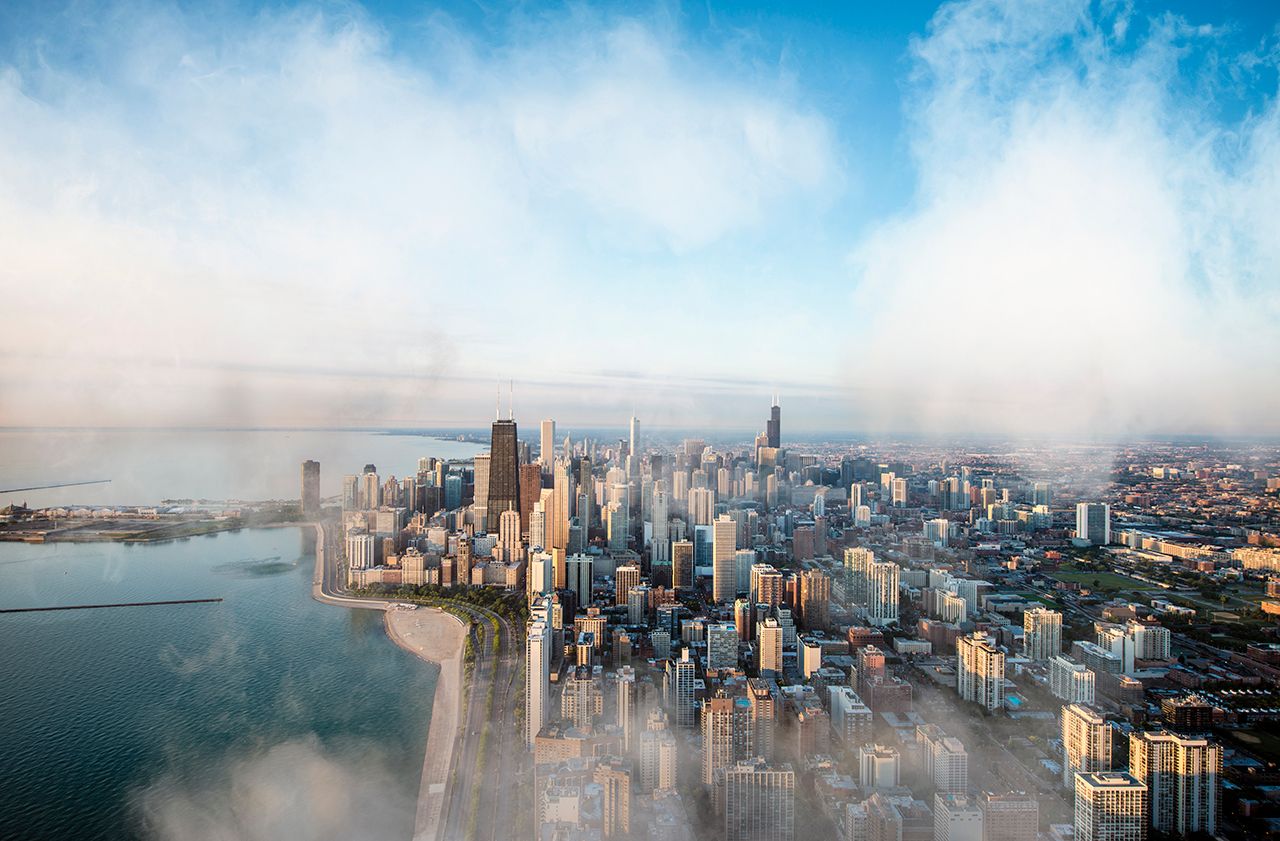
Using drone footage, and a flying-but-you’re-not-really-flying set-up, Flyover Chicago, over at Navy Pier, is worth the hype! The immersive attraction that opened two years ago, with a $40 million price tag, is a way to acquaint yourself with all the different neighbourhoods of the city – wind, mist and other elements, included!
EAT
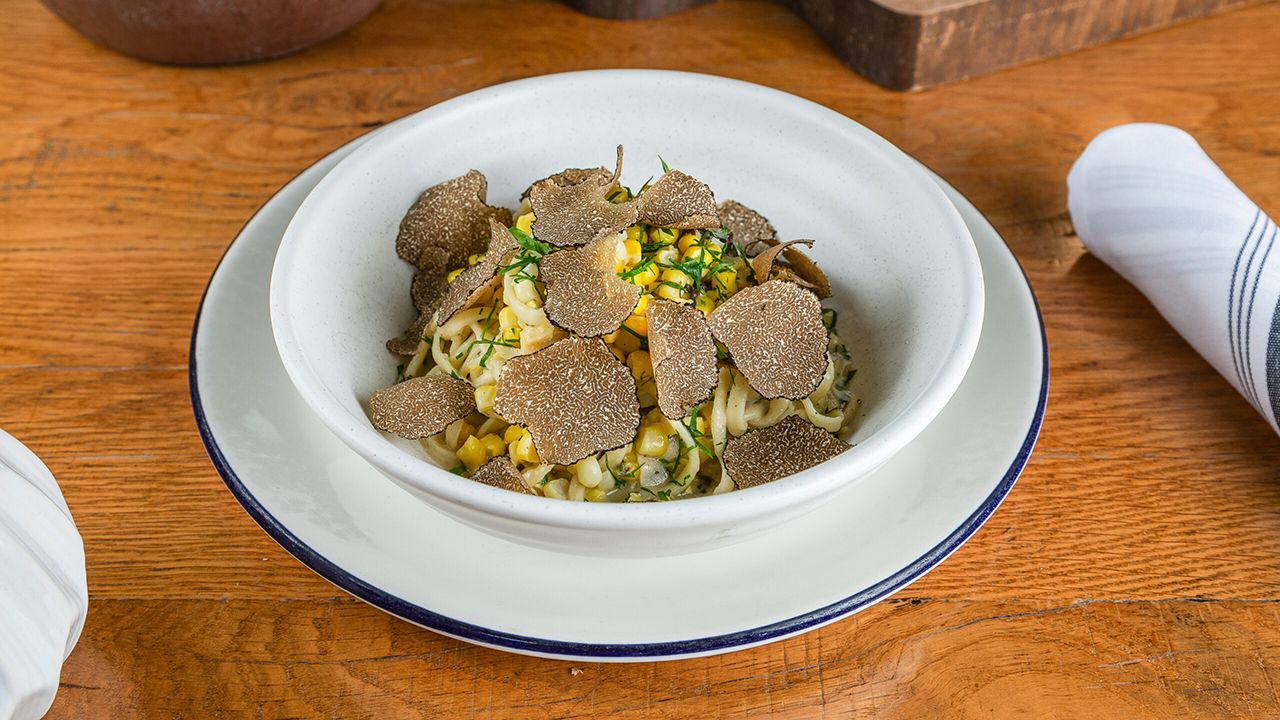
There is a reason why, 10 years in, this Italian joint in Chicago’s West Loop neighbourhood continues to be one of the buzziest spots in town. Both bougie and rustic, thanks to chef Sarah Gruenenberg, it’s lit just right. And the purr in the restaurant tells you everything. All the dishes hit, but the star remains her homemade pastas (yum, ragu Napoletana).
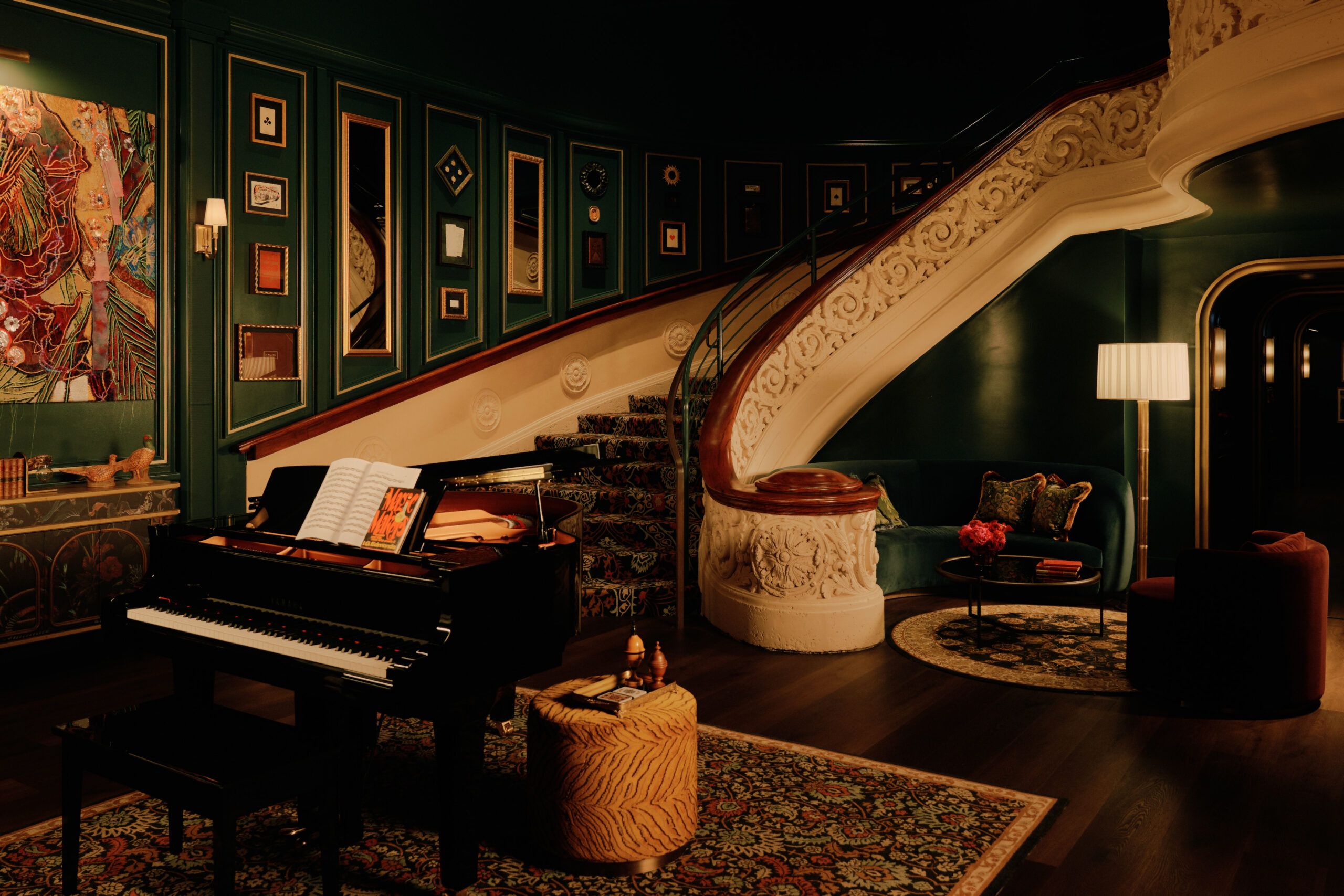
The Gilded Age meets abracadabra at this swanky, all-magic experience, newly housed inside Chicago’s storied McCormick Mansion. Woven across 37 distinct performance spaces, with wandering tricksters, it also features an Art Deco-styled restaurant that ranks as one of the loveliest in town.
DRINK
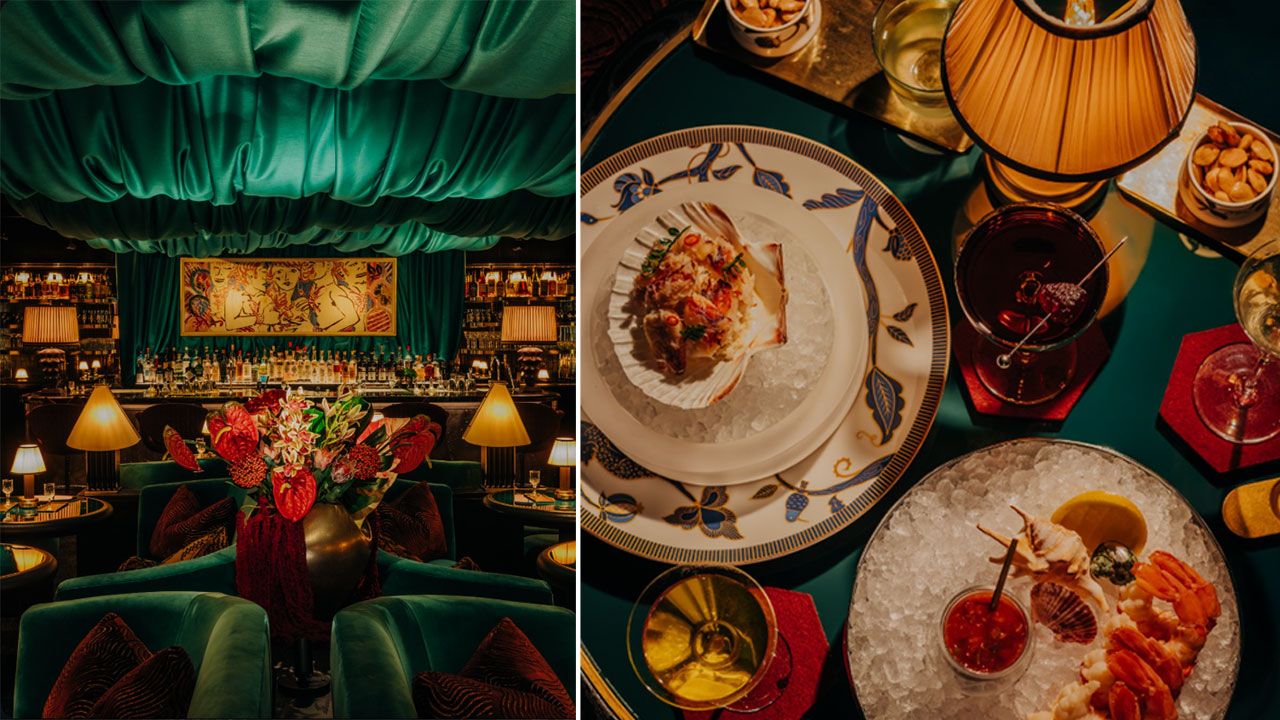
Jewel-toned and smoke-mirrored, this underground speakeasy is the upscale cocktail bar du jour. Set in the River North area, it’s the kind of place where handsome gents wheel out tableside trolleys to serve properly chilled martinis – Japanese Old-Fashioneds abound. Might as well have the Dungeness Crab!