







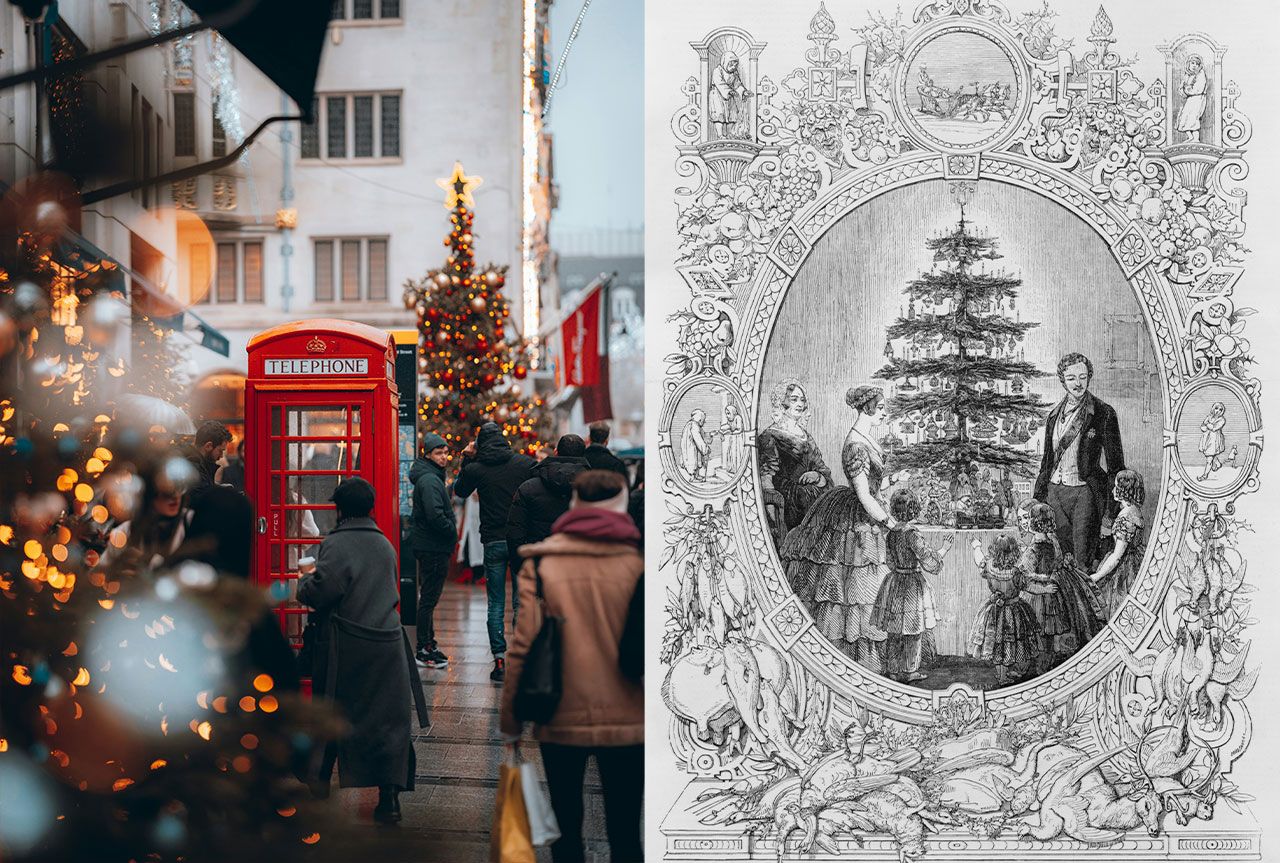
Back in the mid-1800s, a confluence of events in Victorian London helped create the modern Christmas celebrations we know and love today. It began with a busy civil servant, Sir Henry Cole, who, lacking the time (or perhaps the inclination) to write individual season’s greetings to family and friends, commissioned an artist to design a Christmas card and had 1,000 printed. The cards he didn’t use were sold to the public, making it the first commercially produced Christmas card. That same year, in 1843, Charles Dickens published A Christmas Carol, helping popularize the idea of Yuletide as a time for family gatherings and thoughtful giving. Around the same time, London confectioner Tom Smith was developing what would become the Christmas cracker, inspired by the French tradition of wrapping sweets in paper. And in 1848, a drawing of Queen Victoria and Prince Albert gathered around a decorated Christmas tree at Windsor Castle appeared in The Illustrated London News, helping turn the royal family’s German-inspired tradition into a nationwide craze.
So, while London may not have invented Christmas itself, it certainly helped invent the version we still enjoy.
And now is the perfect time to visit London for a long weekend of holiday indulgence. I’ve found that the secret to enjoying the city amid the Christmas crush is to resist the temptation to do it all. Instead, pick one lovely neighbourhood, slow down and make the most of it. In this case, that neighbourhood is Mayfair.
The Mayfair Townhouse
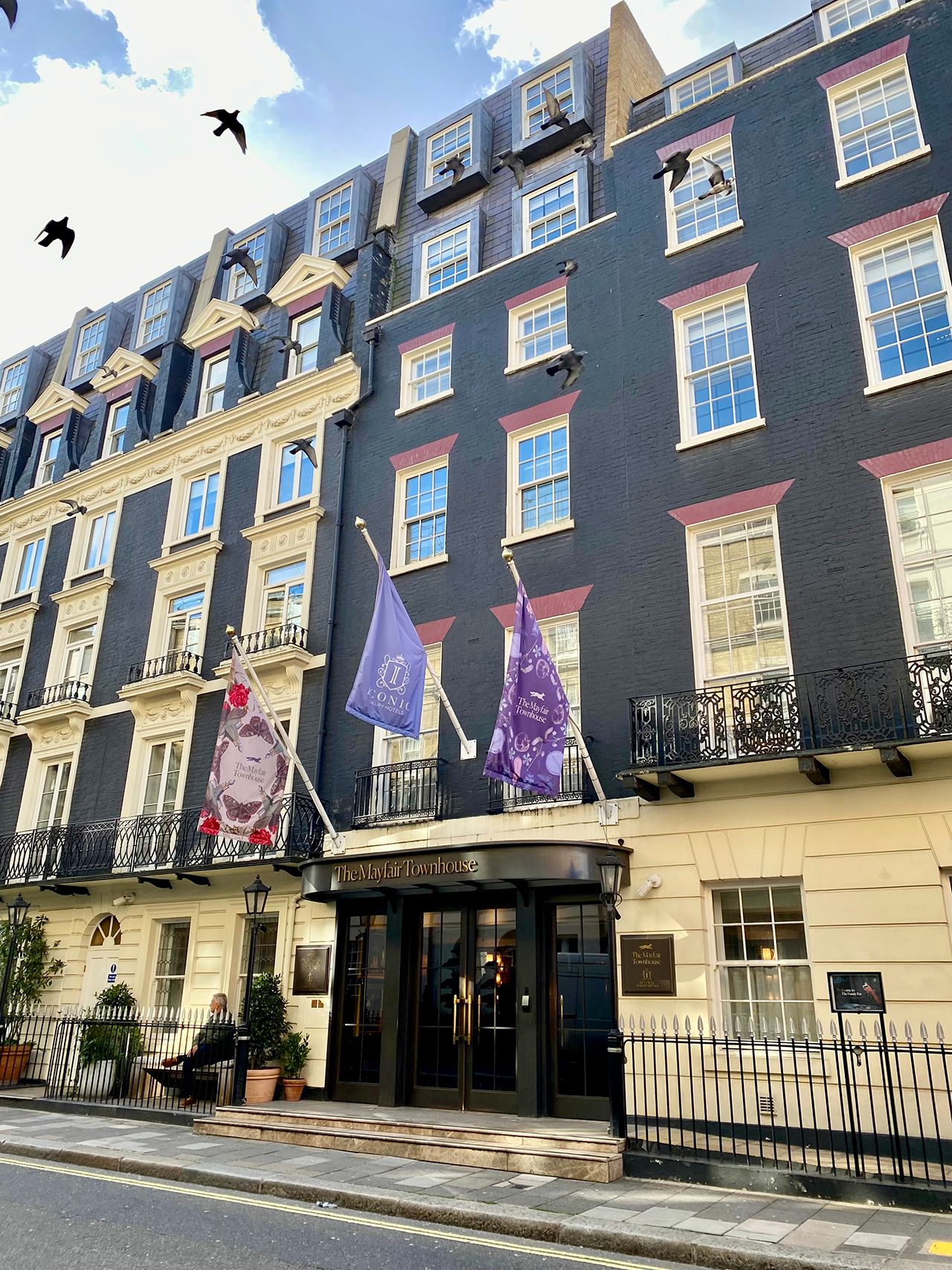
Tucked away on Half Moon Street, just behind Shepherd Market, this boutique hotel occupies a collection of historic Georgian townhouses dating back to 1730. Half Moon Street was once a colourful haunt for bachelors, bohemians and artistic types, and the neighbourhood still retains a certain old-world, anything-could-happen charm.
Elegantly designed for the modern traveller, I defy you to try to open the handsome front doors yourself. The footmen are always at the ready, with a tip of the hat and an umbrella should the unpredictable London weather decide to make an appearance. Rooms are cozy and contemporary, while breakfast in the downstairs Club Room might mean a cappuccino and Eggs Royal, the hotel’s take on eggs Benedict, topped with hollandaise and smoked salmon. Just beyond reception, The Dandy Bar serves classic cocktails, afternoon tea and bites such as game and prune terrine with apple brandy chutney and toasted brioche. It’s a lovely spot to settle in.
Hyde Park
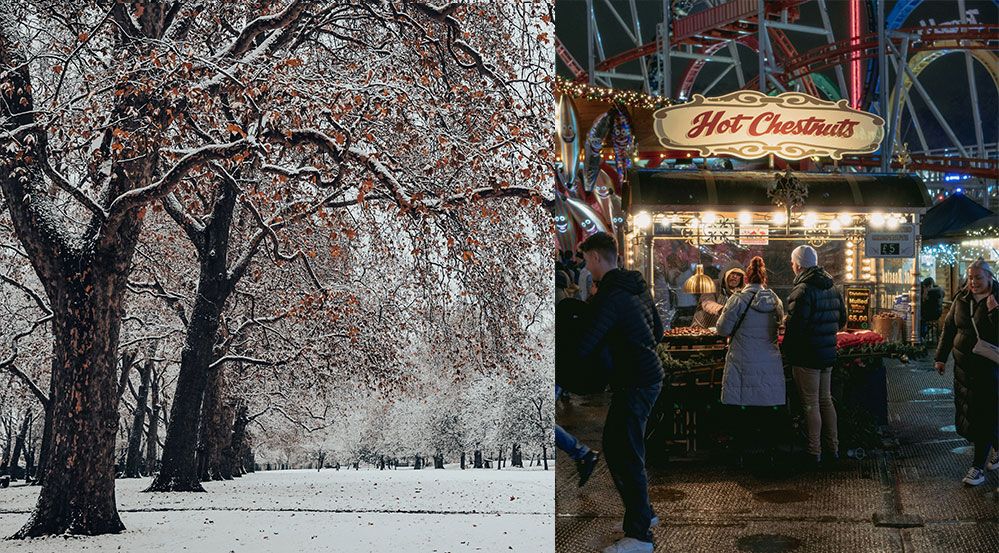
London is blessed with an extraordinary collection of parks and gardens, ranging from meticulously manicured flower beds to wild green spaces. Hyde Park, one of the city’s eight Royal Parks, is a particularly grand place to escape the shopping crowds, stretch your legs and take a deep breath.
There’s plenty to explore, including the Rose Garden, the Serpentine lake and gallery and the park’s hundreds of mature trees. Then there’s the famous Speakers’ Corner, where public debate has been part of the landscape since the mid-1800s. Karl Marx and George Orwell are among the notable figures associated with the tradition, while suffragettes also held rallies in the park as part of their campaign for women’s rights. Today, particularly on Sundays, you’ll still find people climbing onto soapboxes to share their opinions with anyone willing to listen. It’s nice to see some things never change.
And don’t miss Rotten Row, the sandy bridleway running along the south side of the park. Its name probably originates from the French Route du Roi (King’s Road) rather than something less savoury. Dating back more than 300 years, it was a riding route linking Kensington Palace with the seat of government at Whitehall and was used by courtiers and aristocrats riding in their Sunday best.
The Cocochine
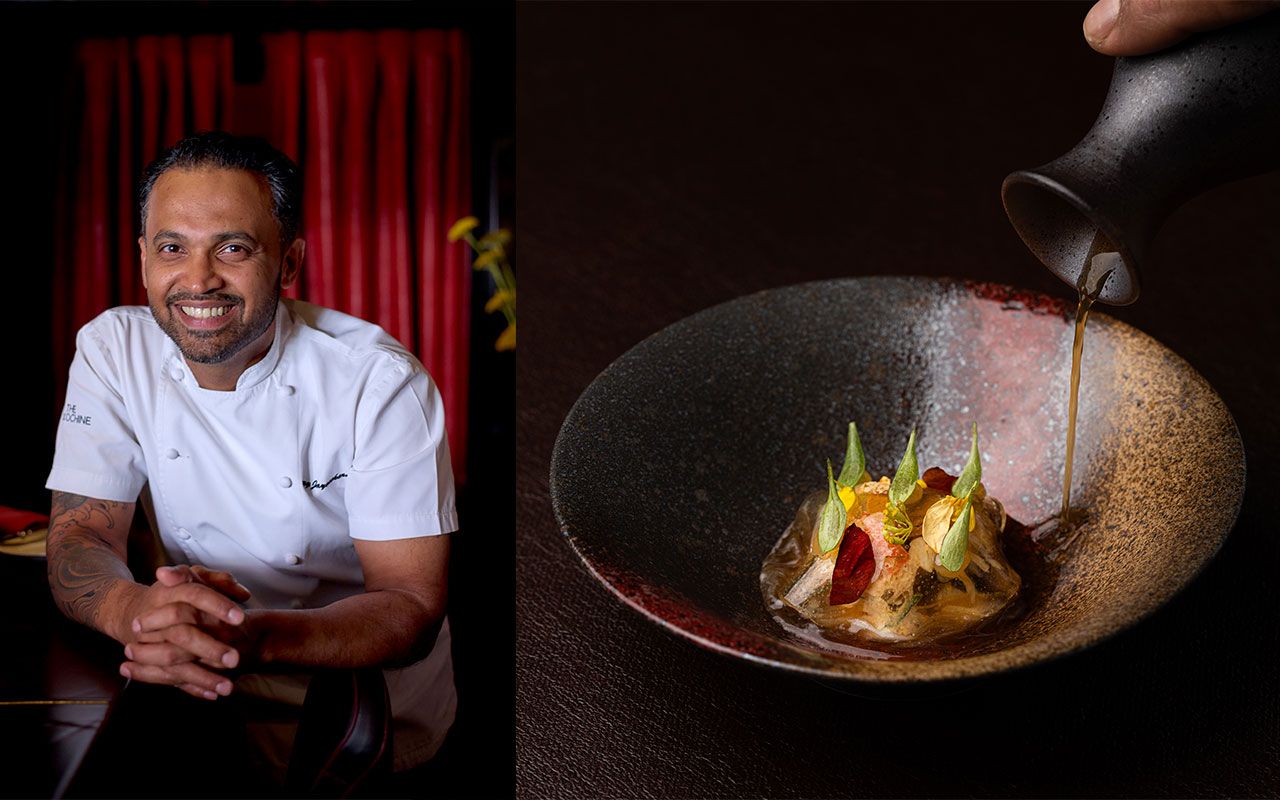
I first met Larry Jayasekara, chef and co-owner of The Cocochine in Mayfair, when he was doing a collaborative dinner in the Okanagan a couple of summers ago. I was so taken with him and his food that I made a point of returning to London to dine at his intimate jewel-box of a restaurant. Walking in feels a little like stepping into a wealthy friend’s home, complete with wood-burning fireplaces and Picassos on the walls.
The restaurant’s farm-to-table philosophy is serious business. The majority of the ingredients come from the 1,100-acre Rowler Farm estate in Northamptonshire, where livestock is raised and crops are grown with an emphasis on regenerative farming. Seafood is sourced from the waters surrounding Tanera Island, one of the Summer Isles off the northwest coast of Scotland. Beyond these two principal sources, the kitchen brings in select ingredients such as caviar, truffles, dairy and some specialty Sri Lankan herbs and spices as a nod to the chef’s roots – he arrived in London from Sri Lanka as a teen.
Chef Jayasekara’s cooking is personal, thoughtful and incredibly accomplished. Normally, when I enjoy a tasting menu, I can recall perhaps two dishes the following day. After dinner at The Cocochine, I could remember practically every perfect, energetic bite.
There’s the Rowler Farm garden salad, which features an astonishing 56 ingredients, from carrot tops to three kinds of mint, marigold flowers and crispy onions. The Ceylon crab arrives in several separate but equally delicious components, including a chilled consommé inspired by Sri Lankan crab curry. Beef tartare doesn’t get much better than when it’s rolled into a giant nasturtium leaf by the chef and spun with confit egg yolk, chilli and Oscietra caviar.
Then there’s a hand-dived XXL scallop with pandan, followed by the most luscious lobster rice, tender, peppery sika deer and Jayasekara’s signature crème caramel, topped with even more caviar. By the end of this languid, extraordinary meal, you may find yourself hugging the stranger sitting beside you at the chef’s counter. After all, you’ve been through quite an experience together.
Selfridges and Bond Street
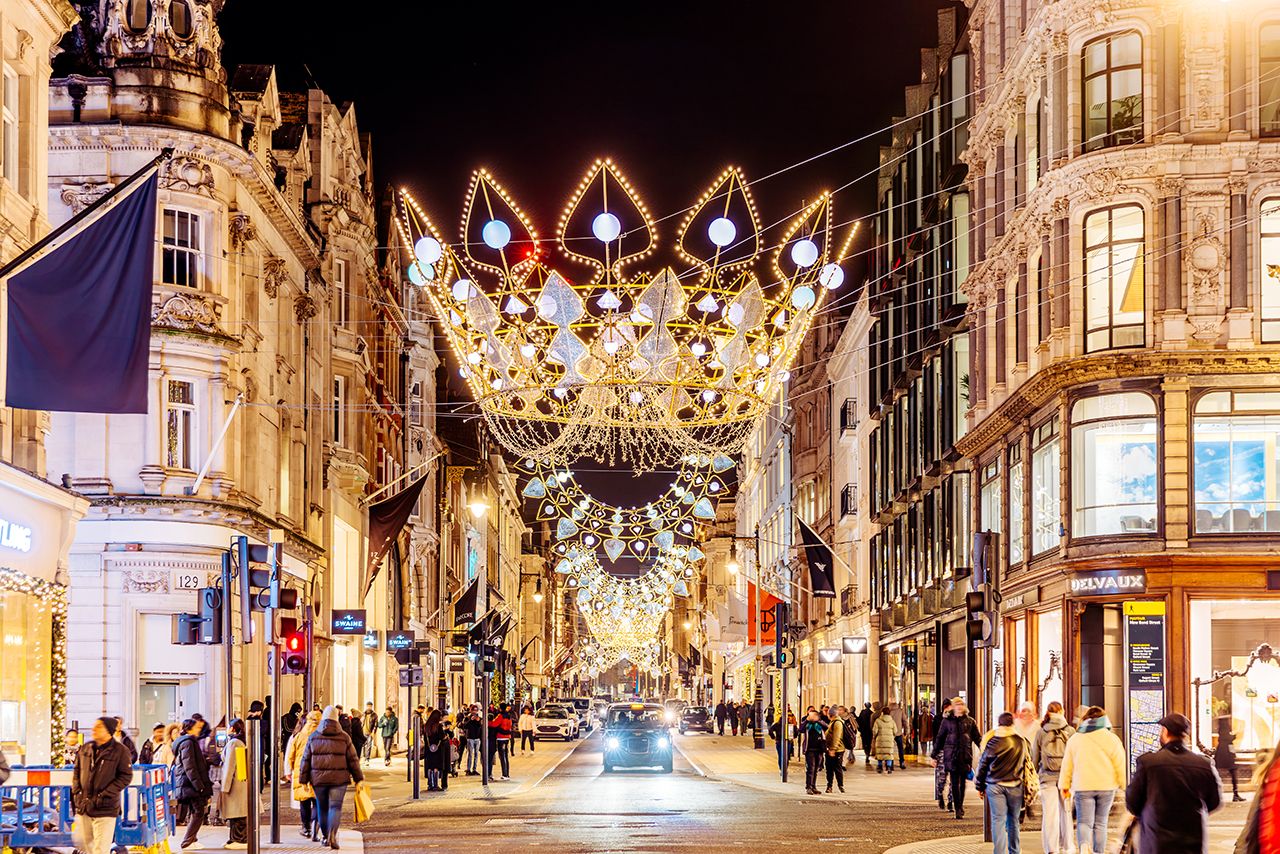
A gorgeous 15-minute walk from the hotel brings you to Bond Street, where holiday shopping is practically a spectator sport. The street’s handsome Georgian and Victorian architecture provides the backdrop for some of the world’s most famous luxury brands, including Stella McCartney, Ralph Lauren, Dior, Gucci, Chanel, Alexander McQueen, Tiffany & Co., Cartier, Jimmy Choo and Hermès.
After admiring the window displays and perhaps doing a little damage to the credit card, head over to Selfridges on Oxford Street. I have to admit, I miss the old-fashioned holiday shopping mall experience in Toronto, but I found it here in all its festive glory. Think spectacular Christmas windows, twinkling lights, dozens of varieties of shortbread and an entire department devoted to the season.
Mayfair Chippy
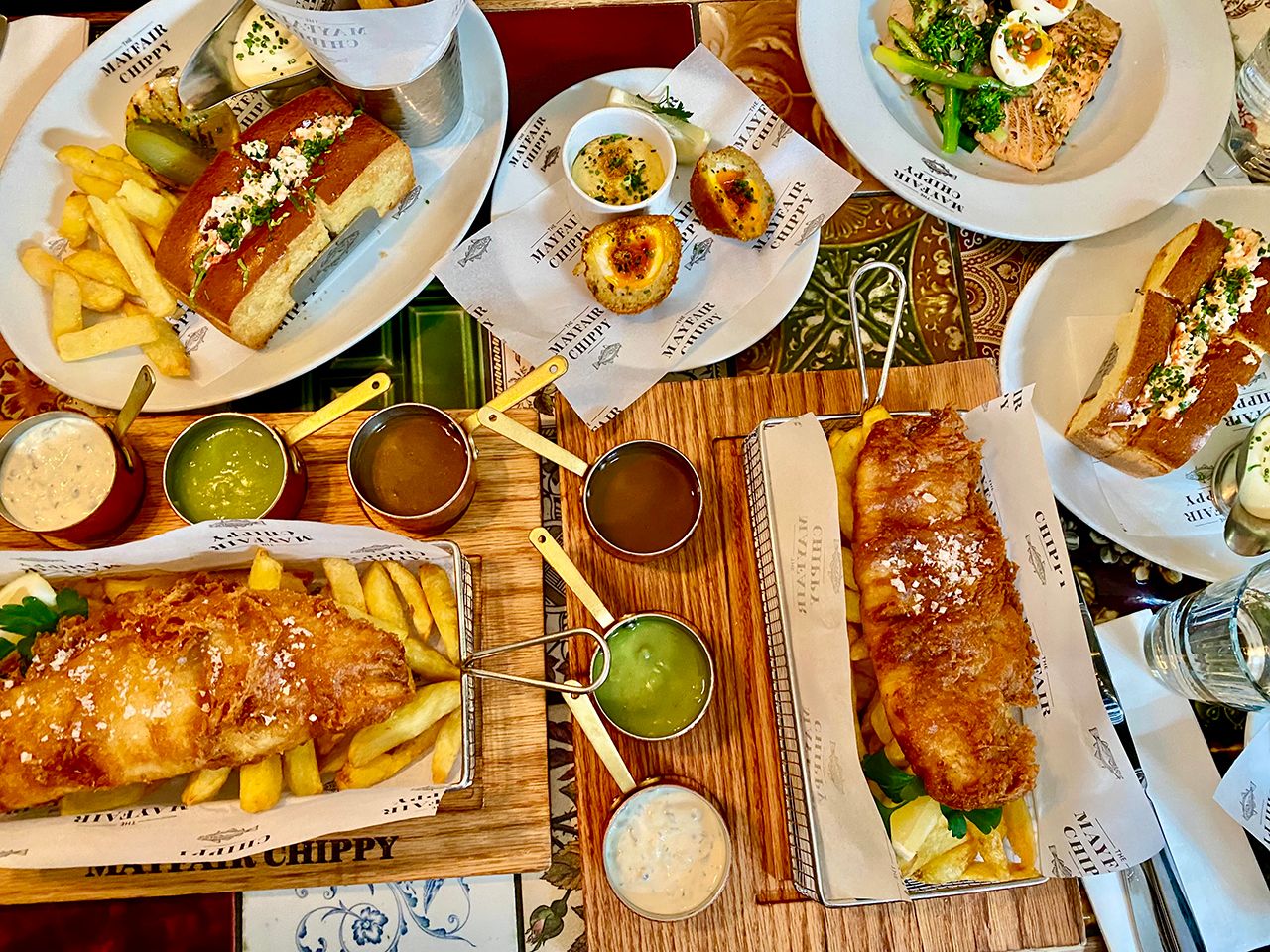
Oftentimes, viral restaurants don’t live up to the hype. But The Mayfair Chippy does. Make a reservation or risk joining a long queue before stepping onto the checkerboard floors, sliding into a wooden booth and tucking into one of Britain’s most iconic meals.
Opened in 2015, The Mayfair Chippy has earned Michelin Guide recognition and an AA Rosette for its take on the classic British fish-and-chip shop. It’s also something of a Mayfair phenomenon, with a reputation for being one of London’s most lucrative restaurants, despite its relatively modest size and approachable price point.
The focus is on responsibly sourced, seasonal fish, including cod and haddock, golden-battered, fried to a crunch and served with thick-cut chips, crisp on the outside and fluffy within, alongside slow-cooked mushy peas and house-made sauces, including tartare and chip shop curry sauce, presented in copper pots on wooden boards. And don’t forget the malt vinegar!
Connaught Bar
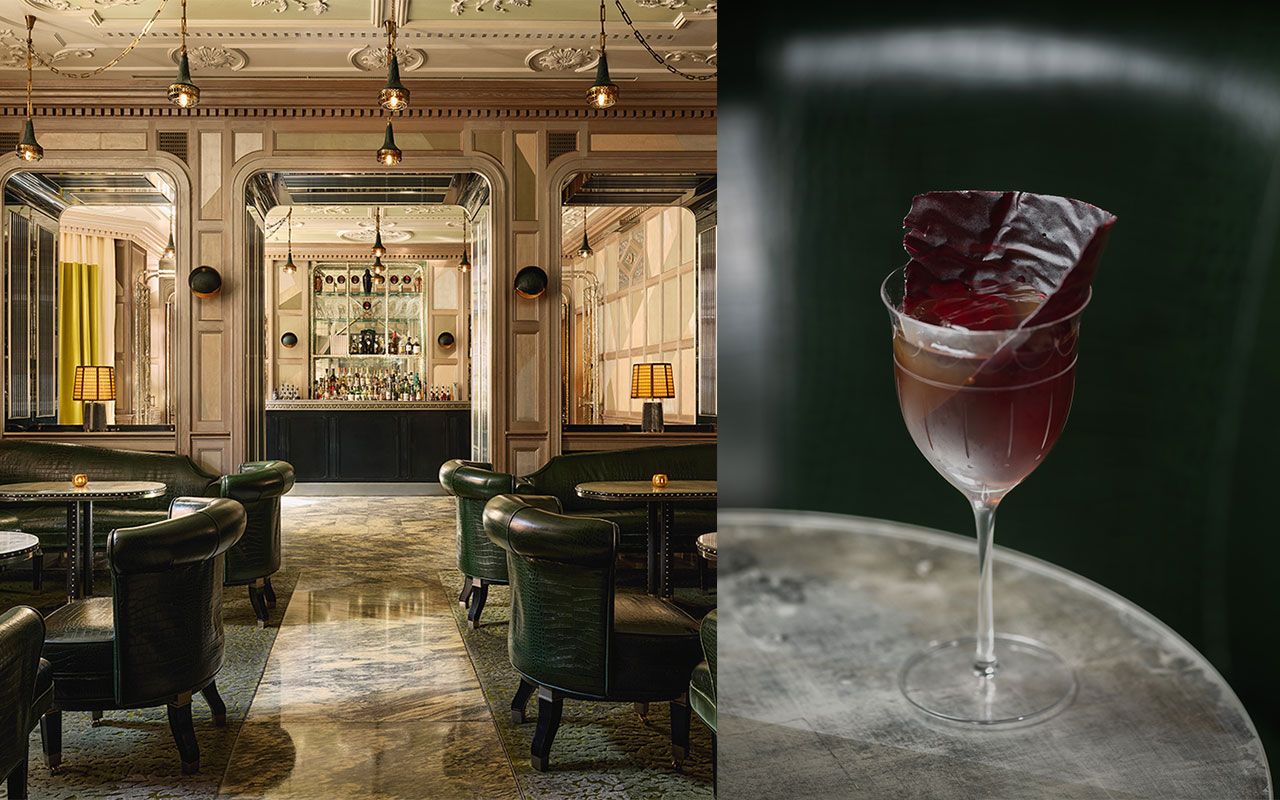
Mayfair is home to a bevy of storied hotels and restaurants, including Claridge’s, The Ritz and The Connaught. At the latter, I recommend stopping in for a tableside martini before dinner and settling in for a little showmanship courtesy of the famous Connaught Martini Trolley.
The ritual begins with a beautifully lacquered trolley being wheeled up to your table and tufted banquette. You choose your base spirit, gin or vodka, and then select from a collection of aromatic house bitters, be it lavender, coriander, cardamom, tonka bean, or the signature “Dr. Ago” ginseng and bergamot blend. The bartender then stirs your martini to perfection before finishing it with an impressively high pour into the glass to aerate the cocktail. An olive, in this case, completes the feat. Let me tell you, nothing beats the sigh of satisfaction after that first sip of an icy martini. And I can’t think of a better way to toast the season.