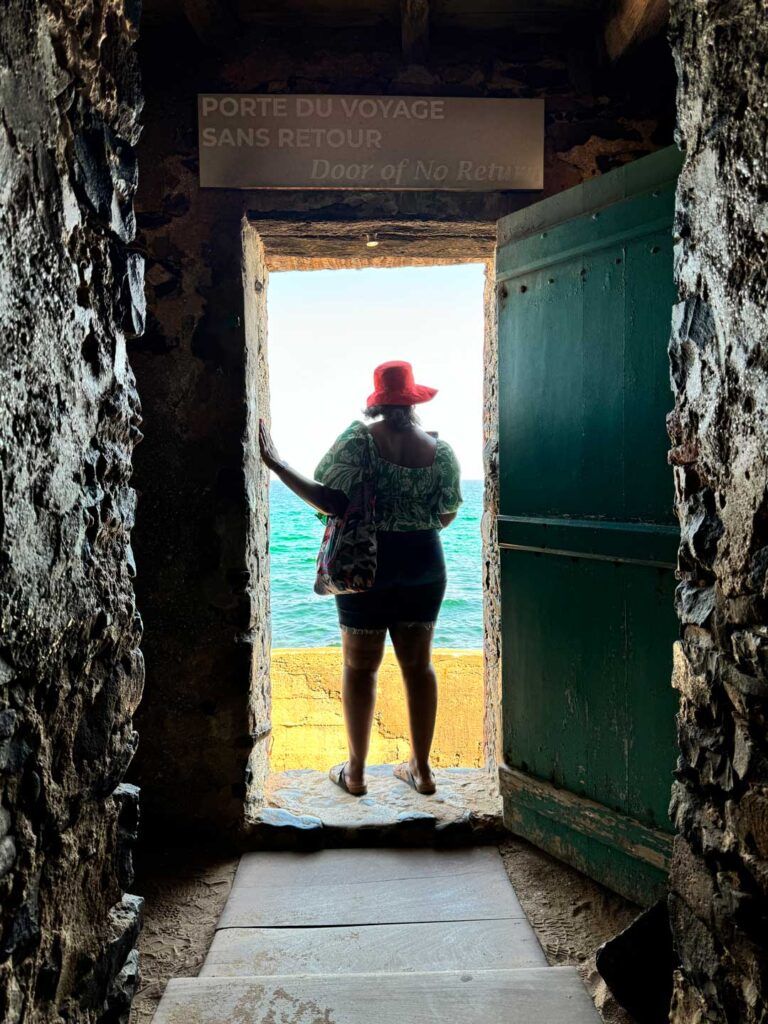


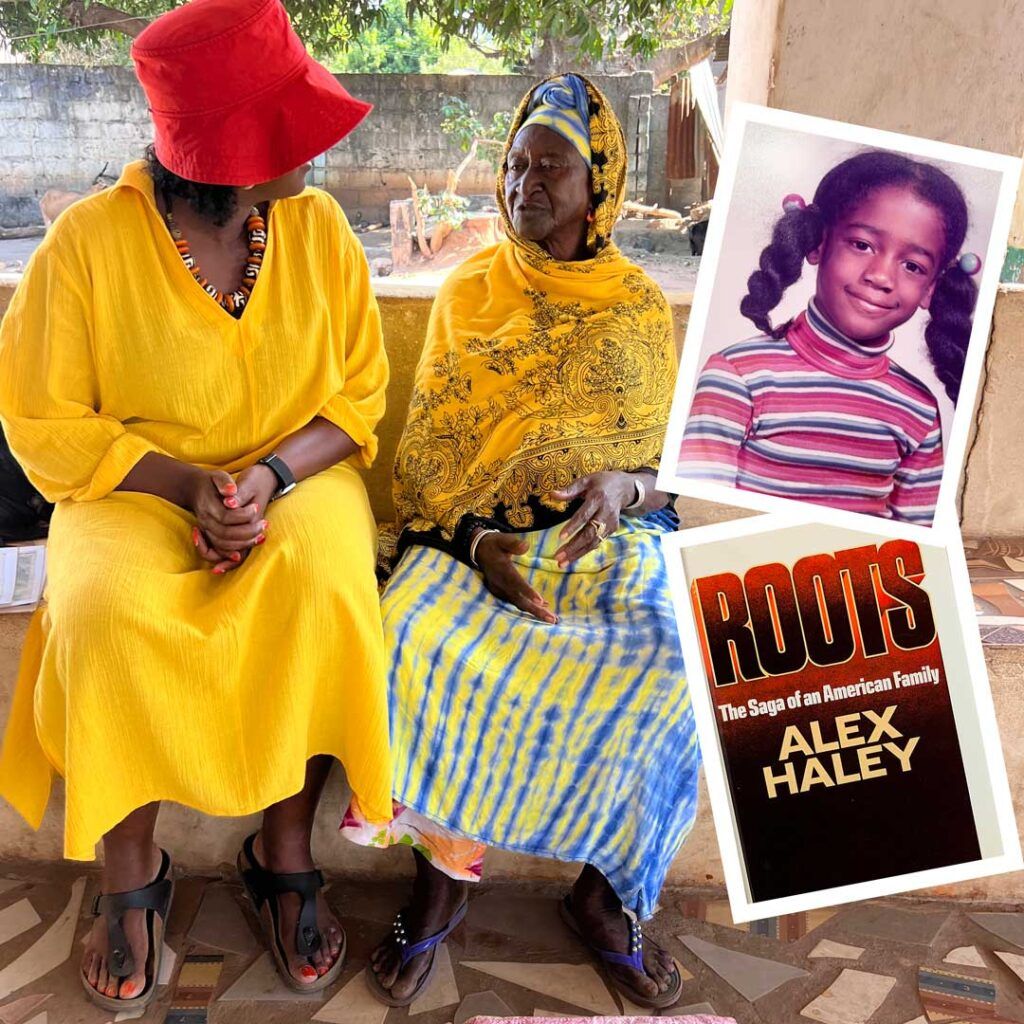
I couldn’t have been more than eight years old when I watched Roots on the small TV in my family’s living room in Toronto. The 1977 miniseries would go on to win nine Emmy awards and be the most watched (at 130 million views) of its time. The story of Kunta Kinte – a free African teenager who is captured, stolen from his family and his homeland, and sold to slavers who transport him to the United States – was my first introduction to the concept of one human being asserting ownership over another. The fact that the enslaved people all had skin the colour of mine wasn’t lost on me.
The show impacted me so much that as soon as it was over, I ran to our bookshelves, took down the 688-page Alex Haley semi-biographical tome on which the TV-show is based, and read it cover to cover. Much has been made over whether Haley’s tale is more fiction than fact, but more than 40 years later, I still have that book on my office shelves. Its story is a fixed reminder of the intrusion of harsh history into childhood whimsy. And when Hurtigruten Expeditions presented the opportunity to visit the region where that story began, where Kinte himself was stolen, I couldn’t turn down.
If you had asked me how I might visit Senegal, Cape Verde, The Bisagos Islands and The Gambia in my lifetime, a Norwegian cruise line likely wouldn’t have been my guess. But H/X Hurtigruten Expeditions launched a 12-day West African itinerary last November and I joined the third sailing of the MS Spitsbergen’s inaugural sailing.
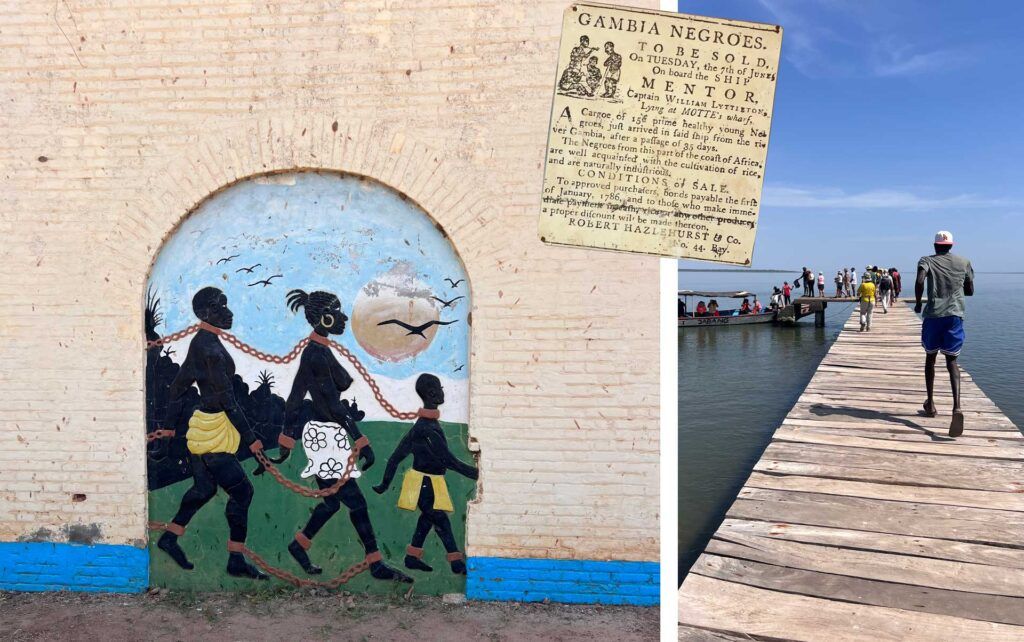
To understand the impact of the cruise, you need to understand the history of what transpired on these waters and in these ports. Between 1501 and 1867, more than 12.5 million Africans were forced into the transatlantic slave trade. The route is known as “The Middle Passage,” and sources estimate that as many as 1.8 million people died during the months-long journey. These men, women and children were shipped from ports across West Africa, including Senegal and The Gambia – countries I’ll visit on this voyage – to lives of harsh servitude around the world, including to the Caribbean, Great Britain and the southern United States. The ride to the new world came with shackles – to each other and the ship, in windowless dank spaces that left no room for human dignity. Without ventilation or sufficient water, many grew sick and died, or attempted to die by suicide. Those who survived the journey faced continued horrors for generations.
Even centuries later, to be happily sitting on board, wine glass in hand, feels conflicting at best. But that discordance – cruising back to Africa on the top deck of a ship, to shores my ancestors likely sailed away from in the bottom of another – is why I’m here. I’m returning to the shores of West Africa to acknowledge the terror; honour the sacrifice and suffering; and bear witness to the tragedy … all the while grateful for a cabin with a window and the comforts of a cruise ship. I have the freedom to live my ancestors’ wildest dreams.
I’ve been to Africa before. My first visit to the continent in 1997 was to Ghana with a group of students from Toronto. Then, like now, Africans greeted me with “Welcome home,” far more often than “Hello.” Most of my time on the continent over the years has been joyful. South Africa, Kenya, Rwanda, Tanzania, Namibia, Ethiopia, Botswana and other countries here have offered treasured connections to people, places and histories. I knew this trip would be more complicated. I also knew it was something I needed to do; a personal circle I wanted to close. One that had opened when I first saw Black bodies in shackles on a ship on television as a kid.
A Stolen History
While there is room on H/X Hurtigruten Expeditions’ MS Spitsbergen for 220 passengers, flight snafus means that our sailing has only about 60 people on board. All except for me, my husband and the group of about 15 African-American journalists I’m travelling with, are white.
And while all of the passengers on the ship speak of a desire to see this part of the world – often missing from safari-heavy African itineraries – among our small group it’s the ancestral homecoming aspect of the trip that is discussed most often. Many have traced their DNA to the region or can point to a direct familial connection.
In the decades since watching Roots with my parents, my education into my ancestors’ history of enslavement has been halting at best. DNA results once pointed to several African countries as my origins, but at the time so little information was in the database that it couldn’t do much more than offer a general nod to the continent. My parents, who were born in Jamaica, know little beyond their great-grandparents of where our story began. While many Jamaicans point with pride to tribes in Ghana (including the Ashanti people) or Nigeria (including the Yoruba and Igbo peoples), we lack that specificity. My Canadian education also failed to offer me any indication of an enslaved people’s history beyond the American tale of Canada as salvation for those seeking freedom from oppressors south of the border.
Sadly, the same has been true for my own kids. It was only in 2020, when I took them to Chatham, Ont. – a major terminus of the Underground Railroad in Canada – that they learned that slavery is as much a part of Canadian history as log rolling, road hockey and atrocities to Indigenous people. Slavery existed here long after those who took the Underground Railroad found freedom. An act passed in 1793 made it illegal to bring enslaved people into Upper Canada – this is what allowed for enslaved runaways from America to find freedom on our shores. But the act didn’t free any enslaved people in Canada and it stated that children born to enslaved people in Canada would only be freed once they turned 25. Slavery in Canada wouldn’t be officially abolished until Aug. 1, 1834. I did all of my education in this country, including a law degree, and only learned this fact on this visit with my kids.
History Reconnected
But where schoolbooks have failed, travel offers an opportunity for illumination. And so, on the sunny morning that we arrived in The Gambia, I’m nervous and excited. About 40 passengers, split into two buses, have opted for the “Roots by Land” excursion – a trip that will link the seminal miniseries to the place it is reputed to have begun.
To start the tour, we walk through the busy markets of Banjul, The Gambia’s capital, surrounded by the everyday bustle of life in this busy port city on the Atlantic. We then hop on a small ferry and make our way from Banjul to Barra, a small city on the other side of the mouth of the Gambia River. The journey is about an hour long, and wooden benches on the open-air top deck are packed with commuters heading to work. Sellers wander between ferry decks calling out their wares – everything from phone cases to sports bras. I spend much of the journey watching the water. I’m captivated by the beauty of the small painted boats that act as water taxis ferrying about eight people at a time, from shore to shore. The tall black figures, draped in colourful fabrics sitting high on the wooden cross bars of little boats, look like the abstract paintings I’ve seen in many African city markets.
I turn to my husband to share the observation and find him chatting amiably with a young man on his way to work. I listen in as the man points to a collection of fragile-looking boats lining the waterfront (most barely bigger than the water taxis alongside us). Those, he tells us, are the boats that migrants use to try to cross the North Atlantic Ocean to Spain. Packed tight with people, most of whom will have offered up their life savings, these open-to-the-elements wooden skiffs will take their chances on the rough waters. It must feel like riding a canoe into a hurricane, I think, as we approach the shore. How different the water must look to them. How menacing.
It’s another van ride before I’m standing in the space I’ve been waiting for the entire trip. We are in Juffureh Albreda: Kunta Kinte’s ancestral home. Before we can enter the village, we must seek permission from the chief. Chief Tako is a slight woman with a demure smile, but her authority is clear. What she lacks in English language skills, she makes up for in raised eyebrows. With her blessing we continue.
Although recent research has shown that in the 1800s the area was more bustling city than quaint village, it’s not hard to imagine Haley’s opening pages happening here among the red earth, stray pups, tin roofs and concrete walls. Seated in the middle of the village is a member of Kinte’s clan. She’s quiet, as our guide explains, for the guests among us who are unfamiliar, the connection of the community to Haley’s book. Guests are invited to sit with her to take a photo. Sometimes she touches a hand. Sometimes she smiles for the camera.
Just down the road, a museum set in a tiny, four-room building attempts to unpack the history of slavery and the role of Africans themselves – as both villains and victims – within it. It’s filled with information and artifacts that often leave you with more questions than answers. The story, so simple on its face – good people don’t enslave other people – can feel more complex as histories suggest just how hard good people can be to find. It’s a long, hot, emotional day.
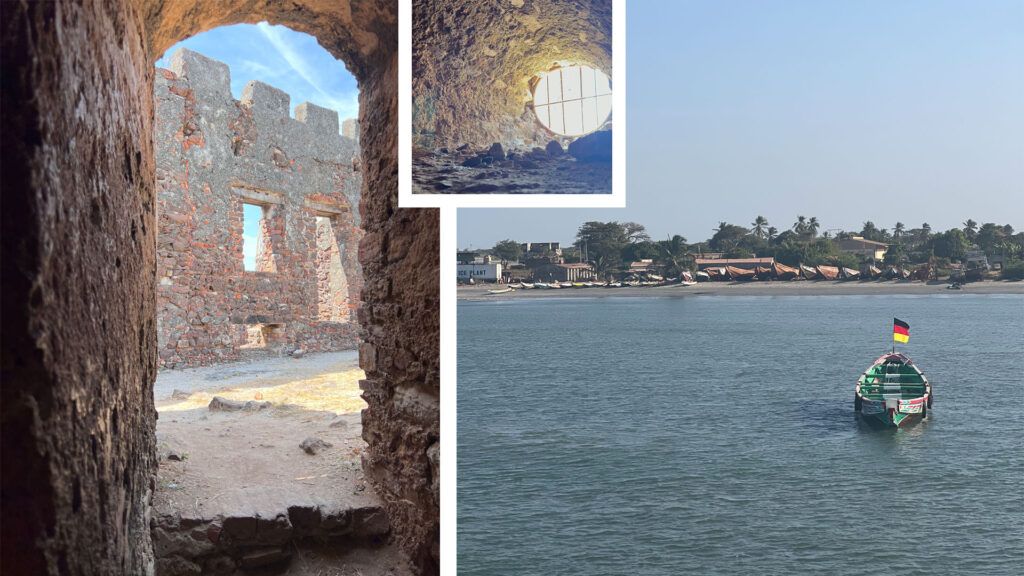
But it’s the last portion of the day that lingers longest in my memory. On the village’s shore, our guides point out our final destination – a small island in the distance. We make our way to the dock, and climb gingerly into a worn pirogue – a sort of long, shallow canoe made out of one trunk of wood with fabrics draped overhead for shade – before setting off. On the other end of the three-kilometre (two-mile) journey, we arrive at what is now known as Kunta Kinteh Island – named for the boy who it is said was once held here as a prisoner, and whose story gave a generation a name and face for the slave trade. The island, now a UNESCO World Heritage site, holds the remains of a ruined fortress. However, the cave-like cell that once held captives waiting for transport to Gorée island in Senegal before being shipped to countries around the world, remains intact.
When I step inside, touch the walls, and adjust my eyes to the limited light coming through a small barred window, my heart breaks anew. Our guide shares stories, most passed down orally in the villages, about the people who were taken and the many ways in which they were brutalized and killed. You can stand on this island, look back to the mainland and see the village where Kuntah Kinte was born, raised and captured. He, just like so many men, women and children, who were so close, and yet so far from home. When slavery was abolished, our guide tells us, about 96 prisoners were still on the island. They were told that if they could swim to Barra’s shore, they could be free. Every one of them took the chance. None of them made it.
The ride back to Barra on the pirogue is quieter than the ride over, and my mind starts playing tricks on me. I can see desperate swimmers in the water. I can hear the ghostly wails of a mother crying for a missing son. I can feel the bodies underneath our boat.
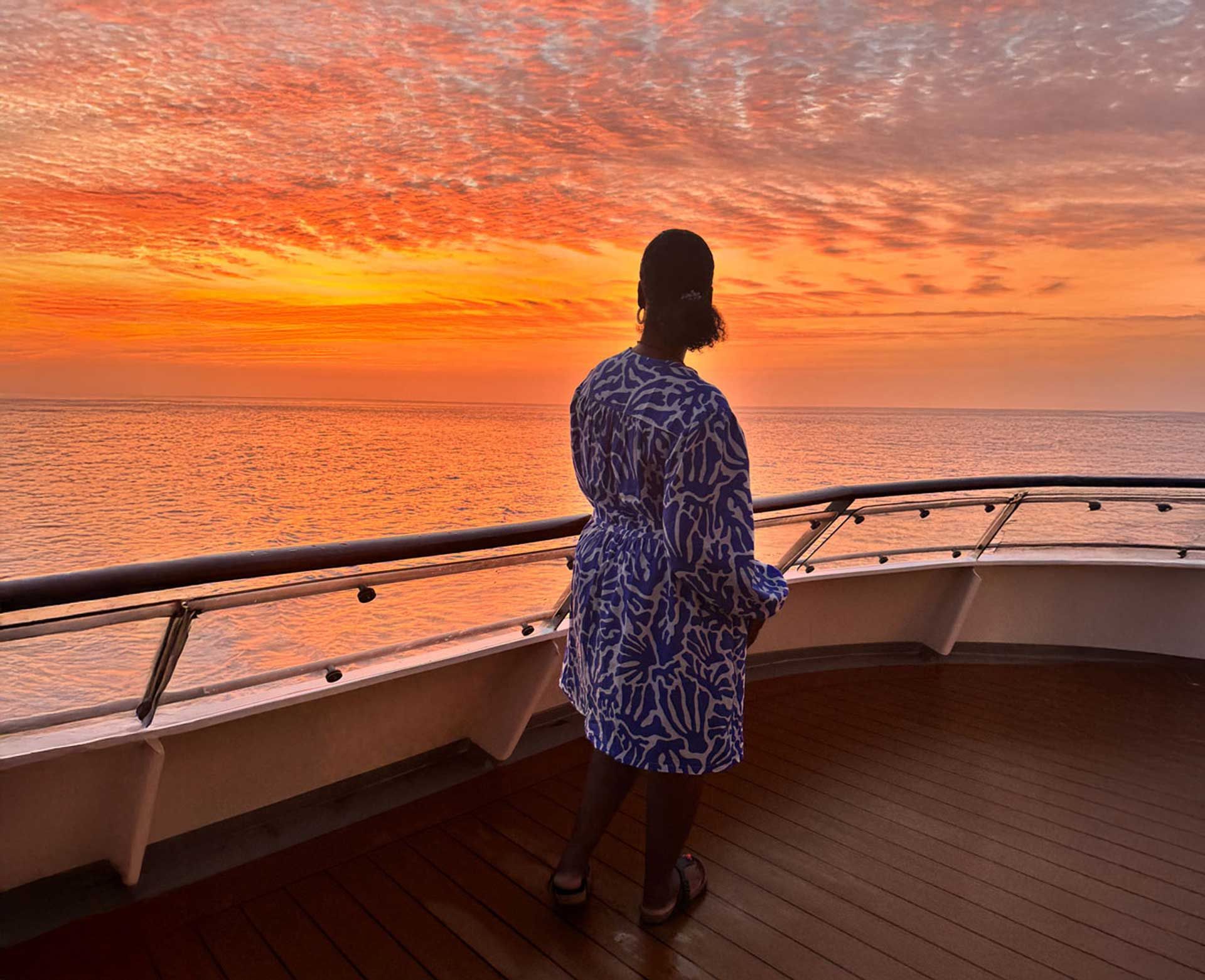
Back on the cruise ship that night, the sunset is a glorious burnt orange; the brightest we’ve seen on the journey. My emotions are mixed: Gratitude for an outing that allows more people to see, feel and touch the history that so intimately affected me. Concern that a day trip will never be enough time to come to grips with the horrors I’ve been puzzling over since I was a child. I know I’ll need to return to fully grasp what these places have to offer, and I hope that the passengers on board with me feel the same way.
We are heading back to Dakar in the morning, but tonight a dance troupe from the region prepares to perform on board. As we wait, I look out on the water and spot a tiny boat. I blink to focus, and the long skinny outline bobbing on the rippled surface is instantly familiar. My heart sinks. Those aren’t commuters heading to some nearby shore. Those are migrants facing the waters that were so treacherous for their ancestors. I’ve never seen anything more courageous.