





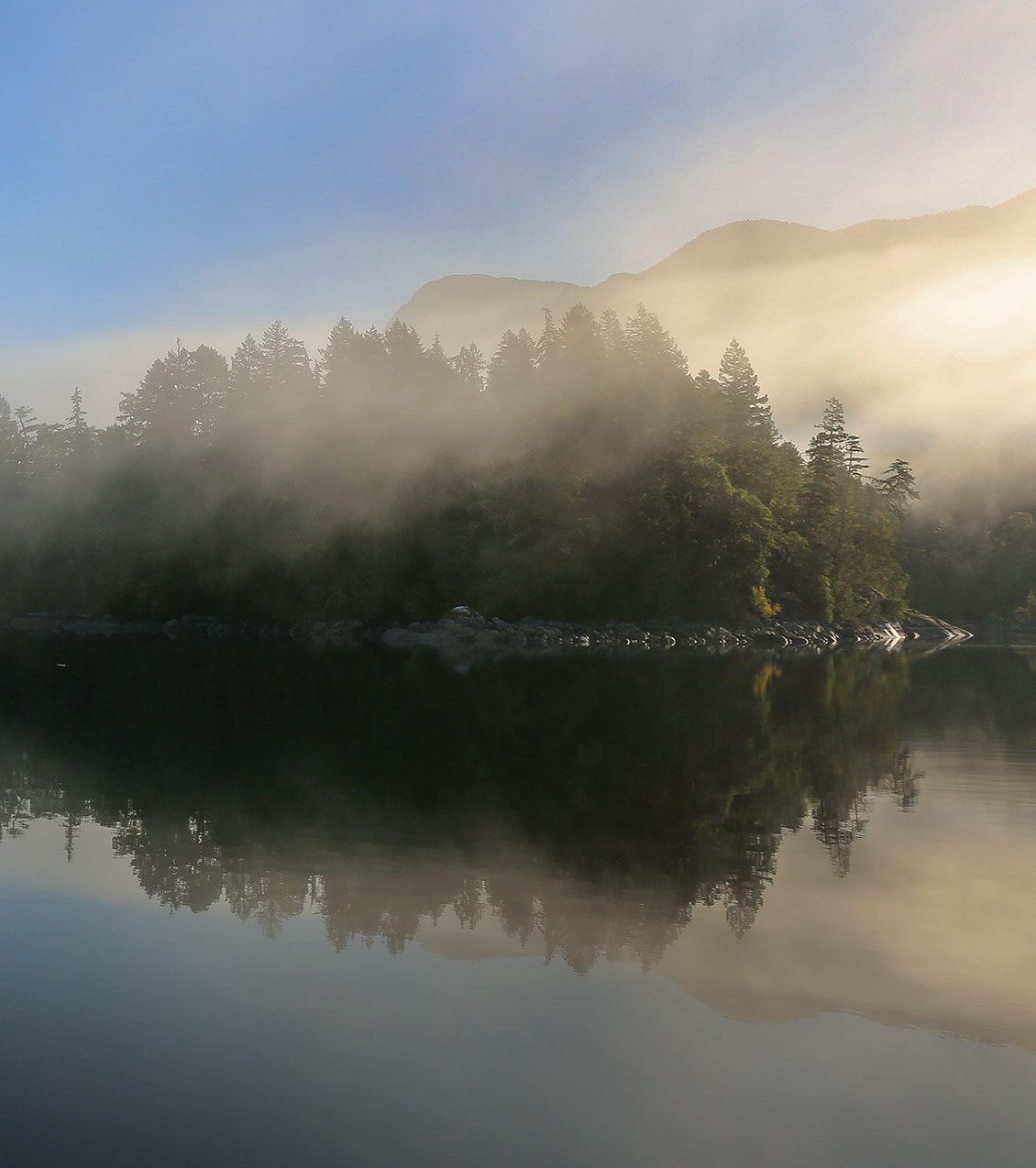
We’re crossing Georgia Strait under full sail on a glorious August afternoon when my partner gleefully announces we’ve achieved 7.3 knots (about 13 kilometres per hour). “Is that good?” I ask. “Fully respectable,” he grins.
I’ve just hoisted the sails by hand and I’m riding the high of a newbie sailor and upper-body weakling who has accomplished something hard. I’m tempted to rest on my laurels, but JD has asked me to be especially vigilant on this trip, scanning for other boats, hull-smashing logs, crab traps and whales.
Born and raised in West Vancouver, he has been sailing these B.C. waters since he was a kid and can tell by the feel of the wind on his face which sails to use and how to position the boat. But JD is losing his sight to a degenerative connective tissue disorder that affects his retinas. It’s so rare it doesn’t have a name but now, at 66, he has very little vision in his left eye and only partial sight in his right. He can see the instrument panels when there’s no glare, but he can no longer take in the surroundings in a single glance.
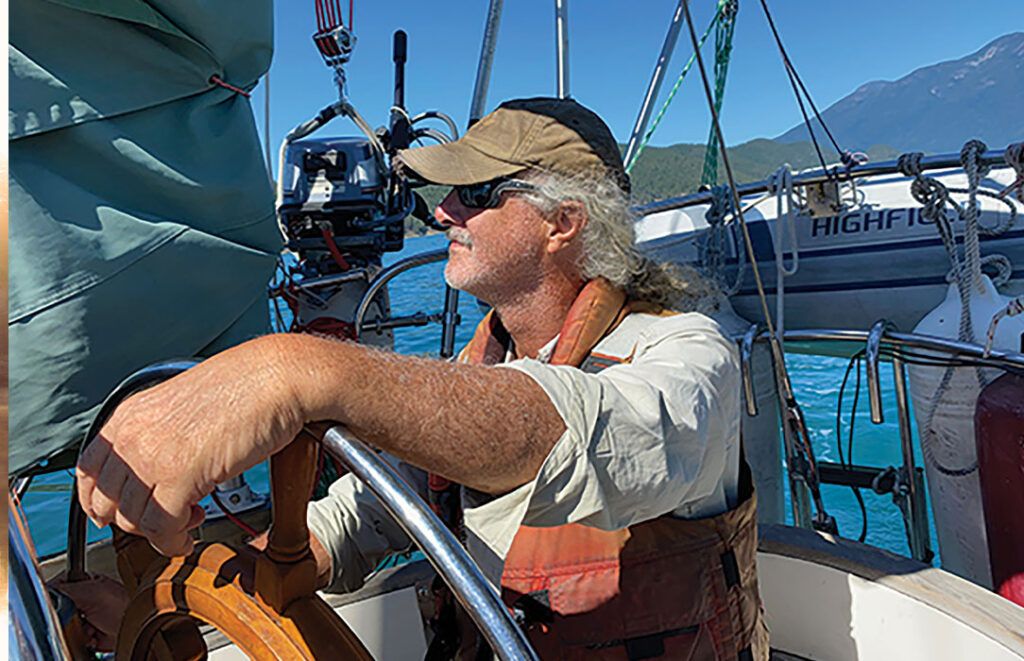
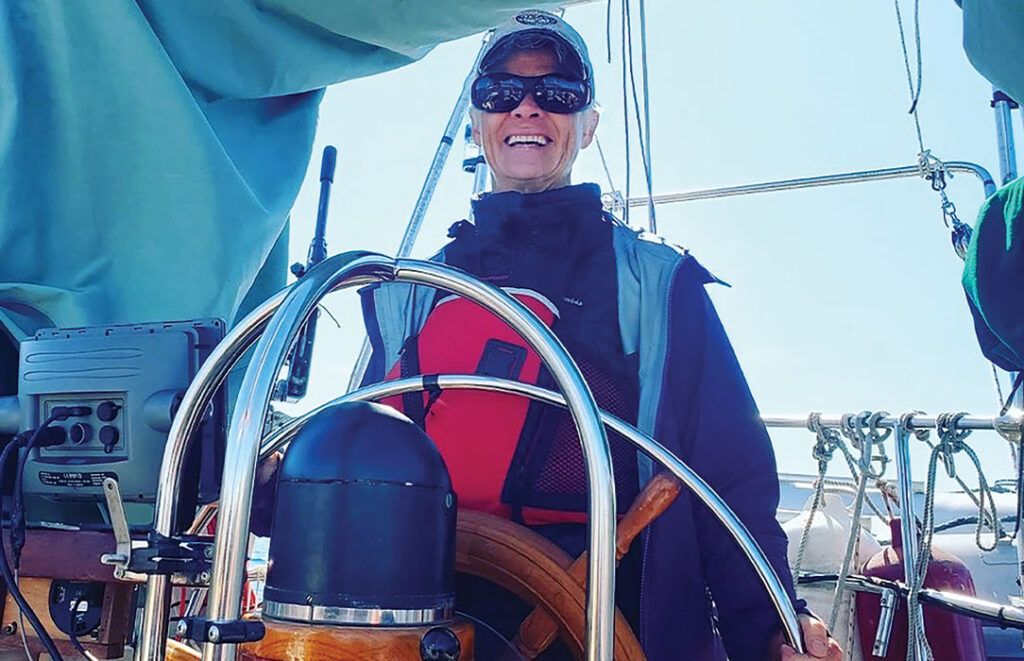
So, our deal during this month-long journey from Nanaimo up to Desolation Sound and back is this: He teaches me – a 59-year-old sailing debutante – to be a competent first mate on his 11-metre (37-foot) Tayana, and I remain steadily watchful, calling out distances and directions of potential obstacles.
“Whales!” I shout back to him at the helm. “About a kilometre out, at two o’clock.” I watch as he swivels his head to focus his remaining beams of vision in that direction. “Got ’em.”
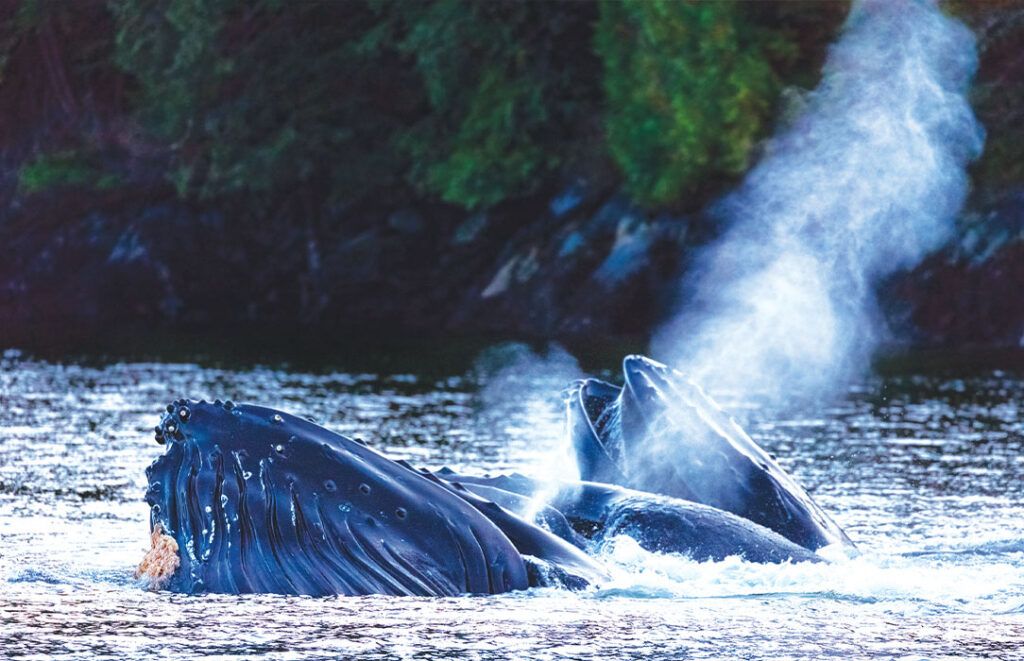
It’s a small group of humpbacks, filter feeders that can grow up to 18.3 metres (60 feet). They were nearly wiped out before commercial whaling was banned in the 1950s, but in the past decade these waters have experienced a humpback comeback, thanks in part to an increase in yummy krill, herring and sand lance (a small ray-finned fish that looks like an eel).
I remember from my sailing course that boats must keep at least 100 metres from whales, dolphins and porpoises and 400 metres from critically endangered orcas. Of course, whales are oblivious to human rules.
I’m sitting on the starboard (right-hand) side of the cockpit when a humpback surfaces RIGHT next to me and exhales a big fishy breath. JD and I whoop in surprise. I start to shake with excitement as I realize it’s bigger than the boat. It keeps pace with us for several minutes, slowly rotating and showing off its flippers, back and tail. Then it’s gone.
Later that day, when we’re safely anchored, JD will tell me humpbacks sometimes inadvertently capsize boats as they lunge toward their prey. Still, I remember this mesmerizing encounter as one of the highlights of a magnificent trip up a sparkling deepwater sound flanked by steep forested mountains – a place JD describes as Peter Pan’s Neverland, where adventures abound and time seems to stand still.
Yet, when we set out from Nanaimo, I had my reservations. Those steep mountains meant there would be days when there would be no safe way to get to shore and, as someone who works out and walks regularly, I knew this would be hard.
Sometimes I had too much energy for a small sailboat, but I bought a shortie wetsuit so I was at least able to swim in the chilly Pacific. As we got closer to Desolation Sound, the water got warmer and warmer and I discovered I could swim in my bathing suit. This, I wasn’t expecting.
I learned that, thanks to the meeting of flood tides from the northern and southern tips of Vancouver Island, the sound’s water doesn’t move around much and is continually warmed by the summer sun. Locals claim it has the warmest water north of Mexico – around 25 C – and I’m happy to take them at their word.
What I know is Desolation Sound, which is about 150 kilometres north of Vancouver and flanked by Cortes Island and East and West Redonda islands, is chock full of gorgeous islets, bays, inlets and snug coves.
It’s hard to believe what British explorer Captain George Vancouver, who explored and charted the region, wrote in his 1792 diary: “This Sound afforded not a single prospect that was pleasing to the eye, the smallest recreation on shore, nor animal or vegetable food.” To be fair to Captain Vancouver, the weather was apparently gloomy; he was bummed he hadn’t found the Northwest Passage; and a lack of wind meant he and his crew were forced to bide their time.
We, on the other hand, had a much better trip. Our first stop was Cortes Island’s Squirrel Cove, a protected anchorage big enough to shelter a few dozen boats, with a small village and general store within dinghy distance. We needed groceries, so I got to practise newly acquired skills: lowering the dinghy from the stern, boarding it from the boat and using the small outboard motor. Within minutes, I was skimming the waves with the bow slightly up off the water. Whee!
Back on the boat with groceries stowed, we untied our kayaks from the deck, lowered them into the water and clambered down the ladder. Our destination was a tidal lagoon beyond a narrow, rocky entrance, where the water rushes in and out with the tides. This creates rapids that reverse twice a day, so we timed it for mid-flood, when water flows from the anchorage into the lagoon, and we glided in over a dazzling carpet of pink sea anemones and purple and orange starfish.
After a lazy paddle to a relatively barnacle-free islet, we hauled out the kayaks and floated on our backs like a couple of sea otters. As we dried on the sun-warmed rock, JD told me we needed to head back with the first of the ebb tide – when water starts to flow out of the lagoon, the rapids begin to reverse and the water is still high enough not to hit rocks on the way out.
But the sun was warm, the lagoon was quiet and we dozed. When we awoke, it was closer to the middle of the ebb. The rapids made us pay by shooting us over a tidal waterfall about half a metre high before spitting us into the anchorage. We emerged, spinning end to end, to the applause of a couple standing on the deck of their boat.
Next stop was West Redonda Island’s Roscoe Bay, where we motored slowly through the narrow entrance just before high tide, anxious about whether the boat would clear its shallow water. My job was to count down the numbers on the depth finder as JD navigated over a sandy bottom that looked like it was so close we could touch it.
We made it through with half a metre to spare. To celebrate, we got out the kayaks again and paddled to the far end of the bay to hike a trail around Black Lake. After days of swimming in the ocean, this small freshwater lake with its gently sloping rocky outcrops was a nice change.
While there were a couple of dozen fewer boats at Roscoe than at Squirrel Cove, it was a smaller anchorage and by day three it felt a bit crowded. We were both ready for some serious wilderness farther up the sound. First we had to stop at Refuge Cove for drinking water and groceries at its well-stocked, funky general store. The cove, tucked into the southern tip of West Redonda Island, is protected from prevailing winds and has a long history of sheltering tugs, fishing boats and recreational sailors. It was high season and we were lucky to get a spot on the small marina’s dock, where boats were packed in, bow to stern. But everyone was friendly and, despite our craving for solitude, we got into the vibe and enjoyed fish tacos at the waterside restaurant.
When we finally sailed into Pendrell Sound, which nearly cleaves East Redonda Island in two, we were grateful to get away from the madding crowd. While most boats head for the end of the sound, we were aiming for something JD calls “The Nook,” which snugly fits just one boat and offers a wonderfully private anchorage.
This is where I learned to stern tie, kayaking to shore to knot a line around a sturdy tree. We were close to shore on three sides, so we did the same with starboard and port lines. If a wind picked up in the night, we’d be safe.
The Nook turned out to be home base for a curious mother and baby seal that bobbed just out of arm’s reach while we looked down from the deck, and hung back a tad farther when we swam. Our days were spent swimming, paddling and bathing in a nearby waterfall, icy cold and glowing green as the sun filtered through sheltering trees.
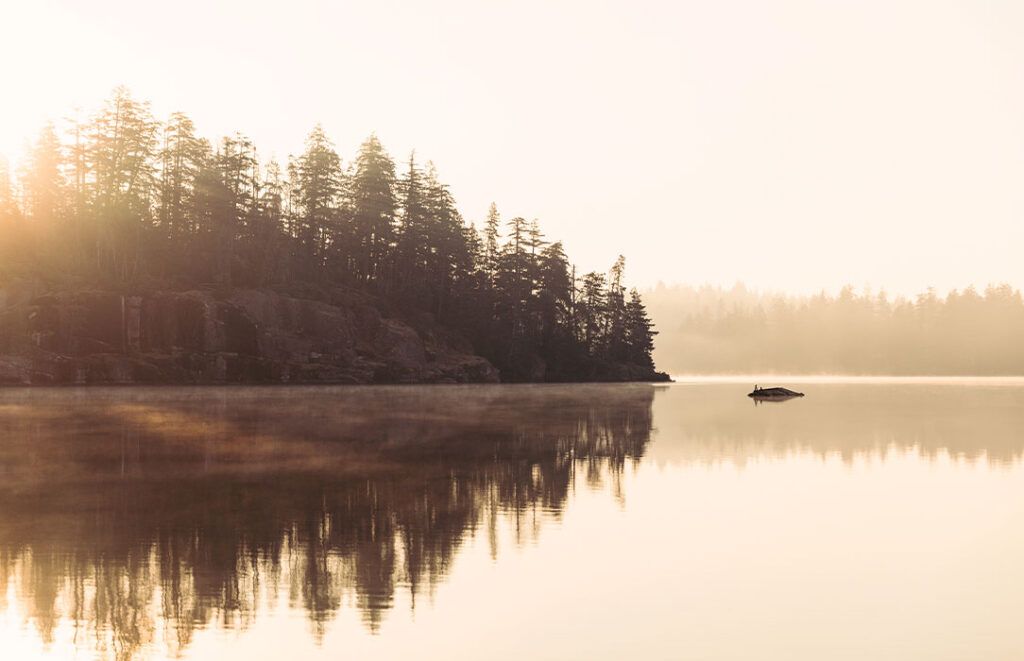
We ate dinner on the foredeck, watching the sheer granite peaks across the sound glow orange, then fuchsia, before darkening to black. There wasn’t a single artificial light and the starlit sky was mirrored in the ocean below.
We can’t predict how long JD’s eyes will let him sail, or if I will learn enough to bring us back here again. Still, that last night in The Nook, I couldn’t help but think about Peter Pan’s directions to Neverland: “Second star to the right, and straight on till morning.”
