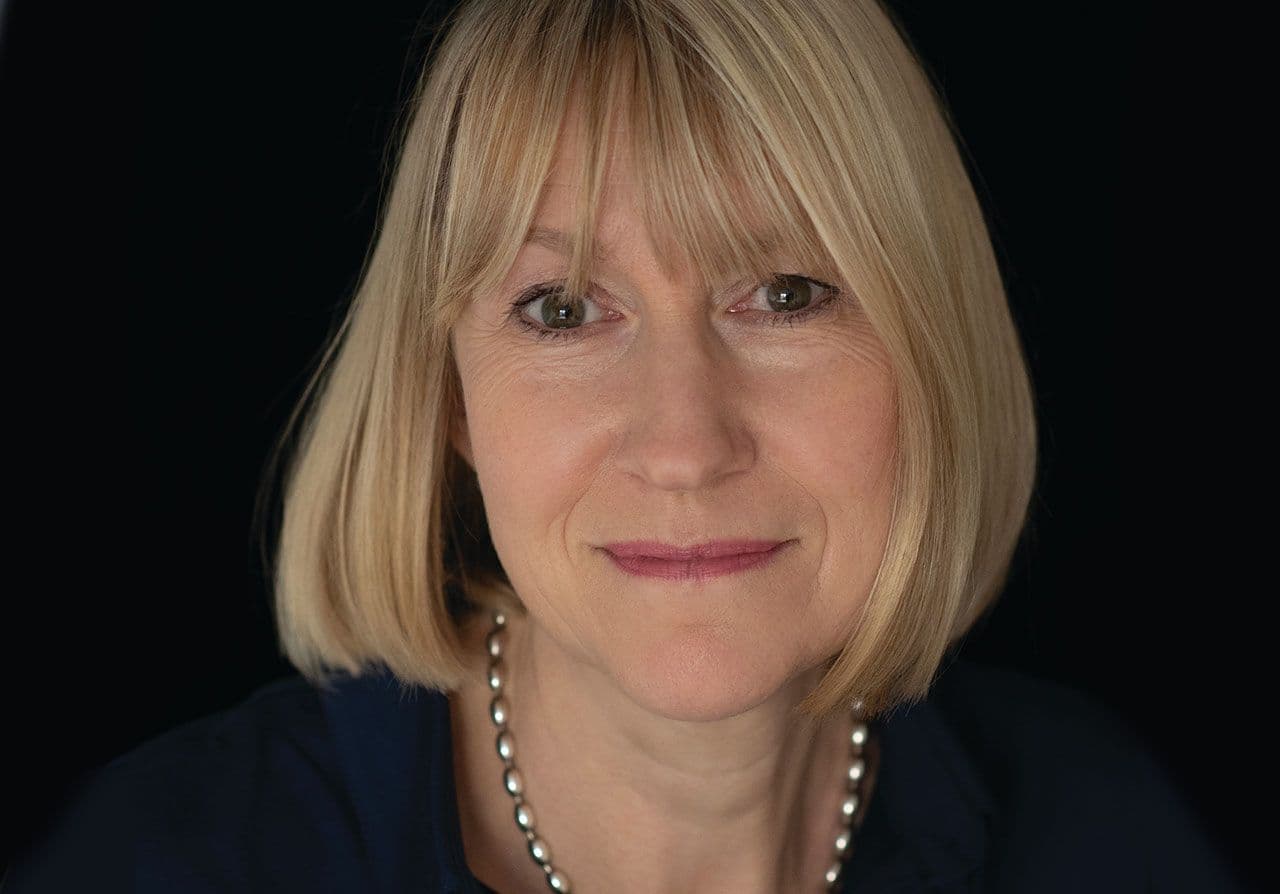
Shy Creatures, Clare Chambers’ 10th novel, was inspired by a news story that kicked her imagination into gear. The British author came across an online account about Harry Tucker, a 47-year-old schizophrenic who had been hidden away in a Bristol house by three elderly aunts. For more than a decade he didn’t go beyond his garden gate. “He had waist-length hair and a beard, living this sort of feral kind of existence with his aunts and various cats and dogs and birds,” she says in a recent Zoom interview from her home in London. “He was taken away to this psychiatric hospital for treatment, and I thought, ‘Oh, this is a very interesting story’ and I wondered how it turned out.”
This may sound familiar to fans of her bestselling 2020 novel, Small Pleasures, which took flight after Chambers read newspaper reports about an alleged virgin birth in postwar England. She invented a newspaper reporter, Jean Swinney, tasked with ferreting out the truth. The former book editor, who started out writing young adult novels and romantic comedies, hadn’t been published in 10 years when she wrote her “breakthrough book,” which was longlisted for the 2021 Women’s Prize for Fiction and won the 2022 British Book Awards’ Page-turner prize.
A year after she read the first report about Tucker, Chambers discovered he had escaped, fallen into a river and drowned. “That seemed like such a terrible outcome,” she said. “A year after he left the hospital and seemed to be making such progress, it was all over. And I wanted to rescue him in fiction, if not in life.”
In Shy Creatures, Chambers does just that. The novel is set in 1964, amid the swirl of women’s liberation and shrinking hemlines. Helen Hansford, a 30-something art teacher who lives in a small flat in the London suburb of Croydon, is looking for adventure and a good cause.

Chambers relishes in the cosy quirks of the ’60s that fix the story in time and place. Helen shares the telephone down the hall with two other women, and the tenants write down the length of their calls in a notebook so the landlord can figure out how to split the bill. Kettles shriek and tea leaves are spooned into china pots, which bubble and spit as hot water gushes in. Leftover slices of birthday cake, no matter how dry, are offered to guests (Tupperware has yet to be invented) and kerosene heaters warm drafty rooms. Chambers says she has gotten some flack for this level of every-day description in her novels, but “I love domestic details, nothing is too trivial to be unimportant in ordinary lives.”
When Helen takes a job as an art therapist at Westbury Park, a psychiatric hospital, her mother cringes. “Oh Helen, you mean a mental asylum?” Helen takes the blow in stride, as her parents are not the sort of people who take pleasure in another’s success. Her favourite class is working with male alcoholics who she views as quite talentless with pencil or paint, and suspects signed up in the hope of seeing nude models.
Helen may be unmarried, but she isn’t single, since she’s been having an affair for three years with her colleague, Dr. Gil Rudden, an ambitious psychiatrist who wants to modernize treatment by focusing on talk therapy, rather than filling his patients with drugs. Gil seems to have it all: a wife to run his household, children to show off and a mistress on a string, who he can reel in or let down at the last minute when work or home life needs tending. Even with this tidy set-up, Gil’s ego means he can’t resist lavishing his charms on everyone; women, of any age, and men alike.
Chambers created Rudden as a polarizing character. “Younger women at my publisher’s think he’s an unrelenting bastard, absolutely toxic,” she says, “whereas women of my age perhaps think it’s merely inappropriate. We’ve met many such men as Gil, and I don’t think he’s particularly unusual in his vanity … I’m trying to make him charming, witty and impressive as a professional, but in his personal life, he’s deeply flawed.”
While Gil is trying to wean his Westbury Park patients off their drugs, at home he stands by as his wife self-medicates with alcohol, and he medicates Helen by providing her with birth control and sleeping pills in an effort to keep the two parts of his life going.
One spring morning, Gil is called to a disturbance at the dilapidated home of a 37-year-old William Tapping. Gil and Helen rush to the scene to find a disheveled, mute man whose hair hasn’t been cut for so long he can tuck it into his pants. Police tell Gil and Helen that William’s aunt was in hysterics and he had barricaded himself in the attic. Inside, Helen finds an old suitcase with a trove of William’s drawings of birds, badgers, foxes and cats, which shows a level of talent she has not seen before in her art therapy room. She notices he has repeatedly sketched a charming cottage with deck chairs on the lawn and a hammock hanging from a tree. What was its meaning? Why had he drawn it over and over again?
When William is taken to Westbury, the plot kicks into high gear as Helen is determined to find out what happened to him and help him have some semblance of a regular life. From here, the story moves back in time to slowly reveal William’s buried past, and forward to a brighter future for Helen, with new purpose and independence. Chambers ties up all the loose ends and follows through on her promise to rescue William in fiction, if not in life.
As for her next novel, she says she is waiting for inspiration. “I don’t like chasing after ideas,” Chambers says. “I have this old-fashioned idea, like a courtship. I want the idea to make the first move.”