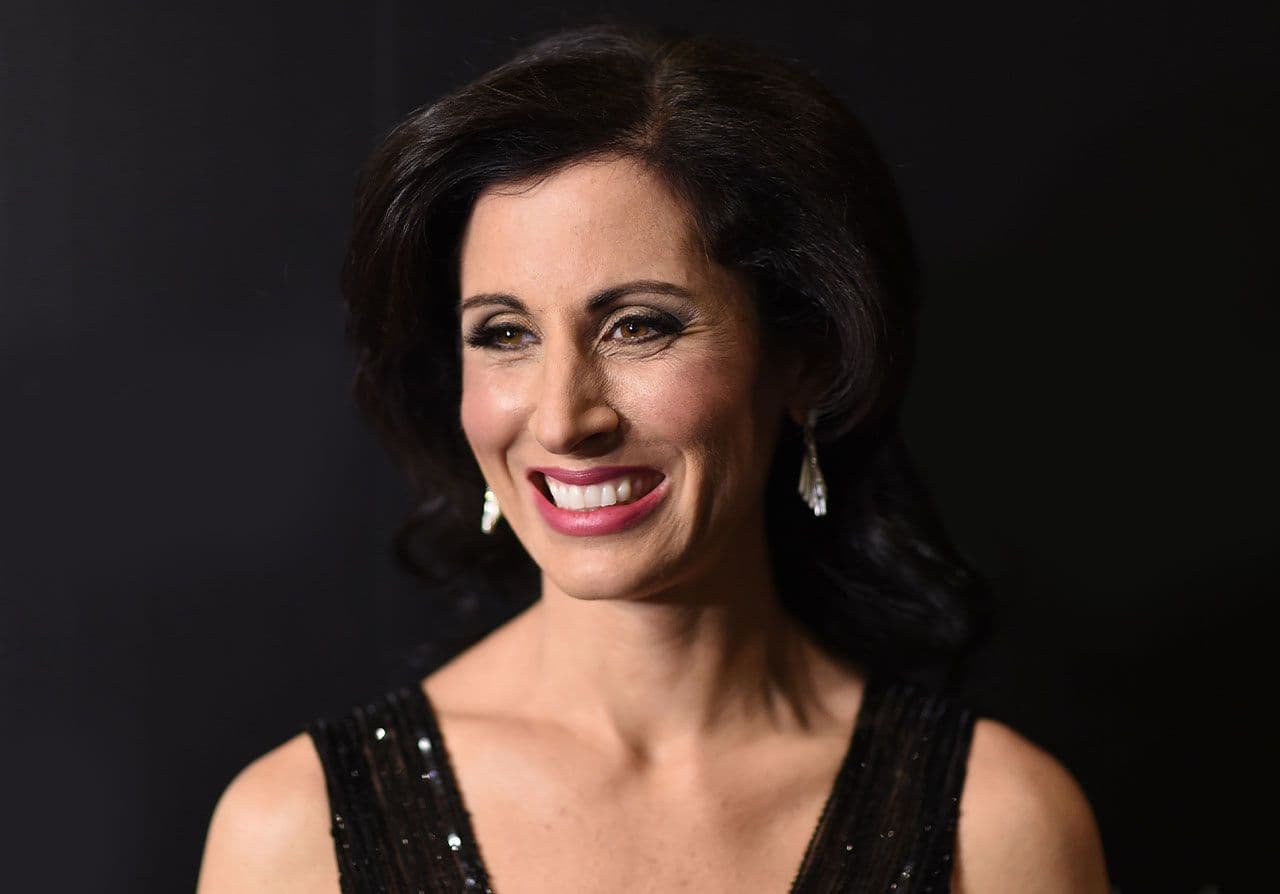
Proof for would-be authors that publishing dreams come true: In 2007, neuroscientist-turned-writer Lisa Genova – after a painful year of endless rejections from agents and traditional publishers who said a book about Alzheimer’s would never sell – committed a so-called writerly sin and self-published her first novel, Still Alice. Despite warnings it was a waste of her book and she would never become a “real” writer, Genova proved each and every one wrong.
First there was a surprise endorsement from the National Alzheimer’s Association. Next, a rave review in The Boston Globe. Then appearances on Fox News and NPR. Soon enough, a wise agent scooped her up, Simon & Schuster bought the book at auction for half a million dollars and the re-release landed on The New York Times bestseller list. Still Alice, the movie, was released in 2014 and Julianne Moore’s portrayal of a Harvard professor suffering from early-onset Alzheimer’s won an Oscar for Best Actress.
I’m retelling this story because I believe in real-life book fairy tales, but also because I’m equally interested in what comes after. Genova, whose grandmother’s diagnosis inspired Still Alice, used her medical background to write novels about brain injury (Left Neglected), autism (Love Anthony), Huntington’s Disease (Inside the O’Briens) and ALS (Every Note Played). Her MO is to understand the disease on a personal level as much as she understands it as a neuroscientist.
Genova’s latest book, More or Less Maddy, is new territory for the brain scientist. Her 20-year-old protagonist Maddy Banks, a New York University freshman struggling to choose a major, make new friends and drag herself to class every day, has a manic episode, where she believes Taylor Swift wants her to write her biography and Netflix wants the screenplay. When Maddy crashes, she lands in the psych ward, where she is diagnosed with bipolar disorder and must learn to navigate her treatment and monitor her condition. While capturing Maddy’s highest highs and lowest lows, Genova moves away from the neurological conditions that have defined her career and toward the murkier world of mental health. From her home in Massachusetts, 54-year-old Genova tells Zoomer all about it.
Rosemary Counter: Your new book – your seventh – launched on Jan. 14. Do you still get nervous after seven books?
Lisa Genova: I’m not as nervous as I have been, but I am a bit nervous. I hope that the book lands and that it’s helpful to people. My last book came out during the pandemic and the tour was all on Zoom, so I’m excited to meet people in real life. How many people have a job where you get to be in a room with a few hundred people who love you for what you do? That’s pretty special. I’m so lucky.
RC: Well, you made it happen! Still Alice is such a wonderful publishing success story. It’s like a fairy tale come true for aspiring writers.
LG: It is. Nobody wanted the book and everyone said it wouldn’t sell. I was at a point where I could stuff it in a drawer and go back to neuroscience or I could self-publish it. It was a dicey decision, and I was entering a pool where anyone can publish anything. I was selling it out of the trunk of my car and begging bloggers to read it for their book club. There was a lot of hustle involved. All that’s changing though. I think more and more people – including established writers – are going to self-publish more. They’re concerned about the disproportionate piece of the pie taken by the publisher. The contracts we have been pretty much the same for 50 years even as the market’s very different. Writers do a lot more than before: they maintain websites, social media accounts, promotion. Not that I’m disparaging publishers; I love them and they do a lot, too. It just might be time to modernize.
RC: You’ve tackled Alzheimer’s, ALS and autism, but this your first venture into mental health. Does that change your approach?
LG: It does, yes. We don’t know what causes bipolar and there’s no blood test or brain scan that confirms you have it, but I think we could probably just as accurately call bipolar disorder a neurological disorder. From a neuroscience lens, we just don’t understand it yet. We don’t know a lot of things about the brain, actually. Instead, we classify it as “mental illness” and a whole lot of stigma comes with that. It’s a very different world than the one where you’ve got Alzheimer’s or ALS. People treat you differently. The drugs we use to treat people with bipolar are serendipitously discovered drugs used to treat other disorders. They’re very non-specific and cause a lot of side effects.
RC: Dumb, English-major question, but is that because there hasn’t been enough research? Could scientists just discover the bipolar gene?
LG: That’s very possible. Some day, we should be able to figure out a combination of genes you’ve inherited or proteins expressed in the brain or a pattern that lights up in a brain scan that is indicative of bipolar. We just don’t know it yet. We like to think we know everything, but we’re not that far out from thinking bipolar disorder was caused by demons and we should bleed you people with leeches. Or maybe your detached, wandering uterus was to blame. Maybe you were a witch. We’re better than that, thankfully, but we’re not at any place of enlightenment. We usually classify things we don’t understand as mental illness, and I don’t think it serves us.
RC: Maddy is your youngest protagonist so far, and I thought at the beginning she lacked identity. She’s not like her sister, she needs a boyfriend, she doesn’t have any friends. Was that deliberate?
LG: I love that you picked up on that! Maddy’s only 20, and that’s an age where nobody’s fully formed. Nobody knows who they really are. There is also a list of markers of things you’re supposed to have for a “normal” life. You should go to college, you should get a career, you should get married and have a family. Maddy doesn’t want all that, it doesn’t really fit and she doesn’t know what else there is. At a moment like that, a diagnosis like bipolar – which has an age of onset of late teens and early 20s – can be so big and can so easily take over someone’s identity. I wanted to push back against this. I wanted to show that Maddy could have bipolar disorder and still find herself outside of the diagnosis.
RC: For that, she turns to stand-up comedy, and, in turn, so did you. Was it difficult to write comedy?
LG: I’d never written comedy before, but it was important for the story for a lot of reasons: I wanted to introduce humour into this heavy story, first of all, and I know we humans often use humour to cope with something difficult. Maddy doesn’t want a normal 9-to-5 job, so comedy fits into that, too, and also the stand-up experience is kind of a bipolar experience sometimes. You could be up there and killing it, the crowd’s laughing and you’re on this wild high, or you could bomb and nobody’s laughing and you feel so alone and you want to crawl off that stage.
RC: You actually did stand-up, did you not?
LG: I did, kind of, but I cheated a little bit because it was during the pandemic so I got to do it over Zoom. Not quite the same as getting up on a stage but I still did it. I had an audience, I had to prepare and memorize my set. But first, I took a stand-up comedy class and I started by saying to the teacher, “I’m a writer and I’m taking the class for my 20-year-old character so I’ll be writing as her.” The teacher immediately said, “No, you’re not.” He was so right; I had to be myself and be vulnerable. I had to write as myself, a 50-something-year-old woman. Only one joke I wrote landed in Maddy’s set; it was one about how much I hate thongs. I got a few laughs and didn’t get booed, so that’s good.
RC: Are you already at work on a new book?
LG: I’m focusing on the book tour at the moment, but I do have another project in the works. I’ve been hired to write a movie about menopause. I know. I’m 54 years old, I’m living it every day, so I didn’t even hesitate and said I’d love to do that. It’s gonna be a dramedy with an ensemble cast. I’m scared and excited and ready to go.