A “deep cut,” for non-musicians in the house, is a band or artist’s lesser-known non-hits that only true fans know and appreciate. In Deep Cuts, the buzz-worthy debut novel from Canadian author Holly Brickley, they’re a metaphor for many things: nostalgia for LP lingo lost to the digital age, the particular pain of being romantically back-burnered, the inevitable scars of first love.
Despite the novel’s wonderful specificity in time and place – the University of California, Berkeley in the early aughts – it’s otherwise an all-too-familiar tale about young love. Brickley’s leads, aspiring musician Joe and songwriter Percy, are first-year university students and probably soulmates with a decade of dramatic romantic obstacles: Joe has a girlfriend, then Percy has a boyfriend; he’s indie-famous, away on tour, and she’s a blogger and music critic watching him from afar. They spark and decide to be just friends, but when their hook-up backfires spectacularly, they disconnect and reconnect and fight and make up.

So, just how autobiographical is Holly Brickley’s Percy? They both went to Berkeley in the 2000s, they worked the same job, they’re both madly in love with musicians and, while they lack musical talent, they’re obsessed with songs and songwriting. For anyone in the right age range – she’s 45 – Brickley totally captures a you-had-to-be-there moment in musical time of Neutral Milk Hotel, Interpol, The Decemberists, Kate Bush and PJ Harvey. Every chapter is a song title and, since the movie rights have been sold, soon enough you’ll be streaming the soundtrack.
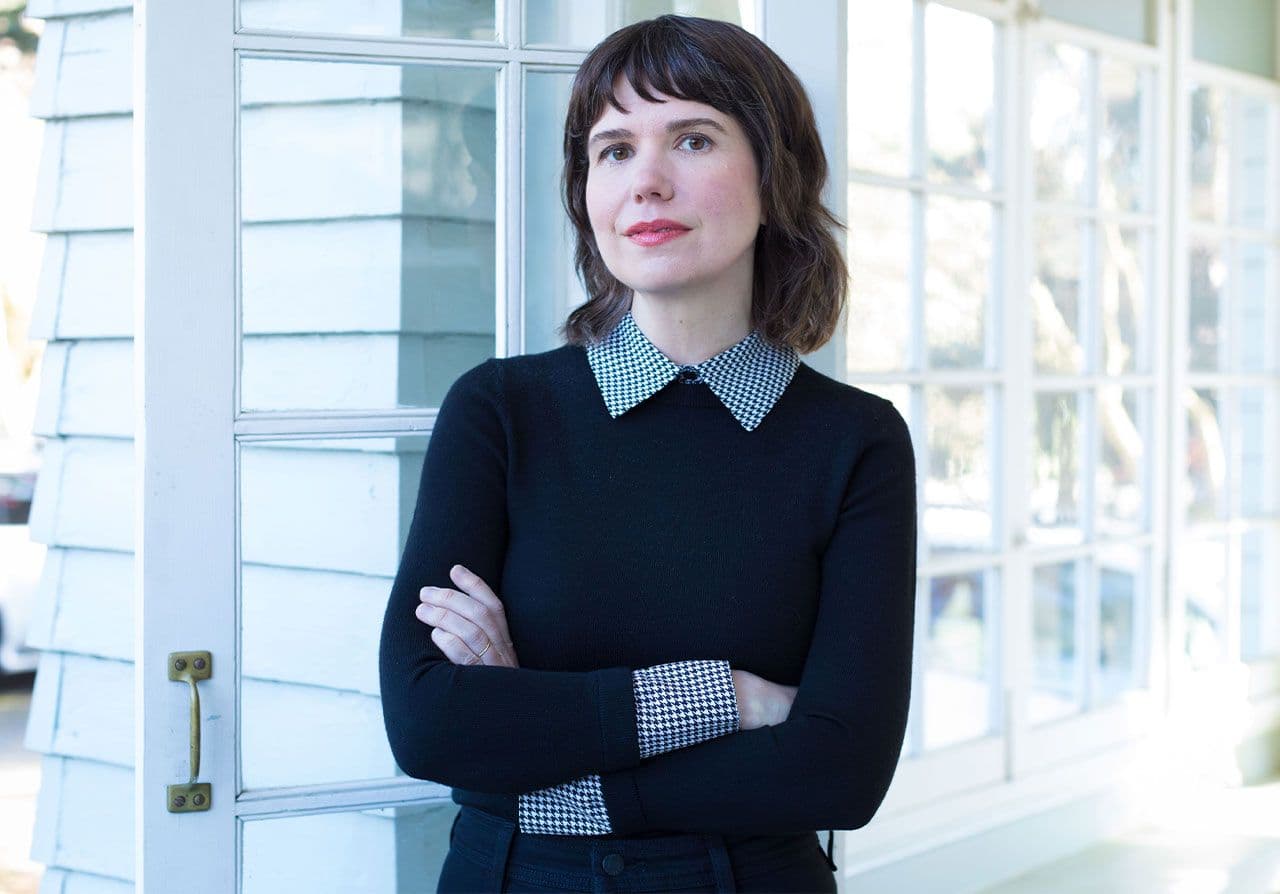
Originally from Hope, B.C., Brickley now lives in Portland, Ore., with her musician husband and two daughters. She talks about the power of music to shape emotions, nostalgia for mixtapes and iPods and who will play Percy in the movie.
Rosemary Counter: I Googled you in advance,but you’re hardly online. That’s very cool, except now I really don’t know anything about you at all. I assumed you were a music journalist.
Holly Brickley: Not at all, no. Journalism seems like a lot of work! I love music, but I have no actual musical talent, so I just write about music. I really like to write stories and fiction, so I make it up. As for the digital footprint, I am on Instagram, but that’s it. I guess I’ve just been busy being a human and working and getting married and having kids. The whole time I’ve been telling people I’m going to write a novel without actually writing it.
RC: So you had a day job. What was that?
HB: I actually had the same job that Percy has at the last part of the book: a trend researcher. I travelled a lot, led projects, did consumer research. When the pandemic happened, everything slowed down enough for me to think, ‘what am I doing with my life?’ We moved from San Francisco to Portland. I got a new job and suddenly had time to write, so I wrote Deep Cuts in about a year.
RC: You and Percy seem to have a lot in common.
HB: Percy started with all the things I hate about myself: my envy of musicians, my obsession with the fact that I lack musical talent and my critical perfectionism. These are things that frustrate me about myself and I wanted to understand them better. I gave Percy a lot of the external circumstances of my life – the school, cities, jobs – but other than that, Percy very quickly became her own person. The plot is all fictional, none of any of this happened to me.
RC: You don’t have a Joe? I feel like we all have a Joe.
HB: I am married to a musician, but my husband is definitely not Joe. Joe is defined by trauma – in both positive and negative ways. He lost his mom at a young age, so he has this perspective, like whatever, the worst has already happened. Because of that, he’s comfortable with failure and is able to take risks, unlike Percy. Joe has this sad void in his life that he’s always trying to fill in different ways. Because Percy is so connected to his music, trying for a real relationship is really scary for him. He’s a little bit intimidated by her and terrified of losing what they have, and then when things start happening professionally for him, he wants to check that out before he signs up with Percy.
RC: I’m not forgiving that any time soon. Can you tell I have some big complicated feelings about Joe?
HB: I can tell you do not like Joe! He has some pretty heinous behaviour at times, I admit. He’s a complicated guy.
RC: Every chapter in your book is a song, and the list at the front of the book is like a track list. How is reading your book like listening to an album?
HB: I really wanted to explore the power of music to shape our emotions. The vast majority of the chapters are real songs that people will recognize, like Hey Ya! by Outcast or Sara Smile by Hall and Oates, though others are more obscure and others are completely fictional. I really wanted to explore music through fiction, because – and this comes up a lot in the book – music is the only art form we actively experience while we’re otherwise living our lives. We’re never running and looking at an abstract art canvas, but we’re often listening to music while we do dishes, or dance, or have sex. Music actually reaches into our lives all the time to shape our emotions and experiences.
RC: It’s so hard to use mere words to capture sounds, let alone music. Was that nerve-wracking for you?
HB: For the songs that everyone knows, no, because it’s easy with, say, a Beach Boys song – people already hear it playing in their head. I was very nervous about making the fictional songs “real.” Joe’s song is Bay Window, which, in the book, he and Percy wrote together, but in real life I wrote it at a piano. I’m truly a musical idiot, but I took piano lessons for four months for this book, because I didn’t want Joe’s songs to sound like poems. I told the teacher I wasn’t interested in learning piano, but I was interested in writing pretend songs. I got just enough rudimentary knowledge of the piano to get by, and my husband helped to bring Bay Window to life. I needed to feel like it was a real song – and it is a real song – so that I felt comfortable writing about it on the page.
RC: And now you’re headed to the screen. Congrats on selling the film rights.
HB: Thank you. It was optioned pretty quickly, which is great, and we’ve got a studio and a star attached. The announcement is coming soon, so I think I can tell you: It was sold to A24 and Saoirse Ronan is going to play Percy and Austin Butler will play Joe.
RC: I’m sure the movie will be so nostalgic.
HB: The best part of the nostalgia for me was remembering the technology. I knew music would be fun to write about, but I’d kinda forgotten how technology changed the way we experienced music. We used to have albums and mixtapes; if you wanted to know about new music, you’d have to hear about it from a friend and then plug in your iPod to your friend’s jack. It was a beautiful time with a whole different energy.