


For a while, it felt like Dan Brown was everywhere.
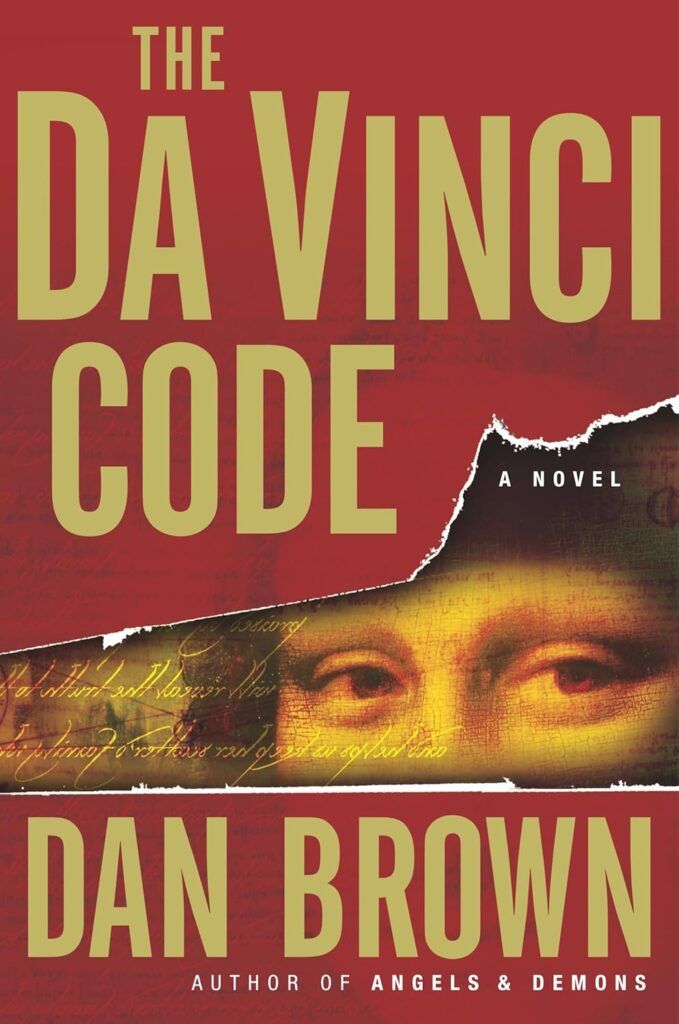
It began in 2003, when the New England writer published The Da Vinci Code, his fourth novel. That book was something of a last chance: Brown’s first three books were, he says, “commercial failures entirely. They did not sell any copies.” If the fourth failed, he planned to return to his previous career as a musician.
Instead, The Da Vinci Code was a staggering success, selling more than 80 million copies in 44 languages, helped in no small part by resistance from members of the Catholic church to elements of the book and its film adaptation. The next decade brought three more novels, all bestsellers, and three film adaptations.
And then – nothing.
It’s been eight long years since we last checked in with Brown’s renowned professor of symbology and amateur adventurer Robert Langdon in the pages of Origin.
And it’s been almost a decade since Tom Hanks donned Langdon’s trademark Harris tweed jacket and Mickey Mouse watch, in the film adaptation of Inferno.
This month, though, Langdon is front and centre in Brown’s instant bestseller The Secret of Secrets, and it’s just what readers have been waiting for. There’s a new creepy villain, a powerful secret organization, high-intensity chases, narrow escapes and lots of discussion about art, history, and science. Yes, Dan Brown is back, and in fine form.

Zoomer caught up with the 61-year-old author in Toronto during one of only three North American stops on his latest book tour.
Zoomer: Before we talk about the new book, let’s start by going back to the beginning. How did Robert Langdon come to you?
Dan Brown: I grew up on the campus of Phillips Exeter Academy, which is a prep school, so I grew up in a world filled with teachers. All the adults I knew were educators. And all of my babysitters – and the young people around me – were some of the best students in the world. I grew up in a very geeky world where learning was cool, so when it came time to write a hero, I wrote the heroes that I knew. There’s a little bit of my dad in him, there’s a little bit of Joseph Campbell in him. He sort of evolved out of having grown up in this very academic world.
Z: How much of you is in Robert Langdon, and how much of Langdon is in you?
DB: Langdon is kind of the guy I wish I could be. We share a passion for art, symbols, codes and some of these interesting, under-the-radar theories. But he has a much more exciting life than I do. I mean, he’s a globetrotter! I sit behind a computer and type. He’s also a whole lot smarter than I am. I remember saying that once in a talk, and a woman said, “Wait, I don’t understand. Everything he says, you have to think of.” I said, “Well, you gotta understand that when he walks by a painting and gives an off-the-cuff, perfect analysis of the symbolism in it, that took me three and a half days to research and write.”
Z: Did you envision him as an ongoing hero at that point?
DB: I didn’t, actually. I had an idea for Angels and Demons and wrote the novel.
And then I wanted to get far away from Baroque architecture, religious theories and anything to do with the Vatican; I’d had enough of that world. So I wrote Deception Point next, which was as far from that as possible: ice caps, a lot of high-tech. But by the time I was halfway through the book, I missed Langdon, and knew that the next book would be him. And then I wrote The Da Vinci Code.

Z: Did you have any models or influences in terms of your approach to thrillers?
DB: This sounds very random, but for things like description, I look to Of Mice and Men. That book, the first paragraph of every chapter, has a phenomenal sense of place, appealing to all of your senses, and that certainly influenced me. The work of Robert Ludlum, the international thrillers with these high stakes, influenced me. I hadn’t read any what you would call adult fiction until I was well out of college. You know, you just read all the classics in prep school and in university, and I was amazed by Shakespeare’s wordplay. That always interests me, that things have multiple meanings. In all my books, you can sort of feel that influence where I’m playing with the way words are used. Joseph Campbell was an enormous influence on me, his writing about symbolism and the power of myth, that whole notion, and the fact that there’s an archetype for a hero.
Z: Is there a moment when your path as a writer started?
DB: I was on vacation and found an old copy of a book called The Doomsday Conspiracy. I didn’t know who Sidney Sheldon was; it was a paperback just sitting on a dock of this place where we were staying. I picked it up and started reading, and I couldn’t stop. I thought, this is basically the Hardy Boys for adults. And I read all the Hardy Boys series! I thought I could do this. I could absolutely tell a story just like this. I sat down and wrote Digital Fortress, on spec, thinking, well what would happen next? And, about halfway through, I thought, who are you trying to kid? You don’t know how to do this. I had that moment where you take a long walk and say, no, you can do this, and finished the book, and the first editor who read it bought it. You know, the book didn’t do anything, but it got published, and it was my foot in the door. I just kept working and hopefully improving, and here we are.
Z: It took a while for that door to open fully, despite your foot in it.
DB: Yeah, my foot was in it, getting crushed for three straight novels as they were trying to slam the door. But I just kept working, and I think on some level I had faith that eventually things would work out. And so they did, quite well.
Z: Moving on to the new book: The Secret of Secrets is about noetic science.
Can you give us a capsule definition?
DB: Noetic science is the study of human consciousness, and specifically the study of
this notion that the human mind has the ability to affect the material world. Our thoughts can literally physically affect matter. It’s a fascinating field that studies ideas we would call paranormal but studies them from a very rigorous scientific place. When I started writing The Secret of Secrets, if you had asked me, do you believe in life after death? I would say, no, absolutely not; when you die, it’s a full stop, total blackness. It’s a computer whose power cable’s been cut; you’re done. Eight years later, having spoken to so many people who had near-death experiences, spoken to physicists, noeticists and read all kinds of accounts of not only experiences, but hardcore scientific experiments that have had results that you just look at and say, that’s impossible unless X, Y and Z, I’ve come out the other side. I never thought I would say this, but I’ve arrived in the camp where I believe that human consciousness works in a much different way than we believe and that it very, very possibly – and almost probably – survives the death of the physical body on some level. You know, nobody’s quite sure what that means, but there’s something that happens. I find that fascinating.
Z: Why do you find it so fascinating?
DB: I think because I’m a skeptical person at heart and it takes a lot to convince me of anything, and the science of consciousness I found very convincing. So everything I believe about the way my head works is backwards? It’s not creating my thoughts, it’s receiving my thoughts, for example. That’s sort of the first aha moment. We all love those aha moments where the world looks a little bit different to us. But beyond that, the reason I find it so fascinating is because it has enormous implications for our lives. It sounds crazy to say, but I no longer fear death. I’m not in a hurry, in any way, shape or form. I love life, but I don’t have that gnawing, oh my God, when it’s over, it’s over, sort of feel. And, as I said in the book, there’s a lot of science to suggest that a lot of the bad behaviour in the world is the product of our universal fear of death. Whether it’s materialism or prejudice or nationalism, those sorts of destructive mindsets and behaviours may start to dissolve as we learn more and more in the coming years about the nature of death.
Z: Do you feel we’re on the cusp of a paradigm shift?
DB:Without a doubt. I equate this to the moment in history when we all believed the Earth was at the centre of the solar system. We had a geocentric model of the solar system; it made sense to us, it’s how it felt, but there were anomalies. That star’s in the wrong place, that planet’s in the wrong place. Copernicus comes along and says, this model’s all wrong. We’re gonna put the sun at the centre, and people are like, that’s insane! How could the sun be at the centre? You know, that makes no sense. Well, let’s try that model. And all of a sudden, all the anomalies go poof, and everything fits. I think that’s where we are at this moment in history with respect to consciousness. I think a lot of the ideas in the book, materialist scientists are gonna go, no way! And in a few years, all these anomalies have evaporated, and maybe this model is closer to the truth than we ever imagined.
Z: It feels like The Lost Symbol planted some seeds for this book. You’ve brought Katherine Solomon back, for example. How long has this been percolating in your mind?
DB: You’re absolutely 100 percent right. When I wrote The Lost Symbol and introduced Katherine Solomon, really two things happened. One is, I like this notion of Langdon having somebody in his life, a relationship that had never turned romantic, but they were always sort of circling each other, waiting for the right moment. I thought that was sort of interesting, but really what I liked about Katherine Solomon was noetic science. And I became fascinated with a lot of the research for that book. But as I researched noetics, I realized, no, human consciousness is a book in itself. I really thought the book I would write after The Lost Symbol was going to be The Secret of Secrets, but I could not figure out how to get in. First of all, I didn’t know enough about consciousness to write an entire book about it. And it’s a very, very difficult thing to take a topic as ethereal as consciousness and write an urgent, relevant thriller set in the modern world; I couldn’t quite figure out how to do it. I went and I wrote something that was very, very urgent and technical and set in the real world, which was Inferno, about somebody who sees Dante as a prophet and decides to help the world with its overpopulation problem. I thought, okay, the book after this is going to be about consciousness. Still couldn’t figure out how to get into it, and I’m still reading all the time and learning. And really, there’s been so much advance in these ideas over the last 10 years while I wrote these two other books that when I finished Origin, I thought, now, there’s enough science on the table, my understanding is enough, that I can actually write this book. I set out thinking it would be a two or three year process, and it turned into, you know, a much longer process. But I learned a ton, and I’m really gratified with how the book came out.

Z: One of the great elements of your books is the marriage of setting and story. Why set The Secret of Secrets in Prague?
DB: As soon as I knew I was going to write about consciousness, I knew it had to be Prague. Prague is the mystical capital of Europe, and it has been since the 1500s, when Emperor Rudolf II invited all the mystics and seers and scryers and Kabbalists and alchemists, everybody came to Prague to help Rudolph communicate with the great beyond and ideally increase his political power by making great decisions. It didn’t work out so well for Rudolph, but Prague became the centre of that world. I love to use location as a character, and when it comes to Langdon, Prague is perfect: it’s castles, it’s crypts, it’s hidden passageways. It just feels just right. Mystical.
Z: Was there anything you discovered about Prague that you wanted to use in the book that you just couldn’t figure out a way to?
DB: Oh, tons and tons and tons. My job as a writer is to be an editor, to respect my readers’ time, to give the reader just enough to keep things fascinating, but not so much that they hit a brick wall. You’re reading a novel to find out what happens to Langdon, not as a Prague travel guide, but you also simultaneously want to learn about Prague, so it’s really a balancing act of figuring out how to titrate that information in a way that it feels relevant to the story. There’s so many things in Prague that I ended up falling in love with, and some of them I couldn’t add, and some of them I loved so much, I changed the entire plot to make sure that I use them. One of them is a mirror maze.

Z: I love that sequence.
DB: It was fun.
Z: Which is a good segue to my final question: These are very serious and thrilling and compulsive novels. But as I was reading The Secret of Secrets, I was reminded of a moment in Origin where Robert Langdon struggles to unpack what is eventually revealed to be the Uber logo on a hire car. And in this book, you’ve incorporated an acrostically scrambled version of your real editor as a fairly significant character. There’s a tremendous sense of self-awareness in moments like that, and a kind of joy. Are you having as much fun as it seems like you’re having?
DB: I’d love to tell you this is miserable work, but it’s a lot of fun. It’s incredibly hard, and there are moments that you go [Exaggerated sigh] this is too hard. But I think, on some level, I do stuff like that, like make [Langdon’s fictional editor] Jonas Faukman into [Brown’s real-life editor] Jason Kaufman, or vice versa. You’ve got this editor who’s in a terrible situation, and what’s funny about it is he’s like, “I can find my way out of this, because I’ve edited so many thrillers, I know what to do in these situations.” And of course, nothing works. None of it works. It’s all fiction. I enjoyed writing that character, and [Kaufman] had fun editing it. He said, “I can’t edit myself, I’m not sure what to do here.” It’s a daily reminder, like, look, this is fun!