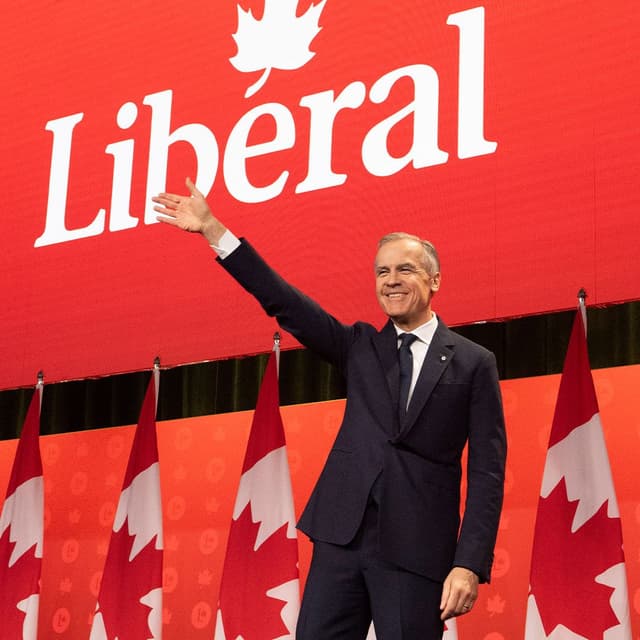
Prime Minister Mark Carney wasted no time outlining to Canadians his game plan for confronting the big issues of the day, whether it is sparring with the U.S. on tariffs, navigating global trade challenges, stimulating economic growth or defending national sovereignty.
The 60-year-old Liberal leader peppered his election-night victory speech with grand nation-building plans: he promised to turn the country into “an energy superpower” that will allow us to “win this trade war” with the U.S. and “build the strongest economy in the G7” so that we can rebuff President Donald Trump and become “masters in our own home.”
An ambitious program like this will occupy a great deal of the government’s attention, political capital and financial resources over the next few years. There’s a risk that, as the Liberals push their nation-building agenda forward, less prominent issues – like the financial insecurity facing many Canadians, especially retirees – may be pushed to the side.
“The Liberals made almost no attention to seniors’ issues during their campaign,” said Anthony Quinn, chief operating officer of CARP (a partner of ZoomerMedia). “We’re urging the prime minister to prioritize the well-being of Canada’s seniors, who have been instrumental in building our nation’s prosperity.”
To ensure older Canadians remain on the government’s radar, CARP has identified five policy changes that could be implemented to improve the financial well-being of the older population.
Let Retirees Control Their Savings
Updating the rules governing Registered Retirement Income Funds (RRIFs) has been on CARP’s wish list since these retirement savings vehicles became popular in the ’80s. Right now, when you turn 71 and wind down your Registered Retirement Saving Plan (RRSP) into a RRIF, you must begin making annual withdrawals based on a prescribed government formula. Many complain that the RRIF withdrawal rules force them to cash in on their savings even if they don’t need the money. “Changing the rules to give seniors more control of their money would help alleviate worries that they will outlive their retirement savings,” says Quinn. “The government will eventually get their tax revenue; they might just have to wait a little longer,” he adds.
Address Income Insecurity
In this era where everything seems to be twice as expensive as it was 10 years ago, seniors living on a fixed income are struggling to keep up with the cost of living. The Canada Pension Plan (CPP) is available to those who have paid into it once they hit 60. The Old Age Security (OAS) program and the Guaranteed Income Supplement (GIS) are government initiatives that prevent older people from falling into poverty. However, Quinn hears from members that the monthly benefits from OAS and GIS have not kept pace with the rising costs of shelter, heating, hydro and food, leaving many struggling with financial insecurity and housing instability. In 2022, those over 75 received a 10 per cent increase to their OAS benefits. To ensure all seniors can retire in dignity, Quinn says this boost should be extended to those between the ages of 65 and 74. “Groceries aren’t any less expensive because you’re younger than 75,” he notes.
Reduce Tax On Working Seniors
Some people over the age of 65 work because they want to be engaged in society. However, an increasing amount need a part- or full-time job just to make ends meet. The problem is that if you’re a working senior who makes more than $24,000 per year, your income will be subject to income tax and/or benefit clawbacks – a major disincentive for senior job seekers. “The government should stop penalizing people for working and allow them to keep a little more of their paycheques,” says Quinn. He suggests that the government should increase the amount that those 65 and older can earn tax-free to incentivize their ongoing participation in the workforce. This will have the added benefit of allowing these seniors to defer their CPP or OAS until age 70, thus increasing the amount they receive.
Improve the CPP’s Survivor Benefit
Quinn says he hears from many members, often women, whose financial security suffers a tremendous shock when their spouse passes away. Part of the reason this happens is that when one partner dies,
the survivor can only access up to
60 per cent of the deceased’s CPP payments. The maximum amount is $859 per month but most people only receive about $320. For those who didn’t work outside the home and don’t qualify for CPP of their own, it’s simply not enough. “This situation really hurts,” says Quinn. “Your expenses remain the same but you’re trying to get by on 60 per cent of what used to be your income.” Because the growth of the CPP investment pool has far exceeded expectations, Quinn says he feels “there’s room in the plan to increase that survival benefit.”
Build a Dental Plan for All
Quinn lauds the Canadian Dental Care Plan (CDCP) for helping many lower-income retirees receive timely treatment they couldn’t otherwise afford. The current eligibility rules require that you must be a Canadian resident, file a tax return and have an adjusted family net income below $90,000. On top of this, you won’t be eligible for the CDCP if you have dental coverage through a private insurance plan. “We have low-income retirees who have extended health insurance policies to cover, say, physiotherapy,” explains Quinn. “But these people, who may only get minimal dental coverage as part of their private plans, are completely shut out of the national plan.” He feels the government needs to work with the insurance industry to ensure this exception is fixed and that “seniors aren’t penalized financially for having private insurance.”
RELATED:
Seniors Need Not Apply: Only Canadians Aged 18-64 Can Receive New Federal Disability Benefit
Why Fraud Against Seniors is Growing, and 5 Simple Ways to Protect Yourself