The problem with most financial self-help books is that they tend to be a bit of a slog. Readers must wade through complex advice delivered in irritatingly patronizing tones while grappling with tedious charts and confusing mathematical formulae, off-putting for even the moderately financially literate.
David Chilton broke this mould when he released The Wealthy Barber at the dawn of the ’90s. Then in his mid-20s and living in Waterloo, Ont., he started a career as a stockbroker before discovering that his real strength lay in teaching financial literacy.
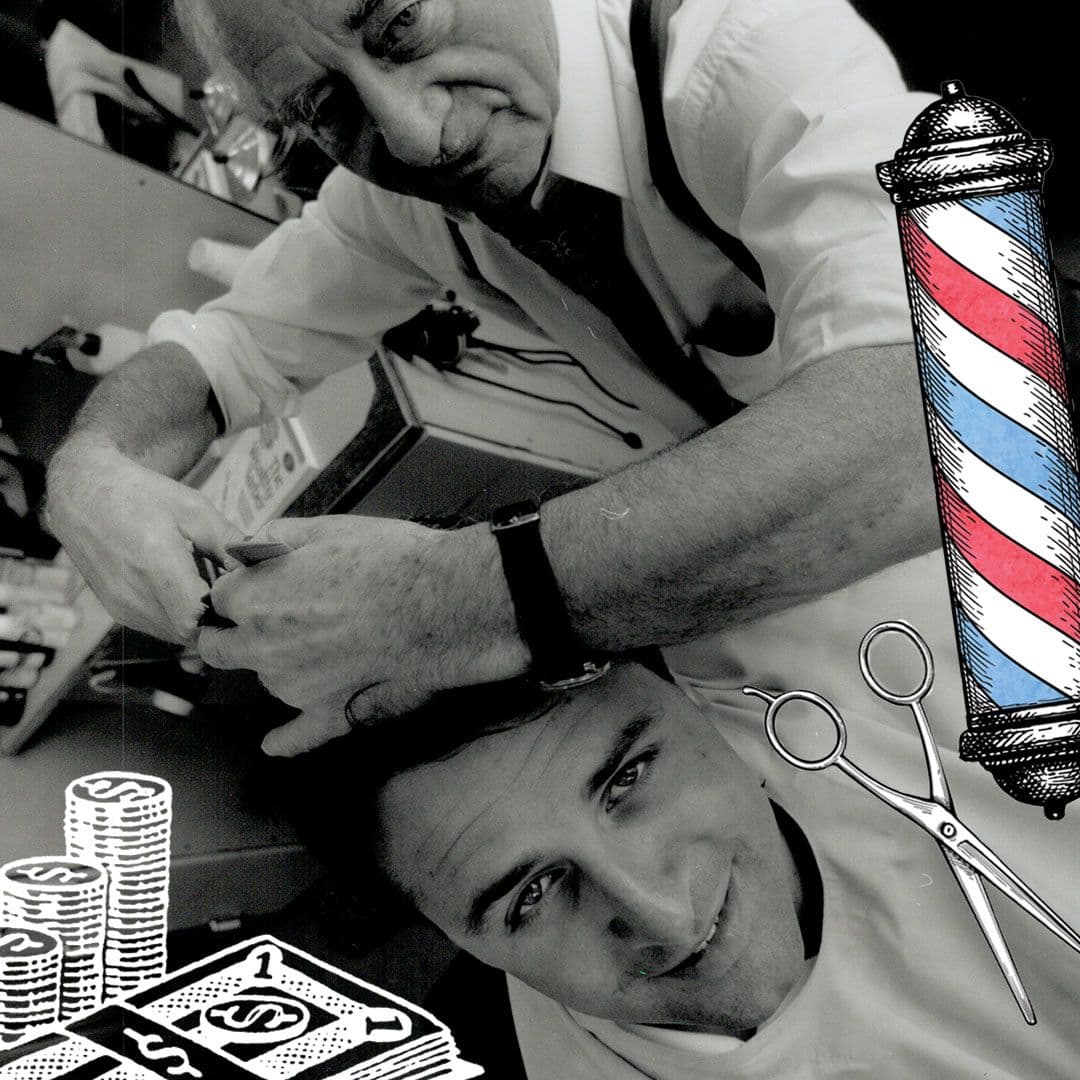
That’s when he came up with the idea of writing a narrative tale about a small-town financially savvy barber, Roy Miller, who doles out advice while he cuts hair in his Sarnia, Ont., shop. Roy shows readers on how to become financially secure while simplifying and demystifying the often bewildering process. His core advice was simple: Pay yourself first by saving 10 per cent of all that you earn and investing it for long-term growth. It’s a formula that has helped many Canadians become financially secure.
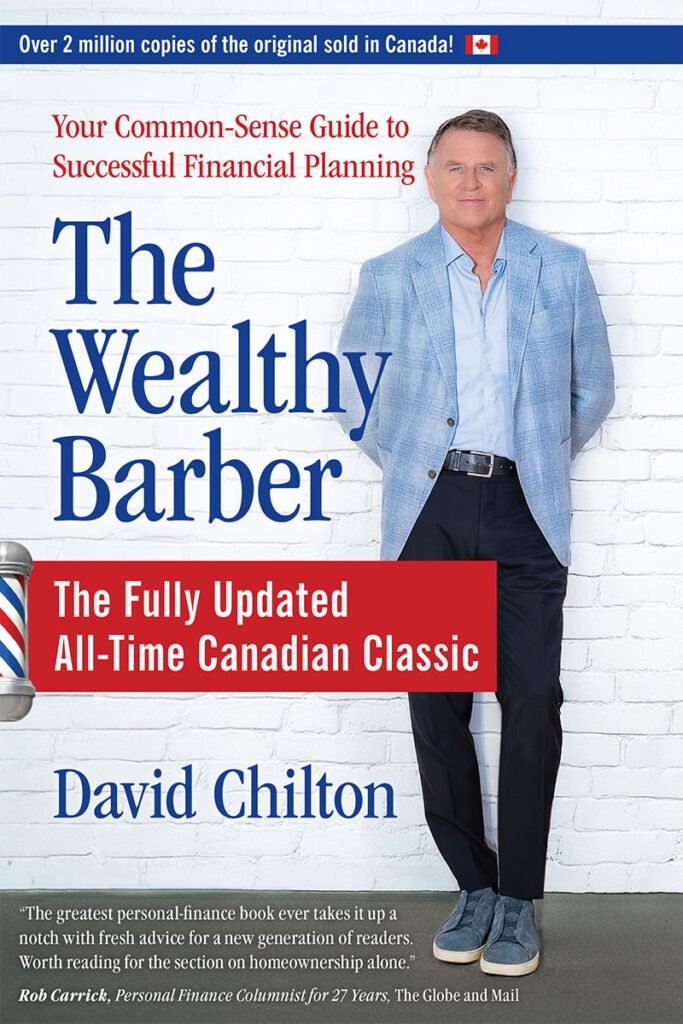
Since The Wealthy Barber’s initial publication, sales have topped two million, making it one of the best-selling books in Canadian history. Its popularity, based largely on the fact that it was not just aimed at people who already had money, made Chilton a household name. He subsequently landed a role on CBC’s Dragon’s Den, published the Looneyspoons and Crazy Plates series of cookbooks and became an investor, in-demand speaker and popular podcaster.
Recently, the 64-year-old released an updated version of his seminal book, which takes into account the drastic shifts in financial landscape over the 36 years since its original publication. Besides adding new characters (including a smart-aleck Gen Zer, a successful millennial and a recent immigrant) he adapts his advice to include the huge increases in housing costs, higher inflation, the arrival of crypto and the dawn of AI.
Zoomer caught up with Chilton, who splits his time living in Wellesley and Sarnia, Ont., to discuss how an older and wiser Roy the barber has re-shaped his financial wisdom to suit the younger generations.
Peter Muggeridge: I understand you wrote the original The Wealthy Barber out by hand. Did you do the same for the updated version?
David Chilton: Yes, and I wrote the updated version on the same card table that I wrote the original one on. A different chair but the same table. It’s broken. My dog knocked it over several times.
PM: How did you make sure that your new book accounted for all the new financial realities?
DC: I have an unusual writing process where I test it as I go. It’s why the books have good flow and seem to resonate because they’re being run by the target audience – I input their suggestions, their questions and their comments as I go. The downside is the amount of time involved. The updated version took 16 months full-time – all day, every day and into the evening. Of course, the editors were pulling out their hair.
PM: Did you find the writing/researching process much harder this time around?
DC: I was 63 during most of the writing, and many times I definitely felt my age. It’s not the same as when you were 27, right? Up at 1 a.m. editing, and when we actually got to the final editing, we were up till 3 a.m. a lot – I’m old now!
PM: How did you come up with the plot device of a barber who dishes out wisdom?
DC: I was actually writing a book called The Ultimate Guide to Losing Money, about all the mistakes people make with their investments. One night I was watching Cheers and I saw the barroom setting, the ensemble cast, the humor, and I thought, “That’s a better way to go.” I originally called it The Wealthy Bartender. I moved it over to the barber shop. This may sound corny but I still remember the moment: it was a Thursday afternoon and I had finished the outline, drove over to my parents and ran the idea by them. My father, who’s a brilliant man (he’s still alive), said: “To be honest, I think it’s kind of stupid.” That’s when I knew then I had a winner.
PM: The concept was so unlike any of the financial self-help books that were being published back then. What was the industry reaction?
DC: The [early] feedback was mixed – in one case quite negative. That was devastating as I had put so much time into it. But then I got lucky. I ended up testing four sample chapters on my slo-pitch team – 11 beer-swigging Canadians, some illiterate. They all loved it. They got pulled right in by the story. But I did not imagine it would become the success that it did.
PM: Why do you think the first book was so successful?
DC: There weren’t many books back then about financial planning. And I knew from dealing with young people that they didn’t understand what an RRSP was, what its advantages and disadvantages were. I felt that you had to go back to basics and really break it down for people to truly benefit from it. The new book still speaks to the average audience member. When I was doing the pre pre-research for the updated version, I went to Conestoga Mall (in Waterloo, Ont.) and asked 20 people: “What is an ETF?” One person got it right. One out of 20.

PM: Does your overall message remain the same or have you adapted it to account for the shifts in the financial landscape?
DC: It’s the same – pay yourself first. It’s corny, it’s trite, it’s in every financial-planning book – but it’s still the most important commandment. But how, exactly, do you do it? Back when I wrote the original, there were just RRSPs. Now there are RRSPs, TFSAs, FHSAs, RESPs, disability savings plans. How do you weave all that together, not bore people and show them how to prioritize and how to make the comparisons? That was the big challenge in putting it all together.
PM: Do you think it’s harder today to save and get ahead than it was for your readers back when you launched the original?
DC: I would argue that it’s quite a bit tougher now than it was in 1989 when the book came out. A lot of boomers don’t recognize what has happened with housing costs. – which have gone up two to three times, depending on where you live. Incomes have risen but housing costs have gone up much faster. Interest rates are down now versus where they’ve been on average, that offsets some of the pain – but not all of it.
PM: I thought your chapter on the difficulty young people today have in saving and cutting unnecessary spending really hit the mark.
DC: We’ve always had a problem with giving into our impulses. But now, with social media and algorithms, companies know exactly how to exploit it. Everybody’s out there trying to get at our weaknesses and get us to spend money, and they have become very good at it. And it’s so easy to give into it, especially with one-click buying and tap-buying. I’m the wealthy barber and I have trouble resisting all this stuff! I write at length about putting in a 24-hour period after you’ve made the decision to major purchase. And a lot of people have told me: “Hey, I’ve started doing that and it’s made me walk away from a few purchases.”
PM: RRSPs have come under a lot of fire lately, but Roy the barber still believes they have merit.
I don’t normally say stuff like this, but I’m an expert on the RRSP versus TFSA math. And all the people out there who are blasting RRSPs are doing a disservice. RRSPs aren’t always the way to go and TFSAs have a tremendous amount to offer and can be a better choice. But RRSPs are getting unfairly criticized by people who truly don’t understand the math. This section was tested over and over again to make sure everybody understood exactly how it works. And I hope it makes a fairly big difference going forward.
PM: Will this be the final edition of The Wealthy Barber?
DC: I’m very proud of this book but it will be my last one.
PM: So what’s next for David Chilton?
DC: I’ve had a lot of fun the last few years putting out the videos for my podcast, which has gone over wonderfully well. We’ve been lucky to get the top guests. I’m gonna continue with that. I may write again, but not on personal finance. I’ve always wanted to write a play and I’m experimenting with a lot of ideas, but I wouldn’t be doing that as a deadline-oriented project. So yeah, I’m not sure exactly what’s next. Plus, remember, I’m old, you know, I’m almost 65 – so I’m not sure how much longer the “what’s next” question will be relevant!
(This interview has been condensed for clarity.)