As the Toronto International Film Festival celebrates its 50th anniversary in September, it seems to have been with us forever. But there’s still something miraculous – and precarious – about its enduring reign as North America’s highest summit of world cinema. TIFF’s unicorn status as both a major industry hub and film’s largest public festival grew from a uniquely Canadian passion project – a polyamorous romance with Toronto cinephiles, indie filmmakers and Hollywood stars.
First named the Festival of Festivals, it started out as a reckless fling on the frontiers of ’70s pop culture. Then, on its red-carpet ride to Oscar glory in the ’80s and ’90s, it matured into a serious long-term engagement. In the last quarter-century, TIFF settled into a durable, if rocky, marriage with the film world, while paying down a mortgage on a stunning home it could barely afford. Now, after weathering existential crises from the streaming revolution, the COVID-19 pandemic and an actors’ strike, it deserves to celebrate.
For me, TIFF has been an ever-extending family. I worked for it as a driver in the early ’80s, hauling film cans up aisles and fire escapes to projection booths. I’ve attended it as a film critic for four decades, premiered a few documentaries at the festival as a filmmaker and then became its historian – writing a book to mark TIFF’s 25th anniversary (Brave Films, Wild Nights). Yet no matter how close you get to this Tilt-a-Whirl circus, in the blur of films, stars and parties, its magic remains elusive. It’s there, and then it’s gone. Fifty years later, we’re left with a flickering kaleidoscope of phantom images and encounters, not unlike cinema itself.
Here are a few memorable moments.
1. On the Waterfront
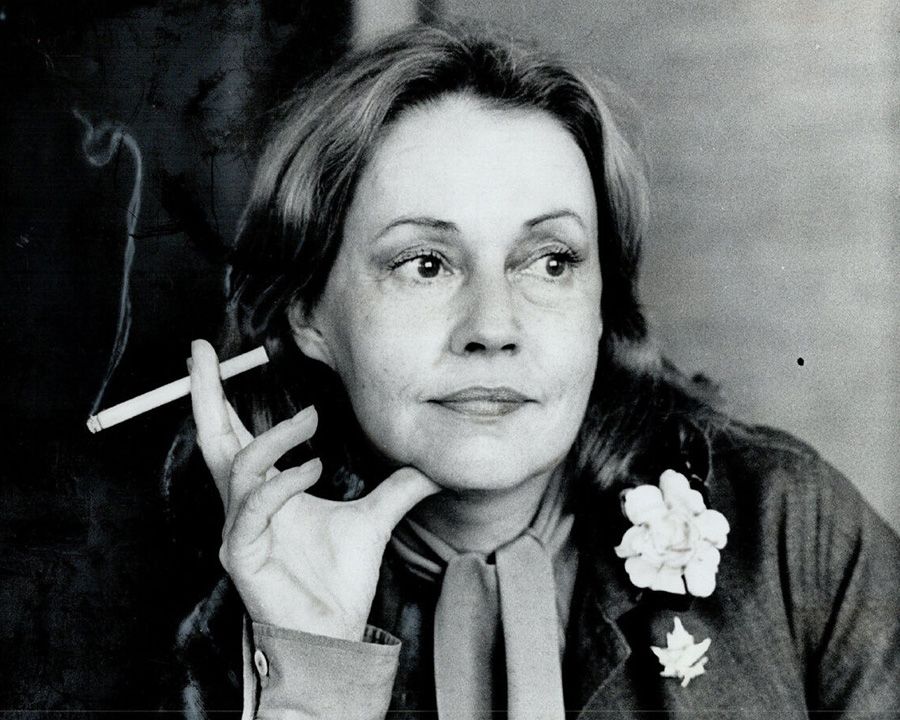
TIFF’s founding director, Bill Marshall, dreams up the Festival of Festivals with Canuck high rollers Dusty Cohl and Henk Van der Kolk on the terrace of the Carlton Hotel in Cannes. In 1976, the inaugural edition is staged at the Ontario Place Cinesphere, and while the Toronto waterfront is no substitute for the French Riviera, there are yachts on the horizon; and a bona fide French cinema legend, Jeanne Moreau, lights up the red carpet for the opening-night gala, Cousin, Cousine. Marshall had promised to bring a murderers’ row of big names to the event, including Warren Beatty, Jack Nicholson, Julie Christie and Martin Scorsese. None of them show up. But they all would come … eventually. And the next year, other stars do make an appearance, including Liza Minnelli, Donald Sutherland, Henry Winkler – and Lawrence of Arabia’s Peter O’Toole, whose only demand is a steady supply of Pakistani hash.
2. Sex, lies and Robert Lantos
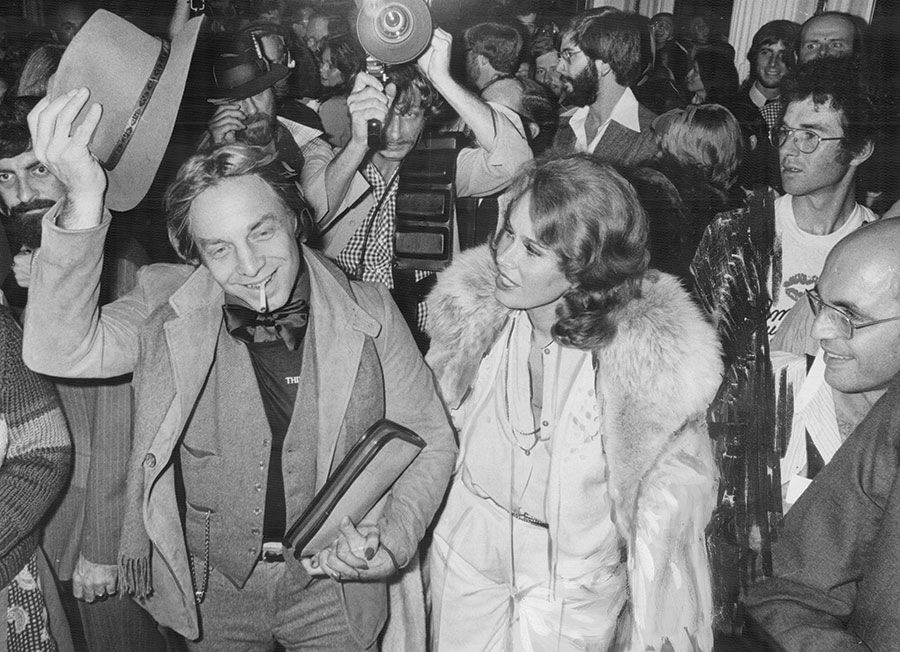
A near riot of moviegoers gives the festival its baptism of fire, creating the kind of viral buzz money can’t buy. All because the Ontario Censor Board decides In Praise of Older Women is too hot for the good people of Toronto. A week before its 1978 premiere, the censors demand a two-minute cut to a tepid sex scene and the media goes bananas. The film’s Hungarian-Canadian producer, Robert Lantos, refuses to cut it, making front-page news. Finally, a homegrown movie people are dying to see! Then the festival accidently oversells the premiere by issuing plus-one tickets that are supposed to be singles.
Amid a torrential rainstorm and a transit strike, mayhem erupts as hundreds of drenched ticket holders try to push their way through the glass doors of the Elgin Theatre, while Lantos and his stars – including Karen Black, Marilyn Lightstone and Helen Shaver – ride to the red carpet in five horse-drawn carriages. A fire marshal holds up the screening to clear a crowd sitting in the aisles, as Wayne Clarkson makes his white-knuckled debut as festival director. From then on, the whole affair would thrive on a frantic fear of not being able to get into films. Lantos goes on to become Canada’s one and only movie mogul. And In Praise of Older Women sets a precedent for spotlighting Canadian films as opening-night galas, including a string of classics: The Grey Fox, The Decline of the American Empire, Léolo, The Sweet Hereafter and Dead Ringers.
3. Oscar, Oscar!
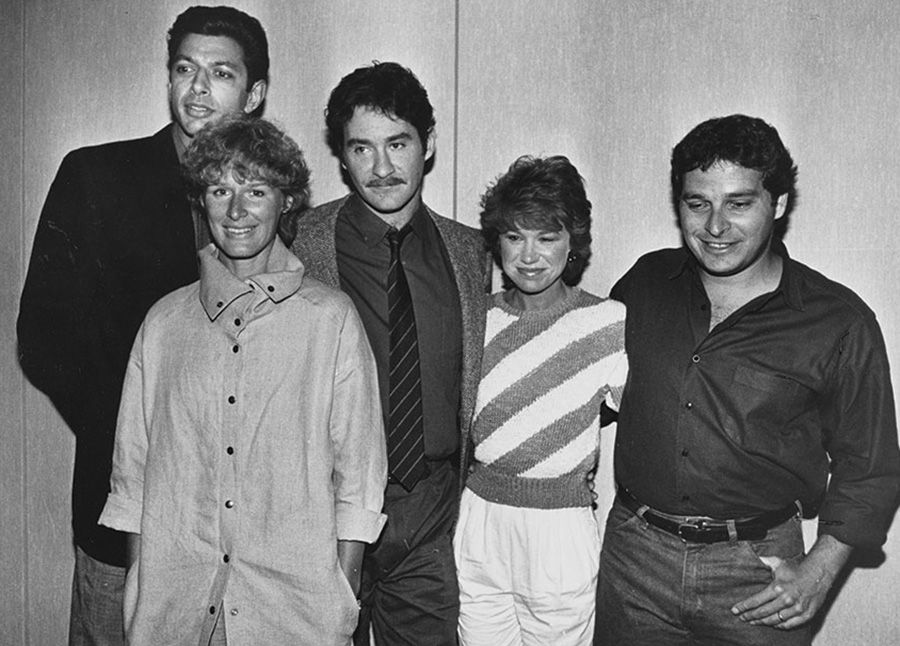
Chariots of Fire proves that the festival’s avid audience of film lovers are the ideal test market for sussing out Academy Award contenders. After showing in competition at Cannes, this tale of Brit Olympians sprinting for gold is certified as a crowd-pleaser in Toronto in 1981. Winning the festival’s first People’s Choice Award presages its Best Picture triumph at the Oscars. Two years later, The Big Chill comes to town cold. Zero hype. It’s a studio film with a pack of rising stars – William Hurt, Glenn Close, Jeff Goldblum and Kevin Kline – all of whom show up. And it hails from Lawrence Kasdan, who made his sizzling directing debut with Body Heat after scripting Raiders of the Lost Ark and the first two Star Wars movies. But Columbia’s studio bosses were baffled by The Big Chill – they couldn’t imagine people wanting to see a movie about college friends who sit around talking. So, with nothing to lose, they give the world premiere to the festival for its opening-night gala. After winning the People’s Choice prize, and three Oscar nominations, The Big Chill becomes a generational landmark. And it further establishes TIFF as an Oscar springboard – be it movies the studios don’t know what exactly to do with (see 2000’s Best Picture American Beauty) or indie gems like Precious (2009), which received a nom, and winners Slumdog Millionaire (2008) and The King’s Speech (2010).
4. Dancing with the stars
Those old enough to remember the festival’s early days often complain about how it has “gone Hollywood.” But courting Tinseltown was always part of the Bill Marshall plan. And it comes to fruition with a series of gala tributes to Robert Duvall, Martin Scorsese and Warren Beatty from 1982-84, hosted by celebrity critics Gene Siskel and Roger Ebert. The Beatty tribute takes the cake and ushers in the era of parties segregated by velvet ropes and VIP rooms. At the giant bash – which was held at the Copa in Yorkville – a reporter trying to get close to Jack Nicholson’s table holds up a notepad that reads, “Want to dance?” Jack mouths, “No, thank you,” then turns to his companion and says, “Pity she used the wrong verb.”
5. Roger that!
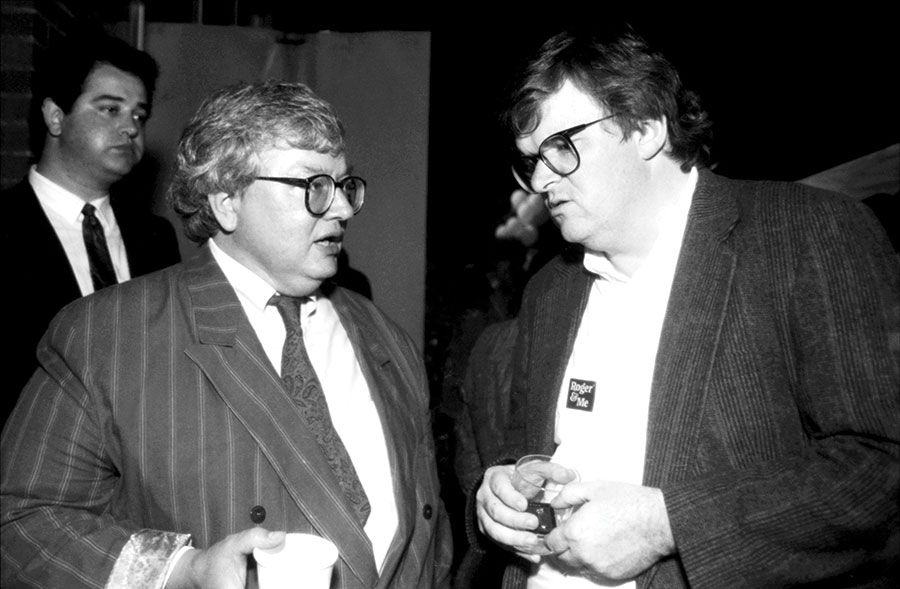
Michael Moore drives up to the Canadian border in Sarnia, Ont., heading to his festival debut with Roger & Me. Asked if he has anything to declare, the unknown dude from Flint, Mich., reveals his boxes of swag: ball caps, T-shirts and 5,000 lint rollers. The customs agent is puzzled. Moore explains that a GM lobbyist said that Flint’s 30,000 laid-off auto workers could always make lint rollers, another product Flint was famous for. Moore, who mortgaged his house to make Roger & Me, had to beg the festival to look at it after he’d missed the submission deadline. He met programmer Kay Armatage in a New York apartment, pulled some film reels out of a gym bag and showed it to her on an old Steenbeck editing deck. By the time Moore hits Toronto in 1989, he has stirred up so much buzz that the premiere of Roger & Me – crammed with people sitting in the aisles of a small theatre in the Royal Ontario Museum – is another fire-marshal fracas. It sparks an instant bidding war. Disney offers Moore $1 million. Harvey Weinstein, wearing Mickey Mouse pajamas, corners him in a hotel corridor and offers $1.5 million. Then, after the movie wins the People’s Choice Award, Warner Bros. buys it for $3 million. Roger & Me, which Moore made for $275,000, grosses $12 million and changes the game of documentary filmmaking.
6. If you build it, they will come
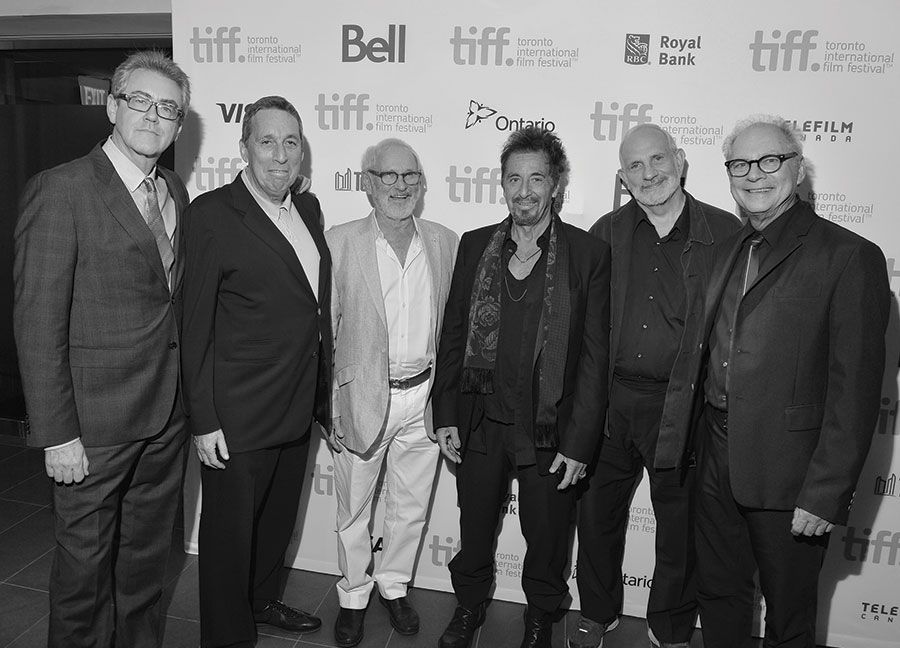
In 1994, the Festival of Festivals morphs into the Toronto International Film Festival as Calgary-born Piers Handling rises from the programming ranks to rule as director and CEO for a quarter century. His dream is to build a state-of-the art cinema palace. Kismet strikes in 2000 when he hears that Canadian comedy director and Ghostbusters godfather Ivan Reitman is looking to do something meaningful with a plot of downtown land inherited from his parents, who came to Canada as Holocaust survivors. Handling and cohort Michèle Maheux, TIFF’s COO, make their pitch over a posh Italian dinner. “Something clicked and we became friends,” Maheux recalls. “Years later, whenever Ivan was in town, we’d have martinis or go for dinner.” Handling compares financing the TIFF Lightbox to making a Hollywood blockbuster, with the 2008 recession landing in the thick of its $194 million capital campaign. But in 2010, the ribbon is cut on the building in what is now Reitman Square, with a plaque to commemorate the family’s heritage. “It was a perfect alliance, the way the stars aligned for that project,” he adds. For Reitman, who died in 2022, it was a homecoming. Before conquering American showbiz, alongside Canadian comedy legends like Dan Aykroyd and Lorne Michaels, he had cut his teeth producing early David Cronenberg films. As a Hollywood mogul who then honours his familial ties with a home for high cinema, he brings his career full circle with the kind of art-commerce alchemy that TIFF is famous for. “And the fact that the next generation has embraced the building,” says Maheux, “was a big part of Ivan’s plan.” They include his kids – director Jason and writer/actress Catherine – who have both presented films in the Lightbox.
7. For the love of Borat
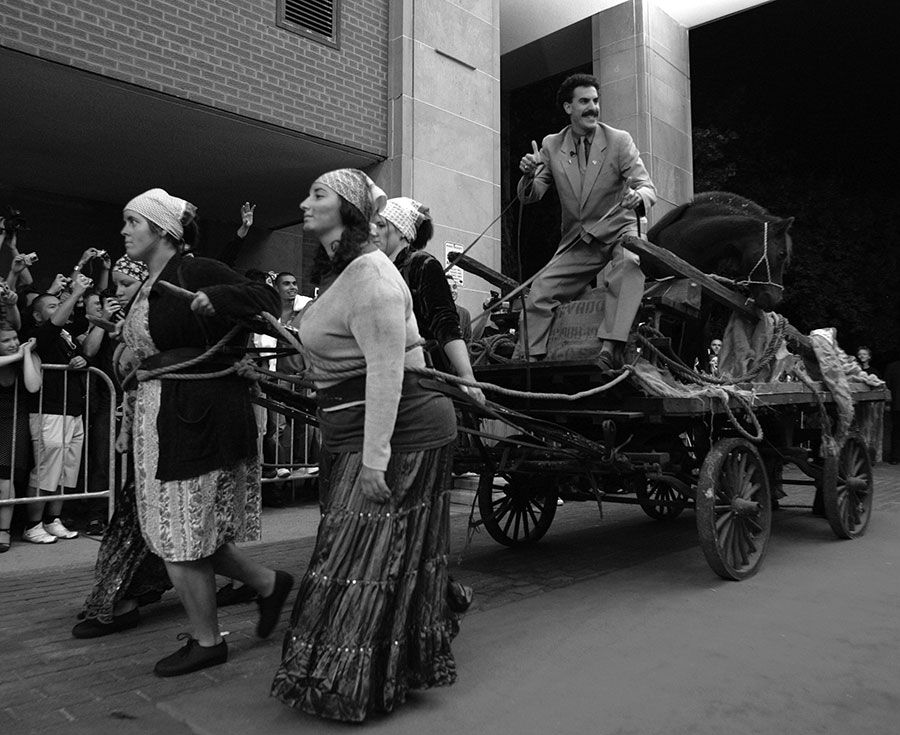
A festival thrives on the unexpected, and sometimes magic results from chaotic mishaps. For the 2006 Midnight Madness premiere of Borat: Cultural Learnings of America for Make Benefit Glorious Nation of Kazakhstan, Sacha Baron Cohen arrives in character at a downtown theatre in a carriage pulled by a team of faux-Kazakh peasant women. But the packed screening grinds to a halt when the projector breaks down. As technicians try to fix it, Cohen and the director, former Seinfeld writer Larry Charles, are regaling the crowd with onstage banter when Michael Moore emerges from the audience to join the conversation. The screening is eventually postponed. But the audience gets treated to an improv master class in mockumentary and documentary verité by its leading innovators.
8. Brangelina bedlam
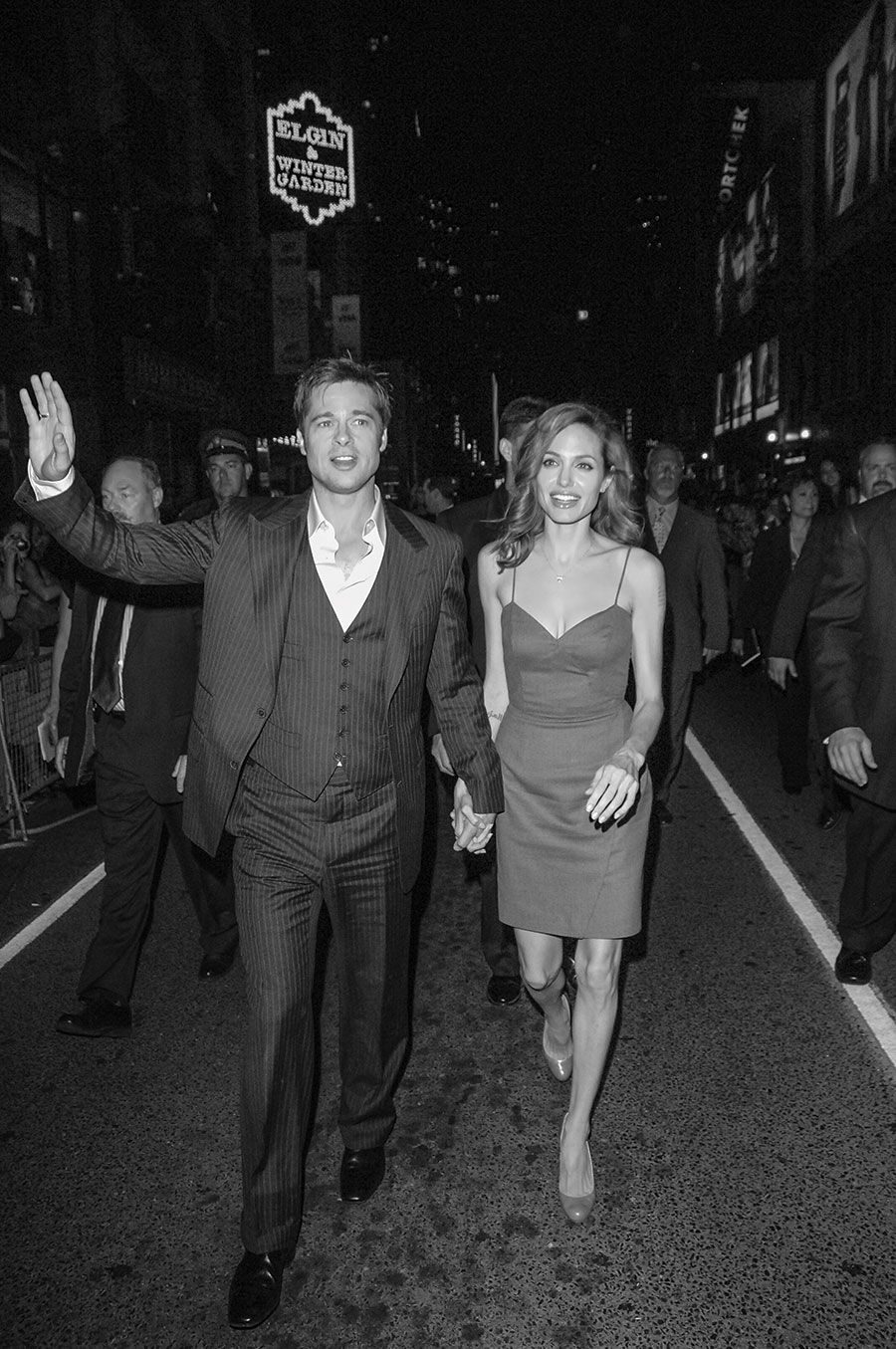
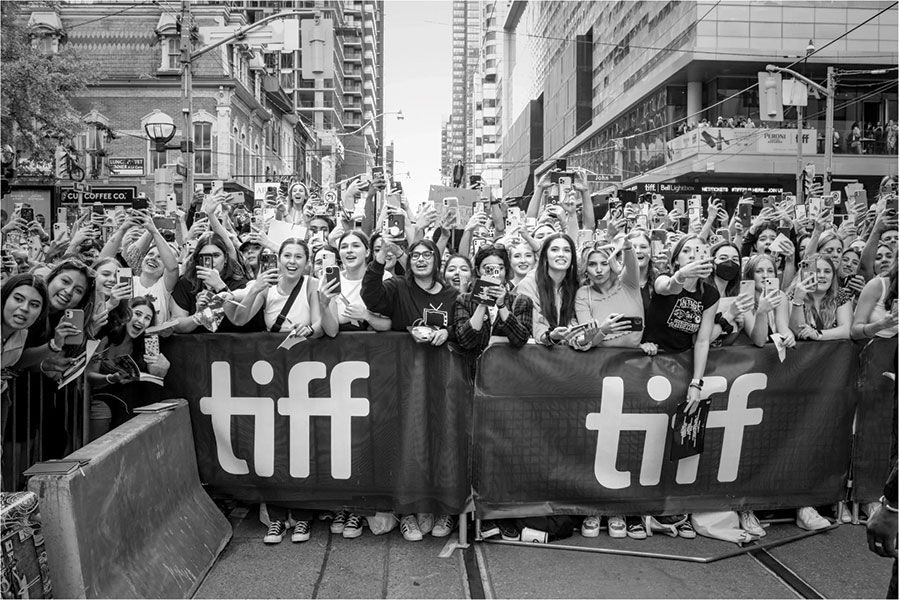
Brad Pitt and Angelina Jolie are on top of the world – the most sensational Hollywood couple since Elizabeth Taylor and Richard Burton. In time, the Brangelina fairy tale, like Liz and Dick’s, would implode. But in 2007, when their limo pulls up at the Elgin Theatre, their flush of fame, romance and sex appeal is in full bloom. Thousands of fans pack Yonge St., which has been closed to traffic for the premiere of Pitt’s The Assassination of Jesse James by the Coward Robert Ford. “As soon as the two of them step out of the limo, it’s like Beatlemania,” recalls Handling. “The screams are just ear-shattering.” Instead of giving a wave and working the red carpet, the couple peel away to sign autographs along the barricades. “It became dangerous,” says Handling. “We underestimated the crowd size and the frenzy. The barricades were almost tipped over as people pushed those in front.” With social media still in its infancy, seeing movie stars in the flesh, unobstructed by phones, is the kind of live thrill a festival was made for.
9. Rockin’ in the film world
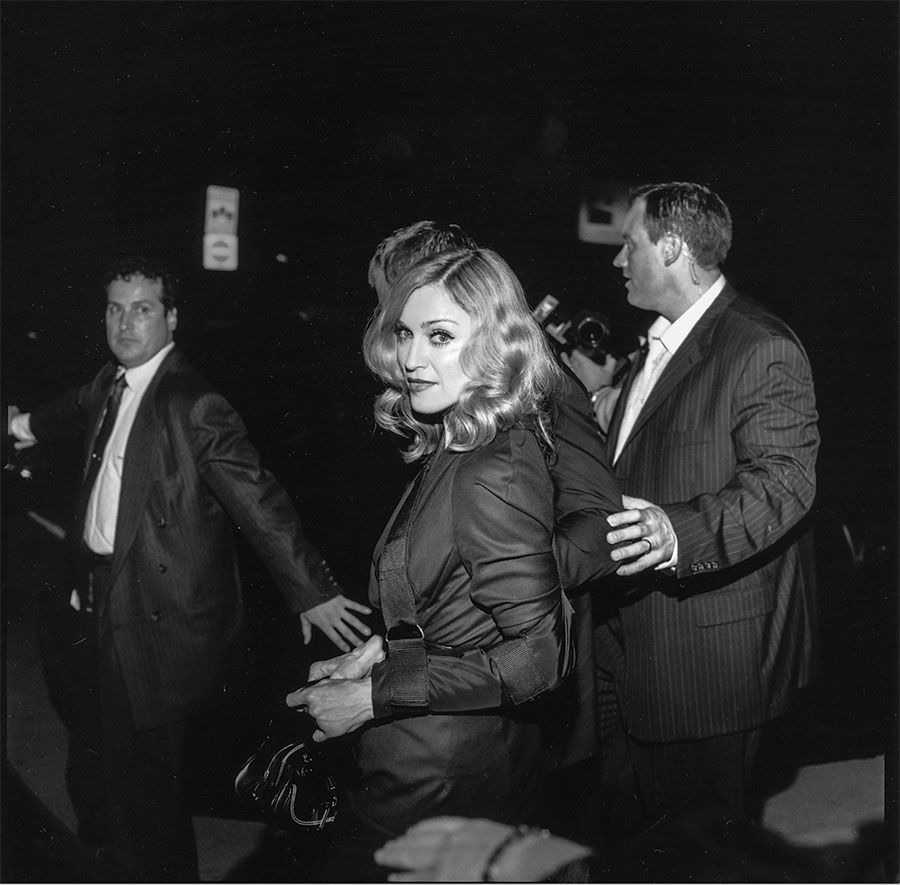
When rock stars and pop divas hit TIFF’s red carpet to promote movies – Bruce Springsteen, Madonna, Bono, Harry Styles, Taylor Swift – they bring a peculiar calibre of celebrity. The first is Robbie Robertson, who serves on the Canadian film jury in 1978 without bothering to see the films. Fresh from The Last Waltz, he holes up in his hotel room after ordering a case of Dom Pérignon, the hotel’s entire supply. Marshall and Clarkson come up to investigate and find a party raging mid-afternoon, with Robertson and Ronnie Hawkins carrying on with an array of local talent: “The room was filled with women,” says Clarkson. “It was a true rock ’n’ roll fornicatorium.” The vibe is more sedate in 2022, when Swift premieres her directing debut, All Too Well: The Short Film. It turns out she’s a film geek. “She really surprised me,” says current TIFF CEO Cameron Bailey, who interviewed her onstage after the premiere. “She knows a lot about movies, especially ’70s American cinema. We talked about her favourite actors and films from that era, like Five Easy Pieces. We talked about lenses!”
10. The heart of the matter
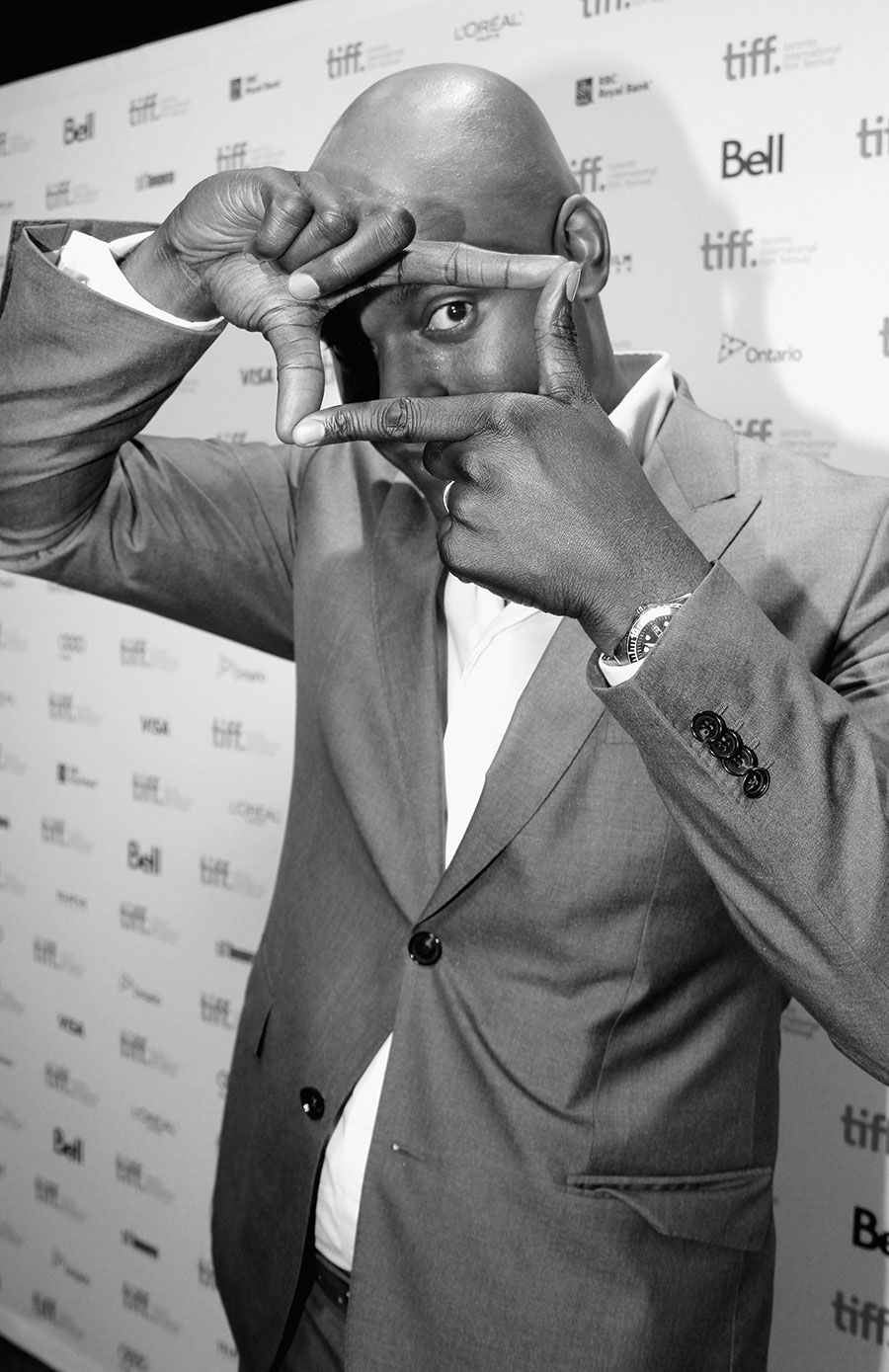
Celebrities stoke the fans, the sponsors and the media. But when the planes hit the Twin Towers on 9/11, the glamour was vaporized midway through the 2001 festival. With all eyes glued to TVs, watching something that looked like a movie, the day’s screenings were cancelled. TIFF then quietly came back to life the next day with no red carpets, no press conferences, no parties, no sponsor intros, no trailers. Just the films and the filmmakers. Handling says this enforced austerity produced “the most amazing festival I’ve ever witnessed.” Fast-forward to 2023, when Cameron Bailey pulls off a starless red carpet with the first animated film to open the festival, The Boy and the Heron. Directed by Hayao Miyazaki, the octogenarian legend of Japanese animation, it hadn’t been outside Japan when Bailey flew to Tokyo alone, drove to the fabled Studio Ghibli and watched it by himself in a screening room. He didn’t meet Miyazaki, nor did the director attend Toronto’s world premiere. With no stars, this foreign-language fable of a boy migrating between the living and the dead casts a spell of pure magic over the audience. At the Oscars, it beats out Sony’s Spider-Man: Across the Spider-Verse for Best Animated Feature. And the festival carves another notch in a history of beating Hollywood at its own game.
A version of this article appeared in the Summer 2025 issue with the headline ‘The Little Festival That Could,’ p. 62.
RELATED:
Great Adaptations: 10 TIFF Films Inspired by Literature
Ready for Their Close-Ups: Our Favourite Celebrity Moments from TIFF 2024
Steaming Up the Screen: Older Movie Stars Are Pushing Boundaries in the Buff at TIFF