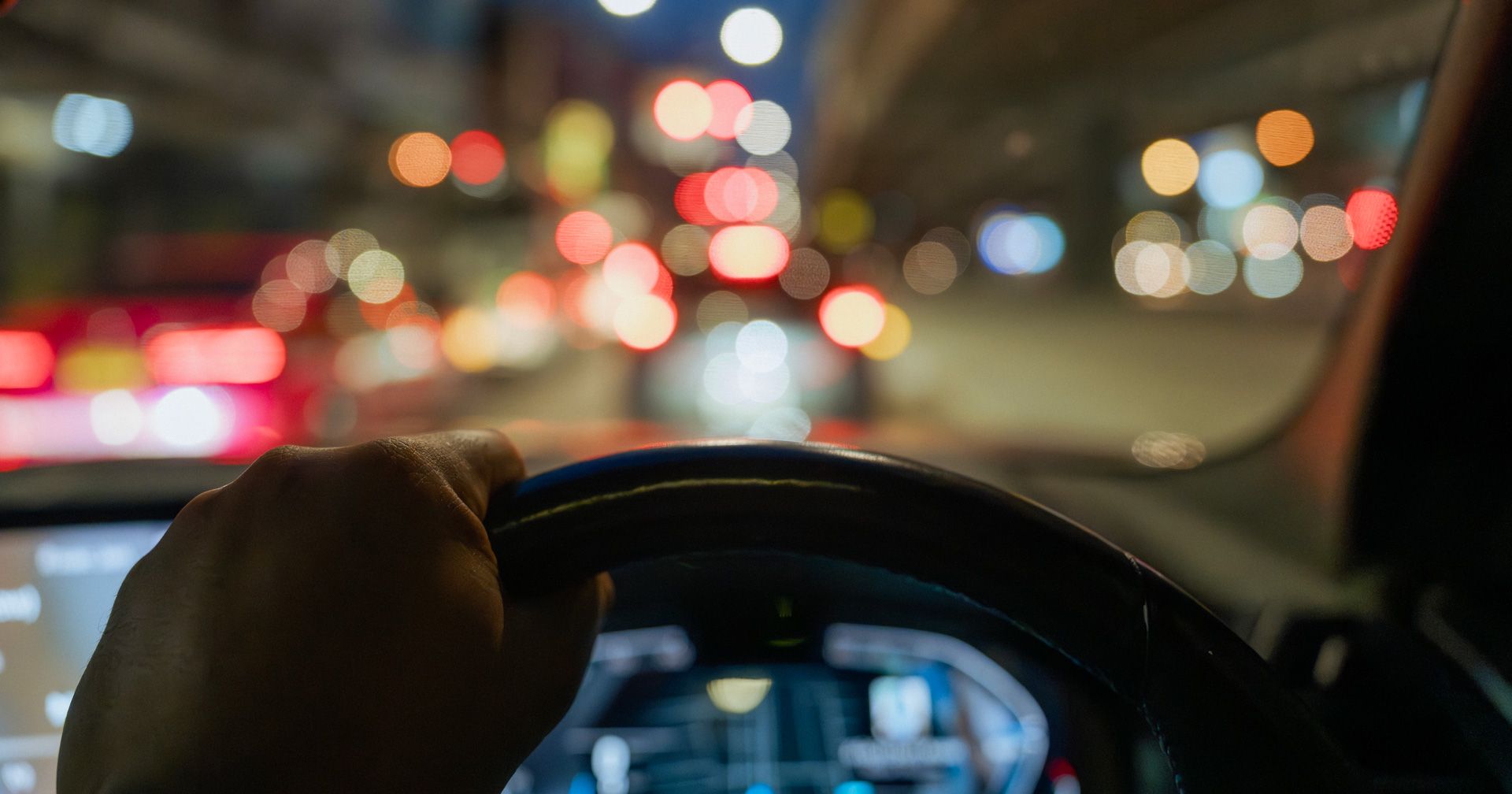
There are plenty of reasons why many of us would rather not be behind the wheel when the sun goes down. Here’s why we find driving in the dark so difficult, and seven tips from optometrists that can help us do it better.
The Problem
Dr. Rachna Menon, an optometrist in Winnipeg, says that while she often hears complaints from patients when it comes to driving at night – “there’s lack of confidence, problems seeing curbs and lanes and complaints about glare and halos from headlights” – there’s a scientific reason so many Gen X and boomers have a hard time doing it.
“As we age, the pupil response time can decrease due to gradual weakening of the muscles in the iris that cause the pupils to dilate, so pupils tend to get smaller with age and dilate less efficiently. This allows less light into the back of the eye, causing vision to become more difficult,” she explains. “The formation of cataracts – which makes the lens look more yellowed and cloudier – also reduces the amount of light reaching the back of the eyes.”
Bowmanville, Ont.-based optometrist Dr. Amanda Edgar says dark conditions also cause “reduced depth perception and contrast sensitivity, as well as increased sensitivity to glare,” making those oncoming headlights problematic. What’s more, with aging comes increasing instability in the tear film and dry eyes, which creates trouble with vision.” Dr. Menon explains the latter using this analogy: “Imagine the cornea as a windshield and the eyelids as windshield wipers. Dry eyes cause the windshield to be streaky, and in low-light conditions when it’s already difficult to make out details, the additional streakiness makes vision feel much worse.” There’s also
Zoomer Rx
The good news? There are lots of things older adults can do to feel safer and more confident behind the wheel at night. Here’s where you can start.
- Get your vision checked. No, this isn’t an age-related tip but allow this to serve as a reminder: If you haven’t had your vision checked in a year or so, it’s probably time to see an optometrist. Dr. Menon says being nearsighted and having astigmatism makes night vision feel worse when it’s uncorrected or improperly corrected (like your prescription is too old).
- Pay attention to how you’re seeing with your prescription. While we’re on the topic of prescriptions for glasses, lenses need to be individualized to the wearer, meaning they need to be measured exactly how they will be worn, “so that the eyes are looking through the correct or intended prescription at all times,” she says. “Any discrepancies with the prescription and how they’re placed into the frames will cause unnecessary eye strain,” making it harder to see at night. Your takeaway here? Get fitted properly and, if your prescription has changed drastically, spend some time getting used to how you see prior to driving at night. See your optometrist or optician if something feels off.
- Glasses wearers: Ask about anti-glare coatings. “It makes all the difference, and quality matters here,” says Dr. Menon. “In my experience, no two anti-glare coatings are the same. If lenses are scratched easily and the coatings are peeling, the visual quality will decline.”
- Look right. “When driving and passing oncoming traffic, avoid looking at their headlights. Instead, look to the white line on the right side of the road up ahead of you to keep your eyes adapted to the dark,” says Dr. Edgar.
- Take a screen break. We’re on our devices all day. Newsflash: These aren’t doing our eyes any favours. “It’s important to manage any visual strain that accumulates throughout the day. This could look like frequent breaks at work or when you’re on the computer or using reading glasses or glasses for screens when prescribed,” says Dr. Menon.
- Get adaptive headlights. Dr. Edgar recommends adaptive beams, which automatically adjust to road conditions and vehicles by brightening or dimming a car’s headlights. When sensors detect other cars around you, your headlights will dim. And when you’re in super-dark areas, your headlights get brighter. Bonus: Not only do these make driving easier for you, but you’ll be helping the drivers of oncoming traffic at the same time.
- Deal with dry eyes. Dry eye is a common condition in older adults, and if you’ve been diagnosed with it, your treatment protocol (which likely includes eyelid hygiene, warm compresses, using a humidifier, taking breaks from screens, staying away from dry spaces and using eye drops) can make a huge difference in helping you drive at night with ease. “I recently had a patient who went from being completely unable to drive at night to driving confidently and regularly, with no change to their prescription or glasses, but simply by treating dry eyes,” says Dr. Menon.