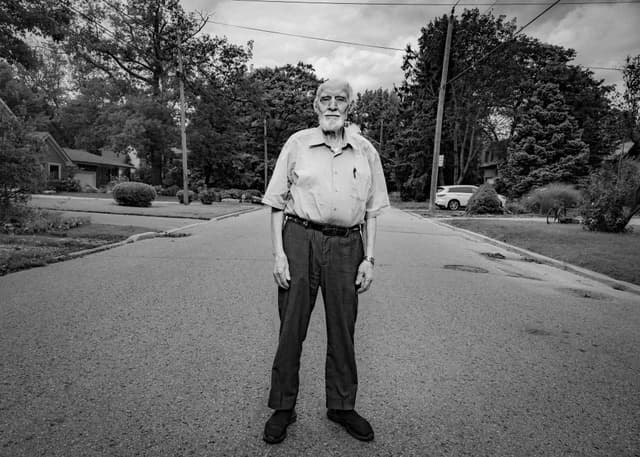
The Pacific Palisades home of Canadian comedy legend Eugene Levy and his wife, Deborah Divine, is among the properties lost to the ongoing wildfires in Los Angeles County, which have now spread across more than 25,000 acres, according to CNN.
Levy and Divine reportedly evacuated Tuesday, alongside other residents of the neighbourhood. The 78-year-old Schitt’s Creek star told the Los Angeles Times, “The smoke looked pretty black and intense over Temescal Canyon. I couldn’t see any flames but the smoke was very dark.”
Soon after, Levy and Divine’s home was lost to the fires, like so many other houses and businesses in recent days. And while much coverage has focused on the more affluent areas affected – particularly the homes of celebrities like Levy, Billy Crystal, Paris Hilton and John Goodman – areas of all economic demographics have been destroyed by the blazes.
The fact that the fires are ravaging the area during award season, arguably the most important and lucrative time of the year in Los Angeles, adds another layer to the story. Some of the celebrities immersed in the Hollywood glamour of last Sunday’s Golden Globes at the Beverly Hilton in Los Angeles – such as nominee Adam Brody and his wife, actress Leighton Meester – saw their homes destroyed by the fires just days later. Other award shows have announced delays, with the Critics Choice Awards bumping their ceremony by two weeks to Jan. 26, and the Oscar nomination announcement being delayed for two days, until Jan. 19.
Meanwhile, actress Jean Smart, 73, who won her second Golden Globe on Sunday for her starring role in the comedy Hacks, posted a message on Instagram that referenced “Hollywood’s season of celebration” and expressed her hope that “any of the networks televising the upcoming awards will seriously consider NOT televising them and donating the revenue they would have garnered to victims of the fires and the firefighters.”

A Foreseeable Tragedy
While wildfires in Los Angeles are rare this time of year, they’re the sort of disaster that climate experts have long been sounding the alarm about.
As The Guardian noted, “these fires are an especially acute example of something climate scientists have been warning about for decades: compound climate disasters that, when they occur simultaneously, produce much more damage than they would individually.”
The story adds that, “As the climate crisis escalates, the interdependent atmospheric, oceanic and ecological systems that constrain human civilization will lead to compounding and regime-shifting changes that are difficult to predict in advance.”
And American climate scientist Peter Kalmus noted in a recent New York Times op-ed that this sort of impending disaster is exactly why he and his wife moved their family out of Los Angeles in 2022.
After years of trying to raise awareness about climate change – “I wanted to scream from the rooftops for people to see global heating as the urgent threat that it is. I wrote articles and tweets with salty language and co-founded nonprofits for a climate app and a climate media group” – Kalmus wrote that experiencing heat exhaustion ahead of another major Los Angeles fire mere miles from his family’s home in Sept. 2020 opened his eyes to the immediate, impending danger.
“For weeks, my family and I were enveloped in a cloud of smoke. My lungs burned and my fingers had a constant tingle,” he wrote. “After the Bobcat fire, Los Angeles no longer felt safe. I feared for the health of my family, and I wondered how we would evacuate if the neighbourhood started to burn. In 2022, my wife was offered a job in Durham, N.C., and we moved.”

Kalmus added that all the old haunts in his former Los Angeles neighbourhood were destroyed by these current wildfires.
“My former neighbour texted me Thursday to say that our little cul-de-sac burned, his house and ours and all our neighbours’ homes except for one. The beautiful house we raised our children in, gone; and my tears finally came.”
How to Protect Yourself and Your Home
An unattributed quote has spread across social media in the wake of the Los Angeles wildfires: “Climate change will manifest as a series of disasters viewed through phones with footage that gets closer and closer to where you live until you’re the one filming it.”
It’s a prescient and terrifying thought, but also one that continues to prove true as climate change worsens. And from floods to wildfires to ice storms, Canada is no stranger to climate disasters.
According to Statistics Canada, 2022 saw “15 catastrophic weather events in Canada, with claims ranging from $35 million to $1 billion, totalling $3.4 billion in insured losses.” In 2023, StatCan noted that “damages from extreme weather events totalled $3.1 billion,” adding, “Both 2022 and 2023 ranked within the top 10 all time in terms of weather-related damage.”
That said, there are ways to protect your home. In 2023, a feature story in Zoomer magazine explained how to climate-proof your home in an era of extreme weather, focusing on the three most common offenders – flooding, extreme heat and wildfire – and offering six “steps to take to climate-proof your home, whether you rent or own, have a big budget or a small one, no matter where you live.”
And in 2022, tech expert Marc Saltzman rounded up a number of tech tools that could help protect you and your property during an extreme weather event. Those include emergency preparedness apps you can download – from the Red Cross’ First Aid app to disaster alerts and, for Canadians travelling south, a FEMA app – to various tools that could help keep batteries charged and power up and running in case of emergency or evacuation.
RELATED:
The World is Not Moving Fast Enough on Climate Change — Social Sciences Can Help Explain Why
Wildfires, Ice Storms & Hurricanes: Seniors Often Hit Hardest When Disaster Strikes
Wildfire and Flood Disasters are Causing “Climate Migration” Within Canada