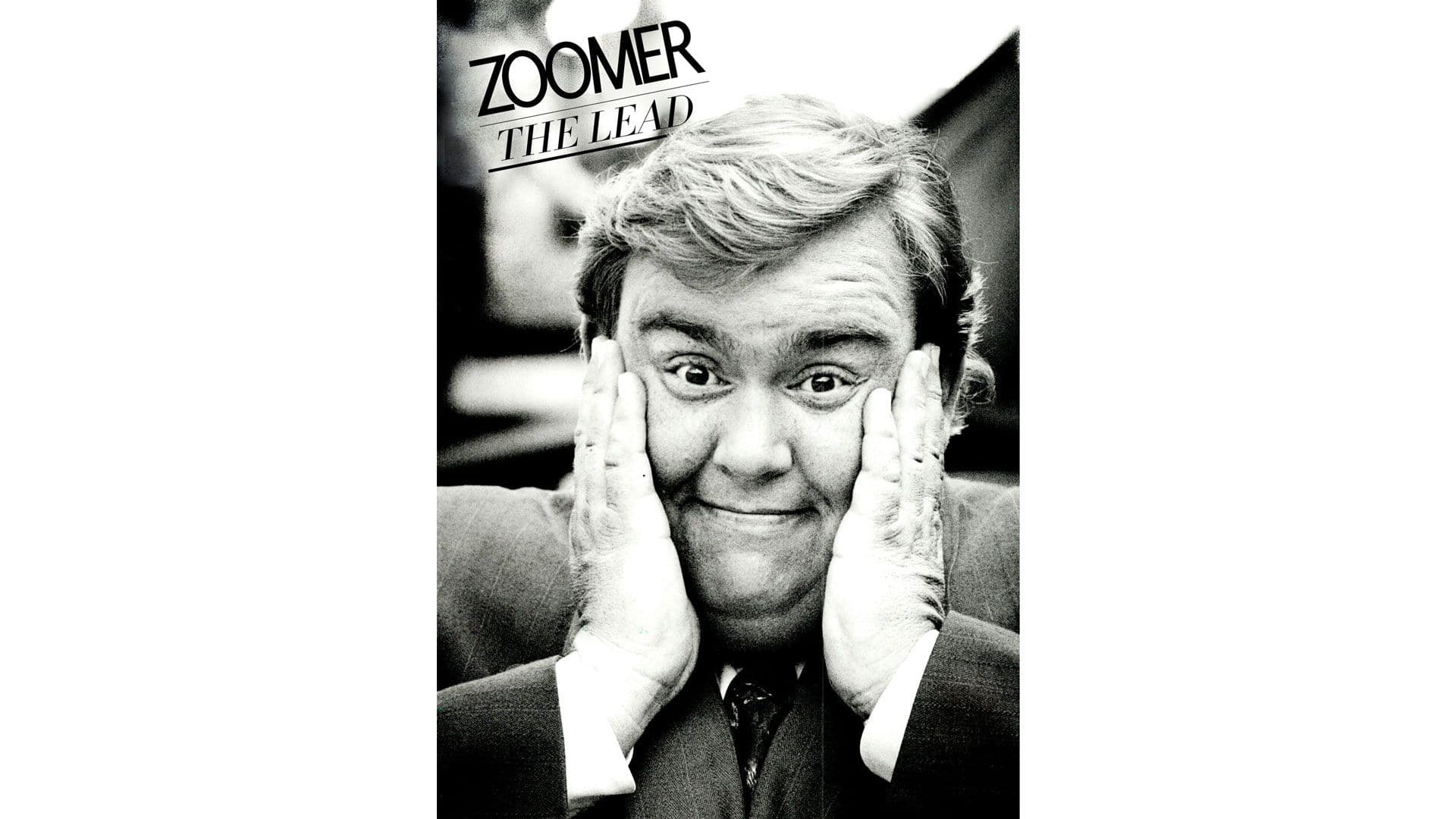
One of the odd paradoxes of stardom is how far appreciation can lag behind fame. John Candy was a great actor most famous for playing loveable losers in a string of huge Hollywood comedies, such as Splash (1984), Planes, Trains and Automobiles (1987), Uncle Buck (1989) and Home Alone (1990). He was the Everyman that everyone could relate to. Whether generating charm, wit or pathos, Candy embodied his characters with such natural conviction that the acting was invisible – which may explain why he never got an Oscar nomination (along with the Academy’s bias against comedy). But he did receive nine Emmy nominations, all for his writing contributions to SCTV, which says something about the intelligence behind the acting.
Candy was not what you’d call a leading man, but with the dexterity of a character actor and the charisma of a movie star, he was a born romantic, a Falstaffian figure with an air of nobility, and a beloved personality on screen and off. After his sudden death at 43, in the spring of 1994, his absence was a shock. The LAPD shut down the 405 freeway for his funeral procession. Just weeks later, Hollywood rushed to award Candy a long-overdue recognition by cementing his star on its Walk of Fame. In a gloriously overwritten eulogy, Dan Aykroyd saluted “this titan of a golden man . . . this magnetic, magnificent magnanimous man.” And now, 31 years after he left this earth – felled by a heart attack alone in his room in the dead of night while filming a shabby western farce in the thin mountain air of Durango, Mexico – Candy’s legacy finally gets its due. By a strange cosmic convergence, his spirit has been joyfully, and sadly, resurrected in two unrelated phenomena: a movie and a book that have appeared out of the blue.
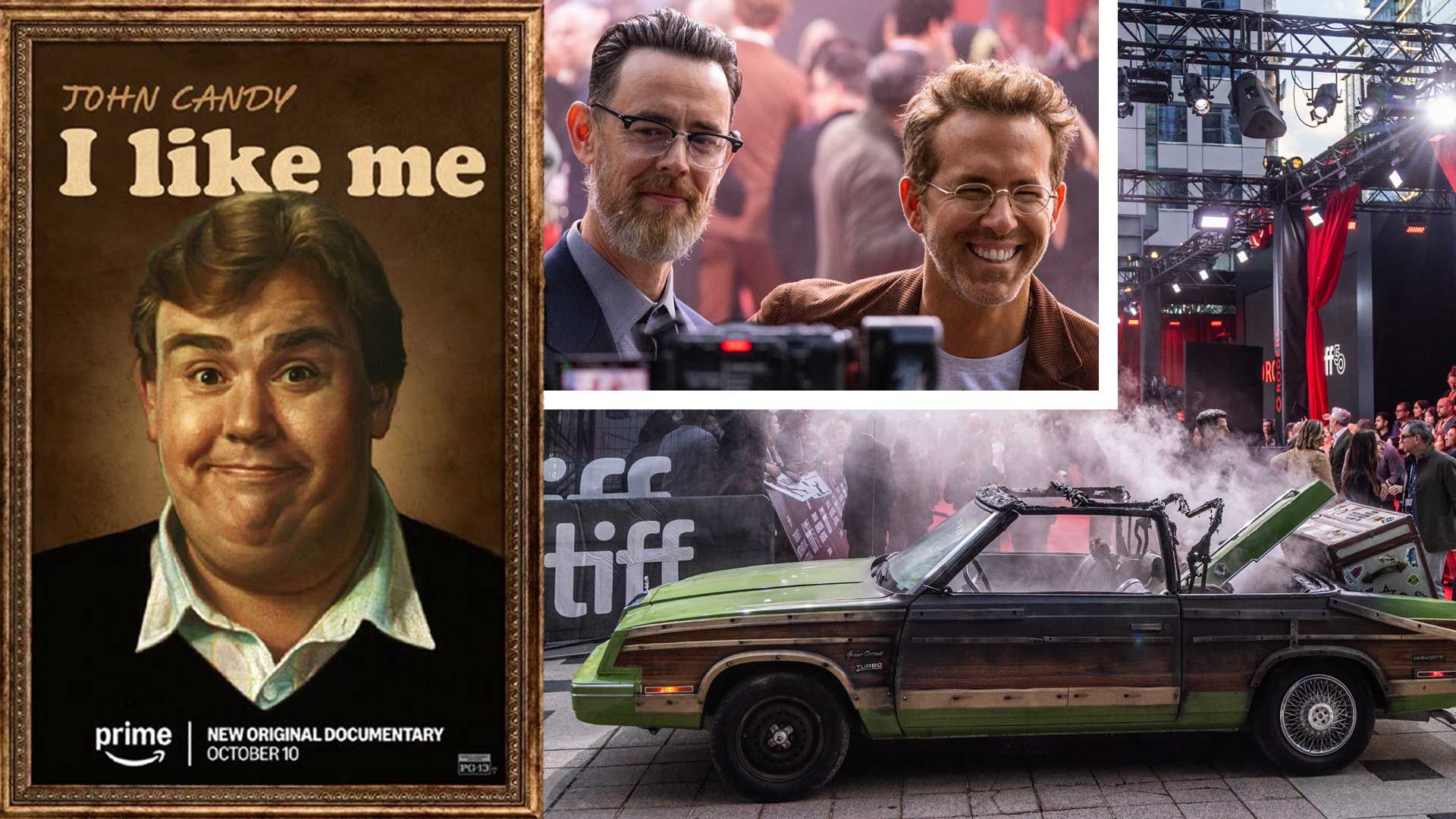
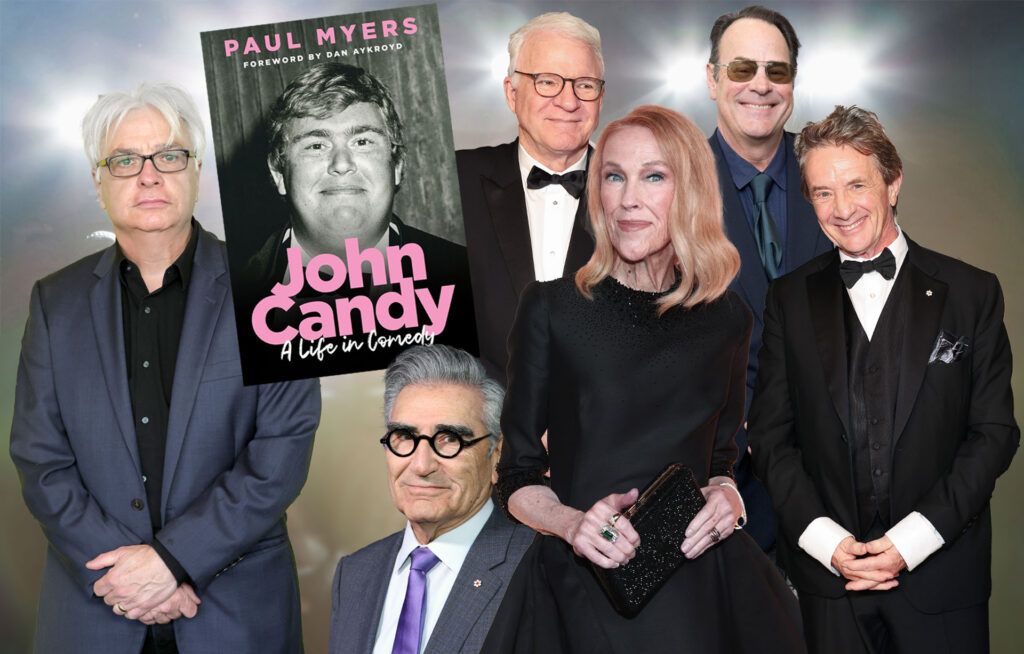
The movie is John Candy: I Like Me, a documentary about his life and work, which kicked off the Toronto International Film Festival last month. Produced by Canadian Ryan Reynolds and directed by Colin Hanks (son of Tom), it’s a jumbo platter of nostalgia, a funny/sad tribute that mixes contemporary interviews with home movie footage and a cornucopia of clips from the actor’s best work. Despite the popcorn pedigree, however, the film will go straight to Prime Video on Oct. 10 without a big-screen release. Meanwhile, House of Anansi Press just published John Candy: A Life in Comedy, by Paul Myers (brother of Mike), a Canadian writer and musician who has written books about the Kids in the Hall, Barenaked Ladies, Todd Rundgren and Long John Baldry. While this isn’t the first Candy biography to be published, it’s by far the most comprehensive and authoritative. Bristling with over 60 fresh interviews, it features many of the same stars that are in the film – including Aykroyd, Chevy Chase, Steve Martin, Catherine O’Hara, Martin Short, Tom Hanks and Eugene Levy – but also some who are not, notably Judd Apatow, Ben Stiller, Patton Oswalt, Elliott Gould and Matthew Broderick
The synchronicity of the book and the film “may be a lucky coincidence of the Zeitgeist,” Myers told me in a recent interview. “But it feels more like the universe answering a question, saying it’s time to talk about John Candy. Or it’s the King streetcar effect – they never come, then two come at once.”
What’s uncanny is how consistently Candy’s personality shines through a book and film that tell essentially the same story without any communication between their creators. Both portray him as the nicest guy in show business, and one of the most complex – a gregarious star who made an art of quiet humility; a man of the people who had expensive tastes in food, drink and fancy clothes; a devoted husband and loving father often absent on movie shoots or hosting extravagant parties; a proud and generous citizen of whatever crowd he was in; and a secretly insecure soul who worried about his talent, his weight, his health. He was haunted by his father’s sudden death from heart disease at 35, three days before John’s fifth birthday, forever fearing he might suffer a similar fate.
Aykroyd serves as a sterling common denominator, giving soul-searching interviews for both. And as a succinct coda to his epic eulogy, he also contributed a brief foreword to Myers’ biography that reads like poetry. Hailing his friend “the leader of our Canadian cohort” he writes: “John Candy was as sweet as his name . . . Sweet, shot through with flavours of cinnamon, ginger and capsicum . . . sweet but far from weak . . a gentle, good man possessed of a brilliant creative fire . . . courtly, generous and hospitable, with the mien of a Knight.”
If Candy was the king of Canadian comedy, Aykroyd is its loquacious prime minister.
“When you see him, when you see his face, I mean . . . I don’t want to cry, but when I see his face, I really miss him.” – Bill Murray
Both the book and the film are glowing tributes. But they offer up vastly different experiences, emotionally. On the page, Myers coolly chronicles Candy’s life and career with assiduous research and reporting, crafting a richly detailed biography that leaves us room to conjure up the actor on our own terms. But on the screen, Candy is virtually reincarnated – physically in front of us as we time-travel through footage of him playing with his kids in the family pool; struggling to maintain his dignity while a shameless female TV host suggests his “handsome” face is wasted on the body of “a fat man”; or as the heart-breaking shower-hook salesman Del Griffith standing up to Steve Martin’s sarcastic assault in Planes, Trains and Automobiles: “Well, you think what you want about me. I like me. My wife likes me. My customers like me. Because I’m the real article. What you see is what you get.”
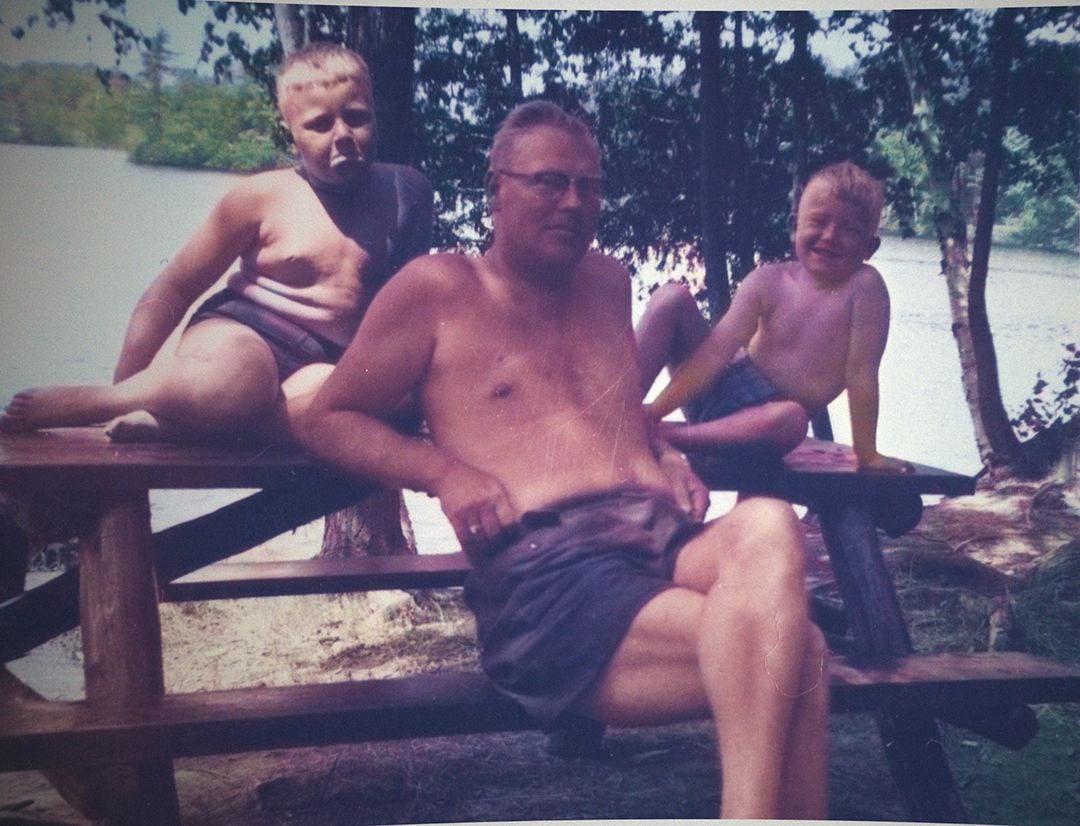
Loving John Candy is not difficult. The challenge for the documentary, which unfolds as an unabashed valentine, is laid out by Bill Murray in the opening scene, as he searches for words, devoid of his trademark irony. “When you see him, when you see his face,” he begins, with a catch in his throat. “I mean . . . I don’t want to cry, but when I see his face, I really miss him. He was smart, he loved music and he was good to people. You can always judge someone by the way they treat a waiter or waitress, always kind to people that are working.” Recovering his poise, he adds, “I wish I had some more bad things to say about him. But that’s the problem when you’re talking about John.” Then the other shoe drops: “I hope that what you’re producing here turns up some people who have got some dirt on him.” Fat chance.
At a press event with the filmmakers before the John Candy TIFF premiere, I ask Ryan Reynolds about the risk of composing an overly affectionate portrait of his subject (a criticism that would later be levelled in some reviews of the film). “With most documentaries, you’re looking for this flipside,” he replies. “This documentary does have a flipside – it’s just not evil. It’s about a person who struggled with things that everyone struggles with, filtered through the prism of joy. John was a good person when no one was watching.” Then he adds, “That’s why I wanted Bill so badly, because he’s like, ‘You can’t do a documentary on John Candy. He’s unimpeachable. I lived with him. He’s never done anything wrong, except one thing . . . ’ ” Murray will eventually reveal that one thing, and I won’t spoil it except to say it was not an impeachable offence, unless stealing a scene from his fellow actors is considered a felony.
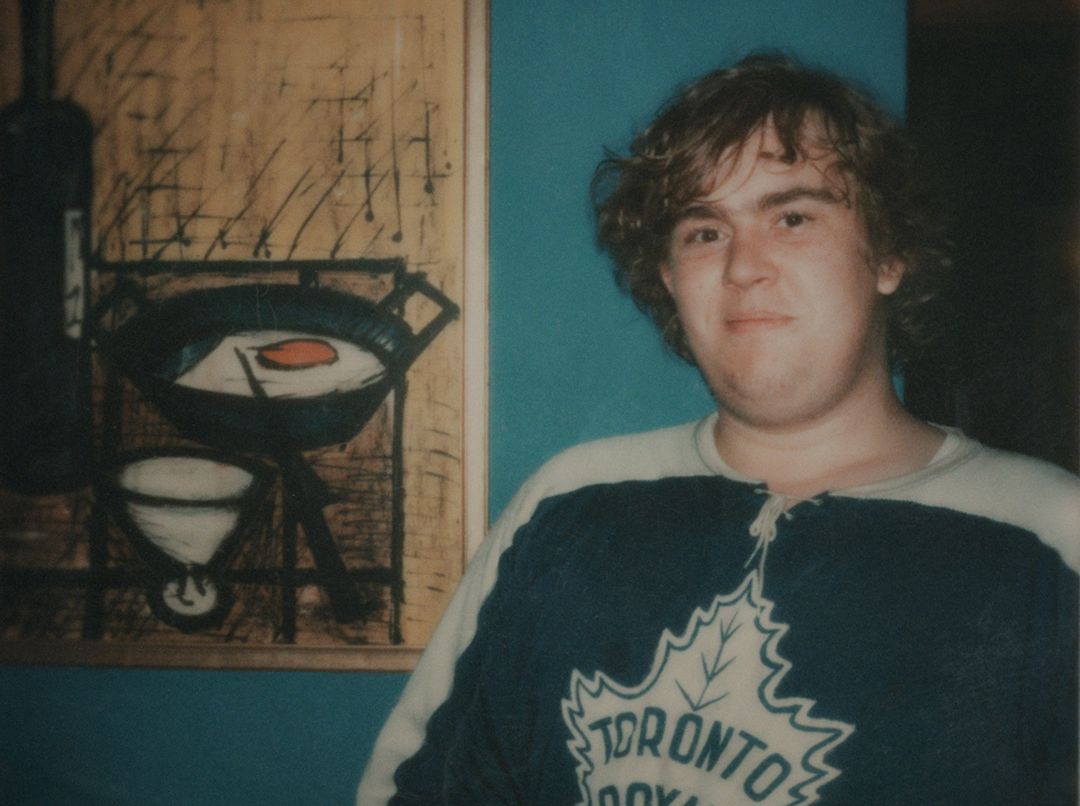
For someone with a penchant for photobombing strangers, Murray is notoriously elusive, and convincing him to appear in the film turned into a protracted negotiation. Late one night Reynolds says he was recording a final, desperate plea to Bill in a video message when his two-year-old son, Olin, woke up and wandered into the frame. “I said, ‘Tell Bill to do the interview.’ And he went: do da innervooh, Bill! [mimicking a toddler mob boss.] And I went, ‘You say no to a child like that and I don’t know what kind of monster you are.’ The next thing I know, Bill was doing it.”
Reynolds, 48, says he has always been obsessed with Candy. “I find the thing most fascinating with him is that division between who he was as a person and the persona that protected him. And I see that in myself.” Reynolds remembers having lunch in Toronto over 20 years ago, sitting at a four-top with comedians Norm Macdonald, Bob Saget and Chris Farley. “All those guys are gone. They all had their own versions of coping mechanisms, some dangerous, some not. And it’s amazing how, posthumously, we canonize the comedian who made us laugh for so many years. We live in a way too curated world now. John was around before any of that, and left in his wake a kindness and joy. He had a way about him that brought people together, and still does – nostalgia is the greatest drug on earth.” On the other hand, he adds, the documentary will introduce Candy to “a whole generation of people that haven’t seen him yet.”
In enlisting Colin Hanks as director, Reynolds called on a family friend who had known Candy from childhood. Hanks, 47, says he has “very vivid memories of meeting John on the set of Splash with my dad, and Eugene [Levy] in the arm cast and leg brace.” He was five at the time, but “John made you feel special even if you were a young kid. He made everyone feel that way.” Hanks says Reynolds called him up and declared, ‘I don’t want to live in a world where there is not a documentary about John Candy. And I think you should direct it.” Colin’s first step was to approach Candy’s children, Jennifer, 45, and Christopher, 41, who are both actors. They didn’t just give him their blessing for the film, but would play central roles as interview subjects – along with their mother, Rosemary Hobor, 76, who was married to him from 1979 to the day he died.
A few hours before the Toronto festival premiere, Jen and Chris (as they call each other) sit down for an interview on the stage of The Second City’s John Candy Box Theatre. Their double resemblance to their dad – the baby face, the smiling eyes – was so striking it was spooky. But they’re used to that. “I am my dad in drag,” says Jen, laughing at her own routine tagline. Chris, meanwhile, brands himself “the bearded version.” So why did it take three decades for them to help get a documentary off the ground? “There’s a balance that takes place when you have a celebrity as a father,” says Chris. “My mom, sister and I wanted to spend time figuring out who we were before we were able to tackle that.” What finally got the ball rolling was when they saw a short video mash-up of Candy’s work that Reynolds created as a tribute to mark the 25th anniversary of his passing. “That,” says Chris, “provided the spark.”
Revisiting memories of their father evoked a flood of mixed emotions. Just as John lost his dad when he was a child, Chris lost his when he was eight. Asked about the parallels, he says, “I’m willing to bet he went through very similar experiences to what I went through. But our dad grew up in a generation that didn’t talk about things. Jen and I were raised in a time where more people were doing therapy, and you could begin talking about loss and death, these huge feelings that generate anger and frustration and scaredness and sadness.”
Chris recalls a moment with his father when the Northridge earthquake struck Los Angeles in 1994. “It had just happened. He picked me up from a house I was sleeping over at, and I got to spend this evening with him, listening to the public radio station on a wind-up radio. The two of us were just sitting on a couch. That has been imprinted in my mind for a very long time. The chaos of the world at the moment. And you’re just hanging with your dad. That was a gift. Because he was gone two months later.”
“As a kid you want to see your parents live forever,” says Jen. “And you want to see them take care of themselves. I threw away his cigarettes at one point.” She also found his long absences on movie shoots difficult. “He would call every day. He still felt present. But I used to cry a lot. He’d say, ‘I don’t think I’m going to make it for your birthday’ and I’d be so upset. Then he would make it for my birthday. He really made the effort. He was a great father.” And for these grown children, the film came as a cathartic act of closure. “He was taken so abruptly,” says Chris, “and this feels like a proper swan song, a proper goodbye.” Adds Jen: “It brings up so many emotions. We’re here with all of our friends and all of our family, watching our dad’s life on the big screen.” Coupling TIFF’s 50th anniversary gala with a tribute to a local hero who called himself Johnny Toronto made for a perfect storm of nostalgia. It also made for a long night, especially after an epic opening ceremony that included a film-geek homage to Candy from Prime Minister Mark Carney. Then the movie – bookended by funeral eulogies from Dan Aykroyd and Catherine O’Hara – rolled out on a tide of adoring testimony and tearful memories, propelled by a relentless score. Despite the wealth of juicy clips of Candy, pulled from SCTV skits and blockbuster comedies, the elation was almost overtaken by a subdued grief. It felt odd to be mourning a man so deeply this long after his death. But that may be because the film is very much a family affair, featuring Candy’s closest relatives and the extended clan of comic actors that he inspired. And for the rest of us, the unresolved complications of being John Candy were just beginning to sink in.
Paul Myers, 64, is part of that extended family of artists, along with his brother Mike. However, Candy’s wife and children didn’t consent to do interviews for his book. “When I reached out to Jen to ask if they would participate,” he says, “I introduced myself as someone who came up in the Second City world, adjacent to Saturday Night Live and SCTV. She gave me her blessing but politely declined the family’s involvement, citing their own unspecified project. Some time later, I saw a Ryan Reynolds posting about a Candy tribute he’d like to make. I assumed, correctly, that it was a documentary, and that this was the family project.”
Speaking via Zoom from his home studio in L.A., where he hosts The Record Day Podcast with Paul Myers, and dressed in a black t-shirt and ballcap, he bears more than a passing resemblance to Mike on Wayne’s World. Though with black-rimmed glasses and blond hair, there are also shades of Dana Carvey’s Garth. But unlike Wayne and Garth, Myers has been a lifelong musician and is more of a rock scholar than fanboy. In early 1980s, he cut his teeth on Toronto’s Queen Street, where indie comedy and indie music overlapped. He played in bands at the Rivoli, the little cabaret bar where the Kids in the Hall were launched before being discovered by SNL’s Lorne Michaels. And it was Myers’ book The Kids in the Hall: One Dumb Guy (2018) that provided the impetus for the Candy biography.
“The Kids were constantly mentioning SCTV’s influence on their troupe,” he says, “and I always wanted to do something about SCTV.” But Dave Thomas had written a pretty definitive book. And Martin Scorsese was working on a definitive documentary, which was never released. So Anansi Editorial Director Douglas Richmond “suggested I narrow the focus to John Candy, and widen the work to include his film career.” Myers says he’d hoped the book would be out for the 30th anniversary of Candy’s death, but that “macabre” milestone slipped by as he was still chasing key interview subjects like Martin Short and Steve Martin. The book’s October publication now aligns with Candy’s 75th birthday, which falls on Halloween.
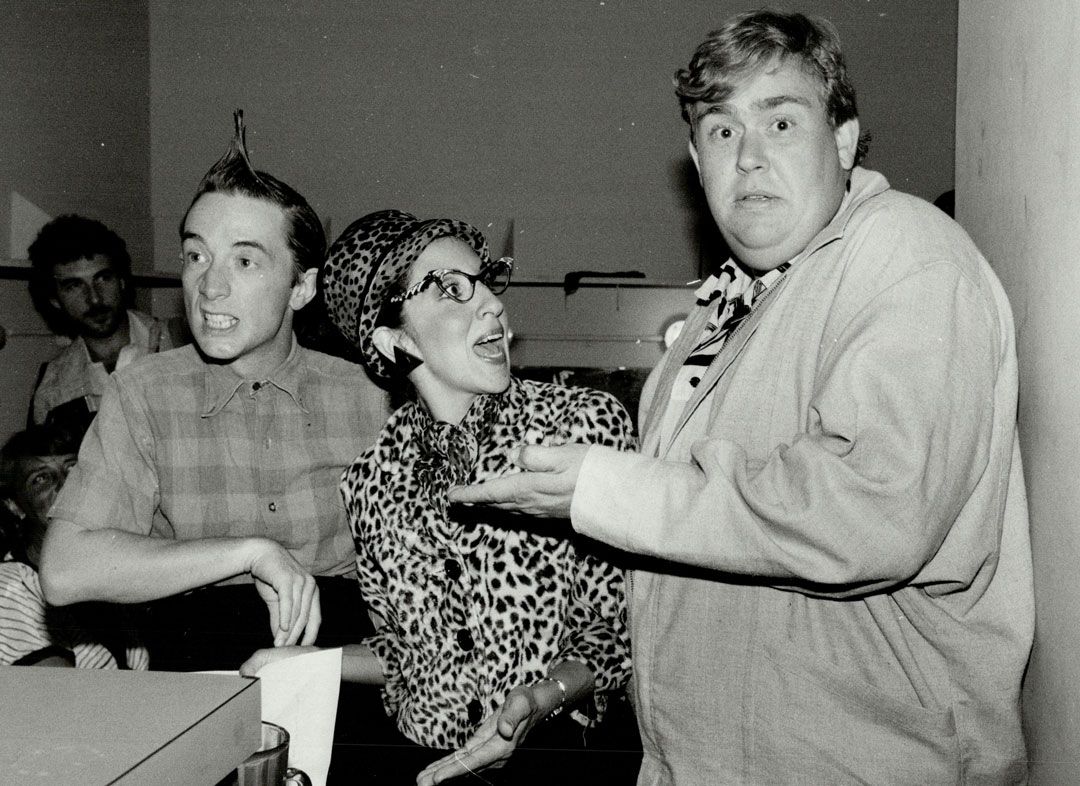
Myers never once uses the first person in his biography, not even when he interviews his famous younger brother, Mike. But he has personal ties to Candy’s Second City family that go back a long way. He traces it to growing up in the Toronto suburbs of Scarborough and Don Mills, watching Monty Python’s Flying Circus, SCTV and SNL with his Liverpool-born parents, Mike, and their older brother Peter. Following in Mike’s footsteps, Paul went on to take workshops at Second City theatre, where he became friends with Dave Foley and Kevin McDonald of Kids in the Hall. And Candy was the catalyst for Mike’s connection with Second City in the first place.
In the book, the author’s brother remembers how in 1980, as an aspiring teenage comedian, he had a life-changing encounter with the actor after a live SCTV show at the University of Toronto’s Convocation Hall. “There have only been two performers that I’ve ever waited at a stage door to meet,” says Mike Myers, 62. “One was Lily Tomlin, and the other was John Candy . . . he was very lovely. When I told him that I wanted to be on Second City someday, he suggested that I first take the Second City workshops, which I didn’t even know about at the time.” Taking those classes led to Mike being hired, “which started my whole career in comedy. So I’m forever indebted to John Candy for that advice.”
“Like Jackie Gleason before him, he had this incredible sense of balance and gracefulness and almost wispiness in how he moved through the world.” –Patton Oswalt
Mike also shares this astute observation in the book: “What makes Candy a uniquely Canadian artist is that we are often known for politeness, but there’s a toughness to the Canadian character, as evidenced in hockey, which has all of the grace of figure skating but all of the ferocity of football.” And his Second City training in improvisation and acting “in the moment,” he adds, “prepared him for movie acting, where Candy’s face in close-up gave us an unfiltered sense of who he really was.”
Ironically, Candy didn’t make the cut when he auditioned for Second City in Toronto, but legendary comedy guru Del Close brought him to the Second City theatre in Chicago, joining a freshman cast that included Bill Murray. In 1974, he returned to the Toronto company in triumph and became the heart of its stage company at the Old Firehall Theatre, which would spawn SCTV in 1976 – a year after Lorne Michaels ignited television’s comedy revolution with SNL, while poaching Dan Aykroyd, Gilda Radner and John Belushi from Second City. But with a cast that included Candy, Joe Flaherty, Catherine O’Hara, Eugene Levy, Andrea Martin and Dave Thomas, SCTV had a wild edge of anarchy that would make it a cult favourite. “If SNL was the great leap forward,” writer Myers, “SCTV was the great leap sideways.” And according to Thomas, it was Candy who came up with the show’s opening sequence of the cast hurling TV sets off a high-rise balcony.
On SCTV, Candy had the freedom to create a wild repertoire of characters, from unctuous impresario Johnny LaRue to 3D-maestro Dr. Tongue and his Evil House of Pancakes, from a Latin-mad Mr. Mambo to a polka-playing Shmenge brother – along with countless impressions, a bandwidth that embraced Orson Welles, Alfred Hitchcock and Curly of the Three Stooges. Tom Hanks, who would co-star with Candy in Splash, recalls first stumbling across SCTV as an unknown actor touring with a Shakespeare company. Switching on the TV in his motel room, he landed on a spoof of the ’50s sitcom Leave It To Beaver, with Candy looming in the title role. “Here was this huge guy in a ball cap playing the Beaver,” Hanks told Myers. “The way he carried himself . . . I recognized some brand of bodacious genius right off the bat.”
Candy’s influence on young comic actors was profound. “I started to watch SCTV when I was about 16,” Ben Stiller tells Myers. “Candy was a big guy, but while he did physical comedy, the jokes didn’t seem to have anything to do with his size. I still watch the SCTV Christmas special every year, and when LaRue drunkenly breaks down and gets his crane shot, that moment just distilled every drunken actor’s trajectory before or since.”
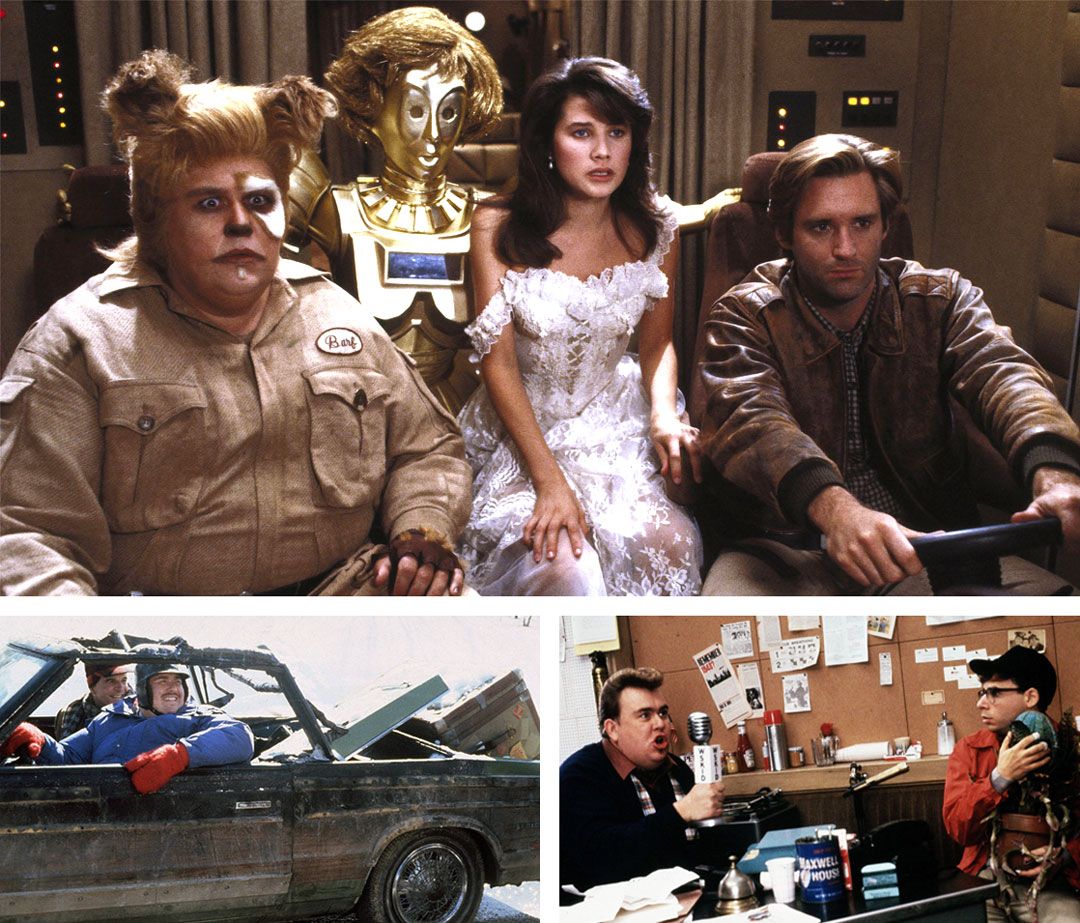
Actors recognized how deftly Candy defied the stereotype of the fat funnyman. But as he began to make Hollywood movies, it was hard to shake the body shaming, which wasn’t even a concept back then. As Ox in the army comedy Stripes (1981), Canadian director Ivan Reitman made him the butt of a fat joke with a scene of him mud-wrestling a gang of strippers, a humiliation that Candy accepted reluctantly – and ended up resenting. Still, in the book, comic actor Patton Oswalt singles out Candy’s work in Stripes: “Like Jackie Gleason before him, he had this incredible sense of balance and gracefulness and almost wispiness in how he moved through the world.” That grace was better served in Splash, when he careened through the racquetball scene like a drunken sailor, a cigarette dangling from his mouth, until he fires a ball that bounces back and slams into his head, knocking him flat. The sheer desperation of that performance was, in fact, an unwitting master class in method acting, because Candy had showed up on set after being up all night drinking with Jack Nicholson. At first, he tried to persuade director Ron Howard to cancel the shoot. In the end, he nailed the racquetball headshot in three takes.
Splash made Candy a star, but it was writer-director John Hughes who recognized that the comedian’s true weight lay in his depth as a dramatic actor. Even in comic roles, he had a power to express his own qualities of childlike vulnerability, parental wisdom and a kind of common-sense gravitas. As Hughes and Candy became the best of friends, vacationing together with their families, Candy was as much his muse as De Niro was Scorsese’s. He appeared in seven films that Hughes wrote and/or directed, more than any other actor. Clips from those films are the highlights of the documentary. And aside from Candy’s classic showdown with Steve Martin in Planes, Trains and Automobiles, what stands out are his scenes with children – as a delinquent but dedicated father figure caring for two kids in Uncle Buck, and as the dubious uncle who’s subjected to a lightning round of interrogation by Macaulay Culkin in Home Alone.
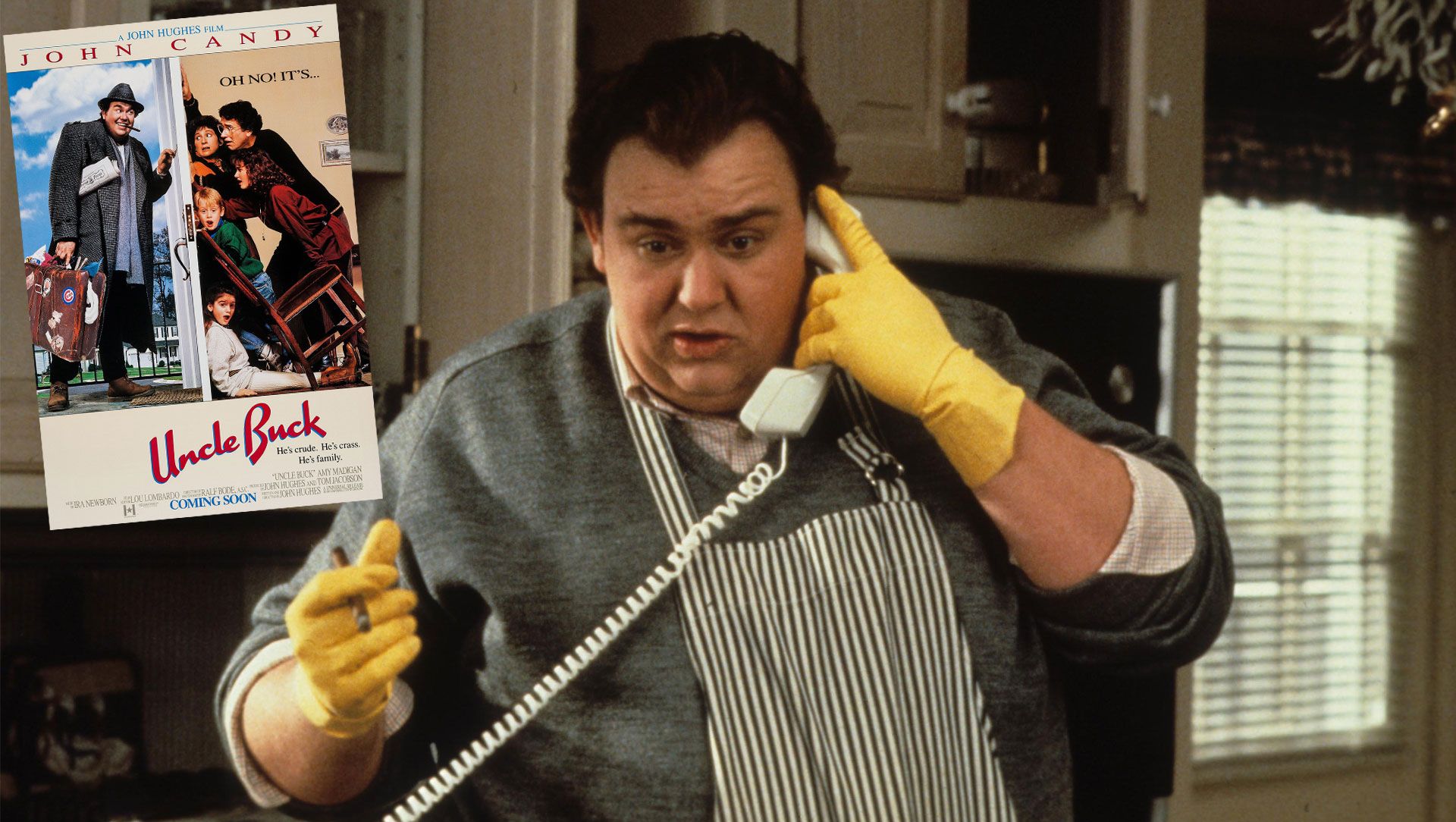
Hughes wrote Uncle Buck explicitly for Candy, who says in the documentary that “my whole attitude toward the two kids in the movie was based on my relationship with [my kids] Christopher and Jennifer – I would never talk down to them.” Culkin, who also starred in Uncle Buck, remembers how kind Candy was to him. “You don’t get a lot of respect as an eight-year-old,” he says, “By that point, my father was already a monster. Then the fame and the money came, and he was an infamous monster.” On the set of Home Alone, he says, “John was always looking a little side-eyed: ‘Everything alright? You doing good at home?’ I remember John caring when not a lot of people did.”
John Candy was a natural hero, and not always the tragic kind. In his book, Myers charts his ambition through the lens of his boyhood desire to become, not an actor, but a pro football player – a dream that was dashed by a serious knee injury after he led his high-school team to a season championship. Then, on an impulse – while still in high school – he drove across the border to enlist in the U.S. Marine Corps, a bonkers notion when so many U.S. draft dodgers were crossing in the other direction to avoid the Vietnam War. Luckily, his busted knee made him ineligible. But Candy finally got his taste of gridiron glory in 1990, when he bought the Toronto Argonauts with Wayne Gretzky and Bruce McNall. He became the ultimate cheerleader, inviting the Blues Brothers to play at their season opener, and steered the Argos to their first Grey Cup victory in eight years.
TIFF’s premiere of John Candy: I Like Me served as a final homecoming. But more of his Canadian cohorts turned for the festival premiere of another documentary, the awkwardly titled You Had to Be There: How the Toronto Godspell Ignited the Comedy Revolution. This film about the 1972 hippie musical that incubated a generation of comedy stars, played at the Royal Alexandra Theatre, where Godspell had its debut in 1972. Many of the musical’s cast were on hand in person or via Zoom – including SCTV alums Martin Short, Catherine O’Hara, Eugene Levy, Andrea Martin and Jayne Eastwood plus SNL pioneer Paul Shaffer. It was a more joyous occasion than the Candy premiere because it was about a living legacy of great Canadian talents, not the loss of one. Still, Candy was present, too, not just in spirit but by stealing the show in a priceless interview clip, as he complained that he got so sick of hearing about Godspell because he was the only one of his tribe who wasn’t in it, and they would not stop talking about it.
And for a moment, with that twinkle in his eye, suggesting that there was much more to John Candy than we will ever know, he was in the room, among friends, as alive as ever.