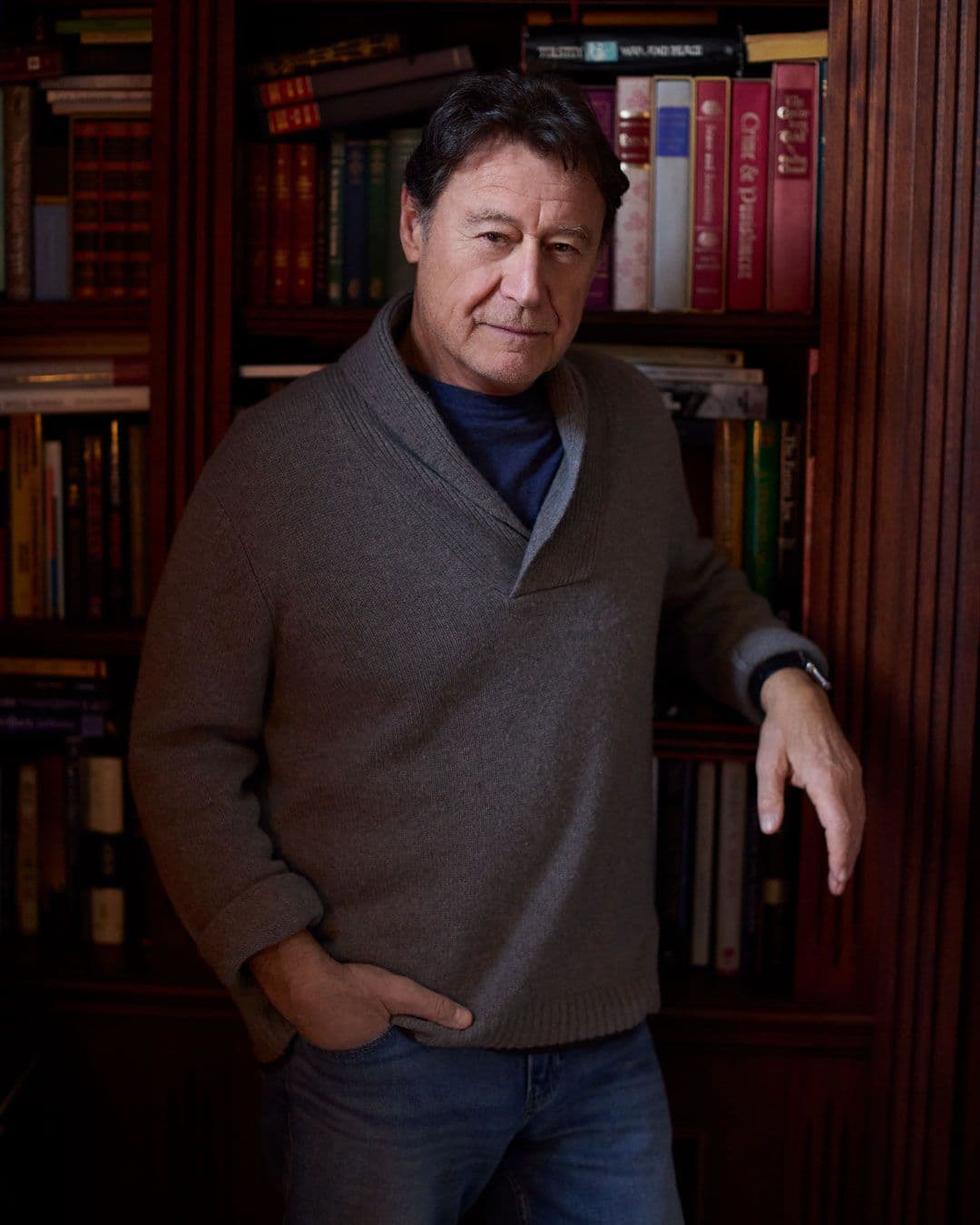
Robert Lantos dwells in a different world from you and me. We’ve done many interviews over the years. And no matter where I’ve found him – lighting a cigar with a blue jet of butane in his Toronto office, or lunching on the cliffside terrace outside Cannes, or on location in a Budapest arena draped with swastika banners while watching Ralph Fiennes fence at Hitler’s Olympics – this Hungarian-Canadian producer seems to own the room. He’s owned the lion’s share of Canadian film and TV production for much of the past three decades, too. This is a man who is comfortable not only in his own skin, but in his own movie. It’s a uniquely Canadian fable, and its origin story goes something like this:
Once upon a time in Hollywood North, the immigrant son of a Budapest truck driver rose up to become Canada’s one and only resident movie mogul. And in our world of shrinking screens ruled by streaming giants, he may be the last. Robert Lantos (no one calls him Bob) made his first bundle at 23, after scouting a festival of erotica in the Big Apple. With a promise to come up with $10,000 in 30 days, Lantos secured the Canadian rights to a compilation of films later aired as The Best of the New York Erotic Film Festival – Andy Warhol and Gore Vidal were among the jury that decided what was best. Lantos and Victor Loewy, a Romanian immigrant he met as a student at McGill, ran a tiny distribution company called Vivafilm that had no money. Lantos heard about a guy in Toronto named Moses Znaimer (now president and CEO of ZoomerMedia), who had just started up Citytv. So Lantos spliced together some of the 16 mm films, hopped a train to Toronto and showed them to Znaimer, with future star interviewer Brian Linehan serving as projectionist. Znaimer handed over a cheque and licensed the festival compilation for his new Baby Blue Movie series on Citytv. Back in Montreal, Vivafilm booked it in one of the city’s theatres, where it played for four months and grossed close to $150,000.
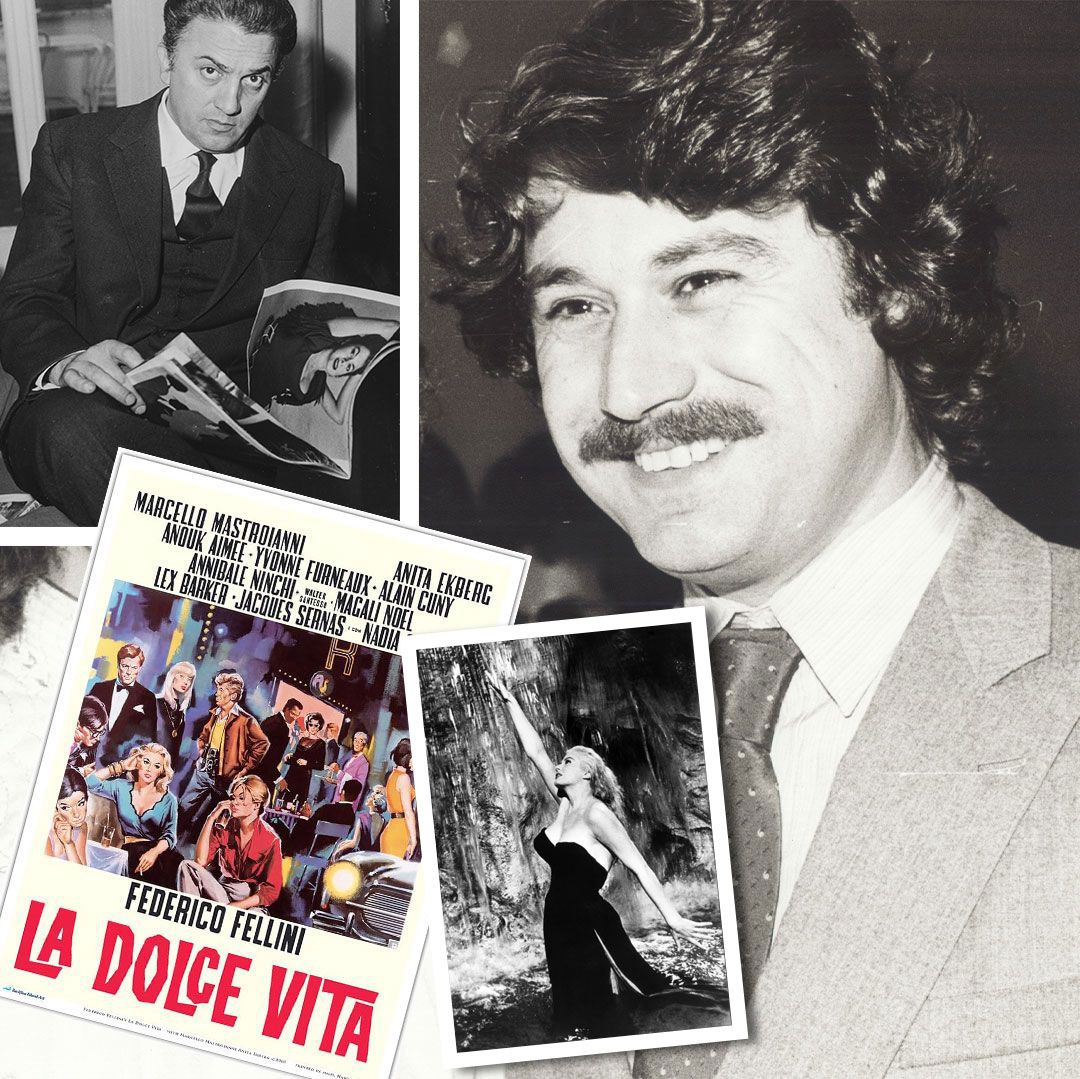
Lantos never looked back. In the ’80s, Vivafilm begat Alliance Communications, which was Canada’s largest producer and distributor of film and TV by the time he sold his share of the company in a 1998 merger that created Alliance Atlantis. The sale, sweetened by a deal to finance a slate of new movies, allowed him to launch his own studio, Serendipity Point Films. It was a moment of serendipity that first sparked his love of cinema at the age of 13, when he saw a poster outside an arthouse cinema on his way to school in Montevideo, Uruguay. His family lived there for five years after fleeing Communist Hungary in 1958, before moving to Montreal. “It was a poster for La Dolce Vita by somebody called Fellini, which meant nothing to me,” Lantos recalls. “But on this poster was Anita Ekberg with a very deep décolletage. I had never seen anything remotely like that.” Unable to buy a ticket because he was under 18, Lantos snuck into the movie by the fire escape and fell into a world he wasn’t looking for. “I went in because of Anita Ekberg, but I discovered Federico Fellini. That’s where it all started.”
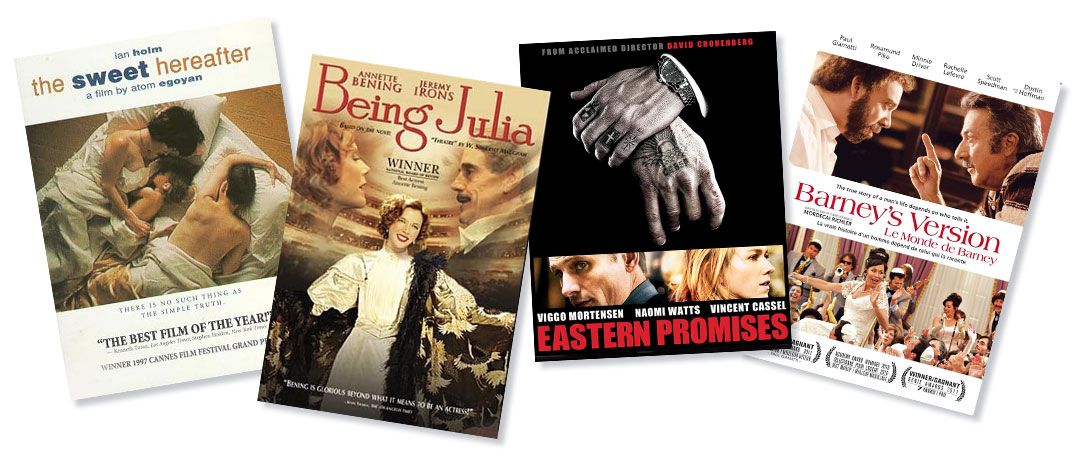
During a career spanning almost half a century, he produced some 30 Canadian features, including Oscar nominees such as The Sweet Hereafter (1997), Being Julia (2004), Eastern Promises (2007) and Barney’s Version (2010). Film producers don’t tend to be public figures unless they’re also actors or directors, but as an impresario known for his ebullient style, Lantos became a kind of politician on the tundra of Canadian showbiz. With Alliance’s virtual hegemony over the domestic industry in the ’90s, he used its TV and distribution arms to help finance his films while playing the public funding system for all it was worth. Fluently bilingual, he worked both sides of the French-English divide. From his Toronto home base, he ran the table like a high roller, without lip service to Upper Canadian politesse. And there was inevitable resentment among his smaller rivals.
But his motives were not entirely self-serving. As the industry’s prime mover in pushing for Canadian content, he did more than anyone to transform our culture of film and television. “No one comes close,” says Toronto film producer Bill House, formerly Telefilm Canada’s director of operations and then Alliance Atlantis vice-president, motion pictures. “Irrespective of whatever opinions people might have that Robert was too greedy or overbearing, he was the biggest presence in the production of Canadian content. Of all the guys who took their companies public – and Alliance was the first to do it – he was the only one to continue making Canadian movies.”
He blazed the way with television. Alliance’s Due South (1994-99), the CTV series that made Paul Gross everyone’s favourite Mountie, was sold to CBS and became the first Canadian series to air in prime time on an American network. Telefilm routinely financed productions without seeing any return on its investment. But House will never forget the day that Lantos issued a seven-figure cheque to Telefilm from that CBS sale of Due South. And if you’ve ever discovered a Canadian movie on an Air Canada flight, you owe it partly to Lantos, who stood onstage at the 1991 Genie Awards (now the Canadian Screen Awards), in a live broadcast sponsored by Air Canada, and berated the airline for not showing Canadian fare on its planes.
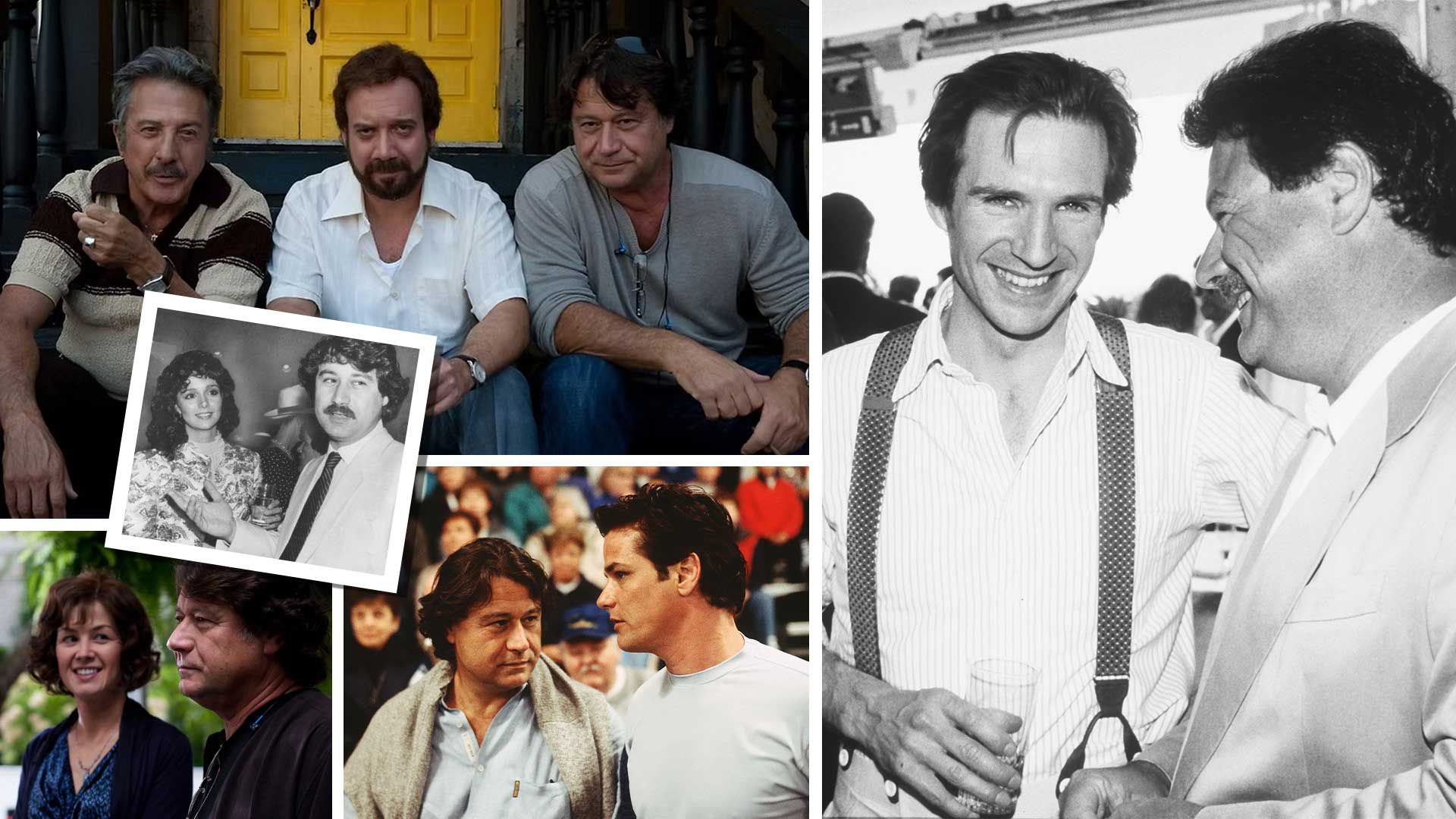
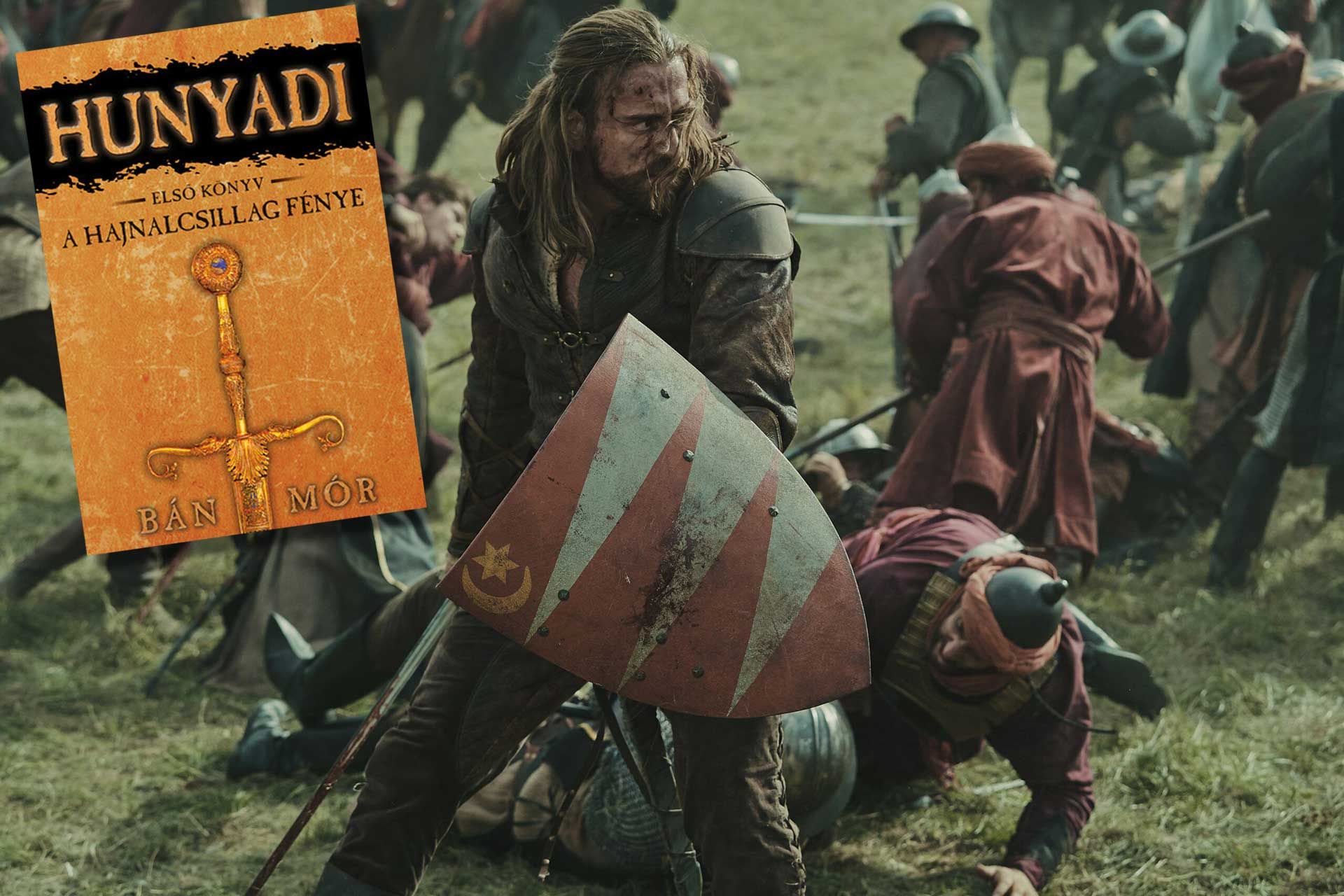
Once an empire builder, now an elder statesman at 76, Lantos has turned his focus to a national culture that’s part of his heritage. He has spent much of the past three years in Hungary producing Rise of the Raven – an epic 10-hour TV series that dramatizes the conquests of Magyar icon János Hunyadi, a military commander who defended Europe against an invasion by the Ottoman Empire in the 15th century. Now streaming on CBC Gem, this Hungary-Austria co-production, costing about $10 million an episode, is one of the most ambitious projects Lantos has ever undertaken. With spectacular battle scenes and lavish sets, it’s a saga of warlords, sex and palace intrigue on a mythic scale reminiscent of Game of Thrones (but without the dragons). Adapted from a 12-volume historical novel by Hungarian author Mór Bán, the series is populated by real-life historical characters, and in a bold departure from the reigning genre of medieval fantasy, none of them speak English. With a cast of some 600 actors, the subtitled dialogue unfolds in Hungarian, Turkish, Italian, Serbian, Czech, Romanian and Latin.
Lantos says he has read all 12 volumes of Bán’s novel in Hungarian, each about 500 pages. Unlike a lot of producers, who would rather read a pitch than a script, never mind a book, he’s a voracious reader. And his career has been grounded in literature, as he tried to infuse Canadian cinema with the prestige of CanLit, adapting novels by Mordecai Richler (Joshua Then and Now; Barney’s Version), Brian Moore (Black Robe) and Anne Michaels (Fugitive Pieces). Lantos has pursued a lifelong quest for cultural significance – and the elusive grail of the Great Canadian Movie. He traces that mission back to McGill, where he majored in English and film and discovered Richler and Leonard Cohen, who were, like him, Montreal Jews. “I love, love, love Mordecai Richler,” he told me in a recent interview. “He spoke a language I understood. And seeing the film of The Apprenticeship of Duddy Kravitz was the first time I thought that maybe you could make good movies in Canada. It never occurred to me before.”
It has been ages since I’ve interviewed Lantos face to face. On a warm fall afternoon, we meet at his home in one of Toronto’s more upscale neighbourhoods, and sit on the back patio, overlooking a pool long enough to swim laps and a two-storey coach house that serves as his office and gym. He looks slimmer and more relaxed than I remember, and his manner seems softened by a contemplative air – the kind that only age can confer. But maybe it’s just the jet lag. He’s fresh back from a victory lap in Hungary, where the National Film Institute honoured him at its Budapest Classics Film Marathon, showing 14 of his movies – including four directed by Atom Egoyan and three by David Cronenberg, who both flew in for the event.
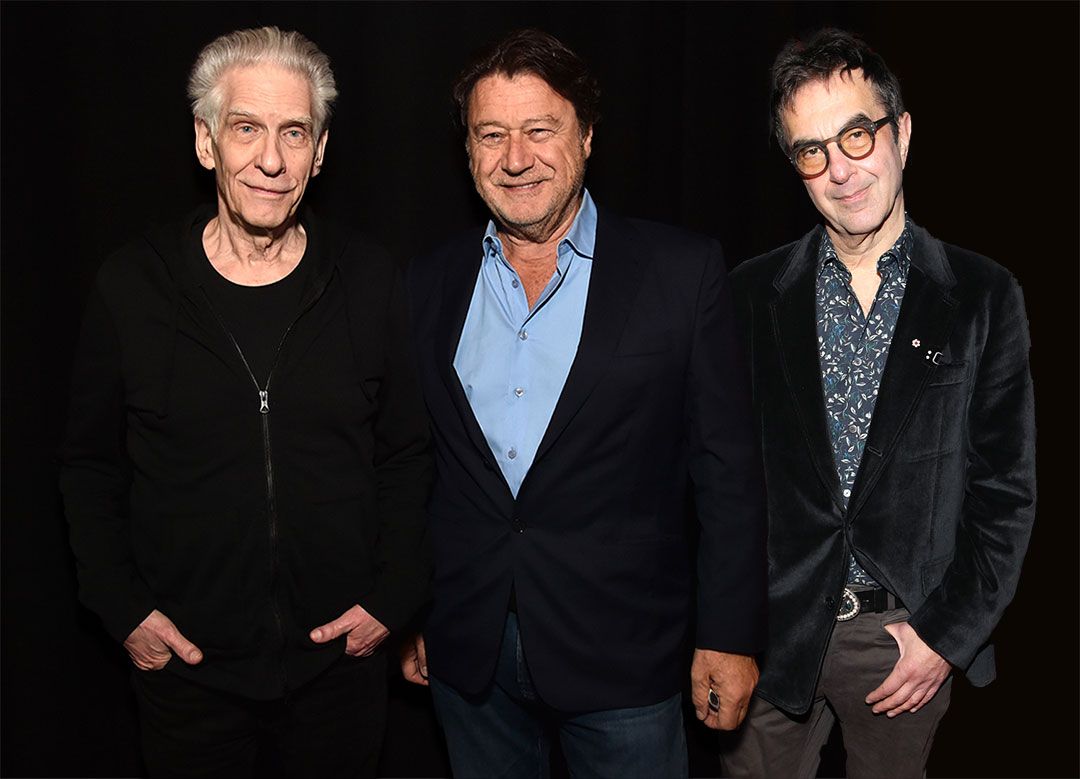
“We had a great deal of fun,” says Lantos, who relished a rare opportunity to wine and dine his auteur friends in his hometown. He made a point of bringing them to Rosenstein, the same family-owned Jewish-Hungarian restaurant that he took me to in 1998 when I was in Budapest to write about Sunshine, the historical epic he made with director István Szabó, starring Fiennes, Rachel Weisz and Molly Parker. He says that the restaurant is like “my mother’s kitchen, and probably the last of its kind.” Which is what he said 27 years ago when he urged me to try the bone marrow, calling it “mother’s milk.” It tasted weird, but I ate it. So did everyone else at the table this latest time, he tells me, when his guests included Szabó and Cannes Film Festival director Thierry Frémaux.
Cannes holds a sacred – and profane – place in the producer’s heart. A dozen of his films have premiered at the festival, beginning 40 years ago when Joshua Then and Now competed for the Palme d’Or. Egoyan’s The Sweet Hereafter came close to winning the Palme in 1997, taking the runner-up Grand Prix and was nominated for two Oscars. Lantos also has fond memories of the firestorm that erupted when his Canada-U.K. co-production of Cronenberg’s Crash (1996) premiered in competition, with Egoyan on the jury. Based on J.G. Ballard’s novel, this outlandish story of characters who get sexually aroused in car crashes, provoked more controversy than any film to hit Cannes in recent memory. “I’ve never had so much fun in Cannes as with Crash,” Lantos admitted during his Budapest tribute, on a panel with Egoyan, Cronenberg and Szabó before a sold-out crowd at the opulent Urania National Film Theatre. “It was hilarious,” he said, “and a marketing dream. The next day, the front page story of the Daily Mail, was ‘Ban This Car Crash Sex Film!’’’
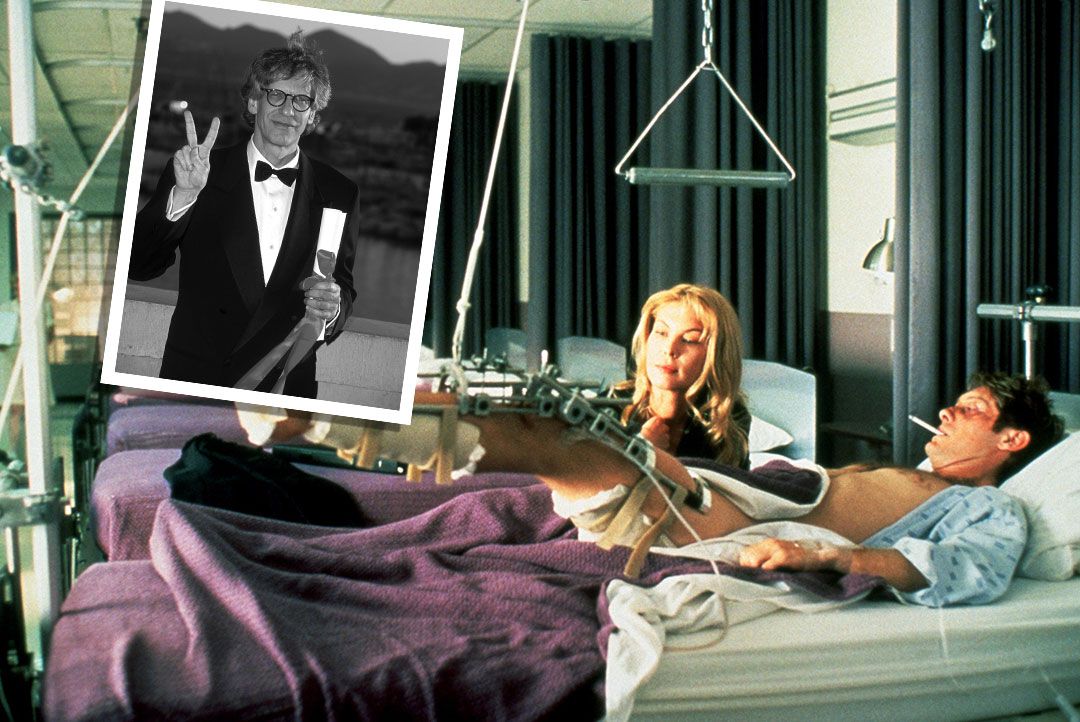
It was Egoyan, however, who served up the juiciest Crash anecdote while discussing his experience on the jury during its final deliberations under president Francis Ford Coppola. Egoyan shared the story with me in confidence decades ago – jury members are sworn to strict secrecy – and I’ve kept it under wraps ever since. But that night in Budapest, he made it public. “It was a very crazy situation, uh, yeah, I can tell the story now,” he ventured, explaining how Coppola produced a stack of cards marked with the names of the films in competition. “He basically said, ‘Okay we’re going to do this with three different piles – a pile that we think might be Palme d’Or-worthy, a pile of films that definitely are not and a pile that are in between.’ Then he took the card that said Crash, he lit a match and burned it!” Coppola, he added, detested the film, but after an intense lobby led by Egoyan, the jury awarded it a special prize “for originality, for daring, for audacity.” Still, at the awards ceremony, Coppola stressed that the decision was not unanimous and some members “very passionately” abstained. Which, as Egoyan pointed out in Budapest, “was not the classy thing to do when you’re president of the jury.”
Controversy over films that violate sexual taboos has coloured Lantos’s career at almost every turn, beginning with his first feature film, L’ange et la femme (1977), by veteran Quebec auteur Gilles Carle. It’s infamous for a love-making scene between Carole Laure, the director’s girlfriend at the time, and musician Lewis Furey. Laure got so impatient with Carle interfering that she begged Lantos to send him away. They were shooting the movie in a country house in Quebec’s Eastern Townships. Lantos spoke to Carle, and the director walked out into the snow and drove home to Montreal, leaving Laure and Furey to perform unsimulated sex as the camera rolled. The stars of the film would later marry.
The following year, on opening night of the Toronto film festival, there was a near riot at the oversold premiere of In Praise of Older Women, a Lantos movie based on a novel by Hungarian author Stephen Vizinczey. Ontario’s censor board turned this harmless romp into a hot ticket by demanding a 38-second cut to a tame scene of a couple making out behind a couch. Lantos refused to make the cut. As a mob fought to get into his movie, the producer rode to the premiere in a cortege of horse-drawn carriages with stars Karen Black and Tom Berenger. And the Lantos legend was born.
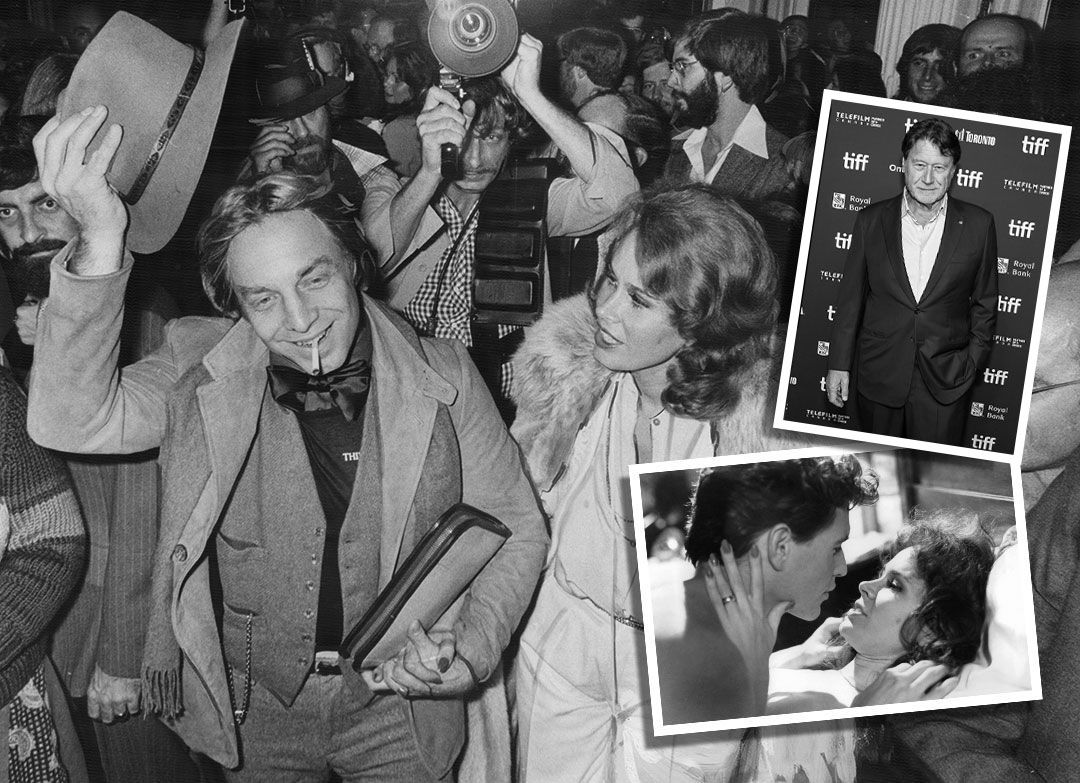
In 1981, he produced Your Ticket is No Longer Valid, an erotic drama based on a French novel about a paranoid businessman who embraces a cuckold fantasy as he suffers performance anxiety with his young girlfriend. It was one of the most expensive Canadian movies ever made at the time, and it dealt Lantos a rude lesson on the perils of casting a high-priced, heavy-drinking Hollywood star – the late Irish actor Richard Harris (This Sporting Life, Camelot). The trouble started with a misunderstanding over casting. And it went downhill from there. During pre-production, the producer and star got into an actual physical fight. “He threw a plate at me, aiming at my head. He missed. Then I shoved him backwards. Then he told me that he was a member of the Irish Republican Army. And that was it for me.” In the end, Harris stuck with the picture, which turned out to be one of the producer’s more ignoble flops.
True to form, eros is a key component of his latest extravaganza, Rise of the Raven, which offers sumptuous interludes of sex and nudity in almost every episode. When I mention this to Lantos, he maintains that they are integral to the history, and that the hero’s first love, Serbian princess Mara Branković (Franciska Törőcsik), indeed became the Ottoman Sultan’s lead concubine after being gifted to him by her father. Raven doubles down on this convenient truth with luxurious love-making scenes in the silk boudoirs and turquoise baths of the Sultan’s palace. “We’re going to have these scenes,” Lantos says, “so let’s not cut away the moment they enter the bedroom. We follow them, just like we follow them into battle. We don’t cut when the battle begins.” Besides, he adds, “We cast very good-looking actors and actresses. Why not give the audience that pleasure of seeing them? I believe in pleasuring the audience.”

While instructing the show’s writers to “not shy away from intimacy,” he also insisted that Janós Hunyadi (Gellért L. Kádár), the story’s hero, be flawed and his antagonist be attractive. When we first glimpse the Sultan Murad (Austrian rap-musician-turned-actor Murathan Muslu), says Lantos, “all we see are the points of his shoes, as members of the court kneel to kiss his feet. When he gets to Mara, who will be traded to him as his concubine, she is not kneeling. He takes her hand, and as the camera moves up, we expect a gross old man. But we see this incredibly handsome, magnetic face. In one second flat, we go from thinking ‘poor girl’ to ‘lucky girl!’”
So while cementing the legacy of a Hungarian warrior, who led a Christian crusade against Islam, Lantos has made Murad a sensitive hunk with an adoring harem – a sultan of swing as opposed to the spartan hero who spends most of his life in the mud of war. Meanwhile, back in Hungary, a Machiavellian noble mocks the crudeness of his own people as he considers the prospect of their defeat with sanguine indifference, musing, “Would it be so bad if they spent their evenings at the steam baths instead of at the pub? And if they sobered up for once and learned to count? If their church wears a crescent moon instead of the cross?”
In fact, the cleansing quality of Turkish baths gave the Ottoman Empire a military edge. “The Hungarians often lost battles because of dysentery,” says Lantos. “They had no hygiene.” In the 16th century, he adds, the Ottomans did conquer Hungary and ruled it for 145 years, leaving a permanent legacy of sanitation. “They discovered medicinal hot springs under the ground and built swimming pools above them,” she says, adding that Hungary now has more thermal pools and public baths per capita than any country in the world. And swimming pools are where Lantos fought his first battles. He played water polo from the age of 14 to 22 and competed on Canada’s national team – a fact that the late film producer and Toronto International Film Festival co-founder Bill Marshall once seized upon when describing Lantos as “the essential water polo player: grace above the water, kicking and gouging beneath.”
He still swims, and now works out several times a week with a personal trainer. “I do a protocol called ‘super slow,’” he says. “It’s pure strength work to keep the muscles – important at our age. And I walk whenever I can.” Lantos lives alone. He had a six-year marriage to actress Jennifer Dale, which produced a son and daughter – Ari, 45, a freelance producer, and Sabrina, 41, a film-set photographer. “Despite my often being an absentee father since I was building a company,” he says, “I have two great kids and now a granddaughter. And that’s an ongoing sense of satisfaction.”
Since his divorce from Dale in 1986, Lantos has not remarried. “I’ve had a few close calls,” he allows. “But long-term commitment – what you’re supposed to do when you get married – has not been my strength. Not when I was younger. Maybe at this stage in life.”
When I ask if he currently has a partner, there’s an awkward silence.
“So it’s complicated?”
“You could say that. I can’t give a simple answer…neither single nor married.”
Over the years, Lantos acquired quite the reputation as a lady’s man, to use that quaint euphemism glamourized by Leonard Cohen. And he doesn’t deny it. But just as he no longer cuts a wide swath through the industry he once dominated, the swashbuckling image of a playboy producer is a thing of the past. Back in the day, he was famous for hosting lavish parties, notably the annual Alliance bash that took over the Royal Ontario Museum during TIFF. “There was unlimited booze, unlimited food, live music,” Lantos recalls wistfully. But the parties in Cannes were a whole other world. The first time Lantos was there, with Joshua Then and Now, he had no money for parties or promotion because the film had been orphaned by its distributor, 20th Century Fox, after the studio head was fired and replaced by Barry Diller. Then Marcel Masse, who held Ottawa’s culture portfolio as communications minister, decided to attend the premiere. After a call to Canada’s ambassador in Paris, Lantos found himself hosting a soirée at the legendary Moulin des Mougins, a three-star Michelin establishment overlooking Cannes. “We took over the entire restaurant,” he says, “all paid for by the Canadian government through the Paris embassy.”
Lantos mastered the art of extravagance – like not staying in Cannes but up the coast with the stars at the ultra-luxe Hôtel du Cap. But the conspicuous posture was also a means to an end, to a refined sphere of influence. While casting Hollywood stars in Canadian movies to get them financed, he remained an independent producer who was not of their world. And with Cronenberg and Egoyan at the top of his portfolio, one can hardly accuse him of not taking artistic risks.
“Sure, he’s done mainstream things,” Cronenberg told me in a recent interview, “but I think his heart has always been in the edgier stuff because that’s the kind of person he is. I’ve never had to worry that he would get nervous about some experiment I want to do or how extreme it might be. He’s fearless.” And he’s tenacious. “Once he thinks a movie or TV series should get made, he will not let it go,” says Cronenberg, citing the producer’s drive to make Crimes of the Future (2022) after resurrecting a mothballed script that Cronenberg had written for Lantos two decades earlier. “Robert spent years trying to convince me to make that movie, and he wouldn’t let go.”
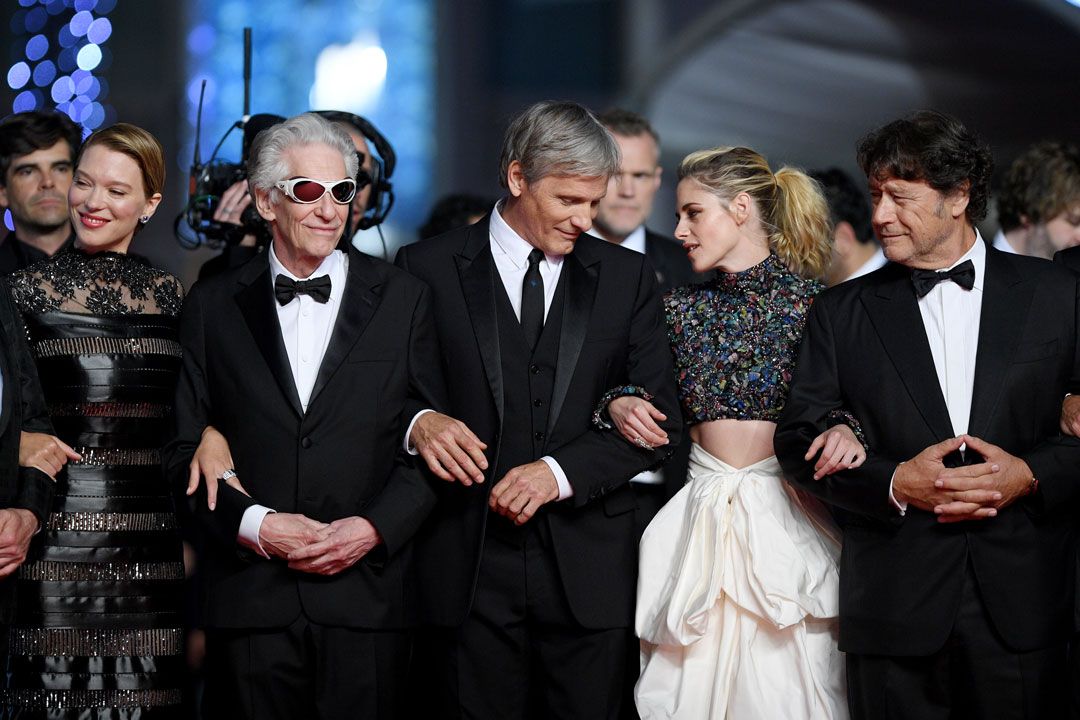
Cronenberg and Lantos go way back. They first met in Cannes in 1975, when the director was promoting Shivers, his third feature. “I didn’t have a place to stay,” the director recalls. “I was living in Tourrettes, in the mountains, and for the festival I was sleeping in the Canadian Film Development Corporation’s suite at the Carlton Hotel.” Now Cronenberg lives just around the corner from Lantos. Over the years, “we’ve become very, very close,” he says. “Sometimes I’ll go to his house and have a coffee or a meal. We know a lot about each other and our families. Like two old guys, we talk about medication. We’ve talked about everything, Israel and religion and God knows what. We talk about politics very intensely because we don’t have the same politics – I’m to the left of Robert – but we do it in a civilized manner. It’s not something that gets in the way of our relationship.”
While they are both Jews, one area where they don’t see eye to eye is the conflict in the Middle East. Lantos has long been an ardent supporter of Israel and a critic of pro-Palestinian protests. And he has made Judaism as much a part of his cultural heritage as his Canadian identity and Hungarian roots. “I didn’t realize I was a Jew until I was eight,” he says. “I was the only Jew in my school in Uruguay, and that was a constant source of bullying. I learned how to fight and when to run. There were a few broken noses, and that’s stayed with me for life.” The recent surge in antisemitism strikes particularly close to home. One thing he says he loved about spending the last few years in Hungary was the lack of antisemitism. Back in Toronto, he was appalled to see the menorah on the front door of his office building vandalized on two occasions.
Lantos has now sold his company’s headquarters. It’s an elegant three-storey structure that he had built in midtown Toronto, with a sunny atrium anchored at the reception by a towering brass-and-copper espresso machine. His office occupied the top floor, with an expanse of floor-to-ceiling windows, a terrace and walls lined with black-and-white photographs of Cannes. Lantos says it broke his heart to sell the building. “I did it to convince myself to take retirement seriously. I want to retire, but I’m not sure how.” He still has several movies in the works, including one that Cronenberg is writing based on his surreal 2014 novel, Consumed; an adaptation of Michael Ondaatje’s 1987 novel, In the Skin of a Lion, that has been stalled in development for decades; and Embers, which is based on a 1942 novel by Hungarian author Sándor Márai. Asked what he would do once he’s done with making films, he says he would like to travel to “places other than Paris, New York, L.A., London . . . places I’ve never been, like Bhutan. And I’m working on a book.”
“A memoir?”
“Something like that…a family memoir.”
Lantos has no end of material. When his mother, Agnes, died in 2017, she left him 20 hours of memories on audio tapes that she had recorded in Hungarian. And her story could be its own movie. In her teens, Agnes was Hungary’s fastest swimmer in the 200-metre breaststroke, but her Olympic dream was dashed by the country’s fascist government, which prohibited many of its Jewish athletes from competing at Hitler’s 1936 Summer Olympics in Berlin. Agnes also dreamt of being a doctor, until Jews were banned from medical school. Good with her hands, she became a fashion designer. When Budapest’s Jews were being herded onto trains bound for the death camps, her two swimming coaches, a couple, took her in as their “daughter” with a fake name and a Christian passport. And during the war, she got a job making dresses for Nazi officers’ wives. “She worked at the Gestapo headquarters as a Jew in disguise,” says Lantos. “She was paid with food that she used to feed her parents, who were hiding in a basement.” After the war, he adds, what his mother and father endured under Communist rule . . . well, that’s a whole other story.
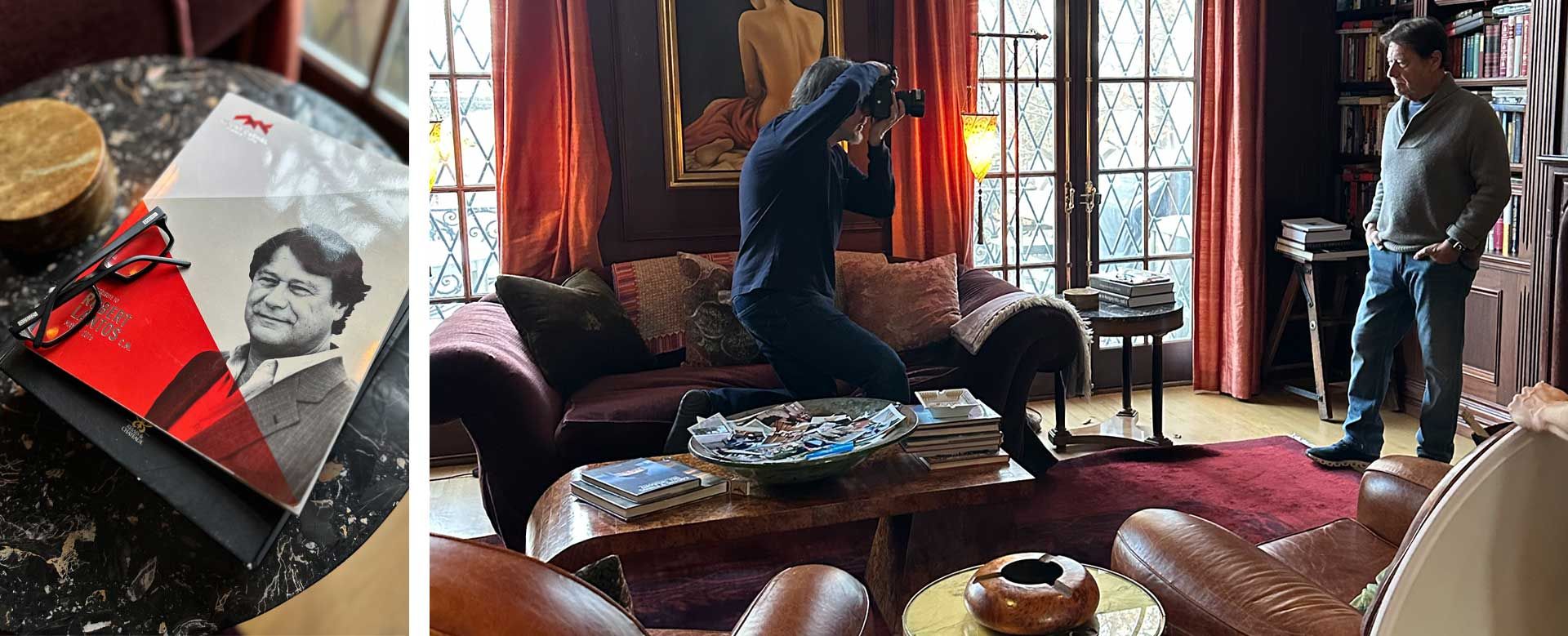
Our interview has gone deep into overtime, but just when I’m sure there is nothing more to know, at the risk of burying the lead, here’s what Lantos divulges as I’m about to leave. In 1971, looking for money to get him through grad school at McGill, he landed a summer job concocting fake news and writing sex columns. Working for Globe Newspaper Group, the Montreal publisher of a dozen tabloids, including Midnight, Close-up and Examiner, he dashed off stories with headlines like “Mafia Steals 10,000 Babies Every Year – Then Trains Them to be Future Prostitutes.” He also wrote personal columns under female pseudonyms, such as “Diary of a Nymphomaniac,” “I A Lesbian,” and “The Journal of June Frank.” At the office, he would get fan mail from readers who fell in love with his fictional personas. “It was insane,” he says. “A woman crocheted a sweater and sent it to my gigolo character. There was a guy in love with my June Frank prostitute who wanted to marry me – he had lumbago and lived with his mother in Cleveland.” Lantos says he wasn’t allowed to respond to the letters but he still has them, stashed in a box.
He also played a role in a faked Midnight photo that proved JFK was still alive and living with Jackie on a Greek island. The blurred telephoto shot was staged on Mount Royal against a backdrop of papier mâché Greek columns, he recalls. “There was a woman in big, dark glasses and a pantsuit behind a man slouched in a wheelchair with a bandage around his head.” Lantos was cast as a bodyguard, “a beefy guy in a wife-beater shirt – I had bigger muscles back then.” A couple of weeks later, while travelling around Europe on his ill-gotten gains, he was walking down Rome’s Via Veneto one night when he passed a kiosk and saw himself in the fake photo, blown up on the cover of a tabloid. “It was an Italian translation of the story which had gone half way around the world, and there I was, on a kiosk in Rome!” Lantos marvels, “And that’s when I learned a lot about fact and fiction and where they merge.”
And as it turns out, Lantos’s tabloid escapades aren’t a new revelation, but they can be found buried somewhere in a library archive, because he later drew on them to compose a thesis on the tabloid press for his M.A. in Communications at McGill – and in “Lying for Fun and Profit,” a cover story he wrote in 1973 for Saturday Night, a major Canadian magazine at the time. This was a man who knew how to mine a good story. “My only regret,” he says, “is that I never developed it into a film.” And he figures it’s too late to start now. “I have enough.”
As fact and fiction come full circle, a life lived as a movie turns into a period picture. One that may never get made, but it’s rich enough for a memoir. The true story of Robert Lantos remains to be written. And the mogul who began his career as a writer may yet end up as one, if he ever learns how to retire.

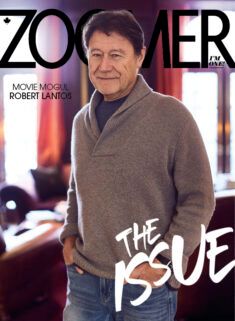
ON THE COVER:
Producer Robert Lantos photographed
at his Toronto home in January 2026
by Chris Nicholls.
Creative Director: Tanya Watt.
Grooming: Jodi Urichuk/Plutino Group