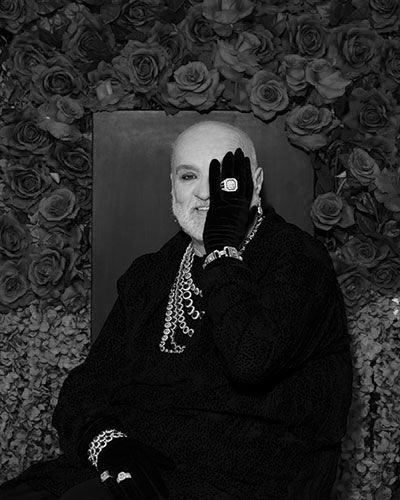
Salah Bachir, the Toronto philanthropist who combined his entrepreneurial success as president of Cineplex Media with his energetic support for social justice causes, has died aged 71 after a prolonged illness. Bachir’s passing was announced by his husband, artist Jacob Yerex, who posted a simple “Have a good slumber my sweet habibi,” late yesterday evening.
Toronto’s arts community reacted to the loss of a giant. Jeanne Beker wrote: “Philanthropist, bon vivant, art aficionado, and true “mensch” the much beloved Salah Bachir was an inspiring force to all of us.” Bachir was a founding member of the Canadian Foundation for AIDS Research (CANFAR), which posted: “Salah was part of CANFAR’s story from the early days of the HIV/AIDS crisis, when fear and stigma ran deep, and the need for advocacy was urgent.” His commitment to the community, they said, “never wavered.”
View this post on Instagram
In a Facebook note released after his death, Bachir himself wrote: “I feel as if I have lived several lives and I am profoundly grateful to the friends, family and colleagues whose support has helped me realize my dreams and make my achievements possible.”
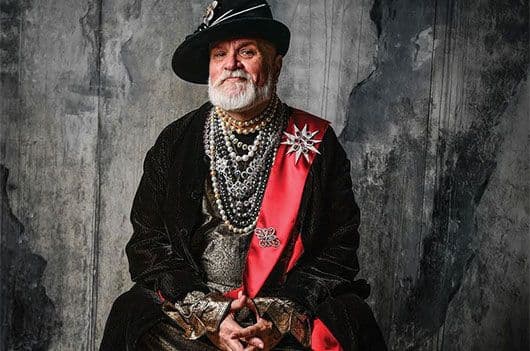
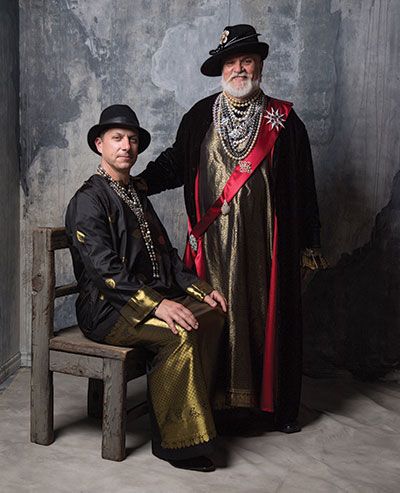
His achievements were many, and lasting. Bachir was an exuberant personality with a broad swathe of friends networked across communities, and he embraced a joyful and dramatic sense of style, known for his pearls and brooches and love of parties, from which he derived the nickname “Gala Salah.” But it is his legacy as a fundraiser and philanthropist that has transformed many causes, and the concrete places and programs that sustain communities.
Born in Lebanon, Bachir emigrated to Canada in 1965 at the age of 10. He chose to fight for the underdog from a young age: at 15, he picketed outside of a Dominion store to support César Chávez during the grape boycott. As an entrepreneur and businessman, he served as president of Cineplex Media between 2005 and 2021, where he founded and published Famous Magazine, which later became Cineplex Magazine. Later in life, his philanthropic work was broad-ranging, personal and always impassioned: he raised extensive funds for Casey House and he threw an annual gala for The 519 Community Centre over two decades, bringing Ben Vereen, Patti LuPone and Elton John out in support; a wing of the centre is named for him to honour his efforts and personal donations. He was a champion of the Inside Out film festival, the Canadian Film Centre and the AGO. A serious art collector (with pieces by Warhol, Herb Ritts and Canadian artists Yousuf Karsh, Betty Goodwin and Attila Richard Lukacs), he served as chancellor of OCAD University from 2017 to 2021. He and Yerex endowed the Bachir Yerex Family Dialysis Centre at Toronto’s St. Joseph’s Health Centre.
See below for two of Zoomer’s profiles that capture Bachir’s life of joy and giving as well as a review of his delicious and gossipy celeb-filled memoir: First to Leave the Party: My Life with Ordinary People … Who Happen to be Famous.
– FROM THE ARCHIVES –
June 2021
The Salah Effect: How Salah Bachir Harnessed His
Passion for Social Justice
by Leanne Delap
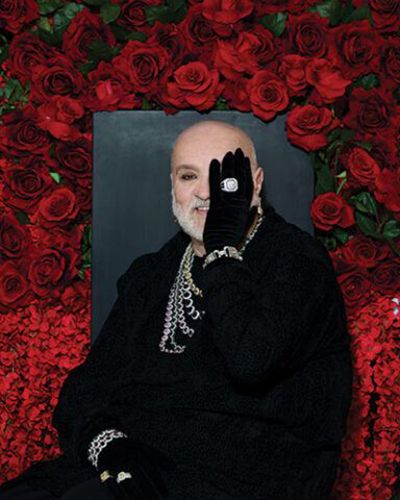
When Salah Bachir threw himself a 65th birthday bash last October, it was a virtual celebration to put all other COVID-19 birthday bashes to shame. Instead of the requisite Zoom call, which would have required several computer screens to view his legion of friends, family and beneficiaries, the Toronto philanthropist saw an opportunity to do what he does best.
He combined the party with the annual fundraiser he organizes for The 519, a Toronto organization that supports the LGBTQ community. Then Bachir, The 519’s honorary patron, exponentially amped up the entertainment factor. Attendees were treated to a private digital extravaganza with messages from Elton John and his husband, producer David Furnish, Margaret Atwood, the Barenaked Ladies and Andrea Martin, not to mention performances by a lineup of legends including k.d. lang, Patti Lupone, Carole Pope, Ben Vereen and Alan Cumming. By the end of the night, the president emeritus of Cineplex Media had raised $500,000 for The 519, which supports some of Toronto’s most vulnerable and marginalized residents. Although Bachir retired last year, he’s still an executive consultant for Cineplex as well as the president and CEO of Phamous Characters, a sponsorship, branding and events company he has run for four decades.
The 519’s executive director, Maura Lawless, says Bachir’s birthday fundraiser was their “largest and most successful” annual event ever, but his sprawling network of deep pockets has a lasting legacy as well. “The other kind of intangible element is that through his involvement, corporate partners and other philanthropic supporters have developed longer-term deeper relationships” with the centre.
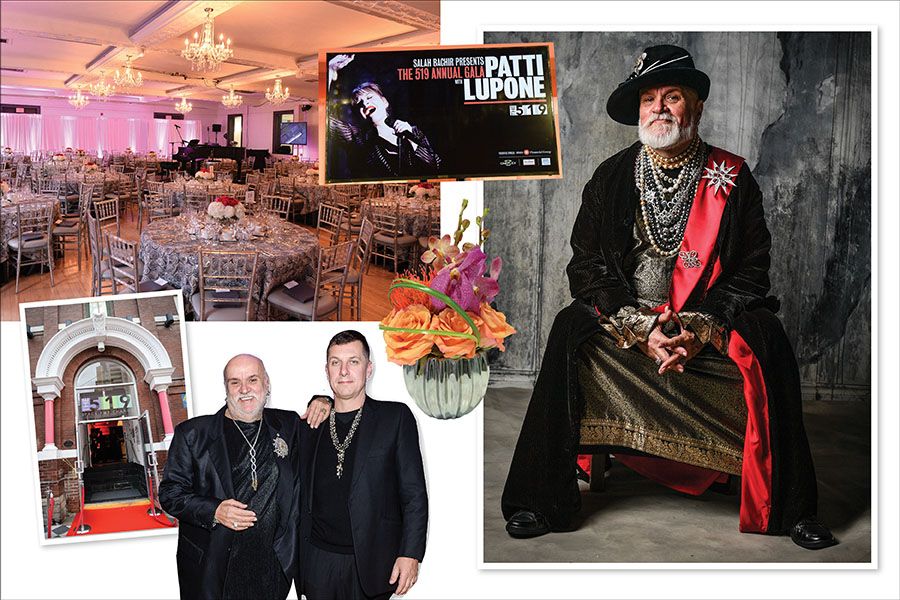
Affectionately dubbed Gala Salah for his larger-than-life-of-the-party presence on Canada’s schmancy rubber-chicken dinner circuit, Bachir recently told his Instagram followers he’s more than happy to stay home these days.
“For the record, I do not miss dressing up for parties,” he wrote on Feb. 24, posting a picture taken two years ago at an Oscar party in L.A. where he is decked out in the eye-popping jewelry he favours — usually an extravagance of pearls but, in this case, a blingy three-strand necklace, a massive lapel brooch and an armful of sparkly bracelets.
That diamond-studded Oscar party picture was taken just months before he had several surgeries “and had to relearn how to walk three different times,” the kidney-transplant recipient wrote. “And I am alive. So in perspective, every day is better than the last.”
Everyone who has worked with Bachir on myriad fundraisers going back to the 1980s knows he has a few edicts, including “We should all be having more fun,” says Nancy Lockhart, who met him in the early ’90s when they both sat on the Canadian Film Centre board. They are dear friends to this day; Bachir and his husband, artist Jacob Yerex, offered unwavering support when her husband, real estate developer, art collector and philanthropist Murray Frum, died in 2013. When it comes to galas, she knows where Bachir stands. “Speeches can be boring as hell. You’ve paid the money and then you get punished. Salah is about bringing on the entertainment.” Every colleague interviewed for this story shared Bachir’s golden rule of galas: “No live auctions! Never a live auction!”
Bachir was born in Lebanon and emigrated to Canada in 1965 with his family when he was 10, where they settled in Rexdale, a northwestern Toronto neighbourhood.
“I grew up playing hockey and lacrosse,” he says. “I still watch the NFL religiously. People have trouble reconciling that with the guy who wears pearls. Well, jewelry makes the man, I always say.” And how did he discover his signature accessory? “[The late arts patron] Bluma Appel invited me to a lunch where all the ladies were wearing pearls,” he says. “The next lunch, I wore my pearls, too. I told them I wanted to fit in!”
Fitting in versus standing out has been part of the narrative tension of Bachir’s life since the family immigrated to Canada. In Rexdale in the ’60s, “There were two WASPs between the Greeks, Italians, Yugoslavs and us, the Lebanese. My mother broke barriers, taking stuff from her garden back and forth to the neighbours.” One of his earliest memories is from Lebanon, when his mother and grandmother would give food to those who had none.
“I remember my grandmother baking pita bread and telling me someone needed it more.”
Bachir’s passion for social justice is deep-rooted. His father was a union man, and he grew up going to the Labour Day parade. “Watching the Vietnam War on TV, the assassination of MLK, that shocked you awake.” When Bachir was 15, he stood outside the Dominion grocery store in the Rexdale Plaza to raise money for U.S. labour leader and civil rights activist Cesar Chavez, who was making an appearance in Toronto near the end of the Delano grape boycott to protest the exploitation of California farm workers. “It’s kind of funny because I love grapes,” Bachir says. He collected about $150, and $50 of that came from his dad. “I gave it to Chavez shyly. He told me how much $25 would mean to a family of migrant workers. And he told me something I will never forget: he said that the money I gave him was $150 more than the cause had that morning.” Bachir remembers bemused parents of his friends bringing him cookies whenever he was protesting outside the Dominion, whether he was boycotting produce or calling attention to native rights, South African apartheid activist Steve Biko’s assassination or the testing of American cruise missiles over Canada. “My mother was relieved when I was going out somewhere else rather than to stand in front of the grocery store where she shopped.”
But it was his student days at Waterloo University — where he studied history and political science — that reinforced how food can unite people for the greater good. After he and fellow Marxist-curious students occupied the student newspaper for nine months. When the administration “closed it without due process,” Bachir joined the International Students’ Association. “We threw potluck suppers to gather votes,” he says. “It taught me you can break a lot of barriers through food. You can build support for things, find kinship. You disarm people — they feel better having eaten something.”
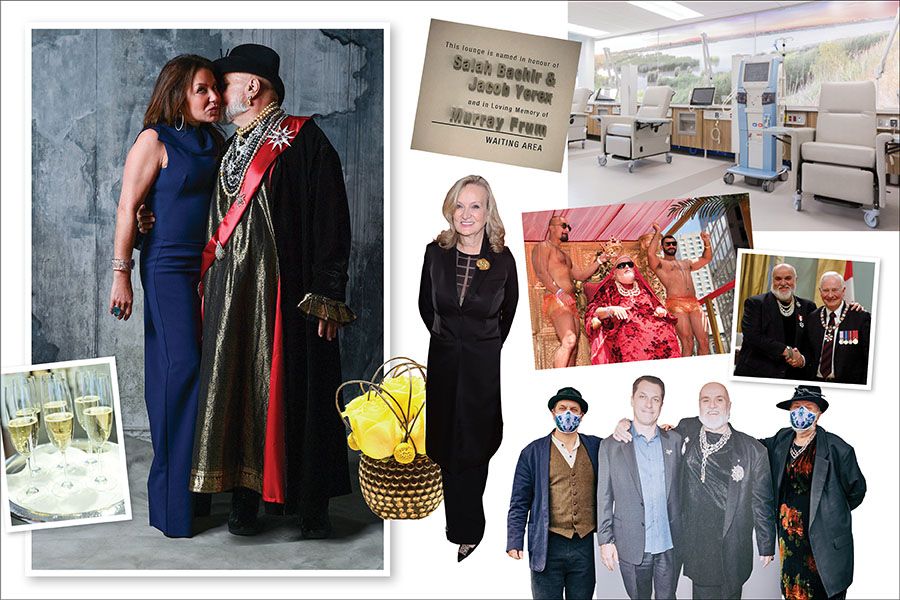
His commitment to LGBTQ causes is close to his heart. As an Arab son, he struggled as a closeted gay man. When he came out to his father when he was about 30, his dad asked if his mother knew. “I said I had already told her,” Bachir says. “So my father then goes, ‘Wait, I thought I was your best friend!’”
He was reticent to come out to work colleagues and his sports pals but recalls his relief at a Super Bowl party he threw in that era. A friend, sensing his nervousness, said, “Sal, come on, I know you are gay. No straight guy ever catered a Super Bowl party from Fenton’s,” referring to the long-shuttered, swanky Toronto restaurant beloved by the upper crust for its leek and Stilton soup.
Bachir, a man of entrepreneurial verve, watched his brother open a video store and decided to start a trade magazine when he saw an opportunity. He added on a video trade show, then video awards galas. He worked with Universal and Disney on home video releases, eventually joining forces with Famous Players, which merged with Cineplex. His innovation, according to Marketing magazine, was to revolutionize and legitimize the in-cinema business, building blockbuster ads with clients and inserting a few powerful social justice-themed public service announcements (including the time in 2005 when he got death threats for an ad that read: “‘I do’ means the same whether you are straight or gay. Let your MP know you support our Charter of Rights and Freedoms”). He also launched the Scene loyalty program and Cineplex magazine. “We don’t go in for celebrity gossip,” he says, citing the secret of his publishing success.
His health issues with kidney disease led to a longtime association with another beneficiary of his charitable giving, St. Joseph’s Health Centre. While receiving dialysis at one of its clinics, he decided patients needed a serene space. He wanted to raise money and raise it fast, so he got on his phone and organized the Non-Gala Gala in 2013.
“Don’t buy a dress. Don’t get a sitter. Don’t pay for parking. Don’t have a bad meal,” he said in an email to a vast network of contacts from his gilded Rolodex. “Just send me the money.”
That effort netted $250,000, which was used to spruce up the hospital’s dialysis and chemotherapy clinics and buy TVs to help patients occupy the time as they spent hours each week hooked up to the machines that clean toxins from their blood. He later upped the ante, raising $2.5 million for entirely new clinics. Bachir, whose kidney transplant occurred in 2019, has had dialysis “all over the world” and thus is especially proud of the Bachir Yerex Family Dialysis Clinic at Toronto’s St. Joseph’s Renal Centre. The couple has even donated some of their art collection to adorn the beautiful new space.
The list of causes Bachir has thrown himself into is long and always personally meaningful. He is a founding member of the Canadian Foundation for AIDS Research (CANFAR) and raised money for Casey House – Canada’s only freestanding hospital for HIV/AIDS patients – as well as the LGBTQ Inside Out film festival, the Canadian Film Centre, the Art Gallery of Ontario and the Ontario College of Art and Design University, where he is the chancellor.
He threw a Wild Bird Ball for the Pelee Island Bird Observatory and, in 2016, he served as Grand Marshal of the Pride Parade, surrounded on the float by men in gold bikinis. He received the Variety Club Heart award in 1996, the Canadian Centre for Diversity Human Relations Award in 2012, the Order of Canada in 2017 and the Order of Ontario in 2020. Of these last two honours, which come with a lapel pin, he quips, “I learned that if you wear brooches” – he does, as often as possible, original commissions – “the pin goes over the brooch.”
Bachir and Yerex usually live in a condo overlooking Toronto’s waterfront, where 3,000 works of stellar art surround them, including deep dives into the portfolios of Attila Richard Lukacs, Betty Goodwin, Stephen Andrews and an array of some 60 Warhols.
He and Yerex and their Havanese dog, Max, have been dividing their time during the pandemic between their condo and their country house in Paris, Ont., once owned by the town’s mayor. Built in 1842, Alexander Graham Bell was a guest, “though you’d think the phone would work better than it does out here, with that pedigree,” Bachir jokes.
Bachir is endearingly direct in all his communication, his friends report. Andy Pringle, a friend since the early 2000s, relates his fearlessness around what fundraisers call “making the ask.” Pringle, a former bond trader and current chair of the board of CANFAR who is married to journalist Valerie Pringle, recalls visiting Bachir in hospital after one of his surgeries. “Jacob said to me, ‘I wonder which of you will hit the other up for money [for a cause] first?’ I won because Salah was flat on his back.”
Kate Alexander Daniels produced The 519 gala last year alongside Bachir. “Underneath the jewels and sparkle and shine and glamour that appears to you is actually an extremely humble, decent, authentic, loving warrior who will stop at nothing to do what’s right for the causes that he looks at and sees need help,” says the philanthropist and president of the strategic communications and production company Daniels/O’Hagan/Stephenson.
That said, Alexander Daniels says Bachir “is tough as nails.” The two have worked on event productions since the late ’90s at the CFC and later on AGO gala productions and the Governor General Arts Awards in Ottawa. “Salah takes no prisoners, nor does he have to. He is so fiercely intelligent, strategic, accomplished and capable.”
From his new stay-at-home life, Bachir steps up where he is needed, segueing seamlessly from a video forum on diversity with an MPP to a board meeting to a sponsorship negotiation. Does he ever get flummoxed by the sheer number of his charitable commitments? “Of course I get overwhelmed. That’s what all those friends are for,” he says, “and I know to ask for help.” In the end, he’s still that kid protesting outside the Dominion in Rexdale. “If there is something I can do and I’m not doing it, I get angry and frustrated.”
– FROM THE ARCHIVES –
October 2023
The Stars Align in Salah Bachir’s Celebrity-Filled Memoir
by Kim Honey
The entrance to Salah Bachir’s grand home in Paris – built in 1842 by the first mayor of the tiny southern Ontario town, population 15,000 – is a little hard to find, so visitors often end up texting for directions from the funeral home parking lot around the corner, which amuses the majordomo of the 9,000-square-foot house. His husband, multimedia artist Jacob Yerex, has suggested they post the address outside the wrought-iron gates that encircle the property, but the drivers of the delivery vans that regularly pull up to disgorge all manner of food and sundries can find it, and so the pasha of Paris is content to leave it be. (@pasha_bachir is his Instagram handle, a nickname bestowed by Hoax Couture designers Jim Searle and Chris Tyrell, who dress him, almost exclusively, in black.)
The Toronto entrepreneur, executive, philanthropist, fundraising machine, art patron and LGBTQ activist loves “the country house,” far from the hustle and bustle of the big city, where he owns a lavish condo on the Lake Ontario waterfront. Here, the aesthete is surrounded by gardens that explode with a riot of blooms and greenery in multiple beds, punctuated by 18th-century French statuary and Yerex’s pandemic project, carved totem-like towers of wood salvaged from black walnut trees. There’s a magnificent magnolia tree that carpets the lawn every spring with saucers of pink flowers, a pool made from Indiana limestone and, outside the back door, a kitchen garden that provides some of the vegetables for a salad. Inside, there is floor-to-ceiling art, which is just part of the couple’s extensive collection, along with a living room straight out of a queer Bridgerton, a spa-like bathroom retreat on the second floor and a small conservatory overlooking the garden that acts as Bachir’s office. His little 11-year-old Havanese dog, Max, nips at his feet, and often leaves little presents on the carpets.
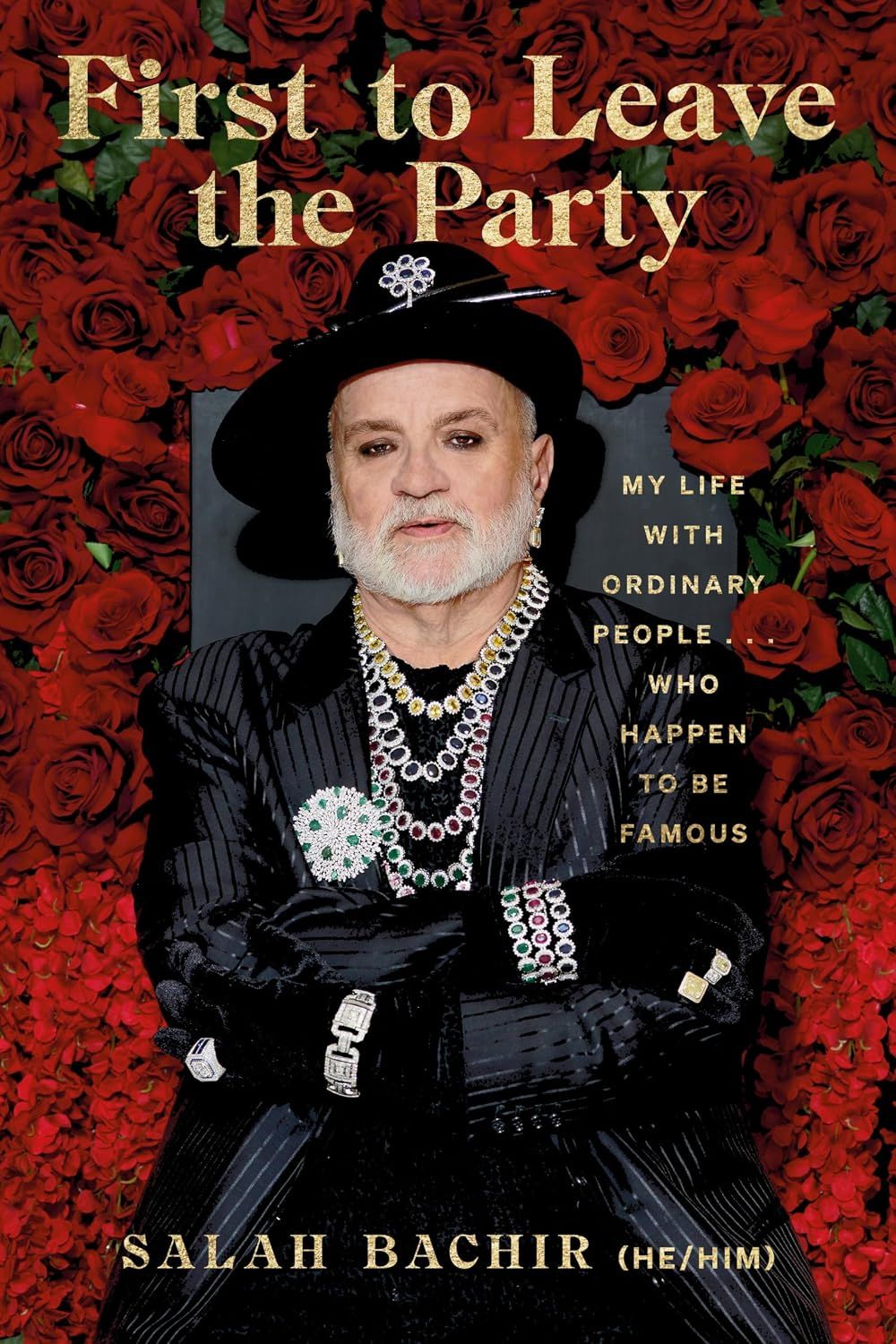
The lunch invitation to Paris immediately followed a request for an interview about his new memoir, First to the Leave the Party: My Life With Ordinary People Who Happen to Be Famous, which chronicles Bachir’s incredible life, from his roots in the northern Lebanese town of Kfarhata to the family’s 1965 emigration to Toronto, his teenage years as a popular football player and on to his early activism in politics as a university student.
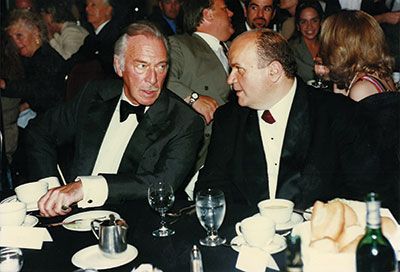
He also explains that his access to the rich and famous began in the 80s, when he managed his brother George’s video store and they started publishing Videomania, the first consumer magazine devoted to home video releases, out of the basement of the Toronto store. Video was a “cash cow” for the studios, he writes, and they “went out of their way to arrange meet-and-greet junkets in Hollywood and beyond to get the word out about films, which would get a second boost with video release.” Other publications were doing celebrity gossip, so his magazines – Videomania was followed, in time, by the trade publications Premiere, Famous and Cineplex – deliberately ditched the invasive personal questions and focused on “the art and pleasure of film, which made us popular with both studios and stars,” he writes. Bachir even interviewed some of the talent himself; that’s how he met one of his heroes, Marlon Brando, in Toronto, after he was sent to talk to Matthew Broderick and ran into The Godfather legend instead.
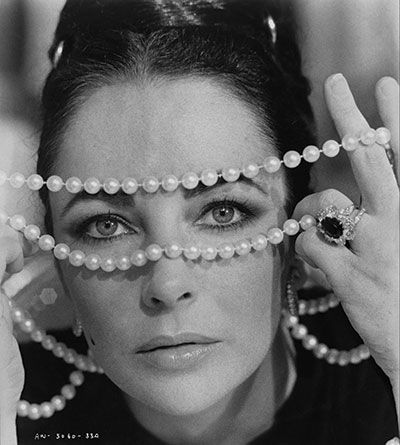
His career in the video business eventually led to executive roles – president of Famous Players and president and CEO of Cineplex theatre chains – and, he notes, dovetailed nicely with his charity work, as they often needed talent for fundraising events. Bachir’s memoirs are sprinkled throughout 54 short chapters about the people he has met and befriended over the years, like: Elizabeth Taylor Tries on My Pearls; Eartha Kitt is Not For Sale; Wooing Gregory Peck; Harvey Milk Sets Me Free and Keith Haring Does New York. Not to mention the chapter detailing the secret affairs he had with American playwright Edward Albee and Tony Award-winning actor Brian Bedford, who was a fixture on Broadway and on stage at the Stratford Festival.
Our long-ranging conversation begins in the den, with comfy leather couches arrayed in front of an 80-inch TV fit for at-home movie and football-game viewing, and proceeds to the farmhouse-style kitchen table, where Bachir talks about his diabetes, the kidney disease that required dialysis, and kidney failure that led to a transplant in 2019 and a near-death experience with sepsis that followed the operation. He also answers two burning questions: How did he make his millions, and are his jewels real?
After a three-hour visit, he and Yerex bid me farewell with a five-litre can of oil made from olives grown on the Kfarhata property, which tastes of jasmine and lemons. It goes without saying, this Q&A has been edited and condensed for length.
Kim Honey: Memoirs can be contemplative, with a lot of writers facing their mortality because they’re casting an eye over their lives. In your instance, you survived death several times. Is that why you wrote the memoir now?
Salah Bachir: I think, having survived, I wanted to tell my story. I was in the hospital when I started posting some of the stories I’ve told for years [on social media], because I wanted something positive to tell people during COVID-19 – something nice, instead of whining about something like, ‘I haven’t traveled for years.’ A lot of the celebrities I write about are at the end of their careers. I wanted to remember some of their contributions, and take it away from ‘what are you wearing?’ You know, all the material things.
KH: What was the goal?
SB: I wanted to do the book as something completely different than everybody else. There’s a quote that always stuck with me, Orson Welles telling his [Citizen Kane] cinematographer, Gregg Toland, “let’s do everything they told us not to do.”
KH: I heard award-winning Canadian author and playwright Ann-Marie MacDonald is narrating the audiobook. It makes sense, because her mother is Lebanese and she can pronounce all the Arabic words correctly.
SB: We hadn’t met before, but, really, [her 1996 novel] Fall on Your Knees meant a lot at that time in my life. And because I’m on anti-rejection drugs for my kidney [transplant], sometimes I cry reading some of the stories. I can’t finish reading even to Jacob. Even to Max.
KH: In the book, you write that there was a point in the 80s when you couldn’t cry. Your psychiatrist called you a beautiful vase with a crack in it. So, you’ve had a lot going on in your life over the years that you had to internalize?
SB: I was in situations where friends in Lebanon during the Civil War were dying. And then with AIDS, that’s a scar that never heals. The reasons I didn’t want to read my audiobook are, one, it was a lot of work, and two, if I can get someone like Ann Marie MacDonald, it’s amazing. But I still cry reading some of those stories. It opened up so many things.
KH: What parts got you?
SB: My struggle was more about people I’ve lost. A lot of the people who are in the book lifted me up at times when I would be down. Having Gregory Peck say, “you’re pretty handsome, yourself.”
KH: There are a lot of ghosts here, aren’t there?
SB: Some of them are still with me. Like, Keith Haring died so young. What kind of conversation would we have today? What would’ve happened over the years? What’s happened with the publicity of the book is that two people who knew Albee have come forward about that piece. They’re adding to the story about how gentle and lovely he was. The artist Shelagh Keeley, she’s got a show, and he bought her art. Little things like that.
KH: This is a very unconventional memoir. It is a series of vignettes. It’s not chronological. We know you’re from Lebanon and you came to Canada at 10, and we know your aunt gave you five bucks before you left. But it’s not like, ‘I was born in x hospital on x day …”
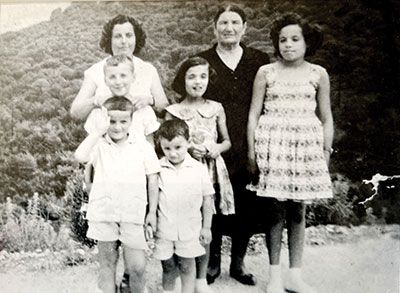
SB: I was actually born at home and we still have the house. My parents left me the house, because I said I would take care of it for our whole family to use.
KH: Where is it, exactly?
SB: A little town called Kfarhata in north Lebanon, about 10 minutes from the Mediterranean. The view is of the mountains, and it was always surrounded by fruit trees. There’s jasmine, there’s cedar, pine trees and gardenias. In the back there are vegetables. And we have a fig tree, an apricot tree and grapes growing. That’s my next book actually.
KH: What is it about?
SB: It’s called In My Grandmother’s Garden. Everything was edible. You walk in and there’s rosemary hedges that are this high [indicating thigh level], and you just rub your hand over them. Even the roses, you can make rose hip jam and rose jelly.
KH: Is that where your love of flowers comes from?
SB: Love of flowers, and love of food. Before all the kidney issues, my thing to say to most famous chefs would be, “it’s your place, make me something.” They knew what they had, what was fresh. I eat everything.
KH: You lived with diabetes for a long time before you got kidney disease. So, you were wining and dining before that?
SB: I was able to eat everything, but people I went to regularly knew I was diabetic. So, like, with [Canadian chef] Jamie Kennedy, I would simply say, “feed me.”
KH: Do you have to take anti-rejection drugs every day?
SB: [Bachir, taking a handful of pills with water] Mm-hmm.
KH: How does it feel to live with a kidney transplant? Is it scary?
SB: It’s great. It’s wonderful. I traveled a lot when I was on dialysis, because you can go most anywhere in the world and be treated. But we haven’t gone anywhere yet. We’ve gone to Ottawa because kd lang was getting a Governor General’s Award.
KH: Was that the last time you dressed up?
SB: I’ve done a few galas. I did one with [Broadway actress] Audra McDonald for the 519 [LGBTQ community centre in Toronto] and Sarah McLaughlin for St. Joseph’s Health Center Foundation.
KH: You’ve said you don’t miss getting dressed up anymore. You’ve done it so many times, and you’re obviously in your element. I mean, look at the cover photo for your book.
SB: They were taken by Guntar Kravis. He’s an old friend and he’s got great photography. Greg Gorman wanted to do the cover – he’s been a friend forever – but he had a retrospective in the Middle East somewhere. He said, “why don’t you come to LA and we can have fun in the studio.” And I’m like, ‘I’m not taking my jewelry and my clothes to LA.’ I’m immune compromised and I didn’t have access to people I work with here. So, [the book cover] was shot in the apartment in Toronto.
KH: If you went to LA for that photo shoot, how many suitcases would you take?
SB: One. I don’t travel with a lot. It’s harder for a bigger guy to find clothes that fit, so I have no problem wearing the same outfit two, three days in a row. I will change the broach on it. [laughs]
KH: Let’s talk about the title, First Leave the Party. You were a partying type back in the day, weren’t you?
SB: I never got drunk, because I was a control freak. When I was staying with my cousin in New York, he would be showering and getting dressed for work and I’d be walking from the village, literally grab breakfast and going to sleep on his couch. It changed over time. Not just AIDS and everything else that could happen, but people get really obnoxious when they’re drunk and apologize two days later. Things get damaged, and you’re tired. I’m diabetic on top of it, and I know I’m going to get myself in trouble somehow. I had a friend who always left at a certain time, and I admired him more and more. And then it became like, ‘I’m going to do this.’ There’s no fear of missing out. If I want to see more of something, there’s always tomorrow.
KH: Let’s talk about your jewelry for a minute, because in the book you have this great conversation with Liz Taylor where you ask her about her fakes, and she says has made identical replicas of some pieces so she can travel with them.
SB: She was wearing that Chopard necklace at the time. I said, “Is that a fake? I always wear a real Chopard.” Liz – I never called her Liz – no one gives her credit.
KH: What would you have called her?
SB: Elizabeth. And I don’t like people calling me Sal. She was actually brilliant, which people don’t give her credit for. She knew her art really well. Her dad was an art dealer and [Greta] Garbo was one of his clients. She knew if her kids had to sell [a piece] or somebody had to sell it – because it was her jewelry and she wore it – that, if it was a $100,000 piece, it was going to go for a couple of million dollars. So, for certain occasions, she wore jewelry knowing that if she was photographed with the Kennedys or in one of the pieces Richard Burton gave her, in the future someone could use it.
KH: Are your jewels real?
SB: I don’t know who said it, but it’s my line: “Darling, the only thing fake about me are my friends.” Ninety-five per cent of them are real. I helped design them with my friends, like Laurie Goodman or Mark Lash here. The joke about this sapphire [necklace, one of a strand of five shown on the book cover] is that your queen-to-be [Princess Diana] got one of these, and I got the rest of them.
KH: Is this one necklace or five separate ones?
SB: Each couple years I’ve added a strand. The first one is yellow sapphire; the second one is blue sapphire; then there’s rubies, emeralds and pink sapphires, all set in platinum. I made the matching bracelets every time and, at the beginning, I did a matching ring, but I stopped after the ruby one.
KH: Was the book hard to organize, because you weave bits of yourself into the anecdotes about celebrities you’ve met, and relate it to your personal experience.
SB: But, by the end, you get it all. I think it was important that we end on the wedding [he married Yerex in 2015], and the journey there. In our magazines, we’ve always said [keep it] light, tight and bright. This isn’t the New Yorker. These [chapters] are not 10,000-word pieces. They could’ve been longer. I mean, Eartha Kitt could have been a book in itself. Aretha Franklin could have been 5,000 words. So, I just wanted to almost pepper the stories and not get into it.
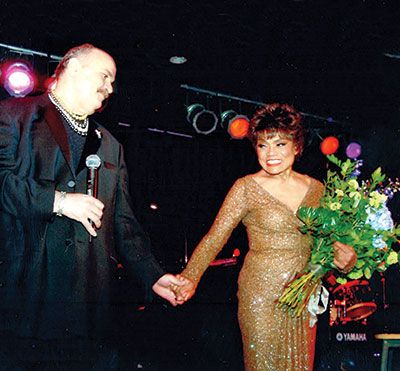
Jami [Bernard, his co-writer] was great. She was a film critic for the New York Post and the New York Daily News, and she has written 10 books. I had to write the Warhol chapter, and there were about 10 more to go. She was in a mood, and she said, “well, this is not about everybody we’ve met, because we’ll have five books to put out.” And I was like, “okay, we’ll stop there.”
KH: The other thing about the ending that was very poignant is you talk about your HIV status, and you say in the book you didn’t want to be known for that. I thought it was interesting, because it is buried in the back. Hasn’t the stigma changed?
SB: I had work in New York, and here in Canada from the early days [of the AIDS crisis], but I didn’t want to be known for my status.
KH: You did not publicize it because of the stigma at that time, or because you were traveling and didn’t want people to know?
SB: My close group of people knew. Obviously with dialysis, everybody knew. I had to go all over the world. There were places who refused me treatment. The American University of Beirut refused me treatment, but at a little hospital in North Lebanon, the doctor said, ‘I’m more worried about your diabetes because you’re here in October and it’s fig and grape season.’ She was really open and great. A couple of places put me in an isolated room, but I had my own room and I could sleep.
KH: You have suffered discrimination because of it?
SB: I think there’s been discrimination. But Arab is like a four-letter word these days, too. Being gay, being fat and having body issues – I was always going through all kinds of stuff, and my status was one more [thing]. I think being gay and being flamboyant or whatever you call it was more of an issue. No one sees me and says, ‘Oh, that guy’s HIV positive.’
KH: How did the book change as you were writing it?
SB: At the beginning, I was angrier, and I didn’t really want to say the HIV thing. I didn’t want to say the Edward Albee [affair] thing. But when I wrote the Brian Bedford story, I started to open up more.
KH: So, you’re more closed off at the beginning?
SB: Yes. It became more of a memoir then, instead of, ‘I knew these people, I met these people.’
JY: I think that might be one of the hooks in the book, is that you get reading it like it’s a bunch of anecdotal, cute stories, and then suddenly you get this really poignant, deep point of vulnerability. That’s kind of strange at the beginning, or disorienting, but then it becomes this neat thing. It was cool to watch you [addressing Bachir] realize that you were getting personal and that you were willing to take that risk.
KH: The interesting thing is in the interviews with these celebrities, you’re opening up to them.
SB: It was mutual. I’m catching some of them at the end of their careers and [they’re getting] very little attention and [I was asking] can we pay tribute to your life? And not treating them like, ‘how was it like sleeping with so and so?’ It was more like appreciating certain scenes in certain movies, and what it took to do that.
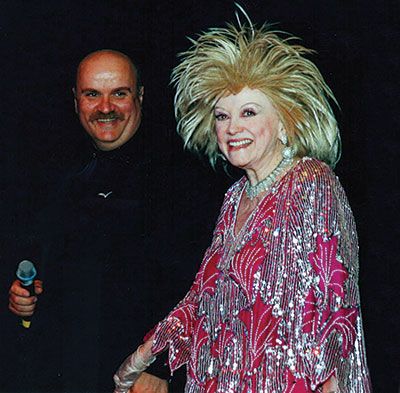
KH: Why was it important to you to humanize them instead of lionize them?
SB: At the end of the day, it was a job. I needed to get a story and I needed to tell one really. Literally, I’d go into an interview thinking, ‘I gotta meet my friends in an hour, let me get this story.’ And you had a publicist that was a little more open than today. Also, I don’t think I was enamored by any of it. Even with all of this [wealth], I’ve always said, ‘if we don’t have it, we don’t have it.’ It’s no big deal. I moved back in with my parents when the first magazine didn’t work.
KH: Speaking of the business acumen, you’ve raised billions of dollars, not to mention all the time and effort you’ve given to charities, but the amount of money you earned has bought a fabulous art collection and your fabulous jewelry collection.
SB: People don’t see beyond the jewels. They see this guy at a gala, they don’t think of the Scene [loyalty] program. No one ever saw that I had run all these successful businesses, that I had the number one read magazines in Canada on a few occasions, or that I changed the whole [theatre business]. I mean, segmenting [theatre audiences], and marketing them.
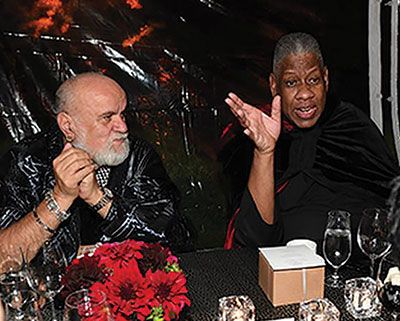
KH: There are rumours you invented some technology that was bought by the theatres, which earned you millions and millions of dollars.
SB: When Cineplex bought Famous Players, I co-owned 50 per cent of the media company, [but] I made my money before Cineplex. I co-owned Famous Players with Viacom. And before that, we launched everything in the video industry. I was doing pretty well by the time we got to Famous Players.
KH: Well, that clears it up.
SB: There have always been these rumours around that I was part of some rich, oil family. When Hilary Weston was Lieutenant Governor of Ontario, she came in with a lovely woman and said to her, ‘Salah’s in oil.’ So, the woman named all these rich Arab families she knew in London. I finally had to say, ‘I don’t know them, but they’re friends with my uncle or dad,’ or something. My uncle was pretty influential in my life. He was Lebanon’s ambassador to the UN and he introduced me to a lot of stuff. But it was about olive oil.
KH: You just turned 68. You’ve had a pretty incredible life as evidenced by this book. Since you’re so good with quips, what would your epitaph say?
SB: Gone are my Salah days.