Start by cutting the deck with your non-dominant hand. Then say these words: “What do I need to know right now?” Pull a card and place it face down. And pull one more.
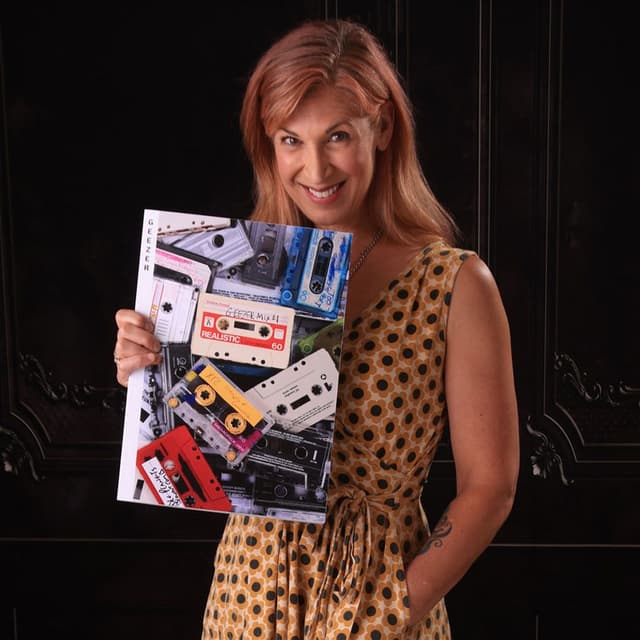
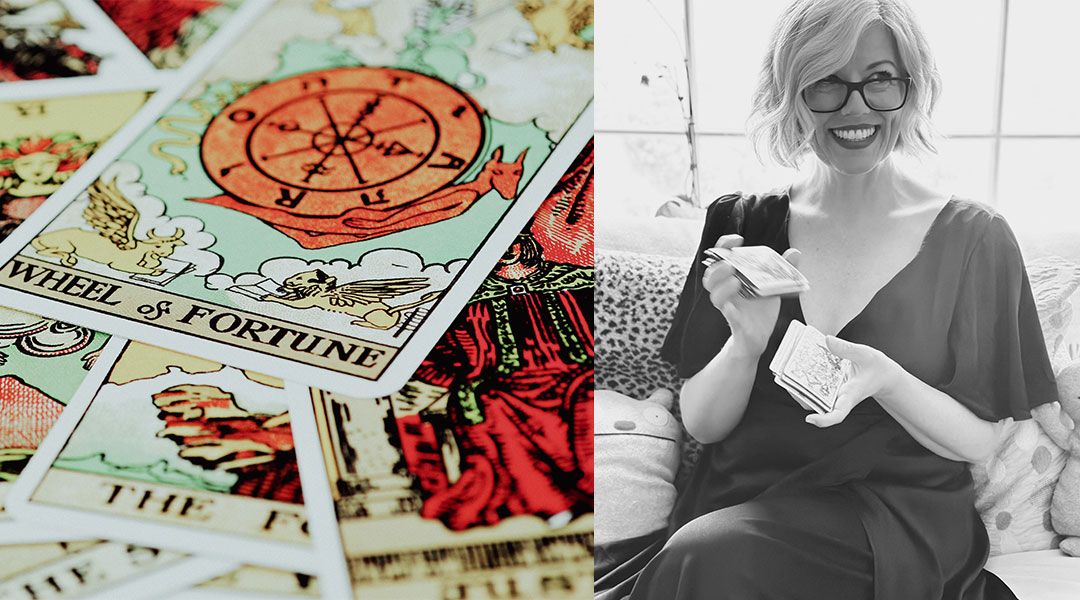
I’m sitting across from Toronto author and tarot card reader Lori Dyan, whose first book, Burn Your Shit, introduced readers to the power of rituals and how to get rid of bad juju. Her latest, Big Deck Energy, is a guide to teaching yourself how to read tarot cards, whether it’s to help manifest a life change or use as a cool party trick.
Dyan is riding a wave of tarot resurgence as people are looking for guidance in these troubled times. Tarot is believed to have been started in 15th-century Italy as a card game. It was co-opted by French occultists in the 18th century before eventually finding a particular popularity with the New Age movement of the 1970s. Lately, tarot is showing up at wellness retreats, on Instagram, in fashion (see Dior and Hermes tarot scarves) and in an influx of new books, which promote the reflective practice as a form of self-care akin to meditation, journaling and therapy. And while pulling and sharing a card on TikTok is a thing, many people are more drawn to the deck as a physical object that can be held, shuffled, arranged and shared with others, screen-free.
View this post on Instagram
While I’m not currently in the market for any mystical assistance, I’m seeing more and more friends pulling cards for insight and guidance on next steps as we hit midlife and look down the barrel of empty nesting and retirement. So, with an open mind and curiosity, as well as skeptical amusement – the same way I feel about the horoscope in the back of a magazine or what my birth year says about me on the placemat in a Chinese restaurant – I meet Dyan for a reading at a coffee shop.
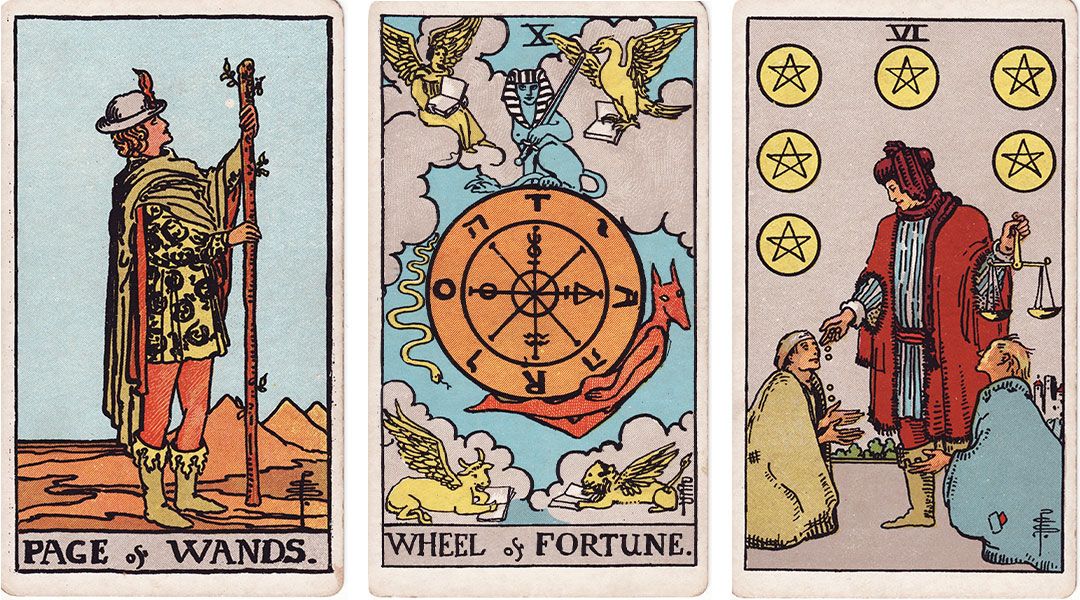
“So, first you got the Page of Wands,” says Dyan, looking at the cards I pulled. “He’s the bearer of good news. Like, that’s it. That’s the message. He’s like, ‘Shanda, good news for you.’ I can’t tell you what it is or when it’s happening, but it’s like a weather system moving in with good news mojo.”
That’s a good start. Time for the second card.
“In order to help you facilitate this good news with as much speed, grace and ease as possible,” says Dyan, “you need to pay attention to this card’s message.” She turns it over. “Oh, it’s a banger,” she continues. “You got the Wheel of Fortune. Wow, it’s the luckiest card in the whole deck.”
Before I start cruising around the coffee shop looking for a pot of gold, Dyan tempers my expectations: “When you have these luck cards, it’s not just handing over all the luck. It’s saying, ‘Here’s a lesson you need to learn to help you harness that luck and work with it.’”
She explains that the Wheel of Fortune teaches us to be open to a different path than we expect. “We’re born at A and we die at B,” she says, “and a lot of people go from A to B on a straight line, with blinders on and head down like a passenger in a bus. This card is saying you can have a very different path. Focus on your goal or your intention and follow that up with some inspired action. Be the driver of the bus. But don’t try and plan, plot and visualize all the steps because it discounts the magic. Be open to seeing little stepping stones, synchronicities, the breadcrumbs that open up something better than you could never have imagined.”
Hmm, I kind of prefer being, what I’d call, a very engaged passenger on the bus most days, but I can see what she’s saying.
Dyan asks, “One more card?” I pull the Six of Pentacles, which has a picture of six gold coins across the top and what looks like a prince handing money to a pauper. Jackpot? “Okay, this card is about seeing the value of yourself as an investment,” says Dyan, souring my lottery-winning expectations. “So, if you get a little extra money, get more back on taxes than you thought, find $20 in your pocket, don’t squirrel it away and forget about it – but also don’t go and blow it. Use it in a way that you’re investing in yourself and your potential, whether it’s taking a class, getting business cards for your little side gig, paying out of pocket for therapy or buying a lipstick that makes you feel amazing. Spend money on your healing, your growth, your evolution, your potential.”
No doubt, I could pull cards all day. It’s fun, it gets you thinking, and Dyan has great energy – she’s both warm and sarcastically hilarious. You can see it in her book as well, which has a conversational, secrets-from-your-sister kind of vibe. Below is more from our chat about the whys, whats and hows of tarot – and how it evolved from a quirk of her youth to a successful second act.
Shanda Deziel: How did you learn to read tarot cards?
Lori Dyan: It all started with a witch named Erika in Calgary in the 1980s. She did everything – tea leaves, crystal ball, palmistry, all of it. But there was something about her tarot cards. When she took them out, I was like, “What are those?” I was fascinated – in love. I’d go over and chat about tarot. It’s a beautiful oral tradition that is passed on. I would take notes, getting her take on the cards. And then I’d try it out, a party trick for me with my friends.
SD: So at first it was just a hobby?
LD: Yes, I got a communications degree and was working in high-level corporate roles that were maybe not well-suited for me, but I interviewed really well. There were times when I would take my clients for lunch and give them tarot card readings. I think that’s how I didn’t get fired, because they really enjoyed the tarot part. I was also always doing readings on the side, and more and more people would reach out and say, “Are you Tarot Lori?” Eventually, there was a tipping point: either I have to go all in on this tarot thing, or I have to pull it back so that I can keep doing the safe thing. I was in my mid-40s and had just left a 25-year marriage. I had a full reinvention, started everything over.
SD: And now you’ve written two books, hosted sold-out seminars and you’ve got companies like Google flying you in for team events. What is it that draws so many people to tarot right now?
LD: People are craving connection – women and Gen X in particular. We’re output, output, output, we’re sandwich generation. We’re taking care of kids, taking care of parents. There’s just so much that we are giving out, and very little time to bring in. So that one hour of therapy, or that one kickboxing class, or that one walk a week, or something like this, where you pull a card every day, it’s an invitation to contemplate, to look within or look outward. It’s a different kind of meditative tool. It kind of brings you into a different space. But every generation can benefit, because the more connected we are to each other through social media and the internet, the more disconnected we are in many ways from ourselves, from community, from the divine.
View this post on Instagram
SD: And how specifically does tarot help with that disconnection?
LD: These cards are not magic. There are 78 cards and each one has a picture on it, and each picture tells a story. And then when you put them together, they tell the story of you. So, it can be used as a tool for self-discovery or self-help, or it can be a journaling prompt. It gives you a little peek behind the curtain to see what’s going on energetically, and then whatever you choose to do with that is up to you because you have free will. You can ignore it, you could let life happen.
SD: What are some things people would like to hear but tarot can’t provide?
LD: Well, if you ask, “What do I need to know about Fred?” I’m not going to be dipping into Fred’s energy. It’s going to be what you need to know about how you’re dealing with Fred. Sure, people are sometimes in a bit of crisis mode and call and say, “I need to see you right away.” But I’m not going to be able to tell you if George is cheating on you, or what your ex thinks of you versus his new girlfriend. It’s not like that. A reading is pulling information from whatever you want to call it – the collective unconscious, your higher self, your universe, whatever. And it’s meant to provide agency for you to be empowered to make the best decisions for yourself.
SD: Your motto is, “Woo woo without the cuckoo.” Can you break that down a bit?
LD: “Woo woo without the cuckoo” is just a way to let people know what they’re in for.
That my approach is to take it seriously, but I’m not precious about it, and I’m not goofy or scary about it. So woo-woo is the metaphysical – it is that which cannot be explained. It’s astrology, palmistry, energy work, past lives, Akashic records, tarot, it’s all that stuff. Then the cuckoo is the nutty stuff, like the flashing neon crystal ball in the window or the fortune teller at the fair. And no offence to them, they may have great wisdom to impart. But I’m not doing that. I’m not going to scare you. I’m not going to tell you what to do because you have free will. I’ll tell you what’s up, and you do whatever you want with it. I always tell people, if anyone says, “If you don’t do this, this will happen,” take your money and run.
Post-script: I left my reading with Dyan on a high, looking forward to that good news coming my way and thinking about what exactly it was that I wanted to manifest and how to break out of the passenger-seat mindset. Just six hours later, I fell down the stairs and broke my right foot. Turns out, I wasn’t going to be driving my own bus anytime soon.