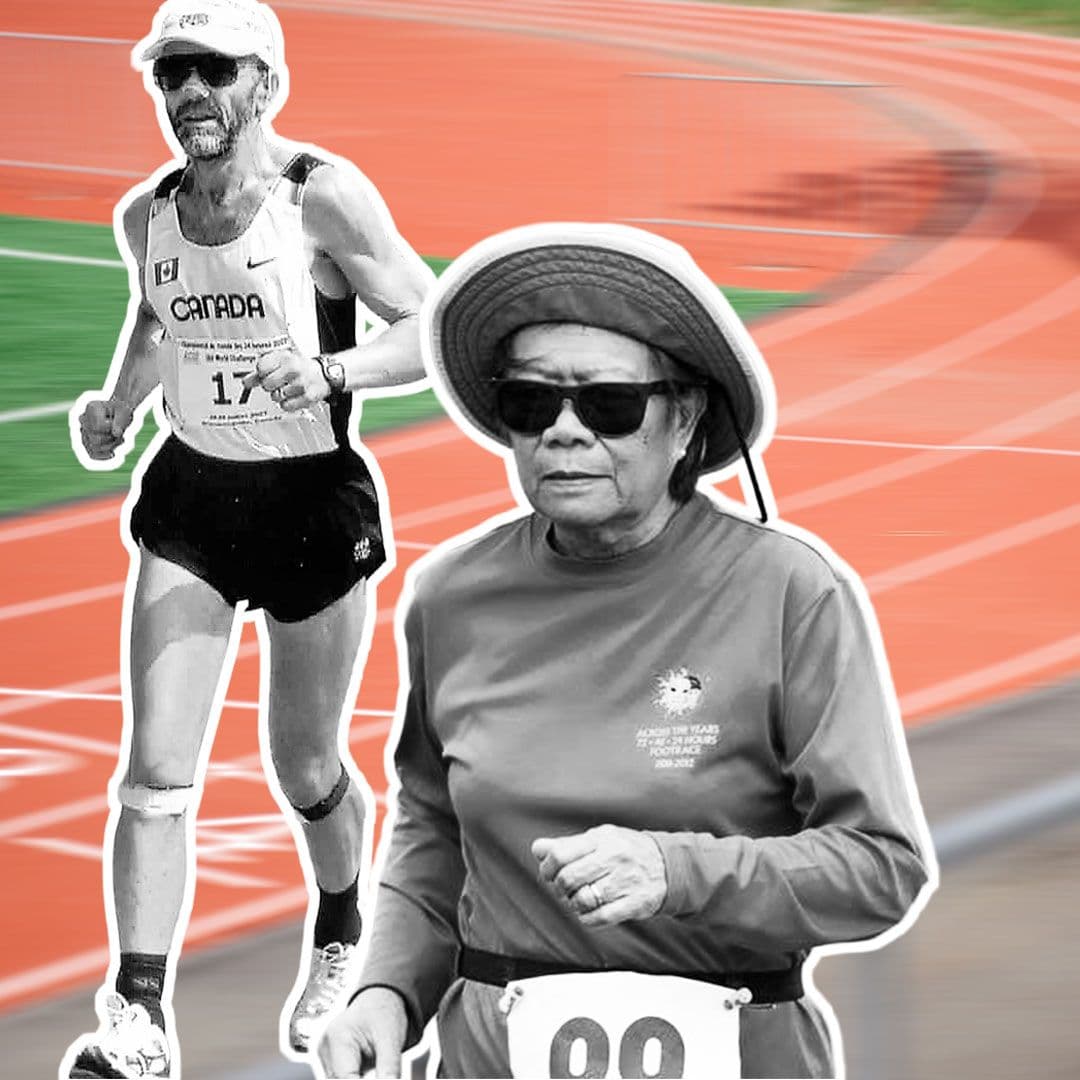
“It’s never too late.” It’s a useful mantra if you’re trying to stay active and healthy as you age. Yet, most would agree the optimistic phrase has its limits. Taking up ultramarathon running in your later years with all of its pavement-pounding exhilaration, for example, might be one of those exceptions. Not for dynamic running duo, George and Erlinda Biondic.
At 74, after decades of crewing for her husband George’s running career, Erlinda didn’t just decide to take up the sport in 2014, she set her sights on the history books.
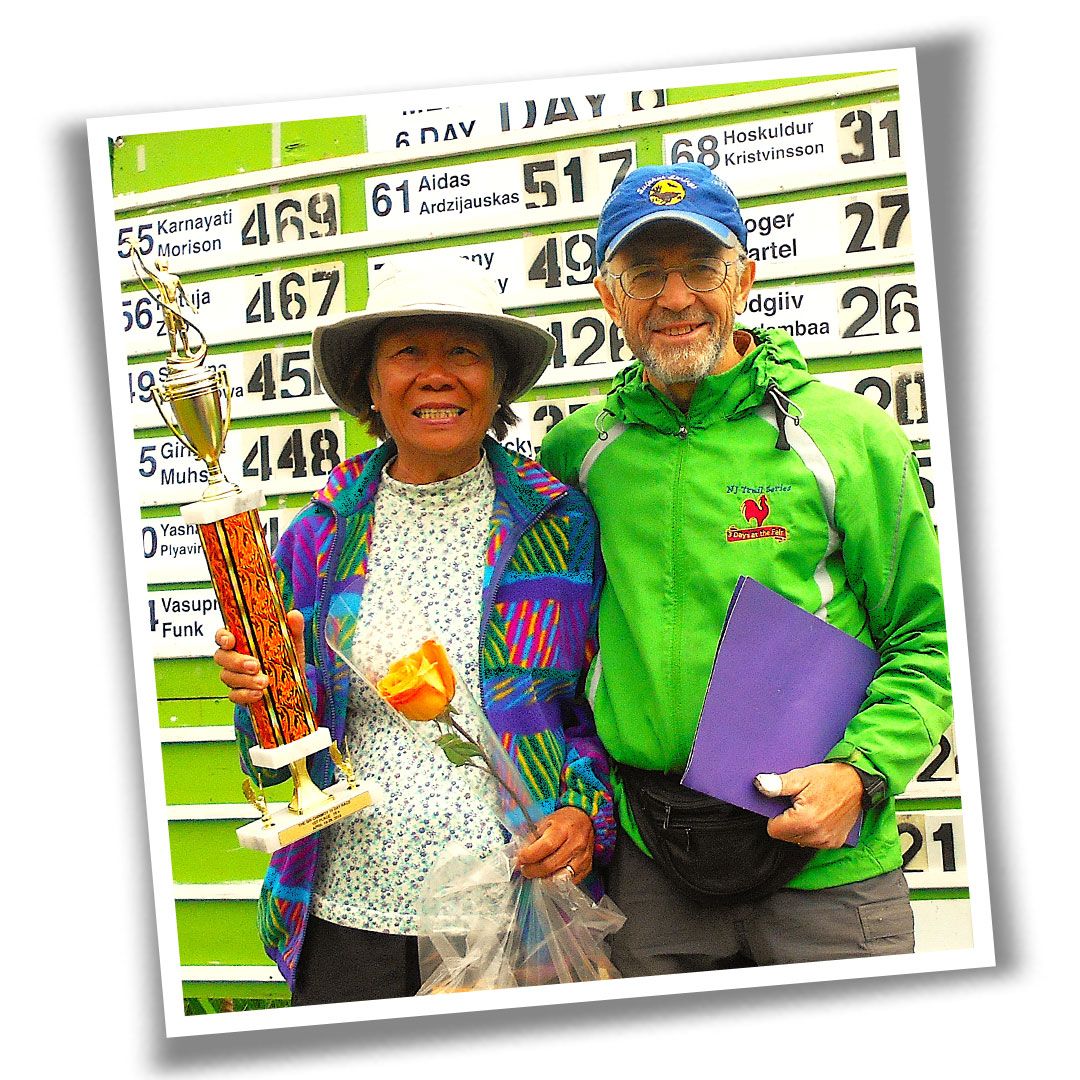
“I was aiming for records,” the 86-year-old tells Zoomer on a call, joined by her running partner and spouse from their Aurora, Ont. home. “I’d look at the website for the Canadian Association of Ultra Runners and it seemed like no one had done anything in my age [group]. I thought, ‘Well, maybe I’ll give it a try.’”
Setting such lofty goals has paid off. Despite her late start in running, she’s earned an astounding 26 Canadian age-group records and three World Age Best Performances. On occasion, she’s even been the one to set the bar. At the age of 82, in a single race, she became the oldest woman to complete 50- and 100-mile ultramarathons, breaking the six-day world record in the 80-plus age group in the process.
George – who holds several age-group Canadian ultrarunning records of his own, including in two-, three- and six-day categories – initially had his doubts about her late-life runaissance. “I gave her half a dozen reasons why this was not a good idea,” George explains.
While conventional wisdom tells us to steer clear of jogging in our later years – and stick to lower impact exercises like walking, bike riding and swimming – healthy seniors who lead an active lifestyle shouldn’t rule out running. In fact, several studies suggest that regular running strengthens the joints and protects against development of osteoarthritis later in life.
Erlinda, who regularly completes a 7-kilometre walk from her Aurora home to Fairy Lake in neighbouring Newmarket, was certainly well primed for taking on the new challenge.
George, a 73-year-old retired computer operator who began marathon running in the late ’70s and has been ultrarunning for the last 10, admits his naysaying may not have stemmed entirely from his doubts about her physical abilities.
“I wanted to be the runner and her to be my super great crew,” he jokes. “But then, of course, I realized the world doesn’t revolve around me.”
During George’s competitive career, Erlinda perfected the role of his crew, ensuring her husband stayed on the planned pace, consumed the correct amount of calories and had enough energy in the tank to finish strong. “When my brain is not functioning, she is my brain,” he says.
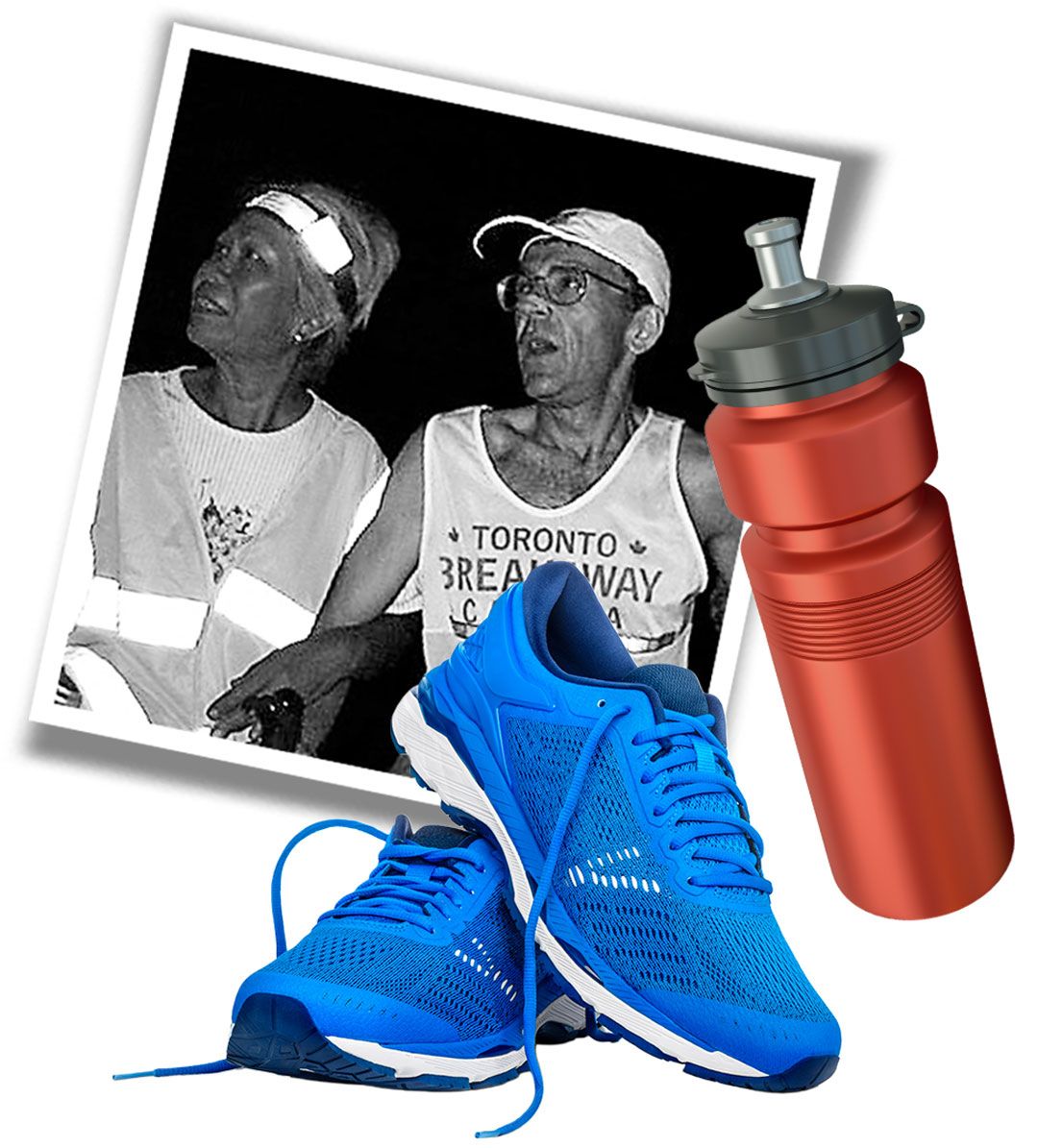
While any footrace exceeding the standard 26.2 mile (42.2 kilometre) marathon distance is considered an ultramarathon, both George and Erlinda frequently opt for the gruelling challenge of timed races, where participants are given a set amount of time – often spanning several days – to cover as much distance as possible.
After Erlinda’s first race in 2014 – a three-day event that saw her complete an astounding 132 miles (212.43 kilometres) in 72 hours – it became abundantly clear that George would have to make room for another star runner in the marriage.
“I was blown out of the water,” he says of her success, allowing that her career as a nurse logging 12-hour shifts may have prepared her for the physically demanding sport. “But that she would be doing this well? No, I just didn’t see it. In terms of her endurance, I had no idea.”
Meanwhile, Erlinda enjoys the confidence boost that came with the role reversal. “It gave me pleasure to know that there are things that I could do,” she says. “That I have a name for myself and that I’m not just behind the scenes.”
The physical activity itself as well as the prep that goes into each race – whether for her own or George’s – has also done wonders for her health. “You’re aware of what you eat and you have to have discipline,” she says.
For the pair, eating healthy isn’t overly complicated. They avoid processed foods and excess fat, sugar and salt. Meanwhile, George eats two meals a day and fuels himself with three additional carbohydrate snacks.
Today, the Biondics have figured out how to share the spotlight, sort of. Every year, they alternate between runner and crew positions, a dynamic that extends to their workout schedule at home as well.
“We walk together at least twice a day and whoever the runner is that particular year, they’ll put in a third workout in the afternoon,” George explains. “There are days I don’t feel like going out, but I have to,” Erlinda adds.
Their workout regimen also includes hill training – both outdoors and on the treadmill – and weight training to target their arms, legs, core and posture. “George also does meditation and pool walking, which gives him the ability to compete with runners 30 years younger than him,” Erlinda says.
Beyond the runner’s high that both George and Erlinda experience at the end of each age-defying finish, they’ve found the sport has strengthened their connection. “When we’re out there working together, efficiently, harmoniously, through thick and thin, we bond,” George says. “These races are the glue to our marriage and the joy we experience borders on the spiritual.”
“We support each other,” Erlinda adds. “George really is my inspiration. He’s my coach, my manager, my trainer, my spokesperson and he even cooks,” she says, before cheekily adding a caveat. “Well, his idea of cooking is boiling water and putting food in the microwave.”
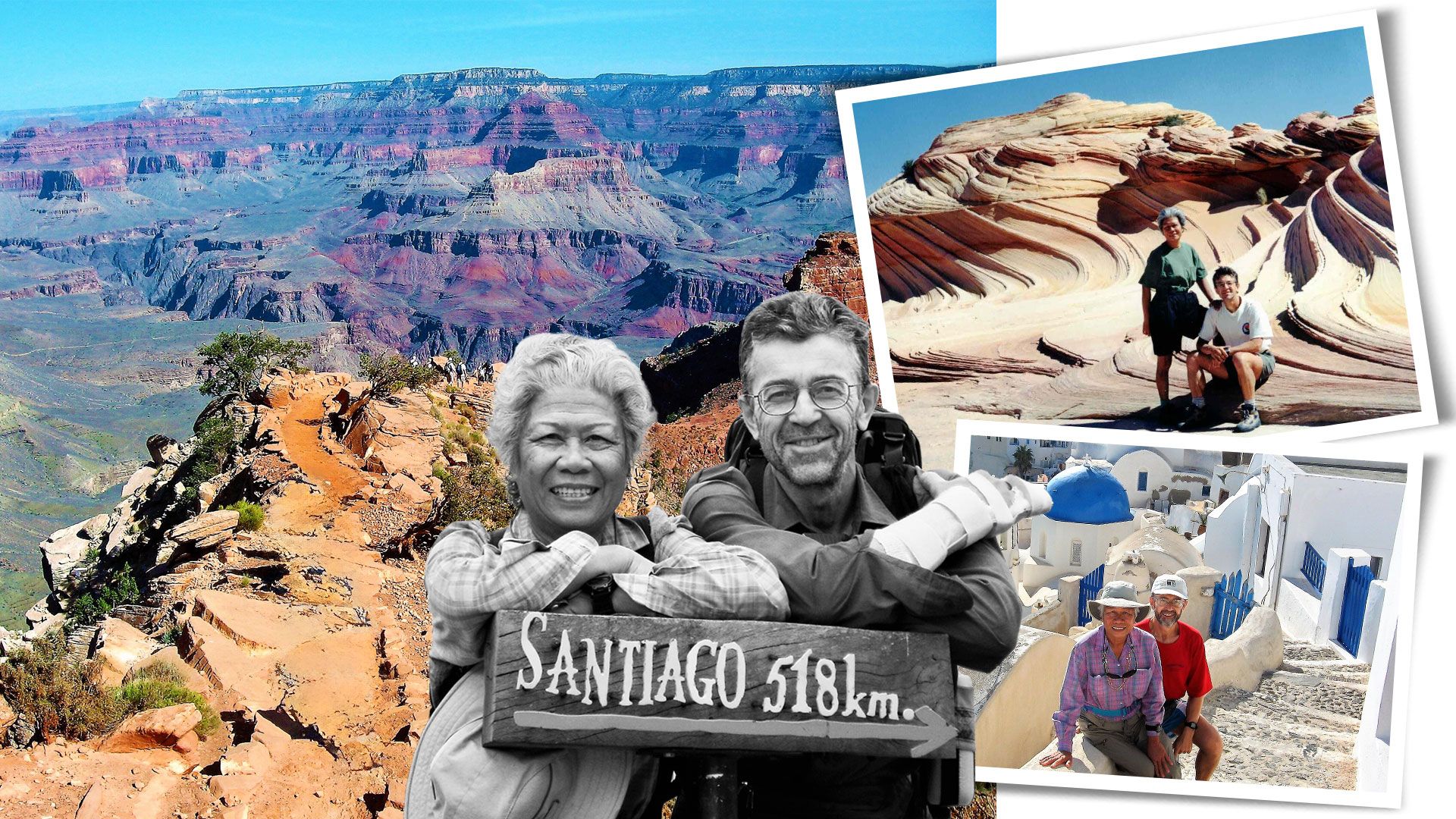
Alongside a steady schedule of races, together they’ve tackled several long-distance treks, from nine pilgrimages along the famed Camino de Santiago in Spain to their most recent completion of the P.E.I. Island Walk – a 700-km route they took on last June to raise funds for food banks on the Island and back home, and to mark Erlinda’s 85th birthday.
When asked if they plan on hanging up their runners anytime soon, neither of them are ready to trade a shot at the record books every other year for a more stationary life just yet.
“I’ll do it when I get to 90,” Erlinda says confidently. “I don’t think so,” George, who, as the runner this year, has a 3-day race in New Jersey coming up, adds. “The benefits outweigh the negatives. My legs are beaten, pain is par for the course and my memory is slipping, which helps because I forget how painful the last race was. But my seasonal depression is under control, my lungs are outstanding and I have the heart of a lion.”
As for any advice they have for those eyeing a new challenge later in life, the running duo offer up a pair of one-liners that meld together into one coherent – and inspirational – message.
“Go out there and smell the roses,” Erlinda says, before George adds the kicker. “The best years of your life don’t have to be before 55.”