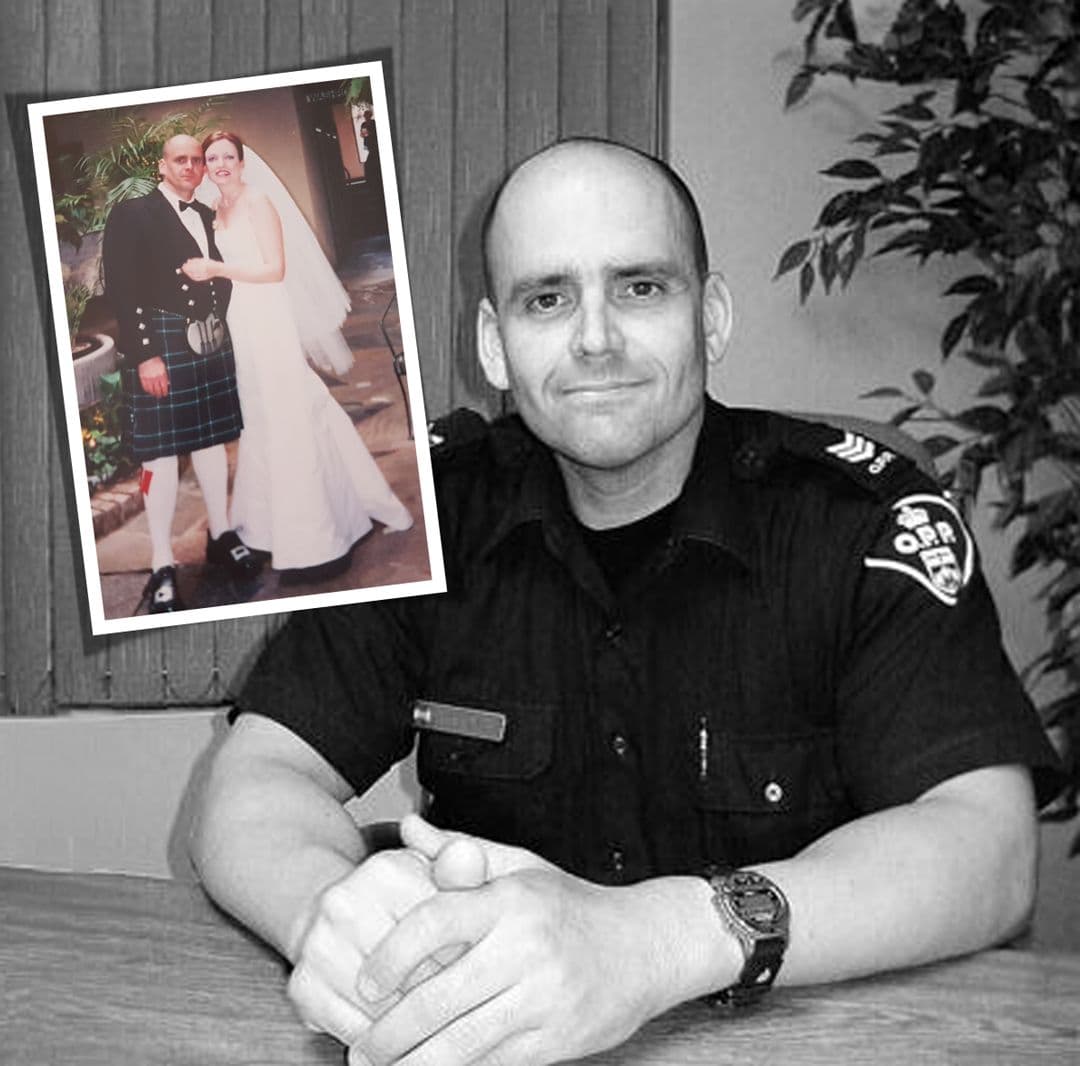
On June 5, 2006, Eleanor McMahon got the call that all spouses of police officers dread. That morning she had said goodbye and I love you to her husband, Greg Stobbart, an Ontario Provincial Police (OPP) officer in Calendon, Ont., on her way to work in Toronto. He was going to go for a bike ride – he was training for a triathlon – before his shift later that day,” McMahon explains to Zoomer. On the way home to Burlington, Ont., that afternoon, McMahon heard from his fellow officers. “Eleanor, we have bad news,” they said over the phone. “Greg’s been hit.” She immediately thought he’d been hit in his cruiser. But they explained that it had been while he was riding his bike. “I never thought that he would be hurt doing something he loved,” she recalls. “He always said, ‘My goal is to come home to you safe every day. That’s all I care about.’”
Greg died that day in the hospital with Eleanor holding his hand. After that, she pivoted. As the details of the collision came out, it was clear that this was a preventable death – there were changes that could be made to keep it from happening again. Turns out, Eleanor was the person to do it. The Windsor, Ont.-born communications expert had already held the role as press secretary for former prime minister Jean Chrétien, and, at the time, was a consultant for United Way Toronto. But she moved into full-time advocacy soon after, pushing for ways that bikes and cars could Share the Road – which is the name of the coalition she started in 2007. Since then, by working with the police, municipal and provincial governments, as well spending four years as an elected Ontario MPP, she’s helped change the laws and facilitate safer streets.
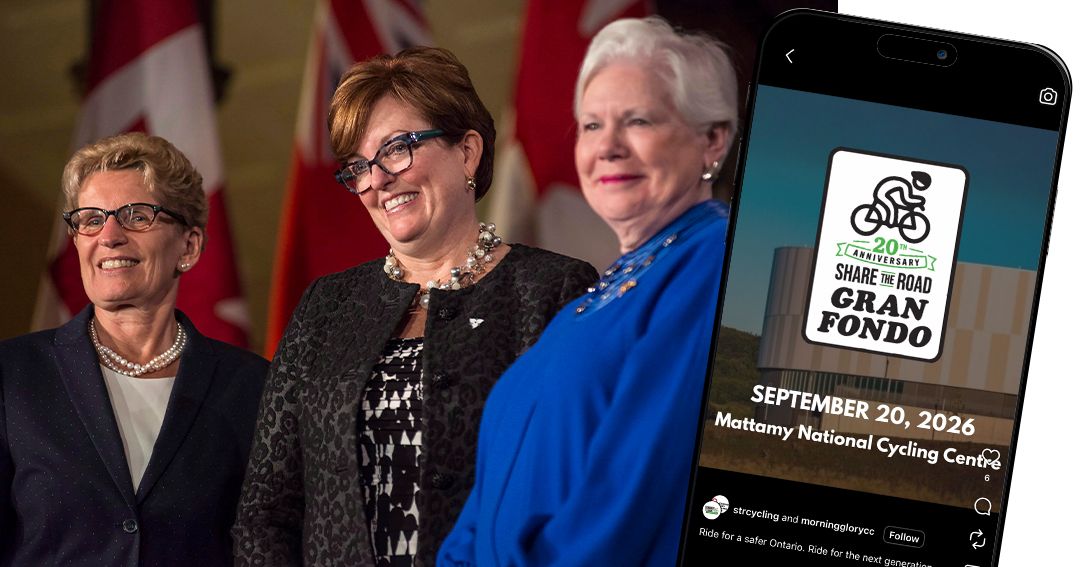
Here, she tells us her story in her own words:
“The man who killed Greg drove professionally for a construction company, and he was driving a five-ton truck when he pulled out past my husband on a two-lane road with gravel on either side. There was a white line that Greg was hugging because he was a very safety-conscious person. And everybody who testified at the trial said that they saw him miles away. He was highly visible and where he was supposed to be – which shouldn’t matter. And this fellow, likely because he was in a hurry, pulls out to pass Greg on a hill into the oncoming lane of traffic. He doesn’t wait; he doesn’t just take a deep breath. Then he suddenly finds himself in a head-on situation with another car coming down the hill. So he turns right into Greg who ends up lying in the ditch. The guy who killed him had five convictions for driving under suspension; four convictions for driving without a licence; and $15,000 in unpaid fines. And two months after he killed my husband, he hit someone else. So this fellow certainly had a propensity to be flagrantly outside the boundaries of the law. After we started to learn the details of what happened to Greg, I went to the commissioner of the OPP and said, “Two provinces in Canada, Alberta and Saskatchewan, have laws that deal with people who habitually drive under suspension. We have the busiest roads in the country, and we don’t have that law. Here’s the business case for one; let’s call it Greg’s Law. And he said, ‘You’re on.’”
Greg’s Law passed in 2008, and states that those who are caught driving under suspension will have their car impounded on the spot. Next, McMahon helped add two new sections to Ontario’s Highway Traffic Act, giving a more severe punishment for careless driving that caused death and bodily harm. Next up was the implementation of the one-metre safe-passing law (2015), which requires drivers to maintain a minimum distance when overtaking a cyclist. Recently, though, the discussion around road-sharing measures, and especially bike lanes, has become a hot-button topic – at least in Ontario. “I’ve kind of gotten away from calling people cyclists because that term has been captured, somehow, as a group of militant people, as a public interest group rather than what it is – people who are riding their bikes for joy, for affordability, for the environment,” says McMahon. “Eighty-seven per cent of Ontarians are both cyclists and motorists, and the biggest supporter of our work is the Canadian Automobile Association. Why? Because everyone wants a safe place on the road and everyone deserves a safe place on the road. Why don’t we want to keep people safer and fitter, lower greenhouse gas emissions and save money at the same time? I just don’t understand.”
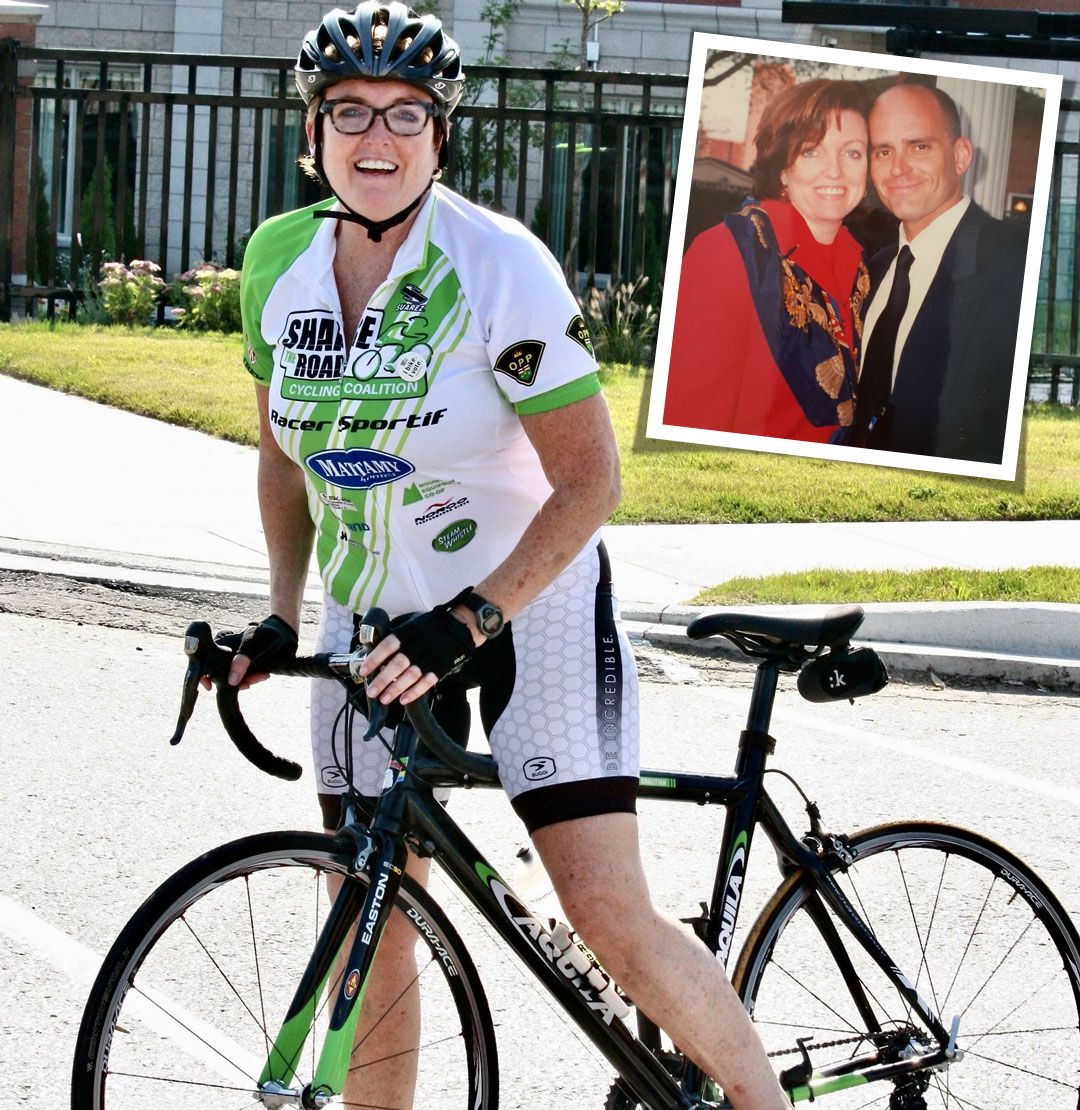
For McMahon, fighting the good fight for bike safety was a no-brainer, but getting back on the bike herself was another matter – cycling had been an activity that she and Greg loved to do together. “For quite a while after Greg was killed, I couldn’t ride. I remember going out one afternoon – I was riding not far from home – and a car came really close and was being aggressive, and it was terrible. I pulled over and cried for a half hour, thinking I can’t actually do this right now. It’s too hard. Thankfully, I’m back on my bike now.” And she can even ride on the street where Greg was killed. “It has a huge multi-use path now. You see moms and kids on it. There’s a memorial to my husband there. And when I visit it, I see families and walkers and joggers and cyclists. And there are bike lanes on that road now. I advocated for that. If only they had been there when my husband was riding that day.”
Next up, McMahon is hoping to usher in a provincial cycling skills education program for all ages in Ontario – including teaching kids to ride properly through the YMCA and in their schools. The initiative is inspired by the successful Bikeability program started in London, England. “They have put five million children into the program since 2007. It’s a bit of the gold standard,” she says. “Of course, the Dutch and the Danes have perfected the cycling education program; they have a national exam in the Netherlands when you’re 12. And the Dutch know, because there have been studies, that when you teach someone how to ride a bike, they become a better driver.” It’s clear that McMahon, 64, won’t be retiring anytime soon. “Greg used to say to me, ‘You know dear, you just don’t know when your ticket is going to be punched,’” she recalls. “I’m a spiritual person, so I like to say that God had other plans for him. He’s off doing those somewhere in the universe. And I have the privilege of continuing on this work and to make a difference in his memory.”