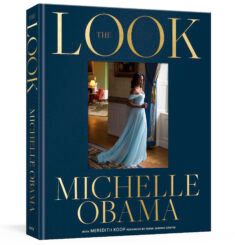
During her time in the White House as First Lady, when her husband Barack Obama served as president from 2009 through 2017, Michelle Obama came to internalize what centuries of royals, who are also mostly seen and not heard, have long understood: clothing can be a powerful way to transmit signals without saying a word. As she said on her book tour this week for her fourth book The Look: “The power that we have as people, as women…to say something meaningful with what we have on, is real.”
Clothing is also a way to show how we are transformed when our lives and circumstances change as we age. Thus it is a joy to see the Michelle Obama who has emerged at 61: unencumbered by the constraints and protocols that consumed her years in the White House. She is signalling freedom – a woman who has now achieved her fullest form.
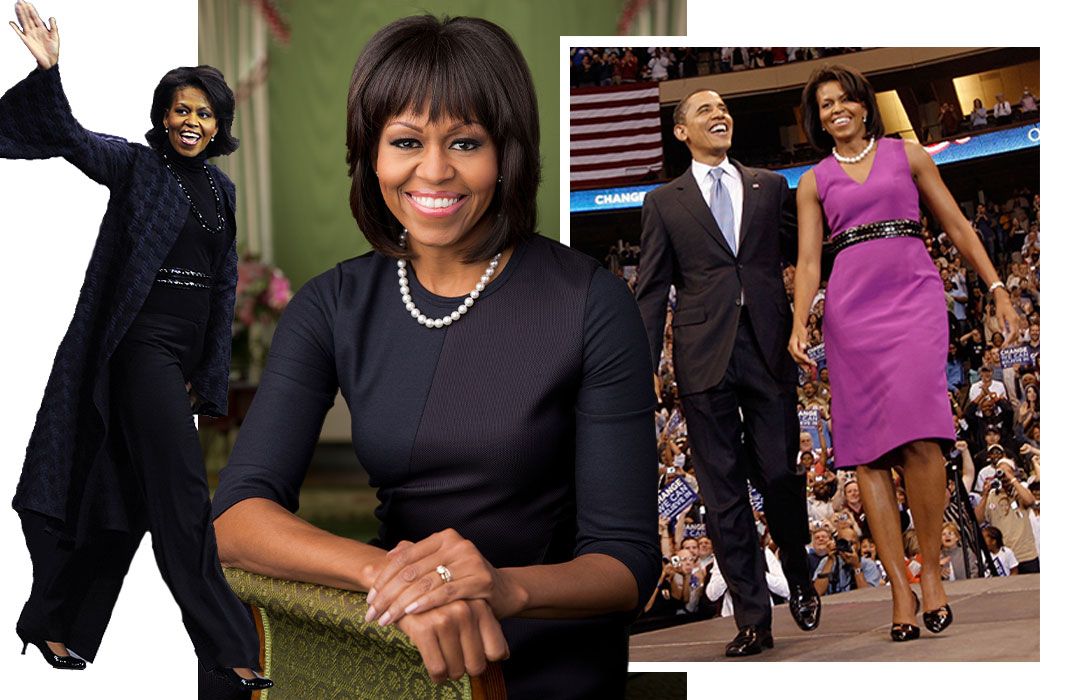
Obama was always clear that she was reluctant for her family to be dragged onto the global stage. Her husband’s career, however, had unstoppable momentum, and she had to adjust on the fly. She was suddenly a key player of the political theatre where, as “spouse of,” her image, her clothing, her hair was what people saw, wrote about, remembered. She determined that she would deploy the psychology of fashion as messaging to reinforce the administration’s values and to promote American fashion.
The Look is a coffee table book that is garnering a remarkable amount of heat, largely because Obama has stayed so silent about her clothing choices up until now. It is a monograph with insights into her fashion choices leading up to and just after leaving the White House. Key members of her glam team, led by her longtime stylist, Meredith Koop, listed as a co-author, weigh in on behind-the-scenes strategies.
The scrutiny and pressures of the role – in particular for the first Black First Lady – were undeniable. Here is the heart of her approach, which she lays out in the book:
“As First Lady, you are put on a de facto pedestal because the role has historically carried so much ceremonial significance, representing the notion of womanhood itself, of femininity and the spousal ideal. I knew that I had to define my own fashion philosophy, and that I was not interested in a ‘look but don’t touch’ approach. If anything, I wanted to invite people in: for an embrace, a meaningful conversation”
Obama was, like the president, an Ivy League educated lawyer, but she was also a busy working Mom who had adopted the ’90s/early 2000s professional woman’s wardrobe of tailored suits with a few little interchangeable touches – a silk top here, a ruffle there to move through the week. Suiting is how men still most often dress, as her husband did when in office, switching between navy or grey – no need to sweat over an outfit of the day.
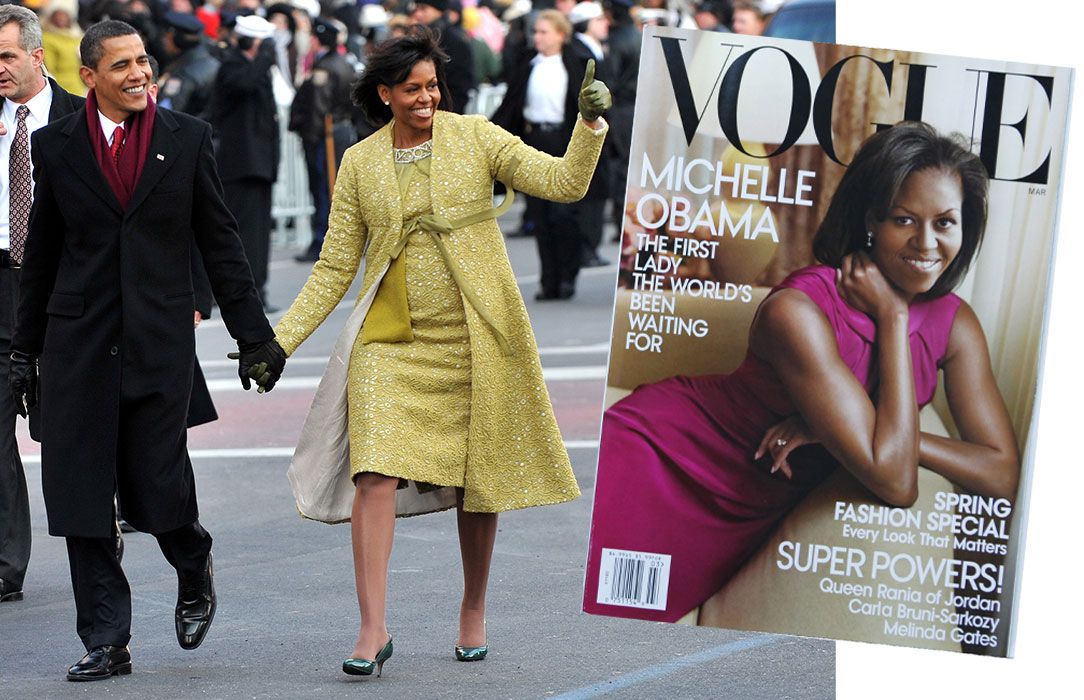
Michelle Obama had to develop a new kind of signature look. Vogue loaned out the big guns: the late fashion editor André Leon Talley was consulted during the couple’s first White House run. He guided her through the highwire transition of softening her image, from power dresser to a shift dress and coat. Approximating the look of one of America’s most popular First Ladies, Jackie Kennedy, made her more palatable to the voting public. After the victorious campaign, she brought her own glam squad with her to Washington DC, including Koop, then just 28, who had been employed at the posh Chicago boutique Ikram, where Obama had shopped in her pre-politics life. She had her hairdressers move to town, too.
Koop, installed in an office with a try-on and tailoring studio, pored over official schedules, the optics, analyzing the purpose and attendees, finding clothing Obama could bend, move, stretch and stand in for long periods. “Michelle was not one to sacrifice comfort for fashion,” she writes. Koop also had to have backup and contingency plans, as disasters and emergencies need to come with clothing changes. Important to Obama was the ability to hug: she would test each outfit, by reaching out with her arms to form an “O,” to see if she could reach out and touch the people she was interacting with.
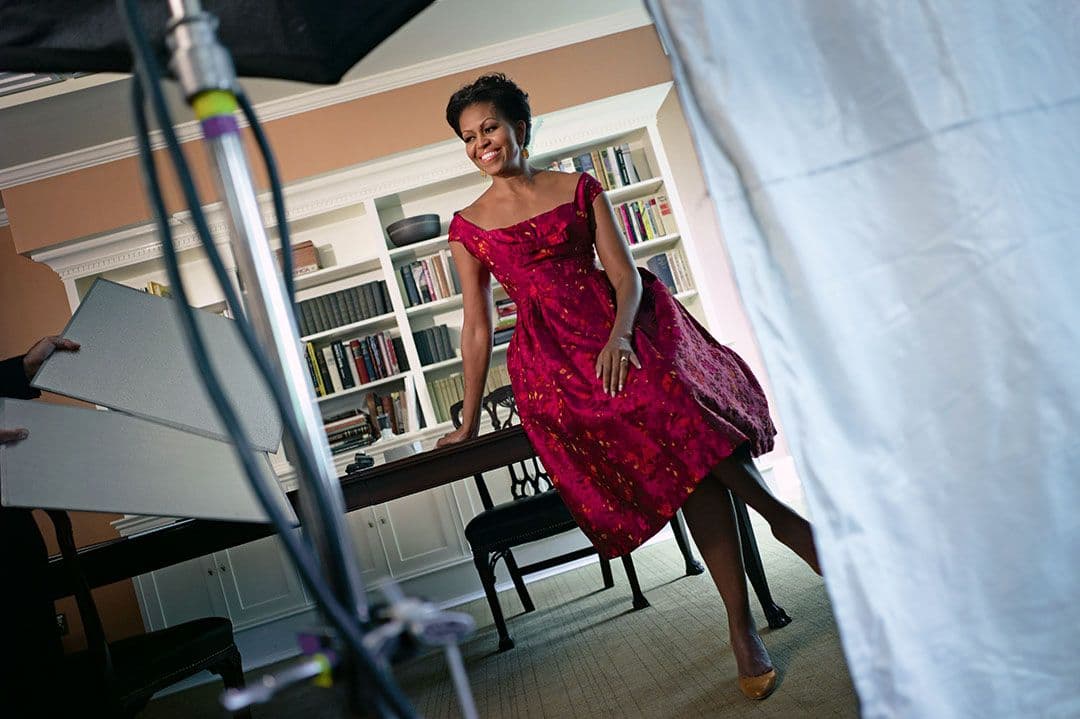
Relatability was paramount. The Obamas landed at 1600 Pennsylvania in the middle of a financial crisis. J.Crew became a go-to, for its preppy lines and mall availability. And she went for saturated hues: “I was attracted to bright colours,” Obama writes, “as I believed they would elicit bright smiles.” Her earliest signature looks – sleeveless dresses, cardigans, kitten heels (Obama is 5’11” and does not dig high heels) and wide belts – became a uniform. Of course, even though her go-to sleeveless dresses showed off envy-inducing toned arms, opponents took potshots at her for looking “too masculine.” She couldn’t win.
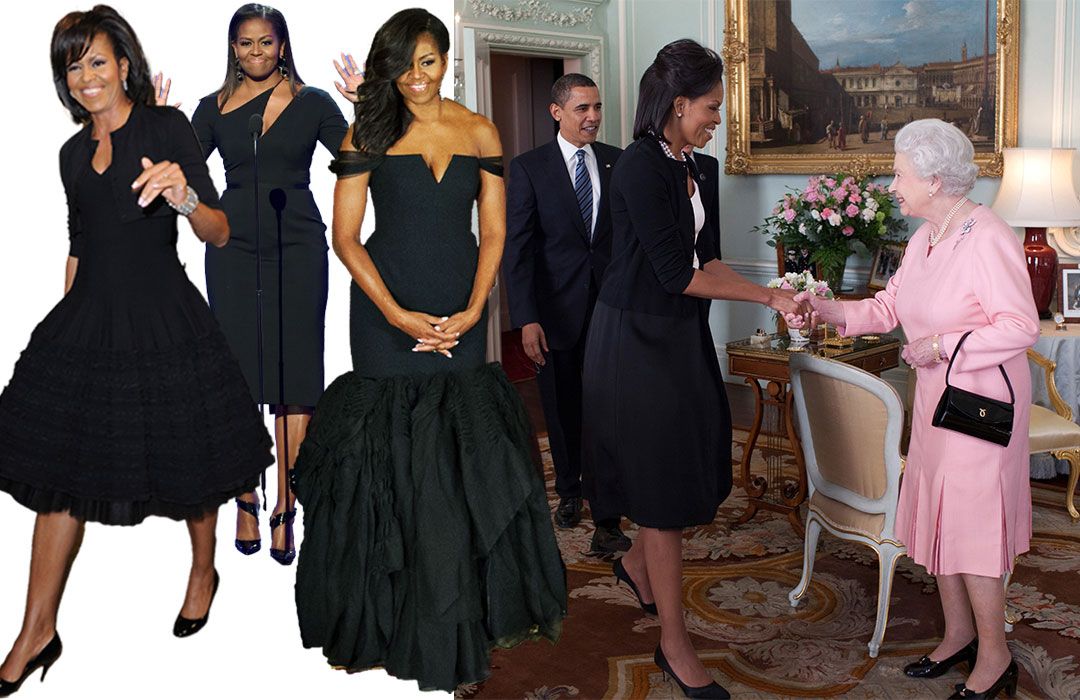
“I preferred simple, straightforward dresses,” she writes, “that would look good on anyone, and gowns that were made for dancing and moving through a room instead of standing and posing.” The clean lines kept things professional. Koop adds: “She didn’t want clothes to be louder than her.”
But Obama and Koop also worked on an influential high-low strategy. It was Oprah, we learn, who sent over her first designer gear from Ralph Lauren in 2004, when the Obamas first hit the national stage; she marvelled at its softness and suppleness. She observes “The right cut…hugged in all the right places, made me feel confident and beautiful.” Because that is what really good –-and personally tailored – pieces do. They don’t distract you.
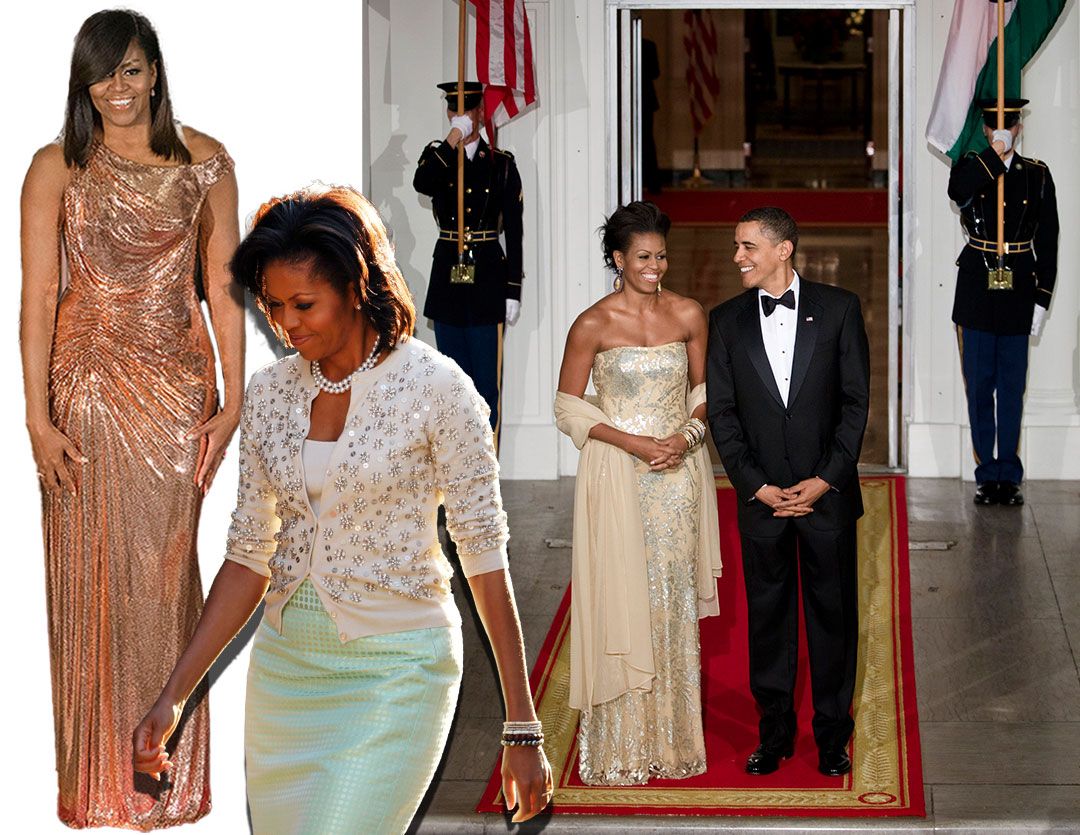
Obama elaborated further on this in a live interview with People Magazine. She wanted the clothes to hold up, not to tug or gape or need adjusting. Once she started an engagement, she says, “Don’t touch me, don’t fix me. Because now I don’t want to think about…how I look, because I want to be here for that little kid I’m talking to.”
What Obama wore sold out; she had a quantifiable effect on sales: former Wall Street Journal fashion reporter Teri Agins, writing for Puck news cites a NYU study of what Obama wore in her first year as First Lady, which concluded she created US$2.7 billion in value for the 29 companies she wore in her first 189 appearances.
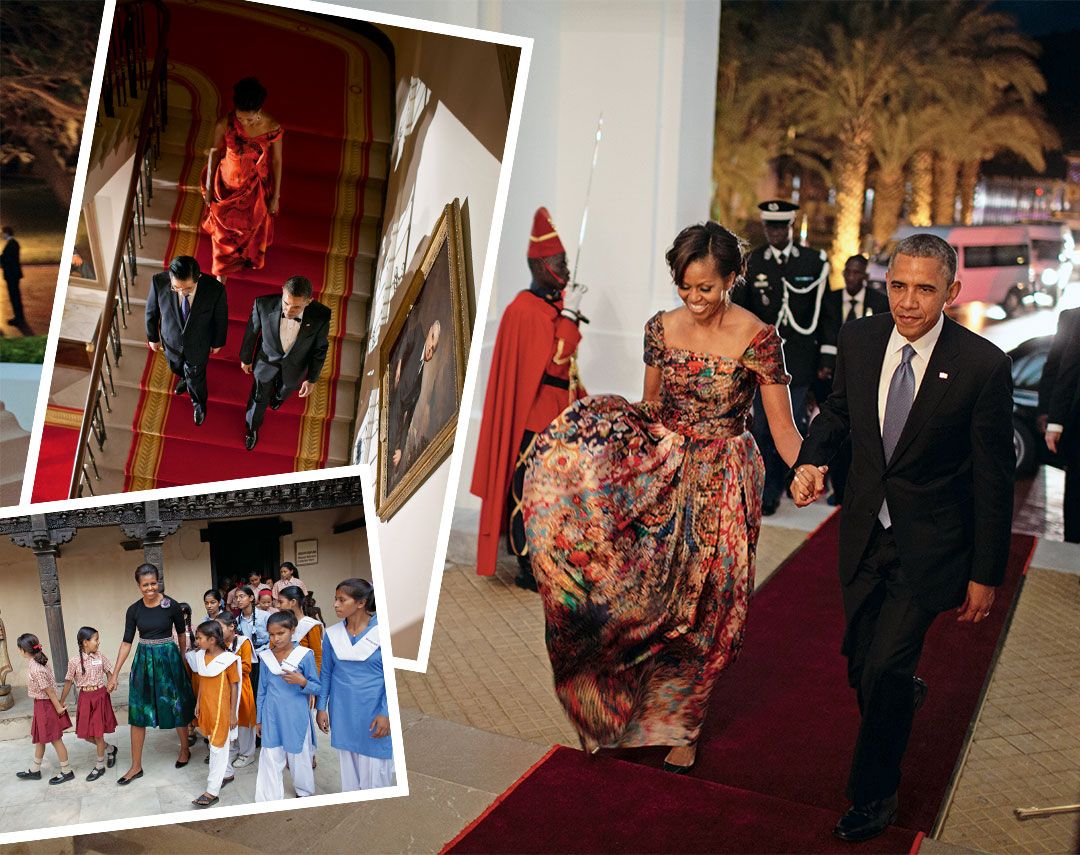
The guiding principle behind Michelle’s image, Koop writes, were the values the Obamas shared: “Inclusivity, artistry and diplomacy.” This last tenet was best seen in the couple’s foreign and state visit wardrobes, and supporting immigrant Americans became her way of diplomatic dressing –the art of honouring your host country. Thus, she wore Chinese-American Philip Lim to Beijing, and Indian-American Rachel Roy to India and so on.
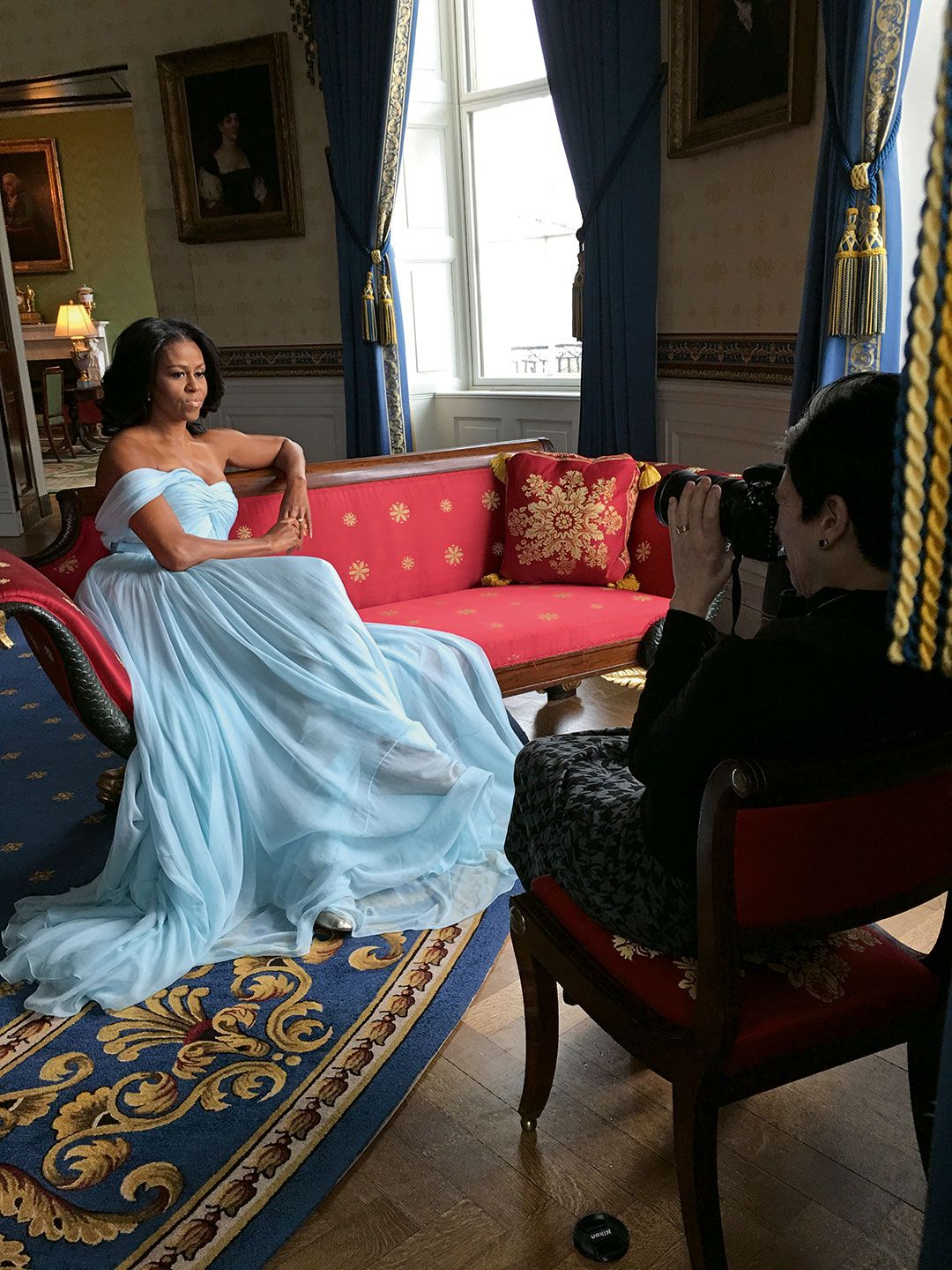
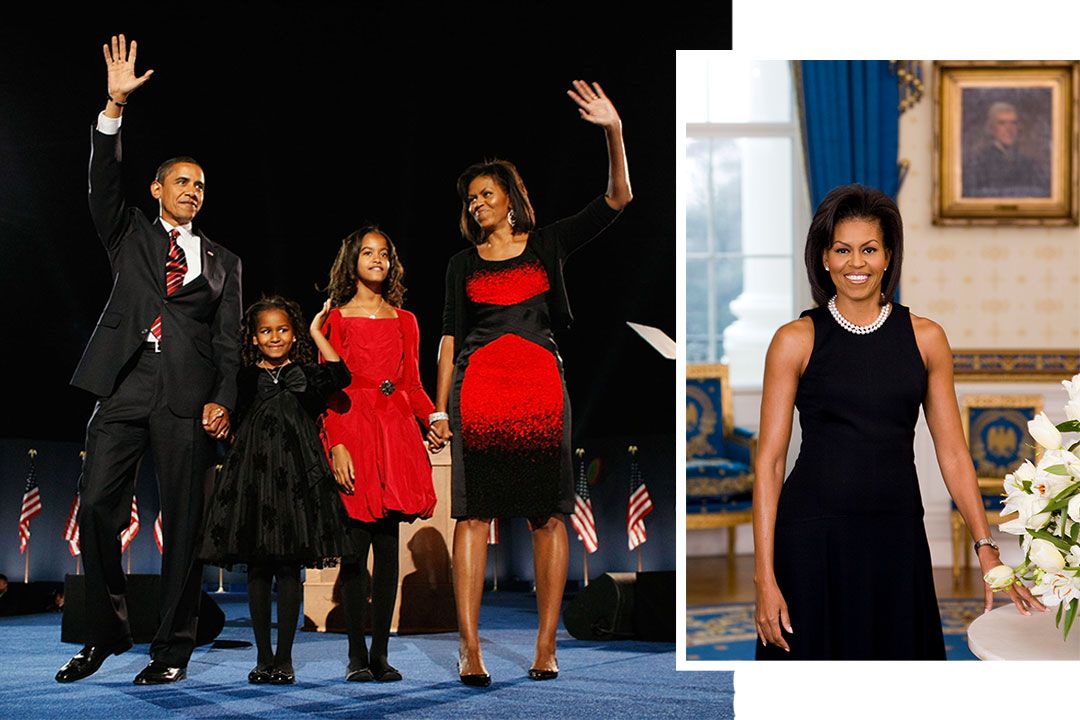
The special occasion pieces are the showstopper items in a First Lady’s wardrobe. Obama made a statement right out of the gate on election night 2008, when she walked out at Chicago’s Grant Park victory rally dressed in a customized Narciso Rodriguez dress that did not hide her light under a bushel. As the designer says in the book: “It was not some prim two-piece ensemble but a super provocative dress. Unapologetic. The message was that change had arrived in a big way.”
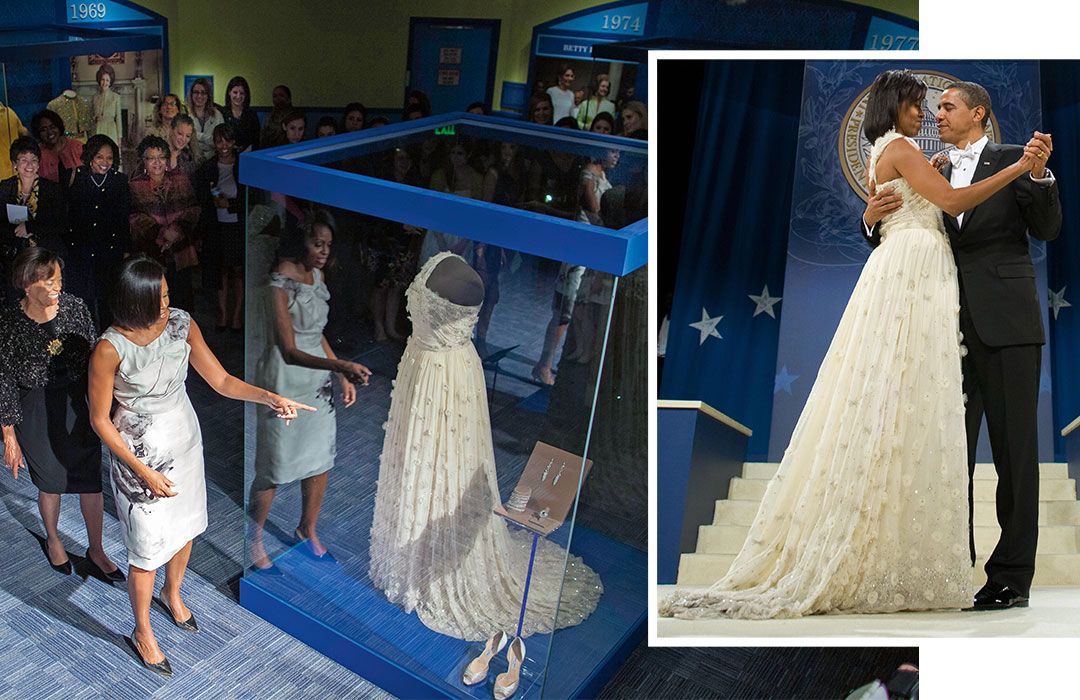
Jason Wu was an early designer that Obama shone her light on, wearing his diagonally-strapped white gown for the Inauguration balls, and his magenta sleeveless dress for her first Vogue cover that same year. Earlier in the day, she signalled optimism, wearing a sparkling lemongrass dress and coat by Cuban-American designer Isabel Toledo for her husband’s swearing-in, paired with contrasting sage-green J.Crew gloves.
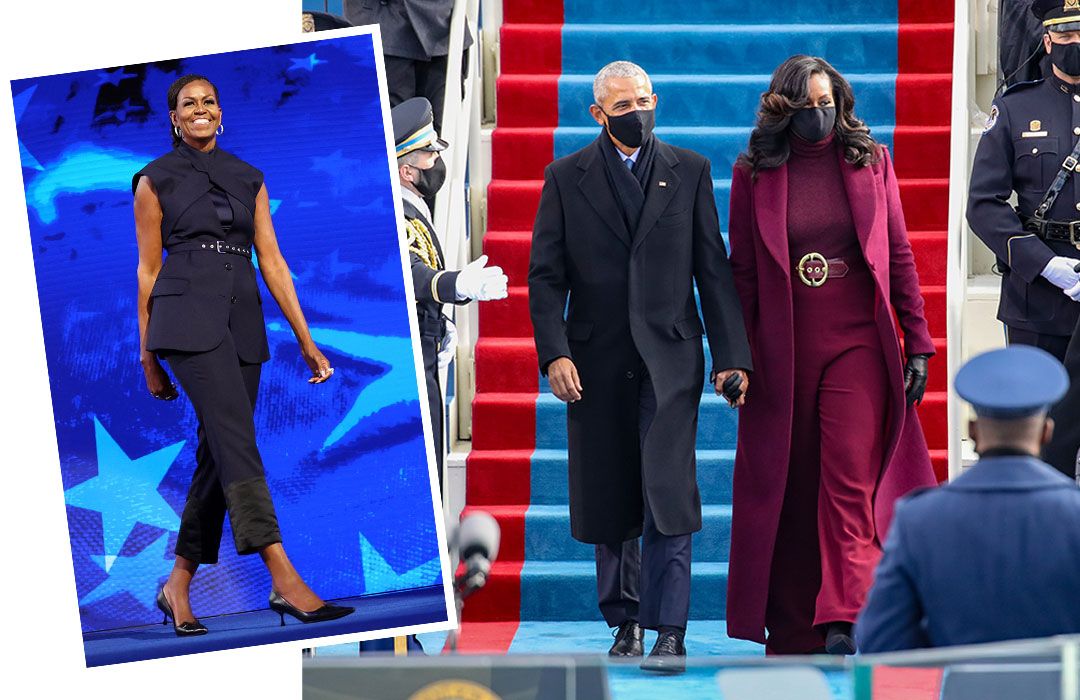
Nearing the end of their White House tenure, in 2016, Obama wore a daring rose-gold chainmail Versace gown to the final state dinner of the second administration, held in honour of the Italian prime minister. She further flexed her more personalized fashion muscles with the powerful burgundy Sergio Hudson separates, including wide pants and a sweeping coat, at the 2021 Biden inauguration. But it was when she introduced then Vice-President and Presidential candidate Kamala Harris at the 2024 Democratic National Convention in a novelty sleeveless jacket and cropped pants from the American brand Monse, with her long, braided hair in a ponytail, that she was really looking more like she wants to today.
Hair is a big signal for Obama, and a powerful chapter of The Look is entirely dedicated to it. As to why Obama did not wear her hair natural or in an Afro-centric manner, even as the culture simultaneously embraced that trend for Black women, she writes, this was so it “would not be a talking point. I knew there was absolutely no way that the first Black First Lady could show up in braids or any other protective style.” The Crown Act (Creating a Respectful and Open World for Natural Hair), she notes, was not introduced until 2019. “Supreme Court Justice Ketanji Brown Jackson can show up with sisterlocks now,” Obama writes, “but we weren’t that country in 2009. We are barely that country now.”
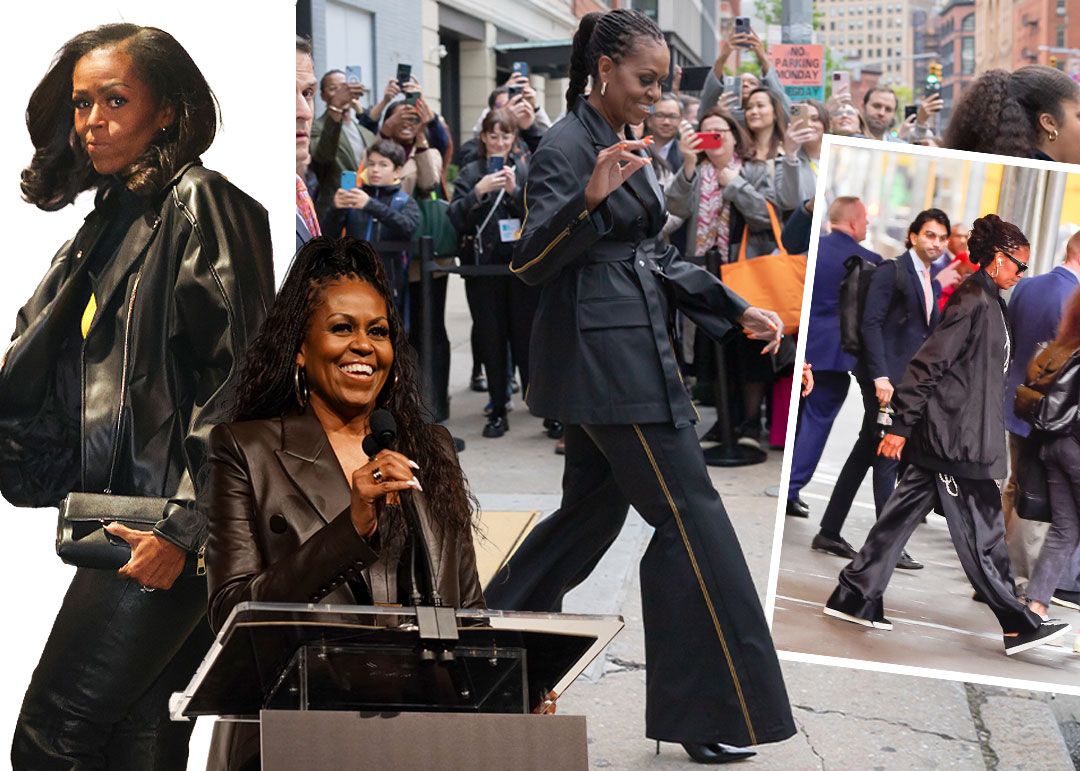
She recounts that prior to entering the White House, she had never worn wigs or extensions, but that daily styling and chemical straighteners were causing real damage to her hair. She came to embrace wigs, at the urging of her hair team in late 2009, so long as they looked like her own styled hair. By 2012, she was playing with bangs, again, says her hairdresser, to minimize damage. By the end of the second term, she was introducing subtle highlights.
Today, braids are her go-to. As she told People: “Braids allow me to get them done, and then that’s one less thing that I have to think about. When I’m out of the public eye, I am swimming, I am playing tennis, I work out, and braids represent that kind of freedom for me.” On the press tour, she says she is indulging her styling team and letting them play. She’s wearing her hair straight again, but as she told the New York Times: “I will be their doll. But when it is over, I’m back in my braids, child.”
The important takeaway hidden in the book is that Obama engaged with fashion for her own edification. “I wanted to look good for every occasion and photograph taken for me. This wasn’t just about outward presentation but about the inner strength that emanates from feeling strong, empowered, healthy.” There isn’t a stronger message to take away than that.