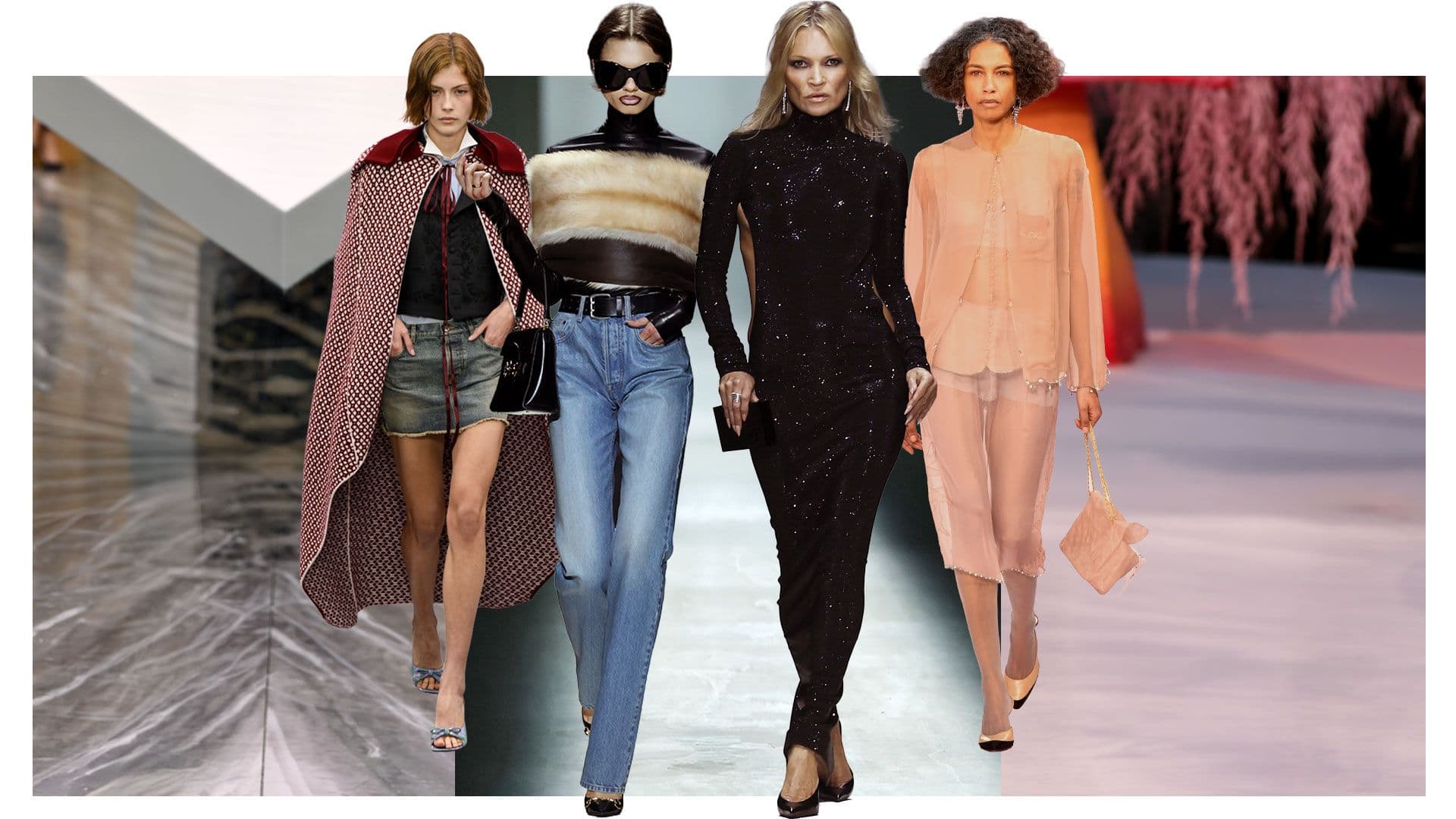
When the crowd, and online voyeurs, saw Kate Moss’s rear view as she strutted out in the finale of Demna’s much-anticipated Gucci runway debut in Milan on February 27th in a slinking, sparkling, black dress that was all business in the front and completely cutaway in the back, the designer’s vision was literally exposed. There was the Gucci leather G-String with the gold double G logos that caused a sensation when the then Gucci designer Tom Ford first sent them down the runway in 1997. It was a full-circle moment, not only to the ’90s but to Kate Moss in the ’90s referencing herself wearing a replica of the dress Julie Christie wore in the 1975 movie Shampoo.
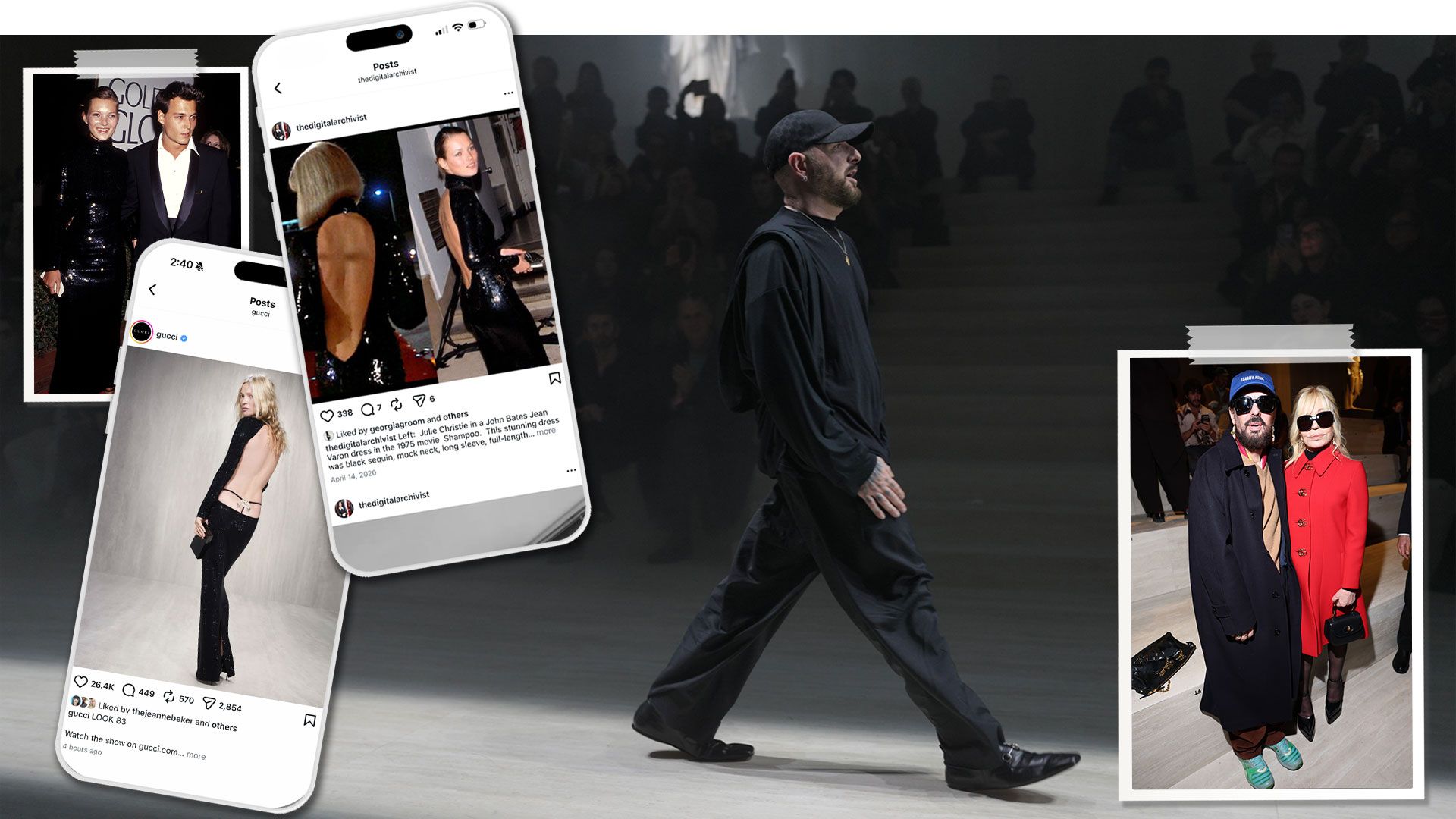
The spin is almost dizzying. In a mission statement released on Instagram the day before the show, Demna wrote, “My vision of Gucci is about the coexistence of heritage and fashion. Here they are not opposites, they are lovers. This first Gucci show introduces a universe of people, archetypes, consumers and dress codes that will shape my design language moving forward.” Much of Demna’s fall 2026 show recalled Ford’s celebrated 1995, 1996 and 1997 collections, which focused on minimalist bodycon silhouettes, barely buttoned satin shirts and trousers, and bum skimmingly low-waisted trousers. The models, and many celebrity faces – Karlie Kloss, Mariacarla Boscono, Emilia Ratajkowski – had the sexy, smudged eyeliner reminiscent of Moss’s decadent after-look of her partying days when she was the embodiment of Tom Ford’s Gucci aesthetic. But if on the hunt for newness one of the most innovative parts of Demna’s designs was, ironically, his vision of how to re-shape granny’s furs into off-the-shoulder shrugs mixed with leather – a new way to accessorize.
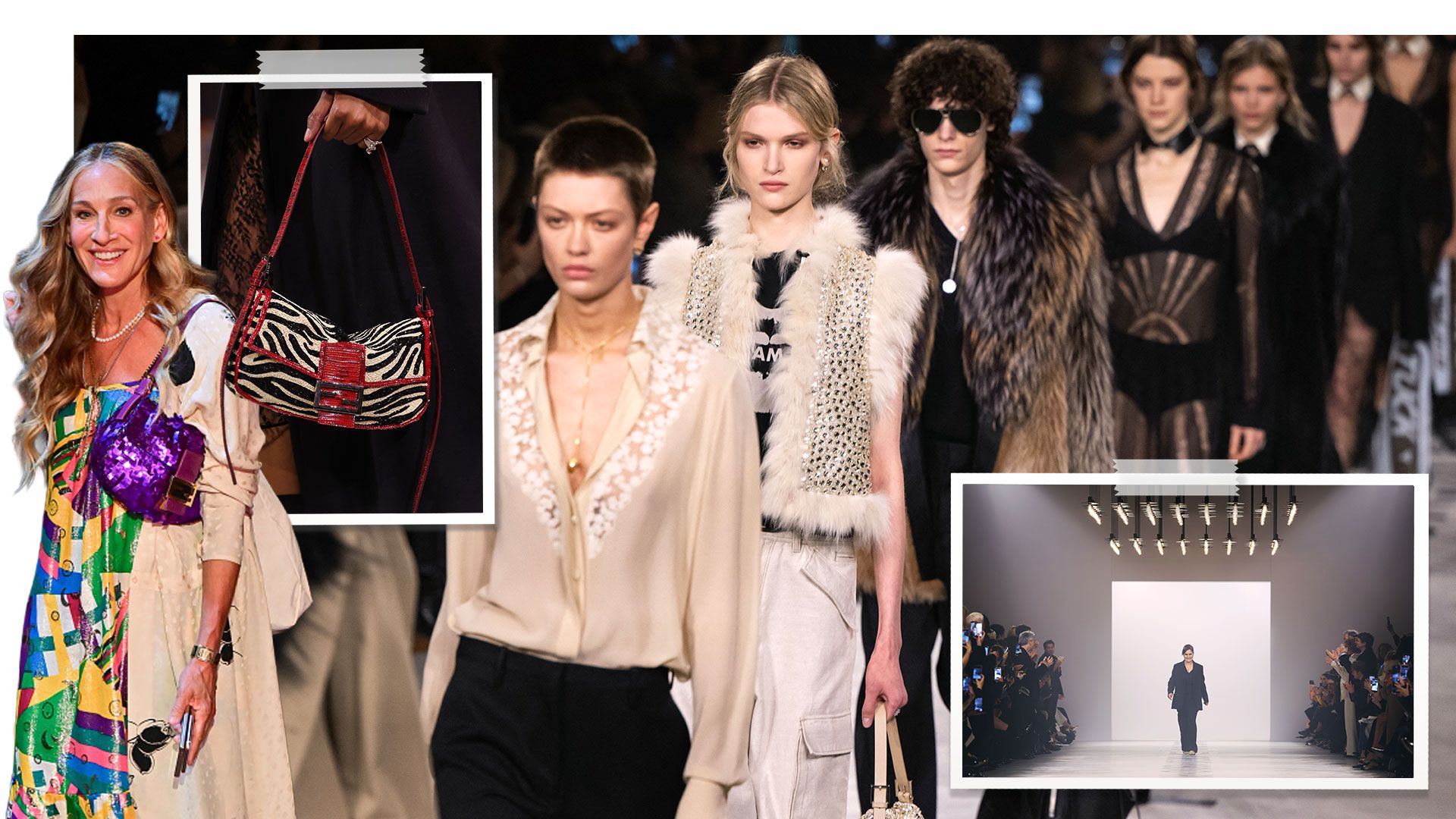
At Maria Grazia Chiuri’s Fendi debut in Milan the night before, highly anticipated because of how she was ousted from Dior after years of making them money, she addressed the brand’s somewhat challenging fur heritage by using archival pelts on the catwalk – this time re-imagined into arresting patch-worked jackets as edging for graphic zebra-striped vests, paired with stamped, glittering leather. Chiuri was also debuting her new atelier at Fendi where clients can bring vintage or inherited furs to be repurposed. Timely timelessness, now that the fashion industry is re-calibrating their relationship to the ban on fur from a sustainability standpoint, realizing the massive environmental toll that faux fur makes. The exuberance of the designs were also a reference to Karl Lagerfeld’s reframing of Fendi’s fur as “fun fur,” which is where the double F logo came from. Like Demna, Chiuri made a return to the ’90s through Fendi’s iconic baguette bag, shown in dazzling bugle-beaded, red-leather edged zebra stripe and snake print iterations. She was also referencing herself – Chiuri is credited as the co-designer of the iconic bag, made famous by Sex and the City – from her time as a young designer in the Fendi accessory studio in the 1990s.
At the couture, just months earlier the fashion rewind went even further back to 18th century romanticism, with deconstructed tricorn hats, billowing capes and satin rosette shoes. At Valentino couture, the audience watched the show through 19th-century Kaiserpanoramas, which forced them to view the collection through square peepholes looking into a stark white room where the clothing was shown, one look at a time. The new designers, who have taken the helm of couture houses also doffed their tricorn hats to maturity, not just of ideas, but to people by using more older models on their haute runways.
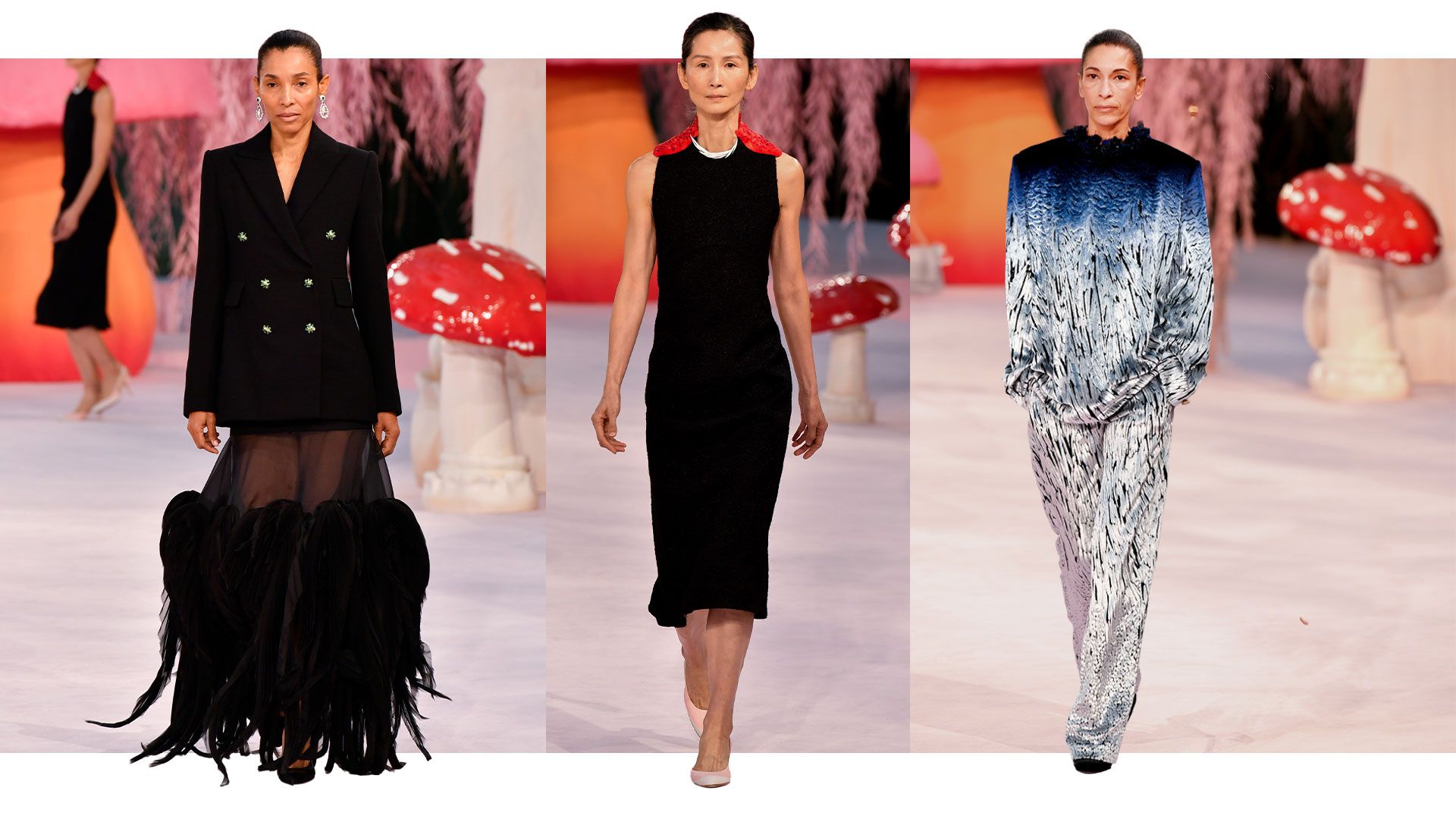
In his first Chanel Couture show, Matthieu Blazy set the label free from its old strictures, not only of tweed and bouclé, but from stomping, sullen young models. He chose, instead, to use more mature models, saying that they, “bring a completely different dimension to the clothes, they have life; they’ve seen the world.” Blazy’s deconstruction of the Chanel/Lagerfeld runway trope was, ironically, a harkening back to the brand’s founder, Coco Chanel, whose designs famously liberated women from the corset. Chanel is also widely credited for the invention of the Little Black Dress, shown by Blazy on just the type of person you might imagine wearing it, an older woman. This achieved another of Blazy’s stated aims, to allow the type of women who are able to buy the clothes to recognize themselves on the runway.
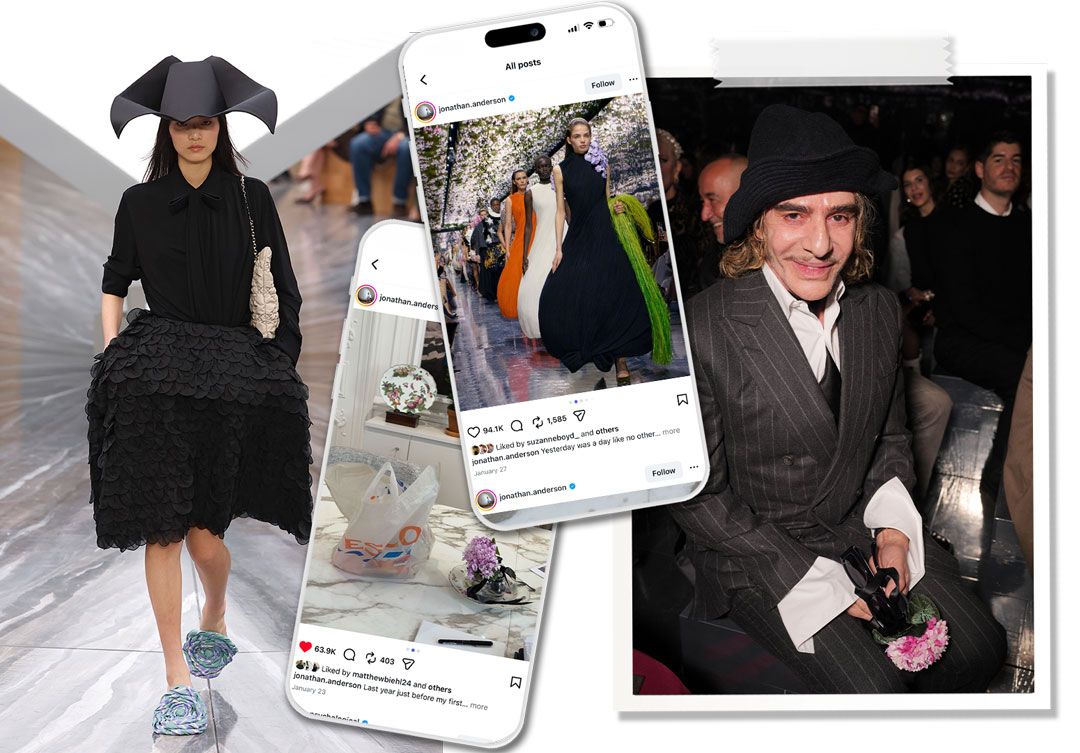
At Jonathan Anderson’s couture debut for Dior, mouths were agape – not at the front-row celebs Rihanna, Charlize Theron and Jennifer Lawrence – but at the appearance of 94-year-old Paulette Boncoure who worked as one of the atelier’s Petites Mains (seamstresses) for over 40 years. Boncoure began her career in 1947, the same year Christian Dior launched his revolutionary New Look collection and helped construct those original pieces. She was highlighted by Anderson as a “living tribute” to the fashion house’s human heritage. After all, without the skills of women like Boncoure, the art of couture would not be possible. Anderson’s aim was not simply to be nostalgic, however, but to return to the maverick legacy of Christian Dior himself by giving the famous hour glass silhouette a literal twist, with pleats that twisted around the body, adding a modern energy to Dior’s classic curves. At a preview before the show, Anderson said Dior “changed fashion in 10 years. Hitchcock, cinema, everything. The shows he did, we look at them now as classicism, but at the time people were quite confused by them. And then he dropped dead.” Dior died from a heart attack in 1957, just 10 years after the collection that made him famous and a star was born. A 21-year-old named Yves Saint Laurent, who had been working alongside Dior in the atelier, stepped into the role debuting his first couture collection just a few months later. The next day headlines around the world hailed him as the man who had saved fashion.
In a nod to the brand’s other fêted designer, John Galliano, Anderson used cyclamens as his floral motif. Galliano brought the flowers as a gift to Anderson when he visited the atelier last year. The collection also heralded the return of John Galliano from the antisemitism scandal. The ground was already laid by the 2023 documentary High & Low: John Galliano, a nuanced look at Galliano’s troubled creative genius, produced by Condé Nast, aka Anna Wintour. Rumours abound that it is all to prepare the world for Galliano as the subject of Wintour’s 2027 Met Gala, if the party survives the Bezos/Sanchez onslaught as the polarizing couple is sponsoring this year’s iteration.
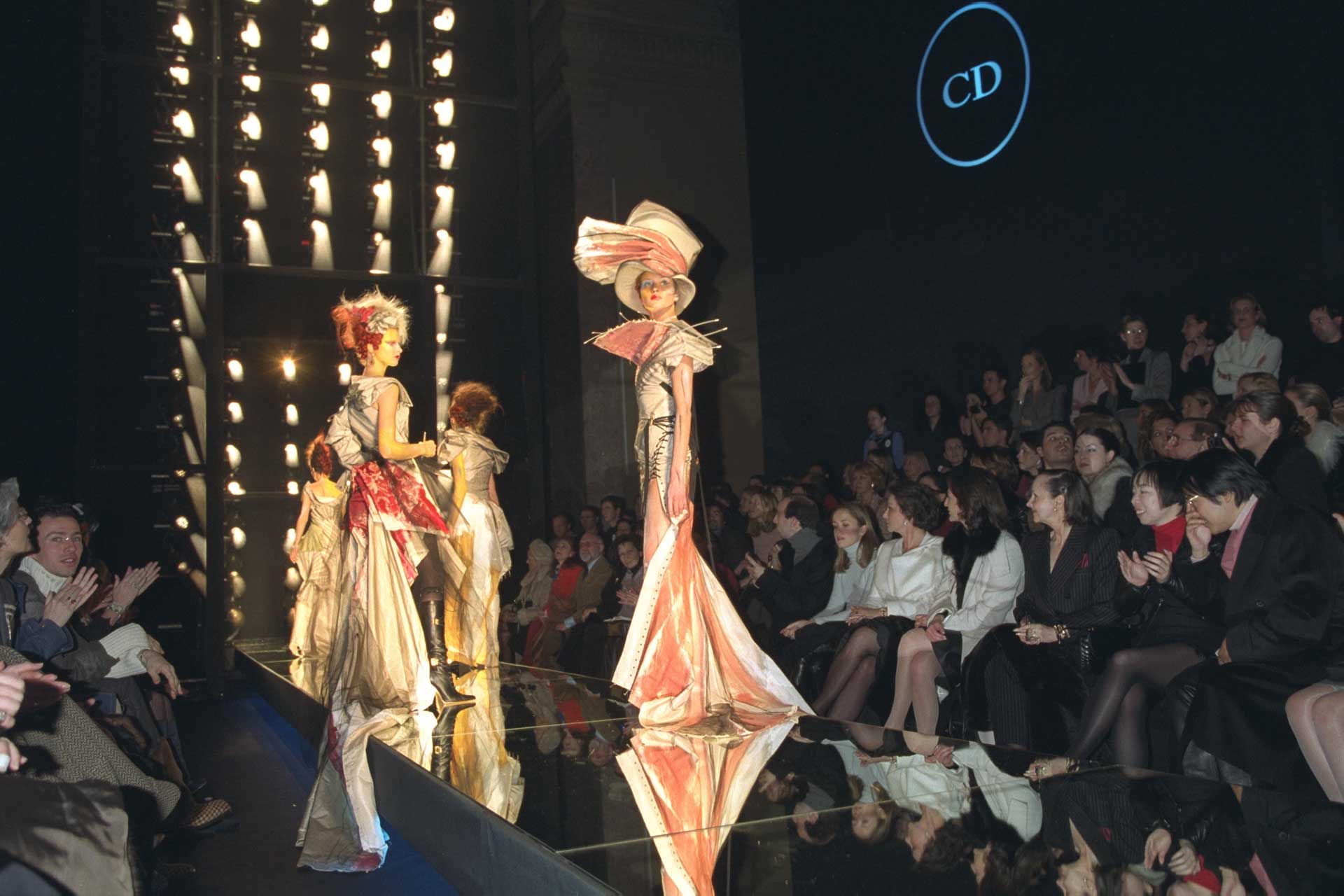
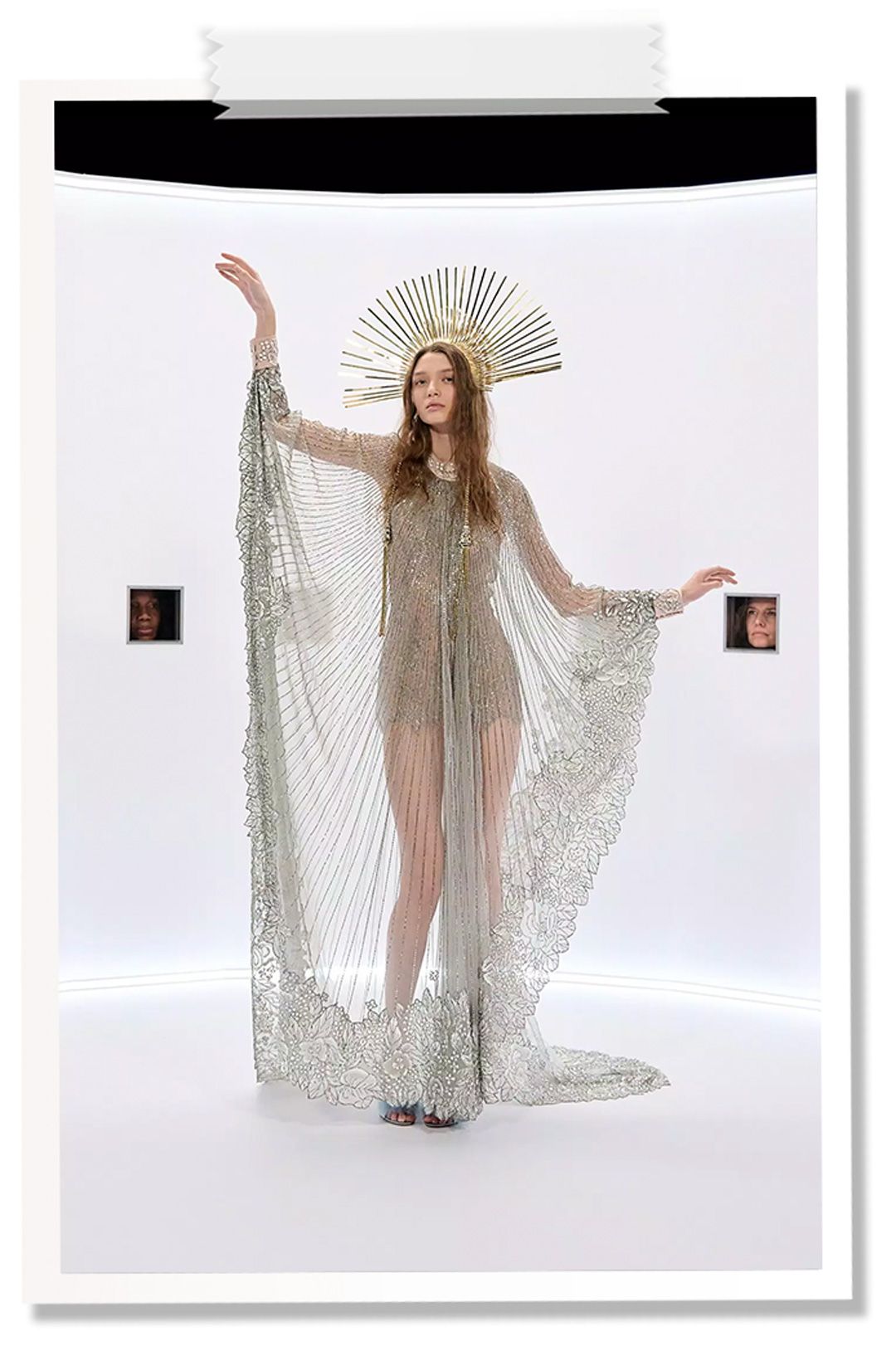
To complete the circle, ’90s-era Galliano is having a moment, as evidenced by the eye-watering prices fetched by French-Lebanese businesswoman and socialite Mouna al Ayoub’s Galliano Dior haute couture collection. In late January, she sold 126 pieces at Le Bristol Paris hotel, including a painted silk evening gown from the Clochards or “Homeless” Spring 2000 couture collection (below) which went for a whopping €663,000 (over C$1 million). Because money, like time, marches on.