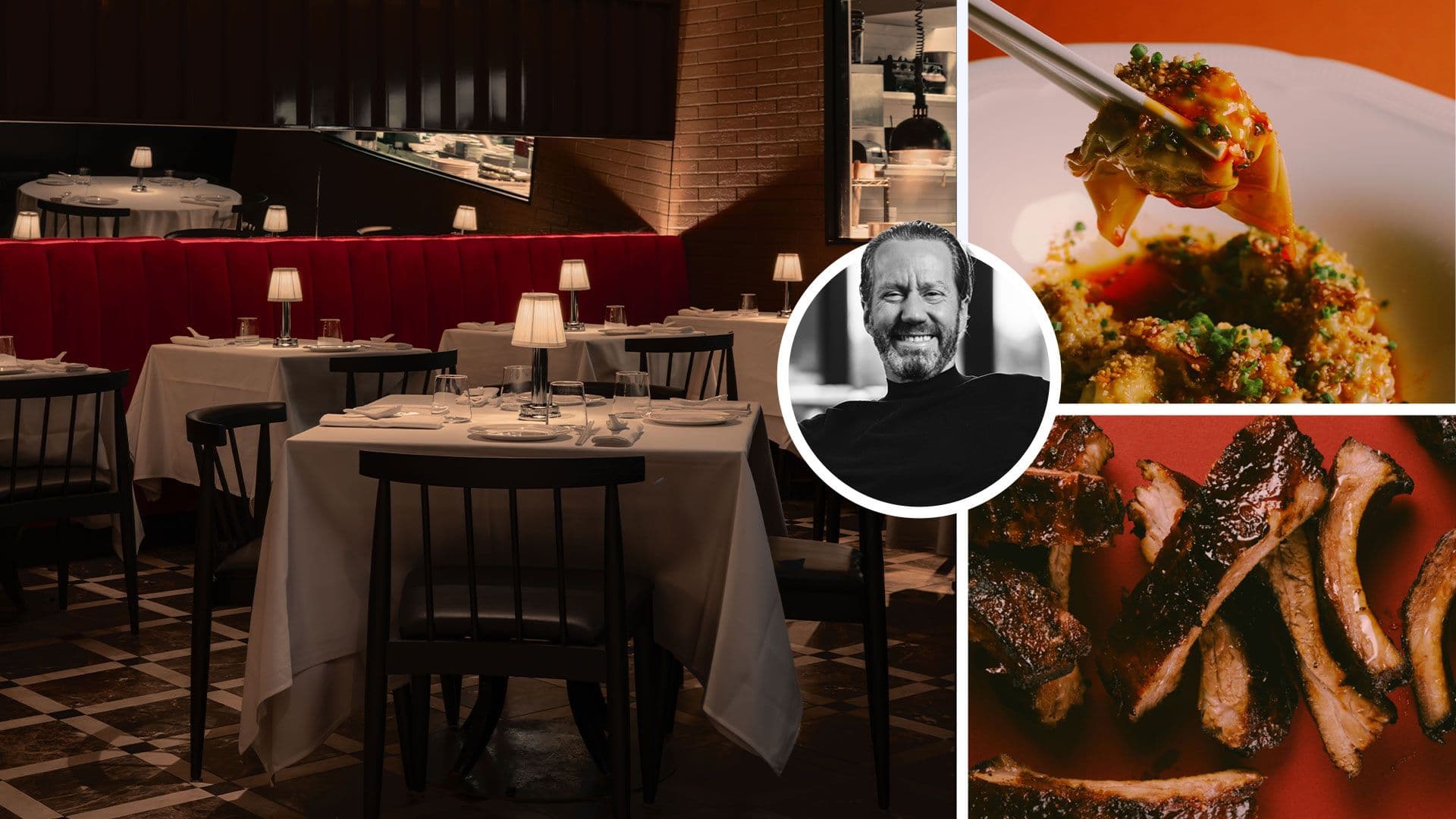
For more than a decade, Jacob Richler has helped shape the conversation around the Canadian food scene’s coming of age. Known to many as “Jacob Two-Two,” after the endearing children’s book his literary lion father, the late Mordecai Richler, dedicated to him, he has carved out his own place in the country’s cultural landscape, emerging as one of the nation’s most trusted arbiters of taste. Zoomer sits down with Toronto-based food critic and magazine editor to find out what’s hot – and what’s not – from coast to coast to coast.
Zoomer: You developed a reputation as one of Canada’s most influential – and occasionally feared – restaurant critics. Was that deserved?
Jacob Richler: I was the inaugural restaurant critic for The National Post – and at the time it had lots of English editors, especially from The Telegraph (both were owned by Conrad Black), they were very enthusiastic about that type of acerbic approach.
I even got thrown out of a restaurant once. There were a couple of Toronto restaurateurs who were brothers, one did front of house and one was in the kitchen and I gave their restaurant a deservedly dreadful review. Years later they opened in a hotel, Le Germain. I went in, sat at the bar and had a glass of wine or two. One of the brothers started chatting with me and I asked him “So what do you recommend I eat tonight?” He replied, “I actually recommend you leave.” I was a bit taken aback but not so taken aback that I didn’t think, “This is a hotel” – so I checked in and ordered room service. The food was no better, they did not last long there.
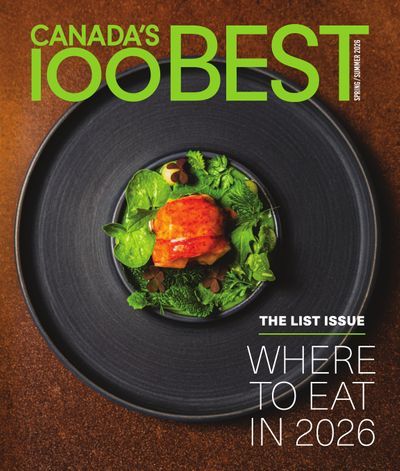
Z: You are now known for being the editor-in-chief and publisher of Canada’s 100 Best Restaurants, how did the annual ranking and magazine come to be?
JR: Years ago when I used to travel a lot, I would rely on the people who are our judges today for recommendations – and that is part of the genesis of the idea. However, to transition from being a critic to this, I had to gain the trust of a number of chefs who didn’t adore me. They were also very hesitant about judging their peers, but now they value their ranking above all else.
I’m very diligent about the judges and we do everything possible to ameliorate our methodology. I couldn’t have planned a better time for it because there are no restaurant critics left. It’s easy to hate one restaurant critic, but now with 160 judges it’s a consensus of opinion that chefs can’t ignore. We also have diners as our judges. Other critics placed excessive value on the impact of their writing on a restaurant’s success. If you give a great review you could be busy for a couple of weeks but, ultimately, whether it went beyond that depended on if the restaurant made the customers happy. Those diners, who represent the success or failure of a restaurant, are a large part of our voting panel. They’re the key to knowing if a restaurant will endure. Critics can be looking at arcane details that are irrelevant to the consumer.
Z: How many nights a week do you eat out?
JR: In the run up to publication of the list, two to three times a week. Otherwise, I cook at home five or six nights a week. I don’t understand how you could possibly evaluate restaurants if you don’t cook. It’s the only way to recognize what’s going on on the plate.
Z: If there was one city you were relegated to in Canada for the rest of your gourmand life, which one would you choose and why?
JR: It’s kind of the same as when people ask me, “What’s your favourite restaurant?” Some days I’m in the mood for a perfect ham and cheese sandwich, other days I want a tasting menu. The cities are a bit like that. They’re very different from each other in their culinary makeup. People act so surprised sometimes, “oh Montreal’s so different from Toronto.” Try driving 600 kilometres in Europe – you’ll be through six countries and eight languages – of course they’re different!
Quebec has older culinary traditions, it was settled first, and was more populous, But the food is manifested in a different way in each place. In, say, Vancouver, Asian elements work their way into everything. Even though the Asian population is smaller than in Toronto, it is far more present, chefs using rice wine vinegar instead of white wine vinegar for instance. Montreal understands French cooking more than other places. If you want to go to a perfect French bistro, you have to go there. Quebec also has amazing farming, most of the birds and lamb I buy come from there. My best steak is from Ontario, wild boar from Manitoba. . .
Z: Do you see any burgeoning food scenes in Canada right now?
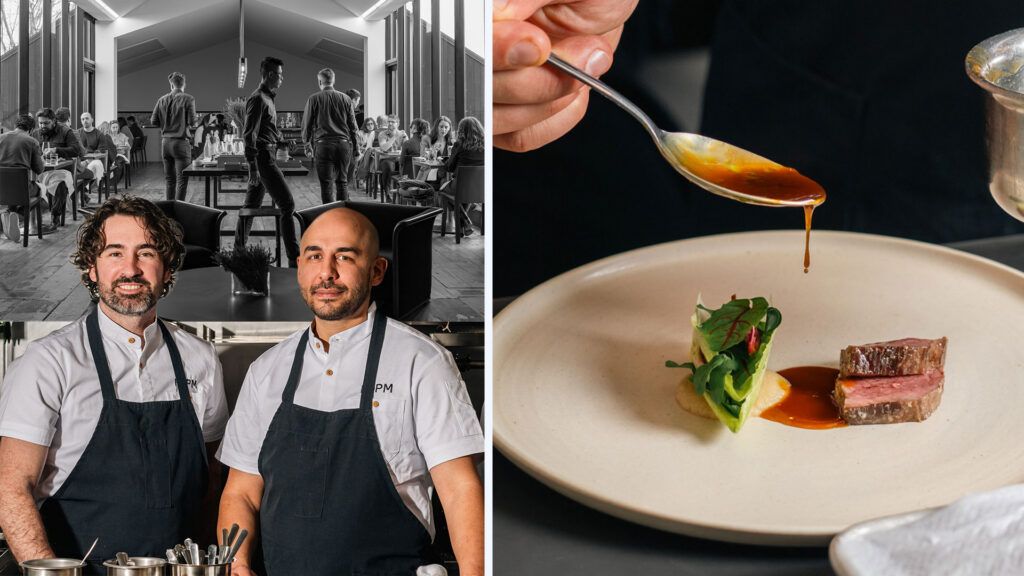
JR: The big cities you expect to continue in an established way. What’s exciting are small restaurants in unexpected places, including our No. 1 restaurant, Pearl Morissette, in Jordan Station in Niagara. One good restaurant begets another; – people work in the kitchen, get trained, and want to do their own things so they open a restaurant and the food scene starts to go. It’s lovely to see. It happened in St. John’s, Nfld., when Raymonds opened, and now there are a handful of excellent restaurants there. And, of course, in Prince Edward County. Quebec is very good at this, they have great rural restaurants.
Z: Is there a favourite cuisine or country for you?
JR: Oh, I love my trips to London, the food is fantastic there. The prices in New York City have become, in my estimation, higher and I don’t find it to be particularly rewarding of late. I also have some antipathy to go to the States which never previously existed. I walk into a restaurant in New York and I feel fleeced; in London I don’t. My wife and I slip in one posh meal, but then the rest of the time it’s about what they’re doing in the local gastropub.
I always love going to Italy and France. I don’t get to Japan often enough but I will make amends for that next year. Japan is incredible, but very formal – it can be overwhelming.
Z: How has the Canadian food scene evolved since the 100 Best started 11 years ago?
JR: One of the jobs I have to do at this time of year is try to categorize the restaurants on the list. Once upon a time they were “French”, “Italian” or “Continental”, but now you can’t work it out! Really, what’s happening is our chefs are more and more confident about putting what they love on the plate. It is increasingly personal (versus recreating the perfect duck confit), take it or leave it. And by and large, when the chefs are good, people take it.
Z: Are there any food trends you find annoying?
JR: The pressure to consume tasting menus. It is a lot to ask of the customer to give you four hours of their time, if you’re a good chef, you should be able to prove your point in an hour. Also, I’m really happy restaurants have stopped doing the bread-and-butter course. I’m paying $500 for dinner – if you don’t put decent bread on the table, you’re going to hear about it from me.
Z: How do you feel restaurants are reflecting our turbulent times?
JR: There is no question that dining out is an increasingly expensive sport, punishingly so. It’s easy to understand the reasons why – there are a thousand other terrible things going on. Restaurants are in a bit of a bind after the pandemic, either using less prestigious ingredients or decreasing portion size to manage costs. The prices are justifiable but not always for the consumer and the pressure to deliver something fantastic is high. At 100 Best we try to acknowledge this in a couple of ways, including a price guide for the first time so people have a warning. We also have a whole new category – “Recommends” – which means the restaurant’s not on our main list but worthy of an excursion.
Not every night should be a special occasion, even if you have the financial ability to make it so. There are different kinds of restaurants for different occasions. Sometimes you just want to go out for a quiet bistro meal around the corner but the bistro might not be any good, so with Recommends we’re trying to make a list of those that are, and fulfill that need.
FROM COAST TO COAST TO COAST
Richler’s Personal High and Low Picks From Canada’s 100 Best Restaurants
– VANCOUVER –
Sumibiyaki Arashi
There is no other yakitori in Canada that comes anywhere close. Its beak-to-tail experience will change how you think about chicken forever. Peter Ho is a master of the bincho-tan grill.
View this post on Instagram
The Fish Man
This is one of my favourite places to eat in the country. And as it’s in Richmond, it’s close enough to YVR that you can make a dash for it during a layover there (as I have done, many times). Bo Li’s ling cod sour cabbage hot pot is divine.
View this post on Instagram
– CALGARY –
Eight
This eight-seat restaurant has unusual ambition and meets it on every score. The food is highly original, emphatically Canadian, unfailingly finessed, and backed up with great storytelling.
Penny Crown
I love a good tavern so this new and much-talked-about interpretation from Tony Migliarese and his DOPO team will be high on my list when I get to Calgary later this summer. Roast veal marrow with anchovy and salsa verde is my kind of bar snack.
– TORONTO –
Alo Restaurant
Over a decade in, I still can’t get enough of Alo, because of the kitchen’s unwavering finesse and consistency, their clever deployment of different culinary traditions on the plate, and the team’s all-around attention to detail.
View this post on Instagram
Mimi Chinese
Its recent reinvention with a new focus on à la carte dining instead of tasting menus has made Mimi’s a go-to local for me – and has left me plagued with ever-more-frequent cravings for their hot and sour soup, stuffed chicken wings and Dungeness crab.
View this post on Instagram
– HALIFAX –
Mystic
Nova Scotia is a forager’s paradise and chef Malcolm Campbell and his team at Mystic do a captivating job of showcasing unfamiliar but delicious wild coastal ingredients like sea truffle on their pretty plates. The striking, oceanside setting doesn’t hurt, either.
View this post on Instagram
Tribute
Haligonian chef Colin Bebbington accrued years of culinary experience abroad at some of the best kitchens imaginable before returning to Halifax to open this open-flame wood-fired restaurant on the waterfront. The menu speaks of tradition and innovation in sensible measure and, next time I’m in town, this will be my first stop.
View this post on Instagram
– MONTREAL –
Beba
This convivial 28-seat restaurant presents a unique and winning slice of Montreal. The Argentinian-Jewish food is unfussy and delicious, the hospitality generous, and the whole experience joyful.
View this post on Instagram
Pasta Pooks
This ultra-casual pasta counter has won the city over with its exceptional house-made pastas and short, daily menu of Italian simplicities. Pop by for lunch and you will quickly understand why.
View this post on Instagram