Author’s Home Base: New York City
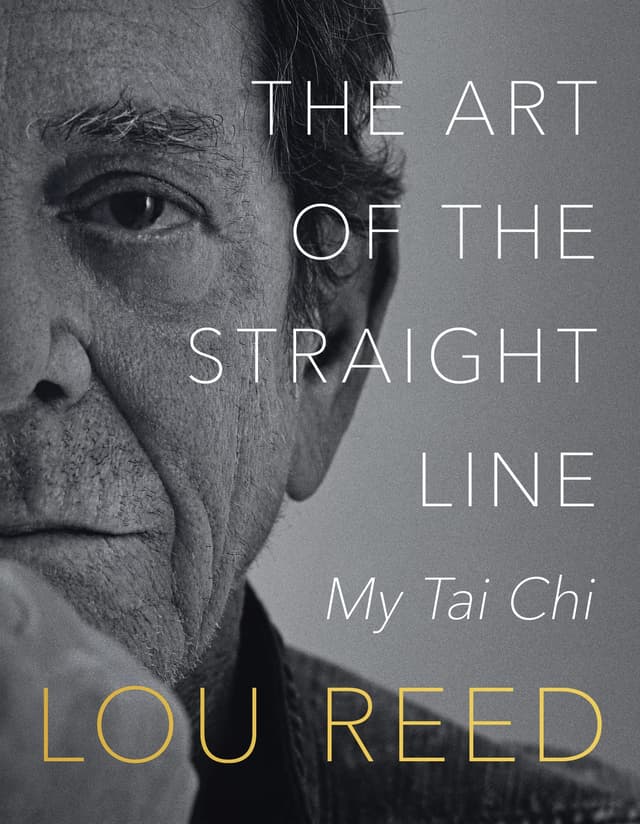
Author’s Take: “[Lou] didn’t want to do an autobio. We tried to make this like a handbook, a how-to, because he really wanted people to do [tai chi]. He genuinely wanted to help people. He was really driven by this need to make things better. Even on the smallest level, he was always asking, ‘How am I going to make things better?’ He tried to make everything as big, beautiful and fantastic as it could be.”
Favourite Lines: “Tai Chi frees you from preconceptions — music or tempo, this, that, or the other thing. It is, I think, a pretty enabling kind of thing. I hate to use that word, ‘enabling,’ but there it is. It’s very, very useful for centering yourself, for experiencing these different kinds of disciplines, be it meditation, bodywork, tai chi, yoga, whatever. Or I like to just have it going all the time because it makes the outside sounds into a more musical environment.”
Review: Lou Reed loved tai chi. Really loved it. He practiced it, taught it, evangelized endlessly about it and pushed everyone in his orbit — from the leather-clad maulers in Metallica, with whom he cut 2011’s Lulu album to Canuck super-producer Bob Ezrin — to give it a go.
In 2009, the one-time Velvet Underground lynchpin set his sights on writing a book about his beloved martial art. But “too many things intervened,” his widow, the artist Laurie Anderson writes in the foreword to The Art of the Straight Line, which she co-edited with a trio of Reed’s friends. Reed died in 2013 at age 71, leaving behind only “scattered notes.” Yet, Reed also left behind a small, vocal army of tai chi converts and cohorts, whose recollections make up this unusual book, which is organized like an oral history but with Anderson sometimes popping up as interlocutor.
Familiar names like rocker Iggy Pop, filmmakers Wim Wenders and Julian Schnabel, magician Penn Jillette and Kirk Hammett from the aforementioned Metallica offer anecdotes about the late musician. So do multiple tai chi practitioners, among them Reed’s most important teachers: Master Ren GuangYi — a key figure in Reed’s tai chi development who sometimes performed with him onstage — plus Peter Morales, brother of Reed’s second wife, Sylvia, who introduced Reed to tai chi on the cusp of the ’80s when his much-abused body was in serious need of rehabilitation.
Tai chi, Reed contends, allowed him to age gracefully while meditatively making peace with the world. “Not to get too flowery here, but I want more out of life than a gold record and fame,” he writes. “I want to mature like a warrior.” The Art of the Straight Line — the title a sly reference to the “circles within circles” propelling practice, which forces one to “move through circles without losing your sense of direction” — is essential reading for fans of Reed, tai chi or, ideally, both. But it’s difficult to recommend more generally. Yes, it’s enlightening and occasionally funny and there are some detours into Reed’s songwriting process. But mostly, it’s really, really focused on tai chi. Enough said. —Kim Hughes