Home Base: Oakland, Calif.
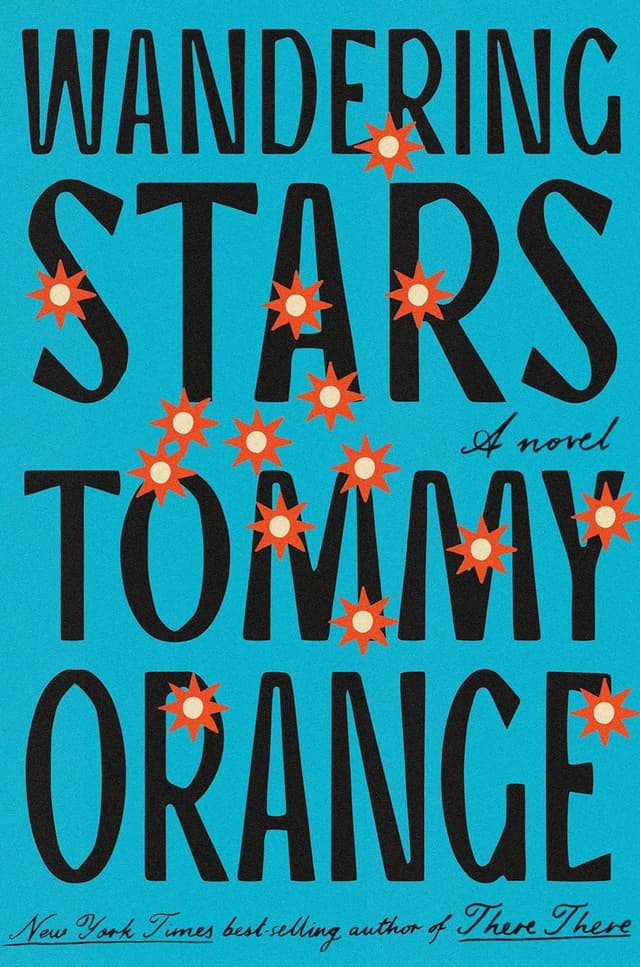
Author’s Take: “I realized St. Augustine [Florida, 1875] was the blueprint for the Carlisle and boarding schools across the country that for decades were about ‘killing the Indian to save the man.’”
Favourite Lines: “One of the doctors … told him the bullet shard in him was shaped like a star, like that was some cool shit. … The doctor said they would keep an eye on it, the star shard, because, he warned, they’ve been known to wander.”
Review: It is humbling to read a novel with such a command of complex themes, voices, time frames and characters. Wandering Stars blew my mind with each sentence, cadence and insight.
It begins in Colorado with the Sand Creek Massacre of the peaceful Cheyenne and Arapaho peoples, by the U.S. Army in 1864. In the opening scenes, Jude Star escapes on a horse with another boy, and they struggle to survive. From there the novel winds (not wanders) through seven generations of the Star family – who endure all the monstrous things First Nations peoples have suffered from colonizers – but it is told through such intimate portraits that you feel you are experiencing them first-hand.
The most disheartening and yet significant passages cover Jude’s time in Florida, after he is picked up as a prisoner of war and sent by train to a “prison-castle” in St. Augustine, Fla. On the way, he describes, shocked, riding past piles of buffalo bones, saying, “Every buffalo dead was an Indian gone.” At the Indian Industrial Institute, Supt. Richard Henry Pratt – a white man with a self-righteous sense of mission – forces his wards to learn English, read the Bible, then go out and drive Indigenous people from their tipis.
The story of losing fathers, losing babies, losing homes, losing voices, being despised, addicted and alcoholic is all told through the wandering stars. These are not just the characters Jude Star and his son Charles Star (whose first names are even exchanged at one point), but the motif pops up slyly: stars in the sky; the bullet shard in Orvil Red Feather’s leg – a flick to Orange’s first novel There There. The beautiful prose does curious dances throughout, depending on who is speaking, like nothing I have read before. It’s a marvel; so stay alert.
As many readers have pointed out, the novel is both a prequel and a sequel to There There, which was shortlisted for a Pulitzer Prize. But Wandering Stars, a plait of intergenerational trauma that goes backward and forward, is powerful, original, deep and sparkling … all on its own. – Susan Grimbly