It’s a cliché that older folks like to lament how things have changed, but the last two decades have seen a transformation that makes other cultural milestones look minor by comparison. The Great Digitization, which encompasses home computers, the internet and the World Wide Web, social media, smartphones and now artificial intelligence, has changed the world entirely. If you were born in or before 1979, as I was, you are among the last humans not classified as “digital natives.”
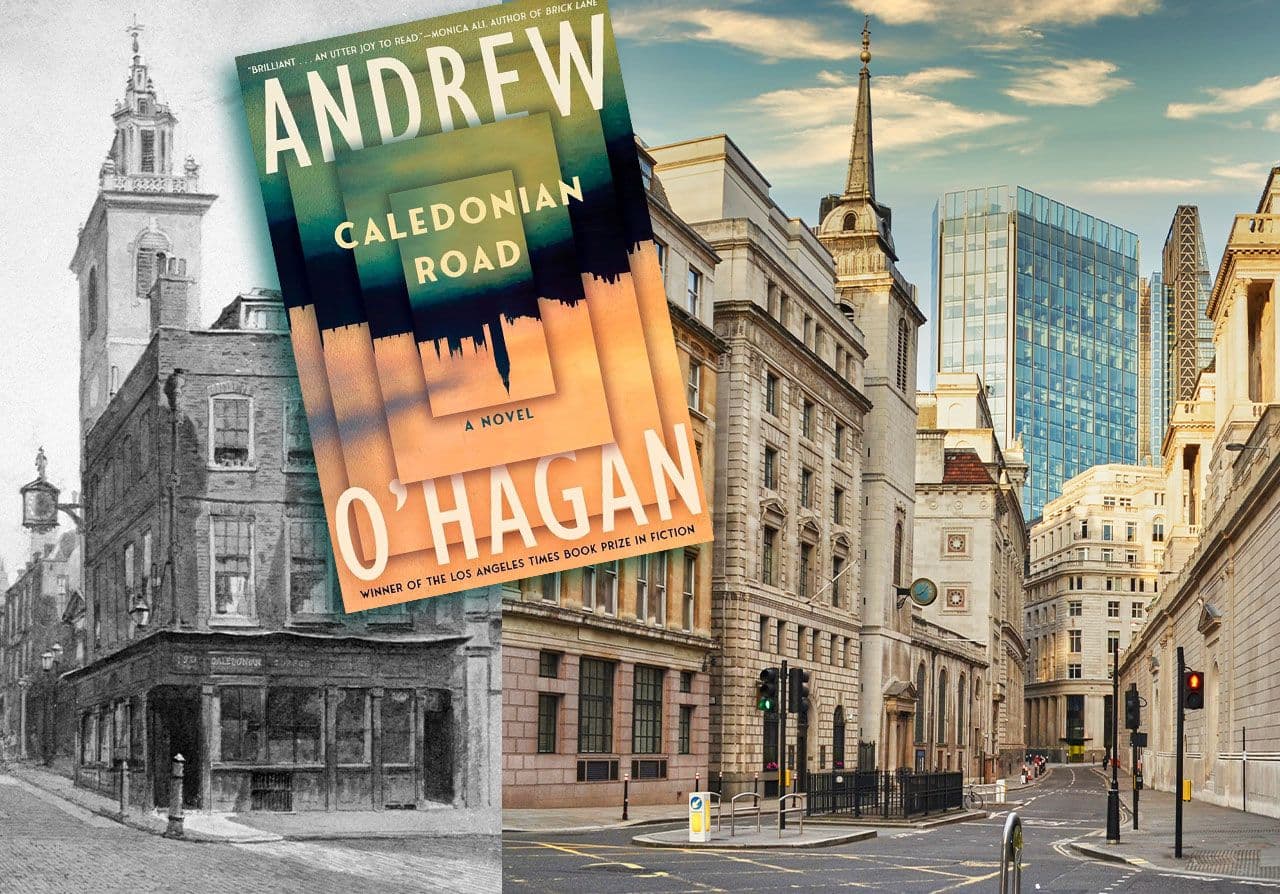
In his latest novel, the magnum opus Caledonian Road, Scottish novelist Andrew O’Hagan dives head first into the generational rift that has resulted from this seismic shift. It’s a deep one, and that’s the point: The 656-page book uses the construct of the Victorian social novel to tell the story of pandemic-era London through the intertwined experiences of five families at different levels of the class hierarchy.

Its protagonist, Campbell Flynn, 52, is a professor and popular art critic known for his work on Vermeer, who ends up being leveraged by people he initially believes he can control. Among them is his student, Milo Mangasha, a young hacker of Ethiopian descent who is chasing digital idealism in honour of his dead mother, largely through cryptocurrency and decentralized networks, but also by manipulating Flynn and his network of privilege.
O’Hagan calls Caledonian Road a “state-of-the-nation” novel, and it tackles some of the thornier issues of our time: wealth inequality, corruption in politics, toxic masculinity, disinformation, racism, nationalism and the shift away from so-called classical western culture toward something untethered from the weight of the imperialistic past.
“From the very beginning, I knew that this book was a thing of scale,” says the author during a recent chat at the downtown offices of Penguin Random House Canada in Toronto. “I knew I wanted to cover a lot of ground, and that the ground would be populated with more people than have ever appeared in my books before.”
Structurally, the novel is mapped atop London, where O’Hagan has lived since leaving Glasgow after university. The author renders the city as an anything-is-possible metropolis that allows new thinking to flourish in anonymity – but also a place in thrall to entrenched power held by eminently corruptible people hiding behind a yellowed glaze of sophistication. His portrait is immersive and contemporary, buzzing with geographical and social details. Caledonian Road is its central nerve, a north-south route through the borough of Islington where Black youth suffer the consequences of living in a society whose codes say they will never be fully embraced as belonging to Merrie England.

“London is one of the great places on earth,” O’Hagan says. “It’s multidimensional, multicultural, multifaceted. But I’ve also come to know that it’s an impossibly corrupted environment – financially, socially, economically. It has the same divisions between rich and poor that have existed there since Victorian times.” On top of that, he says, it’s become “a zone of exploitation” where “people with dodgy fortunes can park their dirty money and clean it through the art world and the property market.” In socioeconomic terms, it’s a petri dish for bad behaviour. For a novelist, it’s a situation that was inevitably going to find its way onto the page.
Although it tackles heavy topics, Caledonian Road reads like a literary version of HBO’s Succession: an epic story of rot, downfall and who gets out alive, told with Dickensian scope and spiked with the delicious thrills of U.K. tabloid culture. The family of a Russian oligarch who lords over the plot provides hints of Godfather-esque crime melodrama. Flynn’s central narrative has the same dread-inducing appeal as watching a building collapse. Through it all, the novel remains exhilarating to read.
In the spirit of the book, I point out to O’Hagan that it’s a bit saucy to write a huge social-realist novel at a time when reality itself is in flux. Again, he says, that’s intentional. “It’s a book about social reality as much as it’s a social-realist novel. It’s a book that’s bent out of shape with undermining forces, confusing forces. Young Milo Mangasha is a powerhouse in this narrative, and what he’s really trying to do is affect a change in the status quo – a change in assumed reality.” For O’Hagan, while his book is an homage to classic Victorian social-realist novels, it’s “teetering on the edge of nonexistence the whole time.”
Caledonian Road, then, lives in a place many of us find ourselves in this volatile era: on the line between solid but fallow ground and a void that is terrifying but offers a certain obliterating hope; where everything holding us up falls away, bringing our broken ideas of freedom with it.
As I get older, I find myself telling young people how I’ve come to treasure being alive before the mass adoption of the internet – to see that perspective as a kind of gift. Some don’t get it. And why should they? Their lives have always been lived through screens. Will Generation-Z ever find its way to embracing the kind of traditional five-pound novel that O’Hagan has produced in Caledonian Road? Does literacy even mean the same thing in the 21st century?
No, O’Hagan says – and that’s fine. “I think this is my most optimistic book by miles,” he says, contradicting reviews that have noted its many flavours of doom. “Nearly all the characters, in their own ways and on their own pathways, are devolved toward the notion that goodness is possible. There’s so much darkness in the story. But it always opens out onto a plain of light.”