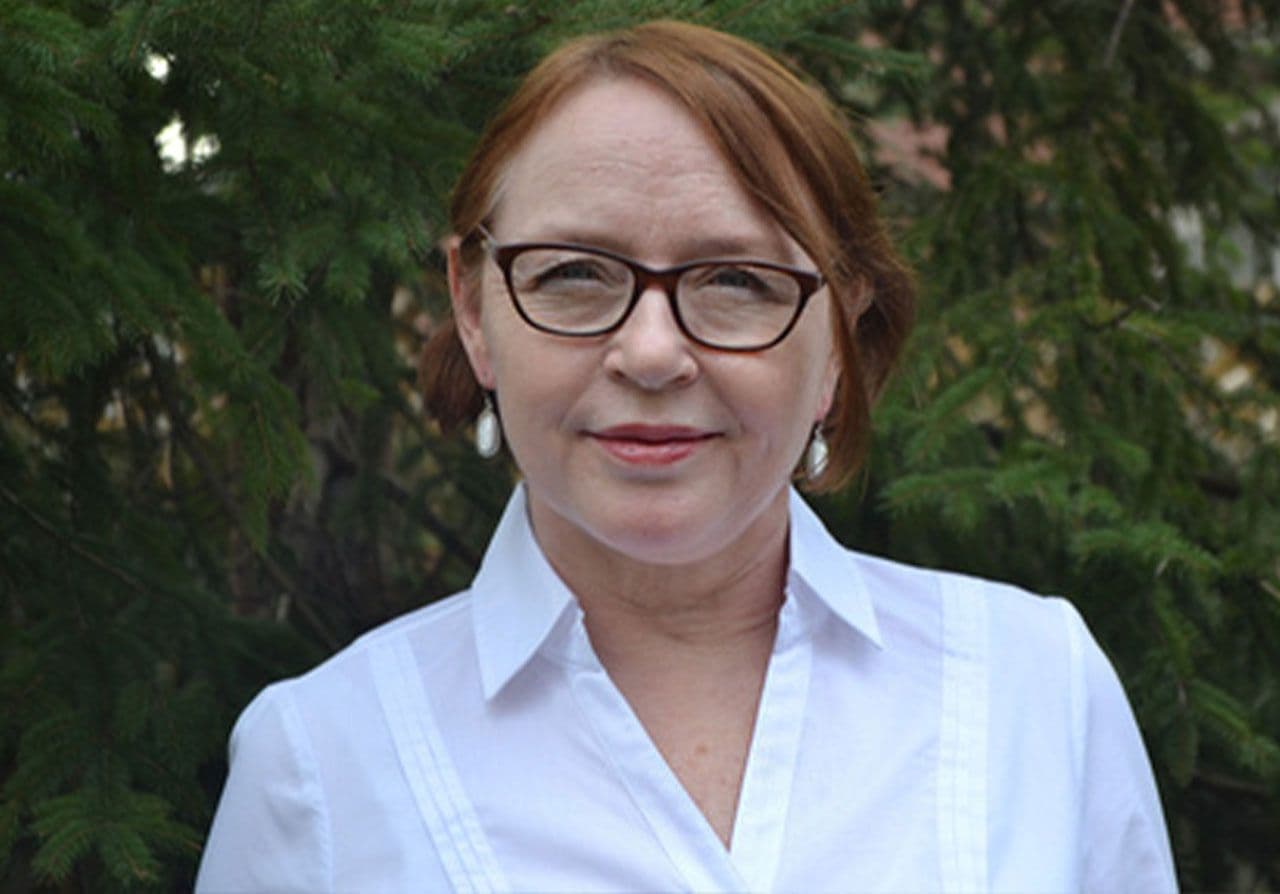
In person, Shari Lapena is gentle and soft-spoken, with an engaging smile that takes in the whole room. I met her recently at MOTIVE, the Crime and Mystery Festival in Toronto, where she seemed very composed before her appearance and, on stage in front of a large audience, she was relaxed, but focused on answering questions. Of course, since the 2016 publication of The Couple Next Door, she has had plenty of experience talking to crowds. That book, her first psychological thriller, sold more than four million copies worldwide and made her into an instant celebrity. A New York Times, Sunday Times and Globe and Mail bestseller, it was translated into umpteen languages, and six books followed that success, each earning its own spot on bestseller lists.
Her newest thriller, published on July 30, is What Have You Done? This one, as with all her books, opens with a bang.
Nothing ever happens in Fairhill, Vermont. It’s a small town, surrounded by farmland, with the Green Mountains in the distance. Cornfields and hay…..
Nothing ever happens in sleepy little Fairhill, Vermont.
Until it does.
Can anyone resist turning the page?

Once you do turn the page, you are plunged into a gut-wrenching scene: a young girl is lying in a field, with her stomach ripped open and “her eyes gouged out by the vultures.” Then you meet the people who live in this seemingly bucolic village. All of them have something to hide, either something they are anxious not to reveal or think maybe they should reveal. As you read on, you become familiar with them, begin to understand them a little and watch as each one unravels, while the investigation into the murder raises more questions.
Under the veneer of what passes for normal, you know that one of these people is guilty of the girl’s murder, but you won’t find out who until almost the end.
Lapena weaves tangled tales of deep, emotional complexity. I was struck by the difference between her warm, friendly personality and the darkness in her books. Her first two novels of literary fiction, both to be reissued this summer for the first time in audiobook and ebook format, seem to be more in keeping with her gentle demeanour. Things Go Flying, published in 2008, was described by Goodreads as a “wildly inventive contemporary comedy about how the past can come back to haunt you.” Happiness Economics, which came out in 2011, was shortlisted for the Leacock Award for Humour. Described by the late Canadian author Paul Quarrington as “wonderful high-purpose fun,” it’s the story of a stalled poet who takes guerilla action in support of poets everywhere.
The contrast between those books and her domestic noir is stark. “I’ve never found a way to bring humour into my thrillers without undercutting the tension,” she tells me, and, having read a number of her books, I see why. The surprise is that she has this other voice in her literary fiction, and that she seems comfortable with both.
Part of the darkness in her thrillers rests in her extraordinarily realistic portrayal of dysfunctional families. In her previous book, Everyone Here is Lying, it’s right there in the first chapter: As William Wooler’s affair unravels, the so-called family man hits his nine-year-old daughter and then she goes missing. In What Have You Done? it emerges more slowly, as you get to know the characters.
When I ask whether she has had her own experiences with dysfunctional families, she says, “I think that all families are dysfunctional in some ways … There is mental illness, alcoholism, fractured relationships. There are people who are deceitful, dishonest. There is domestic abuse. We all know that a lot goes on behind closed doors.”
I ask if she is a great observer of human nature, and she says she is genuinely curious about people and has a lot of empathy.
“That’s why I can get into people’s heads,” she explains. “I can take on their emotional baggage, their fears and anxieties and motivations. When I am writing, though I am very different from them, I can think like the characters. No matter their age, or gender or predisposition, I seem to be able to get into their mindset. I’m like an actor stepping into a character and seeing what they will do. It’s my favourite thing about writing.”
In real life, Lapena is happily married to Manuel Lapena, an IT professional, and, after raising two children in Toronto, they live full-time on a farm north of Cobourg, Ont. In her mid-50s, she wrote The Couple Next Door in secret, because she wasn’t sure it would work.
Unlike many suspense writers, when Lapena starts a new book, she does not have an outline. “I don’t know how it’s going to end,” she says. “I just start at the beginning and go all the way through in my first draft. The story just comes out and gets onto the page.”
If only it were as simple as that, I was thinking. The complex picture she builds – the pace, the tension, the twists in her stories – are skillfully structured. When I was writing my art-world mysteries, I had to keep going back over previous scenes to make sure I didn’t accidentally introduce something I had not hinted at earlier. In Gull Island, my first psychological thriller, I felt I had to keep in my mind the ending so that I could slowly reveal the disintegration of the person telling the tale.
As I was reading What Have You Done? I focused on one character quite early as the killer and waited to find out if my guess was right. As it turns out, Lapena didn’t know who it was either until quite late in the book. “I think if I were to decide too early who the killer is, I couldn’t keep alive all the other possibilities,” she says. “I couldn’t effectively keep the plot lines going.”

A lot of writers tell you they have to work backwards, to make sure the clues are planted early enough for the structure to hold. Lapena does not think she could write that way. Worse, she might have to abandon a book if she knew too early who had done it. “I wouldn’t see any point in continuing if I knew what was going to happen,” she says with a laugh.
There are always surprises in Lapena’s books, but there is one eerie treat in What Have Done?: a ghost who makes an appearance early in the story and shows itself again as the story unfolds.
At the end of our conversation, we talked about her childhood in Nova Scotia, her education as a lawyer, her stints as an English teacher and her early fondness for grim Russian novelists like Fyodor Dostoyevsky and Nikolai Gogol as well as Patricia Highsmith’s deceitful characters.
Now she indulges her passion for horseback riding on the farm, where she is already at work on her next thriller.